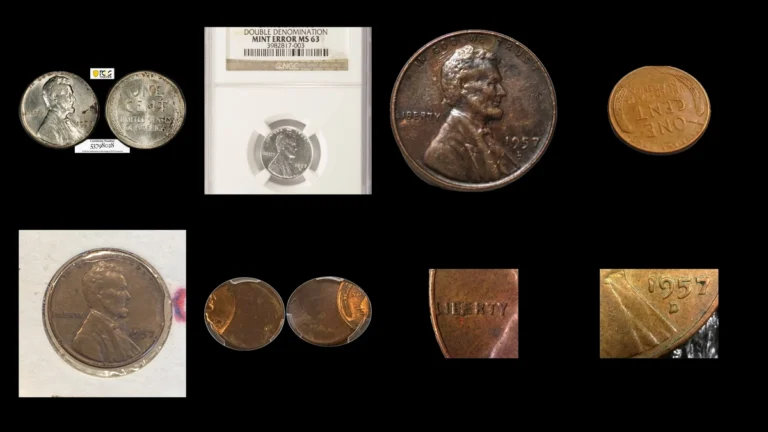
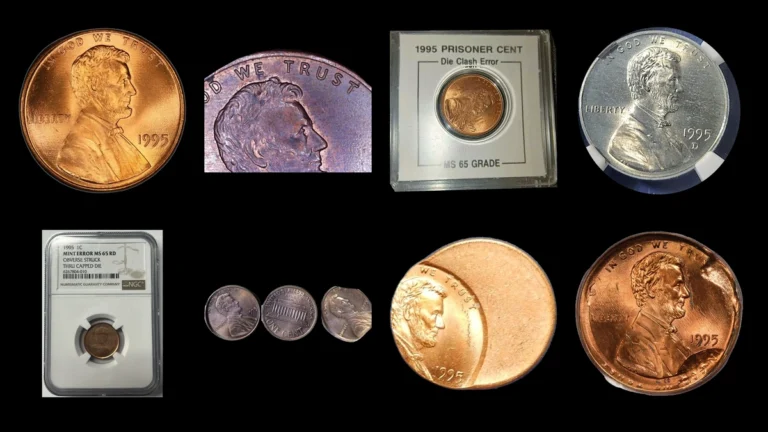
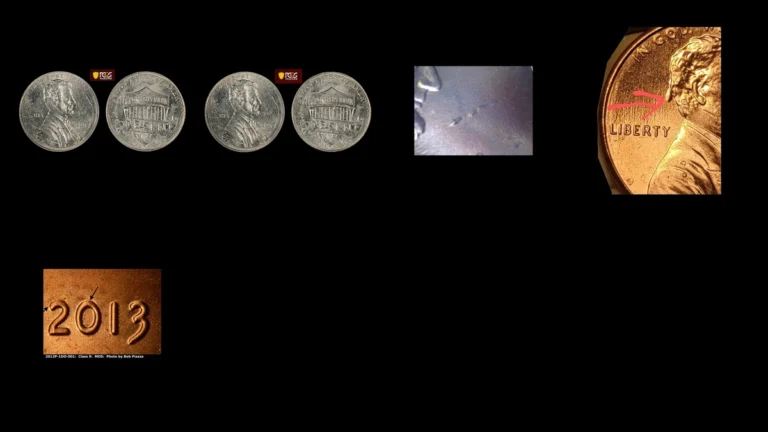
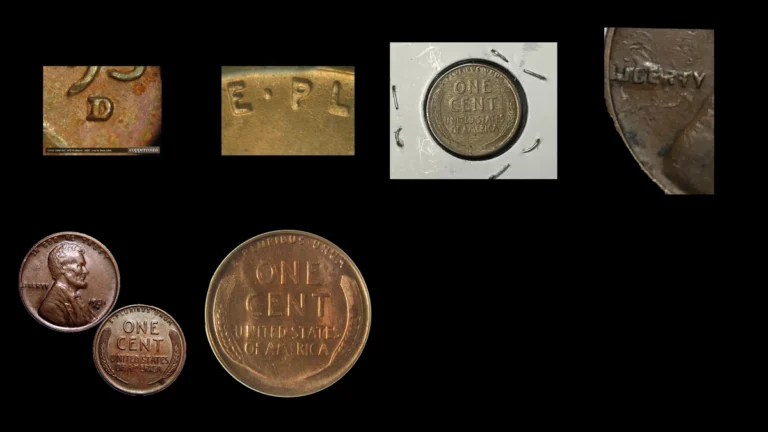
Rare 1984 Penny Errors (List & Pictures)
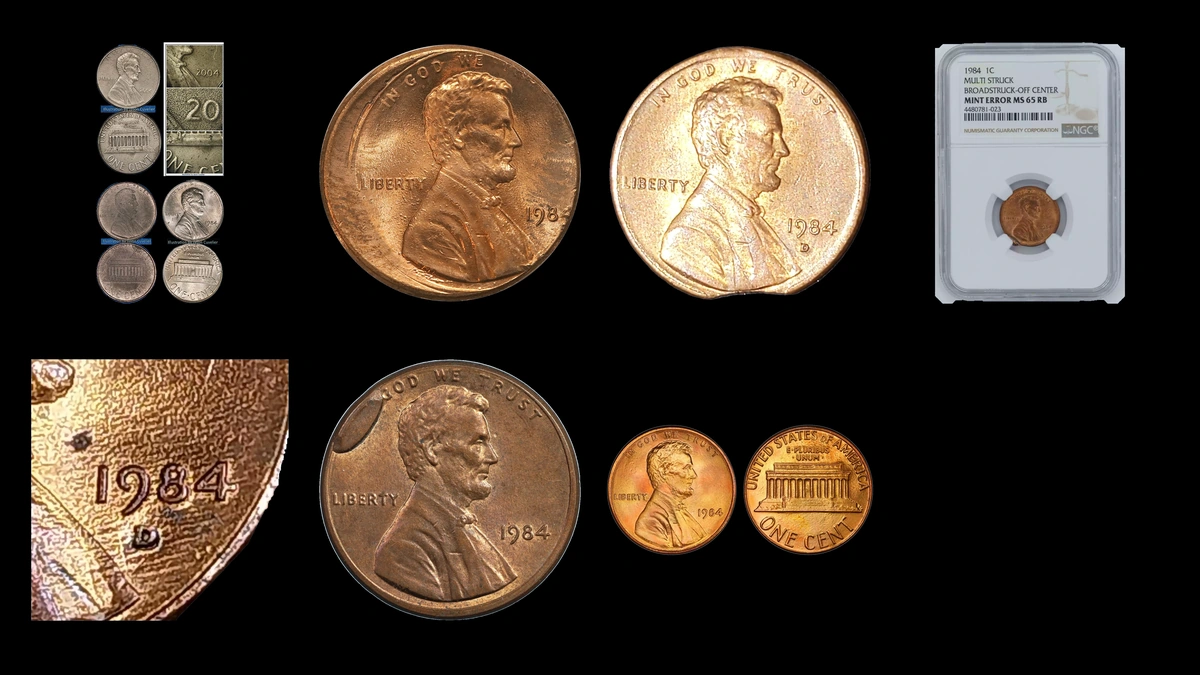
An extra-looking D, a doubled ear, and two overlapping designs can all attract attention on a 1984 cent. Each needs a different explanation.
The ten groups of 1984 penny errors below span an estimated $2–$15,000, with the upper range conditional on proving an older-copper-blank claim. A confirmed 1989-D cent on that older metal sold for $7,500 in January 2018; the 1984 doubled ear reached $3,910.
Start with the metal and outline, then inspect the mintmark, raised patches, and repeated design details.
| Clue | Category | Estimated value |
|---|---|---|
| Weight near the older copper standard | Unconfirmed older-blank claim | $3,000–$15,000 if authenticated |
| Gray surface without copper covering | Unplated zinc blank | $50–$750 |
| Plain metal beside incomplete design | Off-center strike | $20–$350 |
| Three gaps plus displaced designs | Triple clip and off-center strike | $75–$500 |
| Two coins with matching contact edges | Chain-strike pair | $250–$1,200 for the pair |
| Multiple impressions | Flipover or other double strike | $50–$1,000 |
| Single upright bar right of D | Damaged mintmark punch | $2–$30 |
| Recognizable overlapping D shapes | Repunched mintmark | $5–$150 |
| Bar in LIBERTY or rim patch | BIE or cud | $2–$300 |
| Repeated ear or other design contours | Doubled dies | $5–$4,000 by variety |
The ordinary 1984 cent has a zinc center beneath copper plating, weighs 2.50 g, and measures 19.05 mm across a smooth edge. Older copper-rich blanks weigh about 3.11 g.
Use a checked scale and gentle caliper measurements for accessible coins, and a 10× magnifier for the details. Keep surfaces intact and sealed coins in their holders.
1. 1984 Penny A Heavy Coin: The 1984 Older Copper-Blank Claim Error
A genuine 1984 strike on an older copper-rich blank would carry more mass and a different composition from the normal plated-zinc issue. The published claim is a possibility, not a documented certified discovery in the supplied evidence.
Known older-blank errors from other later dates explain why collectors investigate the idea. Their existence does not establish a 1984 example.
How to Identify
Check the scale with a known weight before interpreting a reading near 3.11 g. Inspect the edge for added metal or seams and the date for alteration.
Professional nondestructive metal analysis must confirm copper-rich alloy rather than plated zinc. Do not file an edge or drop the coin as a sound test.
What It’s Worth
The conditional estimate is $3,000–$15,000 after a genuine 1984 strike on older-type copper metal is authenticated. No confirmed 1984 transaction supplies that range.
A 1989-D cent on an older 3.1 g copper blank sold for $7,500 in January 2018 in PCGS MS65 Red. Its different date remains essential to the comparison.
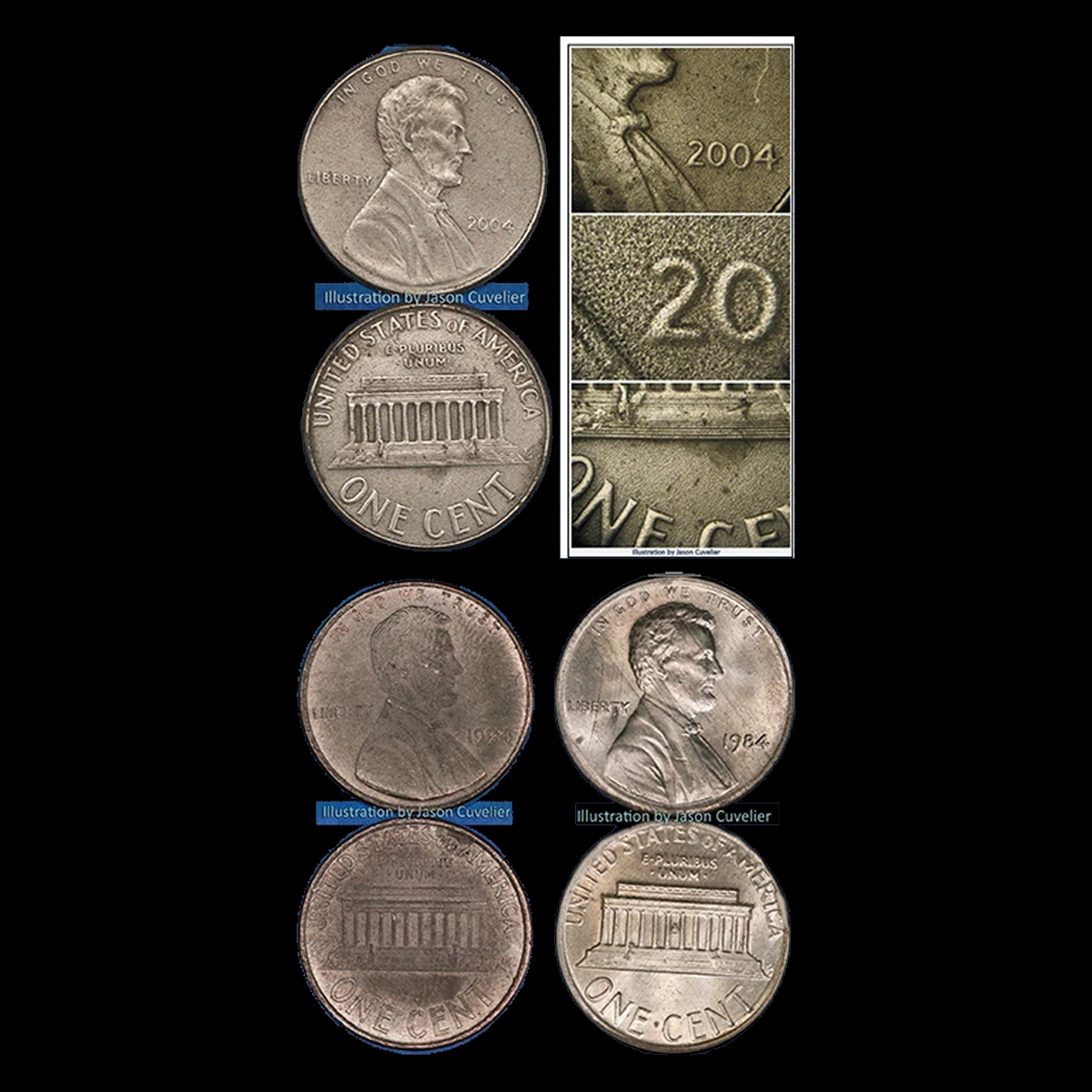
2. 1984 Penny Gray Zinc across the Coin: Reported 1984 Unplated Blank Error
A zinc blank that misses its copper covering can receive a cent design directly in gray metal. The year report concerns fully unplated examples without firmly establishing a mint for the particular claim.
Chemical stripping, corrosion, and an added pale coating can all imitate aspects of that appearance. Both faces and the edge need examination.
How to Identify
Look for intact fine struck detail in the exposed zinc rather than rough chemical attack. Check the edge for copper remnants or an applied coating without scratching through it.
A small weight difference cannot establish when copper disappeared. A specialist needs to assess original surface texture along with the metal construction.
What It’s Worth
A professionally confirmed unplated example has an estimated $50–$750 range. Condition and the evidence for absent plating before striking determine the comparison.
A certified 1995 unplated cent brought $660 in January 2023. That later-year result does not supply an actual 1984 sale or an error value for a chemically stripped penny.
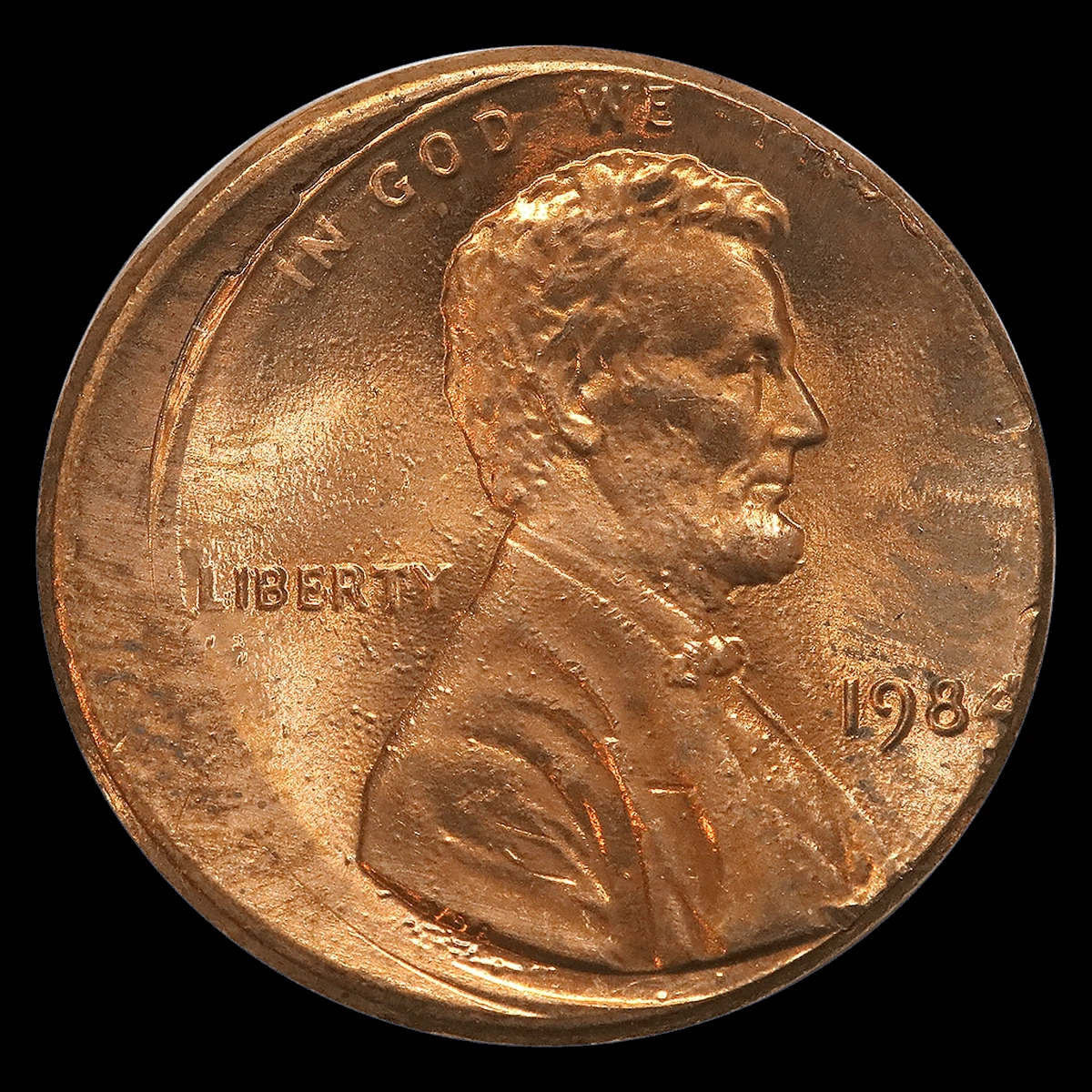
3. 1984 Penny A Large Plain Crescent: 1984-D Off-Center Strike Error
Recorded Denver examples include forty-five-percent and fifty-five-percent offsets. Their blanks lay partly outside the striking area, leaving untouched metal beside incomplete designs.
Directions also vary: some records describe one o’clock, while another gives ten-thirty. Keep those positions attached to their separate specimens.
How to Identify
Inspect the plain crescent for grinding or polishing that could have removed finished detail. Compare the opposite boundary and both faces for corresponding design loss.
Retain the readable year and D in photographs. Ordinary off-center striking does not remove metal, so unusual weight loss needs another explanation or an additional error.
What It’s Worth
The estimated range is $20–$350, from ordinary examples to particularly appealing pieces. The amount of displacement alone is not a price formula.
A fifty-five-percent example in PCGS MS61 Red and Brown brought $41 in September 2024. Two other Denver pieces, forty-five and fifty-five percent off center, each sold for $31 in January 2022.
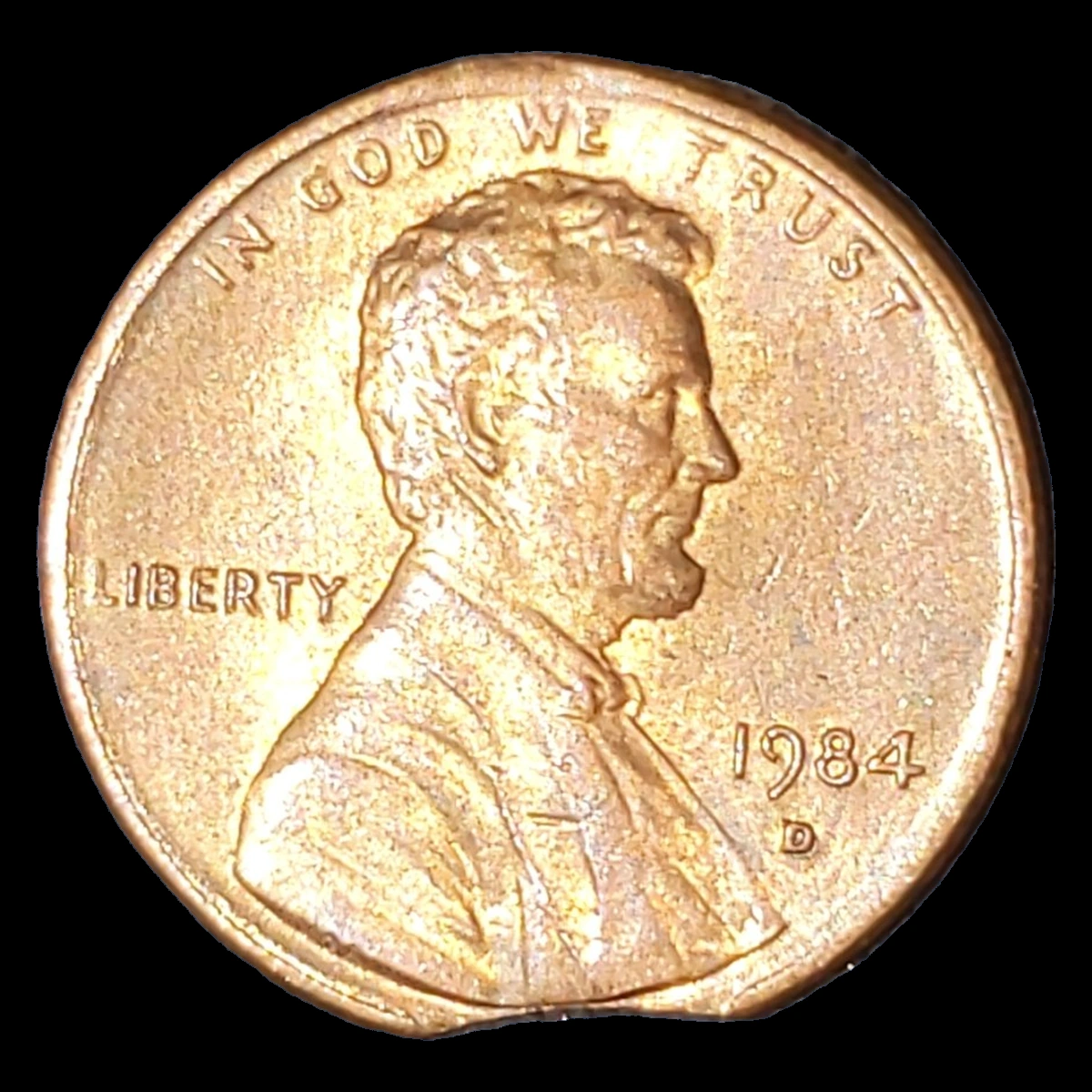
4. 1984 Penny Three Missing Curves and an Offset Design: 1984-D Compound Clip Error
The recorded Denver coin has three curved clips plus an off-center strike. The missing arcs formed when blank punches overlapped earlier holes in the metal sheet.
That incomplete disc later entered the press out of position. Its remaining unstruck area is not a fourth clip because the metal is still present there.
How to Identify
Count the missing boundaries separately from plain metal, then inspect each curved opening for original design formed beside it. Later cuts can create several gaps without reproducing the surrounding metal flow.
Check the front and back for the distinct off-center component. Weight loss should fit the clipped metal rather than the unstruck portion.
What It’s Worth
Comparable multiple clips with an off-center strike have an estimated $75–$500 range. The coin’s complete appearance, condition, and surviving date guide the comparison.
The NGC MS63 Red and Brown specimen brought $156 in October 2019. That amount values one compound-error cent, not three clips and a striking error priced separately.
5. 1984 Penny Two Coins with Matching Contact: 1984 Chain-Strike Pair Error
Two neighboring blanks can press against each other during striking, leaving adjoining contact evidence. A matched pair preserves this relationship better than either piece alone.
The recorded 1984 pair consists of two off-center cents identified as first and second pieces. Both were graded PCGS MS63 Red and Brown.
How to Identify
Photograph the pieces in their matching positions without forcing them together. Compare the adjoining boundaries, metal movement, and strike positions as one event.
Inspect for later dents or filing that might imitate a fit. Two unrelated off-center pennies do not form a chain pair merely because they share a year.
What It’s Worth
A genuine matched pair has an estimated $250–$1,200 range, with strong shared contact evidence and attractive surfaces supporting better comparisons.
The documented pair sold for $352.50 in September 2013. That was the total for both pieces together, and it should not be quoted as a per-coin result.
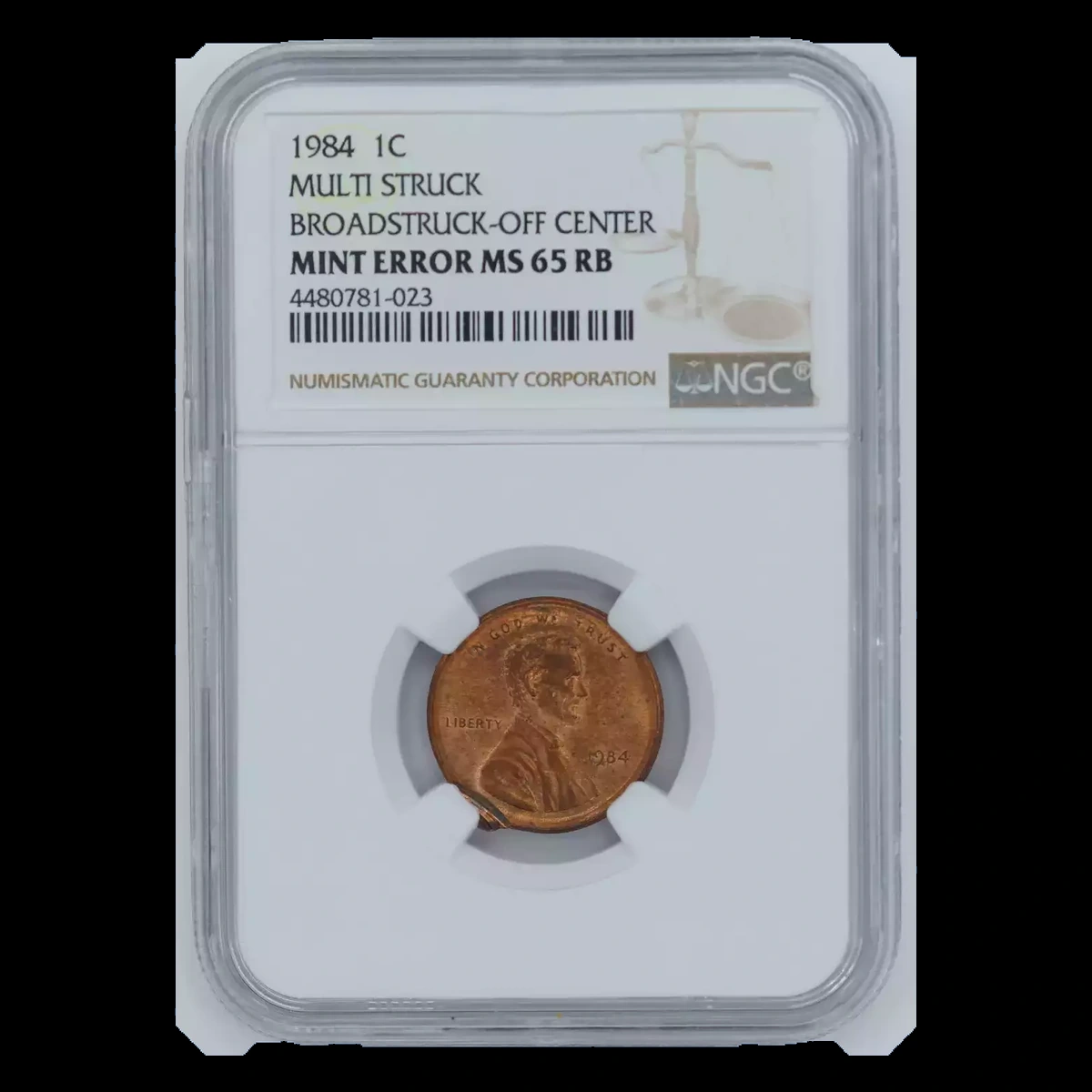
6. 1984 Penny Designs Overlap after Another Blow: 1984-D Double Strikes Error
A flipover strike can place Lincoln and Memorial details on the same face after a coin turns over. A separate Denver example instead has a second blow eighty percent off center with one face blocked.
The blocked-side effect is called uniface. It describes that later striking area, not a coin originally designed on only one face.
How to Identify
For a flipover, trace recognizable front and back design remnants through their overlap on one face. Examine both sides for a sequence consistent with the coin turning over.
For the other example, compare the second-strike area on both sides for evidence of the blocked face. Do not transfer its eighty-percent description to the flipover coin.
What It’s Worth
The group has an estimated $50–$1,000 range because the recorded movements produce very different appearances. Clear attractive combined designs make stronger comparisons.
The NGC MS62 Red and Brown flipover brought $456 in September 2020. The separate eighty-percent off-center uniface example sold for $55 in January 2022.
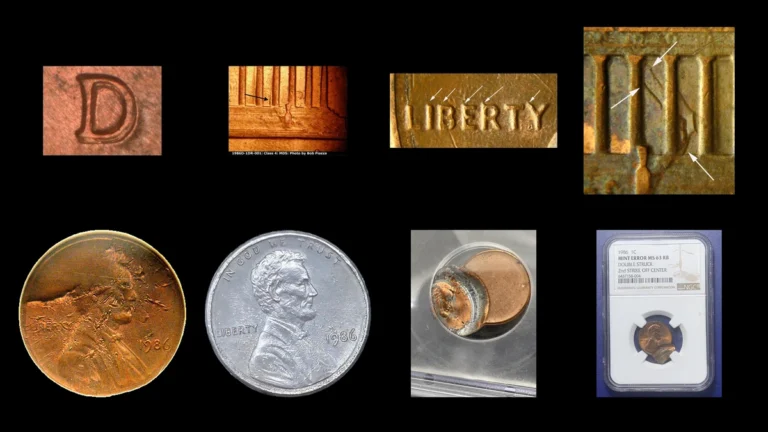
7. 1984 Penny One Upright Bar beside D: 1984-D Damaged Mintmark Punch Error
A narrow extra bar immediately right of D belongs to a particular damaged mintmark punch. The punch transferred its flawed shape into the die, which repeated it on coins.
This feature was once listed among repunched mintmarks before reclassification. The isolated bar is not, by itself, a second D impression.
How to Identify
Compare the upright shape with an identified punch-damage photograph while keeping the date and whole D visible. Its location and form matter more than an obsolete label.
Move the light to distinguish solid raised metal from a scratch, copper blister, or pale split in the plating. The feature does not need to trace a second letter because its cause is punch damage.
What It’s Worth
The estimated range is $2–$30 for an identified example. A sharp clean letter makes the small feature easier to show.
No individual recorded sale is supplied for the bar. A superseded repunched-mintmark name should not turn it into a more valuable variety without matching evidence.
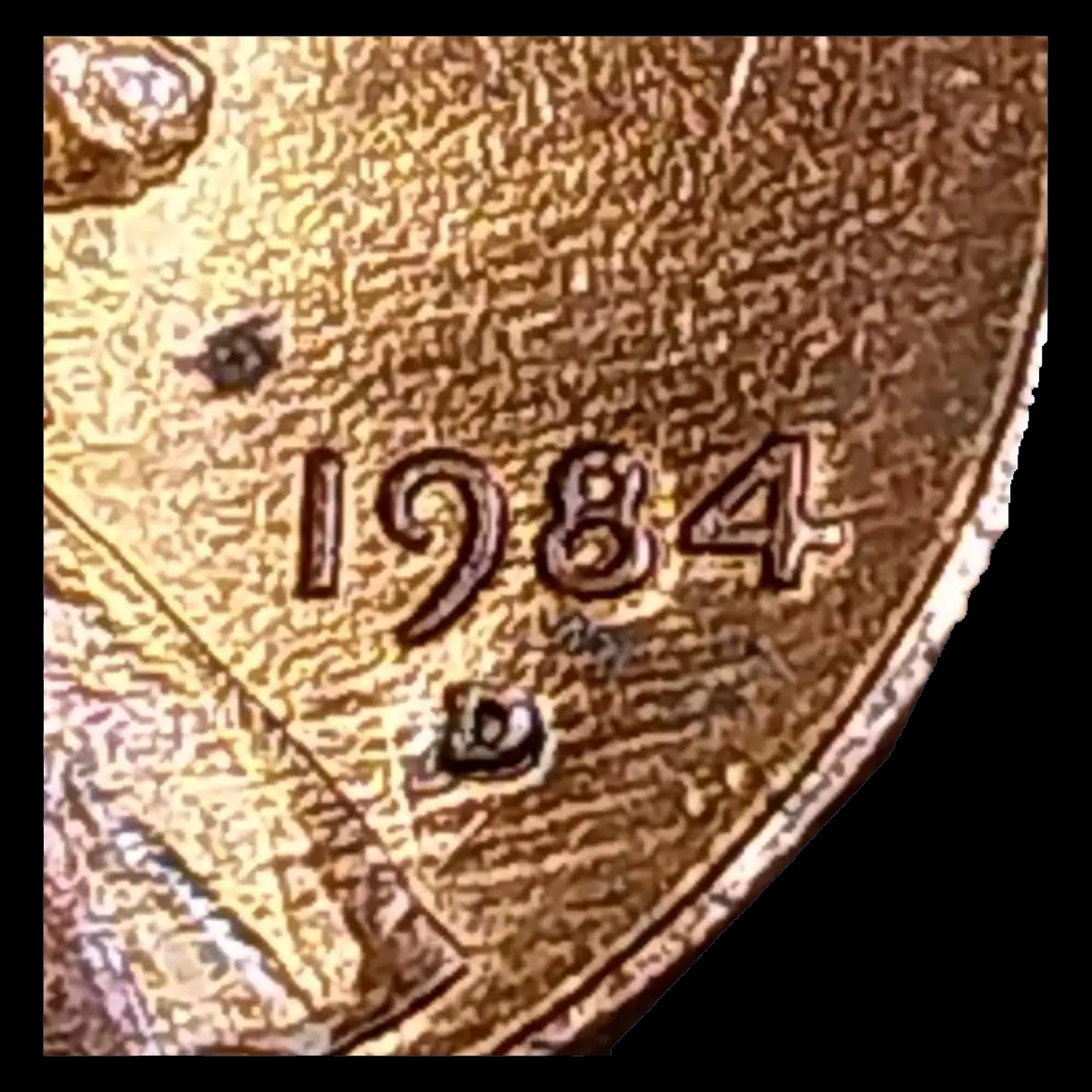
8. 1984 Penny Overlapping D Outlines: 1984-D Repunched Mintmark Error
True repunching preserves parts of more than one placement of the mintmark punch. The letter could shift upward, downward, or rotate between impressions during die preparation.
Different 1984-D varieties therefore have different extra strokes. The surrounding portrait need not repeat because the mintmark was added separately.
How to Identify
Follow the upper and lower curves into a recognizable earlier D position. In a rotated example, the amount of separation can change around the letter.
Flat strike-movement shelves and pale zinc showing through split copper can follow a normal D without duplicating it. Compare the exact pattern and exclude the damaged-punch bar above.
What It’s Worth
Identified repunched mintmarks have an estimated $5–$150 range. Closely spaced minor outlines usually make lower comparisons than a clear repeated letter.
The estimate covers modest Lincoln mintmark varieties rather than supplying a sale for each catalog number. Older photographs may retain obsolete descriptions, so the actual shape controls identification.
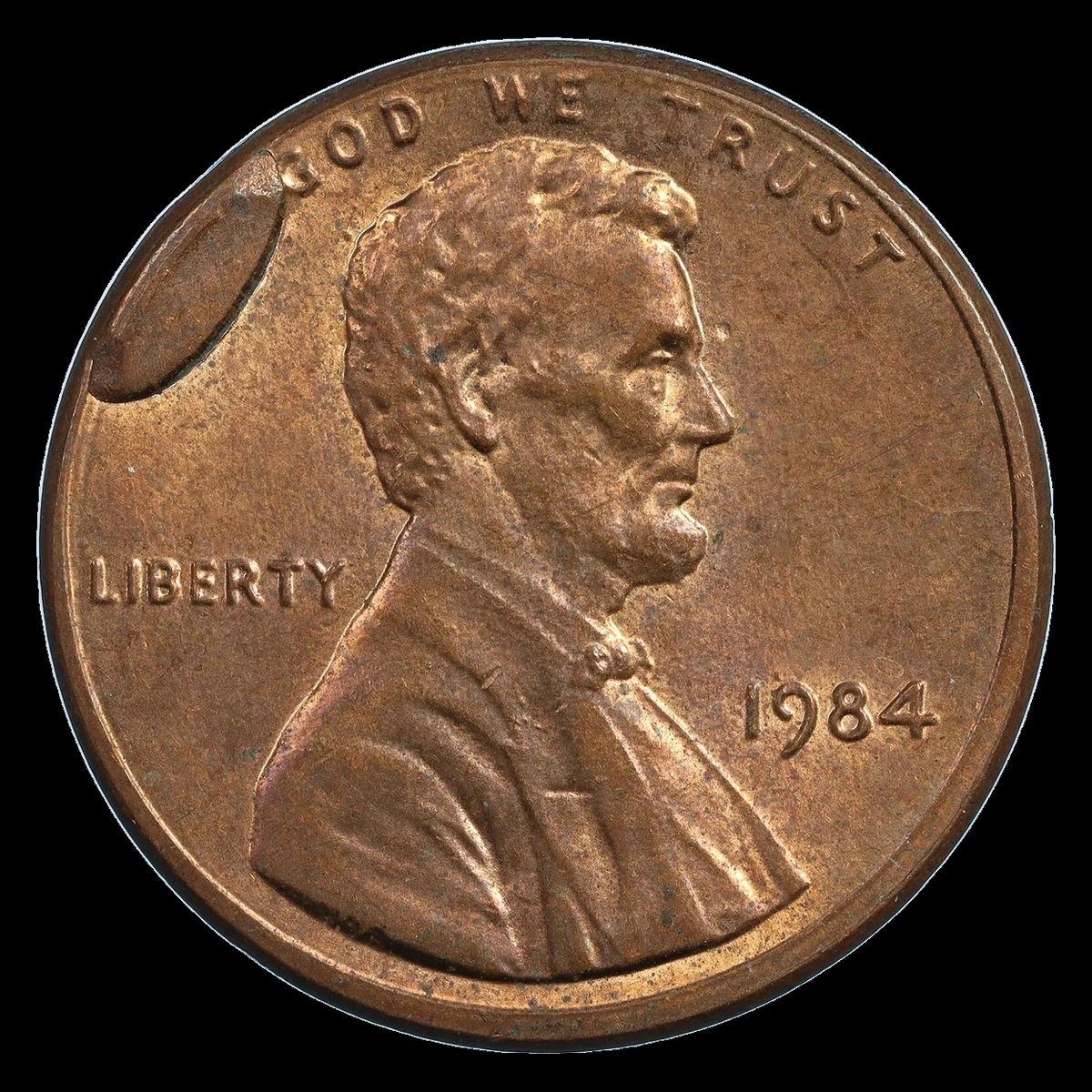
9. 1984 Penny A LIBERTY Bar or Rim-Connected Patch: 1984 BIE Chips and Cuds Error
A small die break between B and E allows metal to form an I-like bar, creating the BIE appearance. A larger break at the die’s edge can produce a raised patch joined to the rim.
That larger rim break is called a cud. The year reports do not establish one mint or clock position for all examples.
How to Identify
For BIE, confirm the bar is in the B-to-E gap. For a cud, trace the raised patch continuously into the rim rather than treating an isolated interior lump as equivalent.
Use side lighting to distinguish original raised metal from a rounded plating bubble or attached dirt. Do not scrape or press the feature to test it.
What It’s Worth
Small BIE chips have an estimated $2–$30 range, while larger original cuds can fall around $30–$300. Size, visibility, and surfaces guide the comparison.
A 2021-D retained cud brought $186 in September 2025. Its Shield design and partly retained broken die section make it a related comparison rather than a recorded 1984 sale.
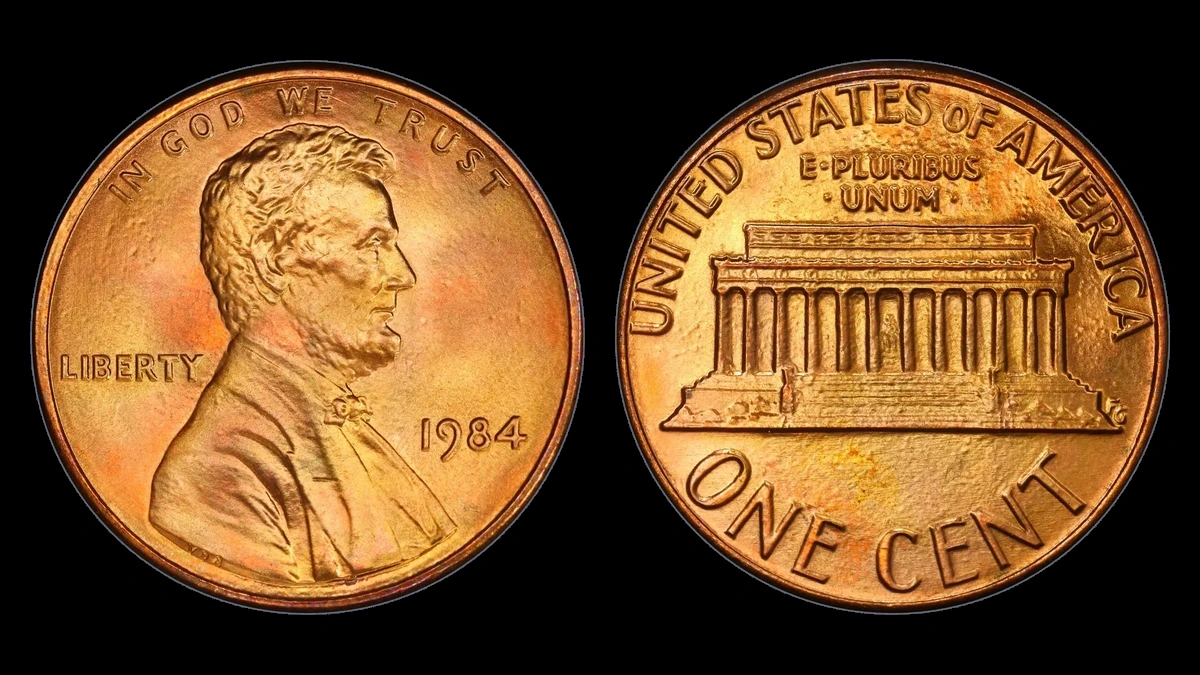
10. 1984 Penny A Repeated Ear or Other Design Detail: 1984 Doubled Dies Error
The major Philadelphia variety repeats Lincoln’s ear and beard. Other examples show different date, portrait, or reverse lettering patterns, including Denver varieties of their own.
The doubled detail originates in a die before striking. FS-101 identifies different varieties at the two mints, so Denver’s date-and-portrait pattern is not the Philadelphia doubled ear merely because the number matches.
How to Identify
Choose the mint and feature first, then compare the ear and beard for the major Philadelphia variety. Other front or back patterns need their own matches around the specified portrait edges, words, or FG initials.
Look for real repeated contours rather than flat strike shelves or split copper exposing zinc. Do not assemble several unrelated marks into one supposed variety.
What It’s Worth
The recognized doubled ear has an estimated $50–$4,000 range across condition. More minor front and back varieties have a separate estimated $5–$150 range.
PCGS records $3,910 in July 2009 for an MS68 Philadelphia doubled ear. Its exceptionally fine preservation and major pattern do not price every thick letter or Denver FS-101 coin.
Conclusion
The smaller 1984 varieties reward precise comparisons: a single bar beside D and a second D outline record different changes to the tools. Larger errors need the same care when separating missing metal, plain metal, and overlapping impressions.
The $2–$15,000 estimates include a conditional older-copper claim, not a confirmed 1984 discovery. Preserve matched pairs, keep mint-specific variety names straight, and establish a heavy coin’s date and composition before using the highest range.