Rare 1990 Quarter Errors (List & Pictures)
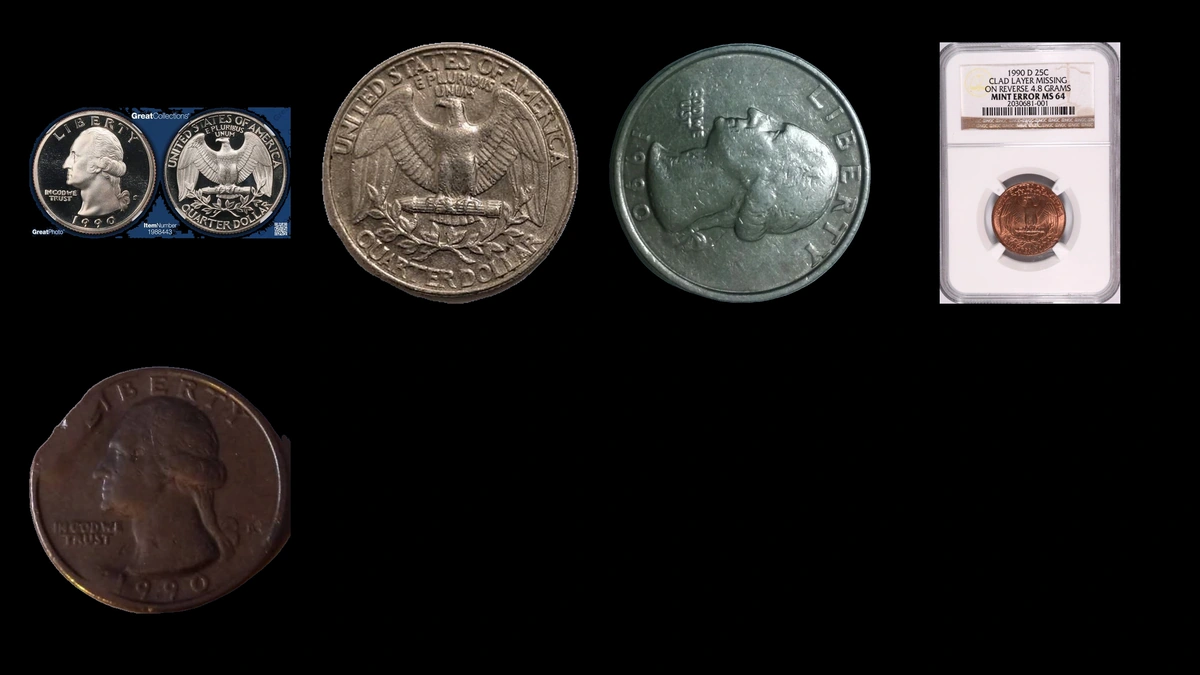
Extra design can be large or tiny on 1990 Washington quarter errors. A flipped coin may carry eagle remnants on Washington’s side, while an S Proof variety needs magnification around its small letters.
The Proof variety produced a documented $360 sale in March 2020. Estimated values across this guide run from $5–$1,500.
Compare repeated designs first, then distinguish tool marks, interrupted strikes, missing metal, and changes around the edge.
1. 1990 Quarter Two Impressions or Opposite Designs Together: Double Strike Error
A reported 1990-P AU58 coin turned over before receiving another strike inside the collar. Eagle remnants can remain on the portrait side, with earlier date or mintmark details on the reverse.
Other examples moved sideways between strikes instead. The records describe a 45% off-center second blow with mint unspecified, a separate P example at 75%, and another coin whose first and second strikes were about 75% and 80% off center.
How to Identify
For a flip-over candidate, trace recognizable eagle or branch detail across Washington’s side. The opposite face should help explain the same turn and later impression.
For displaced strikes, connect each date or portrait with its own border. Keep the percentages with their individual coins rather than building a sequence from several listings.
A faint clash trace differs from a whole second strike that also changes surrounding design. Count impressions that can be followed across both faces, not isolated lines.
Normal 1990 quarters, including the S Proof, are clad at 5.67 grams and 24.26 mm with grooved edges. There was no regular silver Proof version that year; repeated striking can alter the outline without adding metal.
What It’s Worth
Clear displaced doubles are estimated at $150–$700; convincing flip-over examples at $400–$1,500. A 1998-P NGC MS63 double-struck quarter sold for $312 in December 2024.
That later-year sale does not establish a price for the 1990 flip-over. A readable striking sequence and original surfaces can matter more than an extreme percentage.
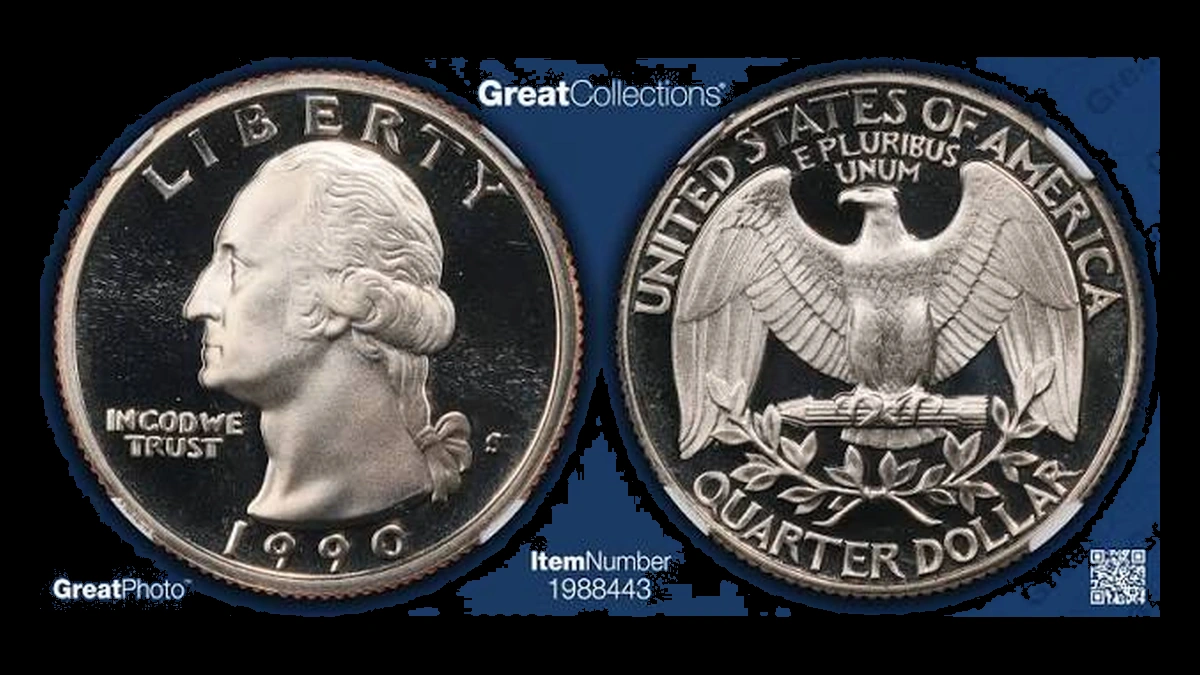
2. 1990 Quarter Small Repeated Outlines on a Proof: FS-101 Doubled Die Obverse Error
On the S Proof, inspect the mintmark, date, and JF initials near the base of Washington’s neck. The FS-101 variety carries doubling in the front stamping tool, rather than receiving a second blow.
How to Identify
Confirm the S Proof and compare all three areas with FS-101 images. One thick digit is less persuasive than the matching rounded pattern across the mintmark, date, and initials.
Flat shelves caused by movement during striking should not inherit the variety name. Keep a graded Proof sealed, and avoid rubbing reflective surfaces when examining a loose coin.
What It’s Worth
Clearly matched examples are estimated at $100–$800. A PCGS Proof 68 Deep Cameo example sold for $360 in March 2020.
Deep Cameo describes strong contrast between frosted designs and reflective backgrounds. Hairlines, spots, or weaker contrast can lower another Proof’s appeal despite visible doubling.
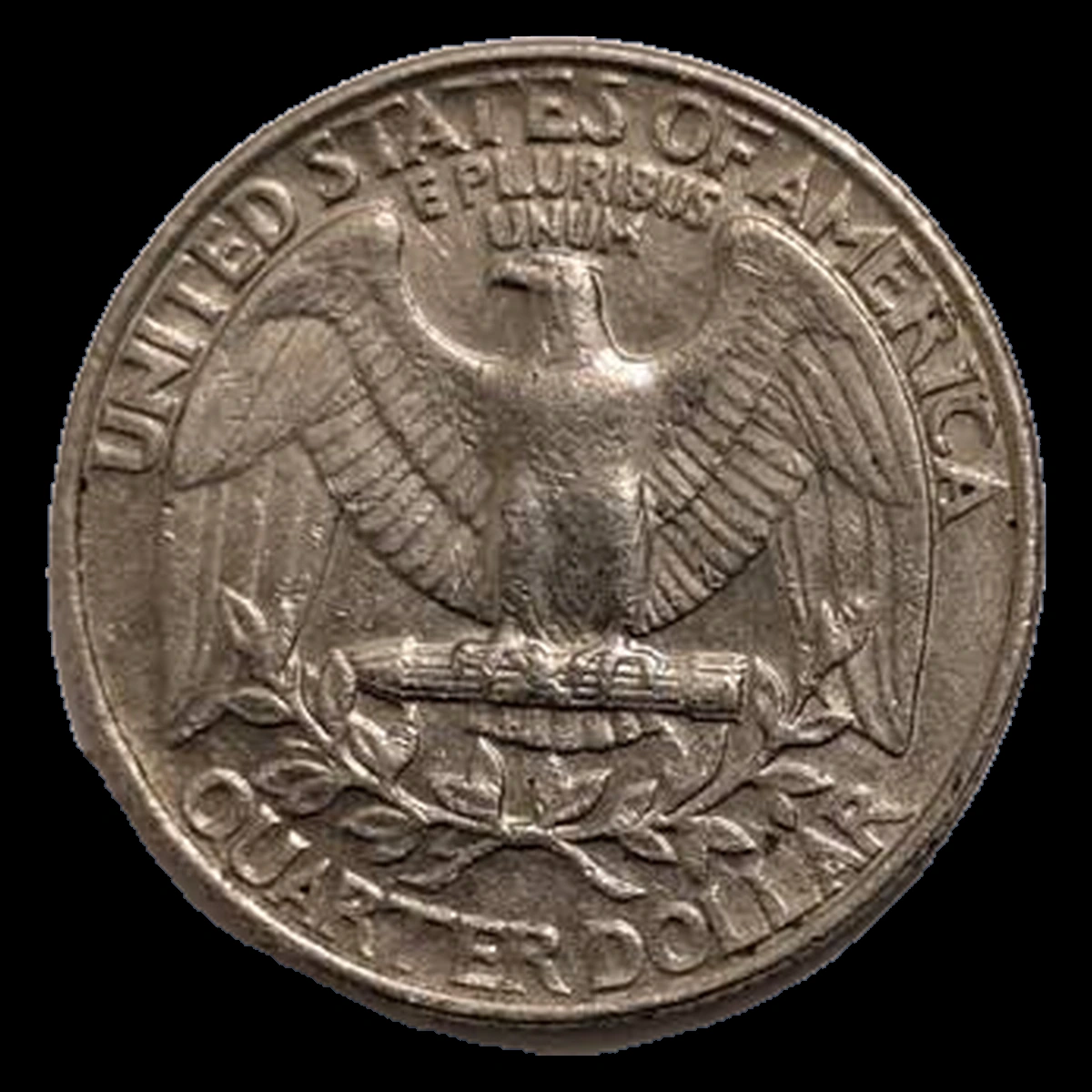
3. 1990 Quarter Faint Opposite-Design Fragments: Die Clash Error
Inspect the open area near Washington’s neck and to its left for a recognizable design fragment. A clash occurs when the two tools meet without a blank and transfer marks that later appear on struck coins.
How to Identify
Use square photographs of both faces to compare the mark with a reversed outline of the opposite design. Its position and shape should work together, not merely resemble one small curve.
The report establishes no particular mint or exact transferred shape. A mark’s raised or recessed appearance alone cannot settle its origin.
Check for a fresh cut or displaced metal that could explain a stray line as damage. The recognizable relationship to the other design is more useful than the line’s brightness.
What It’s Worth
Modest genuine clashes are estimated at $10–$200. Clear transferred detail on clean surfaces generally presents better than an uncertain line visible only under unusual light.
No individual sale is supplied for this report. Wear or heavy contact marks may obscure the feature needed for identification.
4. 1990 Quarter Raised Front Marks near 10 and 3 o’clock: Die-Dent Impressions Error
The recorded Philadelphia PCGS MS65 example has unusual tool-dent marks near two front positions. Depressions in the stamping tool fill with coin metal, producing raised features during the strike.
How to Identify
Compare both marks together with the identified coin. The clock positions are supplied, but their exact shapes and the cause of the tool damage are not established here.
Inspect whether the features rise naturally from the struck surface. An impact groove with metal pushed up alongside it would instead suggest a later dent in the coin.
Check the edge and reverse for related damage. Finding two ordinary contact marks in roughly the right places does not identify this error.
What It’s Worth
Original tool-dent impressions are estimated at $40–$250. Distinct paired marks and well-preserved surfaces support a stronger comparison than an isolated unexplained lump.
The range depends on the struck origin being established; it is not a supplied realized price for the MS65 coin.
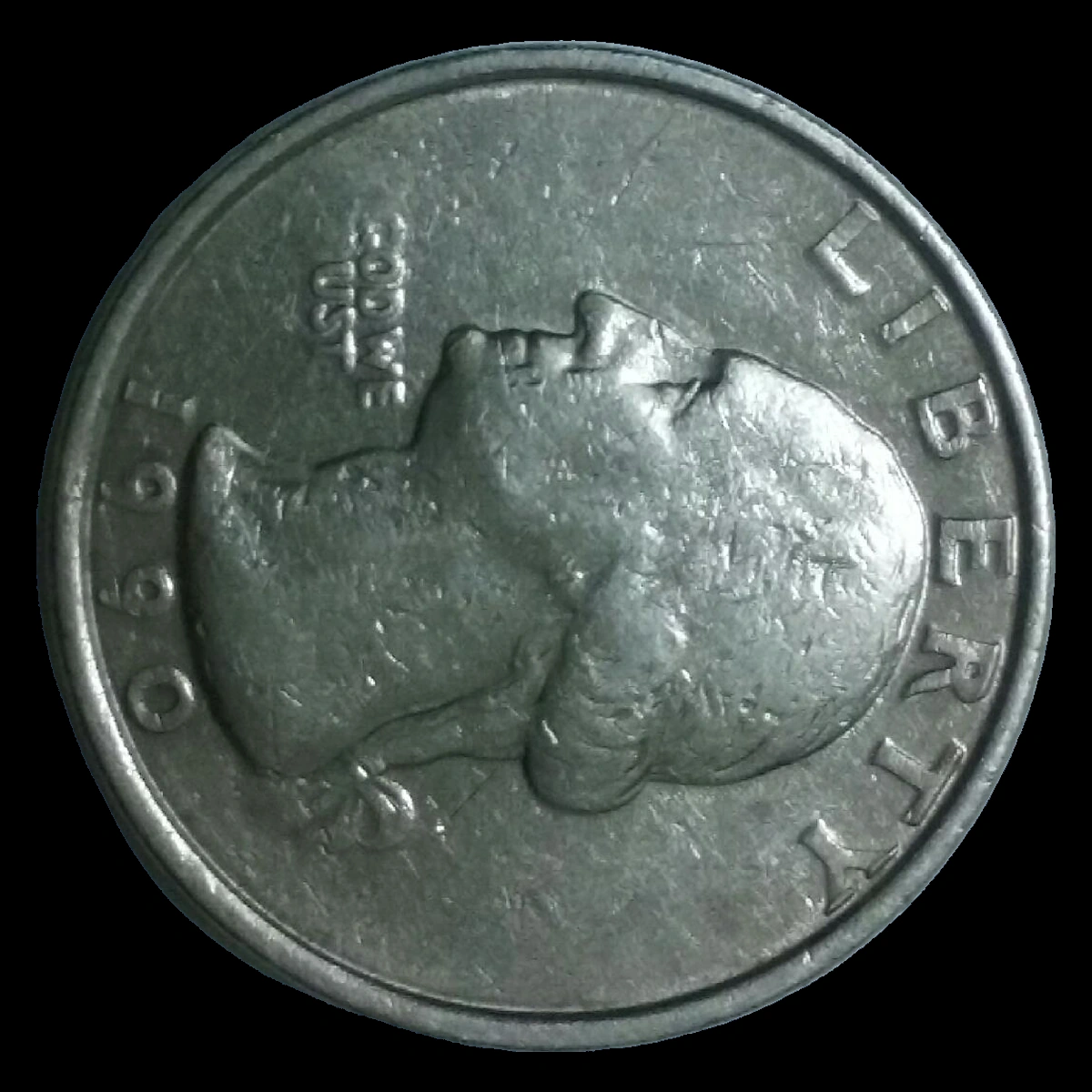
5. 1990 Quarter Missing Motto Letters or a Recessed Patch: Struck Through Material Error
The missing IN and TR reported in the front motto may reflect grease or debris blocking the lettering. A separate Philadelphia example has a recessed impression with a small lifted fragment at one end.
How to Identify
Compare the incomplete motto with adjacent portrait detail. Local blocked letters can coexist with sharp surrounding design, whereas wear tends to affect exposed features together.
On the separate recessed-mark coin, follow the boundary toward the fragment without moving it. The fragment is not established as wire, an edge burr, or a peeling metal layer.
Inspect for scraping and later impact marks on both faces and the edge. An undisturbed transition from normal design to the affected area helps support an interrupted strike.
What It’s Worth
Small grease-blocked lettering is estimated at $5–$50; larger distinct strike-throughs at $30–$500. A 1986-P nickel struck through material sold for $204 in June 2023.
That is a different-year and different-denomination comparison. It neither identifies the Philadelphia fragment nor establishes a sale of that quarter.
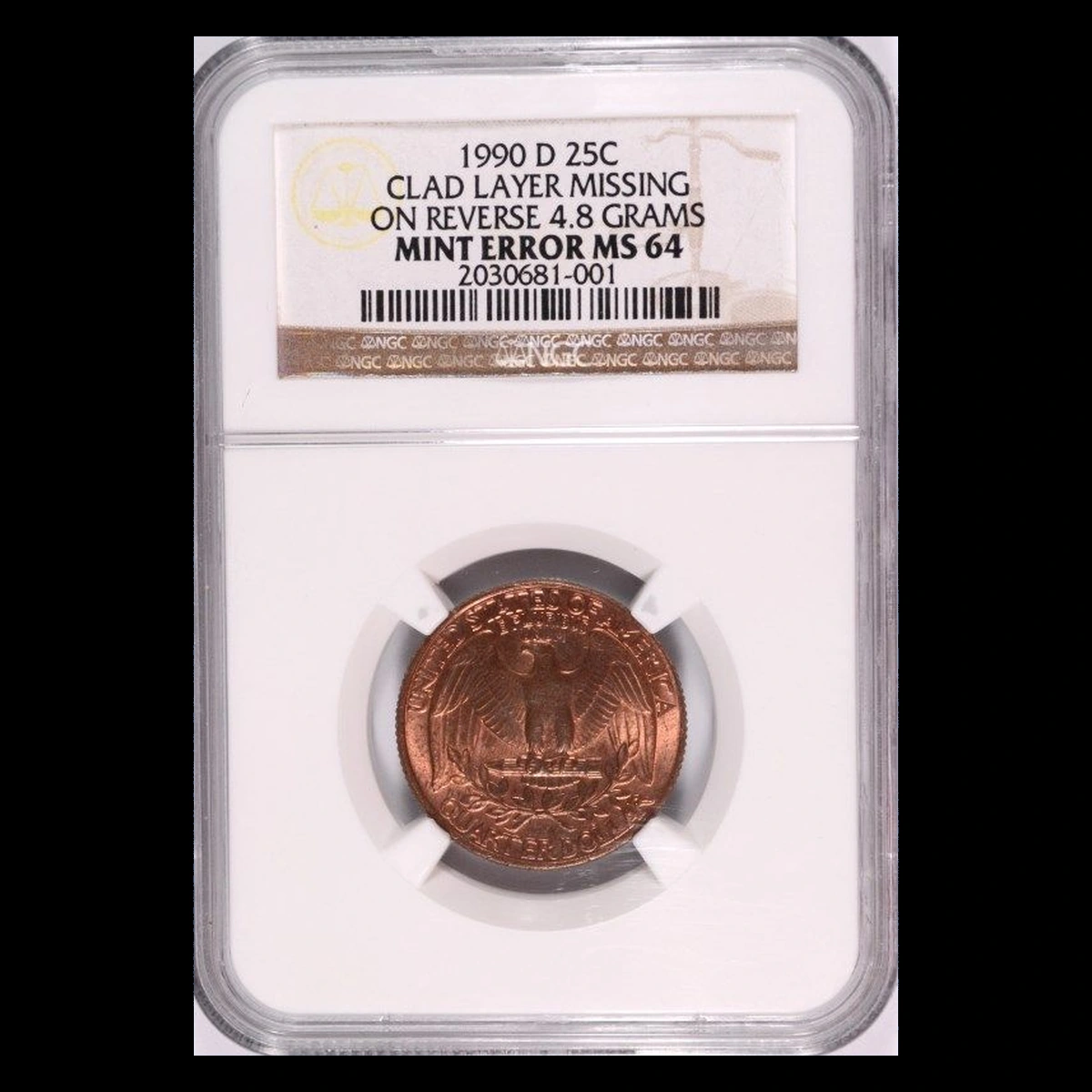
6. 1990 Quarter A Copper Patch or Entire Exposed Face: Missing Clad Layer Error
The specific Denver report describes roughly 15% loss from the reverse layer and a 5.56-gram weight. The corresponding front area is weakly struck.
Broader Philadelphia and Denver missing-layer reports concern separate examples. The local Denver patch does not represent a fully missing face.
How to Identify
Compare the affected reverse and weak front area together, then trace the layer boundary into the edge. The exposed copper should fit a natural separation rather than grinding, stripping, or added plating.
Weigh the actual candidate rather than applying the recorded 5.56 grams to every example. Complete layer loss requires a different amount of missing metal from a local patch.
Clad construction places lighter copper-nickel outer layers over a copper center. Brown color alone does not demonstrate that one of those outer layers was absent during striking.
What It’s Worth
Local layer defects are estimated at $30–$200, and complete face losses at $75–$600. Original boundaries and readable exposed design improve the comparison.
A 1999-D Connecticut quarter missing its reverse layer sold for $149 in December 2024. That whole-face, different-year error differs from the 1990-D 15% patch.
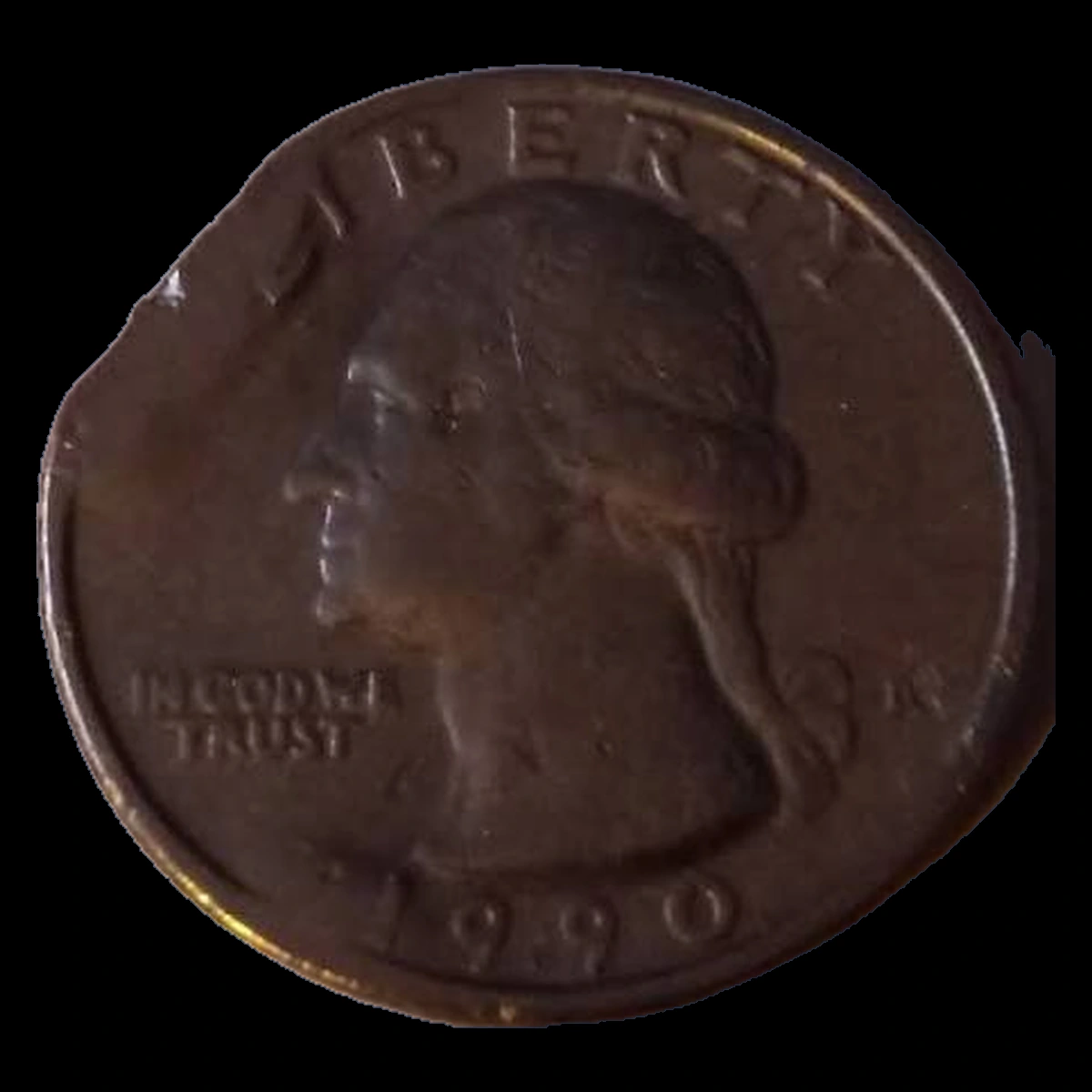
7. 1990 Quarter A Rounded Opening in the Rim: Curved Clipped Blank Error
The 1990-P ANACS AU58 example weighs 5.48 grams and is labeled a disk clip. Its missing curved section originated in the blank, rather than from punching a hole through a finished quarter.
How to Identify
A blank-cutting punch can overlap an earlier hole in the metal strip. Examine both ends of the resulting opening for the way they meet the struck faces.
A natural cut-and-break boundary differs from fresh burrs, filing, or saw tracks. Weakness opposite the gap can help when present, but does not appear equally on every clip.
The cataloged weight describes this particular coin. Low weight alone cannot establish that another missing section predates striking.
What It’s Worth
Modest genuine clips are estimated at $25–$200. A later 1999-D Pennsylvania quarter with overlapping clips sold for $74 in December 2024.
Its arrangement differs from the 1990 curved clip. Gap clarity, a readable date, and original surfaces provide useful distinctions within the estimate.
8. 1990 Quarter A Sloping Step along the Edge: Tilted Partial Collar Error
Normal grooves meeting a smooth expanded band can reveal incomplete collar contact. A sloping boundary indicates the blank sat tilted in the ring that normally controls its edge.
How to Identify
View the side directly and follow the changing height of the transition. Two circles around the face are not the same evidence as a sloping edge step.
The documented Denver coin was graded ANACS MS65. It appeared with a different-year off-center coin, which does not supply this quarter’s edge characteristics.
Inspect both faces and the grooves for grinding, squeezing, or impacts. The step should result from metal spreading during the strike, not later machining.
What It’s Worth
A clear tilted partial collar is estimated at $25–$200. The Denver quarter’s mixed-lot price cannot be assigned to it individually.
A 1990-P nickel with a partial collar sold for $99 in June 2025. That same-year comparison differs in denomination and size.
9. 1990 Quarter A Complete Image within Spread Metal: Broadstrike and Type 1 Blank Error
Failure of collar restraint can widen a quarter while preserving the full design. Two Philadelphia ANACS MS63 broadstrikes were offered together as a lot, rather than as a documented matching pair.
A separate Philadelphia example was identified as struck on a Type 1 blank. That disk had not received the usual raised edge preparation before striking.
How to Identify
Follow the complete outer lettering on both faces and examine the expanded surface for original striking. A coin hammered wider can show crushed design and worked metal instead.
Missing or incomplete edge grooves can accompany a broadstrike, but width alone does not identify an unprepared blank. A Type 1 claim needs its own edge evidence and identified comparison.
Keep the ordinary broadstrikes separate from that special blank description. Their shared expansion establishes only the visible broadstrike feature first.
What It’s Worth
Ordinary broadstrikes are estimated at $25–$200; clearly identified Type 1 examples at $75–$300. The two ANACS MS63 broadstrikes sold together for $101 in July 2021.
That amount covers the two-coin lot, not $101 for each member. Neither coin becomes a mated pair simply because both were sold together.
10. 1990 Quarter A Wide Blank Crescent at One Side: Off-Center Strike Error
The recorded Philadelphia ANACS MS64 coin is about 40% off center toward 11 o’clock. Much of the original blank remains present but received no design.
How to Identify
Read the surviving date and P before comparing the direction. The 40% description belongs to this identified example, not every shifted 1990 quarter.
Both faces should show the corresponding displaced strike. A rim difference confined to one face may instead reflect movement of a single tool.
Inspect the boundary where struck and blank areas meet for later filing or crushing. Removing design after minting does not create an original untouched crescent.
What It’s Worth
Genuine dated examples are estimated at $50–$400. The 40% Philadelphia coin sold for $109 in January 2022.
A larger blank area alone does not guarantee more value. Enough readable date and design must remain to identify the coin, and clean blank surfaces improve its appearance.
Conclusion
A sound 1990 quarter identification connects each odd feature with the rest of the coin. Check both faces for repeated strikes, all three diagnostic areas for the Proof doubled die, and the side profile for a tilted partial collar.
Keep partial layer losses, complete losses, and clipped blanks separate when interpreting weight. Preserve lifted fragments and original edges, and distinguish an individual sale from the total for a mixed or two-coin lot.