Rare 1865 Quarter Errors (List & Pictures)
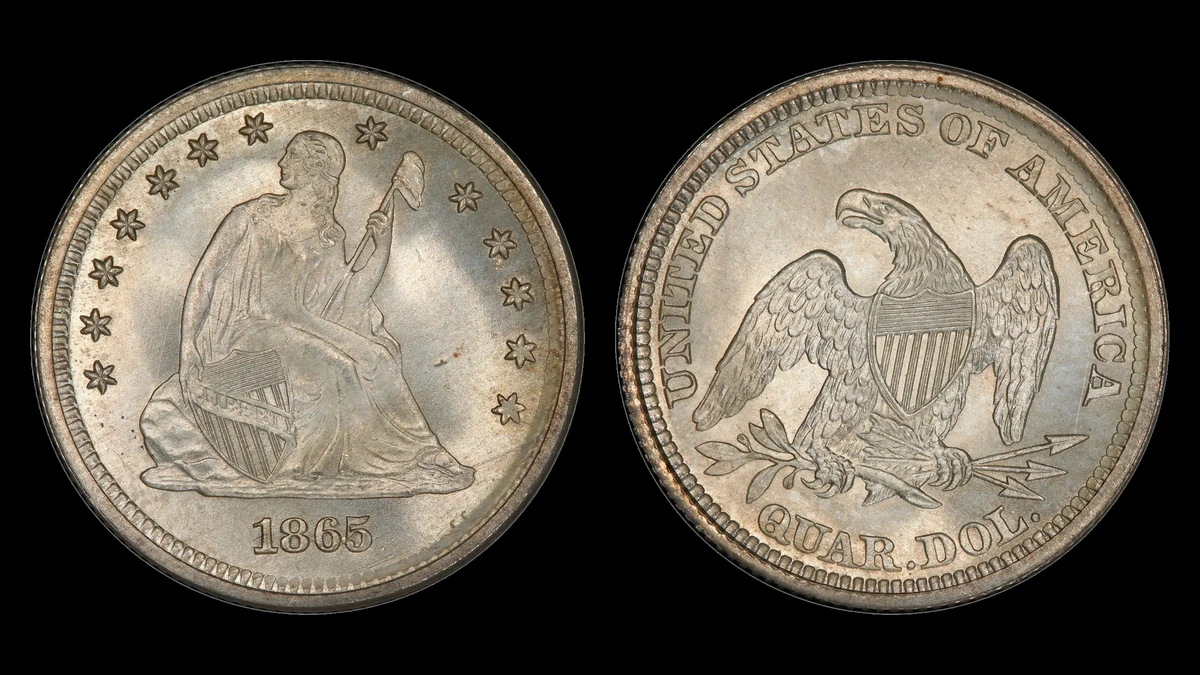
The Gardner 1865 quarter sold for $41,125 in June 2014 with three features from the same die pairing. This 1865 quarter errors guide covers its reworked date, raised date chips, and recut reverse lettering.
Estimated whole-coin values span $250–$45,000. Follow the date from left to right, then turn to the denomination below the eagle to compare the Briggs 1-A pairing.
| Inspection point | Feature | Price context |
|---|---|---|
| First digit of 1865 | Large 1 over small 1 | $250–$45,000 for the complete matching coin; not separate additive premiums |
| Between 6 and 5 and inside 5 | Raised die chips | |
| QUAR DOL below the eagle | Recut lettering |
1. 1865 Quarter A smaller numeral under the date’s 1: repunched date Error
The first date digit preserves parts of two differently sized 1s. A larger numeral was punched over a smaller one while the die was being prepared.
The smaller 1’s upper projection appears on the left of the final digit. Its stem and base remain visible on the right.
This is a repunched date rather than an overdate from another year. The documented Briggs 1-A quarter is a Philadelphia circulation strike, not a collector Proof.
How to Identify
Keep the complete date in view and inspect the small upper-left projection first. Then follow the right side of the main 1 downward to find the earlier stem and base.
The remnants should agree as parts of a smaller numeral. A single bright scratch or trapped speck beside 1 cannot establish the full pattern.
Use changing light and a matching Briggs 1-A photograph to check the raised outlines. Confirm the Philadelphia issue, with no mintmark and no motto above the eagle, before selecting the reference.
What It’s Worth
A matching Briggs 1-A quarter has an estimated whole-coin range of $250–$45,000, from worn examples to outstanding survivors.
PCGS records the Gardner example at $41,125 in June 2014. It was auctioned as PCGS MS66, indicating exceptional preservation without circulation wear.
The result includes the rarity and surface quality of the entire coin. The extra numeral outline does not independently account for that amount.
2. 1865 Quarter A bridge between 6 and 5: date-area die chips Error
A rounded mass connects 6 and 5 on the documented coin. Another raised feature fills the inner opening of 5.
Small missing pieces of the die left cavities that filled with silver during striking. These interior die chips are different from a cud, which is a larger break connected to the rim.
How to Identify
Examine whether the rounded feature genuinely bridges the two digits. Dirt packed between them can look similar in a dark image, so change the lighting without touching the surface.
Inspect the filled opening in 5 as a second checkpoint. Its raised metal should agree with the published specimen and the adjoining numeral.
Photograph both features together rather than showing an isolated bump. Later impact damage or attached material needs to be excluded from the comparison.
What It’s Worth
The applicable estimate remains $250–$45,000 for the complete matching Briggs 1-A quarter.
These chips occur on the same Gardner coin sold for $41,125 in June 2014. They do not create another sale or a second amount to add to the repunched-date estimate.
A worn coin with the correct chips still needs a worn-coin comparison. Clear date detail does not replace exceptional preservation elsewhere.
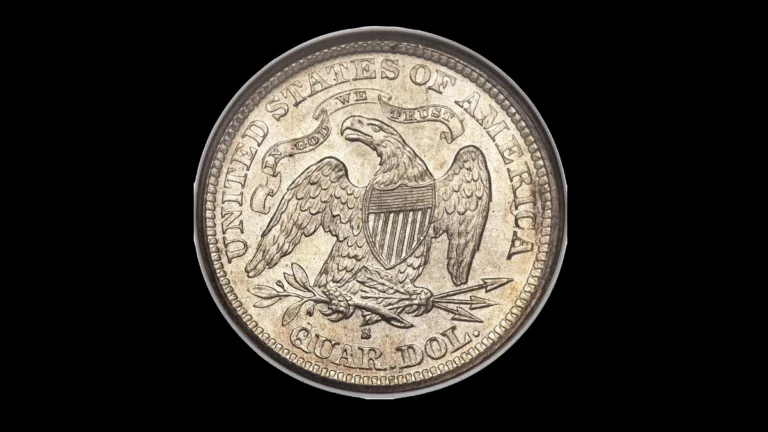
3. 1865 Quarter Reworked QUAR DOL below the eagle: recut lettering Error
The abbreviated denomination on the reverse shows evidence that its letter outlines were worked again in the die. This recutting occurred before the design was transferred to the coin.
The Gardner auction description records the reverse feature along with the large-over-small 1 and date chips. Together they describe the same front-and-back die pairing.
How to Identify
Read the complete QUAR DOL inscription before enlarging individual edges. Keeping its position below the eagle visible helps establish the correct design.
Compare the letter contours with the documented Briggs 1-A reverse. The supplied account gives no separate direction for each recut stroke, so do not invent one from a generally thick letter.
A fresh cut may leave a sharp groove or pushed-up metal on the finished surface. Original die work should form part of the struck lettering and agree with the matching front features.
What It’s Worth
Use $250–$45,000 as the whole-coin estimate for matching examples across the stated condition range.
The same Gardner auction price already includes this reverse. Count the transaction once, even though several features help identify the coin.
Wear and cleaning can obscure fine recut edges. A matching reverse on a heavily handled piece does not justify the finest survivor’s comparison.
Conclusion
The smaller 1, two date-area chips, and recut denomination provide complementary checks on an 1865 Briggs 1-A quarter. Examine them as related features on the same coin.
The wide estimated range reflects the complete quarter’s preservation, not three independent premiums. Match the front and reverse together, retain the original surfaces, and compare worn examples with similarly worn coins before applying an exceptional auction result.