Rare 2000 Dime Errors (List & Pictures)
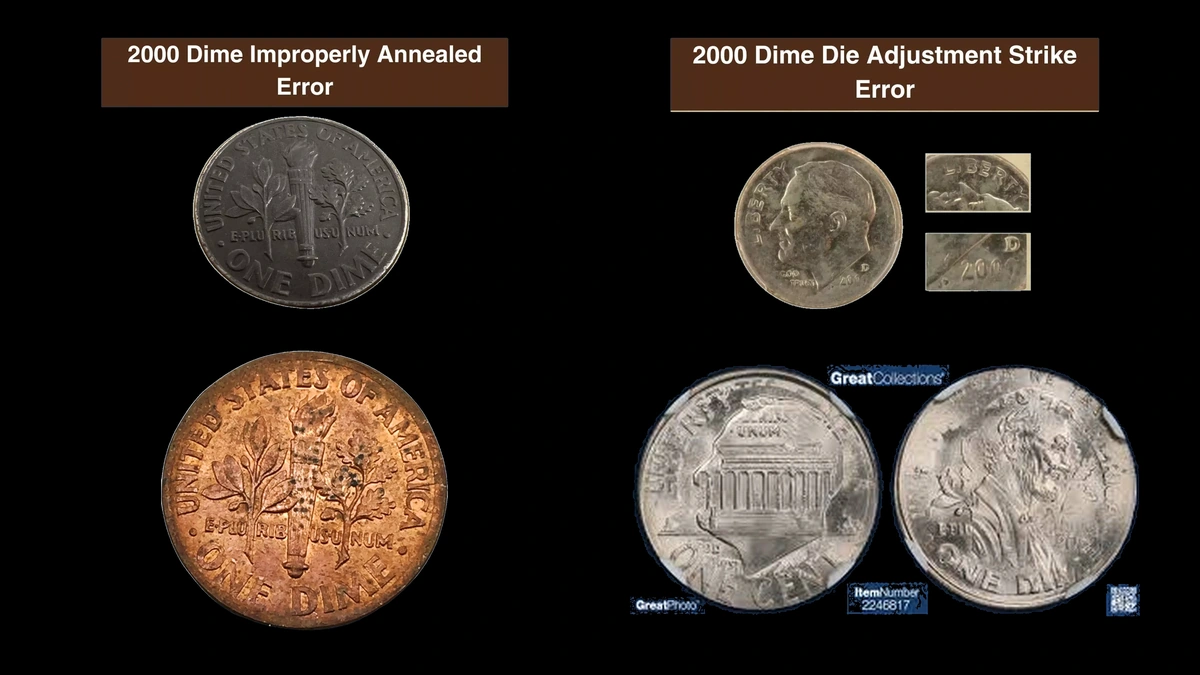
Color, thickness, and overlapping pictures can tell very different stories on a dime. The 2000 dime errors here have estimated values of $2–$8,000.
A Denver brockage with a backward portrait sold for $1,080 in June 2018, even with damage on the front. Begin with the surface, move to the edge, and finish with coins carrying more than one design.
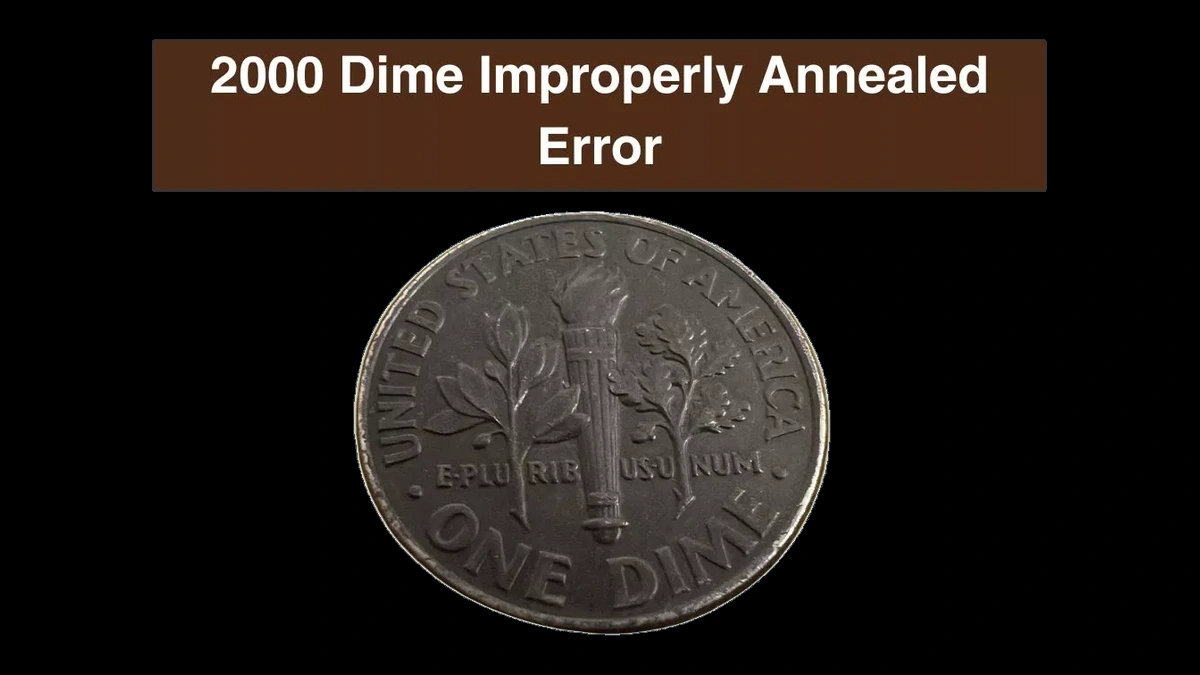
1. 2000 Dime Unusual Surface Color: Improper Annealing Error
Blanks are heated before striking to prepare the metal. A problem during this treatment, called annealing, can leave an unusual surface color.
A documented 2000-D example was graded NGC MS63, meaning unworn with noticeable marks.
How to Identify
Check the edge before judging a brown face. A missing pale outer layer can expose the copper center and create a similar color.
View the coin under neutral light and look for burned patches, chemical residue, or corrosion. Those can change a finished coin’s color without a Mint error.
Color and normal weight alone cannot establish when the change happened. An identified example provides a better comparison.
What It’s Worth
$20–$150 is the estimated range for comparable accepted annealing errors. The MS63 Denver coin sold for $51 in October 2022.
Original detail and an undamaged surface help display the effect.
2. 2000 Dime Smooth Neck or Jaw Detail: Overpolished Die Error
The reported 2000-S Proof has reduced detail around Roosevelt’s neck and jaw. Excessive polishing of a stamping tool, or die, can remove shallow parts of its design.
A Proof is a specially made collector coin. Its normal shiny background is not itself an error.
How to Identify
Compare the portrait with a normal Proof under several light angles. A reflection can hide a line without any detail actually being missing.
Polishing a finished coin can also smooth the portrait, often leaving rubbing lines across the design. Another coin with the same specific loss of detail can help connect the change to the tool.
What It’s Worth
$20–$150 is the estimated range for a confirmed minor overpolished-die feature. Clearly missing detail on untouched Proof surfaces is more appealing than a vague smooth area.
This range does not apply to a coin polished after minting.
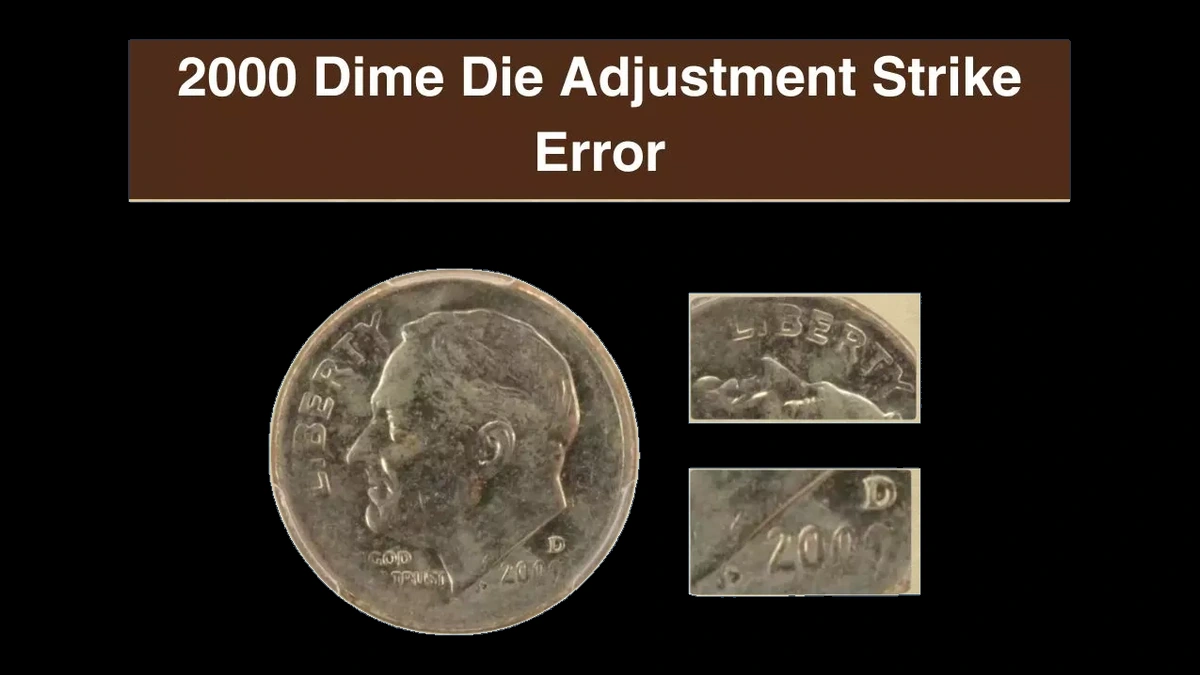
3. 2000 Dime Shallow Designs or Faint Outer Letters: Weak Strike Error
One Philadelphia report describes broad weakness on both faces. Another has a clearer center with faint outer lettering.
Both concern an incomplete transfer of the design, but they are separate examples. The name “die-adjustment strike” does not prove the press was deliberately being tested.
How to Identify
Find the strongest detail and compare it with the weak areas. This shows whether the weakness covers the whole design or mainly the outside.
Wear usually flattens exposed high points first. Scraping and chemical treatment can remove detail while damaging the surrounding surface.
Photograph both faces so the surviving texture and stronger areas remain visible.
What It’s Worth
$5–$50 covers modest original weakness, while $50–$300 is an estimated range for dramatic identified weak strikes. Unworn surfaces make the original lack of detail easier to assess.
A worn dime with faint letters does not earn the same premium.
4. 2000 Dime A Small Lip Sticks Out: Rim Burr Error
A thin projection of metal can make the edge look rough. A Denver rim-burr example is reported without a fixed location around the coin.
The important question is how that lip formed. An original production feature and metal pushed outward by a later blow can look alike from above.
How to Identify
Use a side view to inspect the base of the projection. Do not bend it or test its sharpness with a finger.
Look for a nearby dent, crushed letters, or a folded rim. Those may explain the lip as later impact damage.
What It’s Worth
$2–$75 is the estimated range for a confirmed manufacturing-related burr. Small projections usually attract limited interest.
A lip next to an impact dent may add no error value.
5. 2000 Dime Two Levels Around the Edge: Partial Collar Error
The collar is the ring that controls a dime’s edge during striking. If part of the blank sits outside it, that portion can spread farther and leave a step.
Two 2000-P examples graded ANACS MS63 appeared in one auction lot. They were individual coins, not a matched pair.
How to Identify
Follow the edge from the side and look for a grooved band beside a wider section. The height of the step may change as you turn the coin.
Inspect the boundary for filing or a later cut. A single dent does not explain a continuous collar-shaped step.
What It’s Worth
$20–$300 is the estimated range for one genuine partial-collar dime. A clear step with clean surfaces is easier to appreciate than a slight uneven rim.
A price for the two-coin lot would cover both pieces, not either one separately.
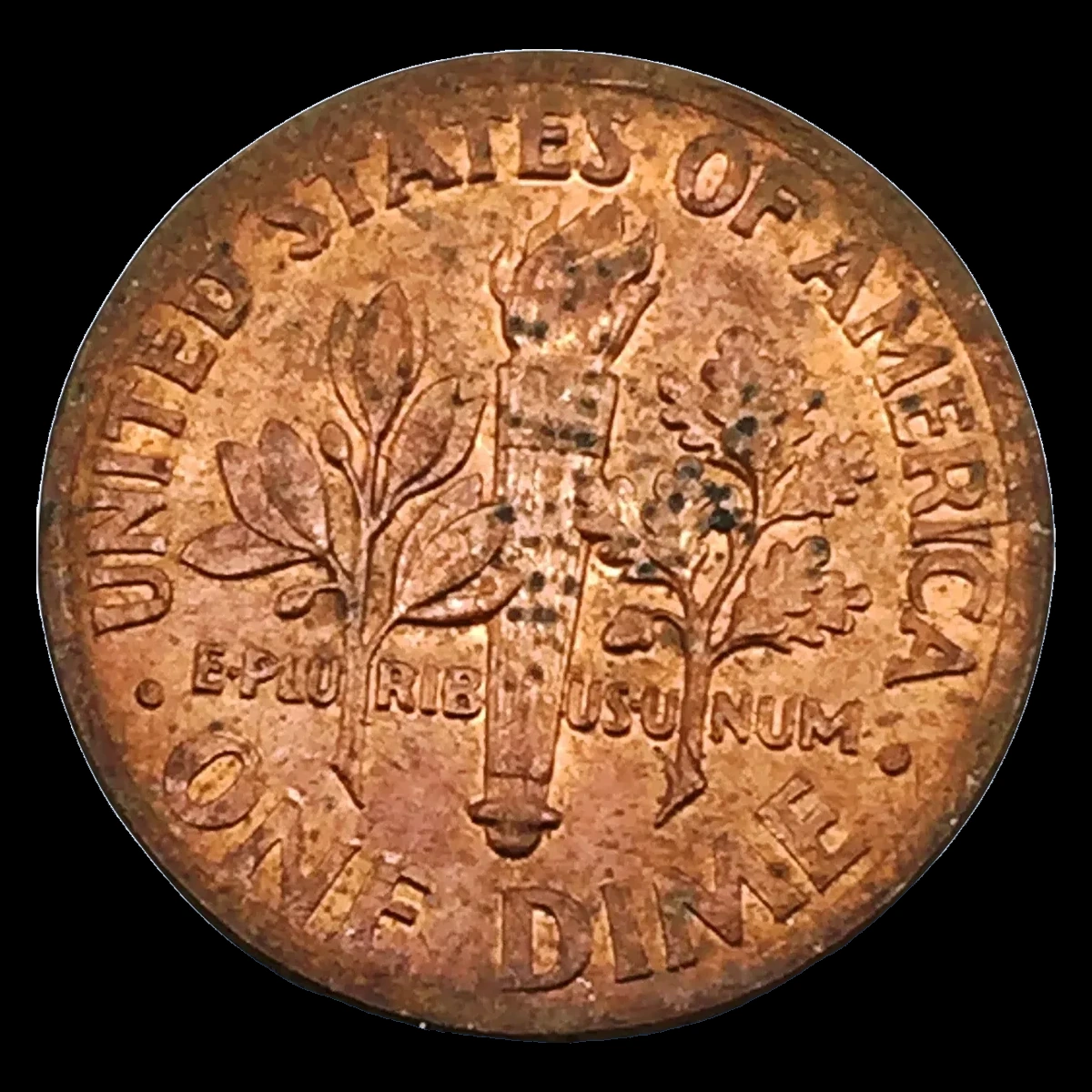
6. 2000 Dime A Copper Face Remains: Missing Clad Layer Error
A normal clad dime has a copper center between two pale outer layers. Losing one outer sheet exposes the copper while leaving most of the coin intact.
Separate Denver examples missing the front and back layers each weighed 1.9 grams. The front-layer coin was NGC MS65; the back-layer coin was MS63.
How to Identify
Inspect the exposed face and its edge together. Missing metal differs from a brown stain covering a layer that is still present.
A regular clad dime weighs 2.268 grams, so a scale can support the comparison. Grinding or acid can also remove weight, making original struck detail and an undisturbed surface important.
San Francisco also made silver Proofs with different metal. Establish which kind of dime you have before judging its layer structure.
What It’s Worth
$50–$500 is the estimated range for comparable missing-layer dimes. The back-layer MS63 sold for $132 in November 2020, and the front-layer MS65 sold for $104 in December 2022.
A separate PCGS MS64 front-layer coin is also recorded. Do not transfer the other coins’ weights or sale results to it.
7. 2000 Dime Only a Thin Sheet Survives: Split After Striking Error
The cataloged 2000-D piece weighs just 0.37 grams. It is a detached layer that already carried the design before separating, rather than a complete lightweight dime.
ANACS described it as AU58 Details with scratches. That means slight wear plus a condition problem.
How to Identify
Keep the fragile sheet protected and never flex it. Photograph its struck face, exposed inner surface, and thin edge.
Look for scraping or grinding that could have made a thin shell after minting. The recorded 0.37 grams belongs to this particular piece and is not a required weight for all detached layers.
What It’s Worth
$75–$400 is the estimated range for authenticated detached layers of this kind. This scratched piece sold for $162 in July 2021.
The result covers the layer alone, without a matching remainder.
8. 2000 Dime A Flap Lifts from the Portrait: Proof Lamination Error
A weak area within the metal can allow a thin section to peel upward. A reported 2000-S clad Proof has this effect across Roosevelt’s portrait.
The flap may still carry parts of the original design. That connection matters more than a bright patch in one photograph.
How to Identify
Change the viewing angle first to rule out a scratch on the holder. Then use side lighting to see whether metal actually rises from the portrait.
Follow any portrait lines onto the lifted section without touching it. Do not push the flap down or lift it farther.
What It’s Worth
$100–$1,000 is an estimated comparison range for confirmed original peeling-metal errors on modern Proof dimes. An attached flap and preserved reflective surface can add appeal.
This is a type-based estimate, not a recorded sale or grade for the reported coin.
9. 2000 Dime Gaps or an Oval Outline: Incomplete Blank Error
Clips begin before striking when the blank-cutting punch overlaps an earlier hole in the strip. One Philadelphia dime has three curved clips and weighs 1.18 grams.
That coin was graded ANACS MS63. A ragged-edge example and an oval blank are separate reports.
How to Identify
Check a curved gap through the full thickness of the coin. Nearby letters may show metal moving toward the opening during the strike.
For a ragged edge, inspect the whole boundary for later sawing or tearing. For an oval coin, show its complete outline and both dimensions.
The three-clip coin’s 1.18-gram measurement should stay attached to that specimen.
What It’s Worth
$25–$600 is the estimated range for genuine examples. Large or multiple gaps with a readable date may attract more attention than a tiny edge defect.
The oval and ragged-edge coins need their own assessment within that broad range.
10. 2000 Dime A Large Hollow and Wide Border: Indent with Broadstrike Error
Another blank overlapped a 2000-P dime during striking and blocked part of its design. The resulting hollow, called an indent, covers about 60% of the documented coin.
The metal also spread beyond its normal outline without full collar restraint. PCGS graded this combined error MS65, meaning unworn.
How to Identify
Follow the hollow’s boundary and the surviving letters around it. Then examine the expanded outside edge to see how the two effects fit together.
A plain indent does not need backward letters or a mirrored portrait. Those transferred details would point to a brockage instead.
What It’s Worth
$200–$1,500 is the estimated range for comparable major combinations. The hollow’s size, a readable date, and clean surfaces all matter.
Value the whole coin together rather than adding two full error prices.
11. 2000 Dime Outer Letters Run off a Small Blank: Wrong-Blank Candidate Error
The reported Denver coin loses upper LIBERTY lettering and part of ONE DIME. Its design appears too large for the available metal.
The blank’s original denomination and composition have not been established. The report should not be turned into a claim for a specific foreign coin or another United States denomination.
How to Identify
Record a loose coin’s weight and diameter, then inspect the entire edge. Filing or cuts could explain a smaller coin made after striking.
The missing outer details on both faces should fit the same small blank. A specialist can assess the metal without scraping the surface.
What It’s Worth
$300–$2,000 is a comparison range for an authenticated dime on a genuinely different small blank. It is not a recorded sale of this candidate.
Identifying the metal and preserving enough readable design would help narrow the comparison.
12. 2000 Dime Several Positions of One Design: Multiple Strikes Error
A Philadelphia dime received a second strike after turning about halfway around. Its NGC MS67 Full Bands grade describes excellent unworn condition and clear horizontal torch bands.
A separate Denver report describes four strikes. Its movement cannot be inferred from the Philadelphia coin.
How to Identify
Find a connected group of letters or portrait details, then locate another position of that same group. Follow the overlap on both faces.
Turning between strikes keeps the same faces toward the tools; flipping over would mix front and back designs. A few doubled-looking edges cannot establish four separate blows.
What It’s Worth
$200–$3,000 is the estimated range for confirmed repeated-strike dimes. Clear separation can matter more than the number of strikes in the label.
Full Bands describes torch detail and does not add another error category.
13. 2000 Dime A Sunken Backward Portrait: Brockage Error
A struck coin trapped against a new blank can press its raised picture into the metal. The new impression is backward and sunken.
A documented 2000-D dime has this brockage on the back. NGC also noted damage on the front despite its uncirculated detail.
How to Identify
Try reading the transferred letters backward. Tilt the coin to confirm that the portrait is pressed down rather than raised.
Several connected features should fit the design that made the impression. Examine the normal front separately for damage.
What It’s Worth
$300–$3,500 is the estimated range for genuine comparable brockages. The damaged-front coin sold for $1,080 in June 2018.
A stronger transferred portrait and better preservation can improve the comparison.
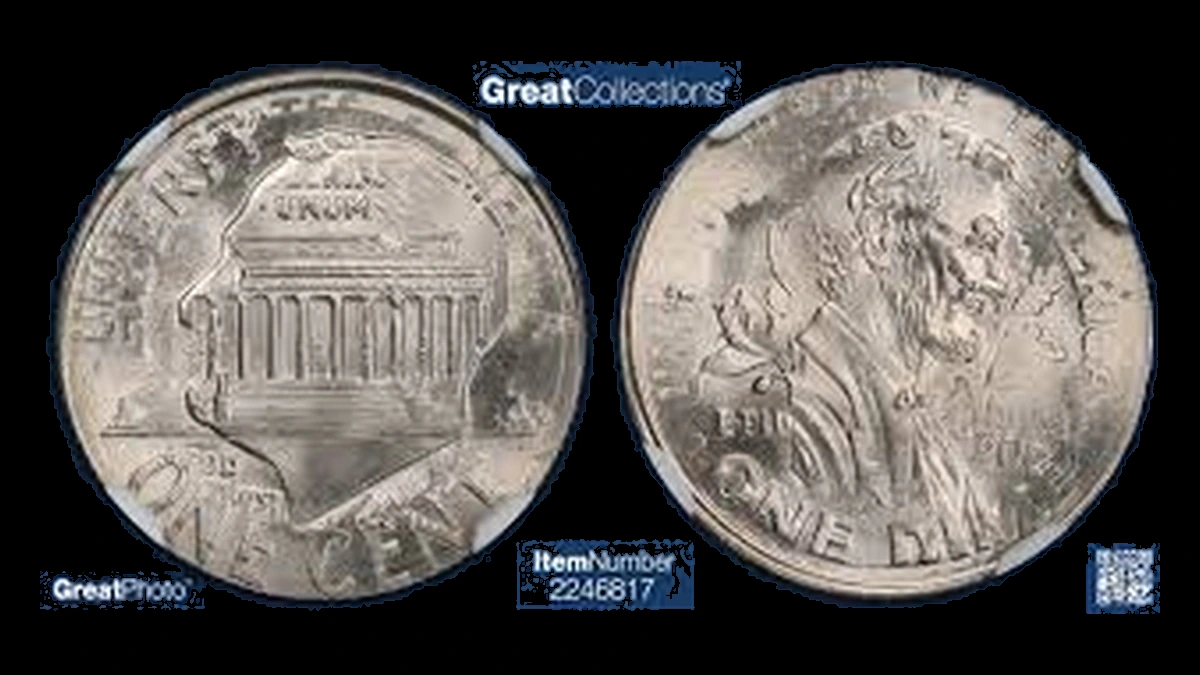
14. 2000 Dime Lincoln or Jefferson over Dime Details: Double Denomination Error
A finished dime can receive another denomination’s design if it reaches the wrong press. One 2000-P dime was struck again as a 2000 cent and graded NGC MS68.
Two other dimes received nickel designs and were graded MS67 and MS66. The MS66 coin also lacks its back outer layer.
How to Identify
Look beneath the later design for recognizable dime details. On the cent example, Roosevelt survives toward the upper left relative to Lincoln.
The owner’s illustrated nickel-over-dime record keeps the two nickel examples separate. Their parenthesized nickel date is inferred rather than fully readable.
Evidence of the earlier dime strike separates these coins from an unused dime blank. Being found together does not make the nickel examples a bonded or mated pair.
What It’s Worth
$700–$2,500 is the estimated range for a genuine cent-over-dime example; $2,000–$8,000 covers comparable nickel-over-dime pieces. These are type comparisons, not recorded sales of the three coins.
Assess each piece’s surviving designs, surfaces, and any missing layer separately.
Conclusion
A copper-colored face, a detached sheet, and a peeling flap are not interchangeable clues. The edge and remaining design help show which process fits the coin.
For repeated strikes, trace connected pictures rather than counting isolated lines. Keep each measurement and grade with its own specimen, especially when a report describes several coins or two different denominations on one piece.