Rare 2002 Penny Errors (List & Pictures)
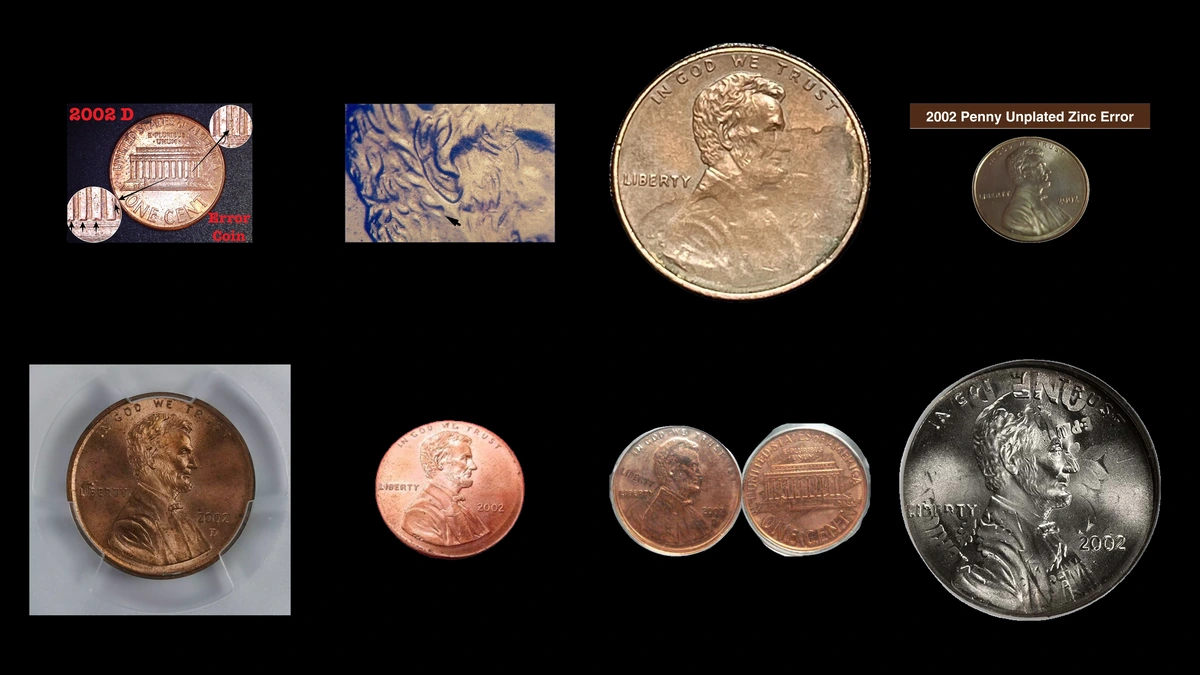
A 2002-S Proof cent on the wrong blank was the highlight of a ten-coin set that sold for $6,612.50. That was the whole set’s price, not a separate sale of the penny.
Most 2002 penny errors are much less dramatic, with small raised marks, doubled details, or a shifted design. The working ranges below run from $2–$8,000; begin with the visible clue, then check the matching section.
1. 2002 Penny A Line or Lump Stands Above the Surface: Die Cracks and Chips Error
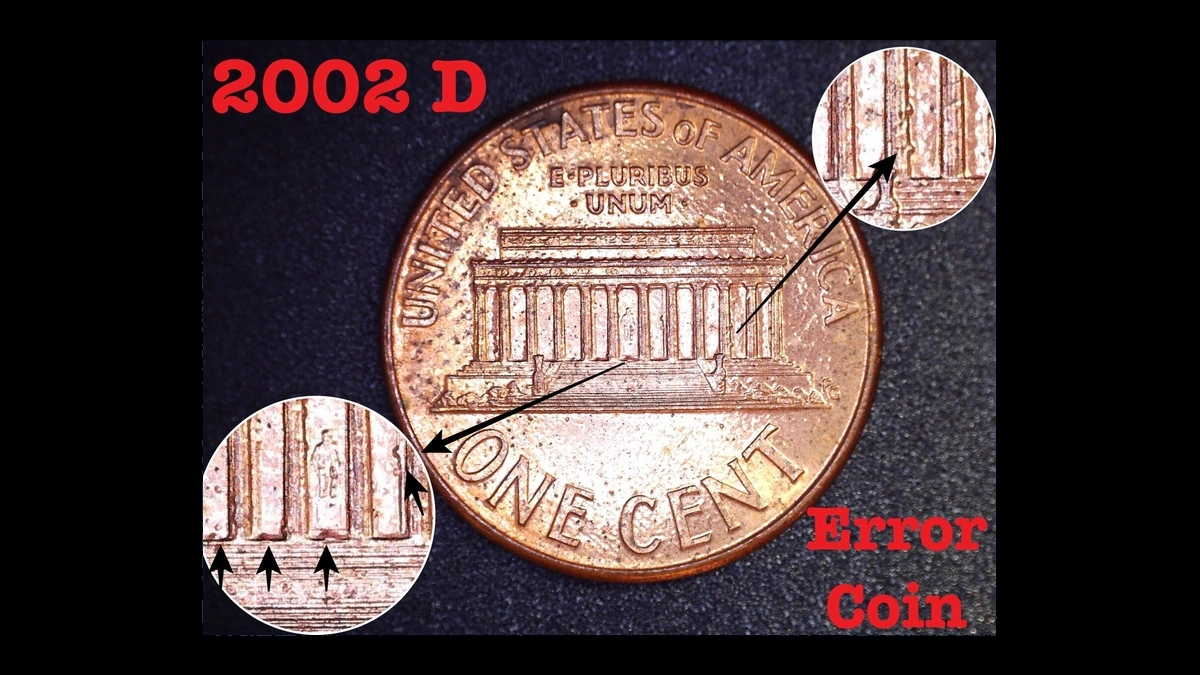
Recorded 2002 cents show raised lines on Lincoln’s forehead and on parts of the Memorial. These are separate patterns left by cracks in the dies that stamped the coins.
A chipped die can leave a lump instead. When that lump sits between B and E in LIBERTY, collectors often call it a BIE.
How to Identify
Use side lighting to distinguish a raised feature from a cut in the surface. Follow the actual line instead of expecting one penny to show every recorded pattern.
A larger lump needs examination too: dirt, corrosion, and copper bubbles can resemble extra metal. Do not scrape the surface to find out.
What It’s Worth
$2–$300 covers small cracks and chips through stronger confirmed breaks. A fine forehead line usually belongs near the lower end.
This is a type-based estimate rather than an individual 2002 sale. Larger, obvious breaks on clean coins generally have more appeal than tiny marks requiring strong magnification.
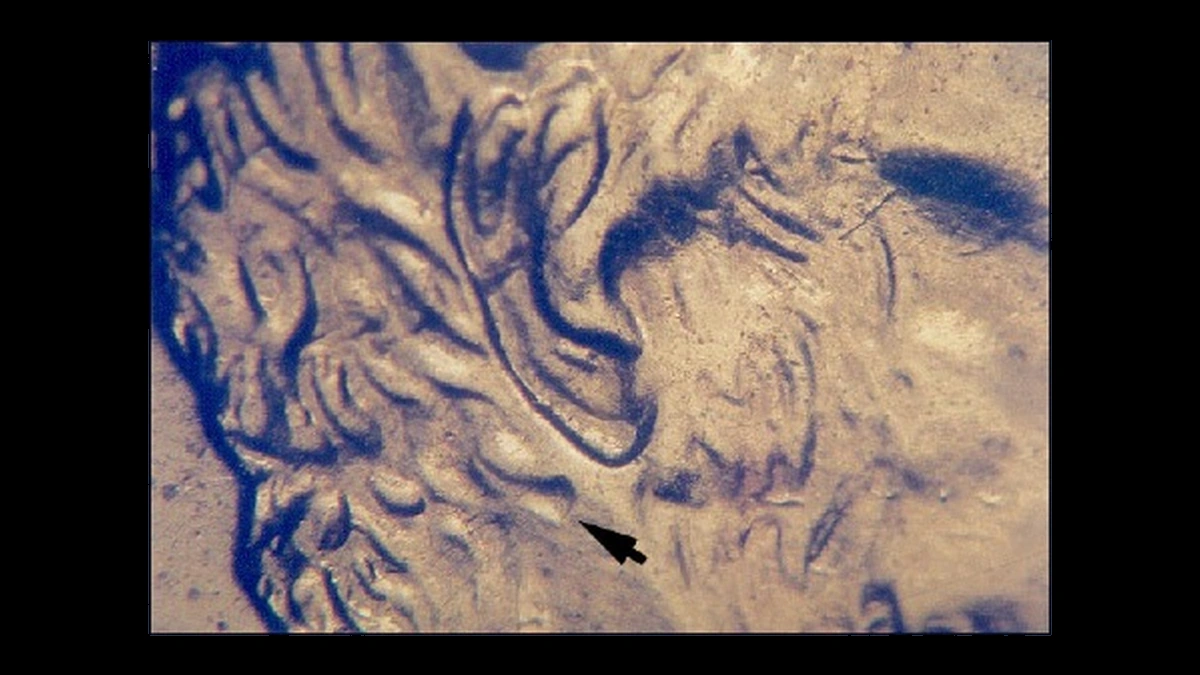
2. 2002 Penny An Ear, Hair, or Memorial Detail Repeats: Doubled Dies Error
One 2002 variety adds a curve below Lincoln’s ear; another shows extra hair detail near his neck. The repeated shape comes from the die, so the penny did not need to be struck twice.
Other varieties affect the Memorial’s middle columns or statue. A separate Denver pattern appears around E PLURIBUS UNUM and its nearby dot.
How to Identify
Choose the correct mint and face in the 2002 doubled-die catalog. Then compare one complete local pattern.
An added ear curve does not require doubled columns on the same coin. Flat ledges beside letters are also different from the matching extra contours of a doubled die.
What It’s Worth
$5–$300 is the estimated range for the reported varieties. Clear, larger details and attractive condition can support a stronger price.
A tiny column feature should not inherit the upper value merely because it has a catalog number. No specific 2002 auction record is used for this range.
3. 2002 Penny Part of the Design Is Blocked: Struck-Through Material Error
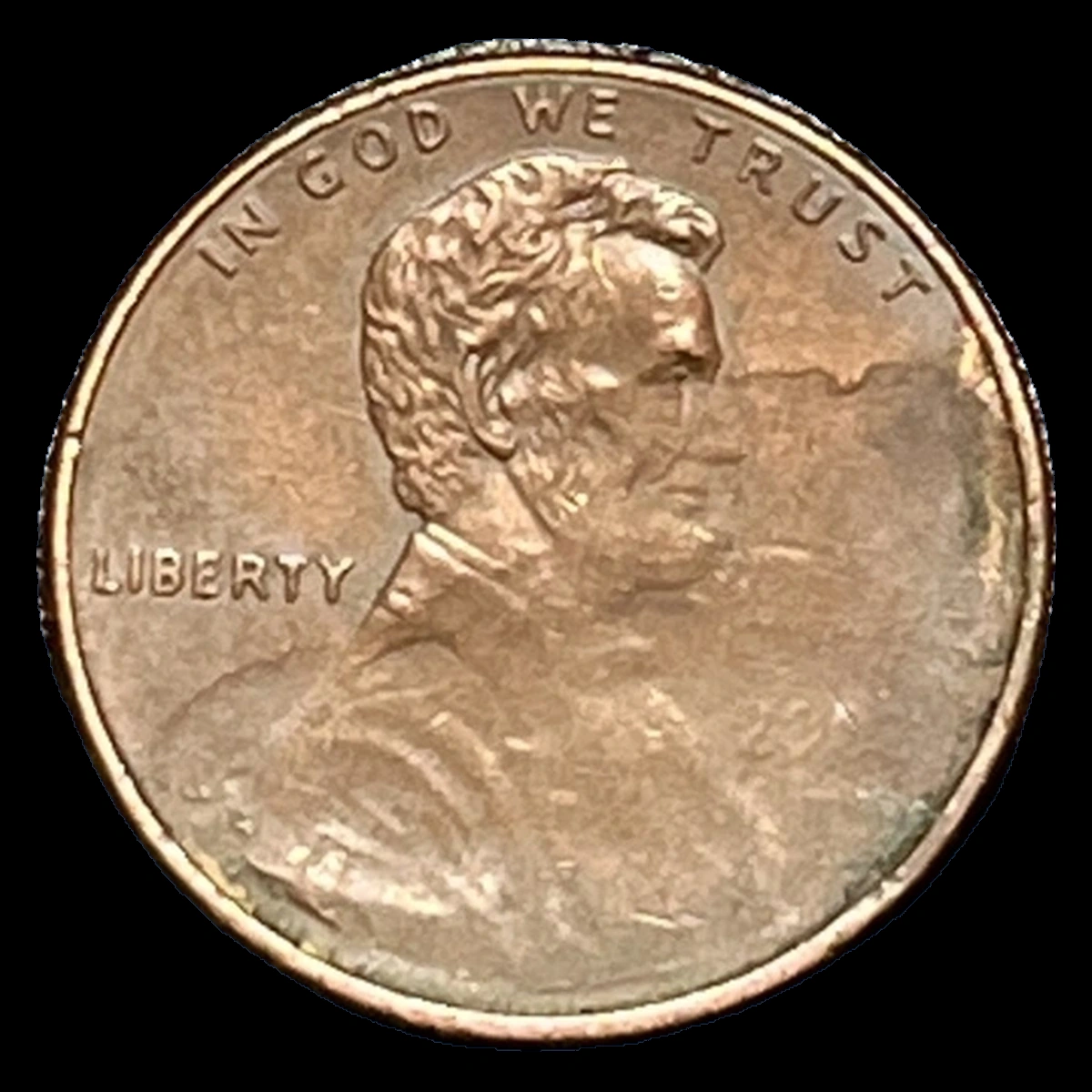
A 2002-S Proof is recorded with a front-side struck-through error and a PCGS PR68 Deep Cameo grade. Something between the die and the coin interrupted the design.
A separate Denver report describes grease-filled detail. That weak patch and the Proof’s mark should not be combined into one example.
How to Identify
Study where normal detail meets the blocked area. Later scraping removes an already struck design, while an obstruction prevents it from forming normally.
Proof coins are specially made for collectors, and Deep Cameo describes strong contrast between the design and shiny background. Compare an S Proof with the same finish rather than a worn circulation penny.
A patch does not identify the blocking material by itself. Do not label it cloth, grease, or metal unless the mark or record supports that description.
What It’s Worth
$10–$500 covers small weak areas through clearer impressions on well-preserved coins. A visible defect on an attractive Proof can fall toward the stronger end.
A 2017-D circulation cent with a front struck-through error sold for $228 in March 2025. It is a recent comparison, not a direct price for the 2002-S Proof.
4. 2002 Penny Gray Zinc Shows Through Missing Copper: Unplated Blank Error
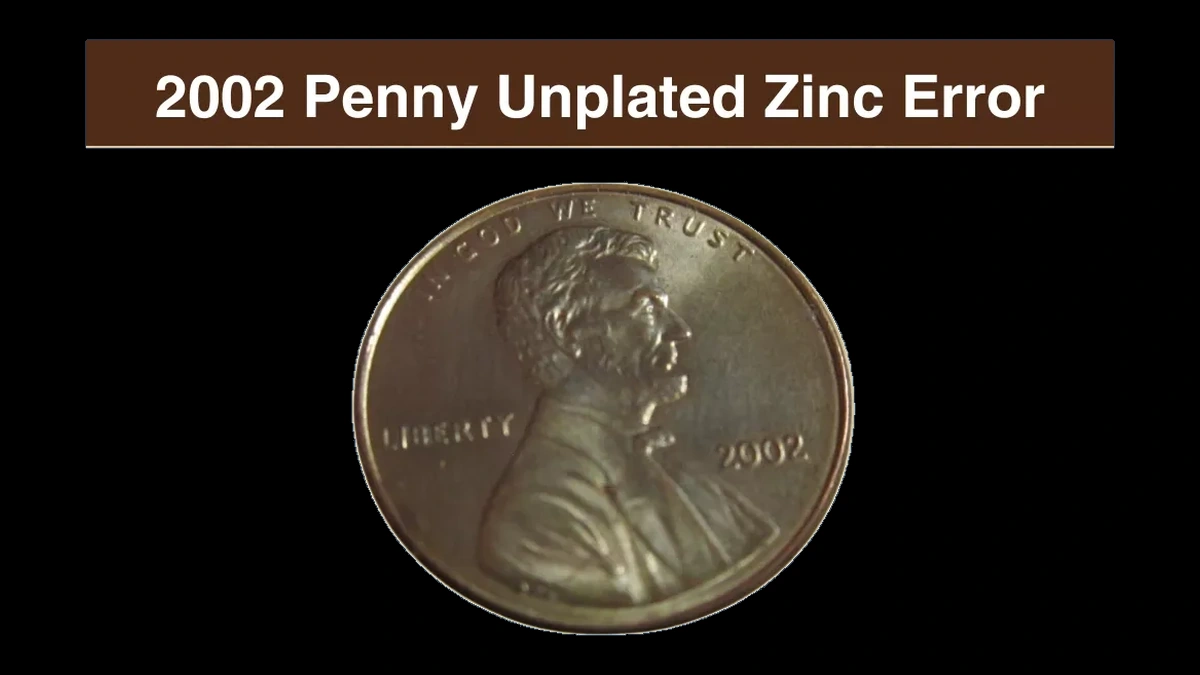
Some reported 2002 cents are fully gray, while others retain patches of copper. They may have been struck on blanks with missing or incomplete copper plating.
The ordinary cent is copper-coated zinc, so later copper removal can produce a similar appearance. The original surface is the deciding evidence.
How to Identify
Inspect the gray area, including the lettering within it, for original struck texture. Pits, residue, roughness, or peeling may point to corrosion or treatment after minting.
A normal cent weighs about 2.50 grams and measures about 19.05 millimeters across. The copper coat is thin enough that a nearly normal weight cannot prove or disprove missing original plating.
What It’s Worth
$25–$800 is the estimate for confirmed mint-made missing copper. Preservation and the amount of missing coverage help narrow that broad range.
For comparison, certified 1995 and 1995-D unplated cents sold for $660 and $180 in early 2023. Their different grades and dates mean neither price automatically applies to a partly gray 2002 penny.
5. 2002 Penny The Edge Has a Missing Section: Clipped Blank Error
A cutter can overlap an earlier hole when punching a blank from a metal strip, leaving a curved gap. A straight gap can arise at the strip’s edge.
The 2002 reports include curved clips and a straight-edged piece described as an S Proof. Each coin needs its own clip and finish checked.
How to Identify
Examine how the struck design and rim meet the missing boundary. Fresh cutting ridges or filing marks can explain metal removed later.
A weak section on the opposite rim can support the diagnosis, but is not always present. On a claimed 2002-S Proof, verify the S and collector finish separately from the clip.
What It’s Worth
$20–$350 is the estimated range for genuine clips. Size, remaining date, surface condition, and finish influence the price.
A 2021 circulation cent with a small straight clip sold for $114 in September 2025. That result cannot directly value a reported 2002-S Proof clip.
6. 2002 Penny The Rim Spreads or the Edge Has Two Levels: Collar Error
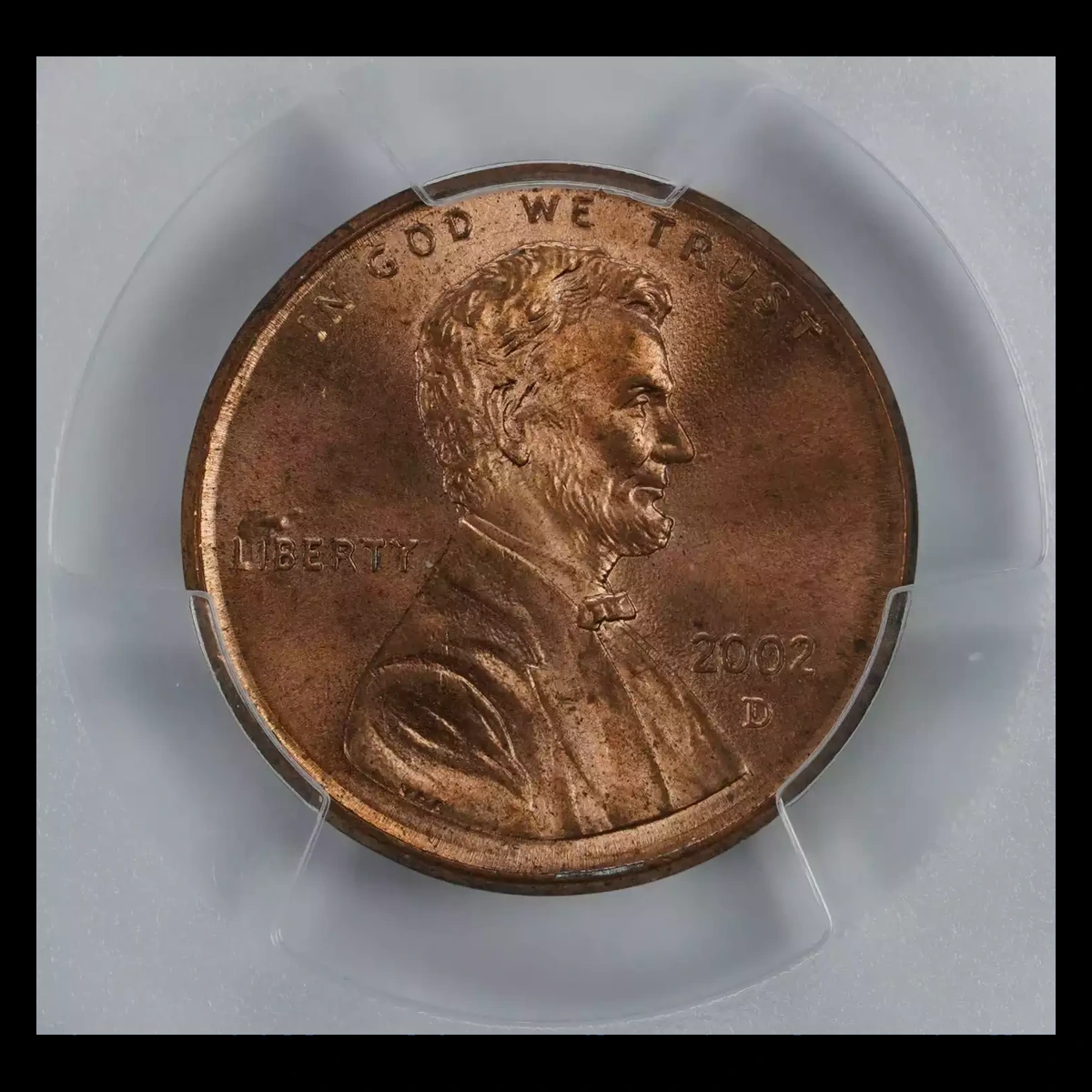
During striking, a retaining ring called the collar normally limits outward spread. Missing restraint can make a broadstrike; partial contact can leave a step along the edge.
A cataloged 2002-D was described as a broadstrike with slight partial-collar involvement. Both features belong to that one coin.
How to Identify
Look for complete outer lettering on the expanded surface, then turn the coin sideways to examine the edge. A face view alone may hide partial-collar evidence.
Crushed letters or tool marks can reveal later flattening. Cents normally have smooth edges, so an absence of grooves is not an error clue.
What It’s Worth
$20–$400 is the estimate for authenticated collar errors of varying strength. Natural expansion and undamaged surfaces support the better examples.
A 1999 MS65 Red broadstrike brought $67 in March 2023. Do not add a second partial-collar price to the 2002-D coin simply because its description names both features.
7. 2002 Penny Half the Picture Misses the Blank: Off-Center Strike Error
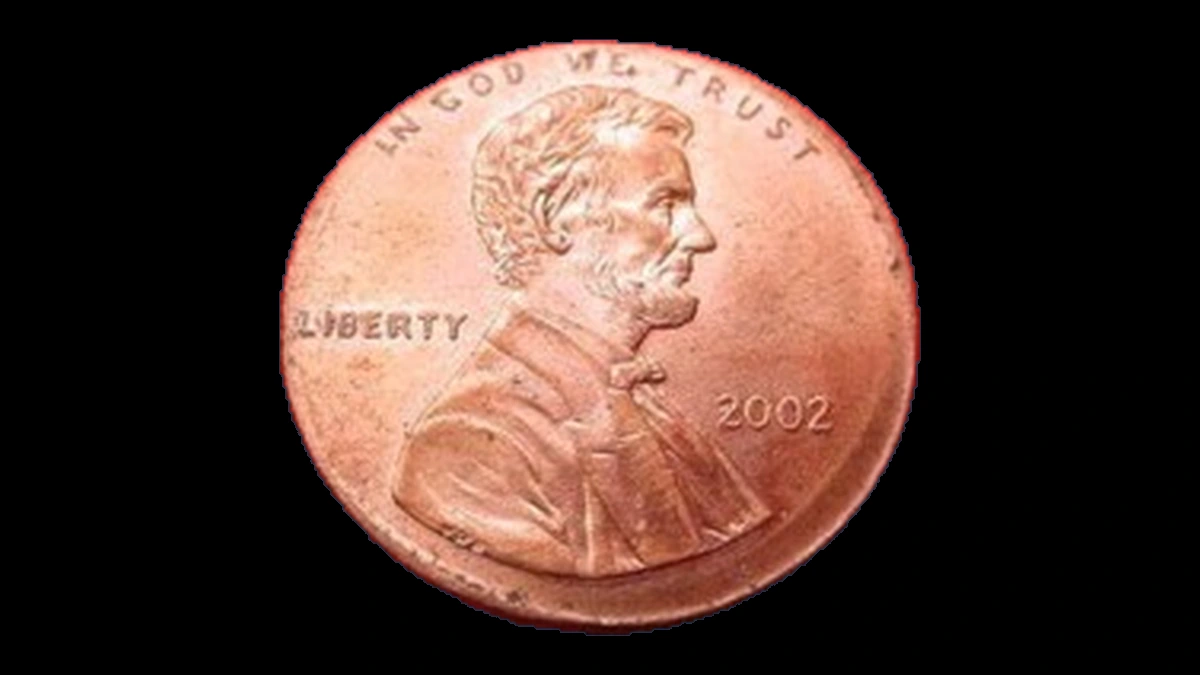
A published 2002-D example is about 50% off center, with the remaining date and D helping identify it. The blank sat too far to one side when struck.
The percentage describes lost design, not a piece cut from the metal. An unstruck crescent can remain on an otherwise intact blank.
How to Identify
Check both faces for compatible displacement and find the boundary between struck and plain metal. A shift affecting only one face can indicate a different alignment issue.
Read the surviving date before assigning a year to a large off-center coin. Keep scratches in the blank area from becoming imagined digits.
What It’s Worth
$15–$600 is a practical range from small shifts to strong, date-visible errors. Original color and an undamaged plain area improve appeal.
A 2006 cent struck only 4% off center sold for $39 in March 2025. That modest result illustrates a smaller error, not the price of the half-off 2002-D.
8. 2002 Penny Two Designs Cross at a Quarter-Turn: Double Strike Error
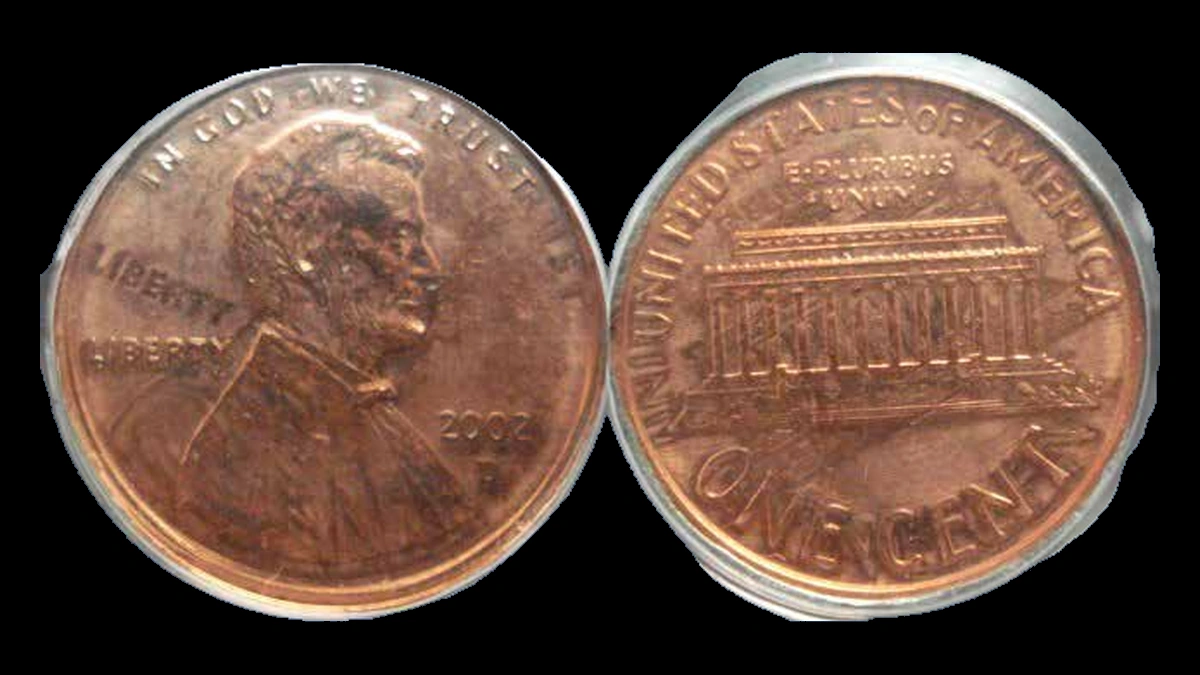
The recorded 2002-D double strike turned about 90 degrees between blows. Parts of two cent designs therefore face different directions on the same coin.
The published specimen is graded PCGS MS64 Red. That label describes condition and remaining copper color, not how the collar operated.
How to Identify
Choose a recognizable letter or portrait feature from each impression and trace their directions. Some earlier details may be partly flattened by the later strike.
Check the other face for a compatible sequence. A quarter-turn does not by itself show whether the collar was engaged, and it differs from flipping the coin over.
What It’s Worth
$100–$1,000 is the estimated range for a confirmed example with distinct strike positions. Easy-to-follow overlaps make the error more appealing.
A 2000 flipover double strike sold for $408 in March 2025. Its different movement makes it a general repeated-strike comparison, not an identical quarter-turn error.
9. 2002 Penny A Large Depression Covers the Back: Reverse Indent Error
A listed 2002-D has an indent covering about 90% of its back. Another metal disc blocked that area during striking.
The same ANACS MS65 Red coin is about 5% off center toward 9 o’clock when viewed from the front. The record does not establish the other disc’s denomination.
How to Identify
Use angled light to follow the depression’s boundary and any design surviving beside it. An indent does not require a readable backward design from another coin.
Keep the front’s 9 o’clock direction separate from the orientation of the back photograph. Later crushing or sharp tool cuts need to be excluded when checking a similar-looking piece.
What It’s Worth
$100–$1,200 is a comparison-based estimate for a large, authenticated indent. The range values the whole coin, including its related off-center position.
The supplied inventory description is not an auction sale. Clear boundaries and well-preserved surfaces help support a stronger appraisal.
10. 2002 Penny The Coin Forms a Cup: Die Cap Error
A penny stuck to a die can be stretched by later blows until its sides rise into a cap. A 2002-D example is reported with an MS65 condition grade.
How to Identify
View the inside design and walls together. Their stretched metal should explain the shape, rather than looking like finished letters forced across a later bend.
The remaining interior design helps identify which die the coin covered. The report does not justify assigning a particular cap side or depth to every candidate.
What It’s Worth
$100–$1,500 is the estimate for confirmed caps, with depth, clarity, and preservation affecting value. Leave the walls untouched so those features remain available for examination.
A 2000 front cap graded MS64 Red sold for $312 in June 2025. Its side, grade, and shape should not be borrowed for the 2002-D report.
11. 2002 Penny Dime Details Show Beneath the Cent: Double Denomination Error
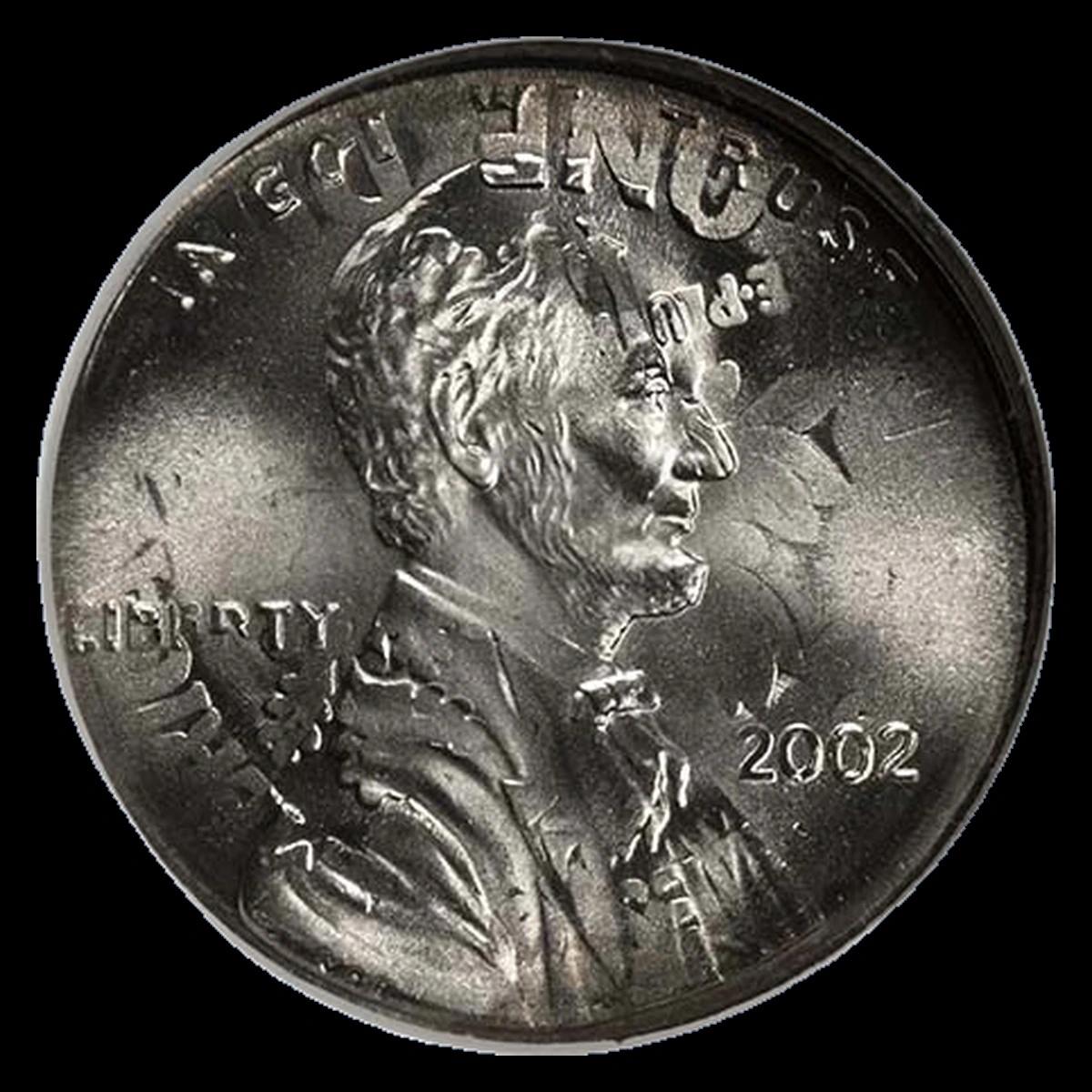
A finished dime can receive a cent design over its existing portrait and torch. A published 2002 example has an NGC MS67 grade.
The surviving earlier design makes this a double-denomination error. It also separates the coin from an unused dime blank struck as a cent.
How to Identify
Find one unmistakable dime feature before trying to read its date. Both faces can contain useful traces beneath the later cent impression.
Use only the underlying year and mint visible on this specimen. Other illustrated cent-over-dime coins cannot supply missing digits for it.
What It’s Worth
$800–$4,000 is the working range for an authenticated 2002 example. Clear details from both denominations and strong surfaces help support the upper end.
A 2001 cent over a 2001-P dime graded MS66 sold for $1,320 in September 2025. That is a different coin from the published 2002 MS67 example.
12. 2002 Penny A Proof Cent Uses Dime Metal: Wrong Blank Error
A silver-colored 2002-S cent appeared in a ten-coin Proof set sold in 2003. The auction described the coin as uncertified and considered its blank to be a clad dime blank.
A separate listing describes an NGC PR66 Cameo example weighing about 2.3 grams. The records do not establish that these are the same specimen.
How to Identify
Confirm the S and original Proof finish, then check for dime-type layered metal. Polishing an ordinary cent does not turn it into a Proof.
An unused dime blank normally starts near 2.268 grams and 17.91 millimeters across. Unlike a finished dime, it has no earlier torch, Roosevelt portrait, or struck edge grooves.
Proof production normally uses repeated blows, which are not automatically a double-strike error. Keep an original set or certified holder intact while arranging an expert examination.
What It’s Worth
$3,000–$8,000 is the estimated range for an authenticated Proof cent on the wrong blank. The special collector format separates it from an ordinary circulation-strike wrong blank.
The ten-coin set sold on May 31, 2003 brought $6,612.50 in total. Its PR66 Deep Cameo description was the auctioneer’s assessment, not a PCGS certification.
A 2007-D circulation dime-blank cent brought $600 in March 2023. That different production format does not directly price the 2002-S Proof.
Conclusion
For a 2002 penny, a close look at the affected area usually tells you where to begin. Added detail, blocked design, a changed outline, and unfamiliar metal call for different checks.
Keep the Proof and circulation examples separate, and treat a set price as a set price. Those simple distinctions prevent an ordinary gray coin or a small surface flaw from inheriting the value of a much rarer specimen.