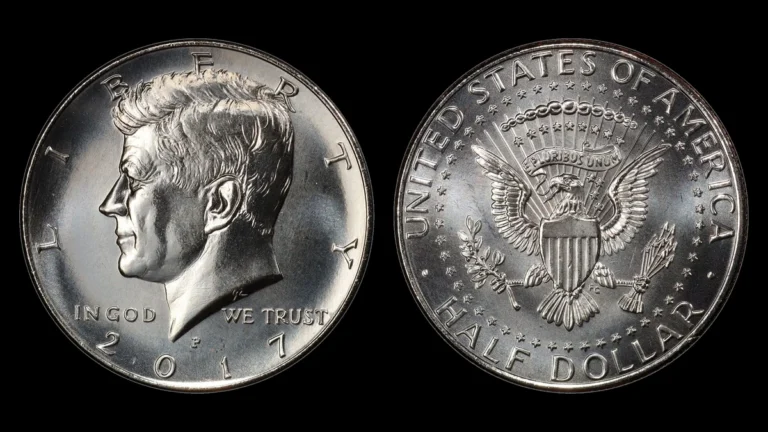
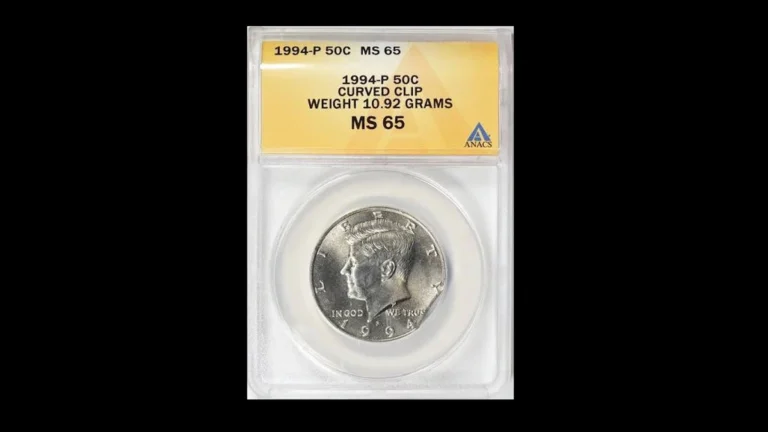
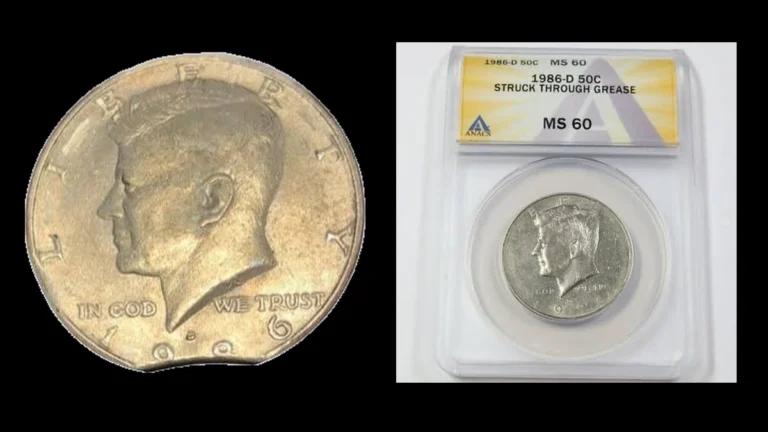
Rare 2004 Half Dollar Errors (List & Pictures)
A raised line through an eagle’s leg is a specific clue on a reported 2004-S silver proof. Heritage recorded $80.50 for a comparable cracked proof in January 2008 as a purchase after the auction.
These 2004 half dollar errors have estimated values of $4–$400. Identify the metal first, examine the outline and copper-colored areas, then inspect interrupted, repeated, or transferred design details.
| Clue | Inspection area | Error | Estimated value |
|---|---|---|---|
| A copper-colored face or patch | Surface, edge layers, and weight | Missing clad layer | $100–$400 |
| Extra width with full designs | Both faces and edge | Broadstrike | $100–$300 |
| Missing letters or interrupted hair | Boundary of affected front area | Strike-through | $30–$200 |
| Repeated front-letter outlines | Same-mint, same-finish comparison | Doubled die obverse | $4–$25 clad; $35–$60 silver proof |
| Opposite-design fragments | Both faces in comparison | Clashed dies | $25–$75 |
| Ridge through leg, star, and A | 2004-S silver-proof reverse | Die crack | $60–$150 |
Regular layered-metal coins weigh 11.34 grams, while the 90%-silver proof weighs 12.50 grams. Both measure about 30.61 mm and have edge grooves, so diameter alone cannot identify the metal type.
1. 2004 Half Dollar Exposed Copper Replaces the Outer Surface: Missing Clad Layer Error
Ordinary 2004-P and 2004-D halves have a copper center between copper-nickel outer layers. A missing outer layer exposes that center and reduces the amount of metal.
The width may remain normal because layer loss changes thickness rather than necessarily changing diameter. The silver proof’s different construction does not fit this error.
How to Identify
Weigh a P or D candidate against 11.34 grams and record the actual deficit. Partial loss and a missing layer across an entire face should not be expected to have identical weights.
Compare both surfaces and follow the layers along the edge under a magnifier. Any surviving layer boundary should agree with the exposed copper area.
Staining, added plating, and chemical treatment can change color without the same original layer structure. Inspect for grinding and consider those alternatives if normal weight and intact layers remain.
What It’s Worth
Estimated range: $100–$200 initially, or $200–$400 for more complete, clearly identified loss in attractive condition. The starting range follows the year guide.
A 1979 missing-layer half graded ANACS MS62 sold for $299 in January 2011. That unworn older coin provides a related comparison, not a recorded 2004 result or a silver-proof price.
2. 2004 Half Dollar Both Full Designs Sit Inside a Wider Edge: Broadstrike Error
A collar normally surrounds the blank and restrains its spread during striking. If it fails to do so, metal can expand beyond the intended outline while retaining the entire picture.
The 2004 guide reports broadstrikes without naming a mint, finish, or certified example. The unusual outline must therefore be assessed directly on the candidate.
How to Identify
Measure several widths against the normal 30.61 mm. Actual expansion matters more than one broad-looking border caused by a shifted design.
Confirm complete lettering and design on both sides, then inspect the edge. Uneven or absent grooves can support a collar problem, while filing and flattening can remove them afterward.
Weight should remain near the appropriate standard because spreading alone does not remove metal. The outline, intact pictures, and edge need to support the same explanation.
What It’s Worth
Estimated range: $100–$300 for recognizable broadstrikes with real expansion. A 1990-P ANACS MS61 sold for $192 in March 2025.
MS61 describes an unworn coin with many noticeable marks. That regular-metal different-year comparison does not set the price of a proof or a dramatically larger spread.
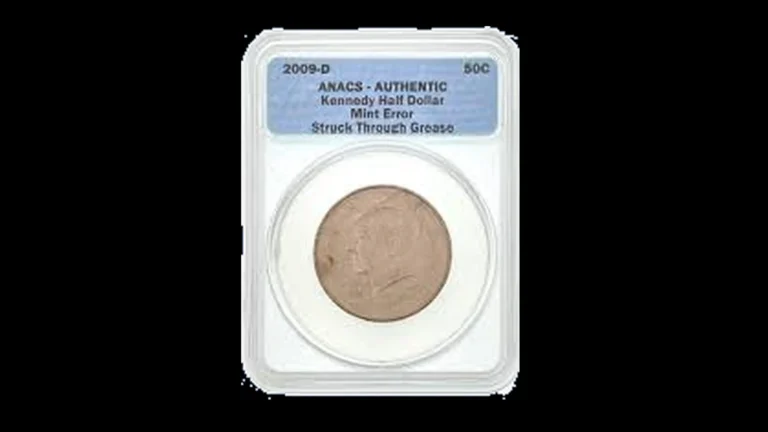
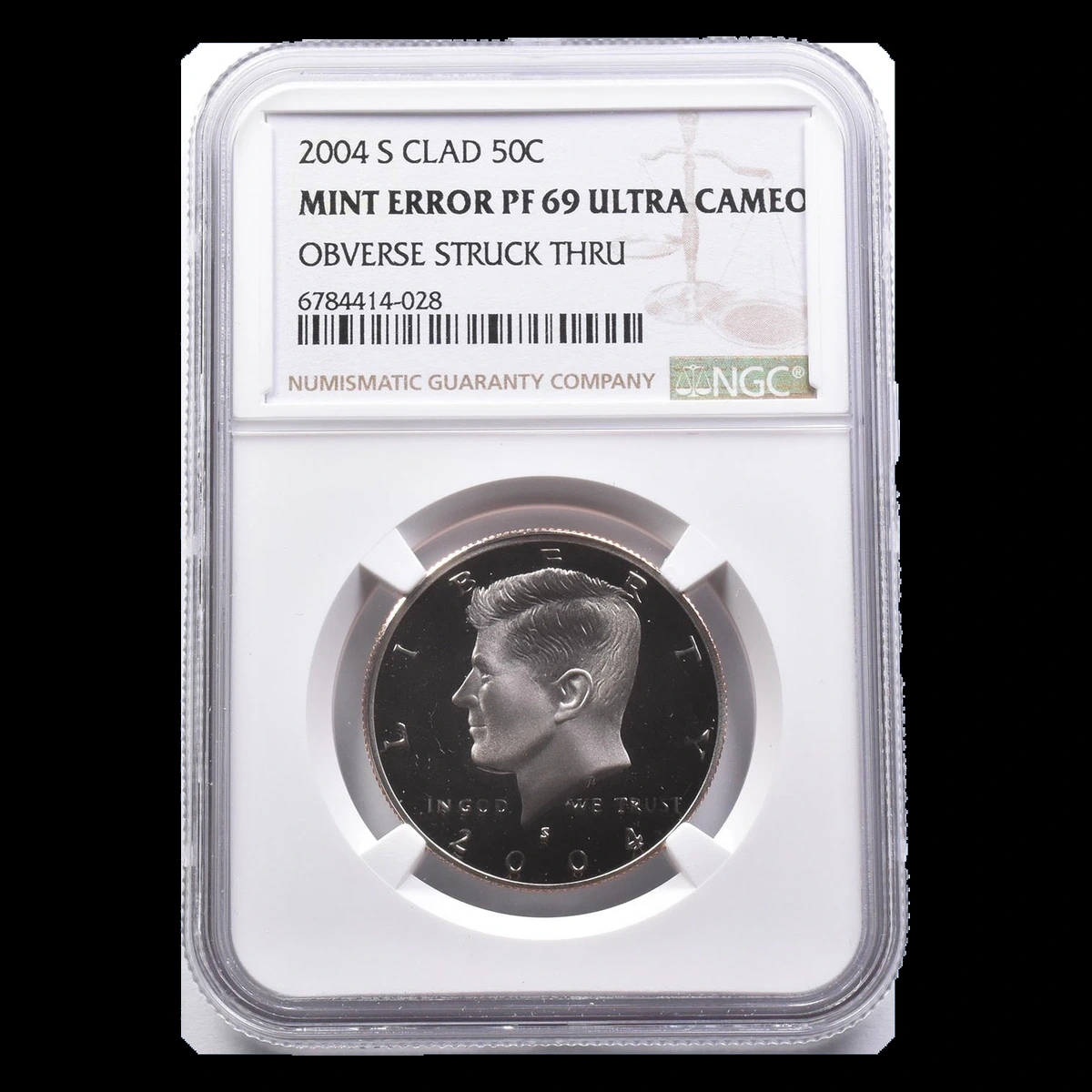
3. 2004 Half Dollar Letters or Hair Stop at an Unusual Patch: Strike-Through Error
Missing letters or a smooth interruption in Kennedy’s hair are suggested search areas. The supplied guide does not identify one particular certified 2004 example.
Material between the blank and die can block part of the design as it forms. A die is the steel tool that transfers the design to the coin.
How to Identify
Compare the affected area with a normal coin and locate the transition back to complete detail. The boundary carries more information than simply counting weak letters.
Examine it with soft and angled light. Scrape tracks, sharp cuts, or displaced metal may indicate that detail was removed after minting.
A smooth patch does not specifically prove grease, and a sharp hollow does not identify a metal fragment. Keep the cause as broad as the available evidence.
What It’s Worth
Estimated range: $30–$200 for genuine localized strike-throughs in ordinary collector condition. Size, visibility, and surrounding surfaces help determine a suitable comparison.
A regular-metal 1976-D affected on both sides sold for $114 in March 2025. It is a different-year, two-sided comparison rather than evidence of a 2004 sale or the material responsible for another coin’s mark.
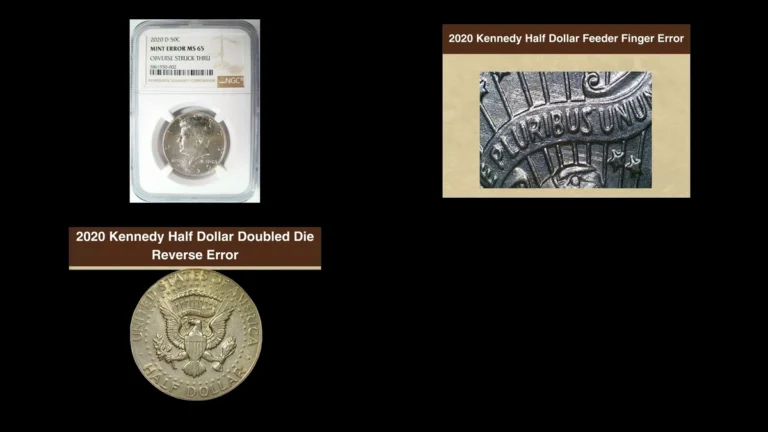
4. 2004 Half Dollar Small Front Letters Have Repeated Edges: Doubled Die Obverse Error
The guide reports minor doubling for P, D, and S issues, generally with modest value effects. Exact letters and directions depend on the specific example.
With a doubled die, the tool contains repeated detail before striking. A bright edge or uniformly thick word cannot establish that cause by appearance alone.
How to Identify
Select an identified reference of the same mint and finish. Compare the actual lettering pattern rather than transferring another year’s dramatic doubled-die diagnostics.
Move the light while following each suspected raised shape. Reflections change, while a low flat shelf may result from movement during striking rather than repeated design in the die.
Confirm metal type using weight and the edge as supporting checks. A regular clad example and a silver collector proof can share a diameter while requiring different price comparisons.
What It’s Worth
Estimated ranges: $4–$25 for regular-metal minor doubling, and $35–$60 for ordinary collector-grade silver proofs. Much of those totals reflects the coin’s issue and preservation.
The year guide supplies normal values and the minor-doubling assessment. These are estimates rather than auction results for particular attributed specimens.
5. 2004 Half Dollar An Eagle-Like Shape Appears on the Front: Clashed Dies Error
A faint feather-like outline on Kennedy’s side may suggest contact between the dies. If they meet without a blank between them, parts of each design can mark the opposite tool.
Later coins can receive the transferred shapes. A real match needs more than a suggestive scratch or reflection.
How to Identify
Compare both faces and identify which part of the opposite design could account for the trace. A mirrored comparison may help with the way the tools faced each other.
Follow connected detail rather than one short line. Polishing marks and scratches need not reproduce the eagle or portrait at a mechanically consistent position.
Record the mint, finish, and undisturbed surrounding surface. Those details remain relevant even if the extra shape is clear.
What It’s Worth
Estimated range: $25–$75 for clear clashes, according to the 2004 error guide. No specific completed sale is supplied.
A recognizable transferred fragment offers stronger evidence than an unexplained faint line. The underlying value of a silver proof can also differ from that of a regular clad coin.
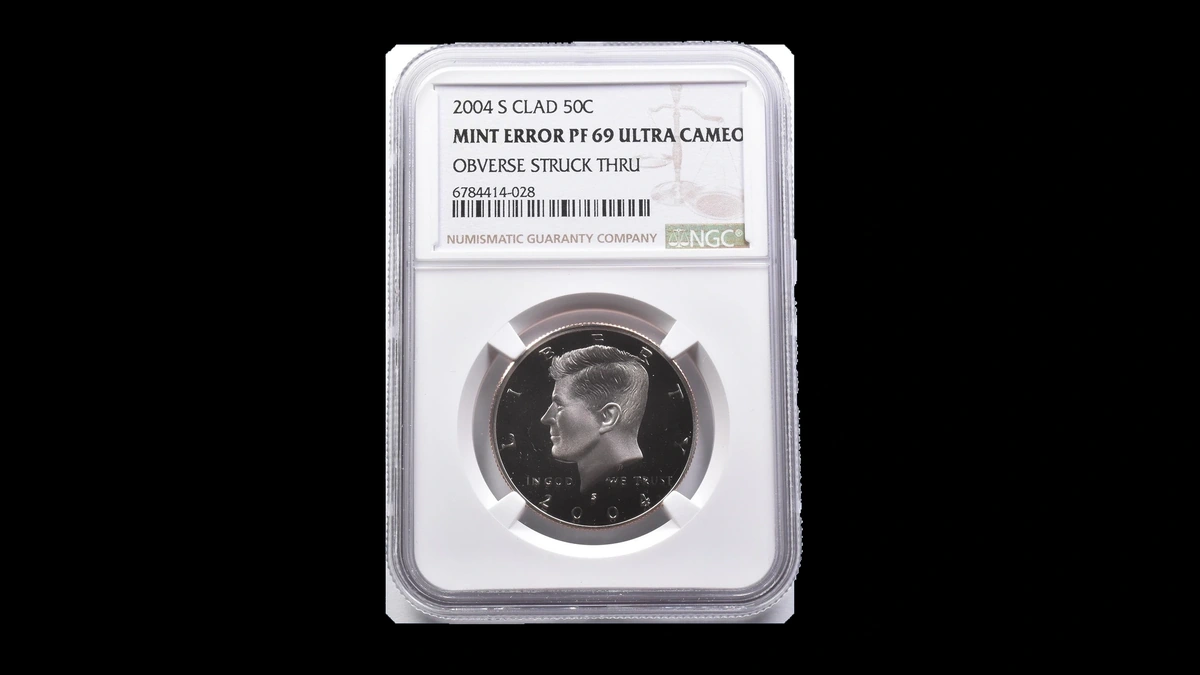
6. 2004 Half Dollar A Raised Line Crosses the Eagle’s Leg: Silver-Proof Die Crack Error
Stephen Soldridge’s reported 2004-S silver proof has a line beginning above the eagle’s right leg, which appears on the viewer’s left. It passes through the leg, a star, and A in HALF toward the rim.
The coin was graded PCGS Proof 69 Deep Cameo, indicating a nearly flawless collector proof with strong contrast between frosted detail and reflective areas. Its ridge came from a crack in the die.
How to Identify
Confirm S and silver-proof construction before tracing the line. An accessible example should be near 12.50 grams and lack the copper edge stripe of ordinary clad coins.
Use Ken Potter’s description to follow the route through the correct leg, star, and A. The full sequence is more specific than a random line near seven o’clock.
Under a magnifier and angled light, verify a raised ridge rather than a cut into the mirrored surface. Handle the coin by its edge to preserve the proof fields.
What It’s Worth
Estimated range: $60–$150 for an attractive silver proof with a comparable visible crack. Heritage recorded $80.50 in January 2008 for a 2004-S silver Proof 69 Deep Cameo with a crack near seven o’clock.
The record describes a purchase after the auction, not a normal bidding result. It values the complete proof and does not isolate a separate charge for its raised line.
Conclusion
Metal type determines the first useful comparison: exposed copper on a clad coin and a ridge on a silver proof call for different tests. Then assess the full outline or the specific design boundary before assigning an error name.
Estimated values range from $4 to $400. The historical $80.50 proof-crack purchase is an exact-year comparison, while the broadstrike, strike-through, and missing-layer examples from other years provide context only.