Rare 2004 Nickel Errors (List & Pictures)
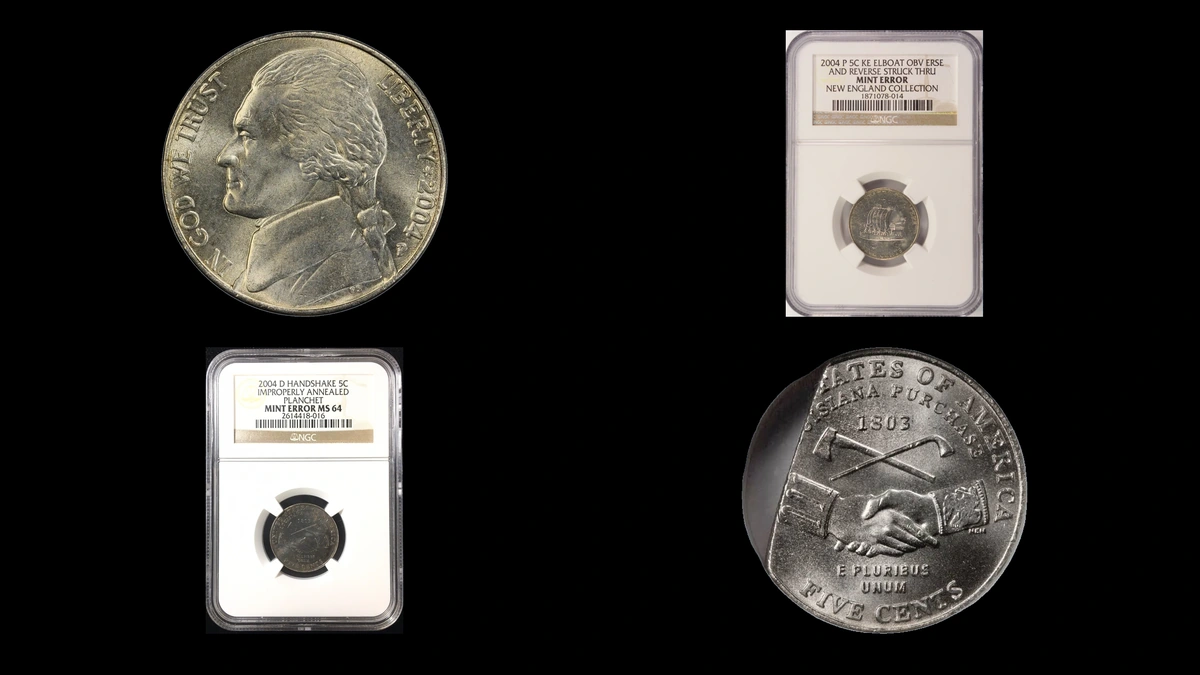
A different-year nickel on a cent blank sold for $372 in September 2025; a 2004-P doubled-die Peace Medal nickel brought $185 in April 2021. Estimated values for 2004 nickel errors range from $10–$2,000.
Identify the handshake Peace Medal or boat Keelboat reverse first, then follow the lettering, surface, outline, and unusual metal checks below.
| Clue | Category | Estimated value |
|---|---|---|
| Repeated design contours | Doubled die | $10–$300 |
| Weak or interrupted detail | Weak strike or strike-through | $10–$250 |
| Unusual original surface color | Improper annealing | $30–$250 |
| Missing or raised edge area | Clip or cud | $25–$350 |
| Wide, stepped, or displaced outline | Collar error or off-center strike | $30–$600 |
| Backward design or smaller copper-colored disc | Brockage or cent blank | $100–$2,000 |
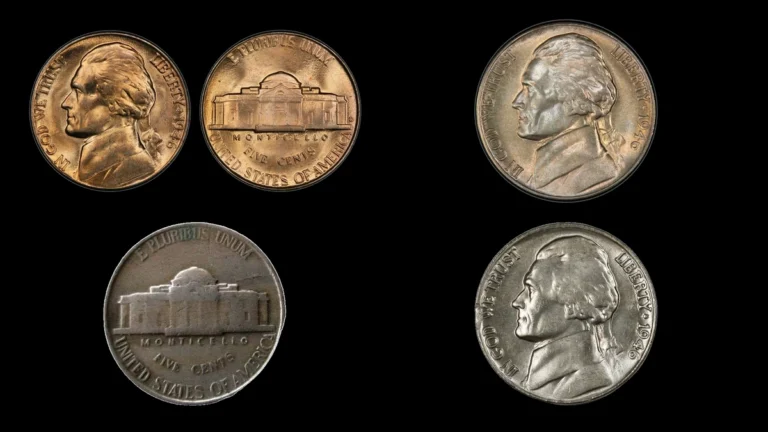
Both reverses accompany Jefferson’s older left-facing portrait. A normal nickel weighs 5.00 g and measures 21.21 mm, with a plain edge and a uniform copper-nickel alloy.
1. 2004 Nickel Extra Letter and Date Contours: Doubled Die Error
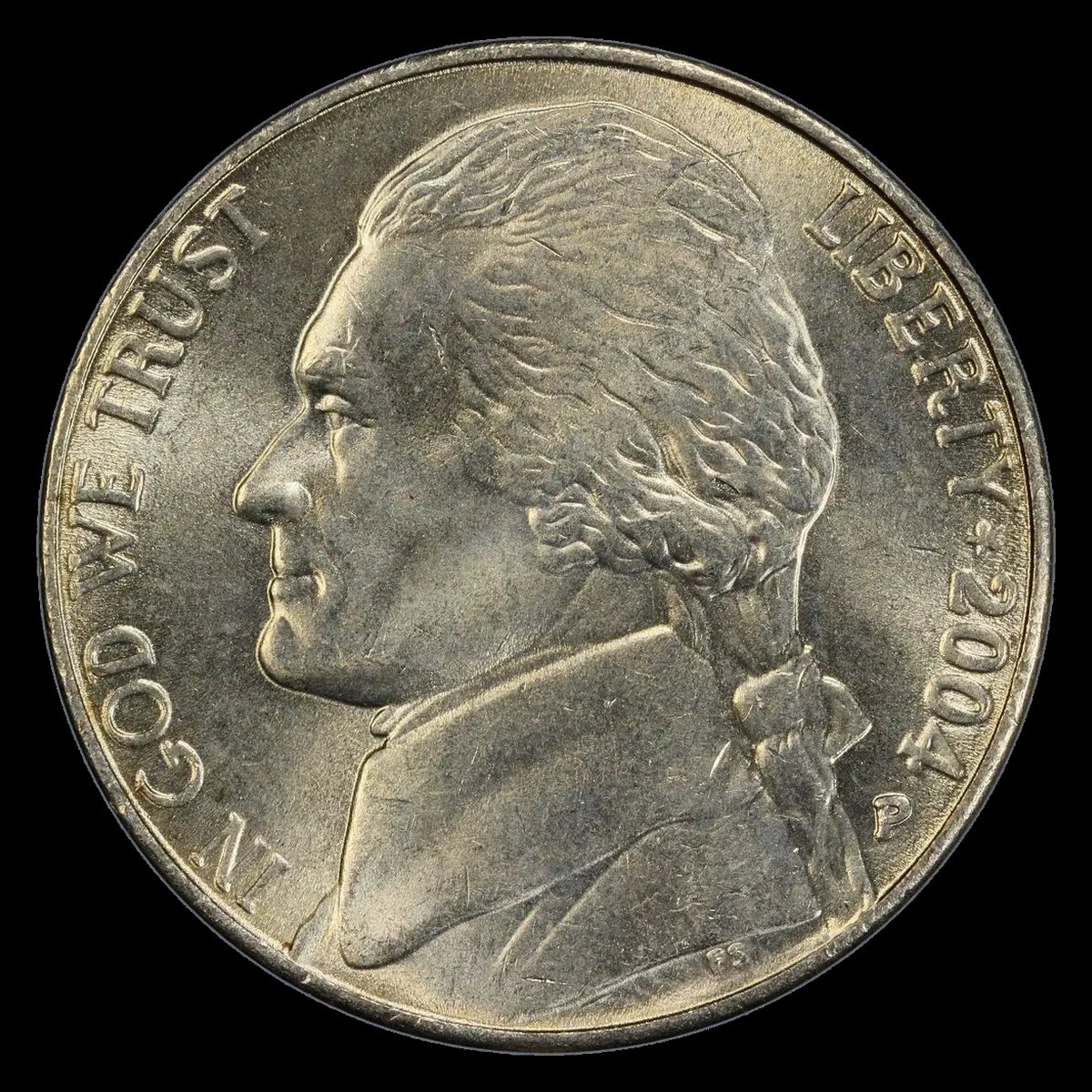
The 2004-P Peace Medal FS-101 has doubled front details. A separate report concerns doubling on a Keelboat reverse.
The repeated detail originates in the die’s manufacture. Each affected coin can receive it in a single strike.
How to Identify
For the Peace Medal variety, compare 2004, LIBERTY, and IN GOD WE TRUST with the FS-101 reference. Flat shelves caused during striking are a different feature.
The Keelboat report needs its own boat-design match. A later forward-facing Jefferson portrait cannot identify a 2004 variety.
What It’s Worth
Estimated values are $25–$300 for matched Peace Medal front doubling and $10–$100 for a confirmed Keelboat doubled reverse. The latter is guidance for the reported category.
PCGS records a $185 eBay sale in April 2021 for a P Peace Medal FS-101 graded MS65. That result belongs to the identified front variety.
2. 2004 Nickel Both Faces Have Shallow Detail: Reported Die-Adjustment Strike Error
A 2004-D Keelboat example is described as a die-adjustment strike. Its weak portrait, boat, lettering, and rim are the visible features to assess.
The name suggests press setup, but shallow detail alone does not prove why striking pressure was low.
How to Identify
Compare high and low details across both faces with a normal D Keelboat nickel. Look for original surface texture where the design failed to form fully.
Wear smooths exposed details after a complete strike, while a blocked patch may affect only one area. Neither should automatically become evidence of a Mint setup process.
What It’s Worth
A genuine unusually weak strike has an estimated value of $25–$150. A broad consistent effect is more useful than slightly soft local detail.
No verified sale accompanies the supplied specimen. The setup label alone does not guarantee an added premium.
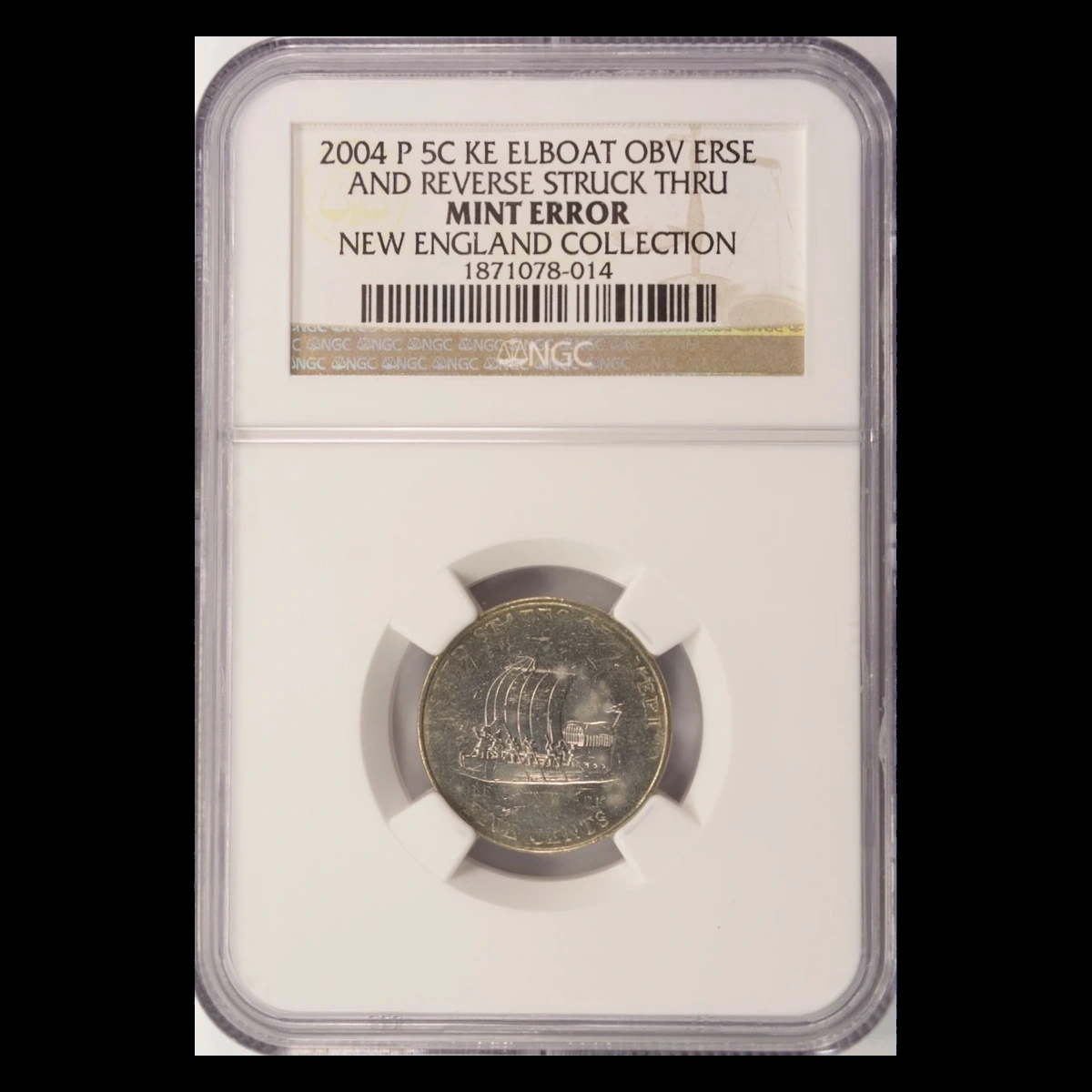
3. 2004 Nickel Part of the Design Is Blocked or Depressed: Struck Through Material Error
An obstruction between die and blank can interrupt a portrait, letter, handshake, or boat. A solid object may leave a depression, while softer material may produce weak detail.
The reported category includes a Proof example. The actual coin must establish its reverse, finish, and obstruction type.
How to Identify
Follow the boundary from normal struck detail into the affected area. Scraping or displaced metal may point to damage after striking instead.
Leave any attached material in place. Do not name thread, wire, cloth, or grease unless the shape supports it, and do not assume foreign material remained embedded.
What It’s Worth
Estimated values are $10–$250 for genuine examples. A clear shaped interruption on attractive surfaces is usually more persuasive than a small weak patch.
A 2000-D nickel struck through a die cap sold for $84 in September 2025. It supplies a different-year blocked-strike comparison, while a 2004 Proof needs a comparison appropriate to its finish.
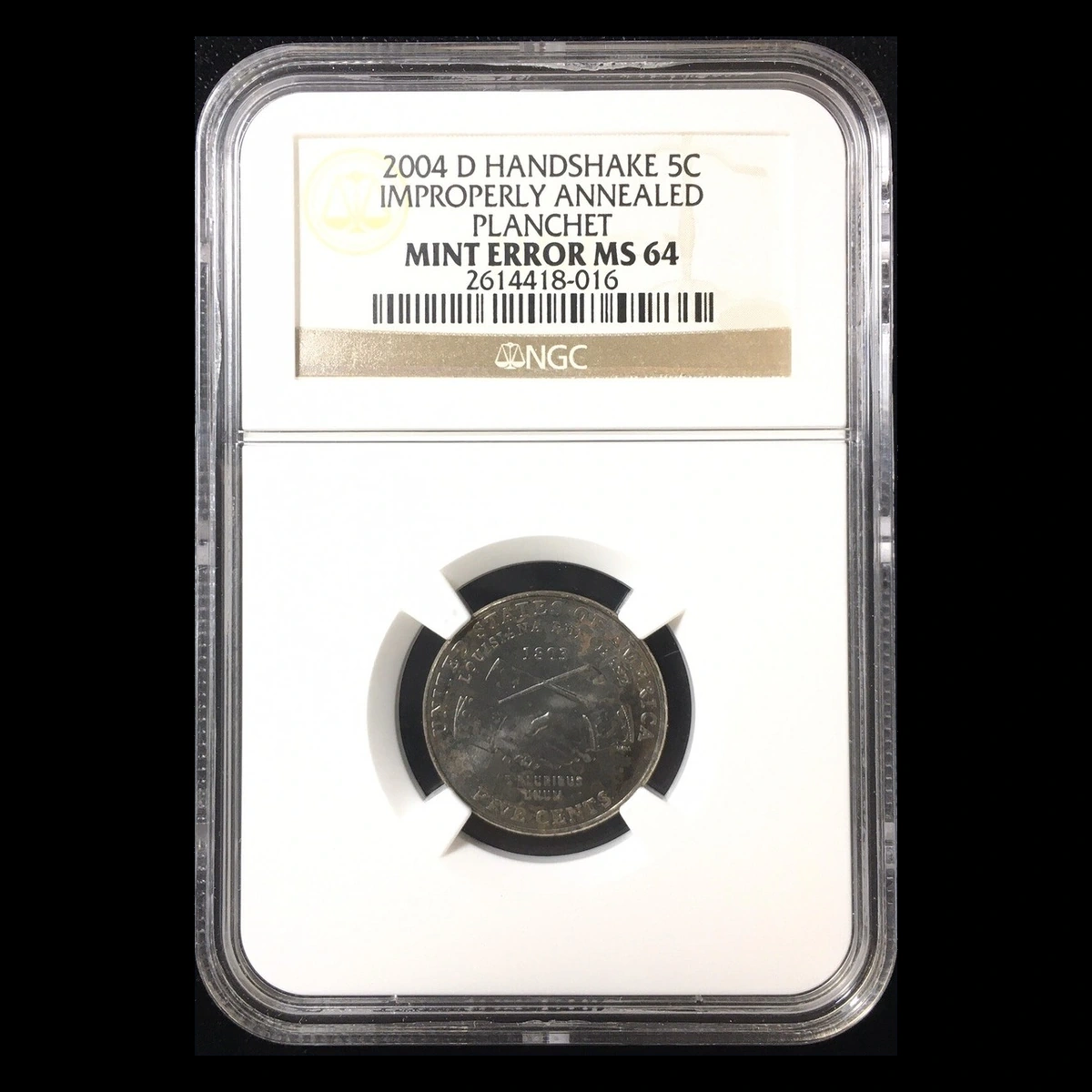
4. 2004 Nickel Unusual Heating Surfaces: Improper Annealing Error
Annealing softens blanks before striking, and an abnormal process can affect their surfaces. Certified examples exist for both 2004 reverse designs.
How to Identify
Record the reverse and P or D mintmark before comparing a certified example. The effect is not a missing outer nickel coating because the alloy is uniform.
Later heat and chemicals can imitate unusual color. Examine the original surfaces, residues, and unrelated damage under neutral light without rubbing them.
What It’s Worth
Estimated whole-coin values range from $30–$250. Stronger comparisons require evidence beyond color alone.
The D Peace Medal PCGS MS64 sold for $57 in December 2020. A P Keelboat MS65 also brought $57 in April 2022.
A damaged D Keelboat appeared in a two-coin lot. That lot cannot supply a separate sale price for the nickel, and its front damage remains distinct from annealing.
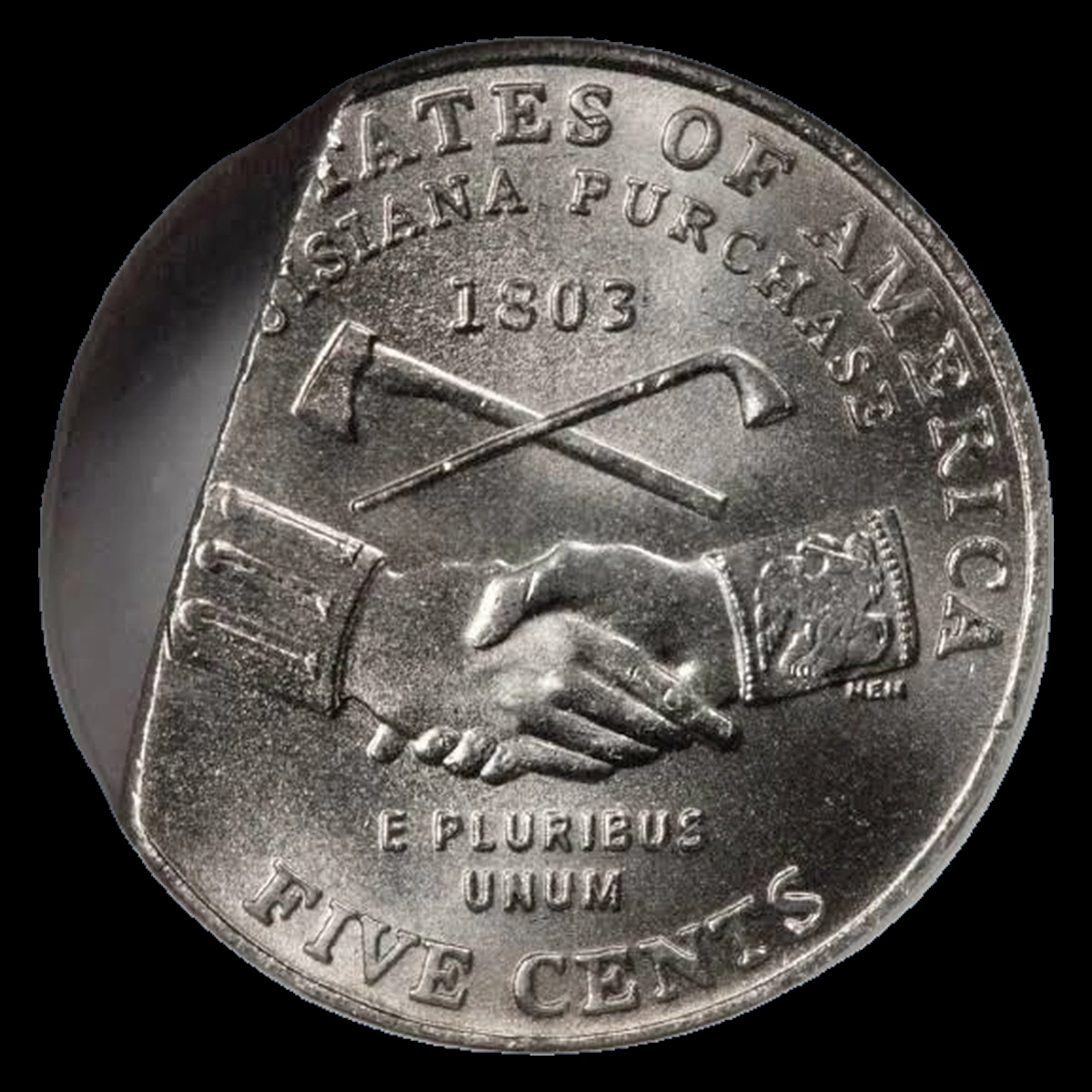
5. 2004 Nickel A Straight Segment Is Missing: Clipped Planchet Error
A 2004-P Peace Medal nickel graded PCGS MS65 has a 6% straight clip from eight to ten o’clock. A separate Peace Medal example was recorded with a 16% straight clip and NGC MS66 grade.
How to Identify
A straight clip can begin where the blank punch crosses the end of the metal strip. Inspect the cut boundary and the way struck detail reaches each end of the gap.
File marks or a fresh cut through finished design can reveal later removal. The larger example does not inherit the smaller coin’s mintmark or exact gap position.
What It’s Worth
Genuine 2004 straight clips have an estimated whole-coin range of $25–$300. Size, condition, and surviving design all influence the comparison.
The 6% P Peace Medal coin sold for $92 in February 2005. No sale amount is supplied for the separate 16% example.
6. 2004 Nickel A Raised Patch Reaches the Rim: Cud Error
When an edge piece of the die breaks away, metal can rise into the opening and replace normal design. The resulting rim-connected patch is called a cud.
How to Identify
Trace the patch to the rim and inspect the edge for a dent that pushed metal inward. An isolated interior bump is not automatically a cud.
The supplied 2004 report assigns no mint or reverse design. Those details and the actual patch location must come from the coin being examined.
What It’s Worth
Estimated values are $50–$350 for genuine rim-connected cuds. A substantial clear boundary generally supports more interest than an indistinct edge lump.
No sale is assigned to a particular specimen here. Added material or displaced rim metal does not qualify for the same estimate.
7. 2004 Nickel A Wide Outline or Stepped Edge: Broadstrike and Partial Collar Error
A broadstrike expands beyond normal size while retaining the intended design. The surrounding collar failed to restrain the metal normally.
The 2004-P Peace Medal report also mentions a railroad rim, a step usually associated with partial collar support. These terms need to be assessed separately against the actual shape.
How to Identify
Use full-face views to check a broadstrike’s complete designs and expansion. Use side views to assess a partial-collar level change.
A scratch around the edge does not establish a step. Missing grooves are irrelevant because a normal nickel edge is already plain.
What It’s Worth
Estimated values are $40–$600 for genuine 2004 collar-related errors. Choose the comparison that matches the actual broadstrike or partial-collar feature.
A 1999-P broadstrike graded PCGS MS63 sold for $89 in March 2025. That different-year example does not establish a railroad edge on the 2004 report.
8. 2004 Nickel Bare Metal beside a Shifted Boat Design: Off-Center Strike Error
A 2004-P Keelboat nickel is reported as 30% off-center. A misplaced blank left some design outside the metal and an unstruck area elsewhere.
How to Identify
Keep the surviving boat, date, and full outline in the same photographs. Both faces should fit one displaced blank.
A crowded border on only one face can indicate a shifted die instead. The bare crescent still contains metal, unlike a clipped section.
What It’s Worth
Estimated values are $30–$500 for genuine examples, with readable dates and clear shifts supporting stronger comparisons. The reported 30% applies only to that specimen.
A 1999-P nickel described as 15% off-center sold for $64 in March 2025. It is a different-year, smaller-displacement comparison.
9. 2004 Nickel Backward Letters Press into the Surface: Brockage Error
A reported 2004-D example carries a brockage, a recessed mirror image impressed by an already struck coin. The transfer can cover part of a face rather than its entire area.
How to Identify
Establish both the backward direction and the sunken surface with angled light. Mirroring a photograph can make letters readable but cannot authenticate the physical impression.
Examine the normal face and edge for later compression between coins. The surviving design must identify Peace Medal or Keelboat; the D mintmark alone does not choose the reverse.
What It’s Worth
Estimated values are $100–$1,000 for authenticated 2004-D brockages. Clarity, extent, and surfaces affect the whole-coin comparison.
An undated Jefferson nickel with a 30% brockage from an off-center strike sold for $336 in June 2024. Its missing year prevents treating that as a 2004 transaction.
10. 2004 Nickel A Smaller Copper-Colored Disc: Struck on a Cent Blank Error
A cent blank can enter the nickel press and receive an incomplete nickel design. The smaller modern blank normally weighs about 2.50 g and consists of copper-coated zinc.
How to Identify
Assess weight, alloy, cropped design, and edge together. Plating, deliberate thinning, or filing can imitate some clues without creating a wrong-blank strike.
The report assigns no mintmark or reverse design. Striking may expand the cent blank, so its final width need not match an ordinary cent exactly.
What It’s Worth
An authenticated 2004 nickel on a cent blank has an estimated value of $250–$2,000. A readable date, identifiable reverse, and attractive surfaces support the higher range.
A 1981-P nickel on a cent blank sold for $372 in September 2025. That older blank used a heavier copper-rich cent alloy, making it a related comparison with a different metal standard.
Conclusion
Peace Medal and Keelboat reverses share basic nickel specifications but require their own variety and specimen comparisons. A weak strike, interrupted patch, and changed color should each be explained by the evidence on that coin.
For larger errors, keep full faces and edge views together. The $57 annealing sales, $92 clip, and $185 doubled-die result describe different coins rather than a universal value for 2004 nickels.