Rare 1928 Nickel Errors (List & Pictures)
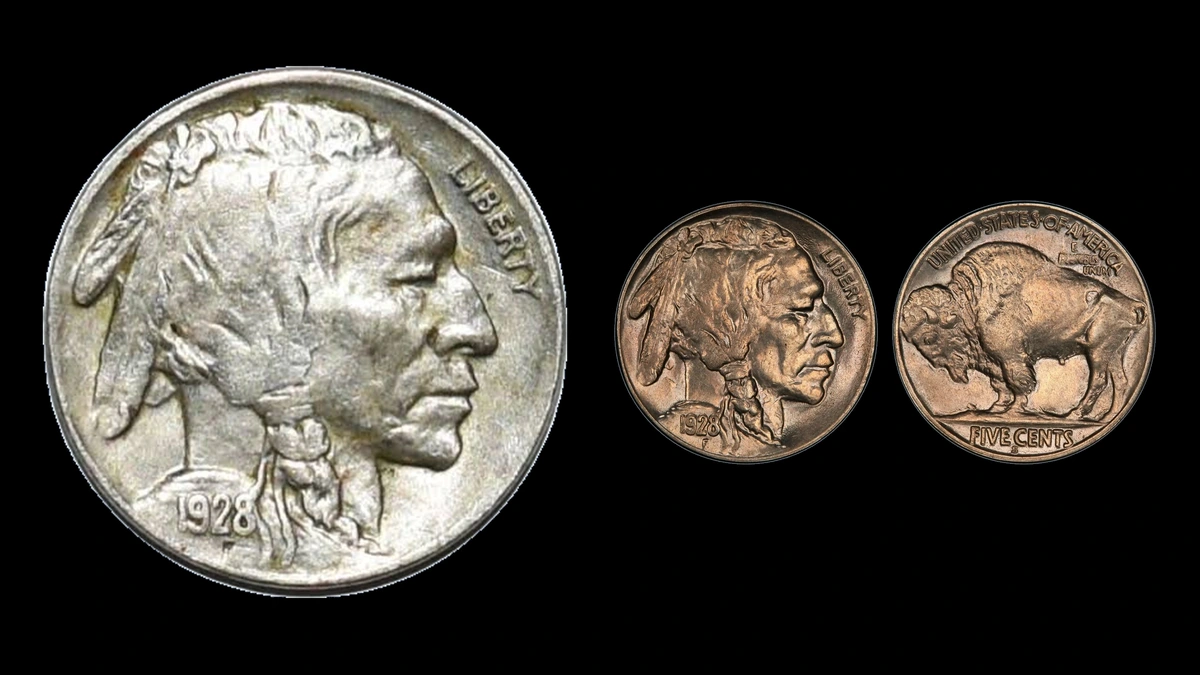
Missing metal, missing design, and extra outlines lead to different entries in this guide to 1928 Buffalo Nickel errors. Estimated values span $10–$3,000, including the San Francisco Two Feathers variety, for which PCGS records $2,040 in August 2019.
Examine the edge and surface before moving to LIBERTY and the small feather. A readable date and the correct mintmark keep each visual clue tied to the right comparison.
1. 1928 Nickel Part of the Disc Is Absent: Clipped Planchet Error
An incomplete blank can receive a normal coin design despite a missing section. Overlapping an earlier hole during blank punching or reaching an incomplete strip edge can produce different shapes.
The 1928 reports do not establish one mint, gap size, or position. Planchet simply means the prepared blank, so the term alone does not identify a particular specimen.
How to Identify
Record the date and surviving outline, then inspect the rim as it approaches each end of the opening. A pre-existing gap affects how those details form, whereas a later cut can slice through finished design.
Look for repeated saw lines or file marks on the exposed edge. Weakness on the opposite rim can support a genuine clip but is not required on every example.
A normal Buffalo nickel weighs 5 grams, measures 21.21 millimeters, and has a plain edge. Missing blank metal reduces weight, although the reduction alone cannot establish its cause.
What It’s Worth
Typical confirmed 1928 clips are estimated at $30–$200. A clear date, original boundary, and appealing amount of missing metal support stronger comparisons.
This range comes from the reported category rather than a named 1928 auction result. A curved notch made after striking does not qualify merely because its outline looks convincing.
2. 1928 Nickel A Solid Empty Arc Borders the Design: Off-Center Strike Error
The documented PCGS VF30 example has a complete date and a strike displaced 15% off center. The bare area is still metal, unlike the missing piece of a clipped blank.
Both designs missed their intended position because the blank was partly outside the striking area. Circulation wear is present, but the identifying details remain readable.
How to Identify
Check both faces for a corresponding shift and inspect the transition from unused metal to struck detail. Scraped-away lettering or a worked boundary can reveal later alteration.
If the complete design remains inside a widened outline, broadstriking may be the better explanation. A single shifted tool can also differ from the two-sided displacement expected here.
Read the year on the metal rather than relying only on a holder description. Buffalo dates often wear down, and the size of an offset cannot establish a missing date.
What It’s Worth
Identified 1928 off-center nickels are estimated at $50–$500. Displacement, readable identity, and remaining detail affect the comparison.
The 15% VF30 specimen carried a $45–$60 auction estimate in January 2003. The archived record does not supply a reliable realized price, so that figure is an old estimate rather than a completed sale.
3. 1928 Nickel A Thin Layer Lifts from the Surface: Lamination Error
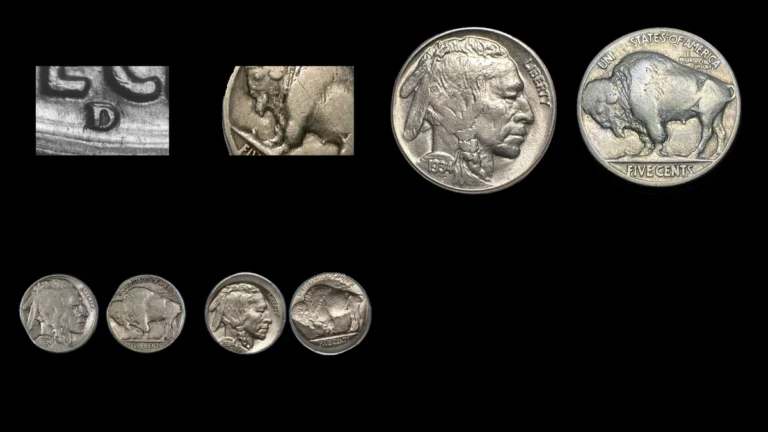
A crack running beneath a surface flap can indicate weakness inside the alloy. This separation, called lamination, is reported on a 1928-D nickel with cracking and flaking.
The copper and nickel are mixed throughout the coin. A lifting layer is therefore not a normal plated coating peeling from a different core.
How to Identify
Hold the coin by sound edges and leave the flap where it rests. Pulling or pressing it can detach metal that helps explain the original separation.
Under changing light, look for a crack extending beneath a thin layer. A gouge cuts into otherwise solid metal, while attached residue sits on top instead of separating from within.
Find the D beneath FIVE CENTS when matching the reported example. The precise patch must be judged from that coin, and slight loss may have little effect on its weight.
What It’s Worth
A genuine 1928-D lamination is estimated at $15–$150. The supplied report has no individual completed sale attached.
A clear attached flap bearing original design can be more informative than a shallow indistinct peel. Corrosion or later scratches can reduce interest even when a genuine separation is also present.
4. 1928 Nickel A Raised Ridge or Rim Patch Covers Detail: Die Crack and Cud Error
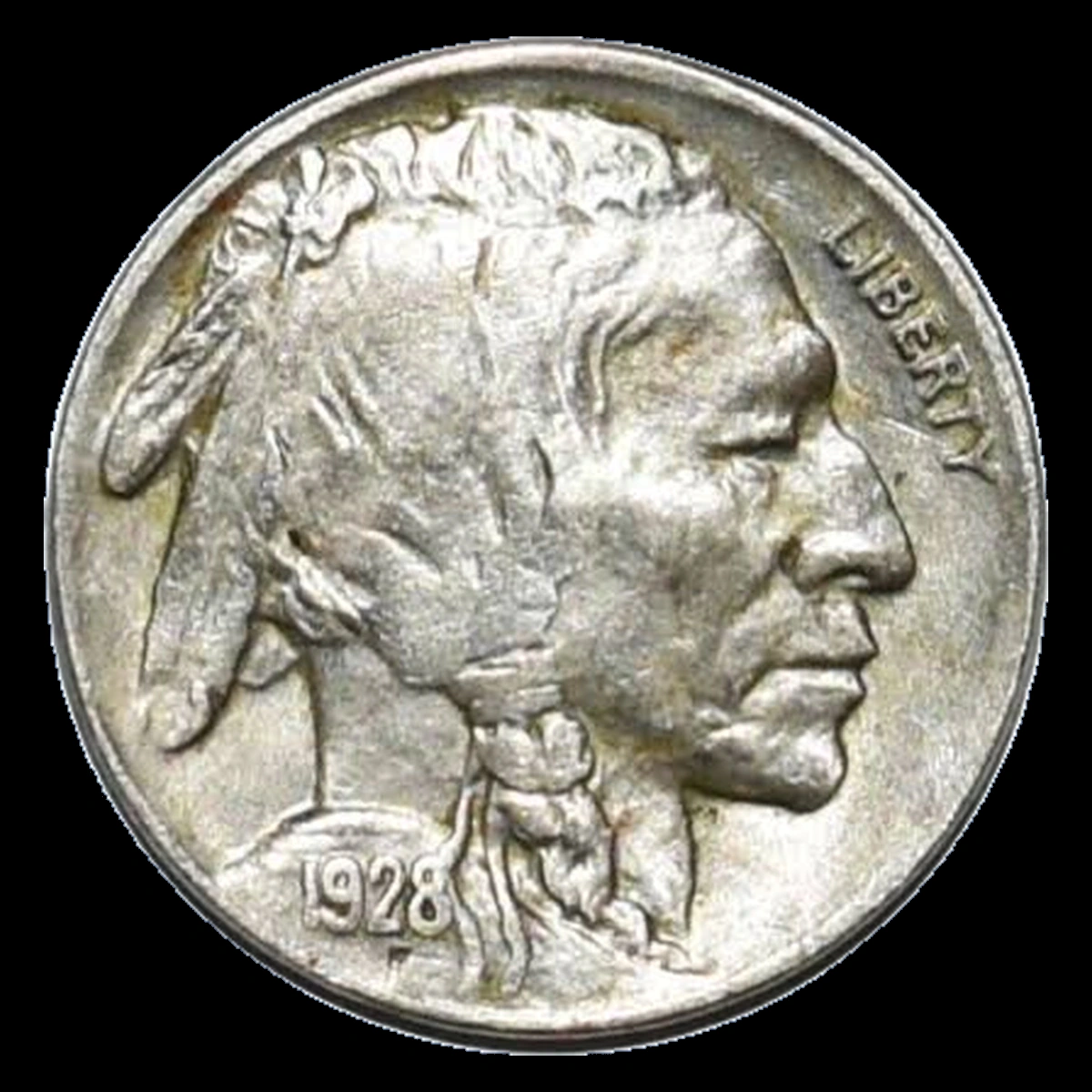
A narrow crack in the die fills with metal during striking and leaves a raised line on the coin. If a larger piece breaks away at the die edge, a rim-connected raised patch called a cud can form.
Both features are reported for 1928 without a fixed route or clock position. The damaged object is the die; the coin itself need not have split.
How to Identify
For a line, inspect whether its center is raised rather than cut into the surface. For a lump, document how it joins the rim and replaces surrounding design.
Look at the nearby edge for an impact or a seam around added material. A later blow can push metal upward, and solder can imitate a raised patch.
A die break does not remove a matching chunk from the nickel. The useful evidence lies in the original struck boundaries, not an expectation of missing coin weight.
What It’s Worth
Modest genuine cracks are estimated at $10–$40, while clear cuds are roughly $50–$300. No individual 1928 sale is assigned to these general reports.
Larger breaks can attract more attention when the date and main design remain clear. The condition value of the underlying nickel remains part of the whole price.
5. 1928 Nickel A Local Patch Lacks Its Intended Detail: Struck Through Error
Material between a die and blank can interrupt the design during the blow. The resulting shape depends on the obstruction and where it lay.
The 1928 listings do not identify a particular mint or material. A smooth weak patch does not establish cloth, wire, or even one specific shape of debris.
How to Identify
Begin with the unaffected portrait or buffalo and compare the high points for wear. If they are all flat, circulation may explain the missing detail.
Inspect the transition into the suspected obstruction under side lighting. A later impact can crush completed design and raise a lip, while scraping leaves disturbed metal where detail was removed.
What It’s Worth
Confirmed 1928 strike-throughs are estimated at $15–$300. Clear shapes with intact neighboring detail offer better comparisons than slight unexplained weakness.
The range is an estimate for the reported mechanism rather than a sale tied to a named obstruction. Damage and corrosion do not receive the same premium because they leave a bare-looking area.
6. 1928 Nickel Stray Outlines Resemble the Other Face: Die Clash Error
When the dies touch without a blank between them, their contact can mark the tools. Later coins can carry partial traces of the opposing design.
The reported 1928 clash type supplies no exact location. A shallow outline must fit a recognizable design element rather than an imagined shape.
How to Identify
Compare the mark with the opposite face in the relationship the dies would have inside the press. Seek another connected feature that supports the same alignment.
A random scratch or ordinary polishing line may cross the background without matching the opposing design. Pressing finished coins together also creates a different effect from marks first transferred between dies.
What It’s Worth
Modest identifiable 1928 clashes are estimated at $15–$150. Stronger recognizable outlines usually make a better comparison than faint isolated marks.
No particular specimen’s auction result is supplied here. Subtle candidates benefit from a firm design match before a clash premium is considered.
7. 1928 Nickel LIBERTY Has Repeated Raised Edges: Doubled Die Obverse Error
The Philadelphia variety listed by CONECA as DDO-001 has moderate doubling in LIBERTY. DDO means doubled die obverse: repeated design on the tool used for the front.
One blow can copy that repeated lettering onto a blank. A seller showing only a thick date has not yet demonstrated the principal LIBERTY detail.
How to Identify
Inspect several letters against CONECA’s DDO-001 listing, matching the spacing and form of the extra outlines. Check the reverse for the absence of a D or S beneath FIVE CENTS.
Look for raised separated letter edges. Flat shelves that reduce the main letter’s shape can arise from movement during striking and do not establish this variety.
What It’s Worth
Identified examples with readable doubling are estimated at $50–$400. No specific completed DDO-001 auction sale is assigned here.
Wear can merge the moderate outlines and weaken a comparison. Prices for the separate San Francisco Two Feathers variety should not be substituted for this Philadelphia doubled die.
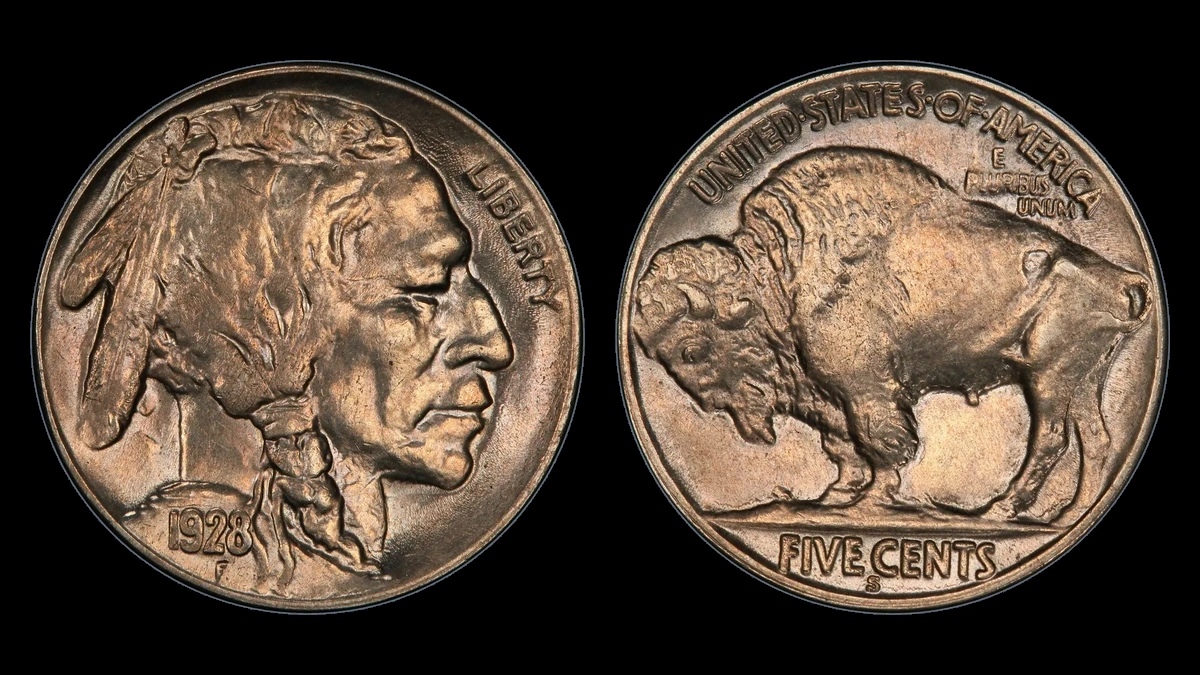
8. 1928 Nickel The Small Inner Feather Is Mostly Gone: Two Feathers Error
On the 1928-S FS-401 variety, polishing the die removed most of the small inner feather behind the portrait. The two larger feathers remain prominent.
A tiny isolated remnant may survive near the neck and hair. Completely smooth empty space is not required for the recognized Two Feathers appearance.
How to Identify
Confirm the S below FIVE CENTS, then compare the small feather’s outline with an identified FS-401 photograph. Include any detached island of feather detail in the comparison.
Check the hair and larger feathers for overall wear. Scraping away the small feather can leave disturbed metal and marks through neighboring details that do not fit die polishing.
What It’s Worth
Identified Two Feathers coins are estimated at $300–$3,000. Both the correct variety and preservation contribute to their price.
PCGS records include an MS63 result of $1,175 in August 2016 and a $2,040 result in August 2019. A separate AU55 example brought $816 in December 2019.
MS63 indicates an unworn coin with noticeable marks, while AU55 indicates light wear. Merely counting two visible feathers on a worn nickel does not establish the same variety or value.
Conclusion
The first question for a 1928 nickel is whether metal is missing, separating, raised, or simply lacking design. Those observations separate blank defects from die damage and collectible varieties.
Match the mint before examining LIBERTY doubling or the small inner feather, and preserve lifted metal rather than testing it by touch. Keep the old off-center auction estimate separate from completed sales when comparing the very different values in this guide.