Rare 2012 Presidential Dollar Errors (List & Pictures)
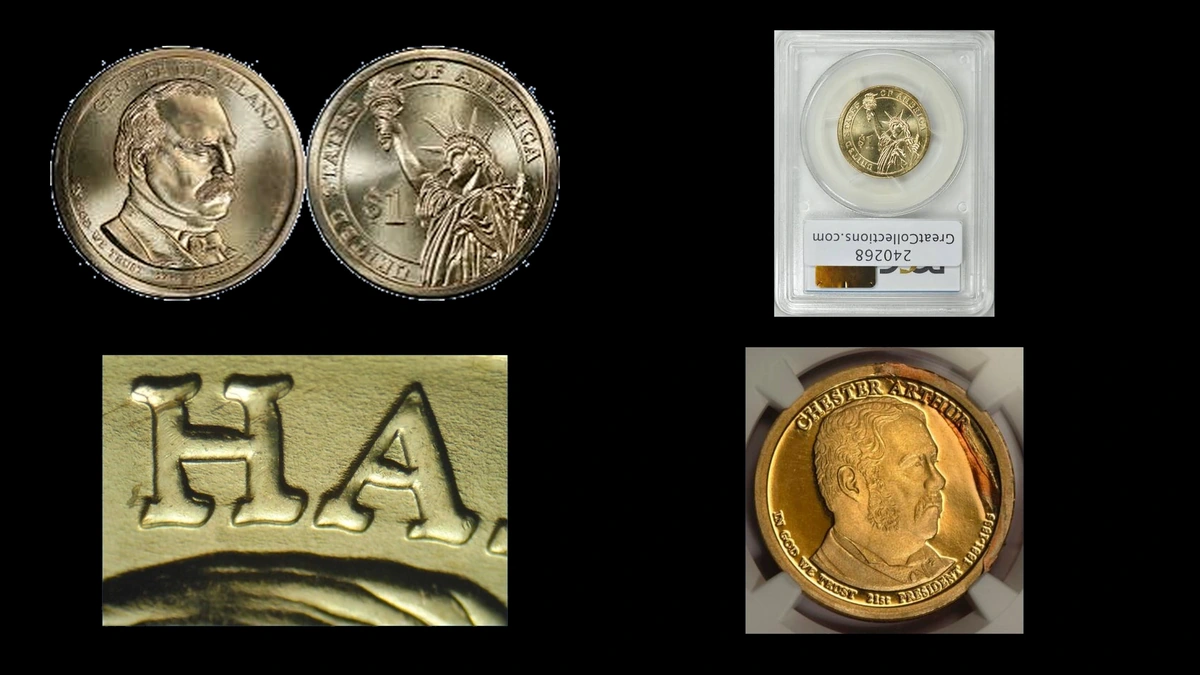
A first-term Grover Cleveland dollar graded NGC MS66 sold for $1,294 in August 2018 with its edge lettering entirely missing. The 2012 Presidential dollar errors below have estimated values of $15–$3,000.
Identify the president and finish, inspect the full edge, then compare any extra face detail or struck-through area with the matching issue.
| What remains visible | Category | Estimated range |
|---|---|---|
| Shallow edge strokes | Weak edge lettering | $15–$200 |
| Some lettering beside blank stretches | Partial edge omission | $75–$1,000 |
| No inscription around the edge | Missing edge lettering | $300–$3,000 |
| Two edge inscriptions | Repeated edge lettering | $100–$1,500 |
| Extra raised face contours | Doubled die | $25–$300 |
| Blocked design on an Arthur Proof | Struck through material | $100–$2,000 |
1. 2012 Dollar Faint recessed strokes: weak edge lettering Error
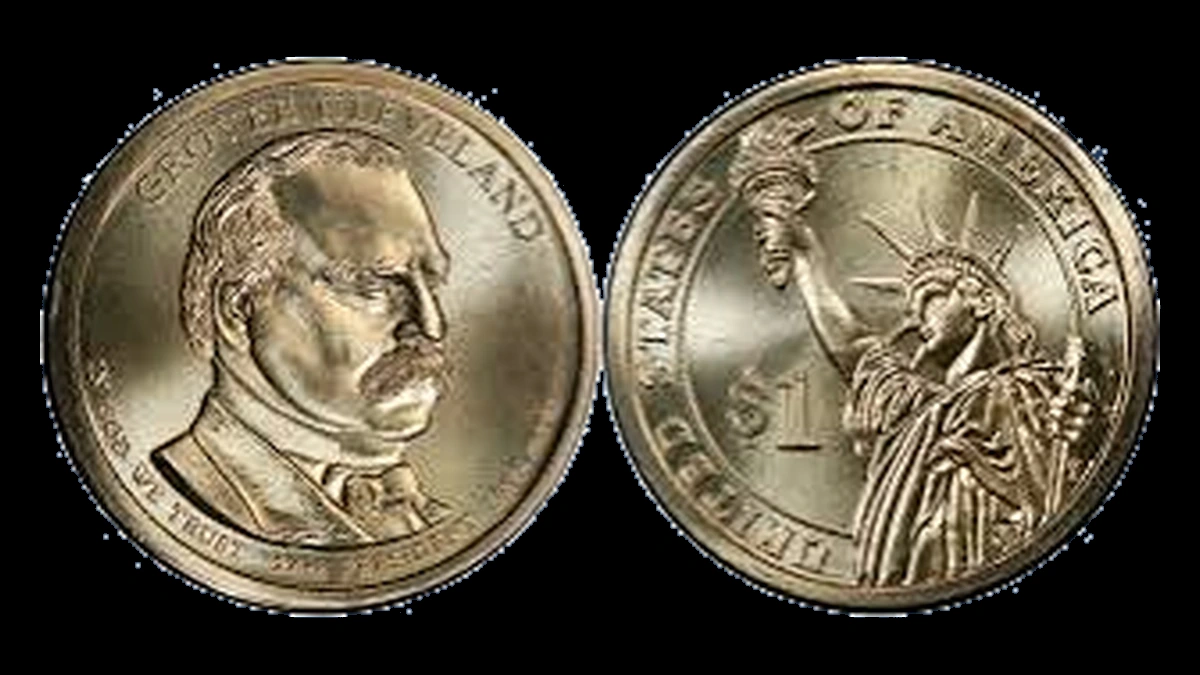
Weak-edge records include Philadelphia and Denver Benjamin Harrison dollars, Philadelphia first-term Cleveland coins, and both mints for Cleveland’s second term. Their shallow inscriptions can vary in clarity around the edge.
Cleveland appears as both the twenty-second and twenty-fourth president, with different portraits for his two terms. A shared name does not establish the same issue.
How to Identify
Read the president and presidency number before selecting a normal comparison. Follow a clear edge letter into the weaker area under changing light.
Look for shallow bottoms of recessed strokes and any readable P or D. Rubbing, rounded rims, or scraping may instead explain weakness acquired later.
Position A and Position B are normal inscription directions. The depth of the lettering, not its orientation, is the feature being examined.
What It’s Worth
Properly identified weak-edge dollars have an estimated range of $15–$200.
A Philadelphia Harrison PCGS MS67 and Denver second-term Cleveland MS64 appear in auction records. The supplied evidence does not establish sale prices for those specimens, so their grades should not be presented as realized amounts.
2. 2012 Dollar Lettered sections beside blank metal: partial omission Error
A Denver Chester Arthur NGC MS65 coin is described as missing 95% of its edge lettering. That description still leaves some inscription present.
Reports also include Philadelphia Arthur and first-term Cleveland coins, with Harrison combinations in catalogs. The extensive Arthur omission does not specify which individual characters survive.
How to Identify
Start at a readable character and follow the transition into a blank stretch. Continue around the whole edge to locate any other surviving text or shallow strokes hidden by glare.
Inspect the blank area for file marks, flattening, or other metal removal. A loose dollar normally weighs about 8.1 grams and measures 26.49 millimeters across, but normal measurements alone cannot establish an original omission.
Even a small section of original lettering prevents the coin from being classified as completely unlettered.
What It’s Worth
Authenticated partial omissions have an estimated range of $75–$1,000.
No realized price is supplied for the 95% missing Arthur coin. Its MS65 grade describes an unworn surface with relatively few marks, separately from the amount of missing text.
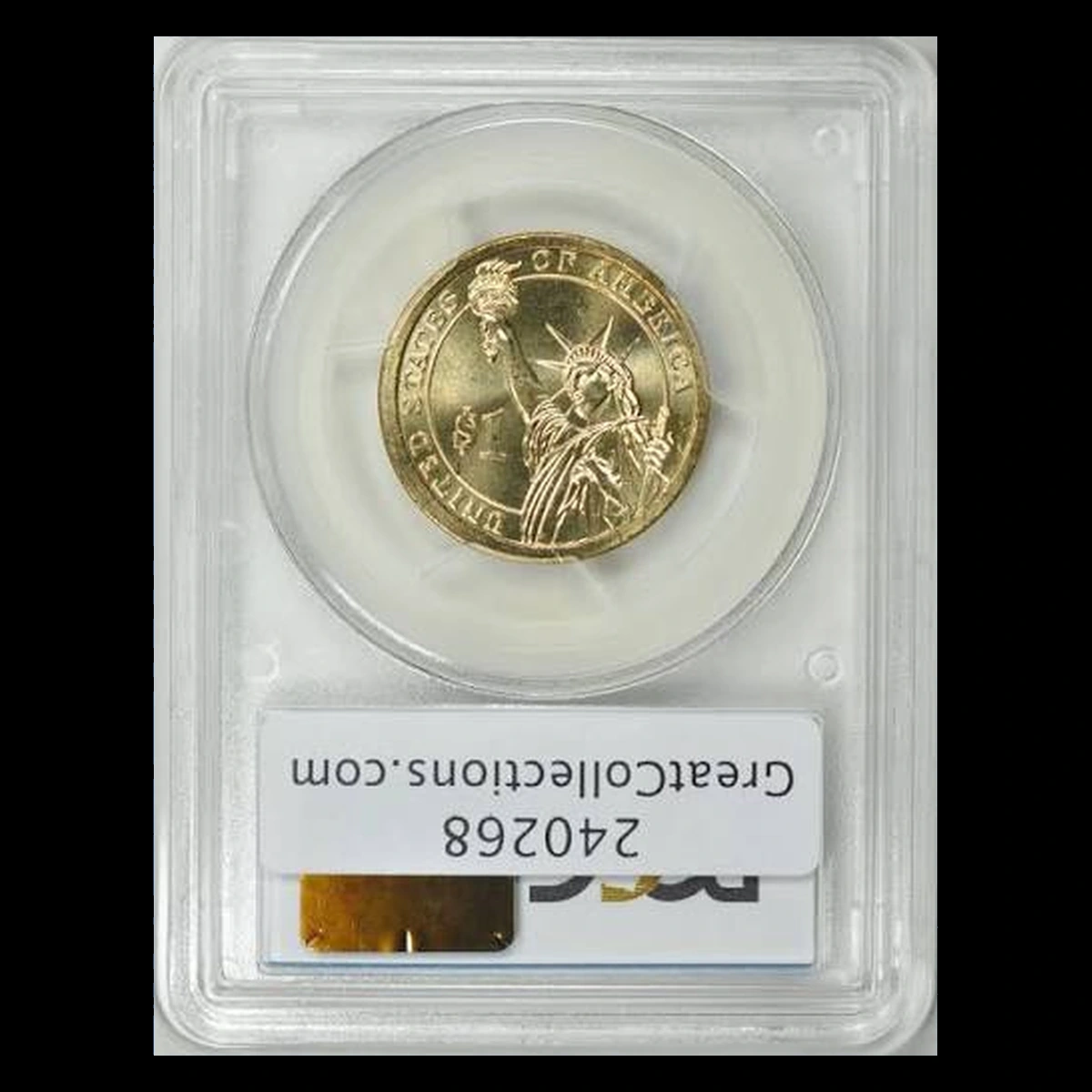
3. 2012 Dollar No inscription anywhere on the edge: complete omission Error
First-term Cleveland missing-edge discoveries are documented from Philadelphia products. PCGS also lists an Arthur missing-edge category.
A plain edge removes the year, mint letter, and E PLURIBUS UNUM, while IN GOD WE TRUST remains on the face. Discovery provenance does not create a visible P on an unlettered loose coin.
How to Identify
For Cleveland, confirm the twenty-second-presidency design rather than the twenty-fourth. Then inspect one complete circuit of the edge with overlapping views.
Search for any remaining date digit, mint letter, or motto stroke. A surviving original mark moves the coin into a partial or weak-lettering comparison.
Check the edge width, shape, and texture for grinding or smoothing. Authentication requires original metal around the whole circumference, not simply normal weight and diameter.
What It’s Worth
An authenticated complete missing-edge example has an estimated range of $300–$3,000.
The GreatCollections archive records first-term Cleveland in NGC MS66 at $1,294 in August 2018. It also records a PCGS MS64 example at $1,125 in August 2022.
These Cleveland sales do not automatically price the Arthur category. President, condition, and demand remain part of each comparison.
4. 2012 Dollar Two sets of edge text on Harrison: repeated lettering Error
Philadelphia and Denver Harrison catalog reports include overlapping and inverted edge inscriptions. Another lettering pass can leave both sets facing the same way or one facing opposite the other.
This is separate from one normal inscription in Position A or B. The reports do not establish the same error for every 2012 president.
How to Identify
Follow each recessed inscription through several neighboring characters. An inverted set should become a readable sequence when the view is turned.
A dent resembling one letter cannot establish another phrase. Keep Harrison’s portrait and the surviving edge date and mint letter together in the photo record.
What It’s Worth
An authenticated Harrison repeated-edge dollar has an estimated range of $100–$1,500.
No completed sale amount is supplied for a particular catalog combination. Clear duplicated words and an undamaged edge support a stronger comparison than scattered ambiguous marks.
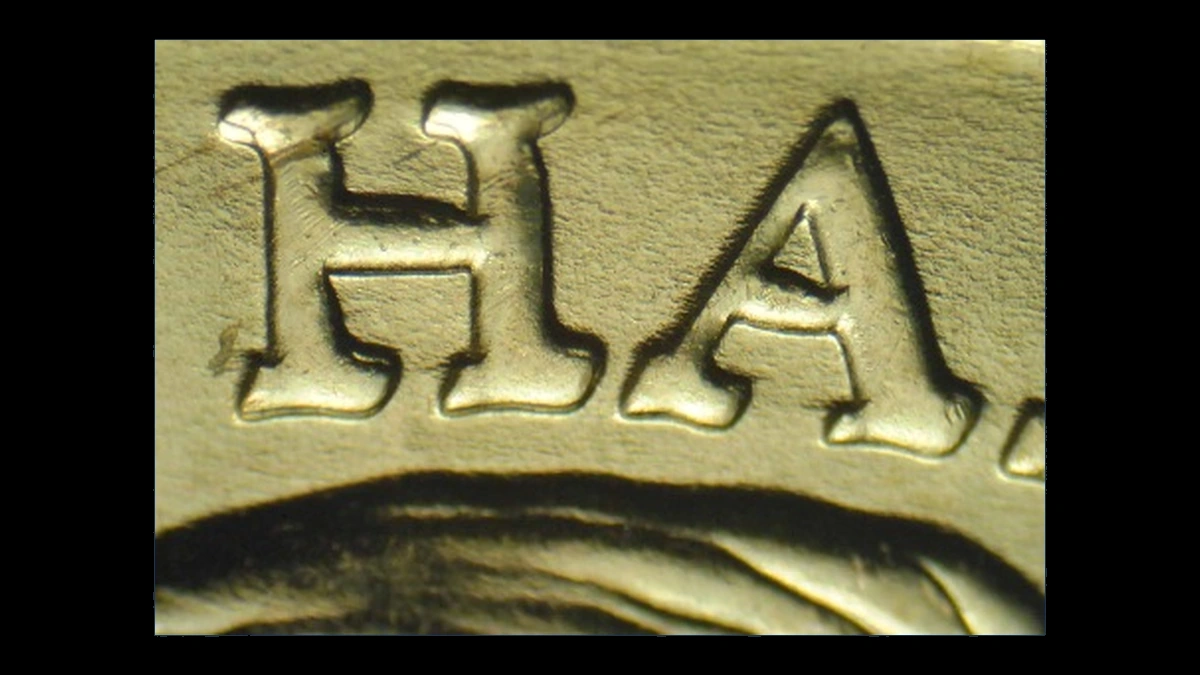
5. 2012 Dollar Repeated arm detail or portrait thickening: doubled die Error
The Philadelphia Harrison front pattern strongly thickens the outer design, particularly toward the right, and portions of the portrait. Separate reverse varieties on Philadelphia Harrison and Cleveland coins involve Liberty’s raised right arm.
The Cleveland report does not identify which term is represented. These face features came from a doubled die, not a repeated pass through the edge-lettering equipment.
How to Identify
On the reverse, locate where Liberty’s raised right arm approaches the second crown ray clockwise from the top. Compare the junction and area above the sleeve with Wexler’s Harrison reference.
For the Harrison front, compare several right-side outer details and portrait features as one pattern. A flat ledge beside one letter has a different appearance from the documented repetition.
Keep Cleveland’s actual portrait visible when discussing its reverse. The arm detail alone cannot establish his first or second term.
What It’s Worth
Matched face-design varieties have an estimated range of $25–$300.
This is a guide estimate rather than a reported auction result for the listed patterns. Clear original surfaces help preserve the small identifying details.
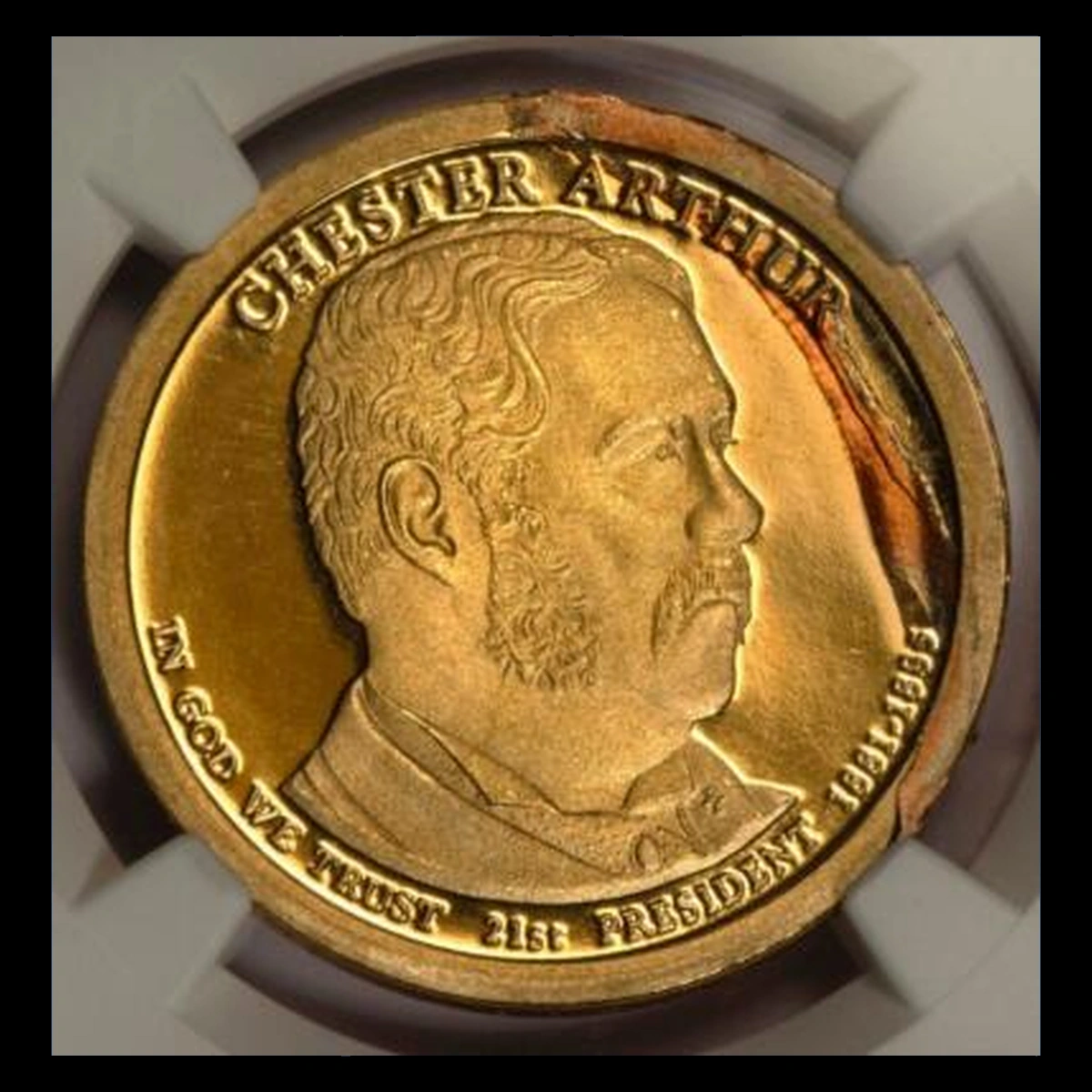
6. 2012 Dollar An impression or trapped object on an Arthur Proof: struck through Error
Two San Francisco Arthur Proofs illustrate separate outcomes. A PCGS PR68 Deep Cameo coin was struck through scrap, while an NGC PR68 Ultra Cameo example retains material and weighs 8.3 grams.
In each case an obstruction interfered with the design. Being struck through scrap differs from the blank itself being made of scrap.
How to Identify
Inspect where normal design stops at the impression or meets the retained object. Leave attached material in place without probing beneath it.
Gouges, scratches, and corrosion can also disrupt a finished Proof surface. The recorded 8.3 grams belongs only to the retained-material coin and cannot identify the other specimen.
Preserve the Arthur portrait and original reflective and frosted surfaces in the photographs. The supplied account does not fix an exact affected location or material for both coins.
What It’s Worth
Comparable authenticated Arthur Proof errors have an estimated range of $100–$2,000.
The PCGS PR68 scrap example sold at GreatCollections in February 2024, but its public price is hidden. Its sale therefore supplies no realized amount to quote.
Conclusion
Edge classifications depend on what actually survives: shallow strokes, some lettering, no inscription, or two complete sequences. The president and Cleveland’s term determine which catalog comparison applies.
Face doubling and Arthur Proof obstructions require separate checks from edge errors. Keep both faces, the whole edge, and any retained material documented together, with specimen-specific grades and weights attached to the correct coin.