Rare 2015 Sacagawea Dollar Errors (List & Pictures)
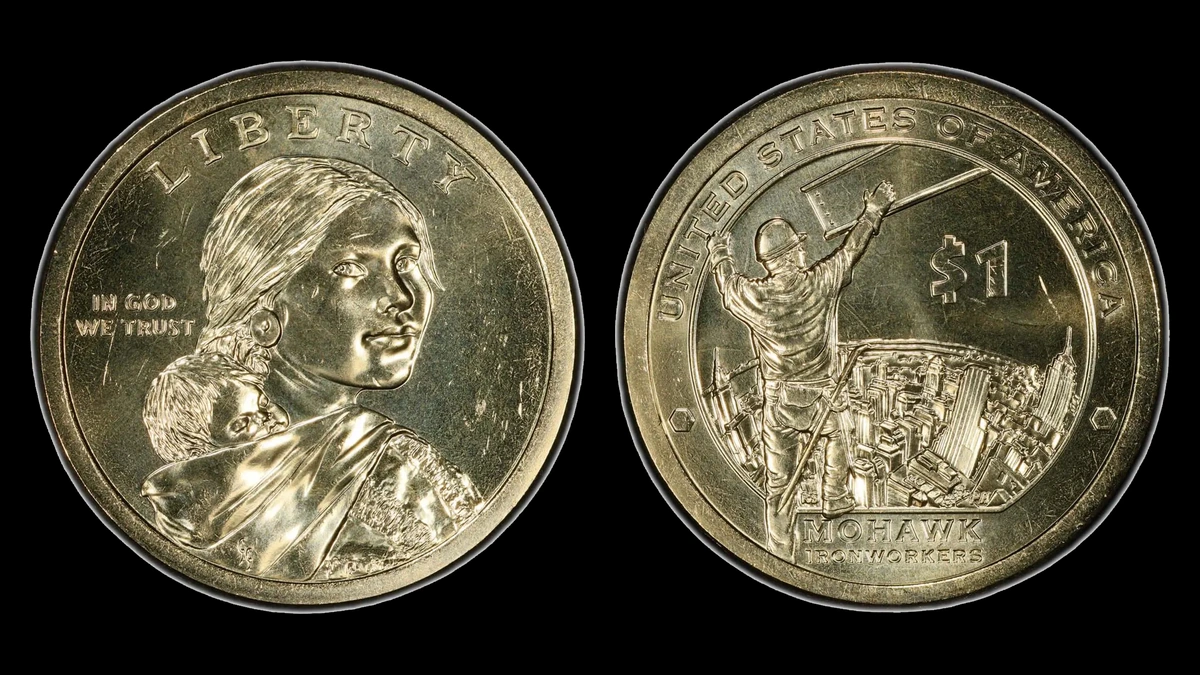
A faint inscription on an ordinary Philadelphia dollar is a different comparison from repeated edge stars on the enhanced West Point issue. The mint and finish matter when examining 2015 Sacagawea dollar errors.
Estimated values for confirmed examples span $20–$1,000. A different-series 2007-P John Adams dollar with overlapping edge lettering brought $288 in February 2022.
Keep the Mohawk Ironworkers reverse visible while following the edge around the coin.
2015 Dollar Shallow Strokes or a Blank Edge: Weak and Missing Lettering Error
Ordinary 2015 dollars carry the date, mint letter, and E PLURIBUS UNUM on the edge. That inscription is applied separately from the designs on the two faces.
PCGS lists weak lettering on ordinary Philadelphia Position B coins. Position B describes a normal reading direction, while the error concerns how fully the strokes formed.
A year guide also reports complete omission without establishing a particular mint or finish. That description must stay separate from a weak inscription with surviving words.
How to Identify
Find the clearest letters and use them as a starting point for a full turn. Note where strokes grow shallow, stop, or return.
Move the light before deciding that a section is empty. A recessed line can disappear in glare and become readable from the side.
Record 2015 and P wherever they survive on the Philadelphia weak-edge candidate. One normal inscription in Position B does not establish an error.
If nothing remains anywhere, inspect the edge for filing, rounding, or polishing. A normal dollar is about 26.5 millimeters across, though a matching diameter alone cannot prove that its edge is original.
What It’s Worth
$20–$650 covers the ordinary weak- and missing-edge estimates. Clearly abnormal weak lettering may fit $20–$350, while confirmed complete absence can fit $50–$650.
The year guide estimates about $300 for a weak-lettering MS65 example. That is a guide figure for an attractive unworn coin, not a recorded auction sale.
A 2007 Madison missing-edge dollar graded NGC MS67 brought $119 in July 2025. Its different series, date, and high grade must remain part of the comparison.
2015 Dollar Repeated Edge Stars on the Enhanced W Issue: Reported Doubling Error
The West Point dollar has deliberately contrasting textures from its enhanced collector finish. It is not the ordinary Philadelphia product.
A collector reported doubled edge stars and said PCGS once labeled an example SP69 Doubled Edge Lettering. The same account says the service later declined to recognize a similar feature on another submission.
That records a disputed attribution rather than proving two full lettering passes on every doubled-looking star. SP69 refers to very high preservation of the special-finish coin.
How to Identify
Confirm the W and enhanced surfaces before studying the star shapes. Keep adjoining letters in the same close-up so the feature has context.
Follow any apparent second impression around the edge. One enlarged star point may instead show a notch, reflection, or flattened metal.
Change the light and look for two actual recessed shapes that remain in place. Leave a sealed coin in its holder and obtain edge views through it.
The collector’s account describes conflicting grading decisions. A current assessment of the actual specimen matters more than treating an older label as a universal rule.
What It’s Worth
$100–$1,000 is the conditional estimate for a W dollar whose repeated edge feature is accepted as a genuine mint error. Clear repetition and untouched enhanced surfaces support the stronger comparisons.
A 2007-P John Adams overlapping-edge dollar sold for $288 in February 2022. That ordinary Presidential coin has a different finish and belongs to another series.
The range should not be applied from a seller’s wording or an old label alone. The present coin’s accepted feature needs to support the error comparison.
Conclusion
For an ordinary 2015 dollar, determine how much edge text actually survives. For an enhanced W coin, inspect the repeated stars and neighboring inscriptions as one pattern.
Those are separate searches with different evidence levels and finishes. A complete edge-photo sequence, readable mint information, and the Mohawk Ironworkers reverse provide a stronger basis for identification than one striking close-up or a borrowed auction price.