Rare 2018 Half Dollar Errors (List & Pictures)
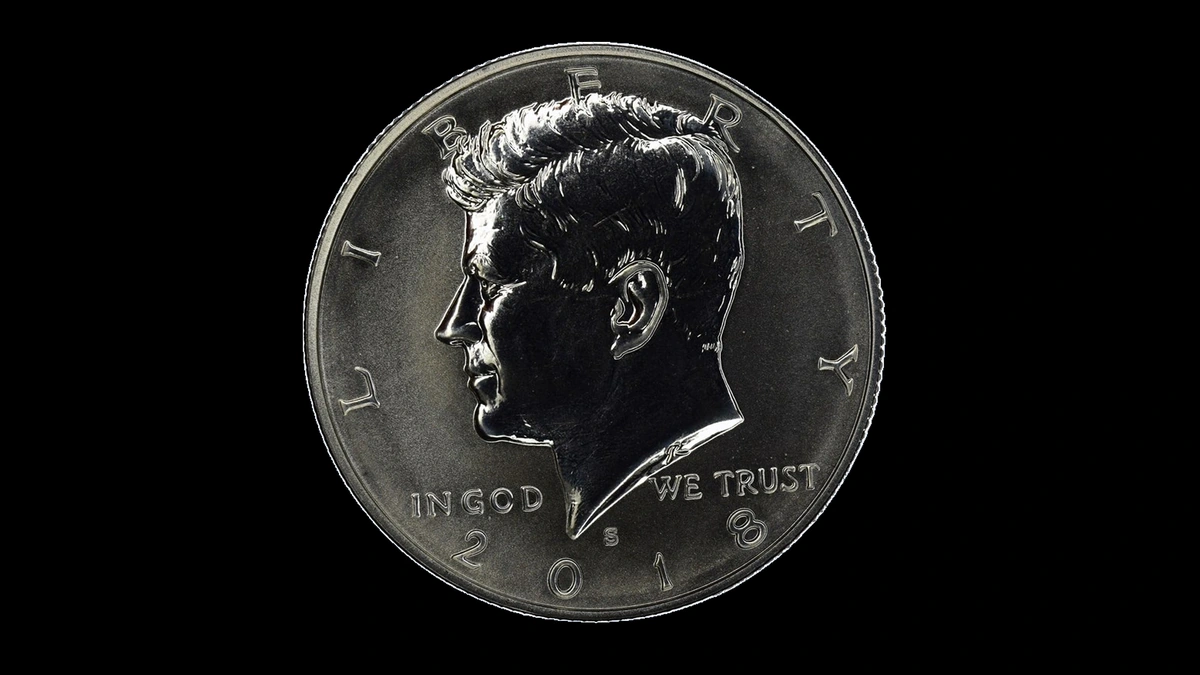
Before treating a dull area on a 2018 half as damage, establish which collector finish you are viewing. The recognized Light Finish belongs specifically to the silver reverse Proof.
Estimated values for 2018 half dollar errors range from $50 to $700. The highest supplied auction comparison, $552, is a different-year off-center coin; a PF70 Light Finish sold for $200 in 2018 and $76.15 for another example in 2026.
Compare finish first, then lettering, local interruptions, and physical changes to the metal.
| Observation | Category | Estimated value |
|---|---|---|
| Reduced obverse contrast | Silver reverse Proof Light Finish | $50–$150 |
| Local Proof depression | Reported strike-through | $75–$600 |
| Repeated raised detail | Reported doubled dies | $50–$350 |
| Raised rim-connected patch | Reported cud | $50–$200 |
| Missing outer face layer | Reported missing clad layer | $125–$700 |
| Missing outline section | Reported clip | $75–$550 |
| Complete design on wider metal | Reported broadstrike | $100–$500 |
| Shifted incomplete design | Reported off-center strike | $100–$650 |
Clad halves normally weigh 11.34 grams, while 90% silver Proofs weigh 12.50 grams; both are about 30.6 millimeters wide with edge grooves. S appears on different collector issues, so the mintmark alone does not identify composition or finish.
1. 2018 Half Dollar The portrait and background contrast less strongly: Silver Reverse Proof Light Finish Error
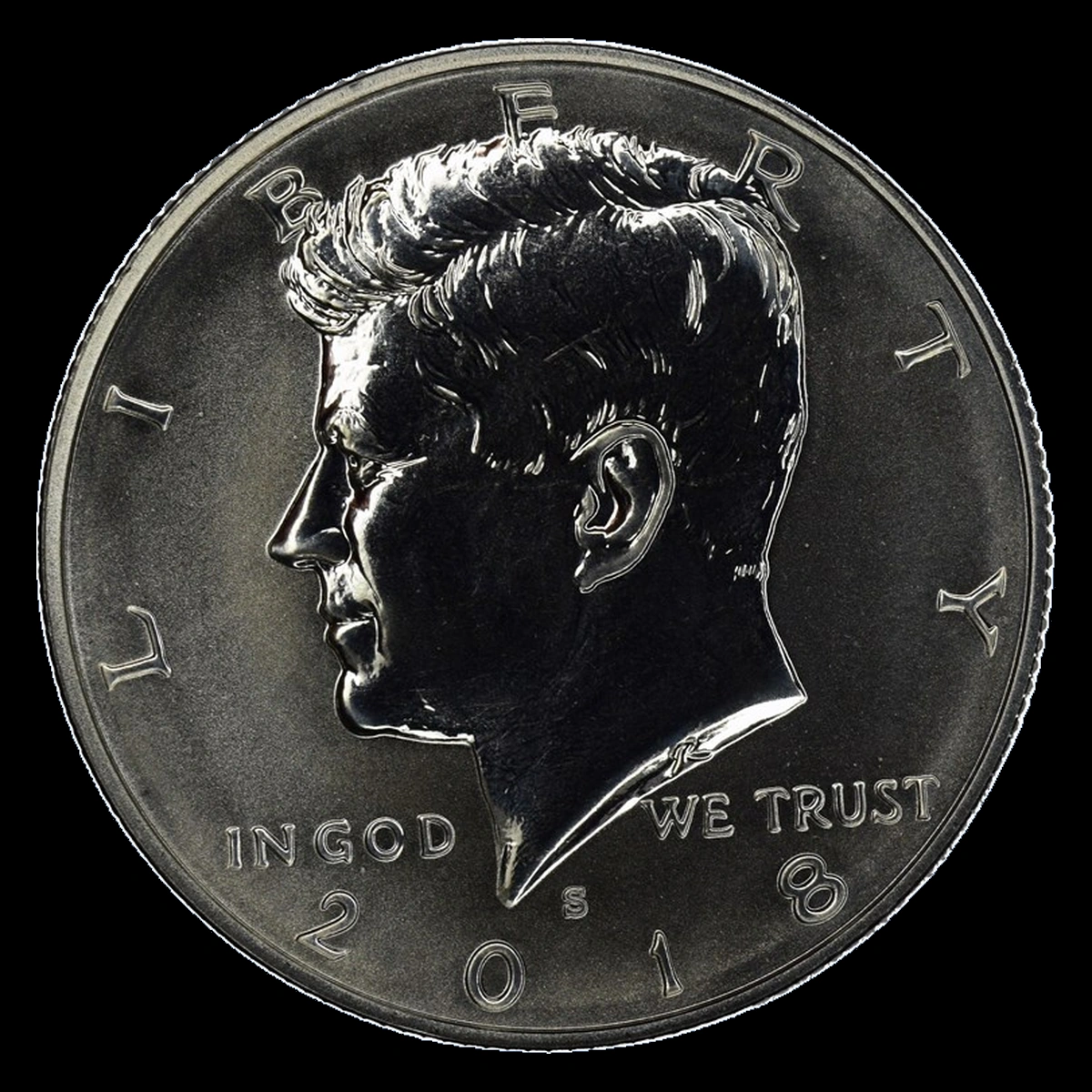
The recognized Light Finish changes the obverse appearance, especially the broad areas beside Kennedy. NGC announced the variety on the 2018-S silver reverse Proof in September 2018.
Its initial explanation proposed incomplete die preparation. A later Mint explanation described intentional differences in laser-frosting strength on the normal issue, so appearance and a proven production cause should not be treated as the same finding.
How to Identify
Place a normal 2018-S silver reverse Proof beside the candidate under identical soft lighting. A conventional Proof has a different normal treatment and cannot supply the same comparison.
Move both coins through the same viewing angles and inspect for persistent reduced contrast around Kennedy. Haze, scratches, wear, or a single dull reflection can alter the photograph without establishing the variety.
Check the coin and label against NGC’s recognition. The reported Mint explanation of surface treatments provides context without proving one definitive cause for every Light Finish coin.
What It’s Worth
Attractive recognized examples in high Proof grades have an estimated $50–$150 range. An NGC PF70 Light Finish sold for $76.15 in June 2026.
An earlier NGC PF70 result was $200 in 2018. PF70 is the highest condition grade, but that older amount is not a guaranteed later price.
2. 2018 Half Dollar One area of a Proof design is interrupted: Reported Strike-Through Error
A seller describes an obverse strike-through on a conventional 2018-S silver Proof in PF69 Ultra Cameo. Ultra Cameo refers to strong contrast between frosted designs and reflective fields.
A separate ASG inventory entry concerns a reverse Proof with an abbreviated obverse strike notation. Neither description supplies an exact location or material, and they do not establish one shared specimen.
How to Identify
Confirm conventional or reverse Proof from the packaging or holder, then look for a local depression or interrupted design. Overall reduced contrast is the Light Finish question, not proof of an object impression.
Inspect the margins for torn metal or raised lips from later impact. The ASG inventory should not be used to assign the seller’s PF69 Ultra Cameo grade to its separate reverse Proof.
What It’s Worth
A clear mint-made impression on a preserved silver Proof has an estimated $75–$600 range. The seller’s grade description is not a realized price.
A 1992-D NGC MS64 struck through an edge-groove fragment sold for $336 in July 2021. That different-year circulation coin is an object-impression comparison with a different finish.
3. 2018 Half Dollar A second raised outline repeats: Reported Doubled Dies Error
Philadelphia reports mention the date’s 8, LIBERTY, and IN GOD WE TRUST, plus reverse doubling without a precise location. They do not establish a named certified variety.
Denver’s separate listing also mentions doubled dies but does not demonstrate the Philadelphia pattern on D coins. Any true duplicated detail originated in the die before striking.
How to Identify
On a Philadelphia candidate, compare the 8 and nearby numerals with a normal same-finish coin. Move the light to distinguish stationary raised contours from reflections.
A flat ledge may result from movement during striking. Denver and reverse claims need their own matching photographs rather than inherited front-side diagnostics.
What It’s Worth
The estimate is $50–$350 for clear matched doubling on an unworn example, using the guide’s roughly $50–$200 range as a starting point. Stronger comparisons require especially visible detail and reliable identification.
The guide mentions an MS69 front-and-back example without enough identifying information to use a sale. A high numerical grade alone does not establish doubling strength or turn that report into an auction record.
4. 2018 Half Dollar A raised patch replaces design at the rim: Reported Cud Error
The 2018-D report names a noticeable cud without specifying its face or clock position. A cud occurs when a piece breaks from the die’s edge and coin metal rises into the resulting opening.
The missing die portion cannot form its intended detail, leaving a raised patch attached to the rim. A bent-over rim can look similar while having a different origin.
How to Identify
Trace the patch’s continuous connection to the rim and see whether it replaces normal design. Inspect for folding, a solder seam, or attached material over an already struck surface.
Photograph the entire affected face as well as the close-up. The year-by-year listing does not supply a location that can be assigned without viewing the actual coin.
What It’s Worth
A confirmed visible cud on an unworn 2018-D has an estimated $50–$200 range. Larger patches extending into the design can be more conspicuous than small border breaks.
Modern Kennedy guide comparisons include a 2008 discussion around $50–$150 and above for substantial breaks. These figures are estimates rather than a sale or size measurement for the reported 2018 coin.
5. 2018 Half Dollar A face loses outer metal and exposes copper: Reported Missing Clad Layer Error
A Denver MS65 is reported with missing cladding, and Philadelphia listings name the category without specifying a face or weight. Ordinary P and D halves have copper-nickel outer layers bonded to a copper core.
Layer loss changes the metal structure rather than simply its color. The 90% silver Proof does not have that copper-core construction.
How to Identify
The copper band visible at a normal clad edge is expected. For a suspect face, inspect for exposed interior metal and a physical step against any surviving outer layer.
Check weight alongside both faces and the edge for stripping, plating, and chemical damage. A stain or small weight difference alone cannot establish an original missing layer.
What It’s Worth
The estimate is $125–$700 for confirmed layer loss on an unworn coin. Readable design and substantial original exposure help support the stronger end.
A 1998-P in NGC MS63 with defective obverse cladding sold for $149 in March 2023. No auction price for the reported 2018-D MS65 is supplied.
6. 2018 Half Dollar An incomplete blank leaves a gap: Reported Clipped Planchet Error
The reported S-mint Proof is PR66 and described as clad, while separate Philadelphia and Denver listings also name clips. No supplied description establishes the S Proof’s gap shape.
A curved gap can begin when the blanking punch overlaps a previous hole, and a straight gap can follow a strip edge. Either explanation needs the actual boundary rather than a shape chosen from the error name.
How to Identify
Use the clad weight standard for the reported S Proof and keep its finish separate from regular P or D coins. Inspect how the design formed beside missing metal.
Filing, sharp burrs, or cuts through finished detail can indicate later damage. Opposite-rim weakness is helpful when present but need not be obvious on every clip.
What It’s Worth
Genuine collectible clips have an estimated $75–$550 range, with an attractive identified Proof potentially making a stronger comparison. The guide does not verify a sale for its PR66 report.
A 1998-D PCGS MS63 10% triple clip brought $99 in March 2025, while a separate NGC MS66 45% curved clip realized $240 in July 2021. Both circulation issues differ from the S Proof in finish and must retain their own gap measurements.
7. 2018 Half Dollar A complete design sits within spread metal: Reported Broadstrike Error
A collar failure can allow the blank to expand while preserving the full design. The collar is the ring that normally limits diameter during striking and forms the edge grooves.
The 2018 reference names broadstriking without a mintmark or measured specimen. It should not be turned into a specific Philadelphia, Denver, or San Francisco attribution.
How to Identify
Follow the outer design on both faces and measure the outline in several directions. A broadstrike keeps the intended picture, whereas an off-center strike loses some of it beyond the blank.
Inspect the expanded border and interrupted edge grooves for natural formation. Later flattening can enlarge a coin but may crush details and leave pressure marks.
What It’s Worth
A confirmed unworn 2018 broadstrike with obvious spreading has an estimated $100–$500 range. The year reference supplies a category rather than a realized exact-year result.
A 1998-P NGC MS65 broadstrike on a Type 1 blank sold for $106 in January 2010. That blank had not received the usual rim preparation, making it a different-year combined-error comparison.
8. 2018 Half Dollar Bare metal lies beside a shifted incomplete picture: Reported Off-Center Strike Error
The guide’s discussion of 15–30% displacement is general guidance, not a measured certified 2018 example. No particular mintmark or direction is established.
An off-center blank receives only the design that reaches its displaced surface. This leaves unstruck metal opposite the missing intended details.
How to Identify
Read the surviving date and compare both faces using the same physical edge as a reference. Matching displacement differs from an uneven border produced by one shifted die.
Inspect the bare area for original texture rather than scraping or smoothing that erased a previous design. Displacement itself removes no metal, so shape and surfaces must explain more than a low scale reading.
What It’s Worth
The estimate is $100–$650 for a confirmed collectible 2018 offset. A readable date and an obvious unstruck crescent support stronger comparisons than slight rim unevenness.
A 1999-D NGC MS66 described as 65% off center sold for $552 in March 2023. Its larger displacement and different date cannot be assigned to the broad 2018 report.
Conclusion
Normal finish differences come first in a 2018 comparison: silver reverse Proof Light Finish, conventional silver Proof, and clad collector or circulation issues are distinct products. A local impression requires different evidence from reduced overall contrast.
For missing metal or shifted designs, use the actual boundary and both faces rather than a borrowed percentage or mint. Several categories remain reports whose estimates require confirmation on the candidate itself.