Rare 1797 Half Dollar Errors (List & Pictures)
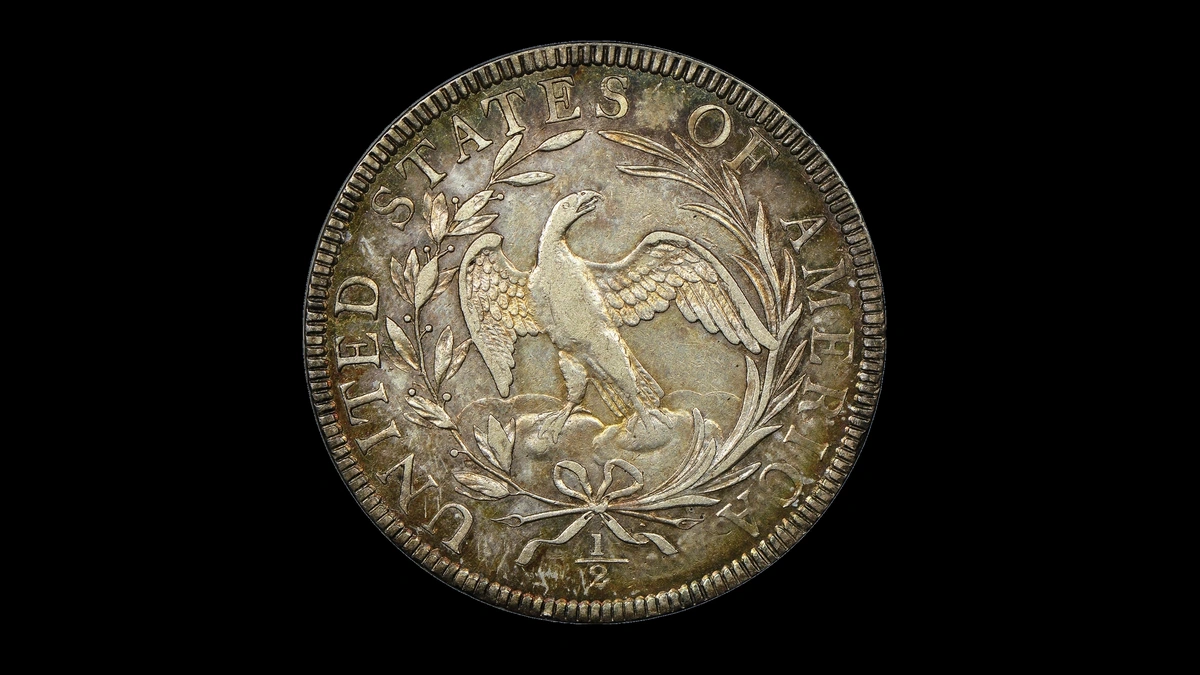
Several unusual marks on a 1797 half dollar can need three different checks: tracing a ridge, matching a faint shape, and reading the edge. This guide to 1797 half dollar errors follows that order.
Estimated whole-coin values span $25,000–$60,000. A circulated example sold for $55,463 in 2025, showing that the rarity of the date already accounts for substantial value before any error premium is considered.
| What catches your eye | Where to examine | Feature | Estimated value |
|---|---|---|---|
| Connected raised lines | Second front star and reverse wreath | Die cracks | $45,000–$60,000 |
| Faint, misplaced design outlines | Spaces near Liberty and the eagle | Reported die clash | $30,000–$50,000 |
| A possibly repeated word sequence | Entire lettered edge | Reported repeated edge lettering | $25,000–$45,000 |
Confirm the basic coin before interpreting a mark: the 1797 half dollar has fifteen front stars and a small eagle on the back. Its normal unworn weight is about 13.48 grams and its diameter roughly 32.5 mm; the much smaller half dime is a different coin.
1. 1797 Half Dollar Lines Through a Star and the Wreath: Die Cracks Error
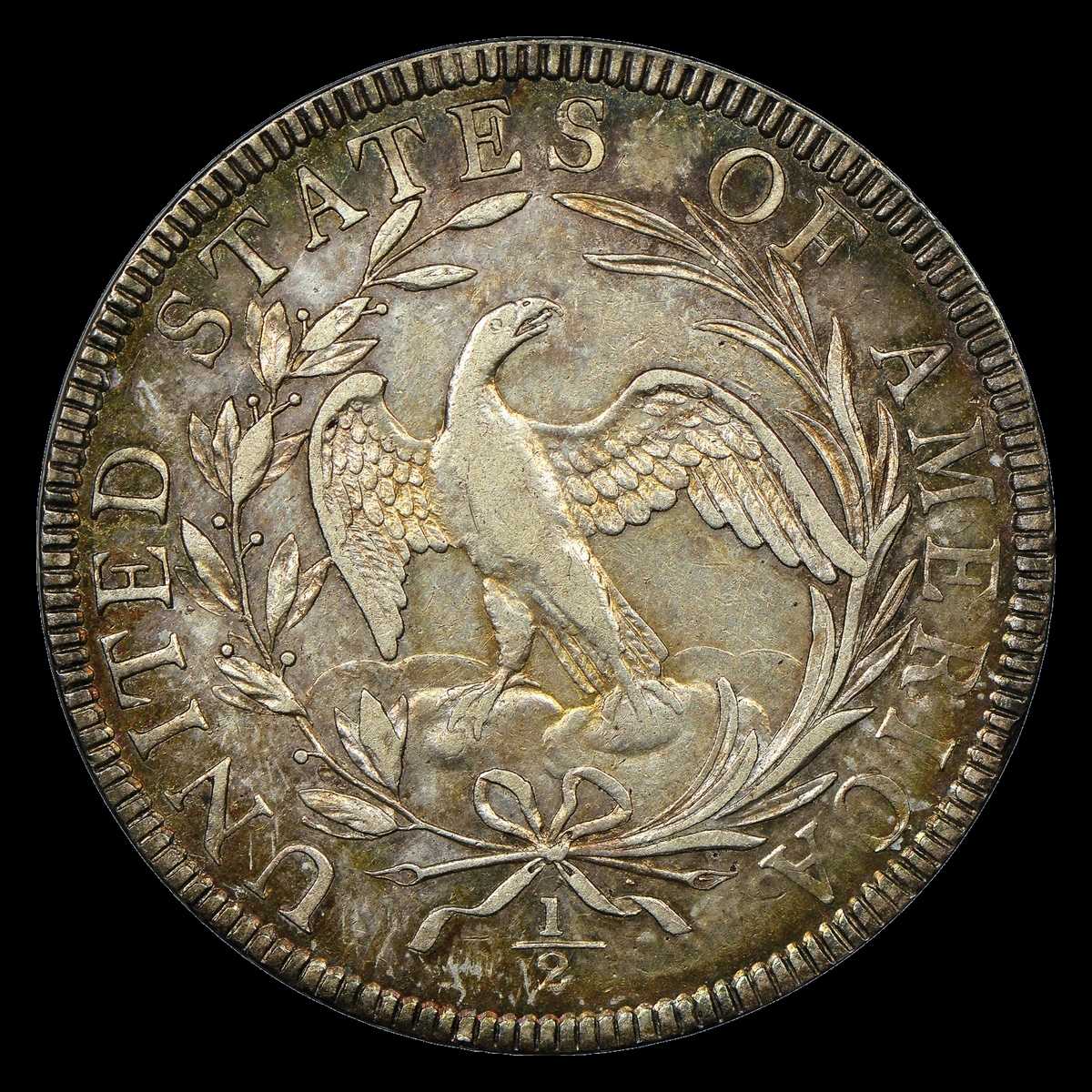
Three raised paths help identify the 1797 variety known as O-101a. One travels through the second front star toward Liberty’s hair curl, while two cross the wreath toward the eagle’s wings.
Each ridge formed when silver filled a narrow split in a steel die, the tool that stamped the coin. The cracked object was the tool, not the coin receiving its impression.
How to Identify
Count from the lower-left star to find the second star. Follow the line inward from the rim and check its connection with the nearby curl.
On the reverse, search near nine o’clock for one path and above the O in the lettering for the other. Both should continue across the wreath toward a wing.
Match all three routes with the O-101a reference, allowing for portions weakened by wear. The catalog number identifies a specific die pairing and stage, not every 1797 coin with a raised line.
A scratch can leave bright metal along its sides, but usually has a recessed cut between them. Side lighting and a magnifier help distinguish that damage from a ridge left by the die.
What It’s Worth
Estimated range: $45,000–$60,000 for similar Very Fine coins with pleasing surfaces. These circulated pieces retain enough detail to show the crack arrangement.
The documented PCGS VF25 O-101a sold for $51,750 in November 2011. Its description records the front crack and both reverse cracks.
The pattern helps establish which coin is being compared. The date’s rarity and the quality of the surviving surfaces account for much of the amount paid, so deep scratches would make another example a weaker comparison.
2. 1797 Half Dollar A Faint Shape in an Empty Area: Reported Die Clash Error
After checking the clearer ridges, look for faint outlines near Liberty or the small eagle. A clash can leave a piece of the opposite design in an area where it does not normally belong.
The dies can acquire these marks by hitting each other without a blank between them. Their next strikes then pass the unwanted traces onto coins.
Clashing is reported for this date, but the supplied evidence does not assign one exact diagnostic shape to every example. Treat each candidate as a feature that still needs a visual match.
How to Identify
Use angled light to explore the open background on both sides. A useful trace should be connected enough to resemble a particular part of the opposing design.
Compare within the half-dollar design, keeping the date and denomination consistent. A photograph of a similarly dated half dime cannot establish a clash on this much larger coin.
Random handling marks and contact impressions do not show the necessary relationship between the two dies. If heavy wear has erased that relationship, the remaining line alone may not permit a confident identification.
What It’s Worth
Estimated range: $30,000–$50,000 for genuine worn examples around Very Good to Fine with modest clash marks. This estimates the whole scarce half dollar rather than a separate clash premium.
A PCGS F15 example sold for $55,463 at GreatCollections in 2025. It is a date-and-grade comparison, not a confirmed sale of the particular clash report above.
The proposed lower range allows for greater wear. A faint outline without a firm identification should not be used to add a large amount to the coin’s value.
3. 1797 Half Dollar Words Appearing More Than Once: Reported Repeated Edge Lettering Error
The edge normally reads FIFTY CENTS OR HALF A DOLLAR, separated by ornaments. This lettering was applied separately from the designs on the two faces.
A Spink description raised the possibility of repeated edge lettering on a 1797 half dollar, but included a question mark. That qualification matters because the same coin had scratches and tool marks.
A faulty pass through the edge-lettering equipment could repeat letters without a second strike to either face. The catalog report alone does not settle whether that happened to this coin.
How to Identify
Read the inscription all the way around, using overlapping photographs if needed. One crowded patch can hide the relationship between the words before and after it.
Seek a repeated sequence that could belong to another pass through the lettering equipment. Dents, scrapes, and later cut-in letters can distort the inscription without producing a genuine repeated sequence.
The uncertain Spink description makes an uninterrupted edge view especially important. Where tool marks overlap the suspected letters, a specialist needs to assess the original lettering and the later disturbance together.
What It’s Worth
Estimated range: $25,000–$45,000 for a worn, damaged coin comparable to the reported example. Spink listed it with an NGC VF Details grade, a condition designation that recognizes a problem rather than assigning a normal numeric grade.
The Spink catalog estimate was £18,000–£20,000, not a realized sale price. It also does not prove an extra premium for repeated lettering.
The $55,463 F15 comparison above had a normal numeric grade. Damage helps explain why the tentative range for the Details coin is lower despite its possible edge feature.
Conclusion
The three crack paths provide the clearest specific match in this group of 1797 half dollar features. Clash traces require a match to the opposite face, while the edge-lettering report remains qualified and needs a full inscription check.
Estimated values of $25,000–$60,000 concern complete rare coins. Wear, scratches, and confidence in the identification determine which comparison is useful.