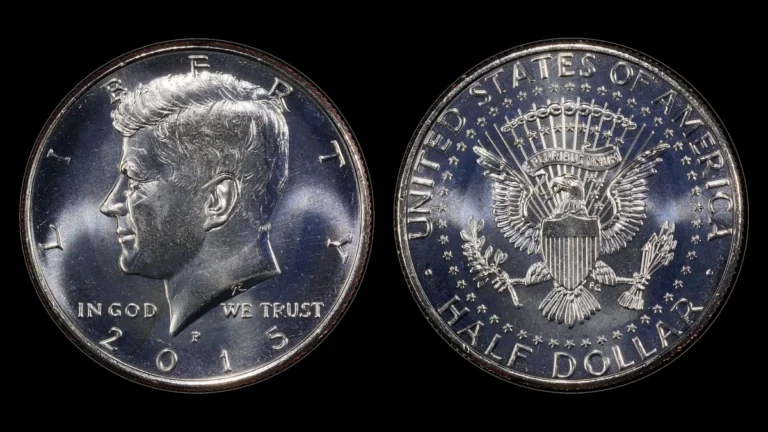
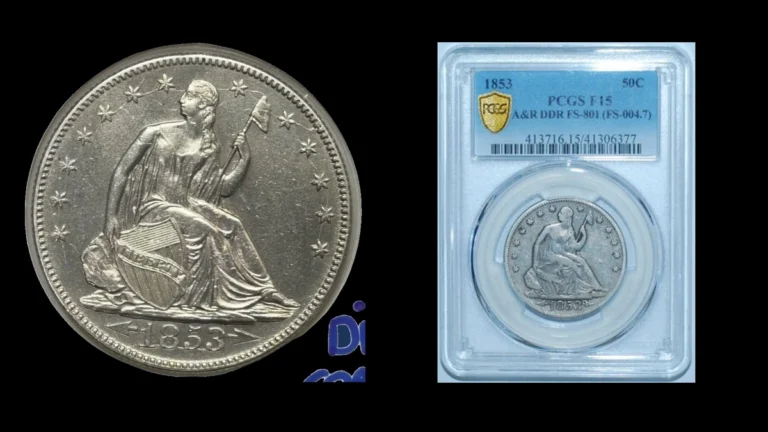
Rare 2008 Half Dollar Errors (List & Pictures)
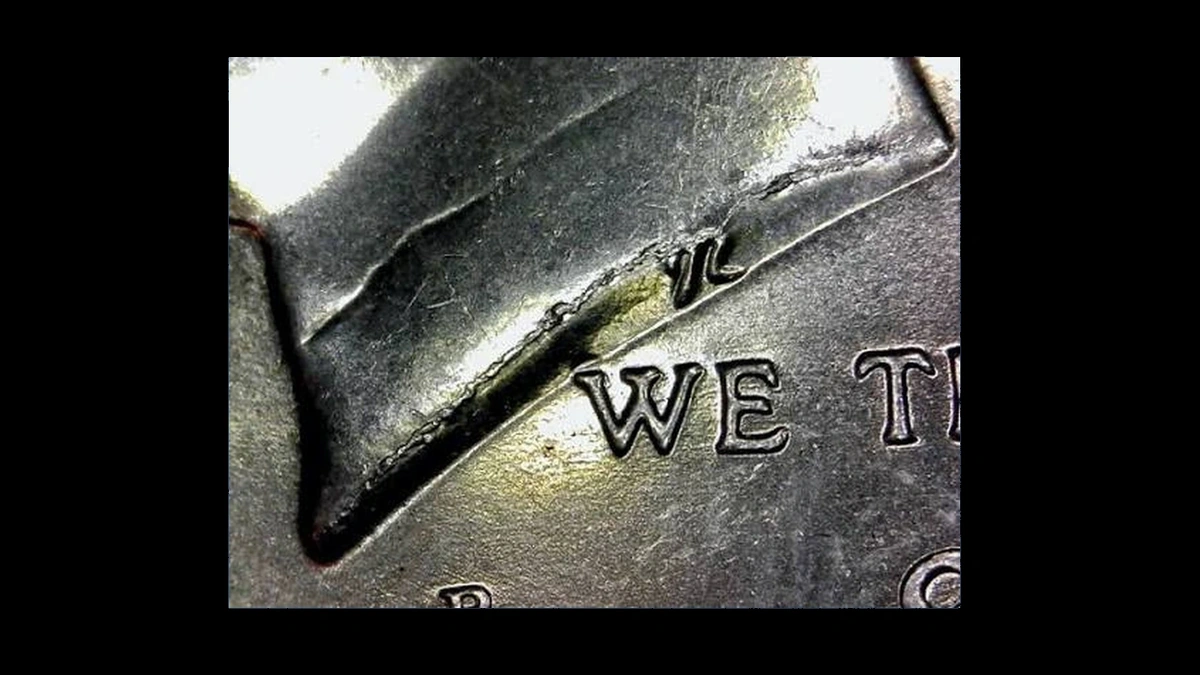
A 1999-D Kennedy half struck 65 percent off center sold for $552 in March 2023. That different-year result provides context for the reported 2008 category.
Estimated 2008 half dollar errors values span $5–$800. Start by deciding whether a feature is raised, recessed, missing, or displaced.
Ordinary and satin mint-set P and D halves are clad coins weighing 11.34 grams and measuring about 30.6 millimeters, with reeded edges. Silver collector proofs require a separate composition comparison.
| What changed? | Possible category | Estimated whole-coin value |
|---|---|---|
| Narrow raised line | Die crack | $5–$50 |
| Raised patch at rim | Cud | $50–$200 |
| Depression or interrupted detail | Strike-through | $15–$400 |
| Absent outer covering | Missing clad layer | $125–$700 |
| Missing edge section | Clip | $50–$300 |
| Plain metal beside displaced image | Off-center strike | $75–$600 |
| Several overlapping design remnants | Multiple strike | $200–$800 |
| Repeatable small duplicated detail | Reported doubled die | $60–$350 |
1. 2008 Half Dollar A Thin Ridge Crosses the Surface: Reported Die Cracks Error
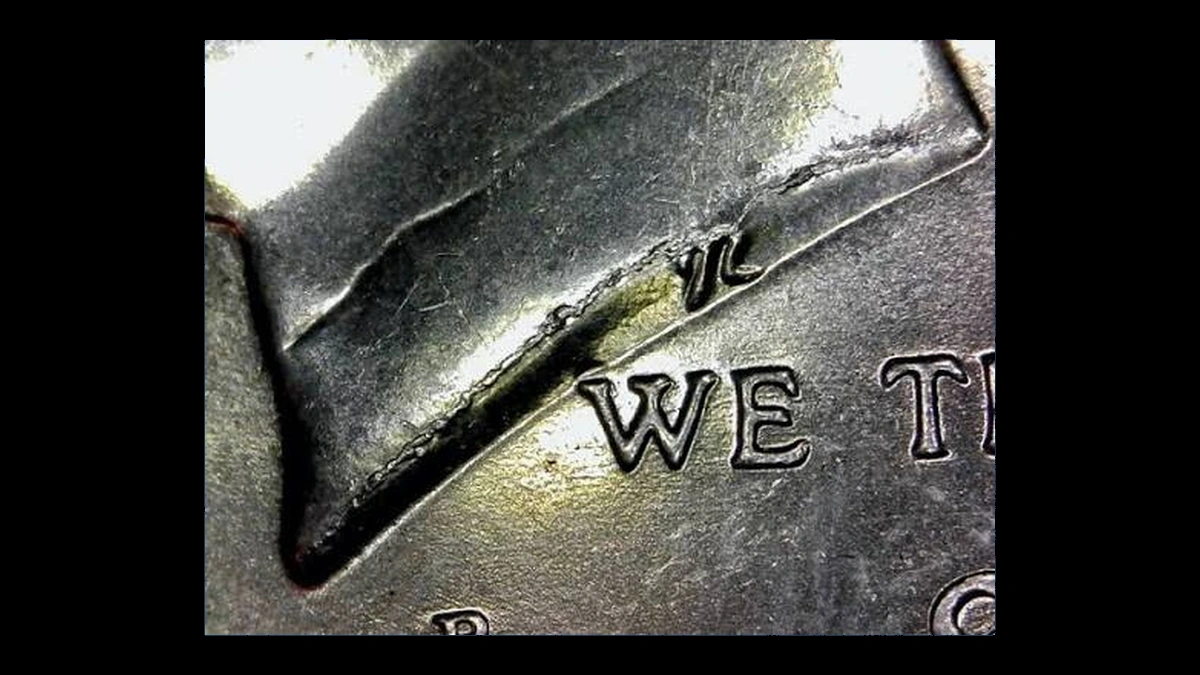
A raised line can originate from a fracture in the die, the steel stamping tool. Coin metal enters the opening during striking and retains its shape as a ridge.
The 2008 guide reports cracks on Philadelphia and Denver issues and suggests examining lettering and hair. It establishes no fixed route for one named specimen.
How to Identify
Compare the suspicious feature with the intended hair and lettering on a normal coin. Some narrow raised details are part of the design.
Use changing side light to follow the whole line and check for an incuse groove. A scratch can push up a bright lip, while loose material can sit above the surface without being original metal.
Leave the surface untouched and document the path through surrounding details. Different lengths may reflect a growing die crack, but length alone does not establish its origin.
What It’s Worth
A confirmed thin crack on an unworn coin has an estimated $5–$50 value. Clear visibility can add interest, but many tiny ridges carry only a modest premium.
The range follows the year guide rather than a named 2008 sale. Condition and an original raised feature must support the comparison.
2. 2008 Half Dollar A Raised Mound Joins the Rim: Reported 2008-P Cud Error
A cud replaces part of the normal design with raised metal connected to the rim. It forms when a piece breaks from the edge of a die, leaving space that metal fills during striking.
The reported 2008-P category supplies no exact location. A small interior island of raised metal is a different feature, and a bent rim can create a misleading lump.
How to Identify
Follow the raised patch to its connection with the rim and locate the details missing beneath it. If ordinary design surrounds it completely, it does not match this rim-cud description.
Inspect the boundary for added metal and the edge for hammering or a folded rim. Weakness at the corresponding point on the other face may provide supporting evidence.
A cud does not inherently remove material from the coin. Normal measurements therefore cannot distinguish it from every raised damage mark.
What It’s Worth
A genuine cud on a collectible 2008-P is estimated at $50–$200. A broad clear break with good surrounding preservation may fit higher than a narrow rim feature.
The year guide supplies the estimate, with no particular 2008 sale assigned to it. A small interior lump should not automatically receive the same value.
3. 2008 Half Dollar Normal Detail Stops at a Depression: Obverse Strike-Through and Grease Reports Error
A confirmed 2008-P graded NGC MS66 was cataloged as obverse struck through. Material between the die and blank interrupted normal contact, but the listing does not identify what that material was.
Separate grease-related reports include P and D coins and satin mint-set pieces. Those reports do not establish grease as the cause of the certified coin’s mark.
How to Identify
Find the transition from normal detail to the affected area and inspect it under movable light. A strike-through can leave a shaped depression or localized weak detail.
Look for torn metal or a raised lip that would support a later gouge instead. Broad smoothing of exposed high points may reflect wear rather than an obstruction.
Record the mint and production finish along with the mark. Name a material only when its imprint provides evidence, rather than treating every weak patch as grease.
What It’s Worth
The estimated range is $15–$400, from small weak areas to visible impressions on well-preserved coins. Recognizable shapes can make an error easier to appreciate.
The 2008-P MS66 listing supplies no realized price here. A 1992-D struck through a fragment bearing edge grooves, graded NGC MS64, sold for $336 in July 2021 and serves as a different-year identifiable-object comparison.
4. 2008 Half Dollar Copper Appears Where a Covering Is Missing: Reported Clad-Layer Error
Copper visible at the edge is normal for a clad Kennedy half. A face showing exposed copper requires inspection for an actual missing portion of the copper-nickel covering.
Partial and missing layers are reported for 2008-P without an established face, weight, or amount of loss. Brown color alone may instead reflect toning, chemicals, or other surface changes.
How to Identify
Look for the physical boundary between surviving covering and exposed core, then photograph it obliquely to show any height difference. Examine face and edge together.
Compare weight loss with the amount of absent material. A large loss should affect weight, while a tiny area may be difficult to measure reliably.
Inspect the copper surface for original struck detail and signs of scraping or chemical roughness. The Philadelphia clad coin should not be confused with a silver collector proof.
What It’s Worth
A confirmed unworn example is estimated at $125–$700. A small defective area and an almost completely missing face require different comparisons.
A 1998-P with defective obverse cladding, graded NGC MS63, sold for $149 in March 2023. That related result is from another year and does not turn normal edge copper or staining into a valuable error.
5. 2008 Half Dollar The Outline Has an Original Gap: Reported Clipped Planchet Error
A clip begins with an incomplete blank before the faces receive their design. Overlap with an earlier punched hole can leave a curved gap, while cutting at a strip edge can create a straighter missing section.
The 2008 reports cover P and D coins but do not establish two specific specimens corresponding to those shapes. Every candidate needs its own physical evidence.
How to Identify
Weigh the coin and compare the shortage with its missing area. Reduced weight alone cannot tell whether metal disappeared before or after minting.
Inspect where the rim and nearby lettering approach the gap. A smooth transition formed during striking is different from a fresh cut through a finished design.
Look for file grooves and burrs, and examine the opposite rim for possible weakness. That supporting clue is not equally visible on every genuine clip.
What It’s Worth
A genuine 2008 clip has an estimated $50–$300 value. A readable date, attractive surfaces, and original rim formation matter alongside the amount missing.
A 1998-D ten-percent triple clip graded PCGS MS63 sold for $99 in March 2025. A separate 45-percent curved clip graded NGC MS66 brought $240 in July 2021; these are comparison results, not 2008 transactions.
6. 2008 Half Dollar The Image Is Displaced beside Plain Metal: Reported Off-Center Strike Error
An off-center strike leaves metal unstruck rather than removing it. The portion beneath the dies receives the image, while some intended outer details never reach the blank.
The category is reported for ordinary 2008 P and D coins without a specific direction or percentage. A slightly uneven border alone is insufficient.
How to Identify
Read the date and surviving mintmark, then compare both faces at the same part of the edge. Missing design and untouched metal should fit a compatible displacement.
Inspect the plain area for grinding or chemical roughening. If only one face is displaced, die misalignment may explain it better than a misplaced blank.
Record the outline and edge reeding before estimating any percentage. An undated coin cannot be assigned to 2008 merely from its Kennedy design.
What It’s Worth
Confirmed examples have an estimated $75–$600 range, from modest shifts to attractive dramatic pieces. Date survival and untouched surfaces affect appeal.
A 1999-D struck 65 percent off center and graded NGC MS66 sold for $552 in March 2023. Its year and percentage must remain separate from the broad 2008 report.
7. 2008 Half Dollar Several Details Survive in Another Position: Reported Multiple Strike Error
A coin remaining in the press can move and receive another blow. The later impression may overlap or flatten portions of the earlier image.
Multiple striking is reported for ordinary 2008 P and D coins, but no individual sequence, angle, or number of blows is established. Those details must come from the actual impressions.
How to Identify
Select more than one surviving repeated feature, such as a portrait edge and a nearby letter. Their relative positions should support the same movement between strikes.
Examine the reverse for related evidence, allowing for earlier detail flattened by the later strike. One shelf beside a letter can result from movement during a single blow.
Check any spreading and changes in reeding against the proposed sequence. Another strike can alter shape without removing metal.
What It’s Worth
The guide-based estimate is $200–$800 for clearly confirmed multiple strikes. Readable overlapping designs and an identifiable date support collector interest.
A 1998-P double strike with a broadened second impression, graded CACG MS64, sold for $317.20 in June 2026. That actual comparison does not establish the same grade or strike sequence for a 2008 coin.
8. 2008 Half Dollar A Small Duplicated Feature Repeats: Reported 2008-P Doubled Die Error
A doubled die contains repeated detail before striking and can reproduce it on multiple coins. This is different from the whole coin receiving another blow.
CoinTrackers reports the category for 2008-P but supplies no numbered variety or definite affected side. No specific ear, date digit, or feather should be invented as a diagnostic.
How to Identify
Compare the actual suspected detail with the same area of a normal 2008-P under similar light. Distinguish rounded repetition from a flat shelf, reflection, or worn-die texture.
Use comparisons of the same finish, since ordinary and satin mint-set surfaces look different despite sharing normal clad measurements. Search for a reliably identified matching pattern on another coin from the die.
Keep the full face visible alongside the magnified detail. Until a specific pattern is established, a thick-looking letter remains a candidate rather than a named variety.
What It’s Worth
A confirmed unworn example has a provisional estimated $60–$350 range. Clear repetition and reliable attribution must support any premium.
The estimate uses modern Kennedy comparisons, including a nearby 2007 guide starting around $60. That is a guide estimate, and no completed 2008-P doubled-die sale is supplied.
Conclusion
Start with what the coin physically shows: a raised ridge, an interrupted design, a missing layer, or another position of the image. Then compare the edge, mint, finish, and weight where relevant.
The certified 2008-P obverse strike-through establishes a specific example without identifying its obstruction. Other reported categories need their own evidence, so keep guide ranges and different-year sales distinct from confirmed facts about a candidate.