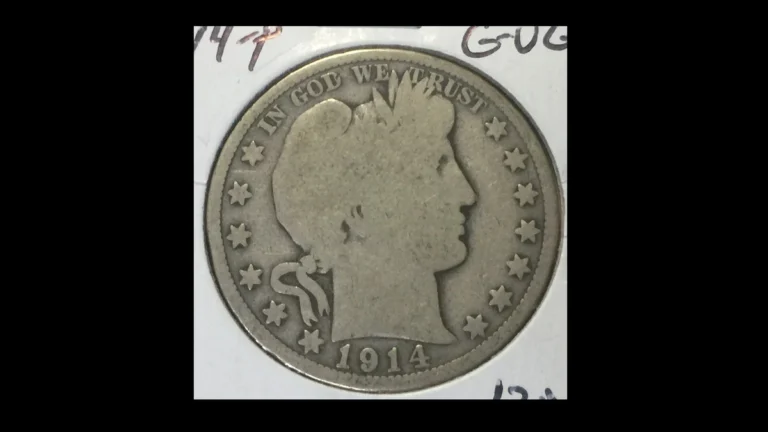
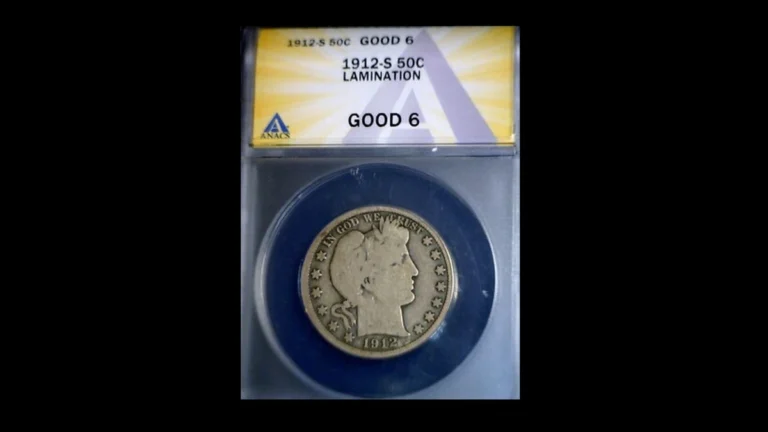
Rare 1911 Half Dollar Errors (List & Pictures)
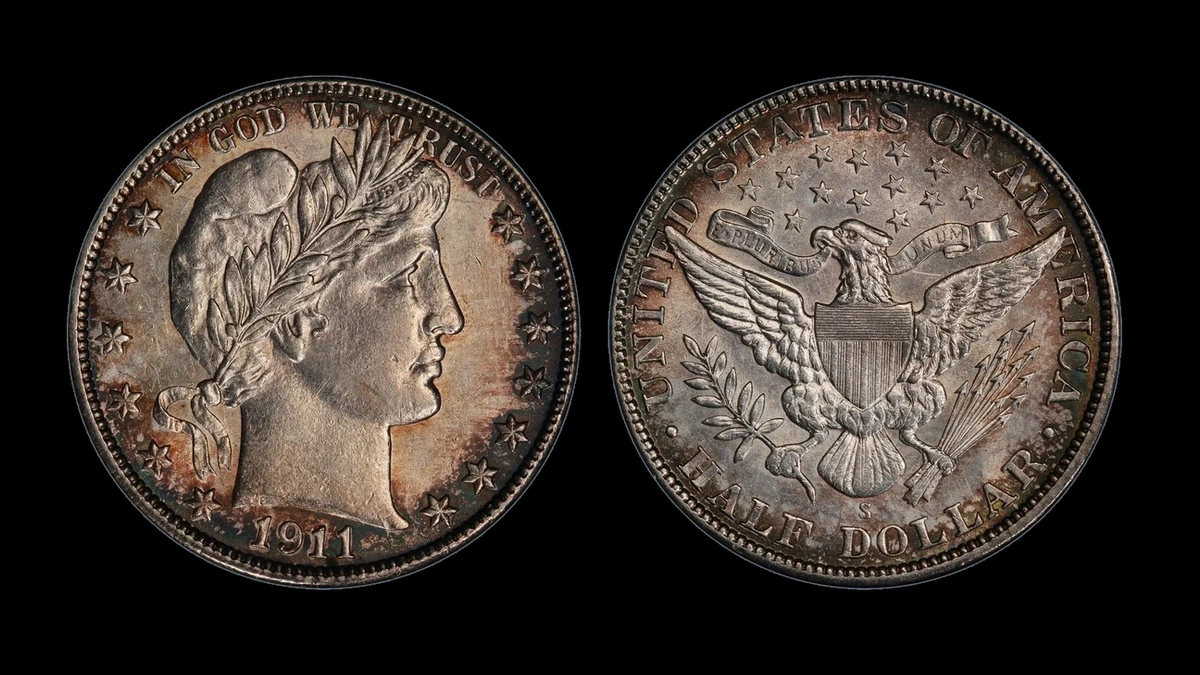
Does the S look upside down, doubled, or normal while the eagle faces the wrong way? Those observations lead to three different 1911 half dollar errors.
The estimates here span $75–$5,875, with the upper figure tied to an MS66 repunched-mintmark coin sold at Heritage in January 2016. A worn coin needs a lower-grade comparison.
Start with the mintmark close-ups, then use a controlled flip to check the relationship between the two faces.
| Observation | Check | Estimated range |
|---|---|---|
| The S seems upside down | Compare its top and bottom ends | $75–$250 for a genuine circulated example |
| A second S remains below the first | Match the FS-501 half-dollar outline | $4,500–$5,875 around certified MS66 |
| The reverse ends upside down | Flip top to bottom without twisting | $100–$300 for a circulated half-turn error |
A normal unworn Barber half weighs 12.50 grams and measures about 30.6 millimeters across, with grooves around the edge. A scale and calipers can check a loose coin, but the features below need their own visual tests.
1. 1911 Half Dollar An S with Reversed Ends: Inverted Mintmark Error
An S still resembles an S after a half turn. Its small end shapes, rather than its general outline, are the useful clues when looking for an inverted mintmark.
This can happen when a worker holds the mintmark punch upside down while marking the die. That steel tool then stamps the inverted letter onto coins.
The Barber Coin Collectors’ Society survey lists an inverted S for 1911, with no examples reported by its 2016 respondents. Treat that as a listed variety, not a count of newly confirmed coins.
How to Identify
Keep the eagle upright and compare the mintmark with a normal 1911-S photograph. Do not rotate one close-up to make it resemble the other.
Study both ends of the letter under a 10× magnifier. A damaged top or a worn lower end can change the apparent shape without turning the original punch upside down.
Look for a single inverted letter rather than two overlapping impressions. A piece of another S belongs to the next category.
A specialist comparison with the correct normal punch is useful before assigning the reported inverted variety. A vague impression that the letter looks unusual is not enough.
What It’s Worth
Estimated range: $75–$250 for a genuine circulated 1911-S inverted-mintmark example. This estimate uses the better-established 1909-S variety as a comparison.
The GreatCollections archive for 1909-S shows $17–$231 for heavily worn through moderately worn coins graded Poor 1 to Fine 15. One PCGS VG8 brought $64 in November 2013.
These are prices for 1909 coins. They help frame the estimate without establishing a completed 1911 inverted-S sale.
2. 1911 Half Dollar Part of a Second S: Repunched Mintmark Error
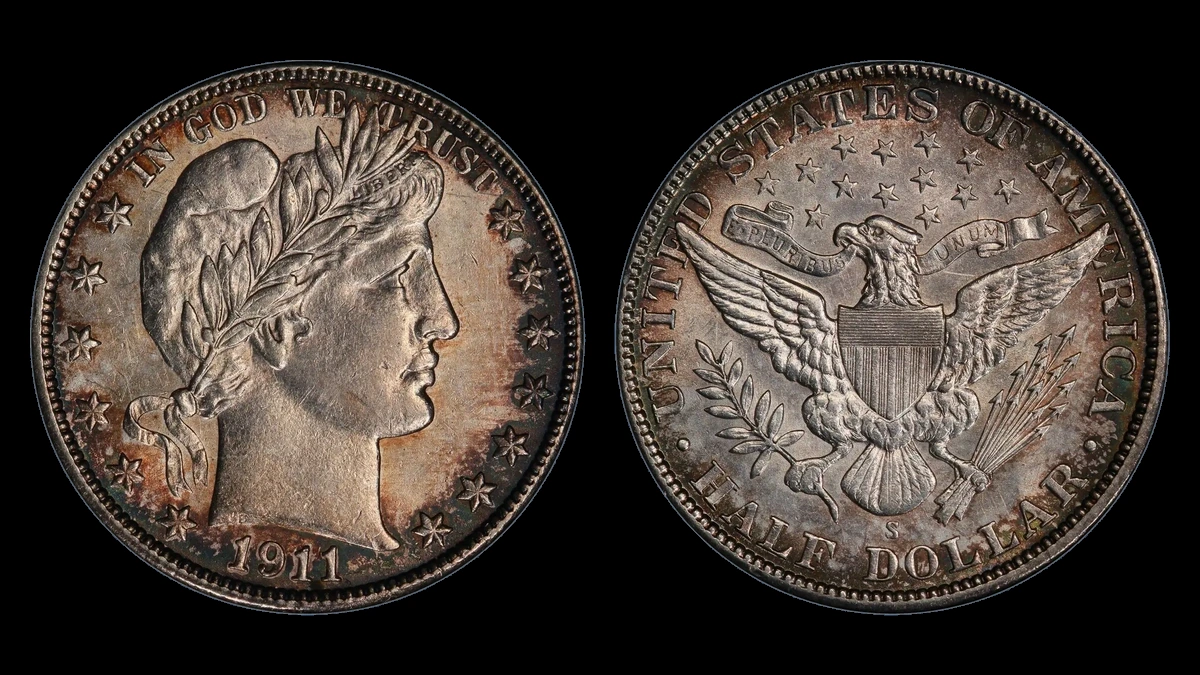
The recognized 1911-S/S variety called FS-501 preserves a remnant near the lower end of the S. Here, you are looking for overlap rather than an upside-down letter.
A second punch in a slightly different position did not completely hide the earlier mintmark. Each coin made from that die could receive the same small extra shape.
How to Identify
Confirm the date and HALF DOLLAR denomination before selecting an FS-501 photograph. Catalog numbers also appear on other denominations, so the number alone is not a complete identification.
Enlarge the S below the eagle, keeping some nearby surface visible. Compare its lower end with a confirmed 1911-S/S half dollar.
The earlier letter should form a matching outline. A flat shelf, rough corrosion, or metal displaced by a hit can thicken an edge without preserving another S.
This is a local mintmark feature. It does not mean the whole reverse was doubled or that the coin received two strikes.
What It’s Worth
Estimated range: $4,500–$5,875 specifically for certified examples around MS66. That high unworn grade requires strong preservation across the whole coin.
PCGS records the $5,875 Heritage sale of an MS66 in January 2016. The variety and the high grade both belong in that comparison.
Visible wear elsewhere does not disappear because the second S is clear. A circulated example should be compared with circulated coins, rather than priced from this MS66 bracket.
3. 1911 Half Dollar An Upside-Down Reverse After a Flip: Rotated Dies Error
For rotation, put the magnifier aside at first. You need to see how the complete front and back line up, not how an individual letter looks.
If one die turns from its normal position, the two faces no longer have their intended relationship. The design on each face can remain sharp and centered.
A Davissons catalog describes a 1911 half with a 180-degree reverse rotation in a four-coin group. It does not give that half’s mint or finish.
How to Identify
Hold Liberty upright and flip the coin from top to bottom without a sideways twist. A normal U.S. half dollar then shows the eagle upright.
On a coin with the reported 180-degree rotation, the eagle ends upside down. This half-turn relationship is also called medal alignment.
Repeat the movement beside a fixed vertical line or record it in one continuous video. Two separately straightened photographs cannot demonstrate the rotation.
Inspect the edge with a magnifier for a seam that could indicate an altered coin. Basic weight and diameter checks support the examination, but the controlled flip is what shows the alignment.
What It’s Worth
Estimated range: $100–$300 for a genuine circulated half with a half-turn rotation. The catalog’s $200 figure applied to four coins together, not an individual sale of the 1911 half.
For another-year comparison, a 2000-P Kennedy half with a 75-degree rotation sold for $79 in March 2025. It was graded PCGS MS61.
The 1911 estimate allows for an older silver issue and a larger turn. It should not be read as an auction result for the cataloged coin.
Conclusion
Use a close-up to judge an inverted or repunched S, and a controlled flip to judge rotation. The same description of an “upside-down” detail can otherwise lead to very different conclusions.
The $75–$5,875 overall span combines several conditions and error types. Its highest bracket belongs to certified MS66 repunched-mintmark coins, not every worn half with an unusual S.