Rare 1902 Half Dollar Errors (List & Pictures)
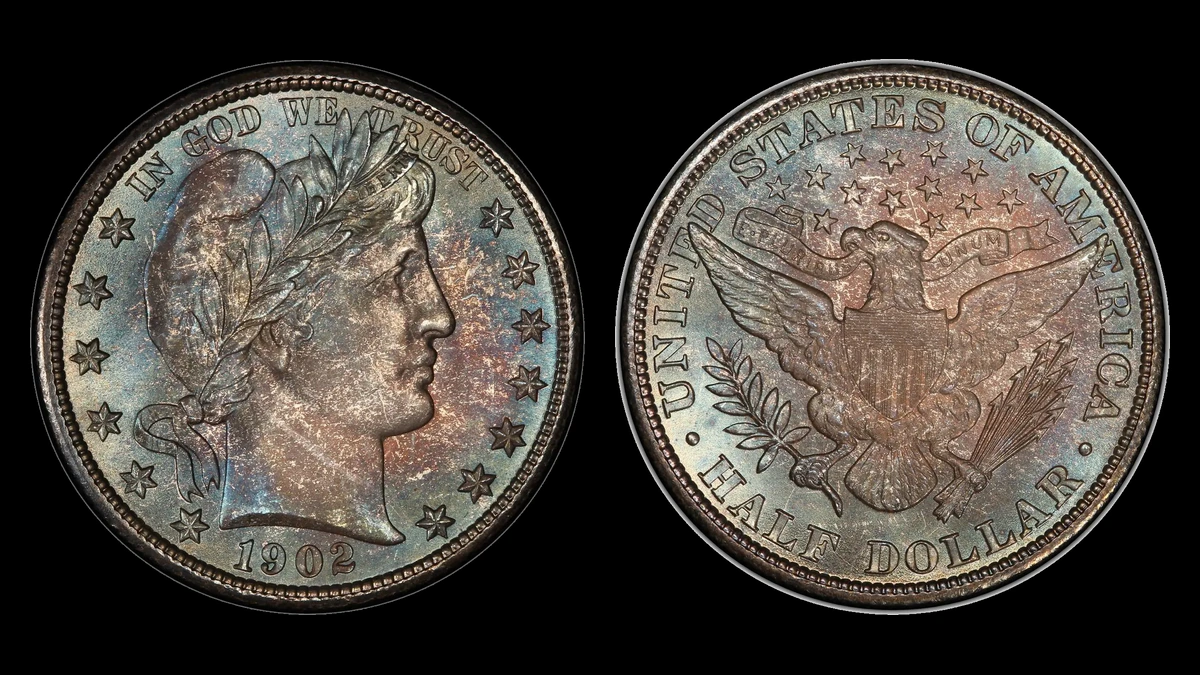
The biggest price here belongs to an exceptionally preserved coin, not to a crack by itself. The Duckor 1902-S half sold for $32,200 in 2010 with an MS67+ grade and CAC approval.
Estimates for these 1902 half dollar errors stretch from $250 to $33,000, across very different grades and mints. Read the mintmark first, then inspect the bust lines and the reported repeated ribbon and star detail.
A letter below the eagle identifies the mint: S is San Francisco and O is New Orleans. Philadelphia halves have no mintmark.
1902 Half Dollar Raised Lines Around the Bust: Obverse Die Cracks Error
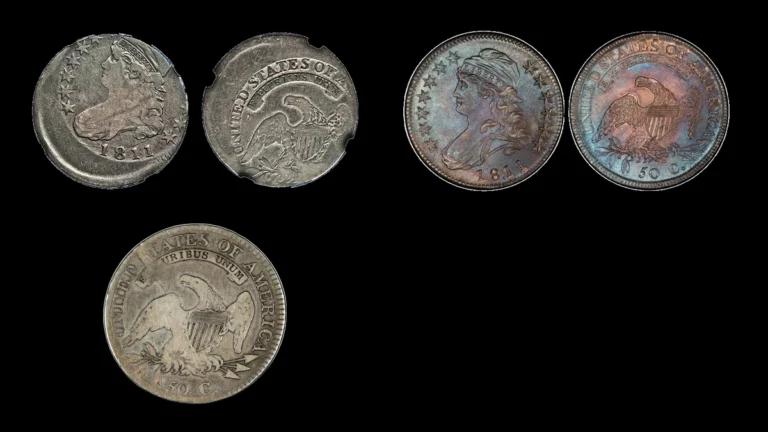
At the pointed end of Liberty’s bust, a raised line may be short and easy to miss. The supplied Philadelphia and New Orleans examples each have a small crack in this general area, while the San Francisco reference has longer lines.
“Obverse” means the front of the coin. The ridges formed when silver entered narrow fractures in the die, the steel tool that stamped that face.
How to Identify
Choose a comparison from the same mint as your coin. On the Philadelphia example, the line extends from the bust tip but ends before the date or star 13.
The New Orleans coin needs its own reference image even though its short crack occupies a similar area. Two lines near the same landmark do not necessarily follow the same route.
For the San Francisco example, examine the line across the bust and the separate route joining the date’s 2 to star 13 through the bust tip. Keep the whole front in view so their positions remain clear.
A movable lamp and 10× magnifier help distinguish a raised ridge from a cut. Random scratches or fine parallel lines should not be combined into a crack pattern.
For a loose coin, the usual unworn specifications are about 12.50 grams and 30.6 mm across, with edge grooves. Those measurements offer a basic check, while the mint and full ridge path identify the relevant comparison.
What It’s Worth
Estimated range: $20,000–$33,000 for superb MS67-level 1902-S coins comparable to the Duckor example. This narrow condition group is unworn and exceptionally well preserved.
The PCGS MS67+ coin with CAC approval brought $32,200 in August 2010. Its later sale was $22,800 in April 2020.
Both results concern one outstanding half dollar at different times. They show why even a documented sale is a historical comparison rather than a permanent price attached to its cracks.
A worn Philadelphia or New Orleans coin with a small bust-tip line does not enter that value range because of the line. Its own date-and-mint value, remaining detail, and surfaces need to be considered.
1902 Half Dollar Repeated Ribbon and Star Edges: Doubled Die Obverse Error
Shift attention from lines crossing the design to extra outlines following the design itself. A reported Philadelphia variety has doubling at the ribbon and the stars to Liberty’s left.
The Barber Coin Collectors’ Society list includes that description, but its survey received no ownership reports. The entry also does not establish whether a particular example was a regular issue or a proof made for collectors.
With a doubled die, repeated detail is already present in the stamping tool. A single strike can transfer both outlines to the coin.
How to Identify
Photograph the ribbon and left stars together before taking closer views. You are trying to establish a relationship between the two reported areas, rather than finding any one thick star point.
Inspect the raised shapes with the light from more than one direction. An apparent outline that disappears with a reflection is less useful than detail you can consistently trace in the metal.
Where a confirmed reference permits comparison, examine separation around the design and any split star points. Flat shelf-like edges from movement during striking are a different feature.
Confirm 1902, HALF DOLLAR, and the absence of a mint letter on the back. A coin from another mint cannot be attributed to the Philadelphia listing simply because similar areas look unusual.
Proof manufacture requires a separate assessment. The survey’s silence on that point should not be turned into a claim that every candidate belongs to one method of production.
What It’s Worth
Estimated range: $250–$1,500 for identified examples from Very Fine through MS63. Very Fine coins show wear with useful remaining detail; MS63 coins are unworn but have noticeable surface imperfections.
The supplied price comparison is an 1892 Barber quarter with both front doubling and a repunched date. Graded PCGS MS63, it sold for $528 at Heritage in March 2024.
That is a different denomination carrying an additional feature, so it offers only broad context. No exact 1902 doubled-die half-dollar sale is established by that comparison.
Conclusion
A ridge crossing Liberty’s bust and an extra edge following her ribbon require different comparisons. For cracks, follow the route on a coin from the correct mint; for the reported doubling, seek agreement in both the ribbon and left stars.
The $250–$1,500 doubled-die estimate and $20,000–$33,000 exceptional San Francisco range apply to separate groups. Superb preservation is essential to the latter, not merely the presence of a die crack.