Rare 1840 Half Dollar Errors (List & Pictures)
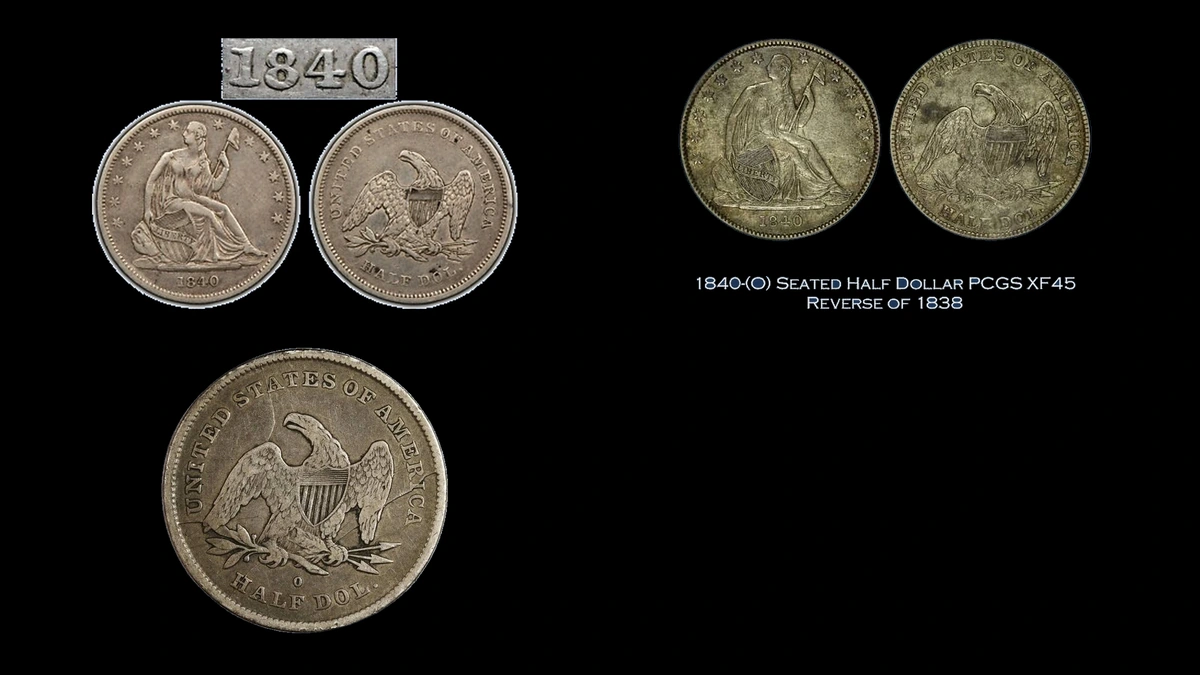
An empty mintmark space does not always identify Philadelphia on an 1840 half dollar. A New Orleans pairing with an older eagle design lacks the O, and its exceptional Newman example brought $51,406.25 in 2013.
These 1840 half dollar errors have estimated values from $600 to $51,406.25 across different grades. Read the date closely, compare the eagle’s design, and then trace any raised crack network.
| Clue | Area to inspect | Identification | Estimated value |
|---|---|---|---|
| Fragments of earlier numbers | Beside the date digits | Repunched date | $1,000–$1,800 around MS61 |
| An older-style eagle without O | Whole reverse | Seated/Bust mule | $45,000–$51,406.25 in exceptional condition |
| A network resembling seams or an H | Reverse of an 1840-O | Baseball die cracks | $600–$1,200 for lightly worn examples |
The ranges describe complete coins in the stated condition groups. For basic comparison, an unworn 1840 half is about 13.36 grams and 30.6 mm across, with grooves around the edge.
1. 1840 Half Dollar Number Fragments Beside 1840: Repunched Date Error
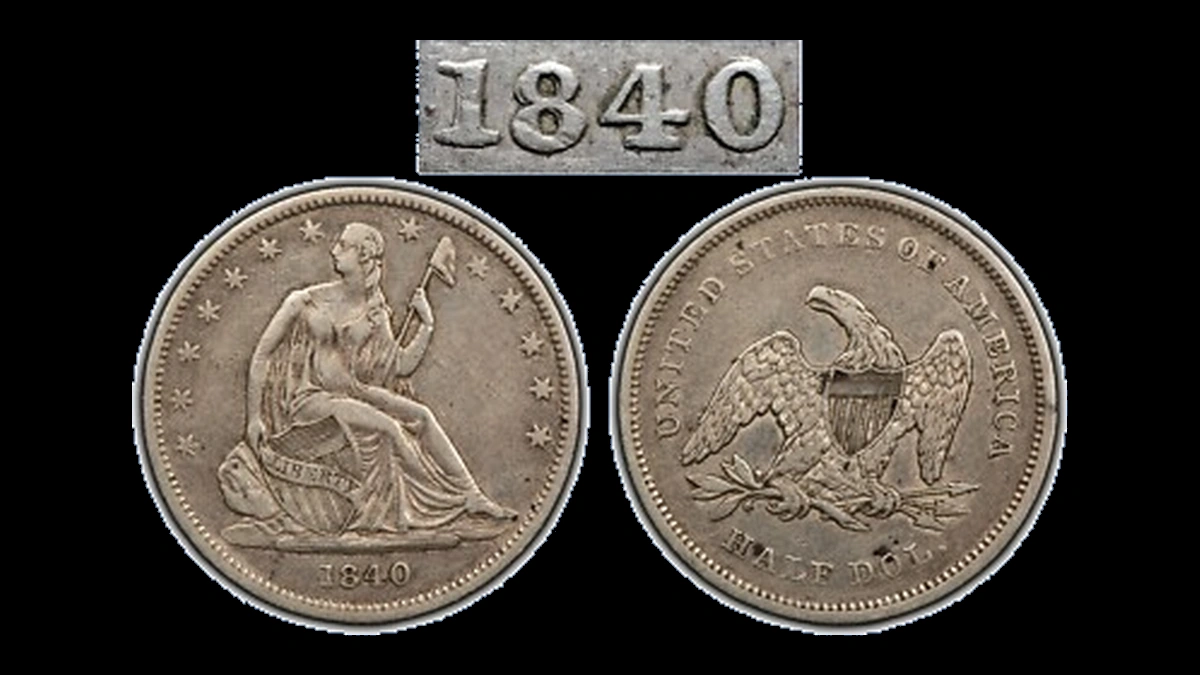
For the Philadelphia Small Letters variety FS-302, inspect three places together: left of 1, left of 8, and above the final 0. Earlier date strokes remain at those positions.
The numbers were punched into the die, the steel tool used to stamp coins, more than once. When the punch position shifted, parts of the previous date remained visible in the tool and transferred to the silver.
How to Identify
Keep all four digits in view while examining the extra strokes through a magnifier. The remnants should fit pieces of numbers, with positions matching the same documented variety.
Identify the mint and the reverse lettering as well as the date. The Philadelphia pattern above belongs to FS-302; other 1840 repunched dates need their own reference photographs.
A New Orleans example has a separately reported remnant at the 8. Finding an odd line near that digit does not establish that it shares the Philadelphia punch positions.
A wide flat ledge beside a number may come from movement during striking, while a dent can push metal against its edge. Neither establishes an earlier date impression just because the digit looks thick.
The date punch affected the tool before the coin was made. A coin with a repunched date therefore did not need to receive two strikes.
What It’s Worth
Estimated range: $1,000–$1,800 for the Philadelphia variety around MS61. That grade indicates an unworn coin with noticeable marks or other surface shortcomings.
A GreatCollections MS61 listing displays $1,300. The supplied evidence does not establish that displayed amount as a completed-sale result.
A PCGS XF45 FS-302 also sold there on December 4, 2022, but its public page does not disclose the amount. That worn coin cannot be assigned the MS61 estimate merely because the variety matches.
2. 1840 Half Dollar An Older Eagle Behind Seated Liberty: Seated/Bust Mule Error
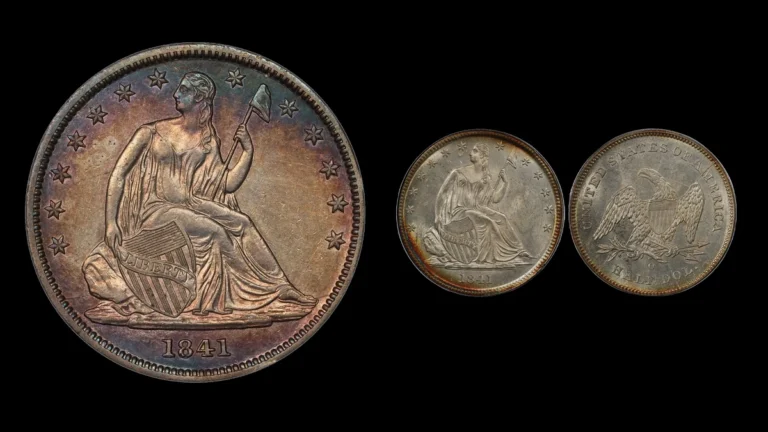
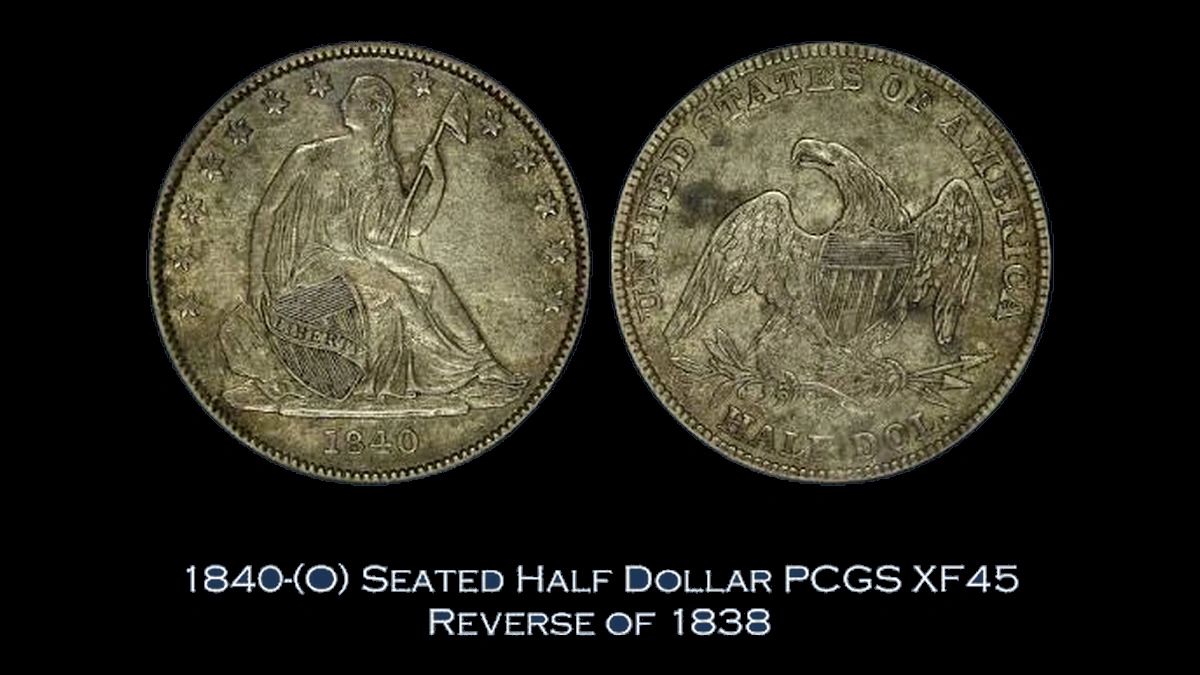
Examine the eagle before drawing a conclusion from the missing O. The Medium Letters pairing has a larger eagle and shield, open claws, and more widely spread leaves and arrowheads than the regular Small Letters reverse.
Those features belong to an older Bust half-dollar reverse paired with a Seated Liberty front. A pairing of dies from different designs is called a mule.
The coin was made in New Orleans, even though it lacks a mintmark. On the earlier New Orleans Bust design the O was on the front, so reusing only its reverse brought no O onto the Seated coin.
How to Identify
Compare the whole eagle and surrounding lettering with a confirmed Medium Letters mule. Check the shield, claws, leaves, and arrowheads as a group rather than choosing one broad-looking feature.
The opposite face must show Seated Liberty with the 1840 date. Both sides are necessary to establish the mixed design pairing.
An ordinary Philadelphia half also has no O, but it uses the regular Small Letters back. Missing a letter therefore does not settle the attribution.
Inspect the usual mintmark area for scraping or disturbed metal that might indicate removal from another coin. The older eagle’s full design remains the central check.
“Mule” describes the mixture of designs here. That term alone does not establish whether workers paired the dies accidentally.
What It’s Worth
Estimated range: $45,000–$51,406.25 for examples with exceptional preservation comparable to the Newman coin. This is not a general value for worn Medium Letters halves.
The Eric Newman NGC MS65 example sold for $51,406.25 at Heritage on November 15, 2013. The catalog highlighted its luster, color, and strong design.
At MS65, the coin has no circulation wear and relatively few surface marks. A circulated or impaired example of the same pairing requires comparisons at its own condition level.
3. 1840 Half Dollar Raised Lines Resemble Baseball Seams: Baseball Die Cracks Error
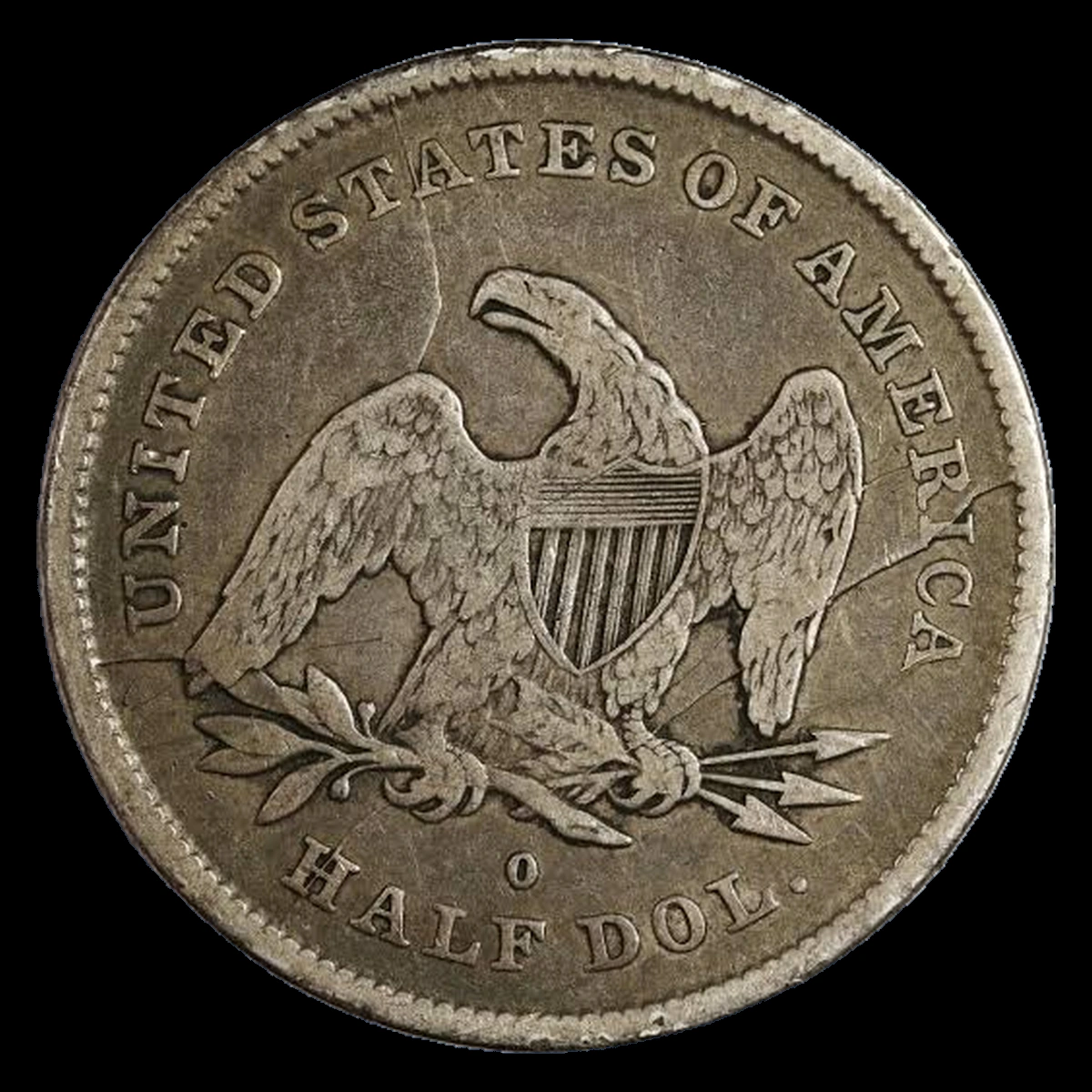
The nickname Baseball describes a crack network on the back of an 1840-O half dollar. Its connected ridges resemble seams or an H, including a lower crossing line.
Silver filled fractures in the die during striking, leaving the network above the coin’s surface. PCGS recognizes the variety, and specialist Bill Bugert documents the damaged die.
How to Identify
Confirm the date is 1840 and the reverse has an O. An 1841-O is also called Baseball, so the nickname alone does not provide the correct reference.
Follow the complete network under angled light, including its lower cross-line and neighboring branches. A close view of only one ridge loses the connections that distinguish the pattern.
Make sure the lines rise above the surface. A gouge cuts the coin, and a split in the blank is not the same as a ridge copied from a cracked stamping tool.
Keep dated front and reverse photographs together when asking for an identification. That prevents a strong-looking network from becoming separated from its year and mint evidence.
What It’s Worth
Estimated range: $600–$1,200 for lightly worn 1840-O coins with a bold, correctly matched Baseball pattern. Clear ridges and original surfaces support stronger comparisons.
A different 1840-O variety, Large O, sold for $780 in October 2023 at AU53. AU53 indicates light circulation wear.
That result provides same-year New Orleans context, not a documented Baseball sale. The exact pattern must still be established before using the estimate for a candidate.
Conclusion
Keep small diagnostics connected to the complete coin: date remnants need the correct variety, the mule needs both designs, and Baseball needs the full crack network on an 1840-O. An isolated digit, absent O, or single ridge cannot answer every question.
The estimated $600–$51,406.25 span covers sharply different condition groups. In particular, the Newman mule’s exceptional MS65 preservation is essential to its high-price comparison.