Rare 1908 Half Dollar Errors (List & Pictures)
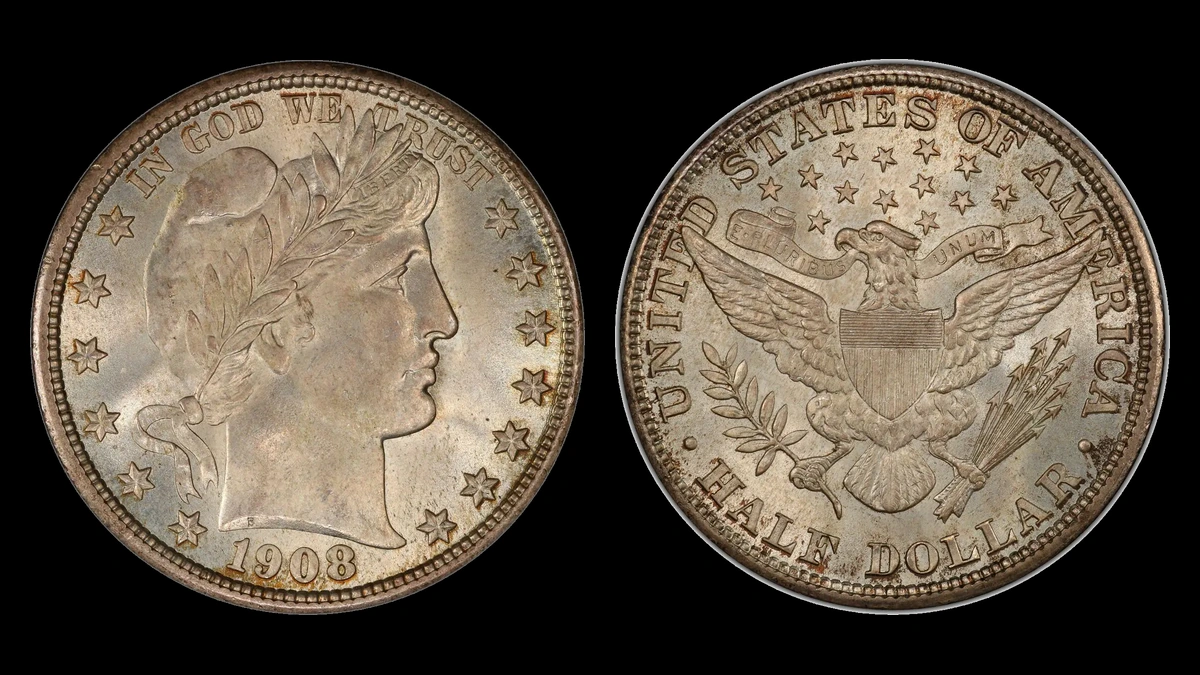
The two features in this guide to 1908 half dollar errors are small: extra number shapes near the rim and a fuller-looking neck on Liberty. A magnifier helps more than a quick glance at the whole coin.
Estimates begin around $50, while an exceptional MS68 “mumps” example sold for $19,550 at Heritage in January 2005. Use the date-border and portrait checks below to choose a suitable comparison.
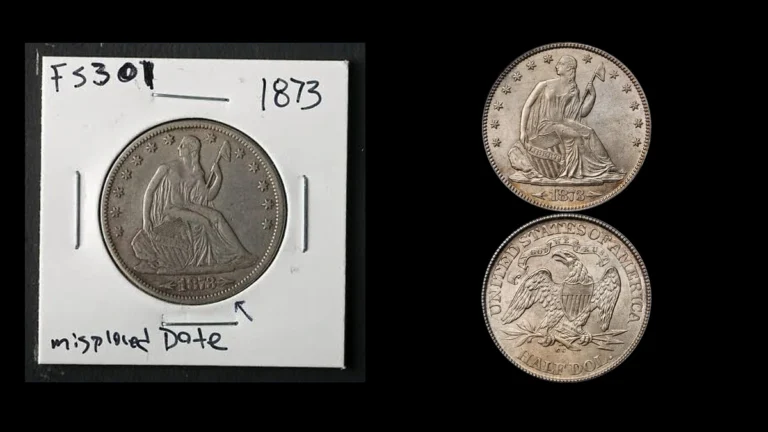
1908 Half Dollar Number Shapes Below the Date: Misplaced Date Error
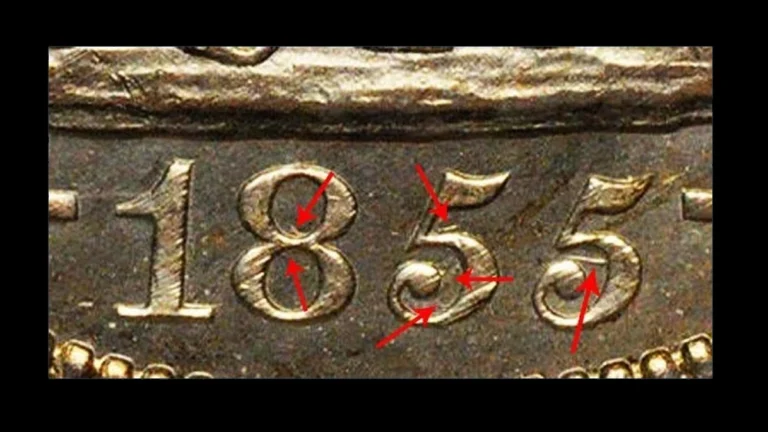
Follow the little teeth around the rim beneath 1908. A curved piece of a number among those teeth can be a trace of a date punched in the wrong place.
Collectors call the border teeth dentils. They give you fixed landmarks for matching the extra marks to a known variety.
The mistake began in the die, the steel tool used to stamp the design. Moving an incorrectly placed date to its proper position did not remove every trace of the earlier attempt.
How to Identify
Check the back for a mintmark before choosing a reference photograph. No letter means Philadelphia, D means Denver, and O means New Orleans.
The Barber Coin Collectors’ Society variety survey includes entries for all three mints. Its 2016 responses reported two New Orleans examples, which is a survey count rather than a total number of survivors.
With a 10× magnifier, keep the date and the border beneath it visible together. Look for a recognizable number fragment in the same position as a photographed example from that mint.
A bent-looking border tooth alone is not enough. The shape should fit part of a number, rather than a random dent or a patch of rough metal.
Also notice how far the extra mark lies from the intended date. An extra outline immediately beside a normal digit may instead belong to a repunched date.
What It’s Worth
Estimated range: $50–$500 for circulated examples, using the supplied year-guide figures. How clearly the fragments show and how much of the coin’s design survives both matter.
A regular 1908-O half graded PCGS VF25 sold for $119 at Heritage in April 2025. That grade means the coin has wear but still shows useful detail.
The sale provides a same-year condition comparison, not a misplaced-date sale. It does not tell us a fixed amount to add for extra number fragments.
1908 Half Dollar A Fuller Neck on Liberty: Mumps Die Bulge Error
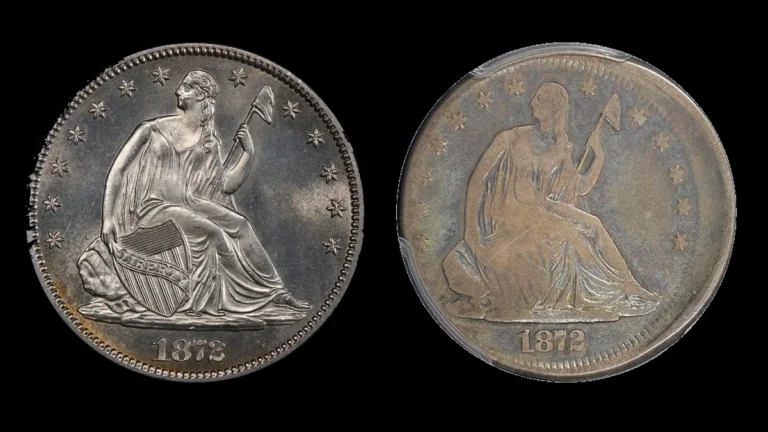
“Mumps” is a collector nickname for a swelling behind Liberty’s neck on some 1908-O halves. The feature can be slight, so it is easier to see beside a normal portrait.
The extra fullness was made during striking as the die changed with use. It belongs to the shape of the portrait rather than material stuck onto a finished coin.
How to Identify
Choose a normal 1908-O portrait and compare both coins at the same size. Light them from a similar direction so a shadow does not create the apparent swelling.
Look at the back of the neck rather than the cheek or chin. As you move the light, the fuller contour should remain in the same place.
A magnifier can help reveal a seam around added material or a dent beside metal pushed up by a hit. Either can produce a bump without being the mumps variety.
Confirm the O below the eagle on the back. An auction description of an NGC MS65 CAC coin in Stack’s Bowers’ December 2020 Larry H. Miller sale noted only a slight trace of the feature.
For a loose coin, a scale and calipers can check the normal 12.50-gram unworn weight and 30.6-millimeter diameter. These measurements and the grooved edge check the coin itself; the neck shape identifies the variety.
What It’s Worth
Estimated range: $50–$450 for worn mumps examples. An unworn coin around MS65 has a separate estimate of $1,500–$2,000.
Heritage sold an NGC MS65 example with faint neck swelling for $1,762.50 in June 2015. MS65 describes an unworn coin with attractive overall preservation and relatively few distracting marks.
The $19,550 sale in January 2005 involved an exceptional NGC MS68. That much higher grade makes it a different comparison from an ordinary worn coin with the same nickname.
Conclusion
For the misplaced date, match a number fragment and its border position to the correct mint. For mumps, compare the neck’s shape on a New Orleans coin under similar lighting.
Both checks depend on small details, but price depends on the whole coin. A worn example starting around $50 should not be compared directly with the exceptional $19,550 MS68 sale.