Rare 1915 Half Dollar Errors (List & Pictures)
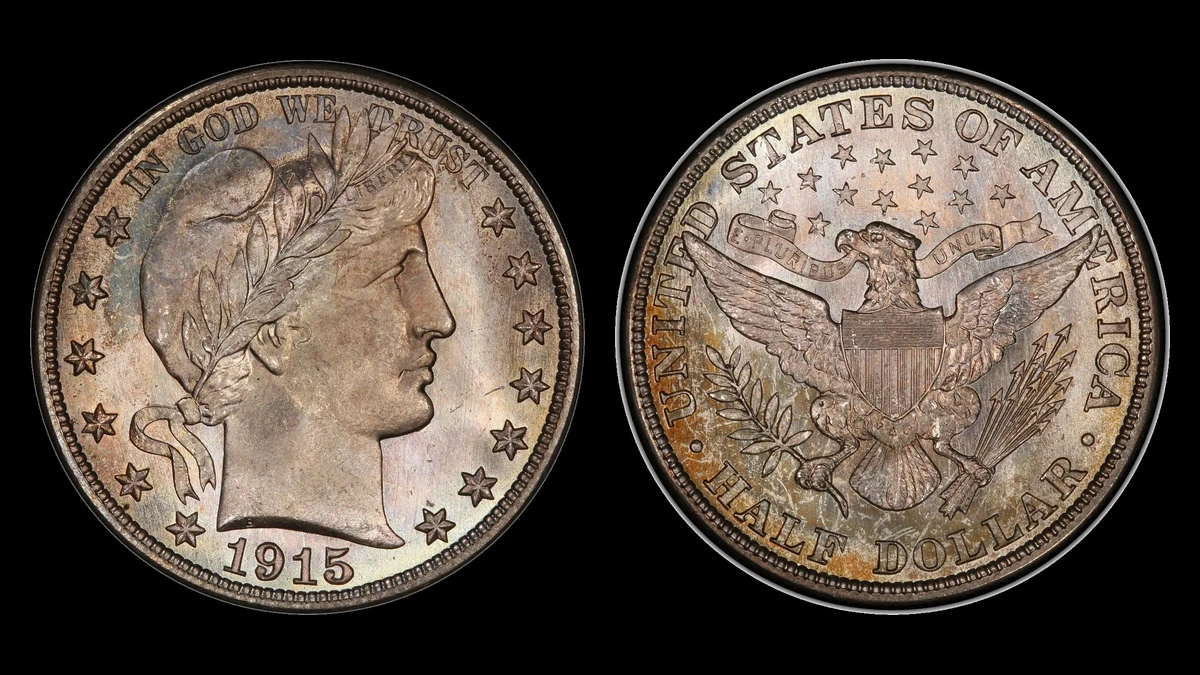
Two landmarks make the documented 1915 half dollar errors feature easy to search for: Liberty’s bust tip and the thirteenth star. The thin connection between them is the subject of this guide.
Comparable exceptional coins have an estimated $20,000–$42,500 range, including a $42,300 sale in May 2015. Trace the connection first, determine whether it rises above the surface, then judge the preservation behind that price.
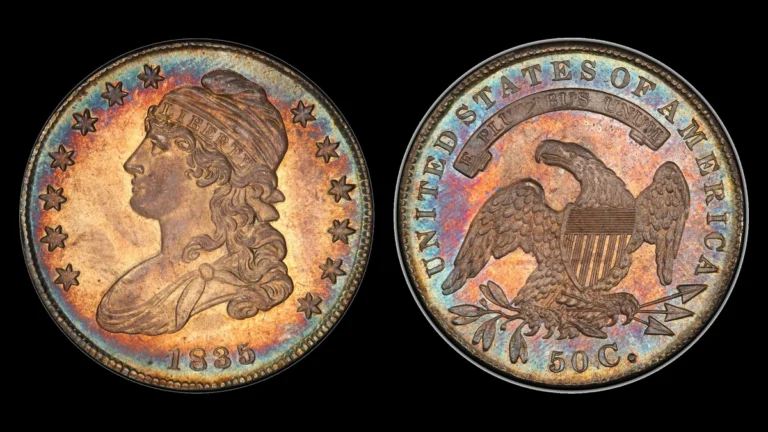
1915 Half Dollar A Fine Line From the Bust to a Star: Die Crack Error
The Duckor collection coin supplies a specific route to compare: from the pointed base of the portrait toward star 13. Heritage recorded it as a small die crack, so the expected feature is a fine ridge.
Its raised height is a consequence of the minting process. A split in the portrait die created a narrow space for silver to enter under striking pressure.
The silver that filled that space remained above the surrounding design when the coin left the press. Following that continuous relief is more useful than searching generally for damaged areas near the bust.
How to Identify
Locate the bust tip before searching the stars. Starting at a known landmark makes it easier to follow the actual route described for this coin.
Use a loupe and trace the line continuously toward star 13. The description in Heritage’s lot 3243 provides the reference for that specific connection.
Light the area from one side and then the other. A ridge catches light as a raised feature; a scratch has a channel cut into the metal.
A scratch may also push silver up along its margins, so a bright lip is not sufficient evidence. Check whether there is a groove running alongside it before calling the line a die crack.
A colored streak or stain can follow a similar route without changing the surface height. Magnification should reveal actual relief, not just a contrast in tone.
The documented coin is the Philadelphia 1915 issue, with no mintmark on the reverse. If examining a loose coin, compare it with the normal 12.50-gram weight, approximately 30.6 mm diameter, and grooved edge, allowing for wear.
What It’s Worth
Estimated range: $20,000–$42,500 for coins comparable in exceptional quality to the documented example. This is not a general price range for any circulated 1915 half dollar bearing a small crack.
The same coin brought $41,687.50 in August 2010 and $42,300 in May 2015. Its PCGS MS66+ grade places it among highly preserved coins with no circulation wear.
The repeated sales show the market for that individual coin at two different times. They do not demonstrate that the ridge alone added tens of thousands of dollars.
For a worn or scratched example, start with comparable 1915 coins in the same condition. The attractive surfaces and scarce date behind the famous result cannot be transferred to a less well-preserved coin just because its crack follows the same route.
Conclusion
The bust tip and thirteenth star make this 1915 die crack straightforward to locate, but the line must rise above the surface rather than cut into it. Its small size has little to do with the exceptional auction headline.
The $20,000–$42,500 estimate belongs to coins of comparable quality. A matching ridge on a worn half dollar identifies a feature, not a guaranteed five-figure value.