Rare 2019 Half Dollar Errors (List & Pictures)
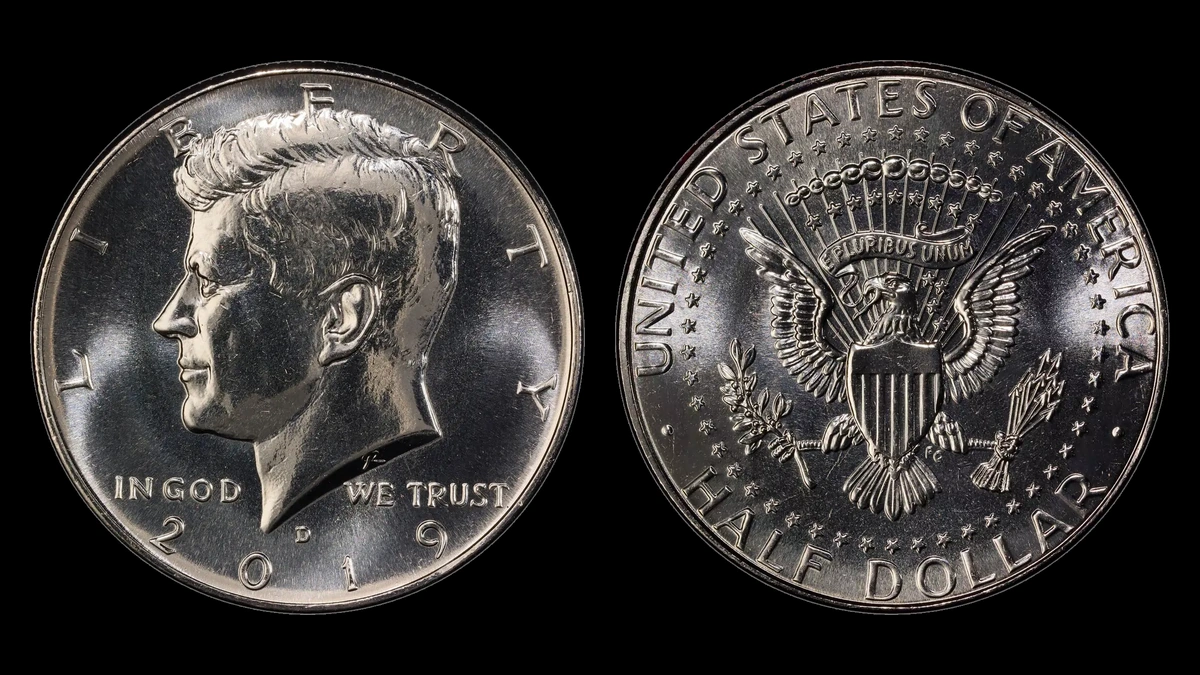
Missing metal and missing design require different checks on 2019 half dollar errors. The estimated values below span $25–$500, with a $432 missing-layer sale from 1974-D providing a different-year comparison.
Examine the edge and color first, compare both full designs, then magnify any repeated front detail.
| Visible clue | What to inspect | Error | Estimated value |
|---|---|---|---|
| A piece missing from the outline | Edge and nearby design | Clipped planchet | $25–$300 |
| Exposed copper-colored metal | Surface boundary, edge layers, and weight | Missing clad layer | $50–$500 |
| Bare metal beside incomplete design | Both faces and surviving date | Off-center strike | $50–$300 |
| A repeated raised shape | Front lettering, date, or portrait | Doubled die obverse | $25–$200 |
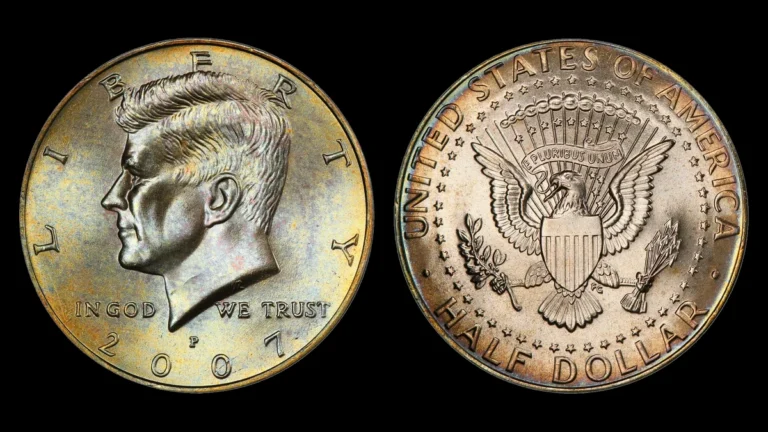
Regular layered Kennedy halves weigh 11.34 grams; the 2019 silver proof is 99.9% silver and weighs about 12.685 grams. The enhanced reverse proof uses the regular layered metals despite its special bright and frosted finish, and the normal diameter is about 30.61 mm.
1. 2019 Half Dollar Part of the Edge Is Absent: Clipped Planchet Error
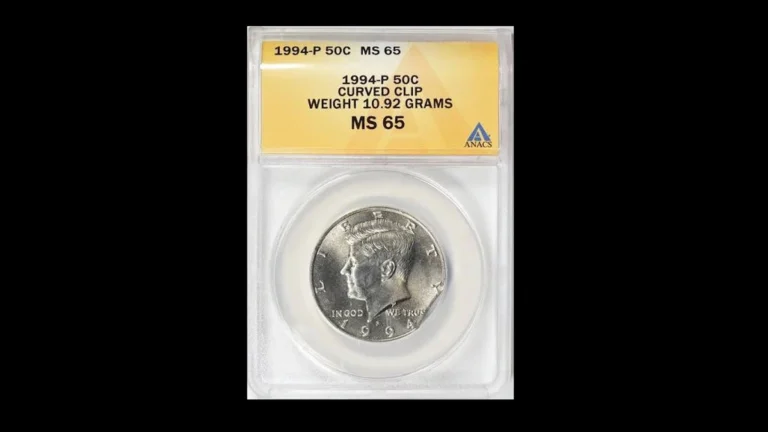
A curved missing section can originate when the blanking punch overlaps a hole left by an earlier blank. Cutting near the end of the strip can instead produce a straighter or irregular missing edge.
A planchet is the metal blank that will become the coin. The 2019-P report includes clips but does not specify their direction or number on a particular specimen.
How to Identify
Study the missing edge and the struck details immediately beside it. They should support the conclusion that the metal was already absent when the design was stamped.
Fresh burrs, saw marks, or crushed letters suggest a section cut from a finished coin. A weak rim opposite the clip can support a genuine example but is not proof by itself.
Check weight against the correct metal type, allowing for the size of the missing piece. Measure an intact portion of the outline rather than expecting a clipped area to retain the normal diameter.
Keep the readable date and mintmark with the edge close-up. A missing section can be genuine without matching an assumed 2019-P clip position.
What It’s Worth
Estimated range: $25–$300 from small clips to more conspicuous missing sections. A 1993-D curved clip in ANACS MS64 brought $34.74 including buyer’s premium in August 2025.
That unworn older coin offers a lower-priced comparison, not a direct 2019 result. Clip size, original edge character, and condition still determine how useful the range is for another coin.
2. 2019 Half Dollar Copper Shows Where a Surface Layer Is Missing: Missing Clad Layer Error
Regular Kennedy halves have outer copper-nickel layers around a copper core. Loss of an outer layer can expose the copper on a patch or across an entire face.
The 2019-P report includes both partial and whole-layer loss without specifying a face. A silver proof requires a different explanation because it does not have this layered structure.
How to Identify
Establish the coin’s metal and finish before interpreting its color. The enhanced reverse proof’s deliberate bright and frosted areas should not be mistaken for missing metal.
On a clad coin, trace the boundary between exposed copper and the normal surface under magnification. Compare it with the layers visible along the edge.
Weigh the coin and consider whether the shortfall fits the amount of layer apparently lost. A tiny patch and a whole missing side should not be expected to affect weight equally.
Chemicals can change color, and scraping can remove surface metal after minting. Original design texture, a consistent layer boundary, and sensible weight loss are stronger evidence together than copper color alone.
What It’s Worth
Estimated range: $50–$500 from partial loss to a clearly missing outer layer across one side. A 1974-D missing its front layer sold for $432 in March 2023.
That NGC MS64 example was unworn with some marks. Its whole missing face provides context for the stronger portion of the estimate, while a small patch or stain is a different comparison.
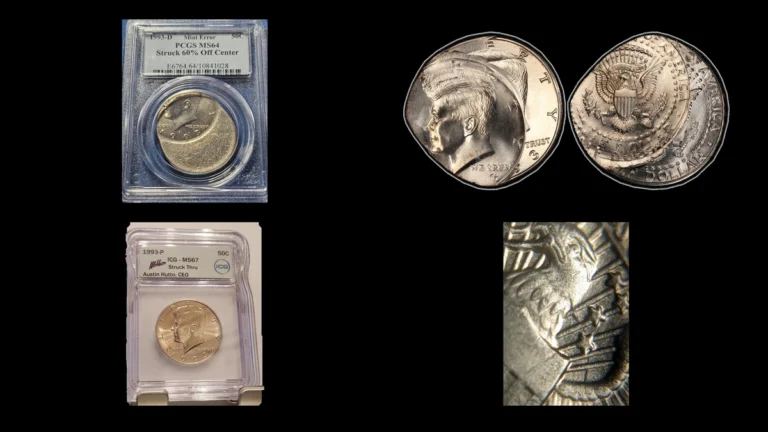
3. 2019 Half Dollar The Metal Remains but Part of the Picture Does Not: Off-Center Strike Error
An off-center blank sits away from the press’s intended striking position. Some design lands beyond the metal while another section remains blank.
Unlike a clip, the error does not require a piece of the blank to be absent. The reported 2019 category gives no specific mint, collector finish, or displacement for an individual coin.
How to Identify
Photograph the whole front and back without cropping out the bare crescent. Missing design on both faces should agree with one displaced blank.
A shifted tool can create an uneven rim on only one side. A widened coin with both full designs may instead be a broadstrike, where the collar failed to restrain the metal.
Inspect the plain area and edge for grinding or polishing that removed design afterward. Weight should make sense for the complete regular-metal blank, with allowance for circulation wear.
Confirm 2019 from the remaining date. A large shift that removes the year cannot be assigned to 2019 from the portrait alone.
What It’s Worth
Estimated range: $50–$300 for regular-metal examples with readable dates. The year guide suggests $50–$150 for smaller shifts and around $300 for dramatic readable-date examples.
These are guide estimates rather than auction records for specific 2019 coins. Surface quality and the amount of visible design remain relevant even when the striking error is clear.
4. 2019 Half Dollar Front Details Have a Second Raised Shape: Doubled Die Obverse Error
A doubled die is a stamping tool containing repeated detail before the coin is struck. It can produce the same additional shapes on many coins.
CoinTrackers reports doubled dies for 2019-P. LIBERTY, the date, and the portrait are suggested search areas, not supplied diagnostics for a named variety.
How to Identify
Confirm the P mintmark and 2019 date, then compare a normal coin under the same light. A small repeated detail may be relevant without creating a complete second portrait.
Follow the raised shape through several lighting angles. A reflection can mimic an extra outline, while movement during striking can leave a flat shelf beside a reduced letter.
Record the extra detail and its surrounding design clearly enough for a specialist to assess. An older doubled die’s particular letter positions cannot be transferred to this year without a matching reference.
What It’s Worth
Estimated range: $25–$200 for a genuine, identified 2019 example. Stronger visible detail and better preservation can support greater interest.
A 1974-D graded ANACS MS64 sold for $49 at Heritage in May 2026, according to Greysheet’s archive. That unworn older variety shows why genuine doubling does not automatically imply an extreme price.
Conclusion
A clipped outline, exposed copper, and blank metal beside missing design each require different evidence. Begin by identifying the metal type so a silver proof or special finish does not lead you toward the wrong explanation.
The estimated $25–$500 range covers confirmed errors rather than appearances alone. For possible doubling, establish repeated raised detail; for all categories, keep the date and mint attached to the comparison photographs.