Rare 1861 Half Dollar Errors (List & Pictures)
The mintmark helps sort 1861 half dollar errors into useful comparisons. A nose crack on a particular New Orleans variety has a $21,600 auction record, while other cracks belong to different dies and mints.
Estimated circulated values below span $300–$6,000, with that exceptional unworn record above them. Inspect the outline and front first, then compare the eagle, branch, and mintmark on the back.
| Clue | Location and mint | Feature | Circulated estimate |
|---|---|---|---|
| Missing edge section | 1861-O rim | Rim clip | $300–$1,500 |
| Raised nose or date route | O or S, depending on pattern | Die cracks | $300–$1,200; $3,000–$6,000 for named Confederate Obverse |
| Unwanted design traces | S elbow and reverse shield | Die clash | $350–$1,000 |
| Three broad raised areas | S lower-right eagle wing | Die breaks | $500–$1,800 |
| A raised spear-like shape | O olive bud | Die gouge or chip | $350–$2,000 |
| Extra upper-right S stroke | Large S mintmark | Repunched mintmark | $400–$1,200 |
The O marks New Orleans and S marks San Francisco. An unworn example normally weighs about 12.44 grams and measures 30.6 mm, with grooves around the edge.
1. 1861 Half Dollar Part of the Edge Is Missing: Rim Clip Error
The Rippere Collection included an 1861-O graded ANACS XF40 with an identified rim clip. The description concerns an incomplete blank that received the coin’s design.
No location or size percentage is supplied for the clip. The gap and the way the struck border meets it must therefore be examined on the actual specimen.
How to Identify
View the missing section from both faces and from the edge. Look at whether the border approaches it naturally or has been cut through after striking.
Fresh cut metal, file marks, or crushed nearby detail suggest later removal. Record the reduced weight and irregular outline, then confirm the O mintmark.
The Rippere ANACS XF40 listing is the reference for this particular report. Another clipped coin cannot supply its missing location or percentage.
What It’s Worth
Estimated range: $300–$1,500 for a circulated coin with a confirmed original clip. No public sale amount for the Rippere example is used here.
An 1832 Capped Bust half with a minor rim defect, graded ANACS XF45, sold for $263.25 including fees in July 2025. That different-series comparison helps frame a modest defect; the 1861-O’s own value and clip size remain important.
2. 1861 Half Dollar A Raised Line From the Nose or Through the Date: Die Cracks Error
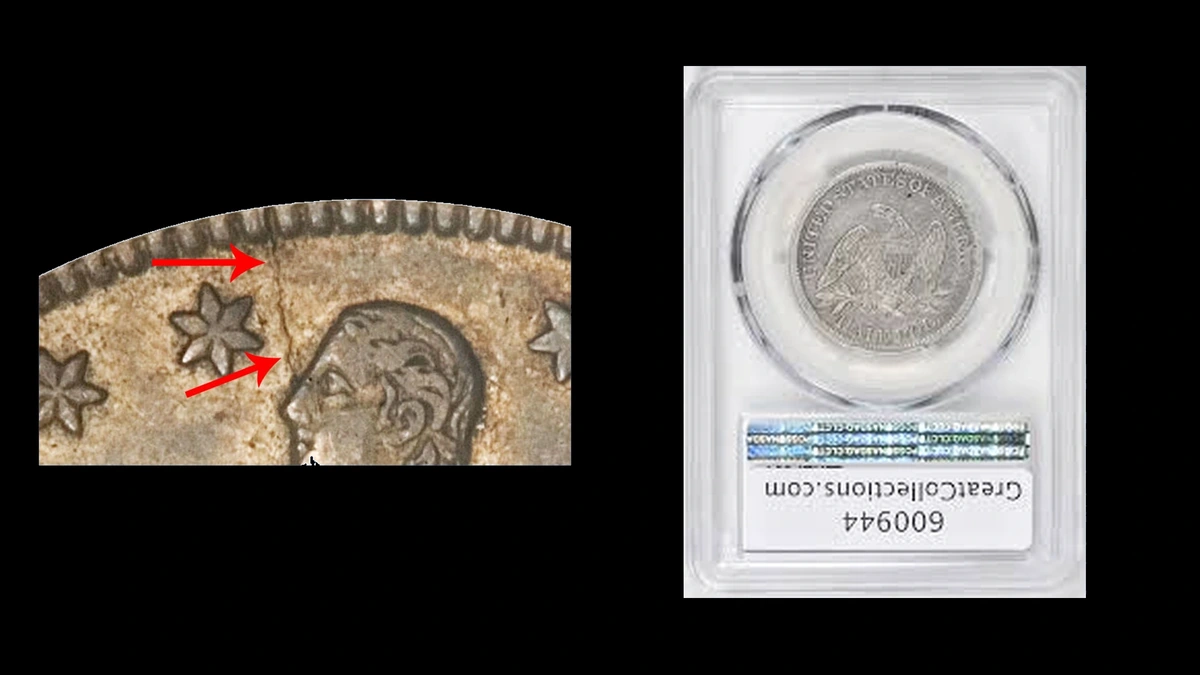
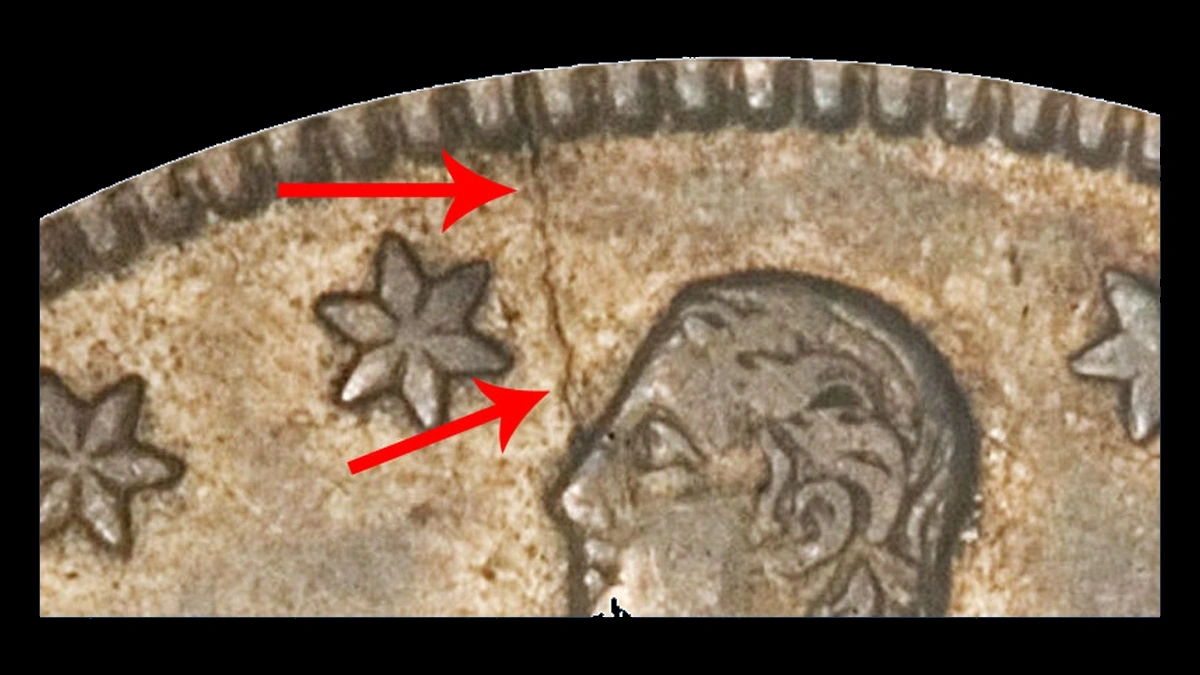
The named Confederate Obverse variety has a diagonal crack from Liberty’s nose toward the border beside star seven. A separate New Orleans feature bisects the date, while a San Francisco route runs from the first 1 toward the rock support.
Each line reproduces a split in the die, the steel tool that stamps the design. Silver entered the opening during striking and left a ridge on the coin.
How to Identify
For the Confederate Obverse, follow the route from the nose bridge toward the border just right of star seven. Compare the full front as well, because the crack can be weak in an early die state.
Keep the bisected-date feature separate in your photographs. The first-1-to-rock route instead requires an S mintmark and its own San Francisco reference.
Use opposing light angles to distinguish a ridge from a scratched channel. A crack anywhere on an O coin does not establish the historically named variety.
What It’s Worth
Estimated ranges: $300–$1,200 for ordinary circulated crack examples and $3,000–$6,000 for identified Confederate Obverse coins around XF to AU. The latter range concerns a particular variety with moderate to light wear.
PCGS records $21,600 for an MS63 Confederate Obverse in March 2020. That unworn coin’s historical identity and preservation explain much of the result.
3. 1861 Half Dollar Extra Folds and Shield Shapes: Clashed Dies Error
Bugert’s illustrated 1861-S has clash traces beneath Liberty’s elbow and at the shield’s lower right on the reverse. The two locations provide a useful paired check.
When the dies collide without a blank between them, each can pick up elements of the opposite design. Later coins can reproduce those unwanted traces alongside their normal images.
How to Identify
Inspect below the elbow, then turn to the lower-right shield area. Compare each extra shape with the opposite design that could explain it.
Leave normal folds and shield details in the close-ups for orientation. A random scratch or straight polishing line need not correspond to any opposite-face feature.
Confirm the S and compare both locations together. A convincing mark in only one unrelated area cannot establish the documented pattern.
What It’s Worth
Estimated range: $350–$1,000 for circulated 1861-S examples around XF with readable traces. These are whole-coin estimates.
Ordinary 1861-S sold listings include $356 for PCGS XF40 in July 2025 and $962.50 for XF45 with CAC approval in January 2026. Neither transaction was identified as a clash sale.
4. 1861 Half Dollar Three Raised Patches on the Wing: Die Breaks Error
Three broad raised areas interrupt the eagle’s lower-right wing on Bugert’s AU55 reference coin. Extensive reverse cracking accompanies the patches.
Missing pieces of a working die create spaces that silver can fill. This produces raised patches where normal feather detail would otherwise appear.
The supplementary study calls the features cuds, a term often used for breaks connected to the rim. The pictured boundaries need checking before a rim connection is assumed here.
How to Identify
Locate all three patches using the Bugert supplementary illustration. Their grouped position is more specific than weak feathers or one isolated bump.
Examine the borders and texture for consistency with the surrounding silver. Added material can also stand above a coin, so height alone is insufficient.
Keep the full reverse cracks and S mintmark visible. Let the actual outlines show whether a patch reaches the rim rather than relying on the name alone.
What It’s Worth
Estimated range: $500–$1,800 for circulated examples with clearly identified wing breaks. The higher portion allows for light wear near the AU55 reference’s condition.
That illustrated coin has no recorded $1,800 sale in the supplied evidence. The ordinary XF results above provide a lower-condition baseline, while the conspicuous defects and preservation inform the broader estimate.
5. 1861 Half Dollar A Raised Mark Through the Olive Bud: Speared Olive Bud Error
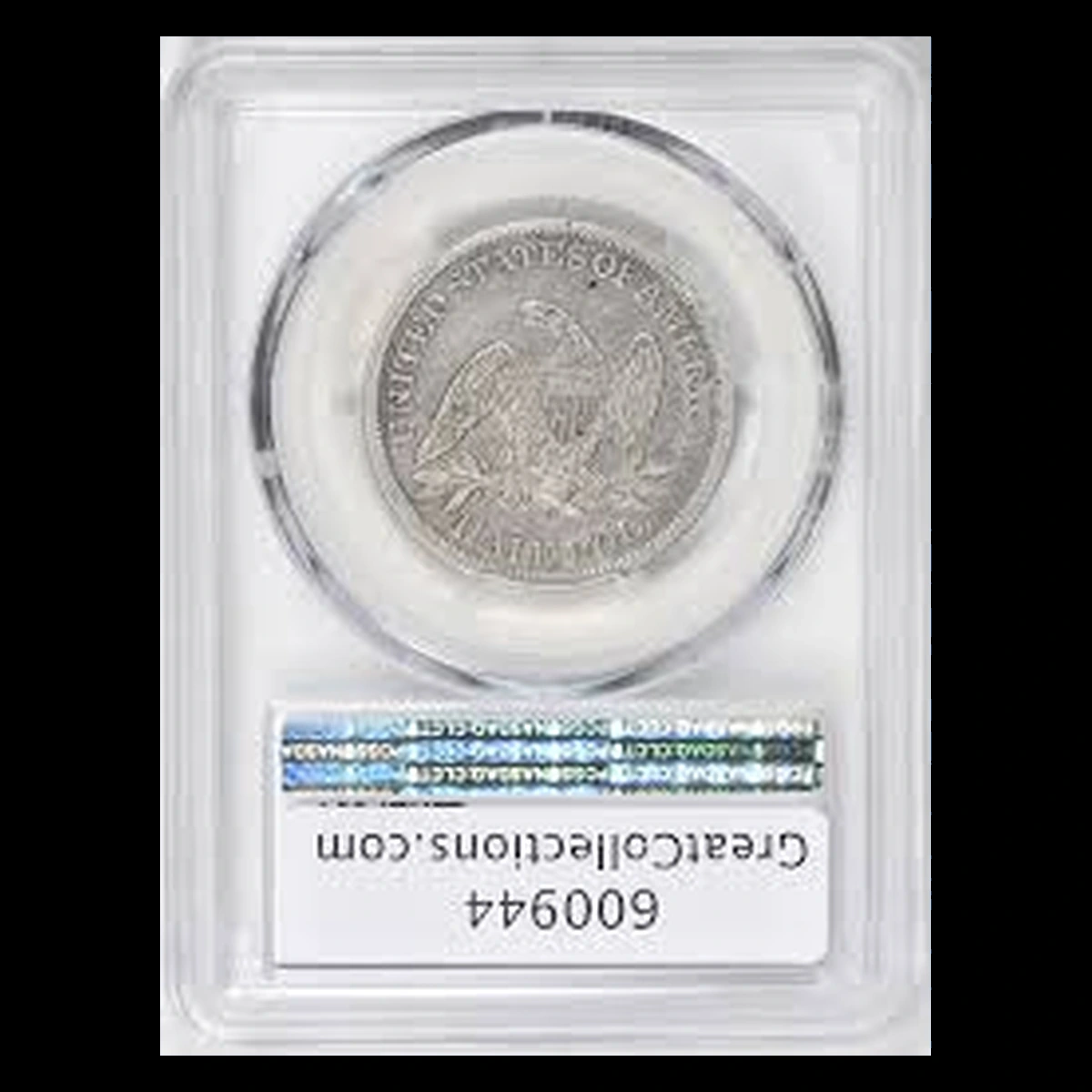
This 1861-O feature appears to spear an olive bud on the reverse. Published explanations describe a gouge or chip in the die, so the visible shape is the most useful point of agreement.
The coin retains the normal United States reverse. Confederate-era history does not make it one of the rare original Confederate-reverse halves or a later Scott copy.
How to Identify
Find the O and identify the full reverse design before enlarging the olive branch. Retain enough of the branch to locate the raised feature precisely.
Compare its shape with a documented Speared Olive Bud example. A scratch through the same area usually shows a recessed cut, possibly with displaced metal beside it.
The nickname describes a particular mark, not any pointed bump near the branch. The correct mint and reverse are part of the identification.
What It’s Worth
Estimated range: $350–$2,000 for circulated examples of the identified variety. A 2021 PCGS discussion placed the combined Bisected Date and Speared Olive Bud variety around $350–$1,200.
The upper allowance here concerns stronger circulated coins. A 2026 Heritage catalog includes an MS62, but that entry supplies no sale result used in this estimate.
6. 1861 Half Dollar An Extra Tip at the Top of S: Repunched Mintmark Error
The Large S report focuses on its upper-right serif, the small ending stroke of the letter. Bugert describes that part as recut.
More than one punch impression in the die left a remnant beside the final S. A large or uneven mintmark without the specific extra stroke is not the same match.
How to Identify
Magnify the full letter with the neighboring olive branch still visible. Move the light to reveal the upper-right terminal and compare it with the documented shape.
Look for cuts, impact damage, or added metal around the S. A flat striking ledge can also change the apparent outline without recording an earlier punch.
Wear may merge the remnant with the main letter. Include the date and complete reverse so a close-up does not lose its year and mint context.
What It’s Worth
Estimated range: $400–$1,200 for identified examples around VF through XF. A clear extra serif and sound surfaces support the stronger comparison.
The ordinary XF40 and XF45 transactions at $356 and $962.50 remain date-and-condition baselines. They do not establish a measured repunched-mintmark premium.
Conclusion
Keep each close-up attached to its mintmark and complete design. The New Orleans nose crack, olive-bud mark, San Francisco wing breaks, and recut S answer different identification questions.
Circulated estimates of $300–$6,000 cover the stated varieties and conditions. The $21,600 MS63 record belongs to the named Confederate Obverse in exceptional preservation, rather than to any 1861 coin with a crack.