Rare 2024 Half Dollar Errors (List & Pictures)
A star impressed into Kennedy’s cheek gives one documented 2024-D a distinctive appearance. Most other reported 2024 half dollar errors are much subtler, with overall estimates of $1–$1,000.
The supplied auction comparison is an older doubled-die coin sold for $49 in May 2026. Examine the cheek, front lettering, and full outline before moving to reverse shapes and raised tool marks.
| What attracts attention | Location | Error category | Estimated value |
|---|---|---|---|
| A cheek star or blocked detail | Front impression or weak lettering | Strike-through and Dropped Star | $1–$5 minor; $100–$1,000 star |
| Repeated raised front detail | Hair, date, or words | Reported doubled die obverse | $25–$200 |
| Unstruck metal and incomplete design | Both faces | Reported off-center strike | $50–$300 |
| Extra feather or ribbon shapes | Reverse of reported P examples | Doubled die reverse | $8–$35 |
| Faint opposite-design fragments | No fixed reported location | Reported die clash | $10–$75 |
| Parallel raised lines | Reverse beside the eagle on D examples | Feeder-finger die scrapes | $3–$5 |
Regular layered-metal halves weigh 11.34 grams; silver proofs made for collectors weigh about 12.685 grams. Both are approximately 30.61 mm across with edge grooves, so identify the metal and mint before choosing a comparison.
1. 2024 Half Dollar A Star Is Pressed into the Cheek: Strike-Through and Dropped Star Error
The documented Denver coin has a star-shaped impression in Kennedy’s cheek. PCGS identified it as a Dropped Star and assigned MS65, an unworn grade with relatively few marks.
Discoverer Jeffrey Flynt describes it in the ANA Reading Room. Material packed into a recessed star in a die can fall out and impress that shape when trapped in a later strike.
This belongs to the broader struck-through category, where material obstructs contact between blank and die. Reports of weak letters or a faint P are less distinctive examples and need separate assessment.
How to Identify
For a cheek star, compare the location and outline with the certified Denver example. A five-pointed dent added with a tool after minting does not acquire the same identity from its general shape.
Inspect the surrounding surface under changing light without disturbing the impression. An original, matching boundary is more useful than how sharply a photograph makes the star appear.
For weak lettering, compare nearby normal details and look for wear, rubbing, or an otherwise weak strike. A faint mintmark does not by itself establish a dropped filling or a star-related error.
What It’s Worth
Estimated ranges: $1–$5 for minor blocked detail, and $100–$1,000 for an identified Dropped Star. These comparisons belong to visibly different features.
The guide mentions an asking price near $1,000 for an identified star. That is not a completed-sale result, and the MS65 grade does not turn the offer into an auction record.
2. 2024 Half Dollar Front Details Appear to Repeat: Reported Doubled Die Obverse Error
Hair, date digits, and nearby words are suggested places to investigate extra outlines. The supplied reports provide no exact identifying pattern tied to a particular mint.
“Obverse” means the front, and a doubled die is a steel stamping tool with repeated detail already in its design. It can transfer that detail with one strike.
How to Identify
Compare the same feature on a normal coin of the same mint, metal, and finish. Similar lighting and magnification help avoid treating a photographic difference as a design difference.
Follow the apparent second shape as the lamp moves. A stable raised duplicate merits closer study, while a changing reflection does not establish another outline in the metal.
A low flat shelf may result from movement during striking. It is different from a doubled design in the die and should not be assigned the same variety identity.
What It’s Worth
Estimated range: $25–$200 for genuine identified front doubling, depending on clarity and preservation. No particular 2024 sale is supplied.
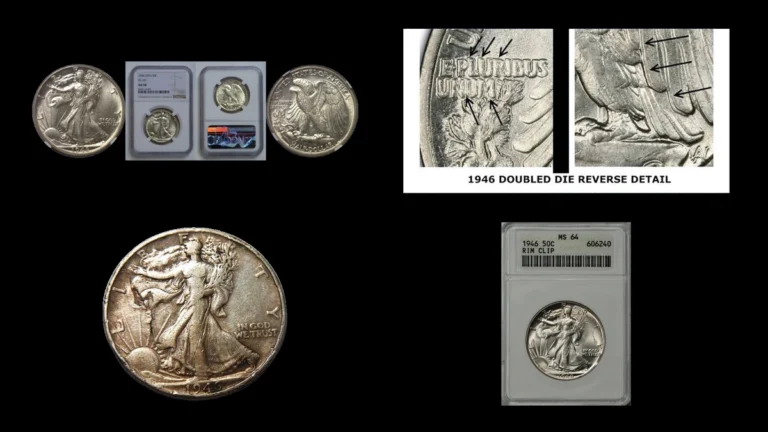
A 1974-D doubled die graded ANACS MS64 brought $49 at Heritage in May 2026. That older unworn variety offers context without establishing a diagnostic or price record for 2024.
3. 2024 Half Dollar Bare Metal Borders an Incomplete Picture: Reported Off-Center Strike Error
An off-center blank sits too far from its intended position beneath the dies. Some design misses the metal, while a crescent elsewhere remains unstruck.
The guide reports 2024 off-center halves without an original certification record, mint, or exact displacement. The actual date must remain readable before assigning a candidate to this year.
How to Identify
Compare front and back photographs of the complete outline. Both designs should end in positions consistent with one shifted blank.
A single uneven rim can result from a misaligned die instead. A clip also differs because metal is absent rather than present but unstruck.
Check the bare surface for grinding or filing and record weight appropriate to the metal type. A finished coin with removed design needs a different explanation.
What It’s Worth
Estimated range: $50–$300 for a genuine regular-metal example with a visible 2024 date and clear displacement. The estimate follows recent Kennedy guide comparisons.
It is not an auction result for a specific 2024 half. Readable date, original blank surface, and overall preservation determine whether the comparison is useful.
4. 2024 Half Dollar Feathers or the Ribbon Have Extra Shapes: Doubled Die Reverse Error
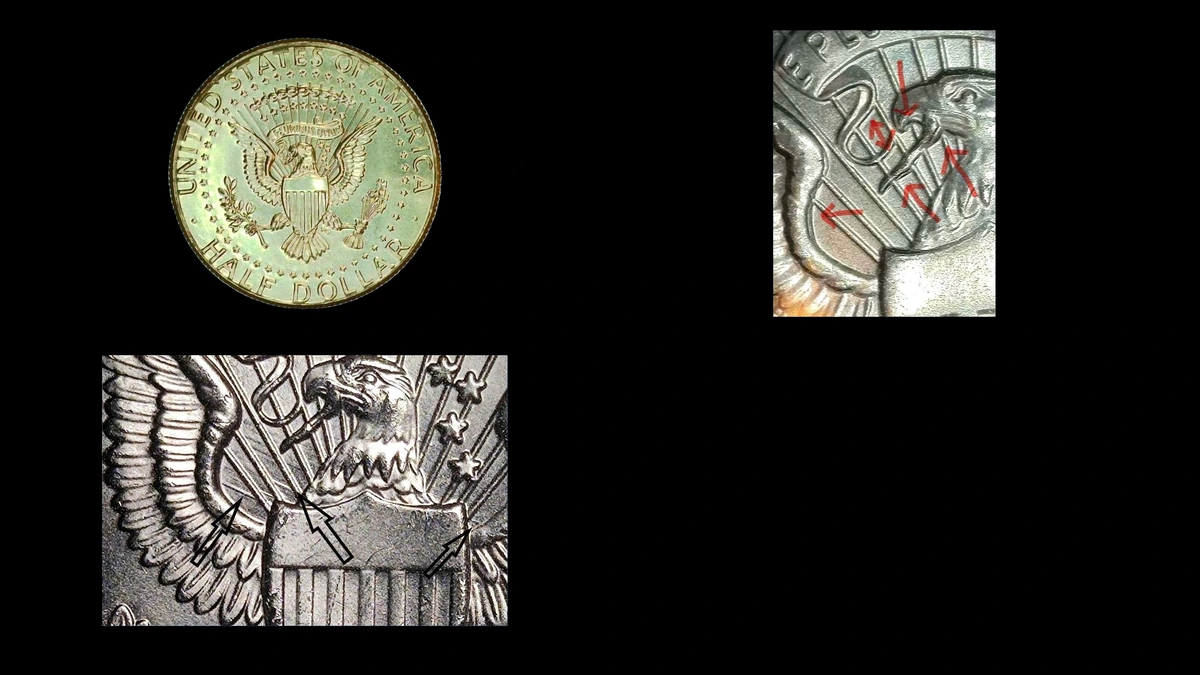
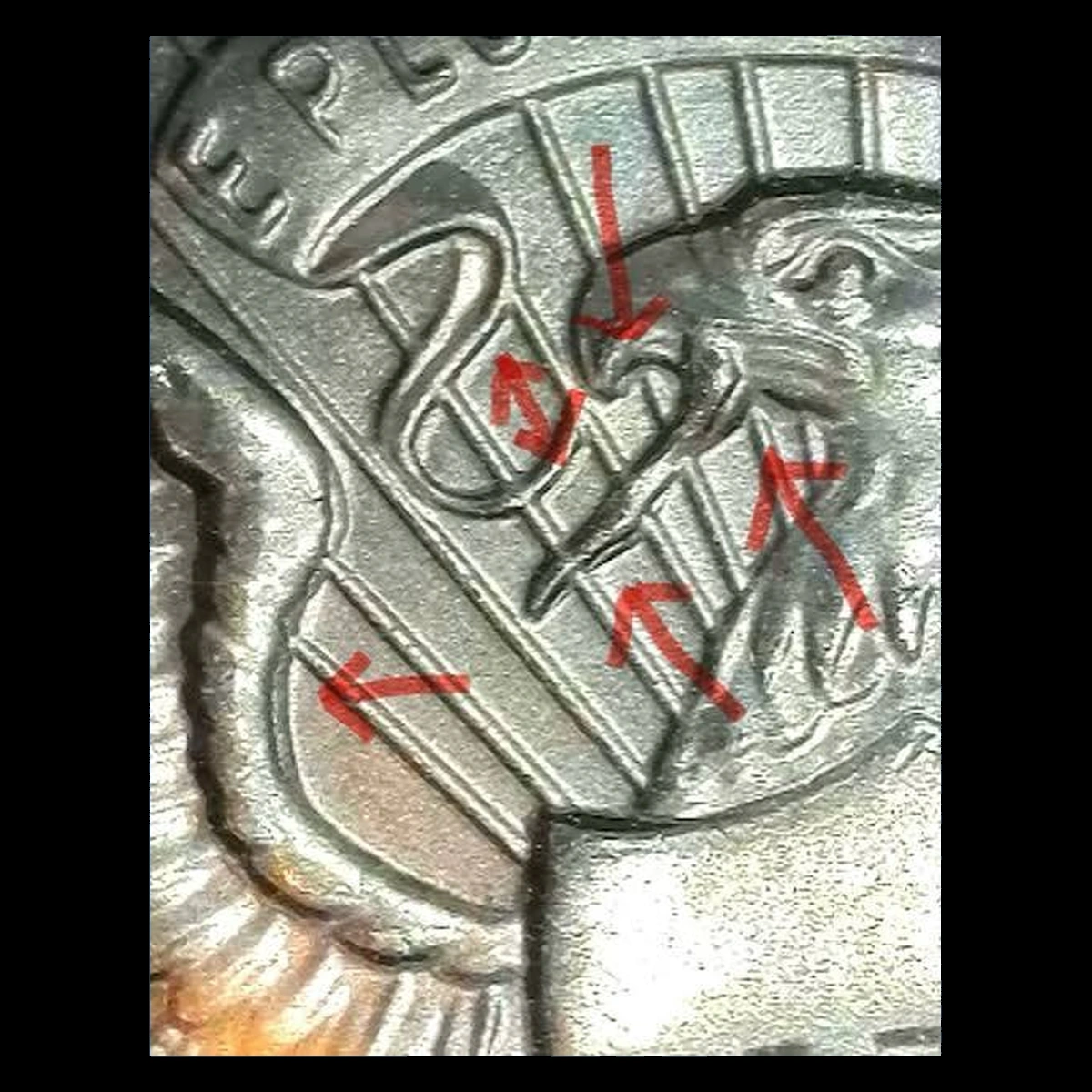
The 2024-P reports describe extra detail where inner eagle feathers meet and near the ribbon in its beak. Those locations refer to different examples.
The repeated shape originates in the die rather than from an extra blow to the coin. Do not combine both reported positions into an assumed single variety.
How to Identify
Begin with a normal reverse beside the candidate, since ordinary feather intersections can suggest extra strokes. Then select either the wing detail or ribbon area for a direct reference comparison.
Use light from two directions and compare the precise outline. Rounded repeated shapes differ from a flat step caused by movement during striking.
Confirm P on the front and retain the complete dated coin with each close-up. Normal measurements establish neither the reverse variety nor the extra shape.
What It’s Worth
Estimated range: $8–$35 for modest reported doubling on unworn coins outside grading holders. The 2024 guide provides the two reverse-doubling ranges combined here.
This is not an individual auction result. A convincing match and good surfaces are necessary before treating ordinary thick-looking feathers as a collectible variety.
5. 2024 Half Dollar A Foreign-Looking Design Trace Appears: Reported Die Clash Error
A clash can leave a recognizable part of the opposite face where no normal detail belongs. It begins when the dies meet without a blank between them and transfer marks to each other.
The annual overview names no mint or precise clash location. The separately documented cheek star should not be relabeled as a clash without evidence of that different mechanism.
How to Identify
Use photographs of both faces to find an opposing design feature that explains the candidate trace. Keep nearby letters or portrait landmarks in view to test position as well as shape.
Inspect the surface under magnification for signs of later pressure or damage. Another coin pressed against a finished half can leave a design-shaped dent without a die clash.
A vague resemblance is not enough. The strongest evidence is a recognizable transferred fragment in a position consistent with the two dies meeting.
What It’s Worth
Estimated range: $10–$75 for a genuine minor clash on a collectible regular-metal 2024 coin. No identified 2024 clash sale is supplied.
The estimate places a recognizable design trace above the modest $3–$5 tool-scrape comparison. That judgment does not make the two causes interchangeable.
6. 2024 Half Dollar Parallel Lines Stand Above the Reverse: Feeder-Finger Die Scrapes Error
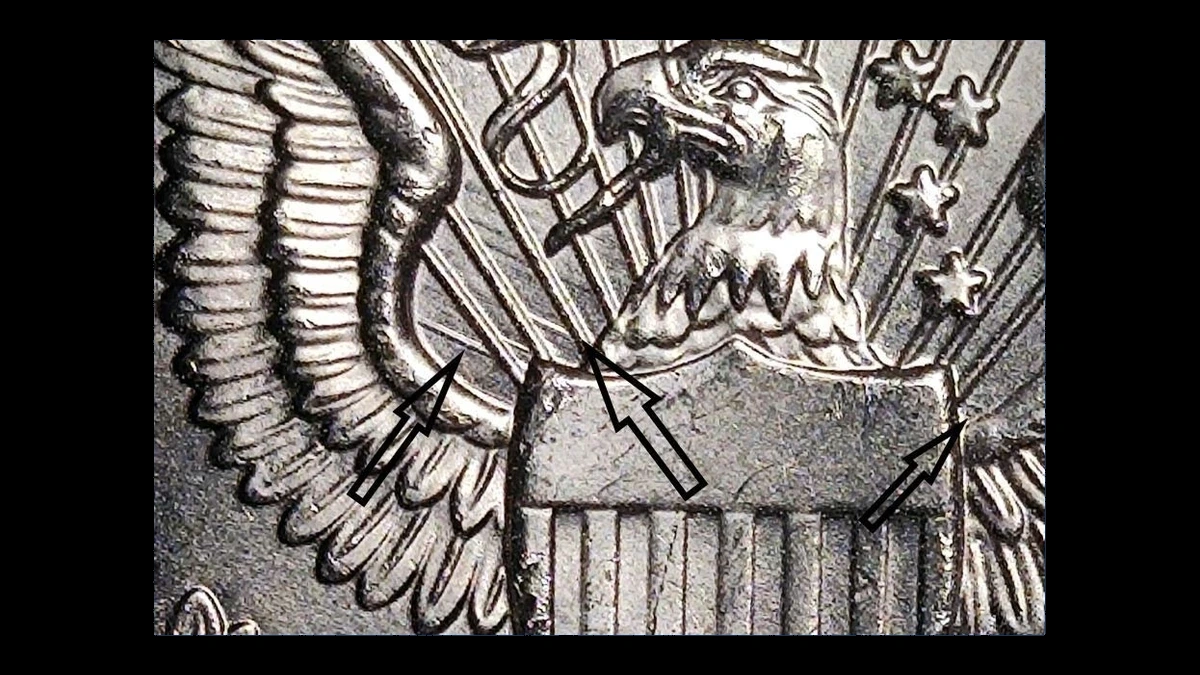
The Denver report attributes parallel lines beside the eagle to a moving feed part scraping the reverse die. Later strikes could fill those grooves with metal and leave raised lines on the coins.
The tool was scratched first; the coin copied its damaged surface. That sequence explains why the resulting coin marks can be raised instead of cut in.
How to Identify
Confirm 2024 and D, then inspect several lines together under low light. Their height helps distinguish original raised ridges from ordinary scratches across a finished coin.
The report supplies no universal line pattern for all Denver examples. Match position and structure on the actual candidate instead of identifying the cause from parallel direction alone.
Weight and diameter cannot prove a scrape in the die. The relevant evidence lies in the struck surface itself.
What It’s Worth
Estimated range: $3–$5 for small recognizable marks on unworn coins. This is a modest retail guide comparison, not a major auction result.
A normal well-preserved 2024-D can already sell above face value. Heavy distracting marks may reduce appeal, and scratches cut directly into the coin do not qualify as the reported die-scrape feature.
Conclusion
Ask whether the feature is impressed, raised, or simply an area the dies never reached. That first distinction separates the cheek star, copied tool marks, and displaced strike before finer attribution work begins.
The estimated $1–$1,000 span includes several evidence levels. The upper figure is tied to an identified Dropped Star asking price, while weak letters and reported minor varieties need their own modest comparisons.