Rare 1847 Half Dollar Errors (List & Pictures)
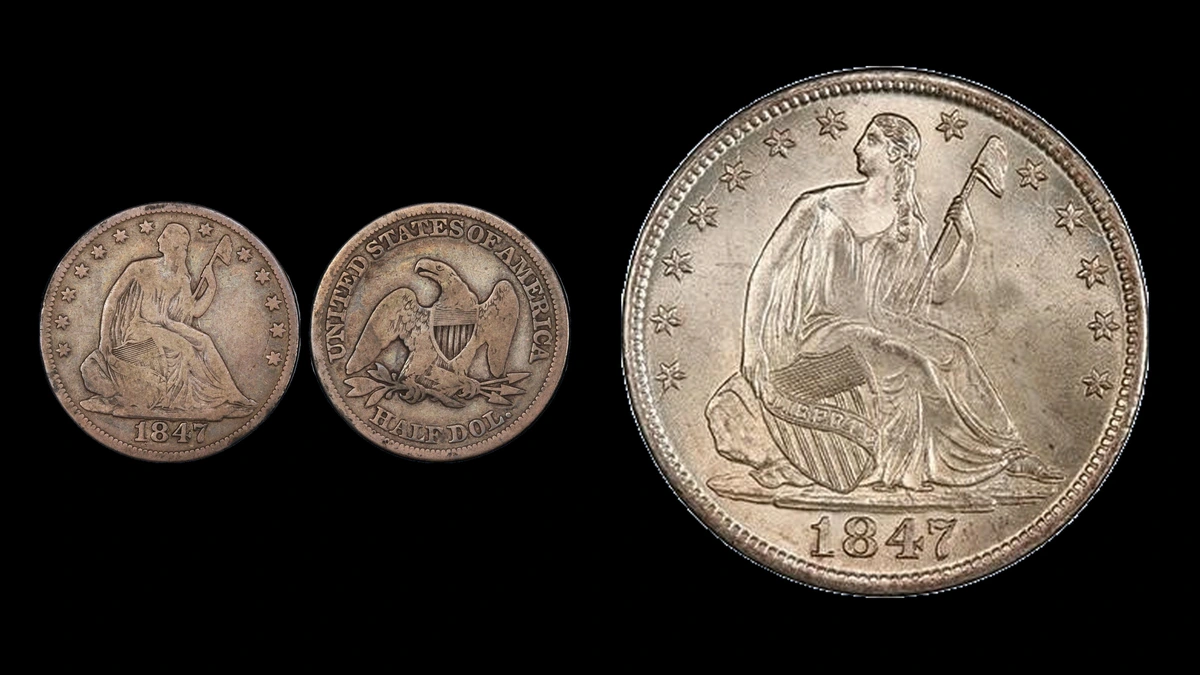
The same year can hide different date and design patterns depending on the mint. Separate Philadelphia from New Orleans before comparing the small details on an 1847 half dollar.
Estimated values for the 1847 half dollar errors here begin near $250, while the exceptional Philadelphia overdate record reaches $43,125. That record is far above the ordinary worn comparisons.
Check the date first, then the doubled design, shield trace, crack routes, and rim break.
| Feature | Main landmark | Estimated worn-coin range |
|---|---|---|
| 1847/6 overdate | Old 6 beneath the final date | $3,000–$12,000 |
| Repunched date | Extra 7 on a New Orleans example | $300–$900 |
| Doubled front design | Mint-specific shield and portrait details | $400–$1,200 for O-mint examples |
| Die clash | Lower-right shield on Large O | $250–$800 |
| Die cracks | Rock, ribbon, lettering, or date | $250–$900 excluding overdate rarity |
| Reverse cud | Broad rim break above UNITED | $500–$2,000 |
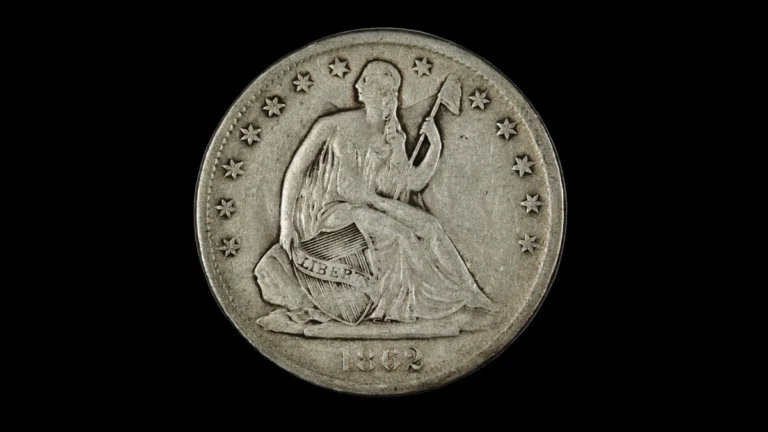
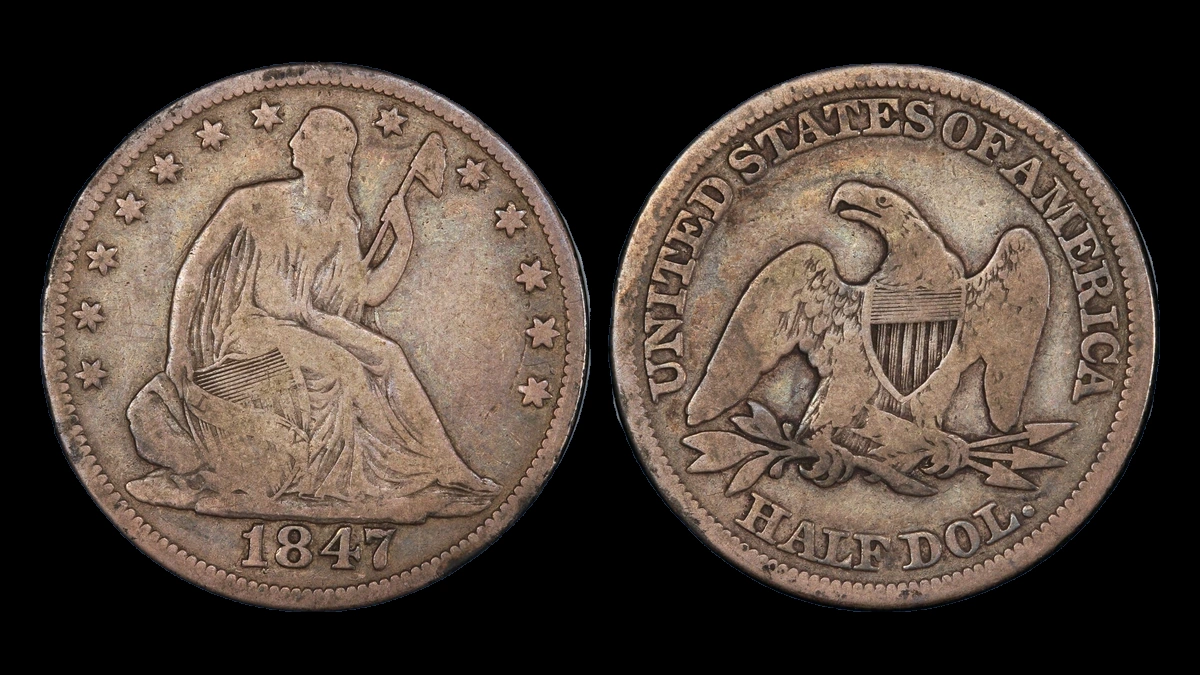
An O below the eagle identifies New Orleans; Philadelphia coins have no mint letter. The normal unworn standard is 13.36 grams and about 30.6 millimeters across, with grooves around the edge.
1. 1847 Half Dollar The Lower Loop of an Old 6: 1847/6 Overdate Error
On the Philadelphia overdate, part of an earlier 6 survives beneath the final date. Its curved lower loop is a useful starting landmark.
Auction descriptions also note remnants of earlier 1 and 4 impressions lower and left of the final numbers. The altered die retained these pieces of its older date.
How to Identify
Keep the entire date in view before enlarging the last digit. Look for the lower loop of the old 6 in the same position as a confirmed example.
Compare the other surviving numeral pieces and their spacing too. A straight line touching the 7 does not replace the expected curved shape.
Later cracks can cross the date area, so trace them separately under changing light. Confirm the absence of an O on the reverse.
What It’s Worth
Estimated range: $3,000–$12,000 for collectible worn examples. Their remaining detail and surfaces matter alongside a clear overdate match.
Worn comparisons include $3,360 in 2020 and a $9,500 sold listing from October 2025 for XF40. XF40 describes wear with substantial detail still present.
The exceptional auction record is $43,125 for an MS62 in August 2011. That unworn coin belongs to a different condition tier from an ordinary worn example.
2. 1847 Half Dollar A Second Piece below the 7: Repunched Date Error
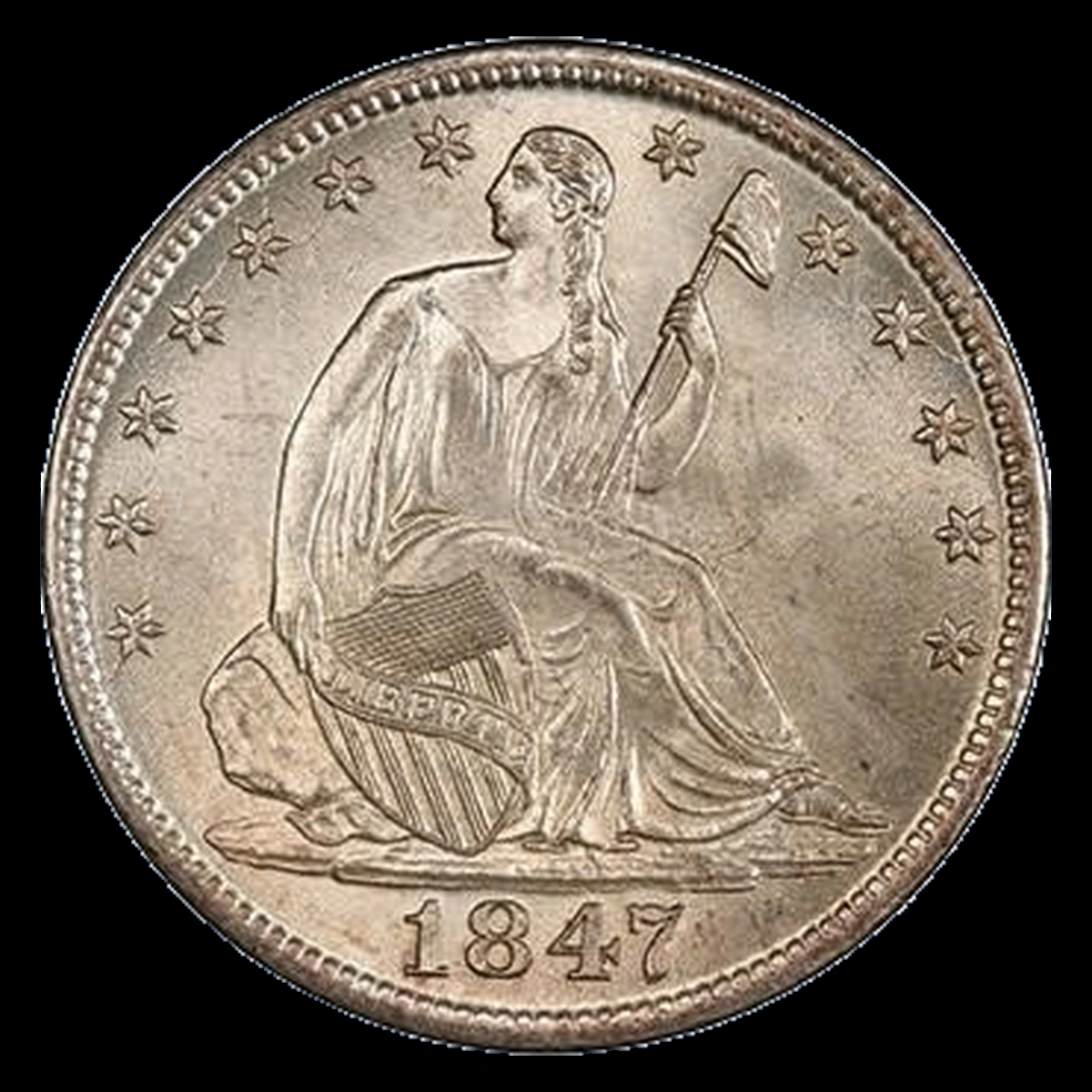
The New Orleans coin auctioned in 2021 shows an earlier 7 impression directly below the final numeral. It formed while the date was being punched into the die.
The same coin later received extensive crack lines from damaged tools. Those ridges have a different origin from the extra number.
A separate Large O example is described as having a doubled date. Its direction should be read from its own photograph rather than assumed to match the downward 7.
How to Identify
Frame the whole date and enlarge the final 7 with a 10× magnifier. Match a recognizable numeral piece below it with the auction reference.
Separate nearby cracks from the earlier digit and check that the feature is not a low flat shelf. The shape and spacing need to agree, not just the general impression of doubling.
Find the O below the eagle. A Philadelphia overdate and this New Orleans repunched date need different comparisons.
What It’s Worth
Estimated range: $300–$900 for worn examples, using ordinary XF45 sales near $500 as context. It is a whole-coin estimate rather than a fixed repunching premium.
The exceptional MS65 CAC sold for $24,675 in October 2021. Its rare level of unworn preservation contributes heavily to that price.
3. 1847 Half Dollar Repeated Shield and Portrait Details: Doubled Die Obverse Error
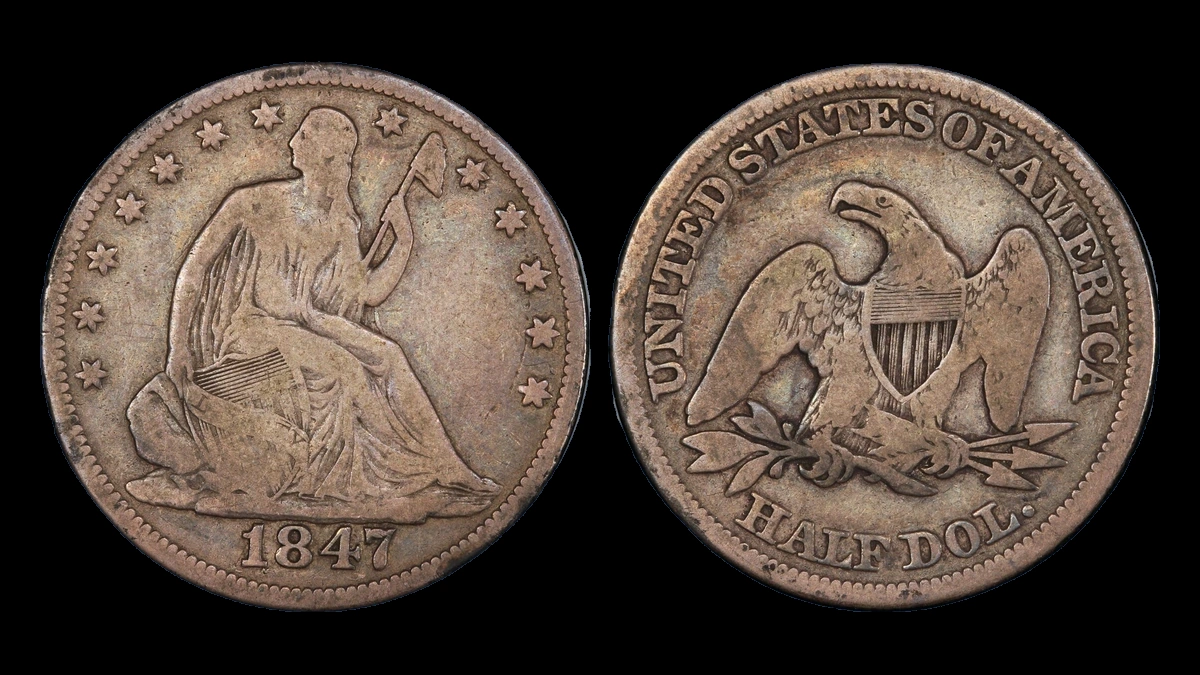
The Philadelphia overdate also has extra outlines around LIBERTY, especially RTY, plus the upper-right shield edge and nearby gown folds. The New Orleans pattern instead involves fingers, the rock’s left edge, the ribbon end, and the first two shield-line groups.
These repeated shapes originated while the die’s design was being prepared. One strike could transfer them to a coin.
How to Identify
Choose the mint-specific reference first. With no O, compare RTY and the upper-right shield; with O, begin with the fingers and shield-line pattern.
Match several extra outlines rather than relying on a single bright stroke. Flat shelves or scratches can imitate a small part of doubled detail.
Keep the complete front and the mint area linked in your photographs. Do not transfer a Philadelphia diagnostic to the New Orleans coin.
What It’s Worth
Estimated range: $400–$1,200 for attractive worn New Orleans examples. Its exceptional NGC MS66 brought $17,080 in September 2026.
Philadelphia’s doubled front belongs to the 1847/6 overdate, whose combined-variety record is $43,125. That figure includes the old date and exceptional preservation, not a separate payment for doubling.
4. 1847 Half Dollar A Trace at the Shield’s Lower Right: Die Clash Error
On the reported Large O New Orleans example, an extra outline appears at the lower-right corner of the shield. Its shape should be compared with the same documented variety.
The dies had struck each other without a blank between them, transferring traces of the opposing design. Later coins could receive those unwanted fragments.
How to Identify
Inspect the lower-right shield under magnification while changing the light. Look for a matching transferred outline rather than any scratch or polishing line in the area.
Compare with the Large O illustration in Bugert’s New Orleans reference. Keep the whole shield and the O visible in the photo set.
What It’s Worth
Estimated range: $250–$800 for worn examples with a recognizable shield-area clash. Ordinary coins of the same date and mint provide starting context.
1847-O sold listings include XF45 examples at $504 in February 2025 and $525 in July 2025. Neither listing identifies a clash, so those figures do not establish an extra clash premium.
5. 1847 Half Dollar Raised Routes through Rock and Lettering: Die Cracks Error
The New Orleans doubled-front die pair has a crack across Liberty’s rock and ribbon, plus a reverse line along the top of UNITED toward the rim above the first S of STATES. Philadelphia overdate examples can instead develop cracking along the date’s bottom.
These paths reflect different tools and stages of use. An earlier coin need not show a later crack at full strength.
How to Identify
Use the cataloged New Orleans doubled-front example for its paired rock and reverse-lettering routes. For Philadelphia, use the appropriate date-area reference instead.
Trace each continuous ridge with low side lighting. A scratch cuts downward, and separate marks should not be joined into an imagined long crack.
What It’s Worth
Estimated range: $250–$900 for ordinary worn examples with visible cracks, excluding the Philadelphia overdate’s separate rarity value. New Orleans XF45 results around $500 provide condition context.
The MS66 doubled-front coin brought $17,080 in 2026, while the cracked MS65 repunched-date coin reached $24,675 in 2021. Both prices cover complete high-grade coins with several features, not a separate amount for each line.
6. 1847 Half Dollar A Broad Raised Patch above UNITED: Reverse Cud Error
The early reverse crack reaches the rim near the first S of STATES, above UNITED. Later, an edge section of the die failed and left a larger raised rim-connected area.
That completed break is a cud. The MS66 doubled-front coin sold in 2026 shows the earlier cracked stage, not the later broad break.
How to Identify
Follow the border above UNITED toward the first S of STATES. Look for a broad raised mass joined to the rim rather than only a narrow line.
Compare with a later-stage image that actually shows the completed break. The MS66 auction photograph cannot prove a surface feature it does not have.
Inspect the mound and nearby edge for solder, corrosion, or impact damage. An added lump is not an original die-break impression.
What It’s Worth
Estimated range: $500–$2,000 for worn examples with the completed raised break. Ordinary 1847-O XF45 values around $500 provide a starting point for the underlying coin.
A large clear cud can add collector interest, but the $17,080 MS66 sale is not its completed-cud record. That result concerns an exceptionally preserved coin with the earlier crack stage.
Conclusion
Match the mint before the detail, and distinguish a complete numeral shape from a crack or reflection. At the reverse rim, a narrow line and a later broad cud are different stages.
Prices range from modest worn-coin estimates to the exceptional $43,125 overdate result. Multiple features can share one coin and one price, so their individual ranges should not be added together.