Rare 1856 Half Dollar Errors (List & Pictures)
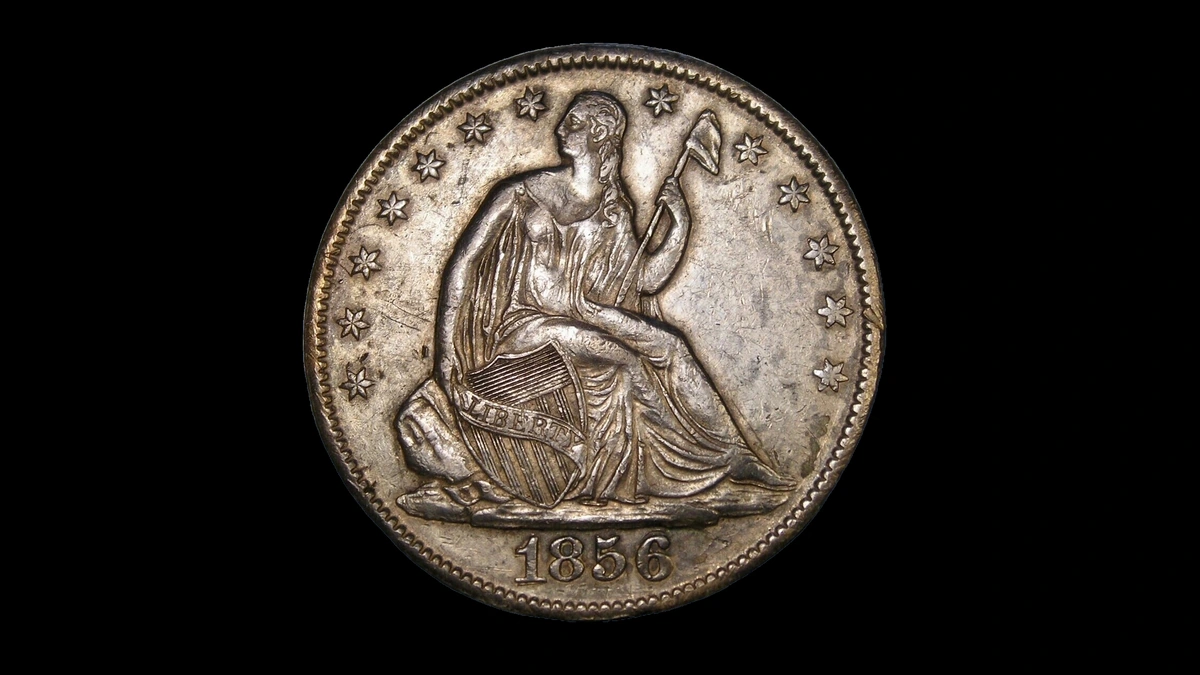
Some 1856 half dollar errors add raised detail, while others remove a shallow fold or open a layer within the silver. The differences become clearer when the mintmark and affected area stay together.
Estimated values range from $125–$5,000; an 1856-S No Drapery AU55 sold for $3,162.50 in August 2011. Inspect the edge and lower-left stars, then the date, elbow, and reverse head area.
| Visible clue | Area and mint | Feature | Estimated value |
|---|---|---|---|
| Partly attached silver sheet | Reported Philadelphia coin | Clamshell lamination | $150–$600 |
| Two jagged rim projections | Philadelphia stars 1 and 2 | Sawtooth cud | $150–$2,000 |
| Extra numeral fragments | Philadelphia or O date | Repunched date | $150–$2,000 |
| Repeated front contours | O WB-19 | Doubled die obverse | $150–$1,800 |
| Missing elbow fold | S front | No Drapery | $500–$5,000 |
| Shield traces in clothing | Philadelphia knee and skirt | Die clash | $125–$1,000 |
| Interrupted surface behind head | Philadelphia eagle | Reverse struck through | $500–$2,500 |
The normal coin is a 90% silver alloy, about 12.44 grams and 30.6 mm before wear, with a grooved edge. It does not have the bonded outer layers of a modern clad half.
1. 1856 Half Dollar A Silver Flap Remains Attached: Clamshell Lamination Error
The reported Philadelphia coin has a partly connected sheet that opens like a clamshell. Separation occurred along a weakness within the original alloy.
The account describes a circulated piece without a certified grade or precise flaw location. It does not concern a modern clad layer coming unglued.
How to Identify
Leave the flap in its existing position. Its surviving connection is evidence and can break if flexed or lifted.
Magnify the layer boundary and attached end for a natural split rather than a tool cut or pried opening. An attached flap may cause little weight loss, so weight alone is not decisive.
Inspect the edge for cutting and distinguish a separating sheet from rough corrosion. Avoid assigning an exact position not established by the report.
What It’s Worth
Estimated range: $150–$600 for a circulated example with an original attached layer. The year guide records a $399.99 asking price, not an auction result.
Extent of the opening and overall preservation affect the comparison. A tiny peel and a large clamshell should not automatically receive the same amount.
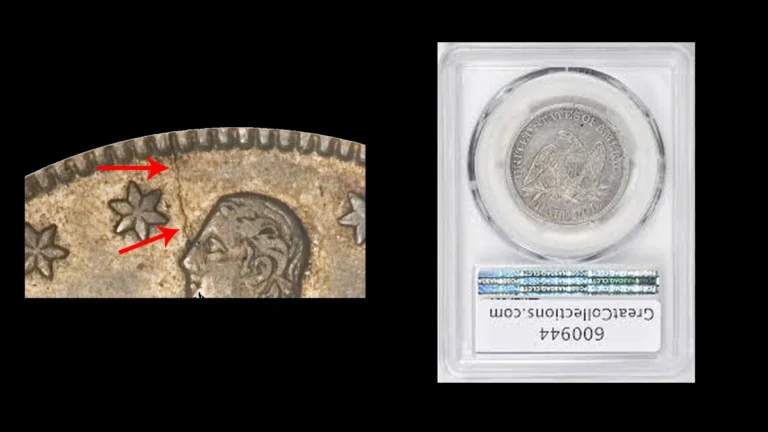
2. 1856 Half Dollar Two Jagged Shapes Outside the Stars: Sawtooth Cud Error
Philadelphia’s sawtooth variety has raised projections outside the first and second lower-left stars. Cracking around stars one through three helps locate the affected region.
Pieces broke away at the edge of the die, leaving spaces for silver during striking. The resulting cud adds raised metal above the intended surface rather than removing a piece of the coin.
How to Identify
Count upward from the lower left and inspect outside stars 1 and 2. Compare the pair of toothlike patches and their connection to the struck rim.
Look for supporting cracks nearby and check the complete edge for bends or flattened metal. A clip removes silver, while an impact can distort the border without reproducing the known raised pattern.
What It’s Worth
Estimated range: $150–$2,000 from circulated examples to modest unworn coins with clear sawtooth detail. The upper allowance requires appropriate surfaces and preservation.
An 1848 WB-13 rim cud in MS61 had a published $1,700 result in Heritage’s January 2025 sale. Its different date and location make it a related Seated-half comparison rather than a sale of this variety.
3. 1856 Half Dollar Extra Pieces of the Date Digits: Repunched Date Error
Reported extra strokes involve the 1, the 6, or the last two digits together. Both Philadelphia and New Orleans have cataloged examples, so the reverse mintmark selects the reference.
Repeated application of the date punch left portions of earlier numeral positions in the die. The O mintmark does not turn these front-date features into repunched mintmarks.
How to Identify
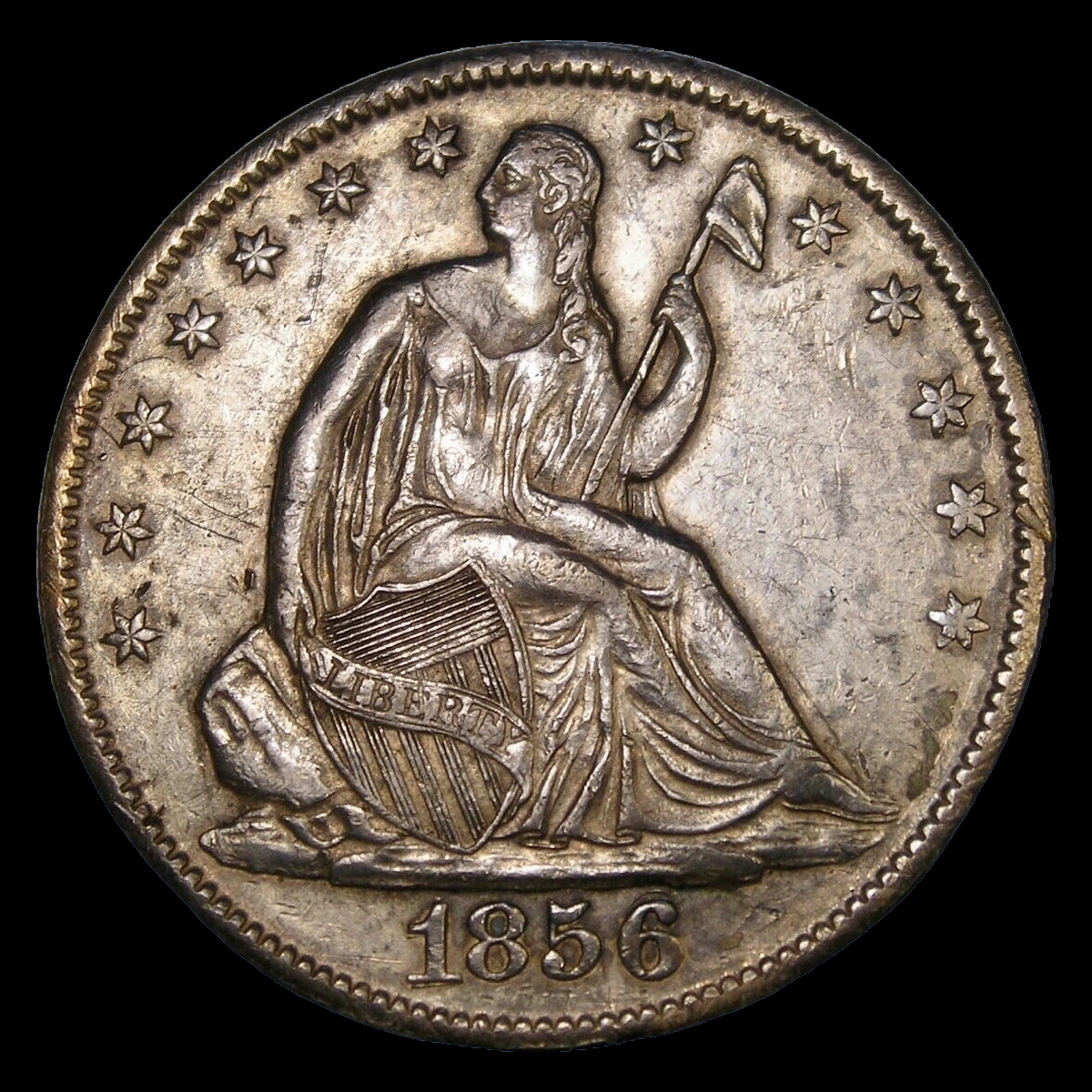
Photograph all four digits straight on and trace any extra curve, upright, or terminal. Match the particular mint and stroke position instead of assuming one direction applies to all 1856 dates.
A scratch need not form a recognizable numeral fragment, and die movement can leave a flat shelf. The earlier digit’s shape should explain the surviving raised detail.
What It’s Worth
Estimated range: $150–$2,000 across representative circulated and lower unworn examples. A Philadelphia WB-6 Repunched 1 in XF40 sold for $372 in May 2022.
An 1856-O repunched date graded PCGS MS63 brought $1,320 in November 2019. The different mint and absence of circulation wear are part of that comparison, and exceptional higher grades can exceed this working range.
4. 1856 Half Dollar Repeated Front Detail on an O Coin: Doubled Die Obverse Error
PCGS recognizes the New Orleans WB-19 doubled front. Unlike an earlier date-punch remnant alone, a doubled die contains repeated design created in the stamping tool.
The supplied catalog text does not name one exact doubled letter. Identification must therefore use the actual repeated contours on a certified WB-19 image.
How to Identify
Verify the O before comparing the front. Similar-looking dates on Philadelphia coins cannot establish this New Orleans attribution.
Compare raised duplicate shapes with the WB-19 reference. A flat shelf, altered cut, or repunching limited to a date digit may have another explanation.
What It’s Worth
Estimated range: $150–$1,800 for properly identified circulated examples. PCGS recognizes the variety but provides no auction record on the supplied page.
An 1871-S doubled front with an incomplete S sold for $7,200 in May 2025 at PCGS MS65. That exceptional unworn, different-year coin is higher-grade context, not an 1856-O valuation.
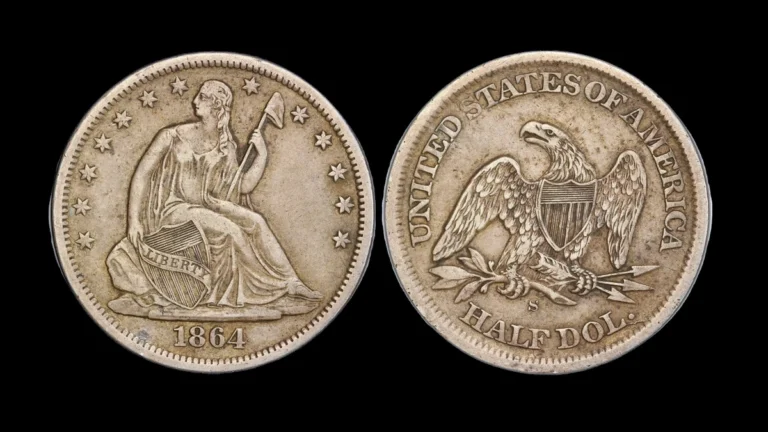
5. 1856 Half Dollar A Fold Is Absent Beneath the Elbow: No Drapery Error
On the recognized 1856-S variety, polishing removed the die recess that normally forms a shallow fold beneath Liberty’s left elbow. Later coins copied the altered design without that fold.
The name does not make it the separate 1839 No Drapery design. Date, S mintmark, and sufficient surrounding detail remain necessary parts of the match.
How to Identify
Compare normal drapery and a known No Drapery specimen at similar preservation. General circulation wear can also erase folds while smoothing other high areas.
Inspect for scraping or disturbed texture below the elbow. A removed fold on a finished coin needs a different explanation from a missing detail in the original die.
What It’s Worth
Estimated range: $500–$5,000 across identifiable circulated examples. The scarce San Francisco coin has substantial underlying value.
A PCGS AU55 No Drapery sold for $3,162.50 in August 2011. The catalog noted reverse surface problems, so originality matters when comparing another lightly worn example.
6. 1856 Half Dollar Shield Lines Appear in the Clothing: Die Clash Error
Documented Philadelphia examples show reverse-shield traces around the knee and skirt, including the area to the skirt’s right. Their shape differs from an ordinary extra-looking cloth fold.
Contact between dies without a blank can transfer elements of one design to the other tool. Subsequent strikes reproduce those unwanted lines.
How to Identify
Compare the clothing traces with the reverse shield’s line arrangement. Use full-face photographs to keep the marks in their documented location.
Check the absence of a mintmark and separate cuts or later coin-contact impressions from transferred design. Some sawtooth-cud coins also have clashes, but their rim patches formed through a different process.
What It’s Worth
Estimated range: $125–$1,000 for circulated Philadelphia coins with readable traces. The clarity of the pattern and the surfaces matter alongside wear.
The ANACS MS63 strike-through discussed next sold for $632.50 in July 2003 and also had light clashing. That combined historical result does not isolate a price for the shield marks.
7. 1856 Half Dollar An Interrupted Area Behind the Eagle’s Head: Reverse Struck Through Error
Heritage titled a Philadelphia example as a reverse strike-through while describing the area behind the eagle’s head as a mint-made metal flaw. Its specific cause was not identified.
A strike-through normally results from material blocking the die’s contact with the blank. Here the recorded classification should not be expanded into a claim about grease, cloth, or another substance.
How to Identify
Locate the area behind the head in the Heritage record. Compare its outline and relationship with the surrounding struck design.
A later gouge may have a cut channel and pushed-up metal. A depression formed during striking need not remove material or make the coin underweight.
Keep the accompanying clash lines separate from this interruption. Both occurred on the same ANACS MS63 reference but answer different identification questions.
What It’s Worth
Working estimate: $500–$2,500 for comparable attractive examples, depending on grade and visibility. The direct historical sale was $632.50 at Heritage on July 30, 2003.
MS63 indicates an unworn coin, so a modest defect on a worn half does not automatically justify the upper estimate. The result values one coin with both its strike-through classification and light clashing.
Conclusion
Keep missing metal, missing folds, repeated digits, transferred lines, and raised rim patches separate as you inspect an 1856 half. The mintmark determines which documented example can support a match.
The $125–$5,000 estimates combine several preservation levels. A coin with both clashing and another feature still has one whole-coin value, and a seller’s clamshell asking price remains different from a completed auction.