Rare 1963 Half Dollar Errors (List & Pictures)
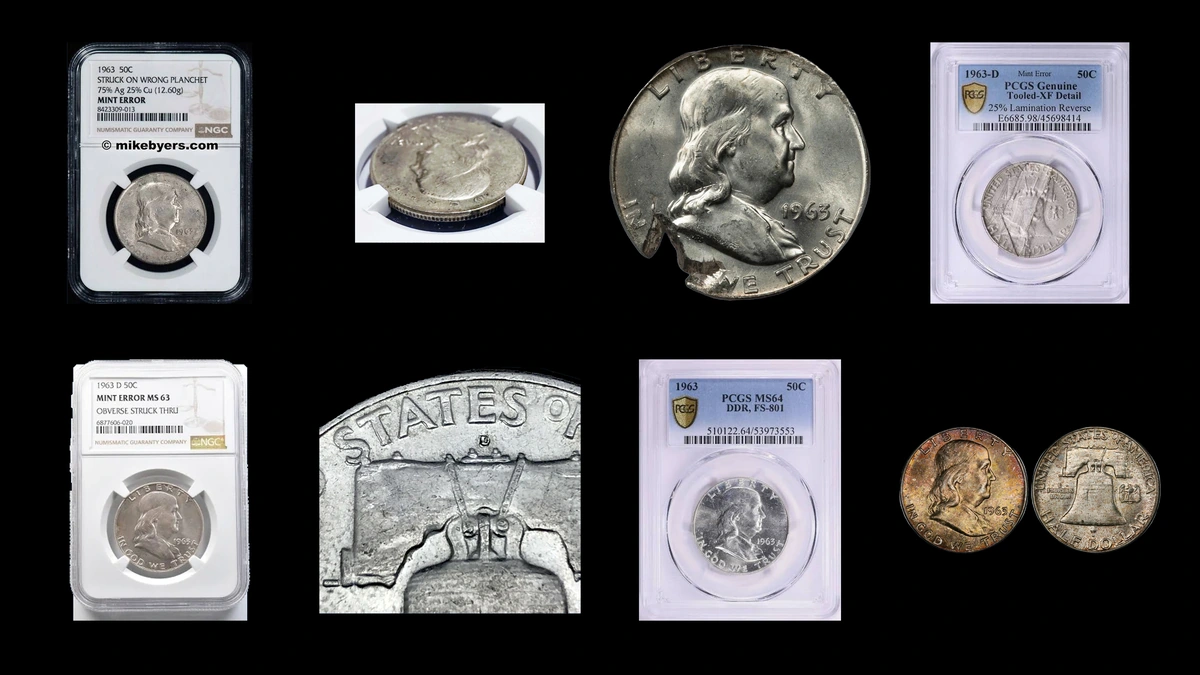
A 1963 Franklin can have nearly normal dimensions yet unusual metal, or carry only part of the design on a tiny wrong blank. A Denver dime-blank example sold for $10,200 in September 2025.
Estimated values for 1963 half dollar errors span $50–$40,000, with the top figure coming from an asking price for an unusual alloy. Compare dimensions and metal first, then inspect surface defects, letter varieties, and evidence of additional strikes.
| Clue | Error | Estimated value |
|---|---|---|
| Small blank with oversized design | Wrong denomination planchet | $1,000–$15,000 |
| Full width but reduced thickness | Quarter-stock thickness | $500–$2,500 |
| Unusual tested composition | 75% silver planchet | $20,000–$40,000 |
| Missing rim portions | Clipped planchet | $60–$400 |
| Original hole or rough shortage | Defective planchet | $150–$1,500 |
| Separating local layer | Lamination | $50–$600 |
| Impression from an obstruction | Struck through | $50–$1,200 |
| Earlier D outline | Repunched mintmark | $75–$500 |
| Repeated reverse lettering | Doubled die reverse | $150–$1,600 |
| Transferred eagle shapes | Die clash | $75–$750 |
| Several design positions | Double or triple strike | $3,000–$16,000 |
| Mirrored portrait on cent metal | Cent-blank brockage | $5,000–$20,000 |
A normal half starts at 12.50 grams, about 30.6 millimeters in diameter, and 90% silver with 10% copper. Its edge is grooved, and the familiar crack drawn in the Liberty Bell belongs to the ordinary design.
1. 1963 Half Dollar Only part of Franklin fits on the metal: Wrong-Denomination Planchets Error
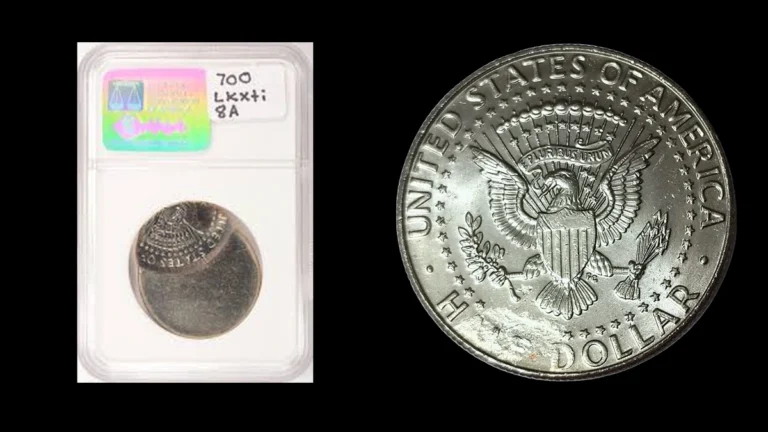
Documented Denver examples include a silver dime blank in NGC MS63 at 2.5 grams and a bronze cent blank in PCGS MS63 Brown. Quarter-blank records include an NGC MS66 and a separate NGC MS62 at 6.2 grams with an additional strike-through.
The documented PCGS MS66 nickel-blank coin is Philadelphia, with its date near the center. It cannot establish a guide’s separate claim of a Denver MS66 nickel example.
How to Identify
Read the date and surviving mintmark evidence before selecting a blank comparison. A missing mintmark area cannot prove that a D was originally present.
Standard blank weights are 2.50 grams for a silver dime, 6.25 grams for a silver quarter, 5.00 grams for a nickel, and about 3.11 grams for a bronze cent. These standards are not measurements supplied for every illustrated coin.
Inspect the edges for trimming or added plating and check that the large design ends naturally on the smaller metal. Composition, weight, and surviving design must support the same blank type.
What It’s Worth
Estimates are $1,000–$5,000 for quarter blanks, $3,000–$10,000 for nickel or cent blanks, and $7,500–$15,000 for dime blanks. Preservation and readable identity influence each range.
A Denver dime-blank ANACS AU58 sold for $10,200 in September 2025, separately from the NGC MS63 example. The quarter-blank MS62 with a strike-through brought $1,200 in August 2022, already covering both errors on that coin.
2. 1963 Half Dollar The coin keeps half-dollar width but is thin: Quarter-Stock Thickness Error
A full-sized half-dollar blank can be cut from a strip rolled to quarter thickness. It retains the larger outline while offering less metal to fill the dies’ design.
The documented Philadelphia PCGS MS63 weighs 9.8 grams and is cataloged as quarter-stock thickness. This differs from a small circular quarter blank.
How to Identify
Record width and thickness together, looking for nearly the normal half-dollar diameter with reduced thickness. The 9.8-gram measurement belongs to the recorded specimen rather than every possible candidate.
Check both faces and the edge for original surfaces instead of parallel grinding lines or other metal removal. Weak detail can fit thin stock, but it needs support from the actual dimensions and undisturbed metal.
What It’s Worth
A confirmed 1963 thin-stock half has an estimated $500–$2,500 range. Full original outline and readable detail make the explanation easier to demonstrate.
A separate 1963-D on a smaller silver quarter blank brought $1,380 in March 2025. That sale supplies a related wrong-metal comparison, not the price of the 9.8-gram Philadelphia coin.
3. 1963 Half Dollar Testing reveals an unusual silver mixture: 75% Silver Planchet Error
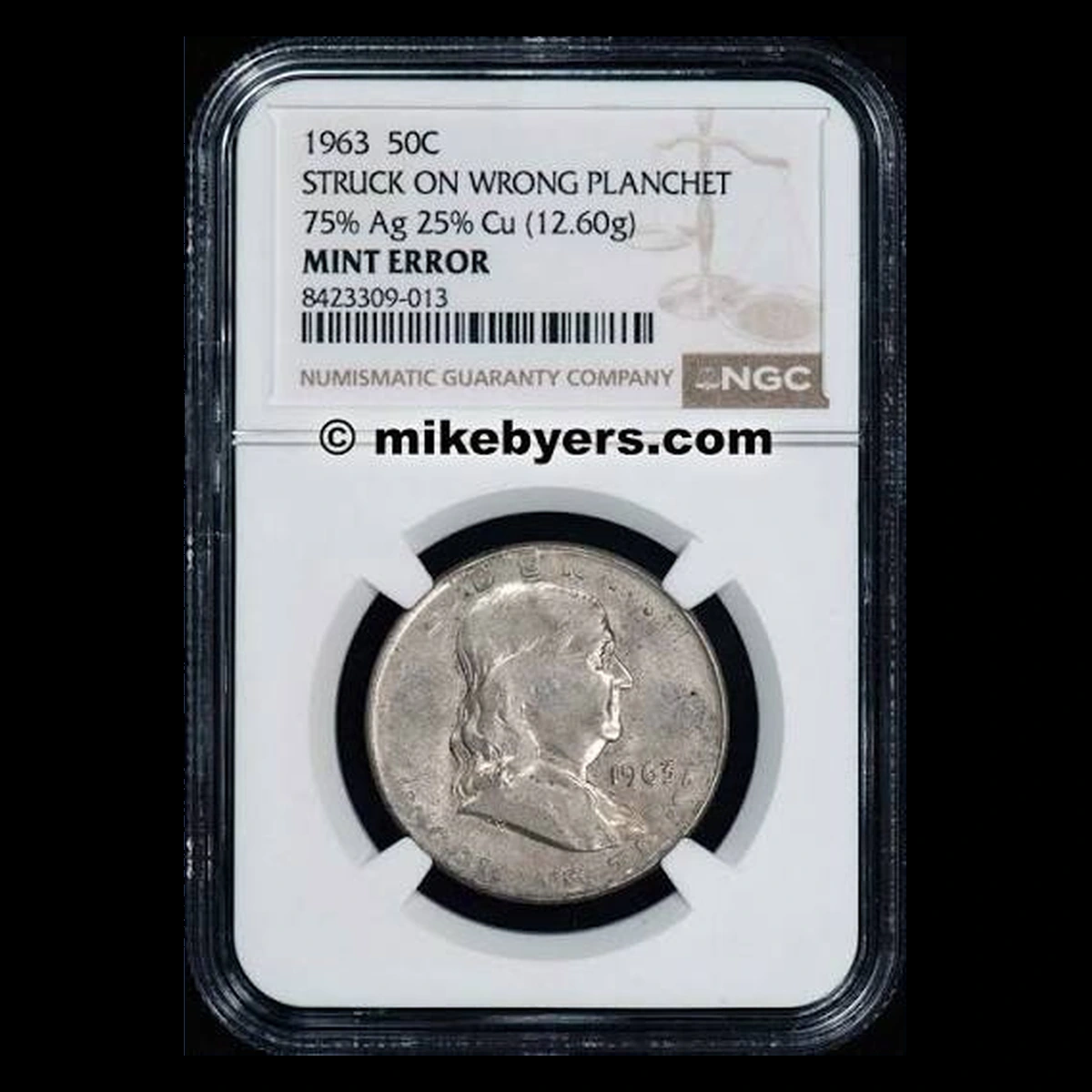
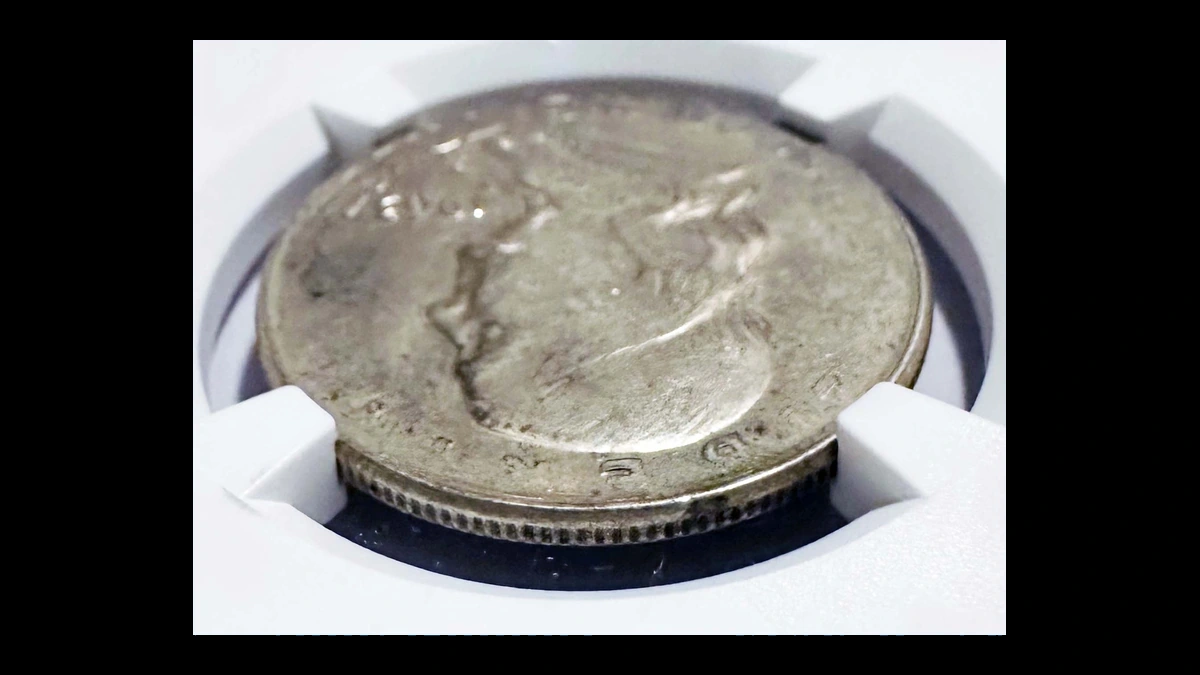
The described NGC-certified specimen contains 75% silver and 25% copper at 12.60 grams, only slightly above normal weight. It also has weak detail and partial collar contact.
The seller proposes an experimental origin, but the cited experimental strip mixtures do not exactly match this coin. Its tested alloy and suggested historical purpose must remain separate claims.
How to Identify
Professional nondestructive composition testing is essential, with attention to surface contamination or plating that could mislead a reading. Nearly normal weight cannot distinguish this alloy from an ordinary half.
Compare the complete coin and certification with the seller’s documented specimen. A partial collar can leave an edge step where only part of the thickness was restrained, but that edge and weak detail do not prove silver content.
What It’s Worth
The estimated $20,000–$40,000 range reflects a highly specialized market, with $40,000 displayed as the seller’s asking price. It is not an auction result.
Confirmed composition and original surfaces are central to that comparison. An ordinary weak strike or unusual edge does not receive the same estimate without the metal evidence.
4. 1963 Half Dollar Curved or ragged gaps interrupt the outline: Clipped Planchets Error
Photographs document curved clips from Philadelphia and Denver, alongside a Philadelphia PCGS MS63 double clip totaling 5%. A separate Philadelphia NGC MS64 has a ragged missing edge and weighs 11.6 grams.
The blank was incomplete before the dies formed the design around it. Different gap shapes do not require the same rim response, and genuine examples need not all show obvious weakness opposite a clip.
How to Identify
Follow the rim toward each gap, looking for natural tapering or detail formed beside missing metal. Sharp cut walls, saw marks, and pushed-up burrs may indicate later removal.
Inspect surviving edge grooves and photograph the opposite rim as supporting evidence. On a double clip, examine each opening without transferring the ragged coin’s weight to it.
What It’s Worth
Collectible curved, double, and ragged clips have an estimated $60–$400 range. Two gaps do not automatically double a coin’s value.
A 1962-D with a 4% clip in PCGS MS61 sold for $84 in March 2011. Its different date, shape, and preservation provide context rather than a realized price for the documented 1963 examples.
5. 1963 Half Dollar A hole or rough metal shortage predates the design: Defective Planchets Error
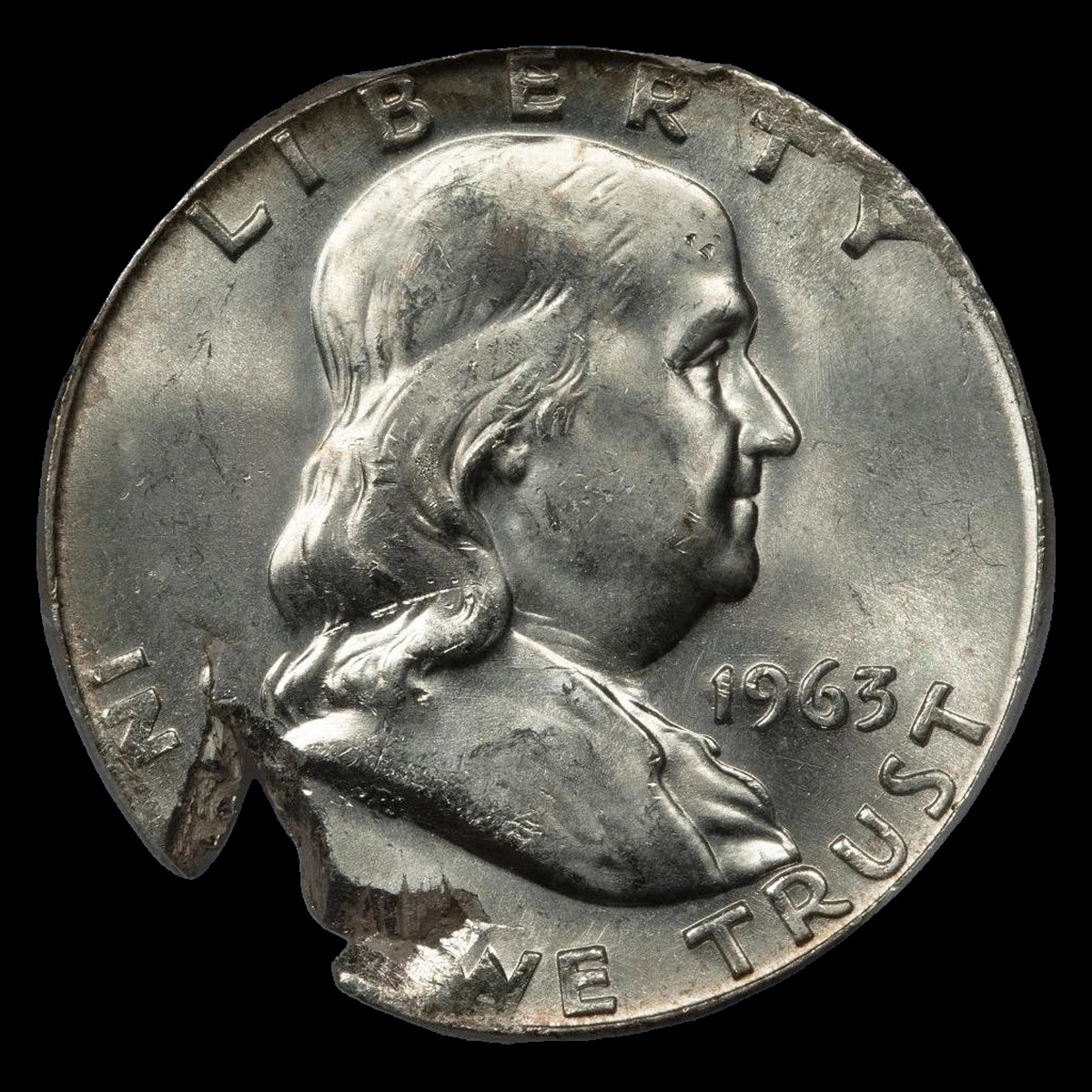
Faulty original metal can leave a hole or an irregular edge shortage without a blanking-punch clip. Separate examples include a Philadelphia NGC MS65 at 11.7 grams and a PCGS MS64 photograph showing a large lower-left defect.
A teaching image has a hole left of the portrait and bell. It is not established as the auctioned holed MS63 Full Bell Lines coin weighing 11.5 grams.
How to Identify
Examine the opening from both faces and ask how the surrounding silver and design formed at its boundary. Drilling afterward may leave circular tool lines, sharp burrs, or cuts through finished details.
Apply the same test to a rough shortage at the edge. Keep the separate lower-left photograph, 11.7-gram measurement, and holed-coin records attached to their actual specimens.
What It’s Worth
Clear original blank defects have an estimated $150–$1,500 range. An unusual hole with undamaged surrounding design can make a stronger comparison than minor roughness.
A 1961 split-before-strike piece weighing 6.0 grams sold for $408 in July 2021. Its different form of defective metal offers limited series context and is not a sale of either 1963 holed example.
6. 1963 Half Dollar A local silver layer lifts or disappears: Lamination Error
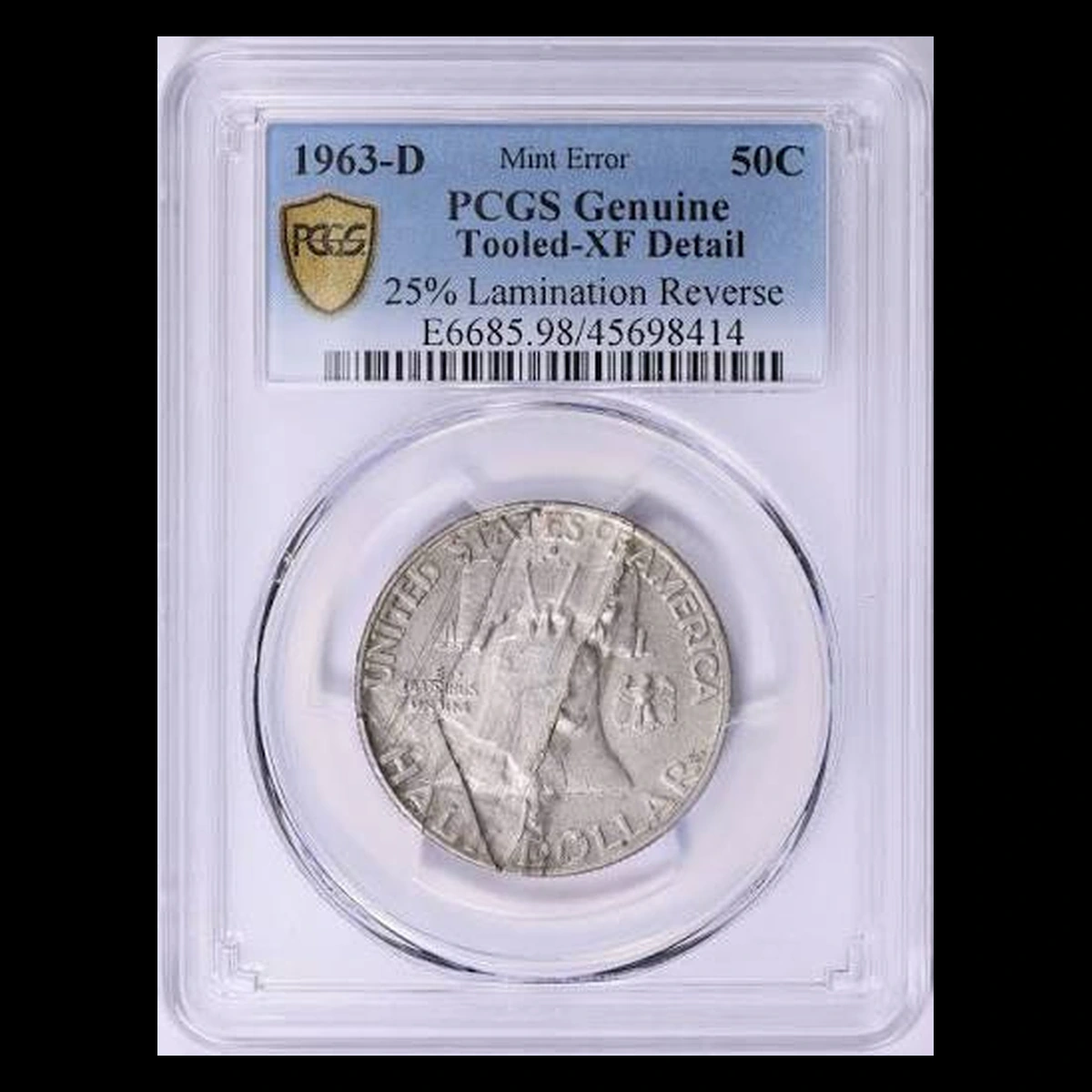
Denver reverse-lamination examples include an NGC MS62 and ANACS AU55. A separate obverse-lamination ANACS MS64 report does not establish its mint.
Another Denver coin in ANACS AU50 combines peeling with a strike-through. Those two descriptions do not prove the loose silver caused the obstruction or establish which event happened first.
How to Identify
Seek a separating layer or a physical boundary within the metal, using changing light to reveal depth. The bell’s normal drawn crack is not a peeling defect.
Leave any attached silver undisturbed and examine the object impression separately on a combined example. An attached flake can leave weight near normal, while a lost piece may reduce it.
What It’s Worth
The estimated range is $50–$600. Greysheet’s auction index records $99 for the Denver reverse-lamination MS62 in June 2023 and $456 for the larger AU55 reverse lamination in April 2021.
The AU50 combination brought about $94 in September 2015. Two named errors therefore do not automatically command more than one particularly visible defect on a desirable coin.
7. 1963 Half Dollar An object leaves an impression in the design: Struck Through Error
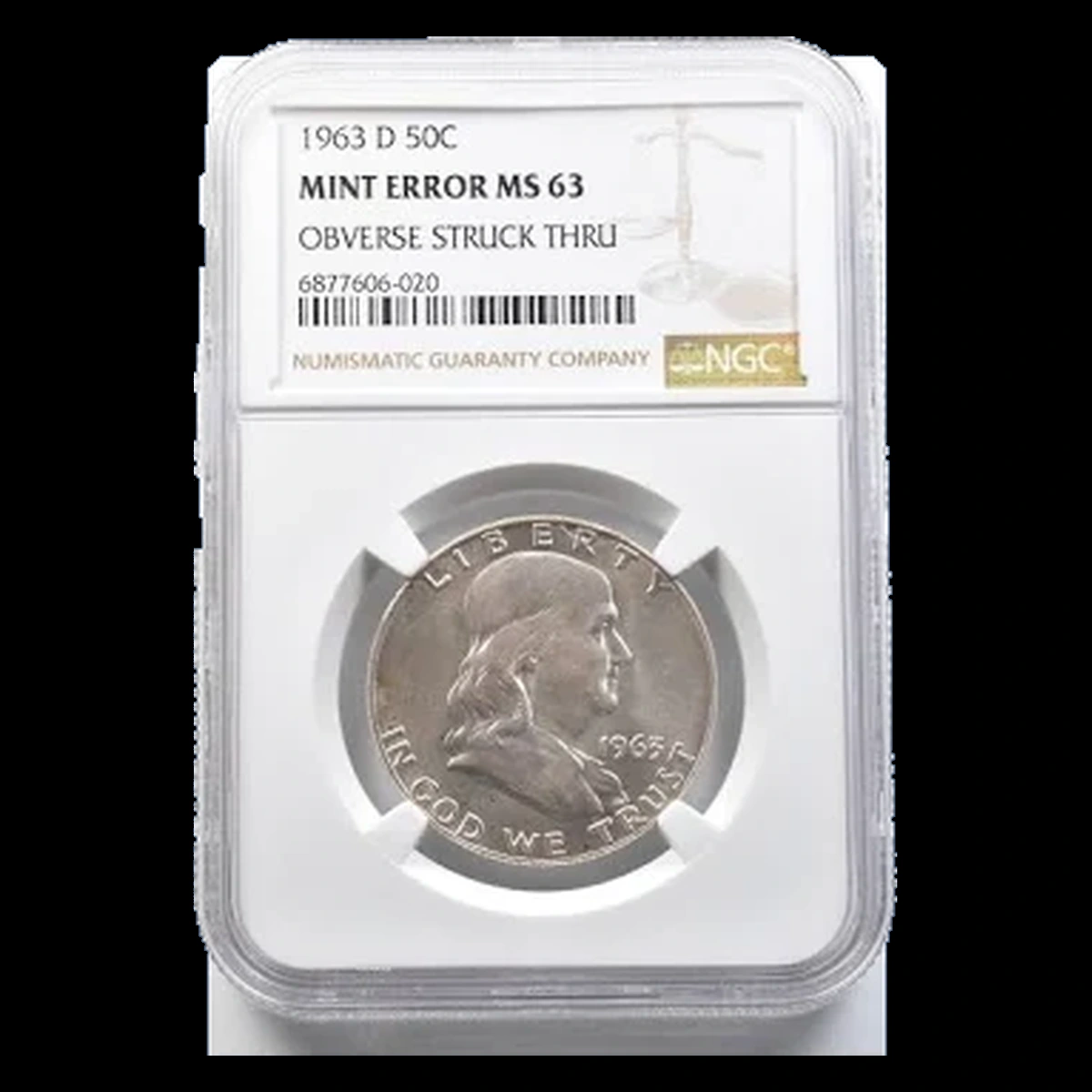
Records include a Philadelphia reverse NGC MS64, a Denver string impression in ANACS MS62, and a Denver staple example in ANACS AU55. Other Denver records describe obverse or reverse impressions without identifying a material.
These are separate coins, not evidence that one half was affected on both sides. A discussion mentions retained material on the staple coin, which should be checked against its actual photograph.
How to Identify
Follow the impression’s own path and inspect how surrounding detail meets it. A later scratch can cut through a finished design and push metal up along its sides.
Leave any retained object in place and photograph it together with the indentation. Normal weight cannot identify string or a staple, and the ordinary bell crack cannot stand in for an object impression.
What It’s Worth
Estimates are $50–$350 for small local impressions and $300–$1,200 for clear object-shaped errors. The Denver reverse MS65 is indexed at $119 in June 2026, while a separate obverse MS63 brought $232 in March 2026.
The staple AU55 reached about $881 in November 2013. The string example appeared in a mixed lot, whose entire price cannot be assigned to that single half dollar.
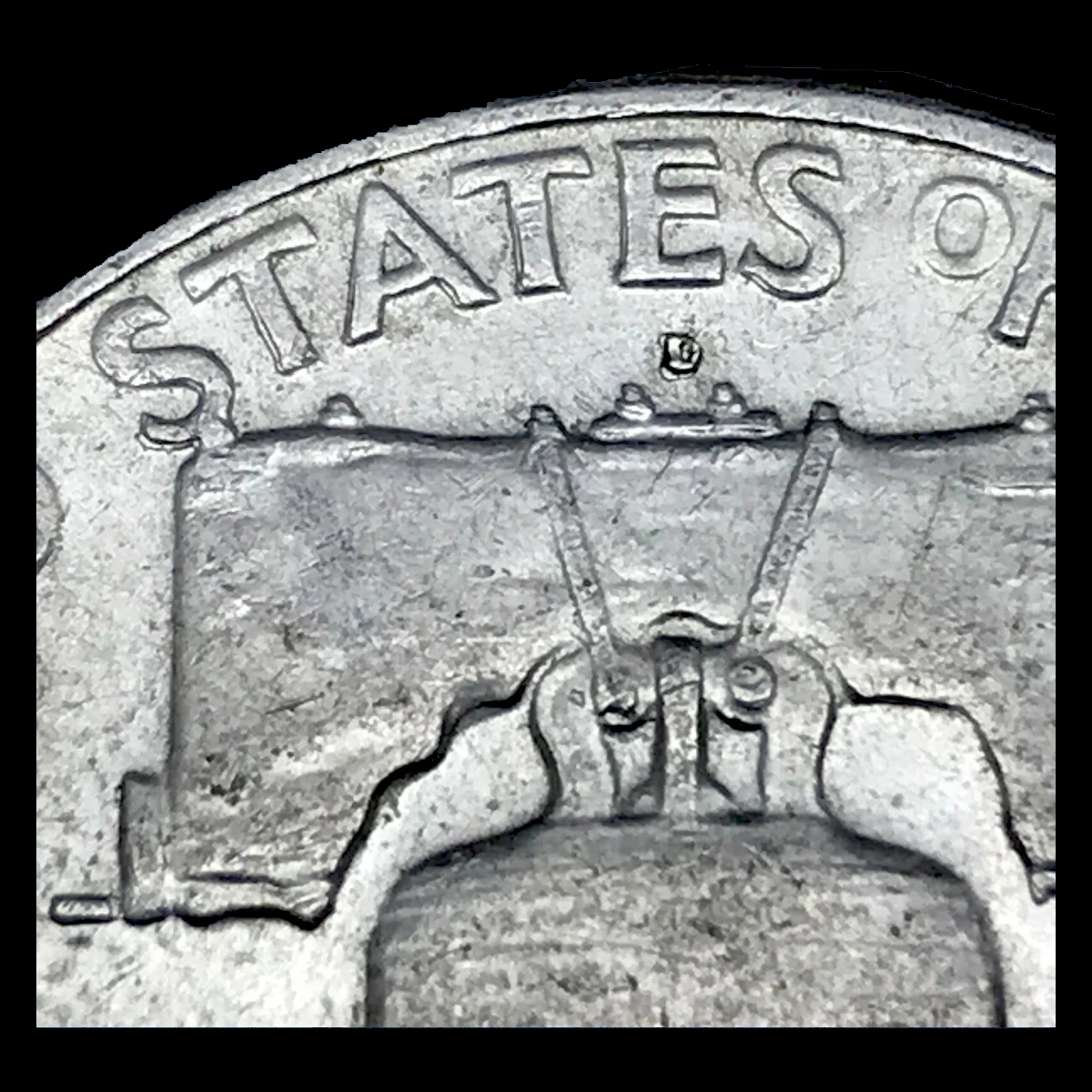
8. 1963 Half Dollar A remnant of another D appears above the bell: Repunched Mintmark Error
The 1963 report describes more than one repunching direction. Each extra contour therefore needs a matching reference rather than one universal location beside D.
A repeated hand punch could leave part of an earlier Denver letter in the die. This is neither an additional strike to the coin nor a claim that a different mint’s letter lies underneath.
How to Identify
Inspect the D’s internal curve and outer boundary above the bell. Compare the added shape with a recognized example of the same direction while keeping both images correctly oriented.
A rounded remnant should fit part of an earlier D. A scratch, lump, or flat shelf that cuts into the normal letter does not establish the same punching history.
What It’s Worth
A clearly matched collectible example has an estimated $75–$500 range. A visible letter shape provides stronger evidence than vague thickness.
A 1952-S FS-501 in MS65 is indexed at $590 from an eBay sale in May 2021. That different-year mintmark variety is a comparison near the upper estimate, not a transaction for a reported 1963 die.
9. 1963 Half Dollar The reverse lettering repeats in specific places: Doubled Die Reverse Error
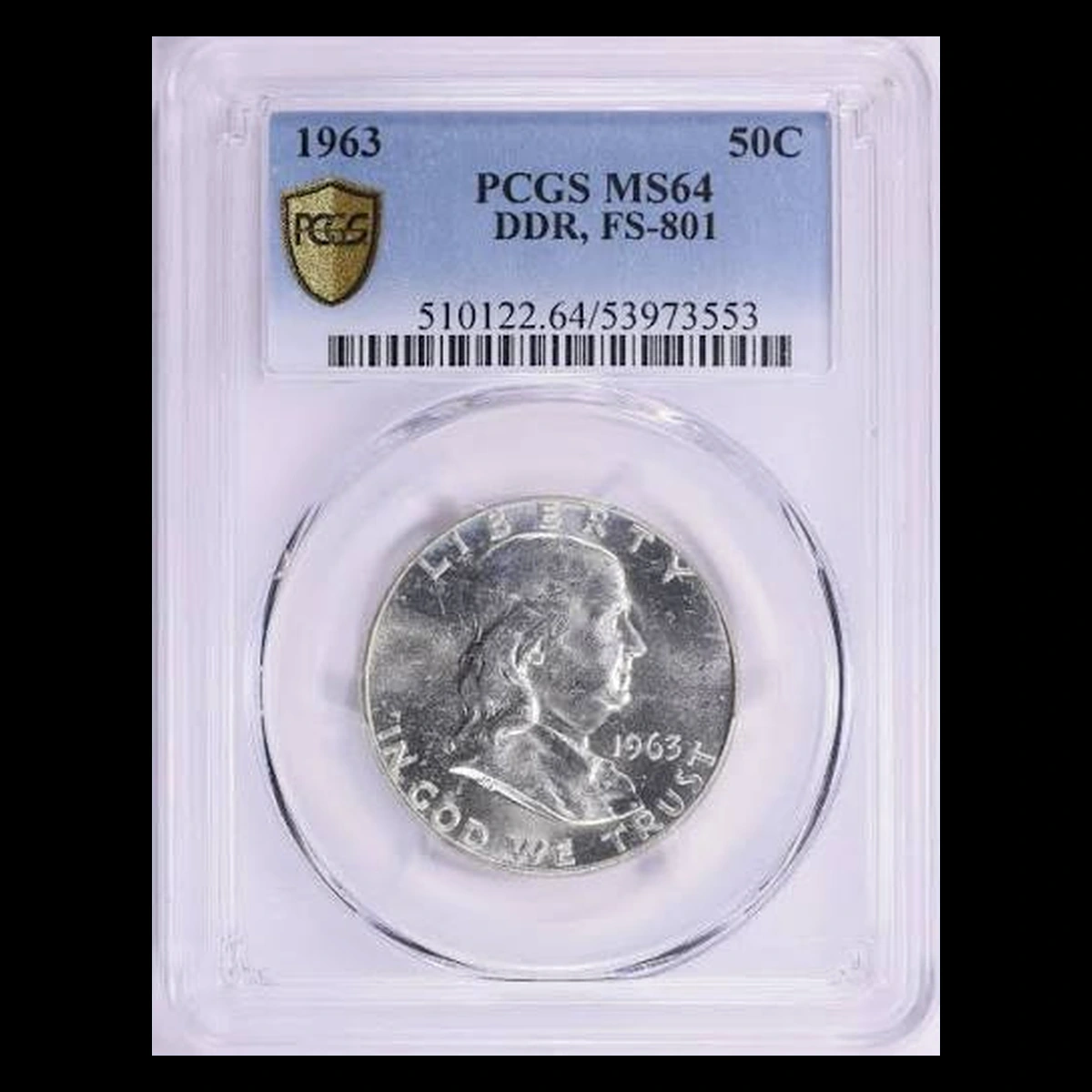
The recognized circulation-strike FS-801 concerns E PLURIBUS UNUM, the E in STATES, and the O in OF. Its duplicated design originated in the die and could recur in the same places on coins it struck.
The attribution does not require two blows to each coin. It also does not apply automatically to reflective lettering on a collector Proof.
How to Identify
Compare the named areas together against the PCGS FS-801 photographs. Actual raised outlines remain fixed when reflections shift under moving light.
A flat ledge caused by movement during striking differs from the matching repeated design. A thick-looking O alone is insufficient without the other corresponding shapes.
What It’s Worth
The estimate is $150–$1,600 for clearly identified collectible examples. PCGS records an MS65 eBay sale of $1,080 on June 7, 2018.
Wear, marks, and visibility affect comparisons within that range. Full Bell Lines describes sharp bell detail and can influence the whole coin’s appeal, but it cannot establish the doubled reverse.
10. 1963 Half Dollar Extra eagle-derived shapes appear on the front: Die Clashes Error
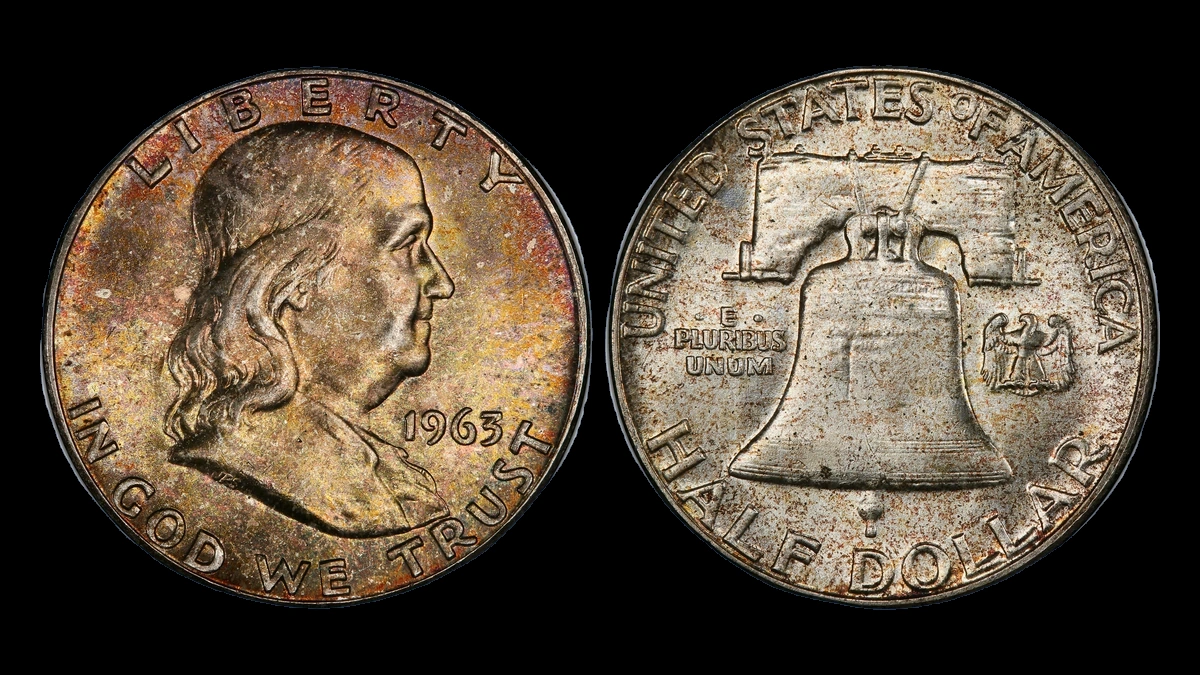
A mouth projection gives some Philadelphia circulation strikes the Bugs Bunny nickname, while other obverse clashes occur elsewhere. Their images and inspection locations should remain distinct.
The dies contacted one another without a blank, taking traces of the opposite design. Later strikes transferred those extra shapes along with the intended portrait.
How to Identify
Confirm the regular Philadelphia issue without D above the bell. For Bugs Bunny, compare the mouth projection with the correct 1963 reference rather than an arbitrary toothlike lump.
A different clash requires its own matching location and relationship to the reverse. Check for nearby impact damage that could explain raised metal without any die contact.
What It’s Worth
Ordinary recognized clashes have an estimated $75–$750 range. Clear transferred shapes and attractive surfaces help support stronger comparisons.
A 1961 Bugs Bunny in PCGS MS64 sold for $250 at David Lawrence in April 2018. That other-year result offers context, while exceptional preservation or Full Bell Lines concerns the whole coin’s quality.
11. 1963 Half Dollar Several impressions reveal separate blows: Double and Triple Strikes Error
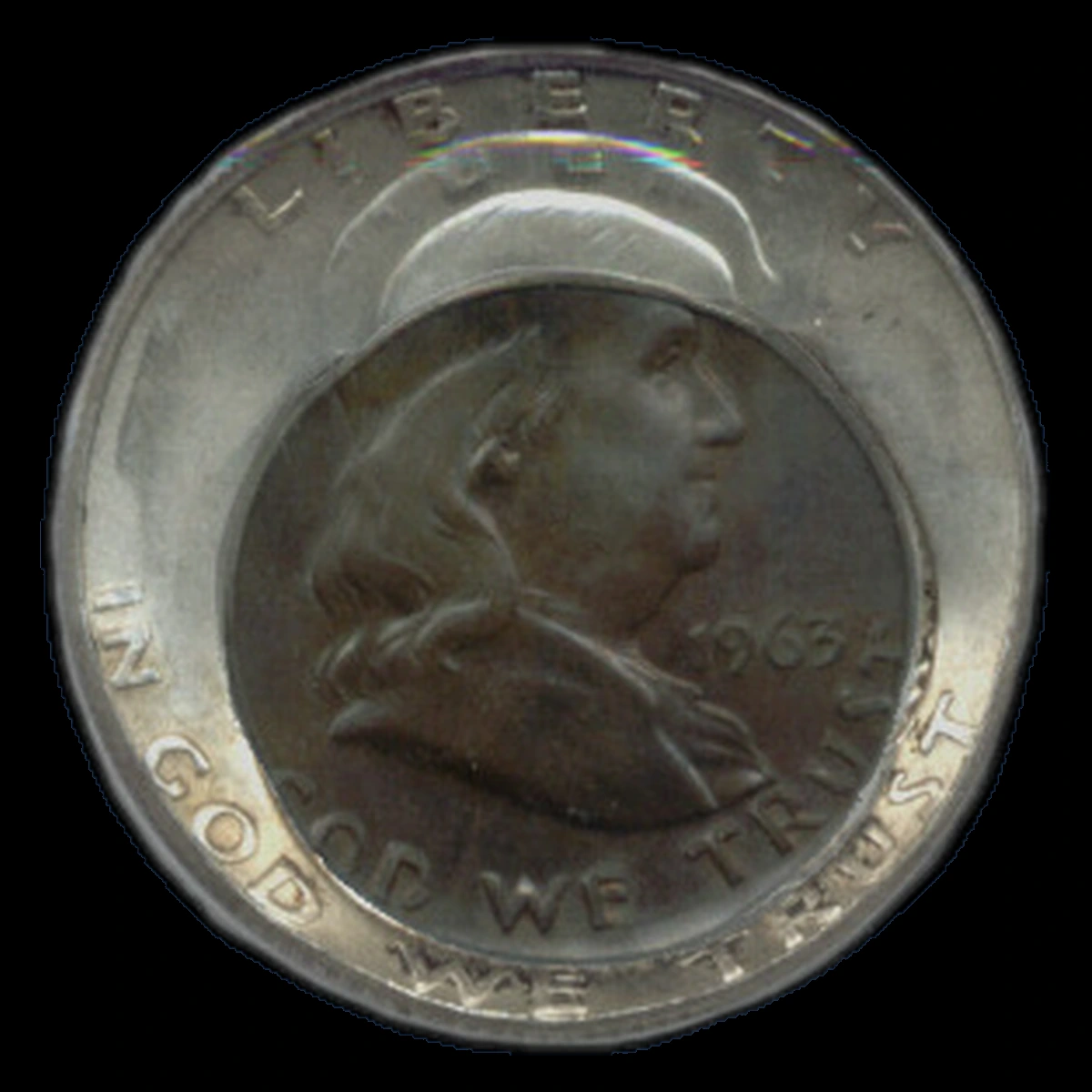
The Philadelphia PCGS MS62 half was double struck while a cent blank left an obverse hollow, and its matching small companion survives. The separate Denver PCGS MS63 records three strikes.
On the Denver coin, a roughly 95% off-center impression toward 6 o’clock preceded a full central strike, followed by an approximately 90% off-center impression toward 10 o’clock. The Philadelphia hollow is not part of that sequence.
How to Identify
For Denver, locate the central design and separate remnants near 6 and 10 o’clock before counting blows. Fine doubled lettering alone does not establish distinct strikes.
The Philadelphia half instead needs a second impression and a cent-sized obverse hollow, with the companion photographed separately and beside it. Look for original related impressions rather than crushed surfaces from later squeezing.
What It’s Worth
Dramatic confirmed multiple strikes have an estimated $3,000–$16,000 range. A surviving matched companion can influence how a pair is offered and valued.
A 1962-D in NGC MS60 with a second strike 70% off center sold for $11,400 in November 2022. That different-year result must not be assigned independently to both pieces of the 1963 pair.
12. 1963 Half Dollar A cent-sized piece carries a sunken mirror image: Cent-Blank Brockage Error
The Philadelphia pair’s small copper-alloy piece is graded PCGS MS66 and carries half-dollar detail plus a recessed reversed impression. A struck coin pressed its raised design into the small blank, producing a brockage.
Specialist records also mention a full reverse brockage and a separate partial example near 11 o’clock. Those descriptions should not be merged into the paired specimen.
How to Identify
Confirm that recognizable Franklin detail is both recessed and mirrored. A smooth blank-shaped hollow is an indent, which lacks the transferred picture required for brockage.
Keep the whole small coin and its surviving date visible, and compare the matching companion when available. Later squeezing can imitate a backward image while damaging the rims and surfaces.
A cent blank starts near 3.11 grams and need not receive full half-dollar edge grooves. Document its own altered outline and weight without applying the full half’s measurements to the companion.
What It’s Worth
A confirmed Franklin cent-blank brockage with readable identity and a clear transferred picture has an estimated $5,000–$20,000 range. A matched pair needs one appropriate total comparison rather than separately borrowed values.
A 1961-D cent-blank PCGS MS64 Red Brown sold for $9,400 in August 2013 without this brockage combination. It provides a small-blank comparison, not a sale of the 1963 MS66 or its companion.
Conclusion
A full-width thin blank and a small wrong blank can both be light, but their dimensions and design boundaries tell different stories. Likewise, a smooth indent and a brockage differ in whether a recognizable reversed picture survives.
Keep paired errors together and preserve each specimen’s own grade, weight, and mint. The $40,000 alloy figure is an asking price, and its proposed experimental history remains separate from the documented composition.