Rare 1969 Half Dollar Errors (List & Pictures)
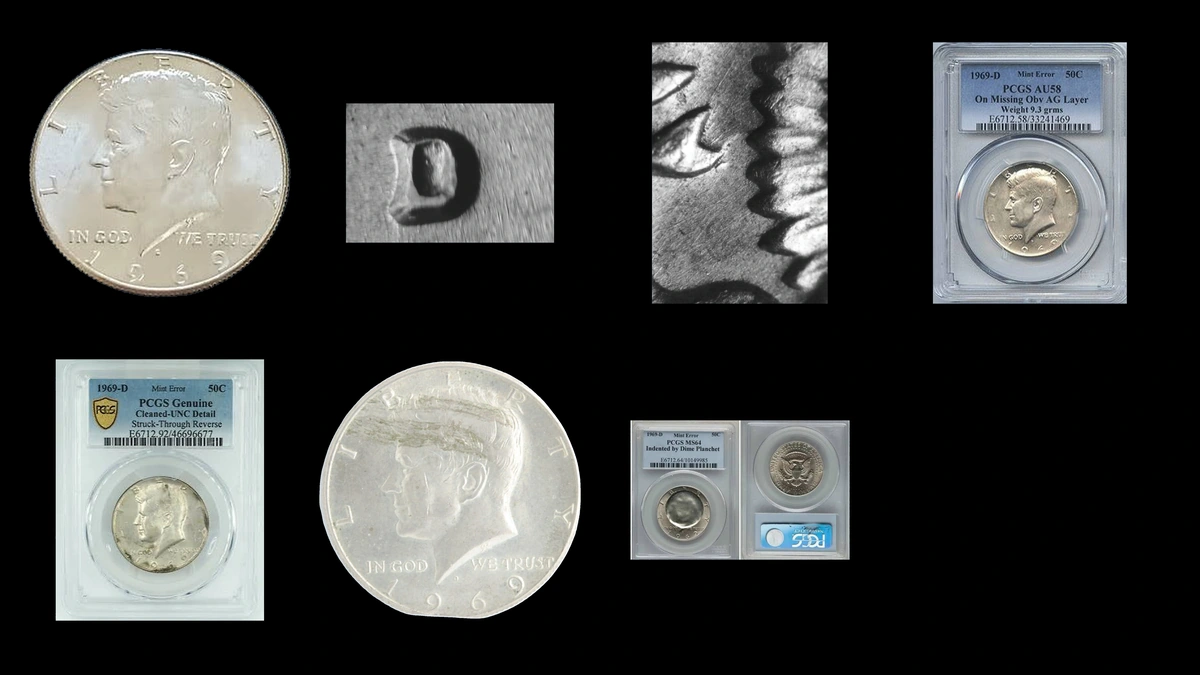
A 1969-S proof on a cent planchet sold for $4,680 in August 2022. Only part of the half-dollar design fit its small copper-alloy disc.
Estimated 1969 half dollar errors values span $10–$7,000. Begin with ordinary shared doubling, then compare individual varieties and larger metal or striking errors.
Denver ordinary coins and San Francisco proofs normally contain 40 percent silver, weigh 11.50 grams, and measure approximately 30.61 millimeters. Their inner alloy also contains silver; it is not a pure-copper core.
| Feature | Inspection area | Estimated whole-coin value |
|---|---|---|
| Master-die doubling | Shared slight lettering repetition | $10–$40 |
| Individual obverse varieties | Extra motto/date/LIBERTY contours | $20–$200 |
| Reverse varieties | Repeated stars and letters | $25–$300 |
| Repunched D | Earlier letter fragment | $20–$125 |
| Small cuds | Rim above or beside I | $25–$175 |
| Clash | DOLLAR and wing-to-leaf area | $25–$200 |
| Thin planchet | Reduced thickness and weak detail | $100–$400 |
| Layer separation | Physical peel or boundary | $75–$600 |
| Strike-through | Impressed texture or interruption | $50–$700 |
| Clips | Original missing edge sections | $30–$300 D; $250–$6,000 proofs |
| Off-center strike | One displaced design | $300–$2,000 |
| Double or flipover strike | Overlapping images | $600–$3,500 |
| Dime-planchet indent | Portrait blocked on full-size half | $2,500–$5,000 |
| Proof on cent planchet | Small copper-alloy disc | $3,500–$7,000 |
1. 1969 Half Dollar Slight Repetition Is Shared across Many Coins: Master-Die Doubling Error
Not every doubled-looking 1969 letter identifies a scarce individual die. Small repeated details passed from an earlier master die through the tool-making process to multiple dies that struck coins.
Denver and proof references describe inward spread in the motto, date, and LIBERTY. Proof descriptions also mention slight tripling and hair below R.
How to Identify
Begin with an ordinary comparison of the same mint and finish. Match the small shared outlines before searching for additional unusual separation.
Keep proof reflections separate from physical contours by moving the light. A feature inherited by many dies need not be rare simply because it is visible under magnification.
Normal measurements establish the silver-clad issue but cannot distinguish common doubling from a scarce variety. The baseline pattern is the first thing to learn.
What It’s Worth
Ordinary collectible examples showing only the inherited feature are estimated at $10–$40. Much of that value belongs to preservation and silver content, with no automatic added rarity premium.
A modest individual Denver doubled die sold for approximately $31 in 2024. Even a named variety can remain affordable, while exceptional grades need separate condition comparisons.
2. 1969 Half Dollar Extra Front Contours Exceed the Shared Pattern: Doubled and Tripled Obverses Error
Individual Denver varieties add repetition beyond the common master-die detail. Some show inward separation in the motto, date, and LIBERTY, while another clockwise pattern is particularly useful at T and Y.
Closely spaced tripling is reported on one variety. WDDO-001 is paired with a recognized doubled reverse, but the obverse still needs its own match.
How to Identify
Compare with an ordinary 1969-D first, then identify the additional relief. Select the correct inward-spreading or clockwise reference instead of mixing their strongest features.
Inspect T and Y for the clockwise pattern and the relevant motto/date areas for other varieties. Flat shelves and tool damage can distort letters without creating the documented contours.
Use any associated reverse as supporting evidence while retaining a separate obverse diagnosis. The shared baseline cannot substitute for the individual variety’s extra detail.
What It’s Worth
Modest worn through clear attractive examples are estimated at $20–$200. The specific variety and remaining detail matter.
The auction index records about $31 in March 2024 for an ANACS AU58 DDO-001 pictured in Flynn’s reference. That lightly worn result neither caps all varieties nor justifies a large premium for ordinary inherited thickening.
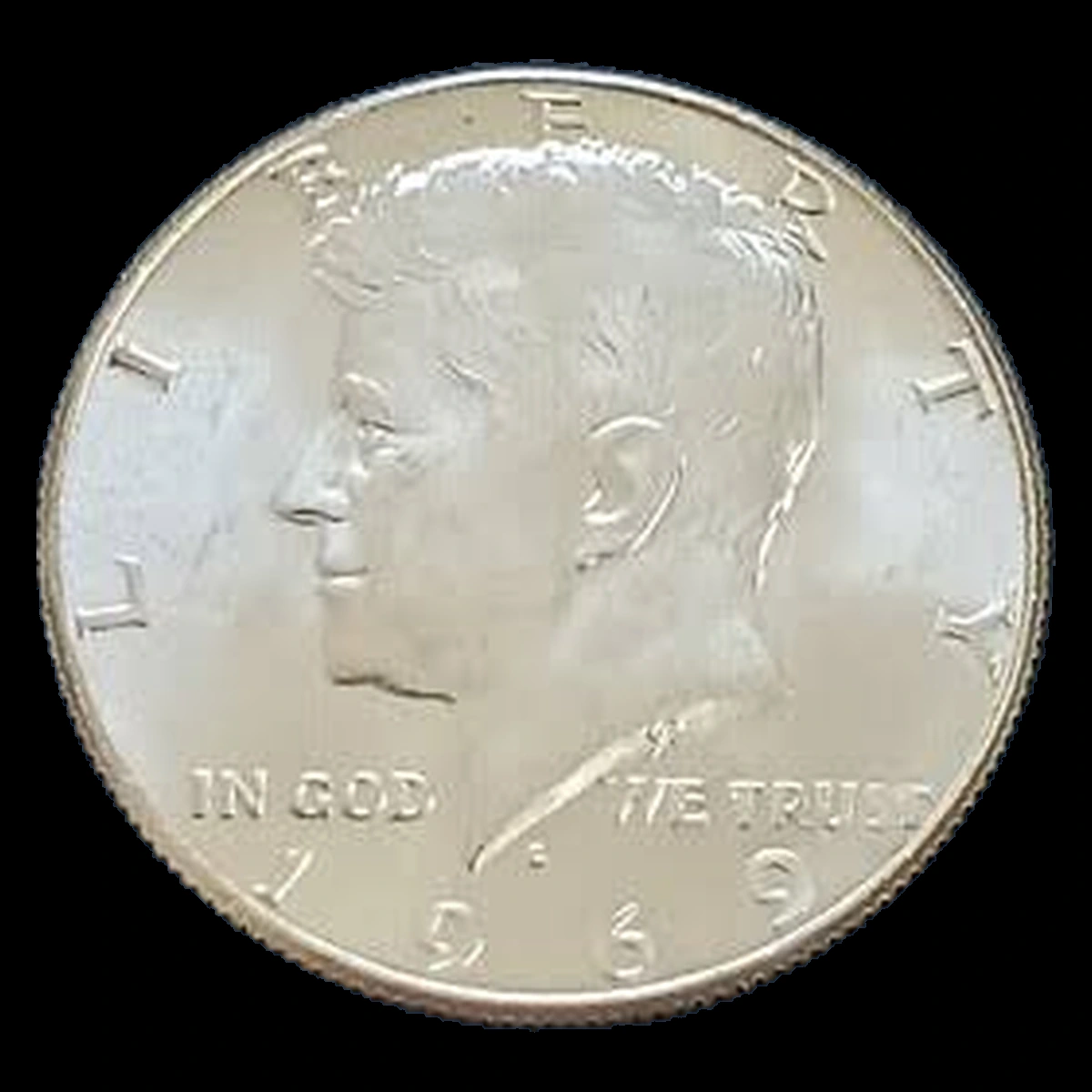
3. 1969 Half Dollar Stars and Letters Have Repeated Points: Doubled and Tripled Reverses Error
Reverse varieties differ in direction and spacing: some Denver patterns spread counterclockwise, some inward, and others show three close outlines. One has tripling in stars below STATES.
San Francisco proofs have separate patterns, even where nearby stars are involved. An ordinary difference in the shape of G in FG is background design information, not an error by itself.
How to Identify
Choose a reference for the correct mint and finish, then compare at least two star points or letter corners. Their repetition should agree in shape, direction, and spacing.
On proofs, change the light to determine whether apparent additional outlines are reflections. Keep the normal G design separate from the doubling test.
Do not build a match from one Denver star and a different proof’s lettering. Each candidate needs one coherent variety attribution.
What It’s Worth
Correctly identified reverses in ordinary collectible grades are estimated at $25–$300. Strength of separation, finish, and condition determine the useful comparison.
The year discussion gives approximately $75 for one MS65 reference. That guide figure is not a sale record for every catalog entry, and a catalog name alone does not establish rarity.
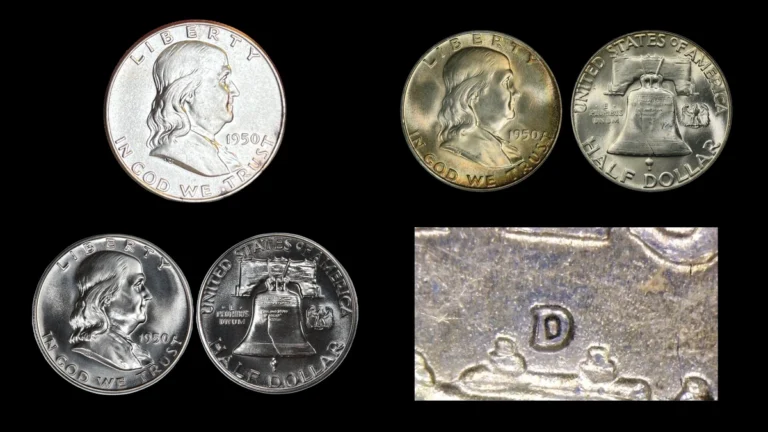
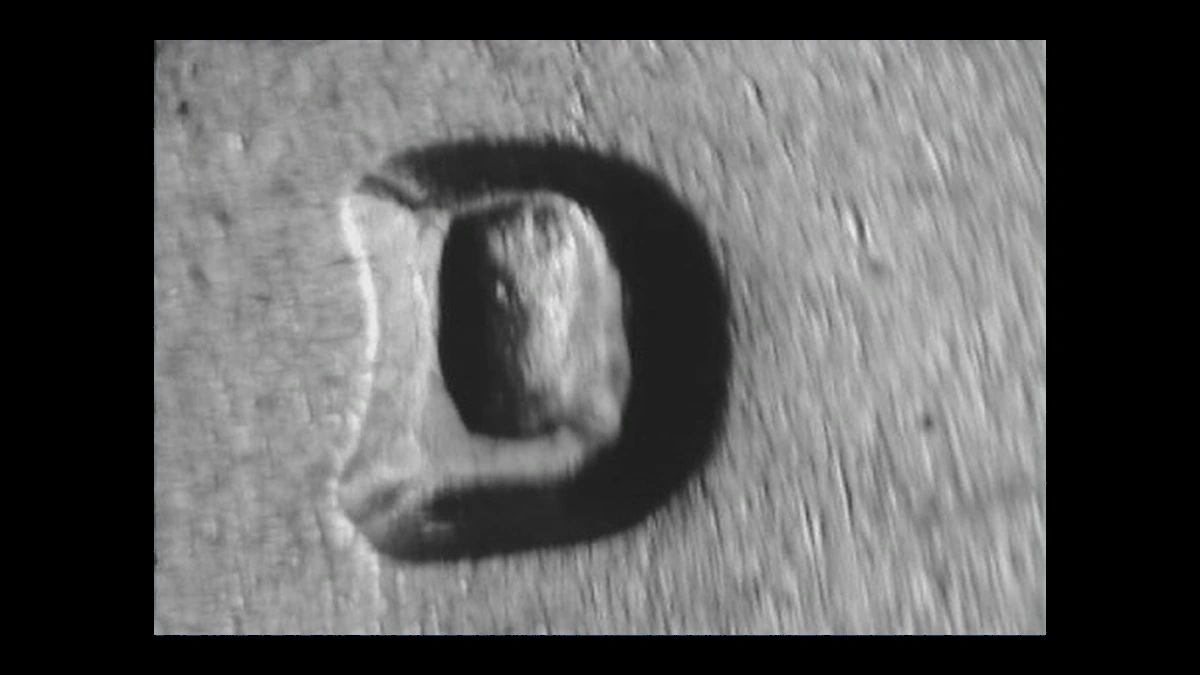
4. 1969 Half Dollar A Tilted Earlier Letter Remains beside D: Repunched Mintmark Error
A mintmark punched more than once into a die could preserve a fragment of its first placement. Coins from that tool then carried the extra D shape.
One cross-reference pairs CONECA RPM-001 with Wexler WRPM-002. A separate tilted version requires its own reference rather than being merged into that pairing.
How to Identify
Examine the D between the neck and date and follow its curves against the correct catalog photograph. Seek a recognizable earlier letter fragment rather than an isolated ridge.
Check surrounding supporting markers with allowance for die-stage differences. A flat shelf caused during striking or a damaged letter can imitate another outline.
Inspect for alteration and retain the full obverse with the closeup. A thick mintmark alone is not enough.
What It’s Worth
Identifiable repunched D examples have an estimated $20–$125 range. Clear remnants and original surfaces improve appeal.
The guide gives around $40 for a representative MS65, an attractive unworn example. That is not an auction record for either catalog number, and exceptional grades require separate assessment.
5. 1969 Half Dollar A Small Raised Patch Appears near I: Denver Rim Cuds Error
One late-stage die pairing shows a rim patch above I in LIBERTY, while another has a patch immediately to its right. These are separate locations on separate examples.
A piece of the die’s edge broke away and left room for raised metal during striking. Earlier coins from the same underlying pairing can lack the later break.
How to Identify
Compare above-I and right-of-I candidates independently. A genuine cud should join the rim and fit its own cataloged outline.
Inspect edge grooves for a rim impact that folded existing metal inward. Check the associated reverse variety without requiring a late-stage cud on every earlier example.
Keep the date and D visible in the full photograph. The exact rim connection matters more than the general presence of a bump.
What It’s Worth
The small recorded breaks are estimated at $25–$175. They need comparisons suited to modest rim defects rather than huge dramatic cuds.
Associated reverse varieties may contribute interest, but the whole coin is being priced. A complete variety value and a complete cud value should not be added as though two coins were offered.
6. 1969 Half Dollar Reverse Lines Match the Opposite Design: Denver Die Clash Error
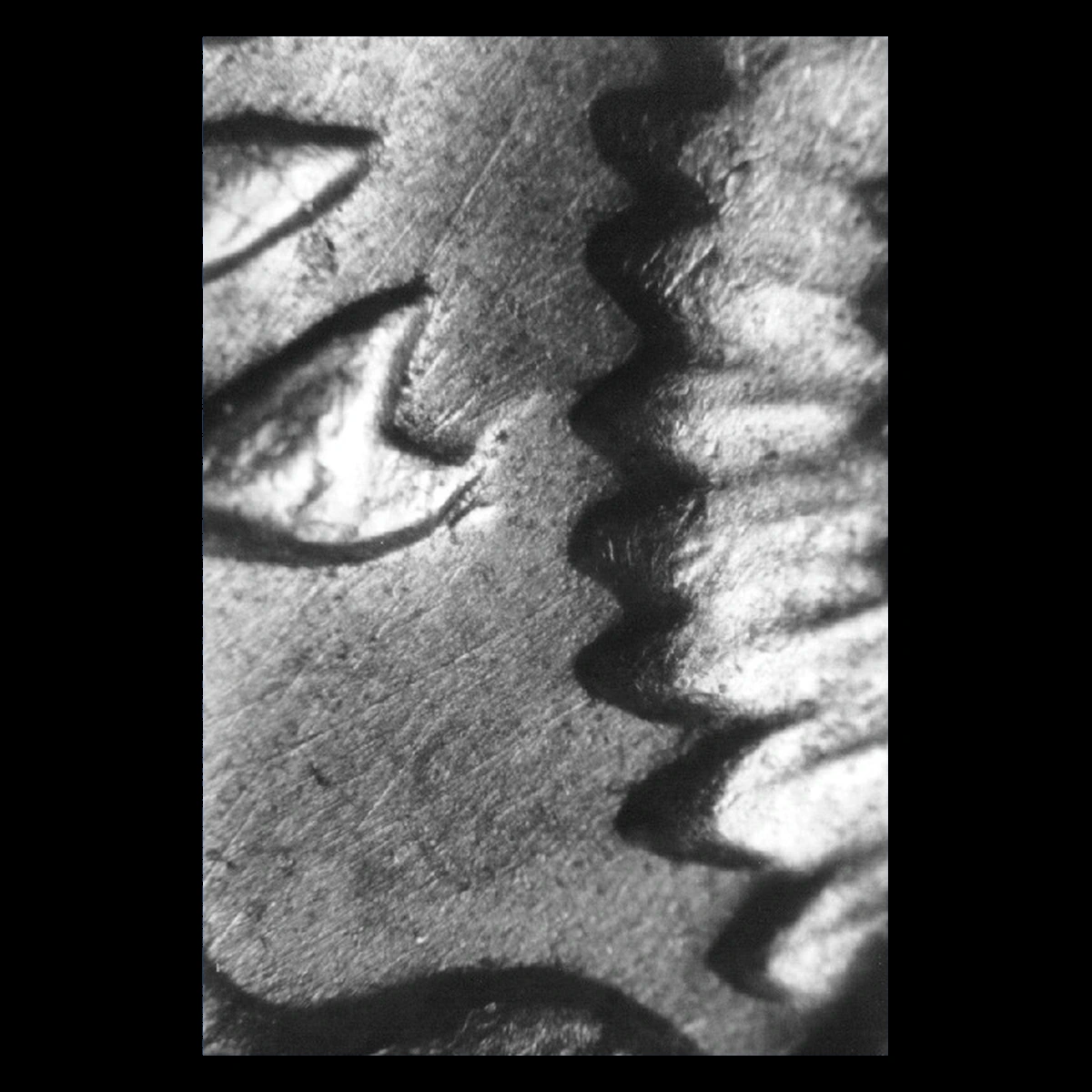
Recorded clash traces occur near upper DOLLAR and between the right wing and lower-right leaves. They belong to a particular stage associated with WDDR-001 and CONECA DDR-010.
The dies contacted without a blank and transferred parts of their designs. Later coins received the traces, but not every coin with similar reverse doubling necessarily shows that stage.
How to Identify
Compare the two named areas with properly aligned images of the opposite face. A transferred shape must make sense in position as well as resemblance.
Separate scratches and polishing lines from recognizable design fragments. One suggestive line seen at one light angle is insufficient.
Record the clash and reverse attribution independently on the same coin. Normal weight or size cannot confirm the contact sequence.
What It’s Worth
A modest clear clash on this silver-clad issue has an estimated $25–$200 value. Preserved recognizable traces support stronger comparisons.
A 1970-S PR65 Cameo clash sold for $159 in April 2022. That different-year proof has a different finish, and a clash plus variety on one 1969 coin still has one combined value.
7. 1969 Half Dollar The Disc Is Underweight and Thin: Denver Thin Planchet Error
The documented NGC MS62 weighs 9.3 grams and has weak tail feathers plus a shallow front border from three to six o’clock. Heritage suggested stock rolled too thin before the blank was cut.
A separate PCGS AU58 listing describes another thin-planchet coin without a usable supplied weight. Neither should be confused with a different split-before-strike coin that also weighs 9.3 grams.
How to Identify
Measure thickness at several points and compare diameter with the normal standard. Uniformly thinner original metal would support a different explanation from one missing surface layer.
Inspect the tail and lower-right obverse border with the layered edge. Grinding, chemical loss, or separation could also create an underweight coin.
Keep the recorded 9.3-gram measurement attached to its specimen. Weight alone cannot prove how the stock was prepared.
What It’s Worth
Genuine thin-planchet examples have an estimated $100–$400 range. Clear physical evidence and original surfaces matter.
The 9.3-gram MS62 did not sell in July 2010. A 1970-S underweight proof at 10.8 grams brought $156 in 2020, a related comparison with different finish and measurements.
8. 1969 Half Dollar A Layer Peels, Separates, or Is Absent: Cladding Failures Error
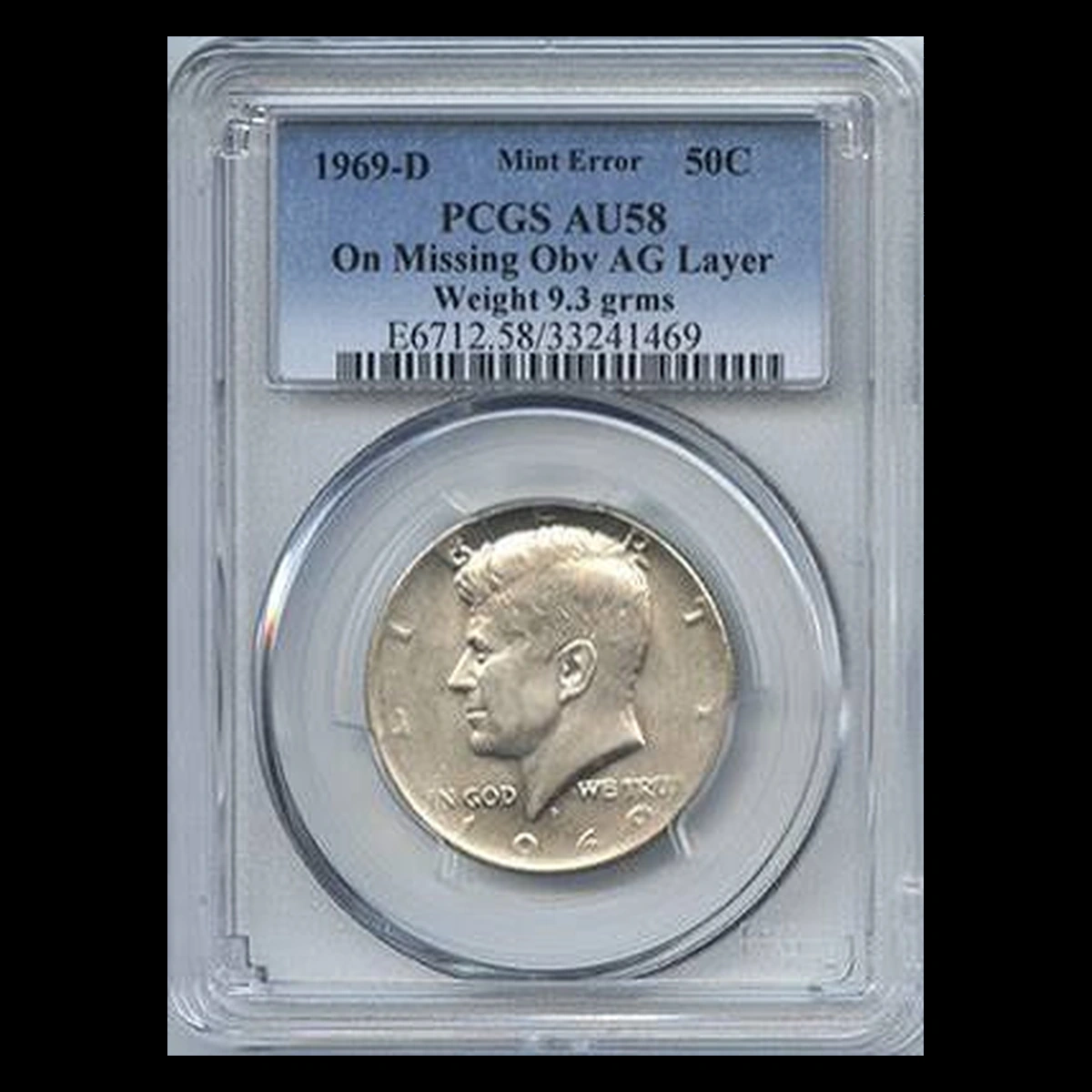
Layer failure may leave a peel, an attached shell, or a lost covering. Records include a Denver split-before-strike at 9.3 grams, a different missing-layer coin at 9.5 grams, and a proof peel above G in GOD.
The outer alloy contains about 80 percent silver and the core about 20.9 percent. Exposed inner metal need not look like the pure copper in later Kennedy halves.
How to Identify
Find a physical layer boundary before interpreting the scale reading. An attached flap, naturally exposed inner surface, or design formed after separation provides more evidence than color.
Leave loose layers untouched and inspect the remaining edge. The thin-stock and split-before-strike coins sharing a 9.3-gram weight still have different mechanisms.
For the proof, match the peel above G to that exact example and keep its separate facial mark distinct. Do not combine descriptions from several coins.
What It’s Worth
Small peels through substantial separations are estimated at $75–$600. Finish and the amount of surviving original metal affect the range.
The 9.5-gram MS63 missing-layer coin sold for $154 in March 2023. An ANACS AU55 attached-shell example carried a $99 dealer asking price, which is an offer rather than a completed sale.
9. 1969 Half Dollar Foreign Material Interrupted the Design: Strike-Throughs Error
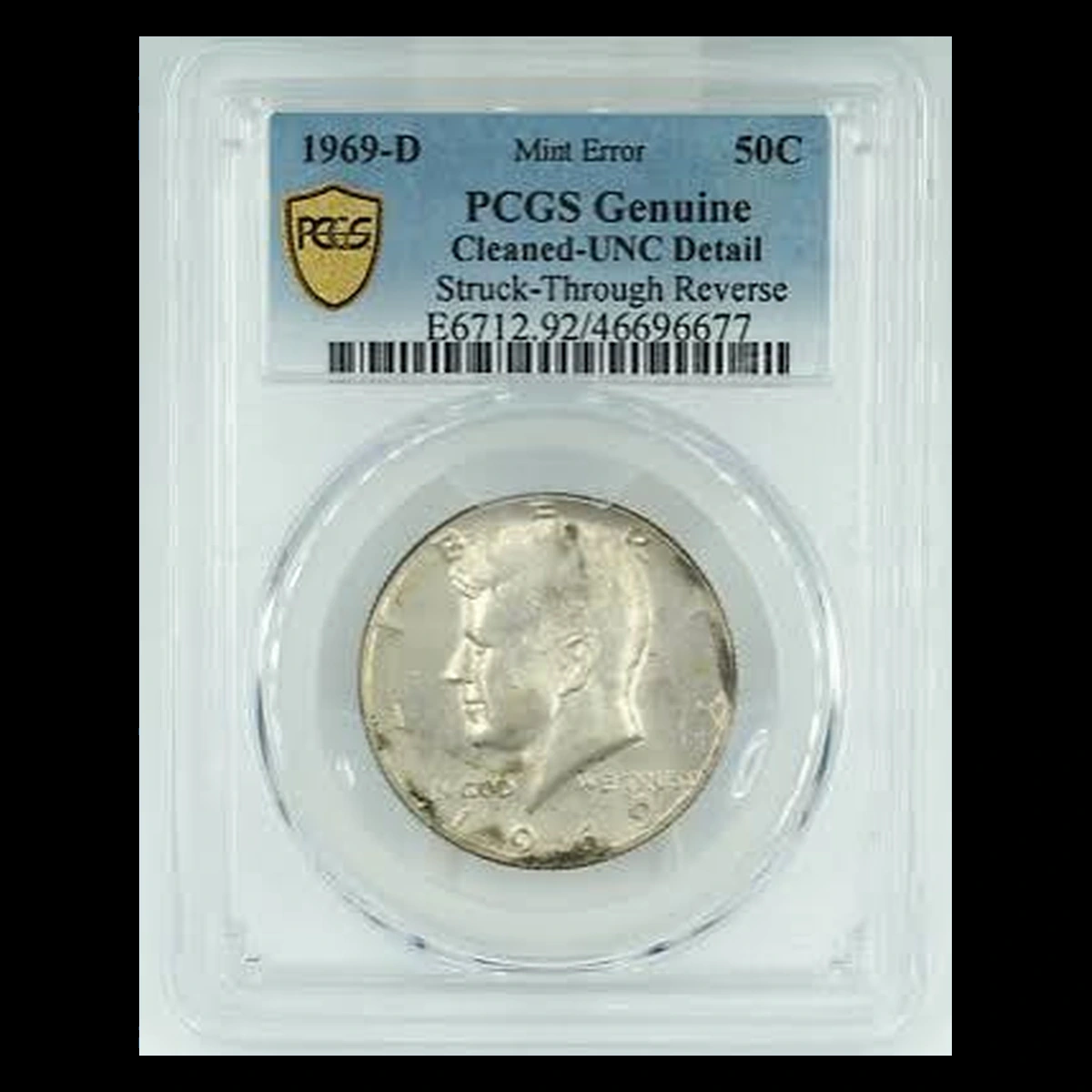
Records include a thread impression on a 1969-S ANACS PR67 Cameo, a Denver reverse-only MS64, and a separate MS65 affected on both faces. Another coin was struck through loose clad metal.
A separate fragment can block the die and later fall away while the receiving coin retains its own layers. That differs from the coin losing its own cladding.
How to Identify
Trace the impression’s boundary where nearby original design stops or resumes. A later scrape can leave torn metal or a displaced lip instead.
Inspect both faces when both are claimed to be affected. One reverse mark cannot establish a corresponding front interruption.
Name thread or another material only when the actual shape or texture supports it. An object need not remain embedded for a genuine strike-through to exist.
What It’s Worth
Confirmed impressions are estimated at $50–$700. Conspicuous texture and strong proof preservation can require higher comparisons than a small ordinary mark.
The two-face MS65 brought $144 in January 2023. The older reverse-only example appeared in a mixed lot, whose combined price cannot be assigned to that individual half.
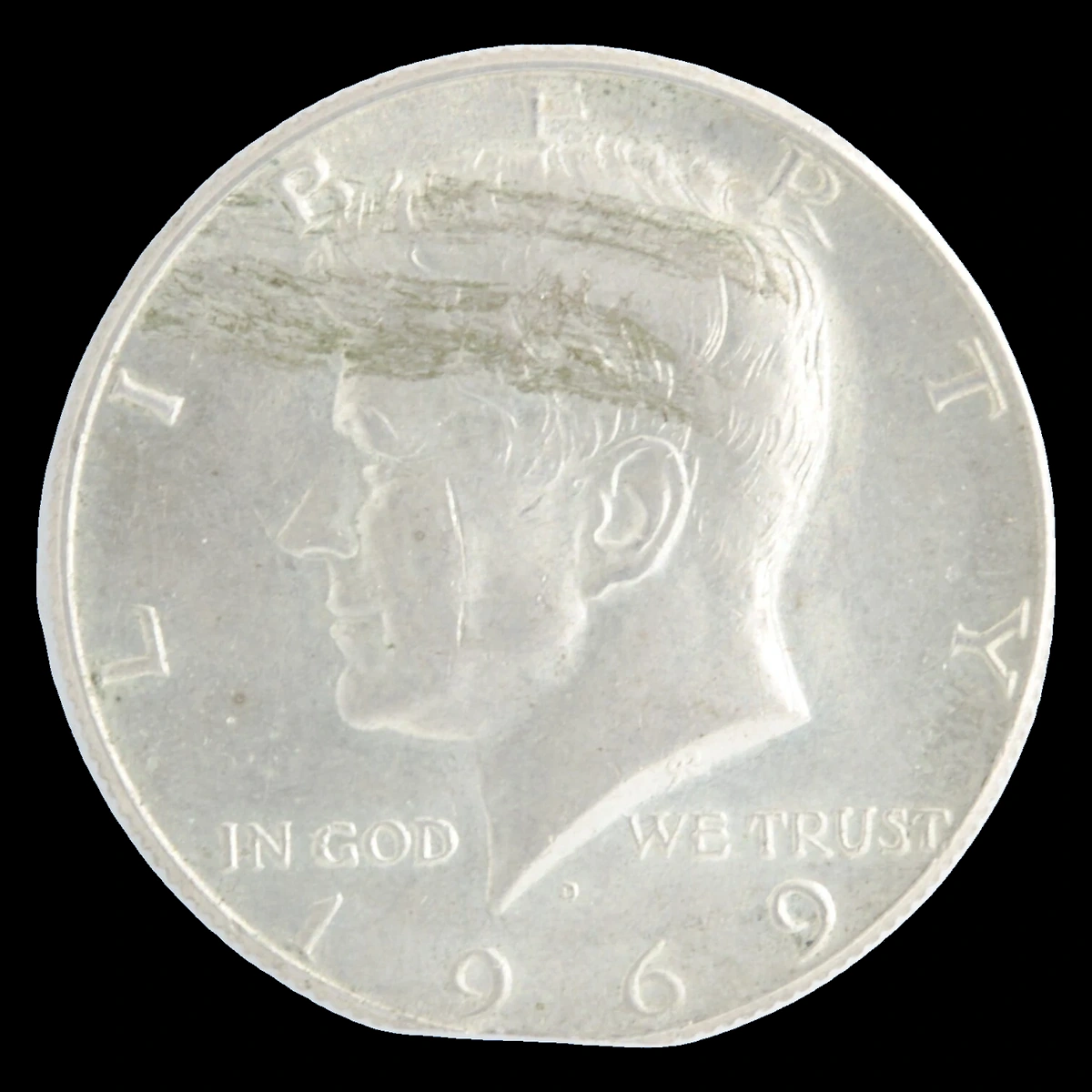
10. 1969 Half Dollar One or More Edge Sections Are Missing: Curved, Straight, and Double Clips Error
Denver reports include a curved clip weighing 11.2 grams, a ragged gap, and a straight gap near six o’clock. Proof records include separate PCGS PR63 and NGC PR63 double-clip coins.
The PCGS proof is described as 22 percent clipped. That measurement does not belong automatically to the other proof or any Denver example.
How to Identify
Examine every missing section for rim and design formation around a gap present before striking. Apply the same physical test to straight, ragged, and curved outlines.
Look for saw tracks or a sharp cut through finished detail, then inspect possible opposite-rim weakness. In a double clip, one genuine-looking gap cannot authenticate the other.
Compare weight with missing metal and wear, keeping 11.2 grams specific to the recorded Denver coin. Preserve the correct mint and proof or ordinary finish in the photographs.
What It’s Worth
Estimated ranges are $30–$300 for Denver clips and $250–$6,000 for proofs. The broad proof range covers very different specimens and evidence.
The NGC PR63 double clip sold for $276 in January 2022. A historical advertisement asked $5,500 for the separate 22-percent PCGS PR63; that ambitious offer is not a completed sale.
11. 1969 Half Dollar A Single Picture Is Far off Position: Denver Off-Center Strike Error
Two documented examples show a 55-percent-off-center strike graded NGC MS64 and a separate 75-percent example graded PCGS MS62. Each blank sat partly outside the dies and received its own incomplete image.
These are individual striking accidents rather than one repeatable die variety. Surviving date and design must be checked on each coin.
How to Identify
Locate the date and D, then compare both faces where struck detail meets untouched metal. The same displaced blank should explain both incomplete designs.
Inspect smooth areas for grinding and surviving reeding for trimming. An intact blank may retain near-normal weight even with most of the design missing.
Record the actual outline and any spreading before comparing percentages. An undated silver-clad half cannot inherit 1969 identity from its general appearance.
What It’s Worth
Comparable dramatic Denver examples have an estimated $300–$2,000 range. Readable identity and preservation remain important.
The 55-percent MS64 sold for $552 in July 2021, and the 75-percent MS62 brought $1,200 in December 2024. These results do not create a fixed price per percentage point of displacement.
12. 1969 Half Dollar Another Blow Overlaps or Reverses the Images: Double and Flipover Strikes Error
Denver double strikes include second impressions 90 or 95 percent off center, plus other specimens at 60, 65, and 70 percent. Those measurements describe separate coins.
One AU58 turned over before a second strike about 85 percent off center, with another disc blocking part of the blow. The surviving images must establish both movement and obstruction.
How to Identify
Trace earlier and later design remnants across both faces, including areas flattened by the later blow. Several features should support one coherent movement.
A flipover can put opposite-side designs on the same face. A simple second off-center strike does not change which side faced each die.
Inspect blocked areas, expansion, and edge evidence without borrowing another specimen’s sequence. Check for seams or later manipulation that could imitate combined images.
What It’s Worth
Genuine examples are estimated at $600–$3,500, with visible sequence and condition affecting appeal. A historical $3,220 result helps frame stronger comparisons.
The 90-percent MS63 sold for $722.40 in April 2021, while a 70-percent MS63 brought $1,920 in December 2024. Movement, flipover, and obstruction on one coin must not be assigned separate full prices and totaled.
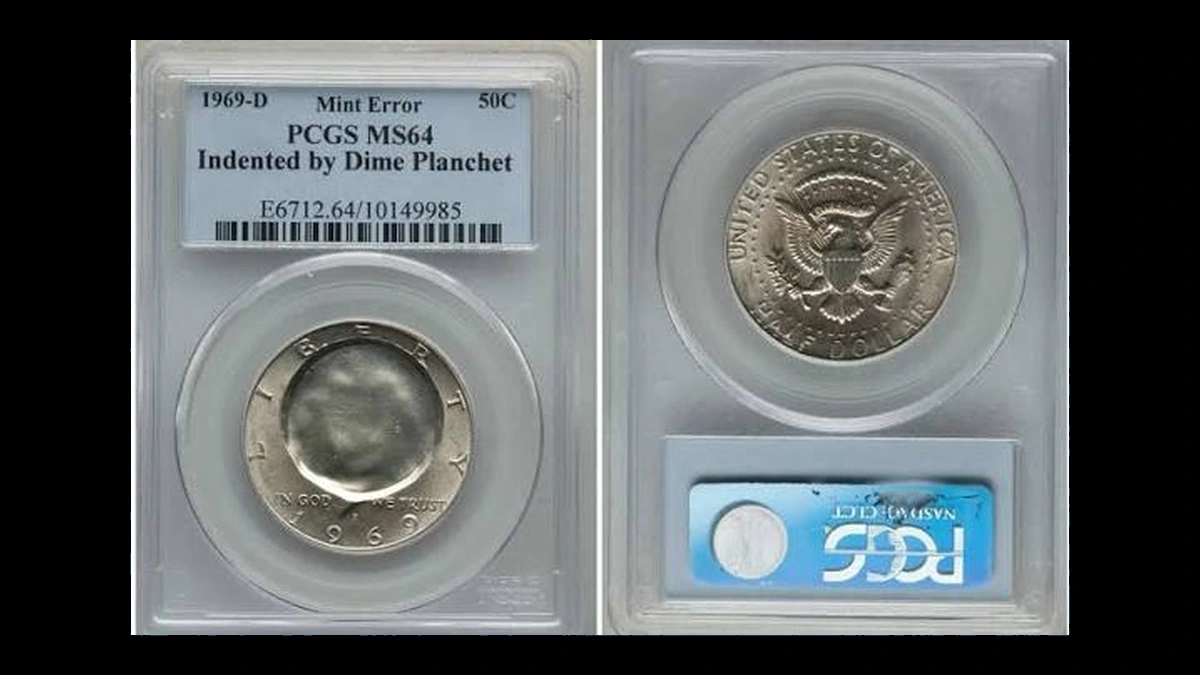
13. 1969 Half Dollar A Dime-Sized Obstruction Covers the Portrait: Dime Planchet Indent Error
The PCGS MS64 1969-D retains a full half-dollar body but has a broad hollow over almost all of Kennedy’s portrait. The lower tip of his neck remains visible.
A dime blank overlapped the half during striking and blocked direct obverse contact. The dime is no longer attached, so this is not a half-dollar design on a dime-sized host.
How to Identify
Compare the neck tip and hollow boundary with the cataloged specimen. Look for a portrait blocked during formation rather than crushed after it was complete.
Use the half-dollar’s normal size and weight as the starting references. No dime remains to be included in the weight calculation.
Inspect the reverse and edge for later pressing. A full-size body with the bounded obstructed area is the essential distinction from a wrong-planchet strike.
What It’s Worth
Comparable clear examples are estimated at $2,500–$5,000. The reported PCGS MS64 sold for $3,840 in 2020.
That price belongs to the half carrying the indent, without an embedded dime. A punched circular mark or a half-dollar design struck on dime metal belongs to a different comparison.
14. 1969 Half Dollar A Tiny Copper Disc Carries Proof Detail: 1969-S on a Cent Planchet Error
The documented NGC PR66 Red and Brown weighs 3.1 grams and carries a proof half-dollar design on a cent blank. The small body cannot hold the outer lettering.
Red and Brown describes surviving copper color and toning, not a separate mint error. The whole host is cent metal, unlike a silver half with a missing outer layer.
How to Identify
Compare the recorded near-cent weight with the normal half standard and inspect the smaller outline. Allow for spreading under the oversized design.
Match surviving date, S, and cutoff design with the confirmed specimen. The edge should reveal one copper-alloy body rather than the half’s silver-clad layers.
Check for trimming, seams, or plating, and do not require normal half-dollar reeding where the blank failed to reach the collar. Copper color alone cannot identify the host.
What It’s Worth
Comparable confirmed proof cent-planchet errors have an estimated $3,500–$7,000 range. Color, preservation, strike clarity, and surviving identity affect the price.
The NGC PR66 Red and Brown sold for $4,680 in August 2022. That sale does not value a brown-toned silver half or a missing-layer coin.
Conclusion
Begin a 1969 variety search with the common inherited doubling so ordinary outlines do not become an exaggerated rarity claim. Then use one specific mint, finish, and pattern for each attribution.
For larger errors, combine weight with the layer boundary, edge, and surviving designs. Equal 9.3-gram readings can reflect different mechanisms, and the two proof double clips have different price evidence; keeping those records separate makes the estimates more useful.