Rare 1820 Dime Errors (List & Pictures)
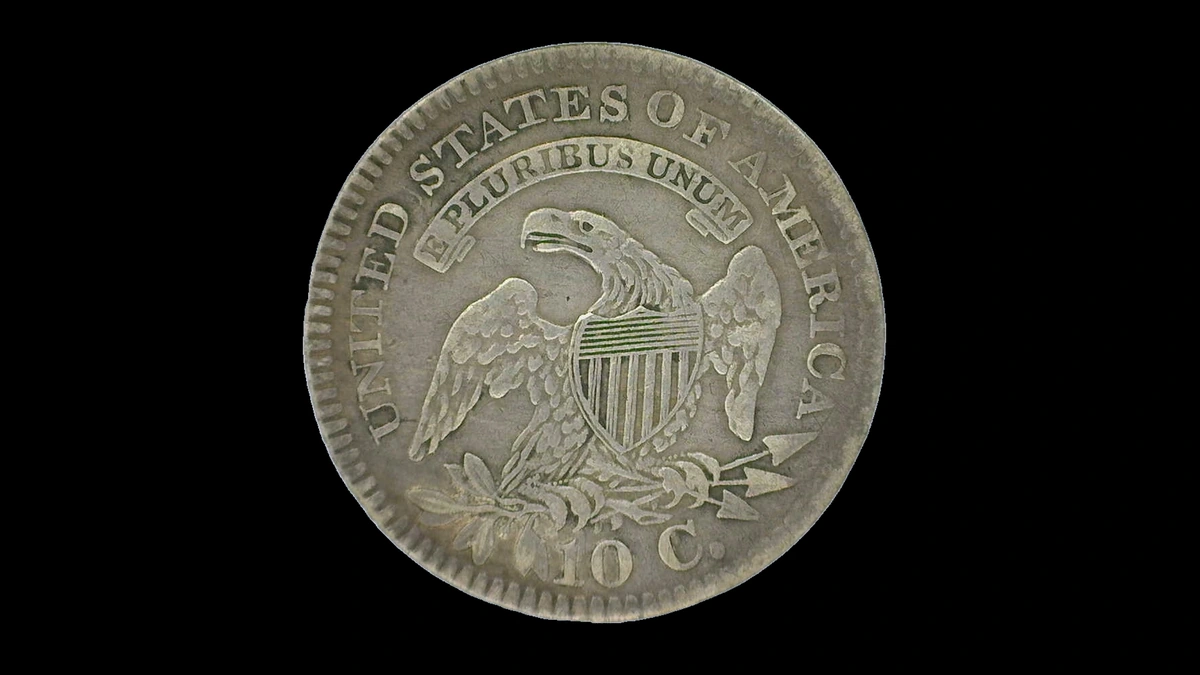
An exceptional 1820 Office Boy dime graded MS67 sold for $152,750 in August 2014. That price belongs to a remarkably preserved complete coin, not a fixed premium for awkward lettering.
This guide to 1820 dime errors focuses on the JR-2 Office Boy reverse. Estimated values of $250–$5,000 cover worn through lower-grade unworn examples; start with the extra fragment between UNITED and STATES, then compare the neighboring letters.
1820 Dime Extra Letter Fragments Crowd the Reverse: Office Boy JR-2 Error
The nickname describes the appearance of the reverse lettering, not a documented employee responsible for it. Several poorly placed or partly repeated letter shapes identify the variety.
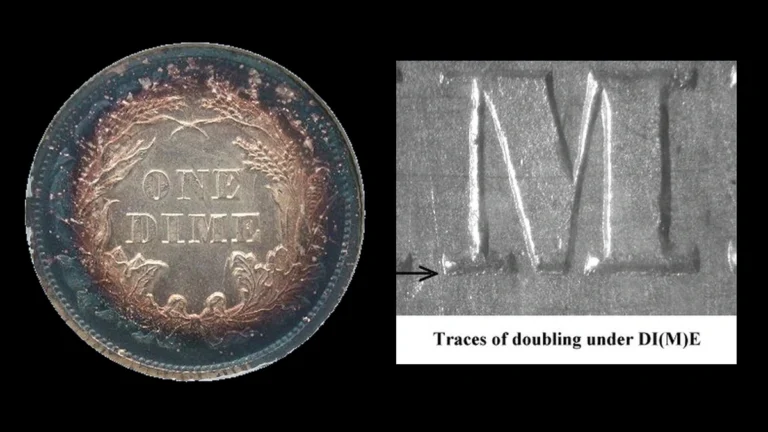
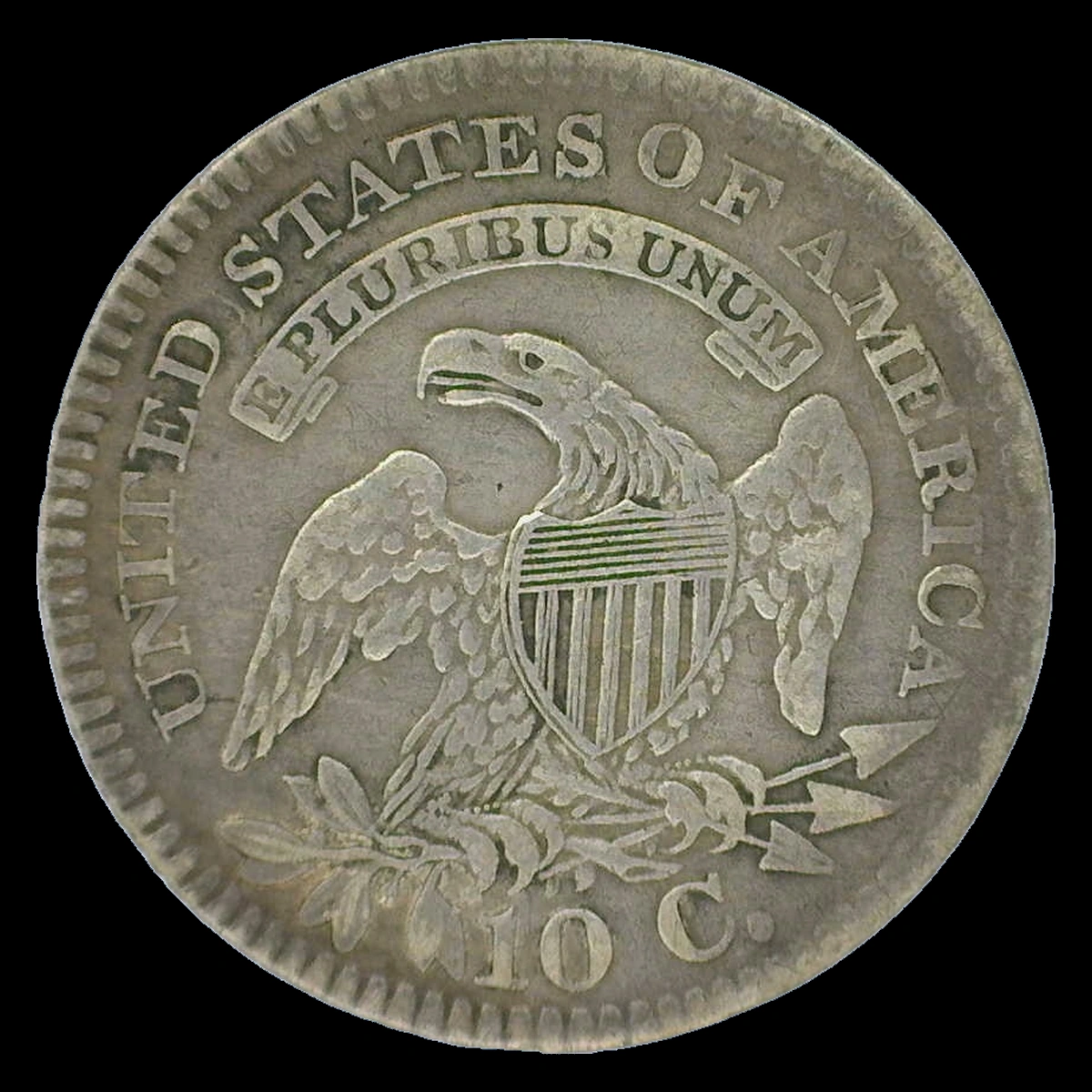
The useful starting point is the space between the final D of UNITED and the first S of STATES. An additional letter fragment appears there, providing a more specific clue than generally crowded words.
Those shapes already existed in the die, the steel tool that impressed the reverse. Coins made from that die received the same arrangement, so a candidate should match several details rather than just look roughly similar.
How to Identify
Keep the reverse upright and bring the D-to-S gap into focus under moderate magnification. Compare the extra fragment with a reliably attributed JR-2 image while retaining both whole words in view.
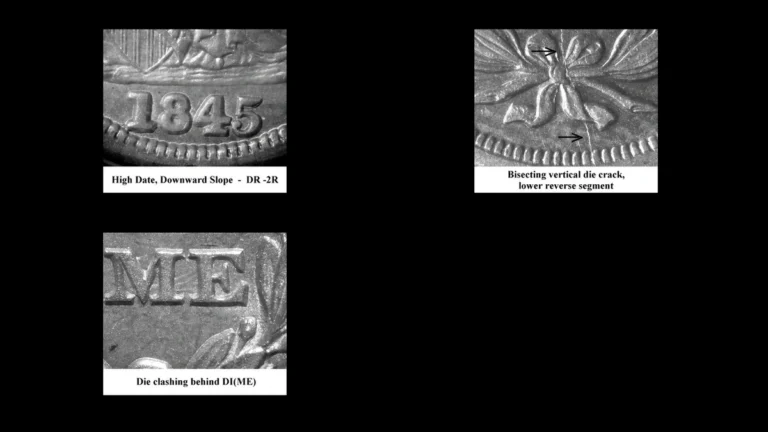
Next, follow the neighboring repeated and crowded letters. Their tops, bases, and added remnants should occupy the same positions as the reference.
Move the light across each feature to separate raised die-made detail from a cut or a reflection. A scratch between D and S cannot establish the variety just because it lies in the expected area.
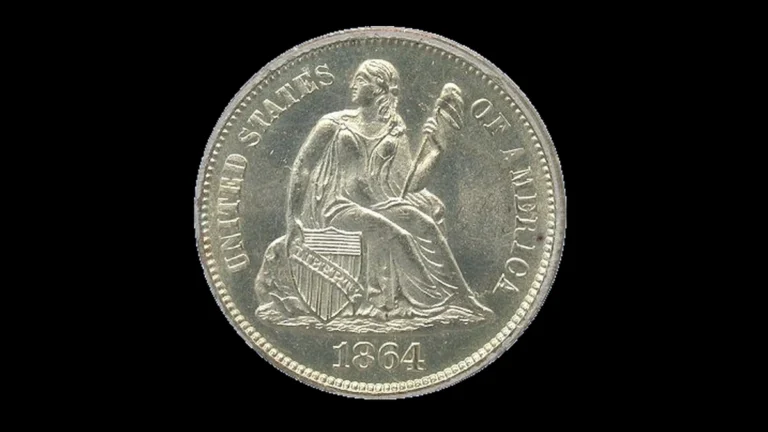
Document the full 1820 date and both faces together. A loose coin can be weighed against the original approximately 2.70 grams and measured against 19 millimeters, with wear considered.
Inspect the reeded edge and surrounding fields for filing, mounting marks, or other alteration. Those observations help assess the host’s condition, but normal measurements alone cannot identify JR-2.
What It’s Worth
Worn through lower-grade unworn Office Boy examples have an estimated $250–$5,000 whole-coin range. Attribution should be followed by a condition comparison rather than immediate use of the highest record.
The PCGS records include an MS64 at $4,600 in 2011. That provides a more relevant reference near the upper working range than the exceptional MS67.
The MS67 brought $152,750 in August 2014, while another highly graded example sold for $27,025 in 2015. Such different results emphasize that preservation and the individual coin matter alongside the shared variety.
The record does not create a standard bonus to add to an ordinary dime’s price. Wear, cleaning, and surface problems can still make two correctly attributed JR-2 coins very different purchases.
Conclusion
The Office Boy reverse is identified through a pattern of letter shapes, beginning with the extra fragment between D and S. Confirm several neighboring details before relying on the nickname or interpreting one unusual mark.
The $250–$5,000 estimate covers worn through lower-grade unworn coins, while the $152,750 result belongs to an exceptional MS67. Preserve the surfaces and compare condition as carefully as the lettering when applying either kind of price evidence.