Rare 1955 Dime Errors (List & Pictures)
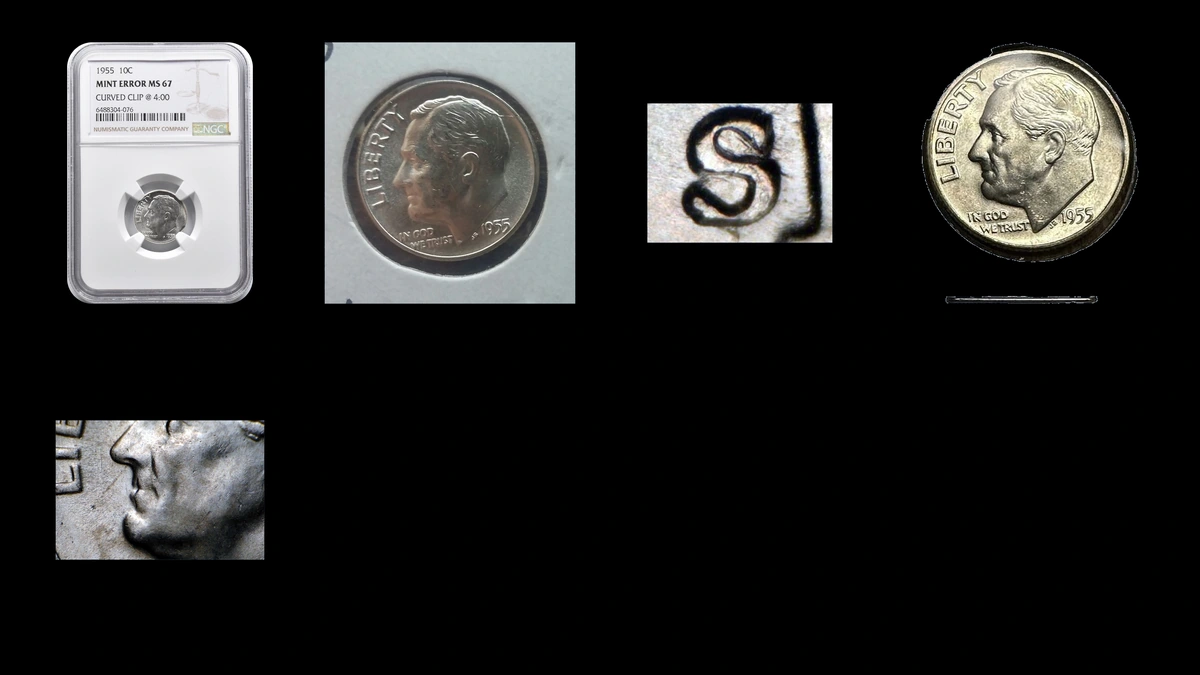
A 2.1-gram 1955-S thin-planchet dime sold for $107 in October 2021, but not every unusual-looking 1955 detail commands an error premium. Estimated whole-coin values for these 1955 dime errors and common doubling appearances span $10–$750.
Check weight and outline first, then distinguish raised breaks and genuine punch remnants from widespread doubling effects.
| Observation | Feature | Estimated whole-coin value |
|---|---|---|
| Abnormally low weight with original surfaces | Thin planchet | $100–$500 |
| Two missing edge sections | Double clip | $75–$350 |
| Design cut off beside blank metal | Reported off-center strike | $100–$750 |
| A raised line reaches the head | Horned die crack | $15–$100 |
| A reverse lump near E and S | Reported die chip | $25–$150 |
| Another S curve near the mintmark | Repunched mintmark | $20–$200 |
| An extra lip on an S-mint coin | Hot Lips abrasion doubling | $10–$100 ordinary coin value |
| Widespread front outlines or a separate reverse E report | Master-die doubling and reported reverse doubling | $10–$150 ordinary; $50–$300 conditional reverse variety |
1. 1955 Dime The coin is unusually light and thin: Struck on Thin Planchet Error
Two recorded 1955-S examples have different weights: an NGC MS66 at 1.9 grams and an NGC MS64 at 2.1 grams. Both fall below the normal 2.50-gram silver-dime standard.
A planchet is the metal blank prepared for striking. A thin one provides less metal to fill the design, although weak detail or low weight alone cannot prove that explanation.
How to Identify
Confirm the date and S, then compare thickness at several points if the coin is safely accessible. A thin blank need not be wedge-shaped, and its diameter can remain near the normal 17.9 millimeters.
Inspect both faces and the grooved edge for filing, chemical attack, or other later removal. Reduced original thickness should agree with naturally struck surfaces.
For a sealed coin, use recorded measurements rather than opening its holder. Keep the 1.9- and 2.1-gram readings attached to their respective examples.
What It’s Worth
The estimate is $100–$500 for genuine thin-planchet whole coins. The 2.1-gram NGC MS64 sold for $107 on October 6, 2021.
No sale price is supplied for the separate 1.9-gram MS66. Its higher grade and lower weight may affect interest, but they do not create a fixed increase over the MS64 result.
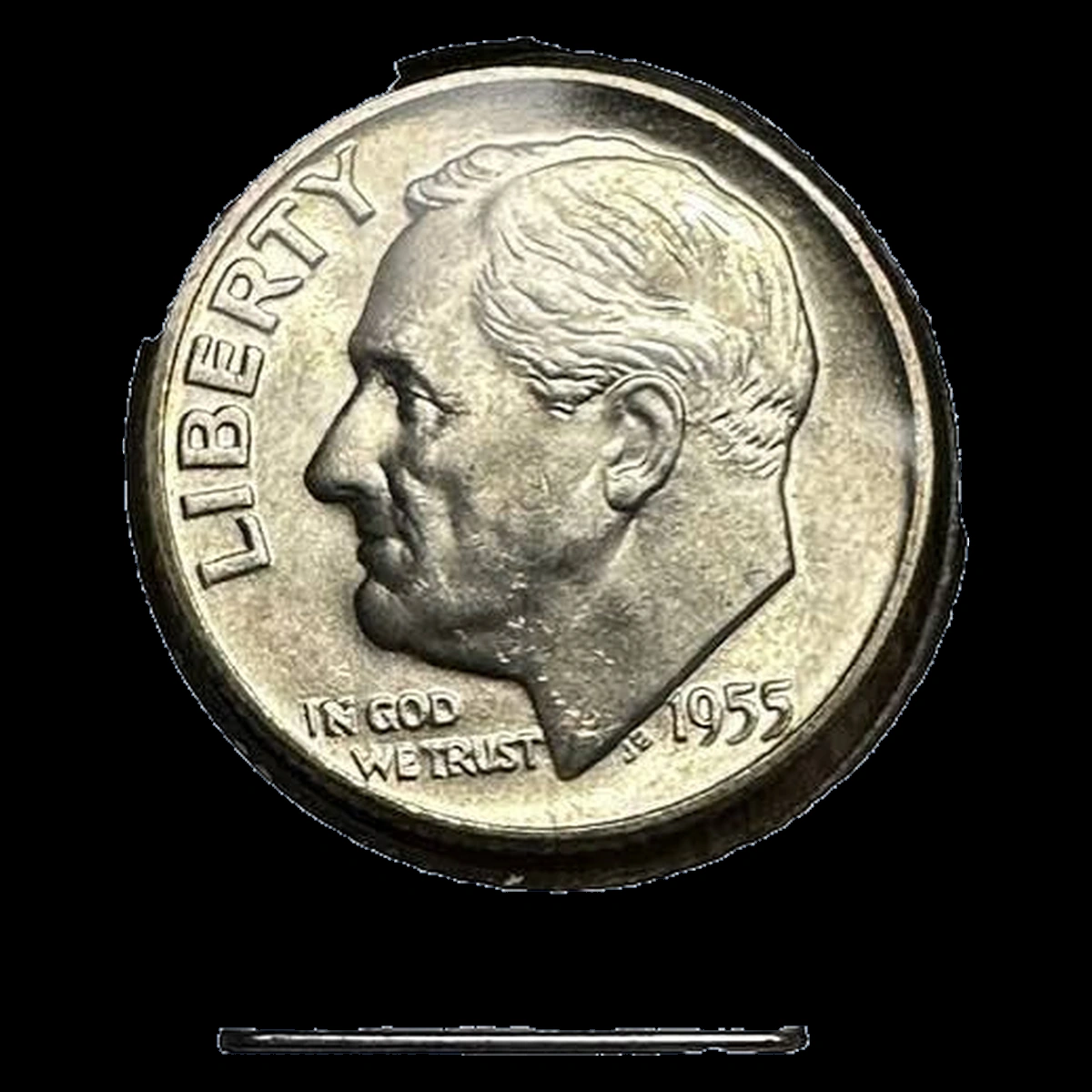
2. 1955 Dime Two gaps interrupt the rim: Double Clip Error
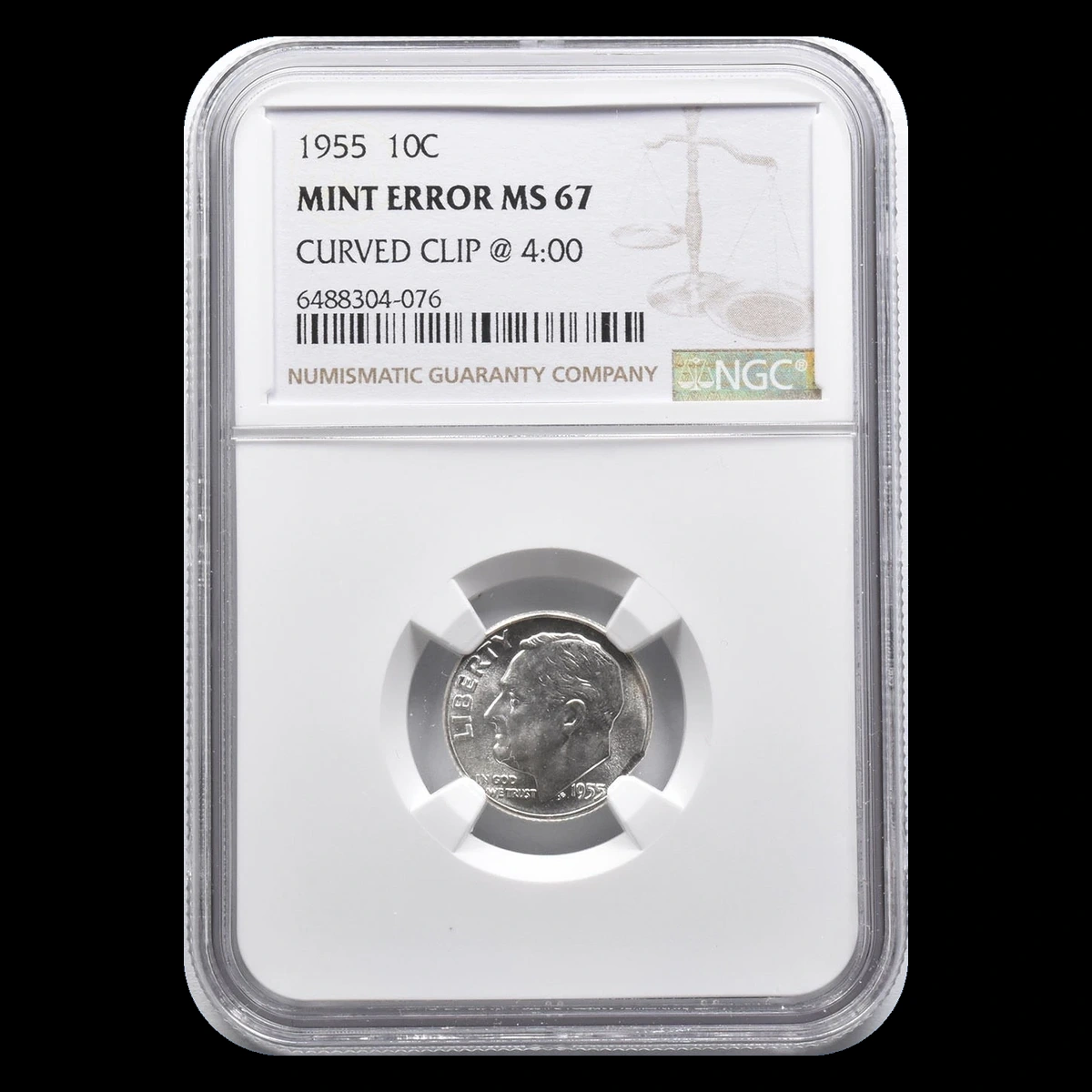
The documented 1955-S ANACS MS63 has two clipped sections and a recorded weight of 2.43 grams. Those gaps were in the blank before it received the coin design.
A double clip describes two missing areas on one coin. It does not mean two strikes or two coins joined together.
How to Identify
Inspect each gap’s endpoints and adjacent design for natural strike effects. Related rim weakness and metal flow can help distinguish a pre-strike clip from a later cut.
Look for tool marks or crushing through a finished edge. The modest difference between 2.43 grams and 2.50 grams cannot establish the timing of metal loss by itself.
Measure across intact portions if accessible, preserving the sealed holder where present. Both gaps need their own evidence rather than relying on their number alone.
What It’s Worth
The estimated range is $75–$350 for genuine double clips in attractive worn through lower unworn condition. The ANACS MS63 listing supplies no public sale amount used here.
A 1947-S with a 10% curved clip sold for $104 in December 2024 at NGC MS66. Its different date, grade, and clip form provide context without making two gaps worth twice that price.
3. 1955 Dime Incomplete designs border an unstruck margin: Reported Off-Center Strike Error
The general 1955 report names no certified specimen with a specific mint or percentage. An actual candidate must show how a misplaced blank received only part of both designs.
A shifted single die can create a different result, leaving one face centered. An uneven border alone cannot decide between them.
How to Identify
Photograph the full outline, readable date, and both struck-to-blank boundaries. An intact picture on an expanded coin suggests a broadstrike rather than an off-center strike.
Check the margin and edge for filing or cuts that removed finished detail. If the mintmark area is missing, its absence does not prove Philadelphia origin.
What It’s Worth
Estimates are $100–$300 for modest worn readable-date examples and $300–$750 for larger or better-preserved errors. These concern regular coins, not rare Proof striking errors.
The known 1947-S 15% offset supplies a related example without a sale amount here. No particular 1955 auction result establishes these ranges.
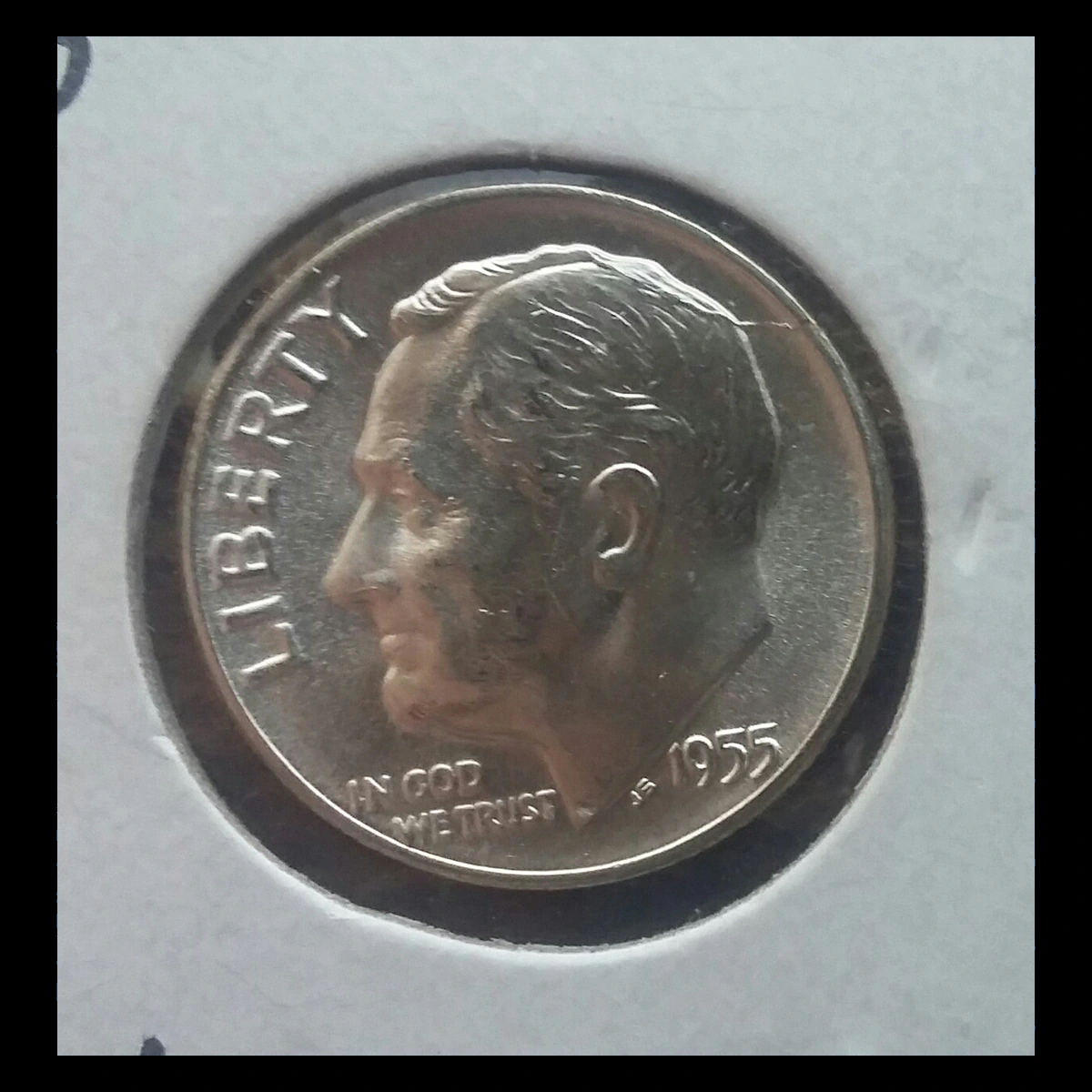
4. 1955 Dime A raised line joins the rim to Roosevelt’s head: Horned Die Crack Error
The reported Philadelphia “horn” runs from the rim near two o’clock to the top of Roosevelt’s head. An older Jim’s Coins catalog described an unworn example with that route.
The line formed as silver entered a narrow fracture in the die. The nickname describes its appearance rather than a separate minting mechanism.
How to Identify
Keep both rim and head endpoints in view, then follow the line under side lighting. It should stand above the surface rather than cut into it.
Compare the route with hair detail and nearby scratches as the light changes. A worn coin may retain the same genuine ridge even though the catalog example was unworn.
What It’s Worth
The estimated whole-coin range is $15–$100 for visible worn through attractive ordinary unworn examples. A continuous line is easier to appreciate than a faint trace.
The catalog’s $3.50 minimum bid is not a completed sale. The estimate reflects similar minor silver-dime cracks, and the nickname does not guarantee its upper end.
5. 1955 Dime A small raised patch lies near E and S: Reported Reverse Die Chip Error
A year guide reports a raised feature near E and S in STATES. No rim connection is confirmed, so it should be investigated as a chip rather than assumed to be a large cud.
A small die fragment can leave a cavity that fills with silver during striking. The coin then has extra raised metal where the tool lost material.
How to Identify
Include the nearby rim in the photograph to establish whether the patch reaches it. Examine the base of the raised feature for an attachment seam or a nearby impact dent.
Dirt or solder can cover existing letters, while a genuine chip belongs to the struck surface. Inspect the opposite face and edge for related damage before assigning the cause.
What It’s Worth
The guide estimate is $25–$150 for whole coins with smaller reverse breaks. It is not a recorded sale of the reported example.
A clear patch affecting a letter can be more appealing than a tiny speck. A small internal chip does not automatically receive the premium associated with a large rim-connected break.
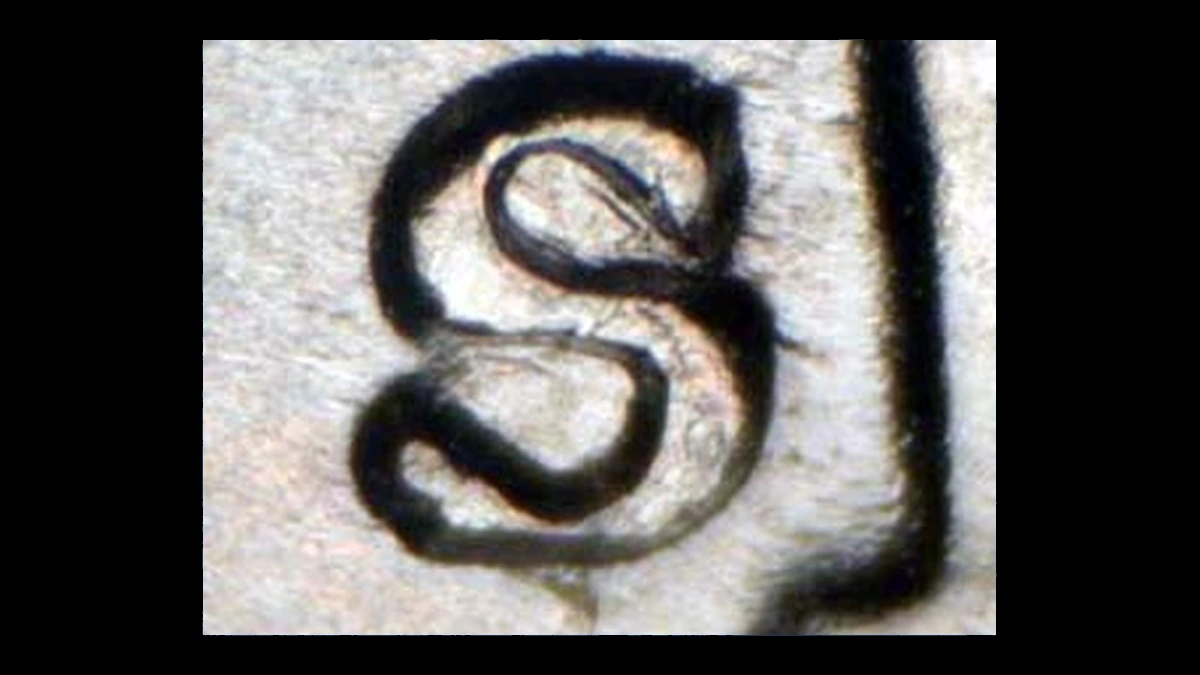
6. 1955 Dime Another S curve remains beside the mintmark: Repunched Mintmark Error
One older listing describes an earlier S below and left of the final mintmark, the southwest direction. Another catalog lists S/S without establishing the same direction.
Workers punched mintmarks into dies by hand. A second entry that did not fully overlap the first could leave recognizable parts of both letters.
How to Identify
Locate S left of the reverse torch base and compare it with a normal mintmark. For the southwest example, look below-left for a curve belonging to an earlier S.
Other S/S examples need their own photographs. A random mound or flat shelf does not establish the same punch pattern.
What It’s Worth
Estimates are $20–$75 for correctly identified worn coins and $75–$200 for clearer attractive unworn examples. They reflect comparisons with similar minor silver-Roosevelt varieties.
The old southwest listing had a $3.50 minimum bid, without a final sale amount. Remnant clarity and surfaces remain more useful than assuming every S/S deserves the same price.
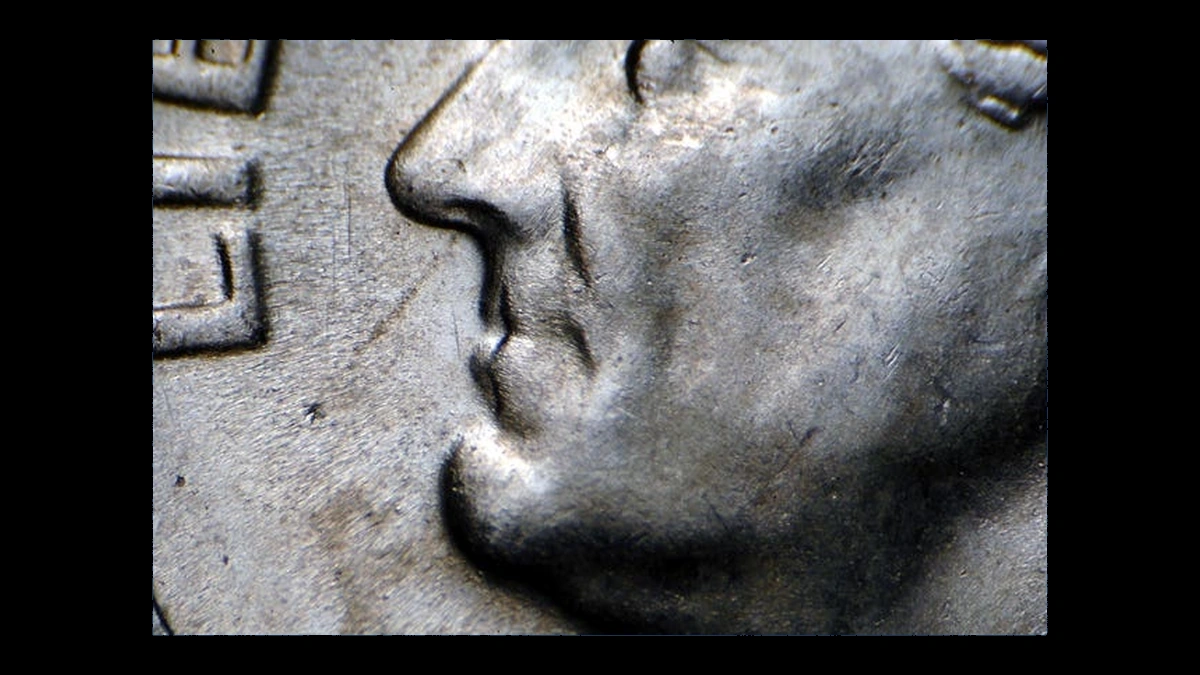
7. 1955 Dime Roosevelt seems to have an extra lip: Hot Lips Abrasion Doubling Error
The 1955-S Hot Lips effect comes from polishing the die, which changed the mouth’s edge in the tool. Coins struck afterward reproduced the altered outline.
Wexler explains the abrasion-doubling identification and the removal of an older doubled-die listing. The visible feature survives, but its cause is not a rare doubled design transferred into the die.
How to Identify
Confirm S on the reverse and compare the mouth with the polishing example. Keep the nearby fine lines visible instead of cropping to the lip alone.
This is a regular San Francisco dime, not a collector Proof. Do not rub the surface to expose the line or diagnose the cause from one extra-looking outline.
What It’s Worth
The estimated $10–$100 range represents ordinary worn through modest unworn coin value, without an added Hot Lips premium. Wexler reports no established extra value for the effect.
The older $100–$500 doubled-die range should not be applied to this polished-mouth appearance. Exceptional preservation or torch detail can raise value for other reasons.
8. 1955 Dime Common front outlines differ from a separate reverse E report: Master-Die and Reported Reverse Doubling Error
Many 1955 dimes show extra outlines around LIBERTY, the motto, or the lips from a master die, an early tool used to produce later dies. The feature could consequently reach Philadelphia, Denver, San Francisco, and Philadelphia Proof coins.
A separate guide report points to E in E PLURIBUS UNUM on the reverse. That observation requires its own identification and is not established by common front doubling or Hot Lips.
How to Identify
Compare the obverse with several normal 1955 examples before claiming a rare die. A widespread recurring outline can be the common master-die feature.
For the reverse report, inspect E against a properly identified reference and distinguish a raised repeated contour from a flat shelf. Keep Proof and regular-strike surfaces separate in the comparison.
What It’s Worth
Common master-die doubling carries an estimated $10–$150 ordinary whole-coin range by mint, condition, and finish, with no special rarity premium. A separately confirmed reverse doubled die has a conditional $50–$300 estimate based on similar minor silver-dime varieties.
A thick-looking E does not satisfy that condition. Exceptional Proof surfaces or very high grades may affect value independently of either feature.
Conclusion
Weight, missing sections, raised routes, and repeated letter shapes each need their own evidence. Keep the two thin-planchet specimens separate, and test both gaps of a double clip rather than relying on low weight.
The $10–$750 span includes ordinary values for common doubling. Hot Lips and master-die outlines should not receive a rare doubled-die premium merely because they look unusual.