Rare 1964 Half Dollar Errors (List & Pictures)
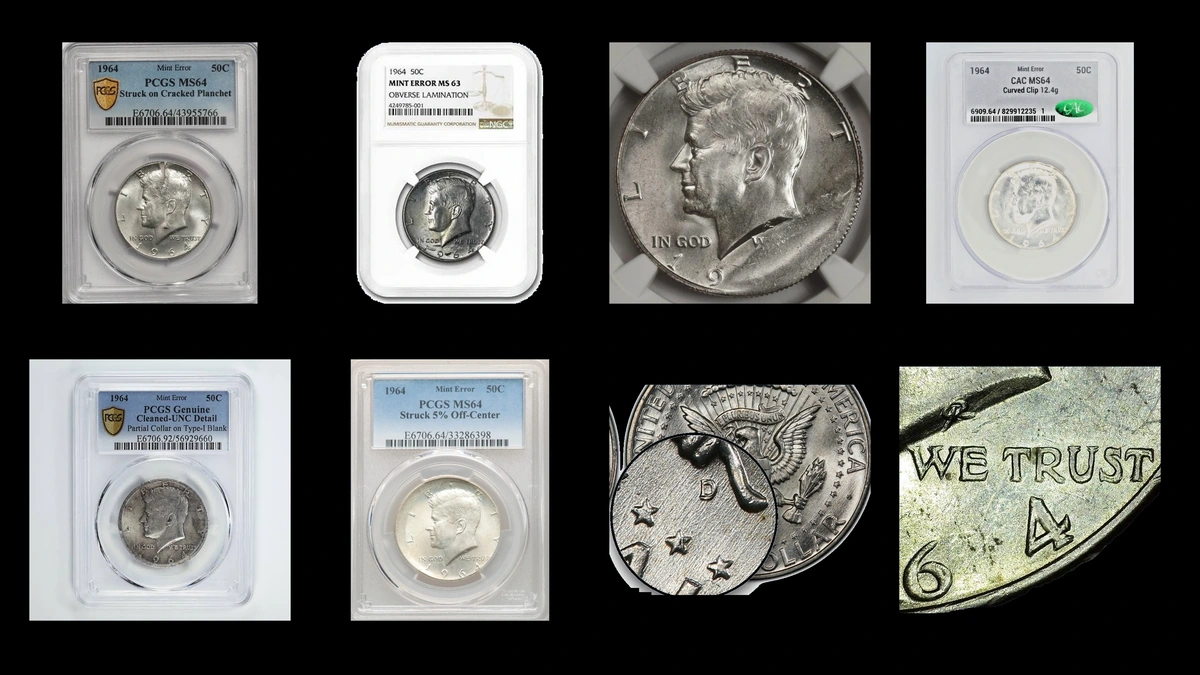
A half dollar overstruck on a finished nickel sold for $6,168.75 in January 2016. That 1977-on-1976 comparison helps frame a different reported overstrike carrying a 1964 Kennedy design.
Estimated 1964 half dollar errors values span $25–$8,000. Inspect the metal and outline first, then distinguish weak, repeated, and reversed designs.
Normal 1964 halves use 90-percent-silver alloy, weigh 12.50 grams, and measure about 30.6 millimeters with reeded edges. Denver’s D is on the reverse below the eagle; Philadelphia has no mintmark.
| Inspection group | Features covered | Estimated whole-coin values |
|---|---|---|
| Missing or incomplete design | Blank, thin/cracked/holed planchet, lamination | $50–$500 by category |
| Edge and outline | Clip, partial collar, broadstrike, off-center | $40–$1,800 by category |
| Small die features | Cracks, repunched D, doubled dies | $25–$1,000 by category |
| Design formation | Strike-through, low-pressure, uniface | $50–$1,500 by category |
| Combined striking | Double strike, brockage, cap | $200–$6,000; cap pair range covers both coins |
| Wrong host metal or coin | Wrong planchet, quarter overstrike | $500–$8,000 by category |
1. 1964 Half Dollar Neither Face Has a Design: Associated Undated Silver Blank Error
An unstruck blank has not received a portrait, eagle, or date. It may be at an early stage without a raised rim or a later preparation stage with its edge pushed upward.
Neither form establishes 1964. The right metal and size can identify a silver half-dollar blank without supplying its missing year.
How to Identify
Inspect both faces for faint erased lettering, grinding, and uneven thinning. An ordinary coin stripped of its designs is not a mint blank.
Compare weight and diameter with half-dollar specifications while allowing for unfinished rim preparation. The edge should not already carry the complete reeding normally formed during striking.
Nondestructive metal testing can support silver identification but cannot date an unstruck disc. Keep the description explicitly undated.
What It’s Worth
Identified silver half-dollar blanks are estimated at $60–$300. Surface quality and reliable classification affect the value.
Two NGC-certified blanks weighing 12.5 and 12.3 grams sold together for $156 in July 2021. That was a total for two undated pieces, not a per-blank or visibly dated 1964 result.
2. 1964 Half Dollar The Whole Disc Is Unusually Thin: Thin Planchet Error
The documented NGC-certified example weighs 9.5 grams. A thinner-than-intended blank can leave insufficient metal to fill some die details, producing a light coin with shallow areas.
The weight difference calls for investigation but does not by itself prove thin starting stock. Metal removed after striking can also lower weight.
How to Identify
Measure thickness and diameter as well as weight, comparing several points with a normal half. Look for original surfaces and edges consistent with a naturally thin disc.
Inspect for filing, polishing, and acid damage. Weak details alone cannot distinguish a thin blank from wear or other strike problems.
What It’s Worth
Comparable genuine thin-planchet pieces have an estimated $100–$350 range. The certified 9.5-gram example sold for $144 in July 2021.
This comparison concerns thin half-dollar stock rather than a blank intended for another denomination. Damage still affects the price even when the coin remains underweight.
3. 1964 Half Dollar An Opening Runs into the Silver: Cracked Planchet Error
A cracked planchet has an actual split in the coin metal. That is different from the raised ridge left by a crack in a die.
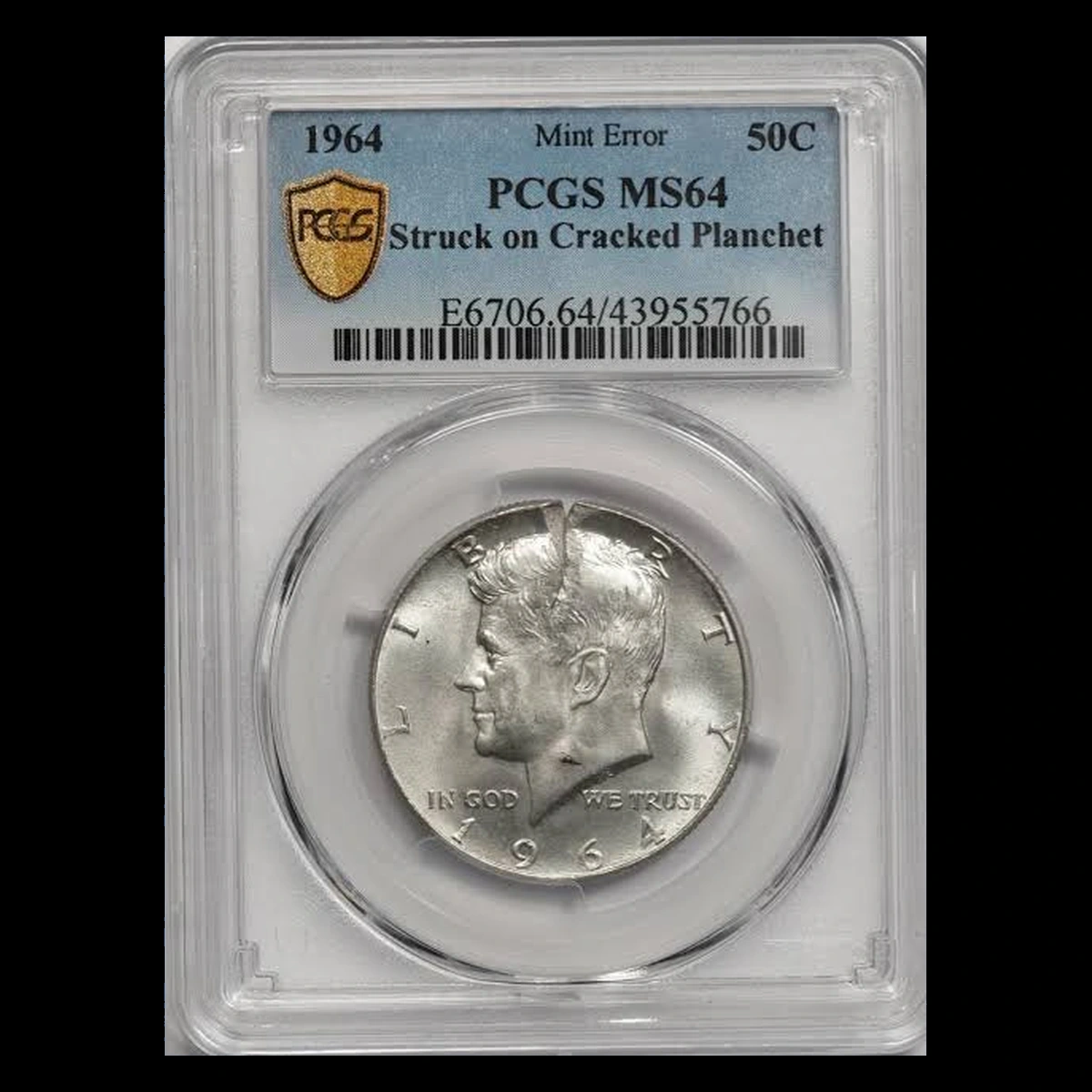
Reported specimens include one opening approximately three-quarters of an inch long and another near the lower-left edge at about 8:30. They are separate coins with separate diagnostics.
How to Identify
Follow the opening on both faces where possible, examining how the original strike formed around it. Look for saw tracks or a fresh cut that could show later damage.
Do not bend the coin or spread the gap. A missing fragment can lower weight, but an attached split need not remove much metal.
What It’s Worth
Genuine cracked-planchet halves are estimated at $75–$400. Visible original formation and remaining detail support the stronger comparisons.
A separate PCGS MS62 sold for $144 in October 2021. That unworn example is not a documented sale of either specifically positioned crack described above.
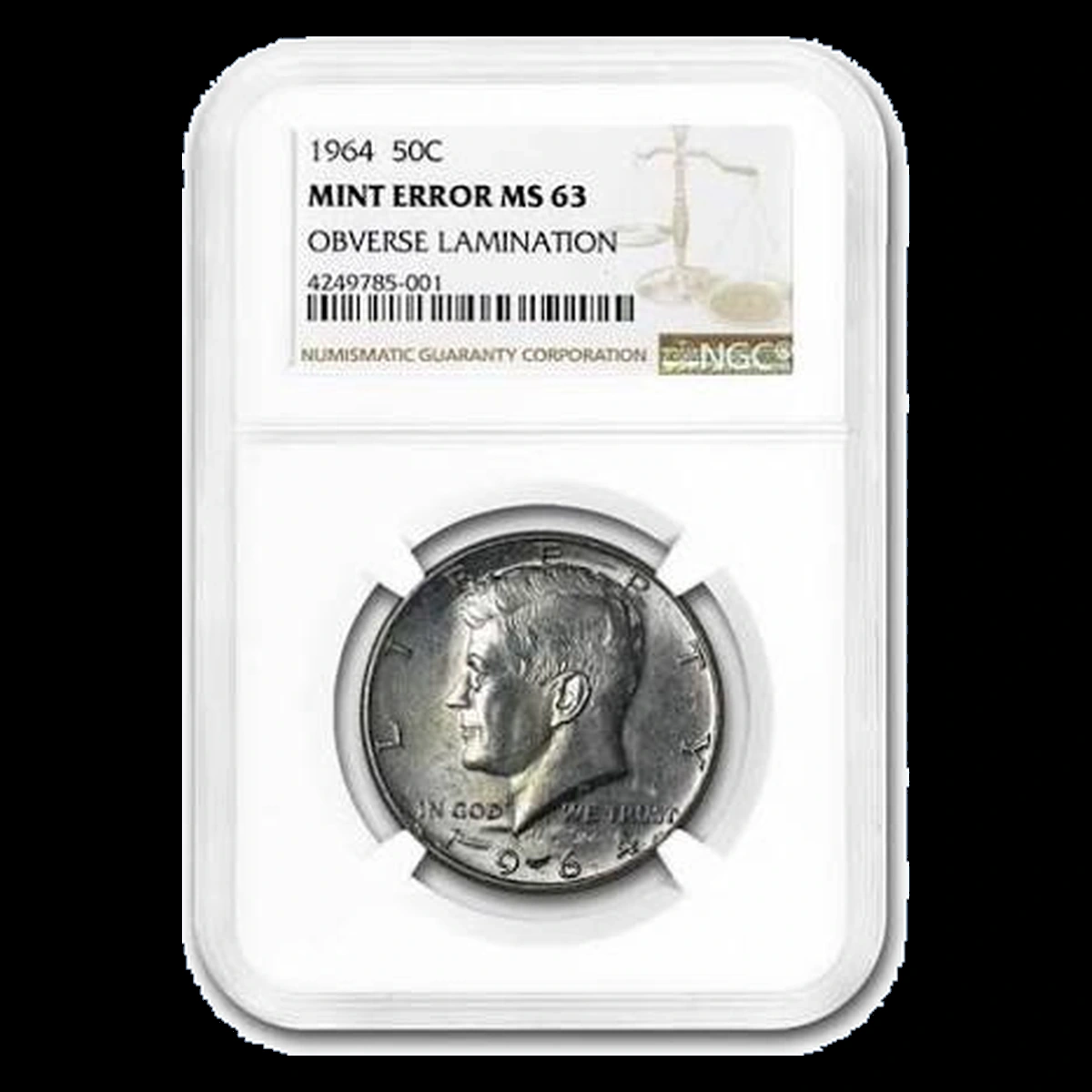
4. 1964 Half Dollar A Thin Silver Layer Peels Away: Lamination Error
Lamination separates a weak layer within the alloy, leaving a flap or shallow missing area. The separation may begin before striking or open farther afterward.
A 1964 half is 90-percent-silver alloy throughout, without the deliberately bonded outer layers of later clad halves. Reported front, reverse, and Denver MS61 examples must remain distinct.
How to Identify
Find the layer boundary and determine whether design continues into the exposed area or ends at a later separation. Leave all attached metal in place.
Inspect for scraping or a smooth dent rather than natural peeling. Weight may change little with a small flap and more if silver has fallen away.
What It’s Worth
Genuine laminations are estimated at $50–$450. Size, surviving detail, and an attached layer can affect appeal.
An NGC MS64 listed as (1964), with reverse metal lost before striking, sold for $156 in July 2021. The parentheses indicate an assigned date and the sale does not belong to the separate Denver MS61.
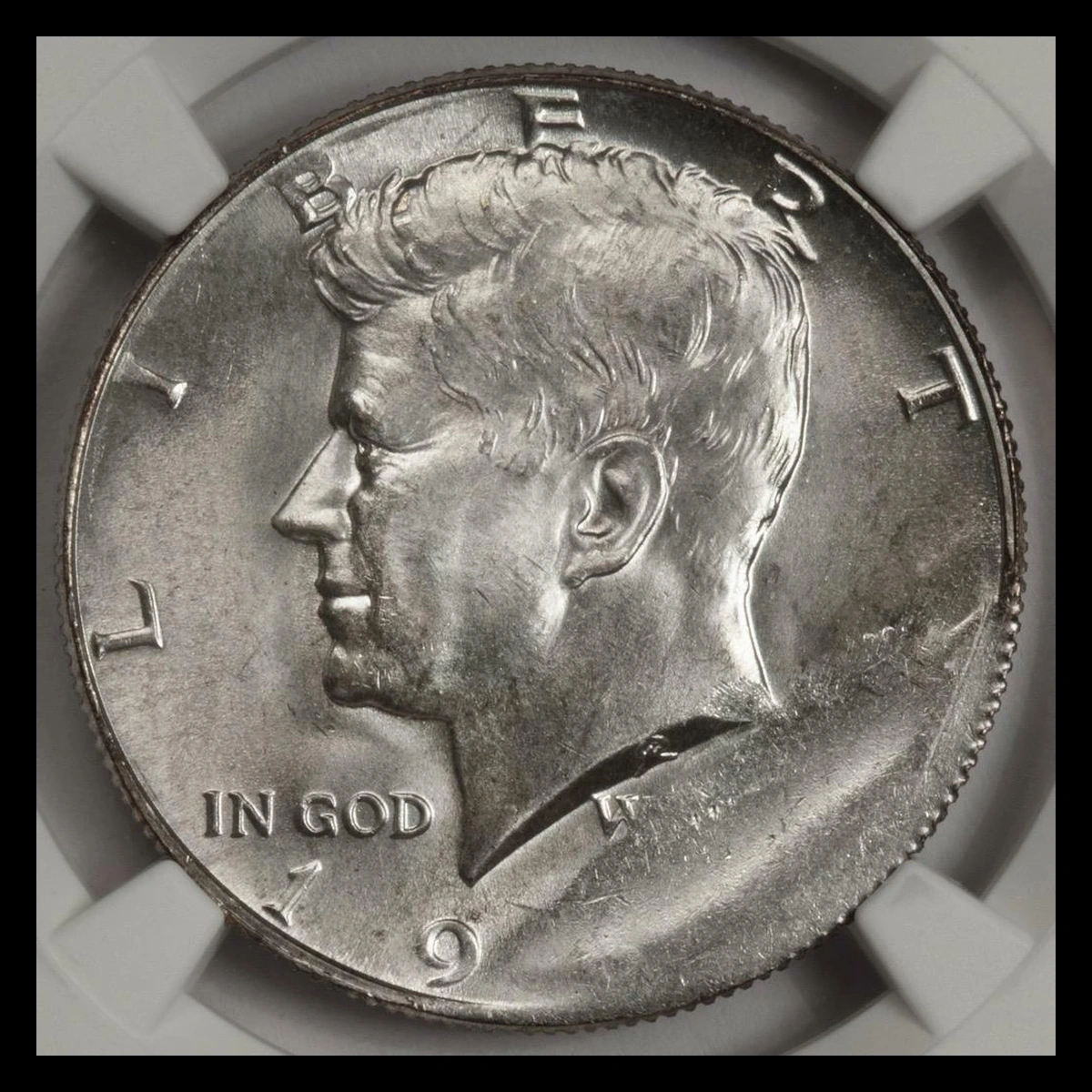
5. 1964 Half Dollar A Hole Predates the Design: Defective or Holed Planchet Error
A defective blank can enter the press with a hole or irregular missing area, and the strike shapes surrounding silver around that opening. Later drilling can imitate the general appearance.
The records include an 11.68-gram NGC MS63 and a separate holed 11.7-gram MS65. Similar weights do not merge their grades, shapes, or histories.
How to Identify
Inspect the hole wall for regular drilling, tool tracks, and burrs at either end. Then examine both faces for design formed around an already present defect.
Compare missing weight with the opening and record the intact outline. A round hole alone does not establish a production flaw.
What It’s Worth
Genuine defective or holed planchets are estimated at $75–$500. Evidence that the opening existed during striking is central to the premium.
The 11.7-gram NGC MS65 sold for $156 in July 2021. That result must not be assigned to the 11.68-gram MS63.
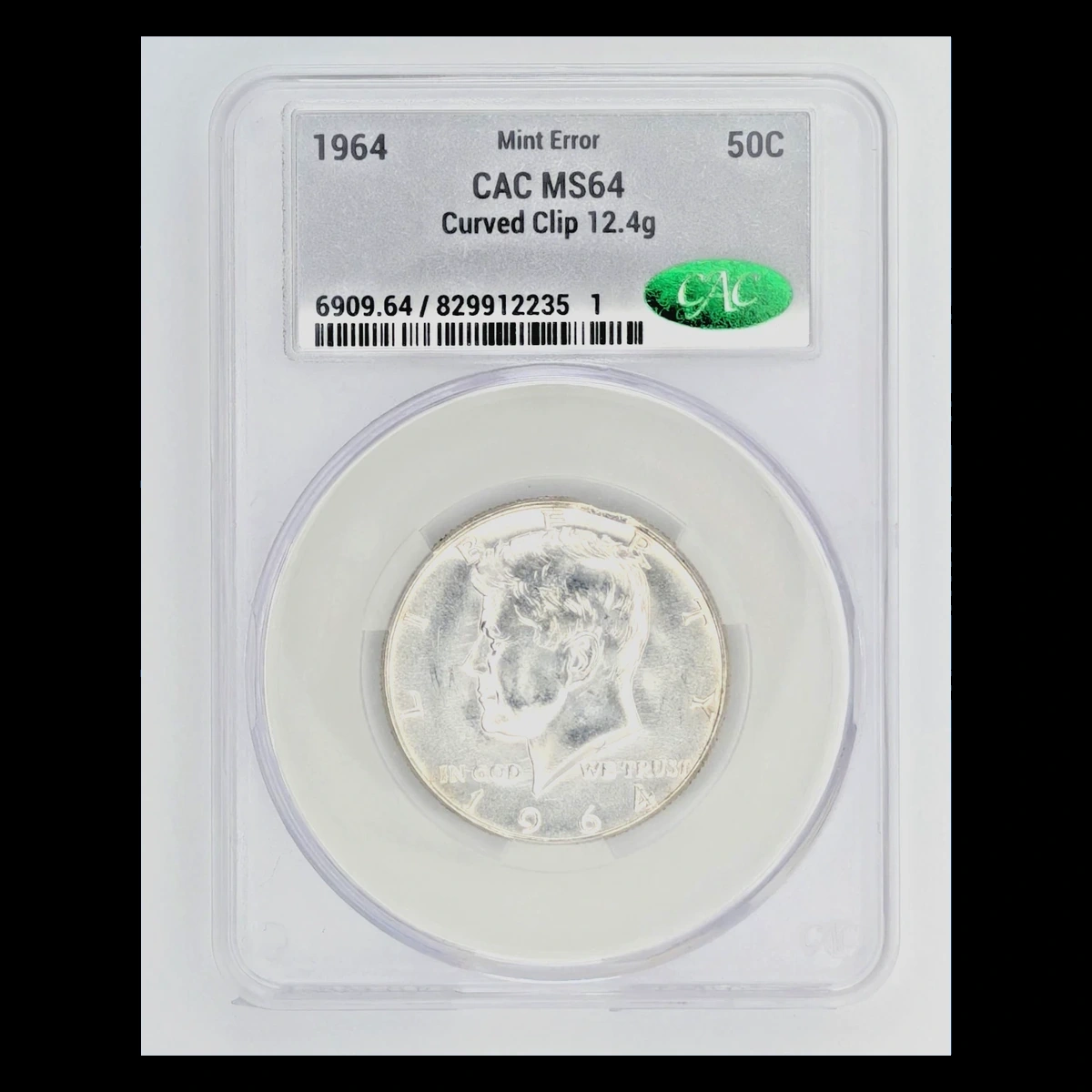
6. 1964 Half Dollar One or More Sections Are Missing from the Edge: Clipped Planchets Error
Clips can be curved, straight, or ragged, with multiple gaps on one blank. Double and triple describe the number of missing sections, not the number of strikes.
The 12.07-gram straight clip and 12.24-gram curved-and-rim-clip example are separate specimens. Their missing metal existed before the design formed.
How to Identify
Inspect each gap’s endpoints for original rim and design formation around absent metal. Search for fresh cutting or filing in the remaining reeded edge.
Opposite-rim weakness can support a clip but may be faint. On a multiple clip, evaluate every opening rather than accepting all because one looks genuine.
What It’s Worth
Genuine 1964 clips have an estimated $40–$650 range. Remaining identity and attractive surfaces matter as well as the gaps’ size and number.
An NGC AU58 ragged clip near the bottom sold for $159 in June 2023, and a separate ANACS MS63 ragged clip also brought $159 around that period. Equal prices do not make different outlines equivalent.
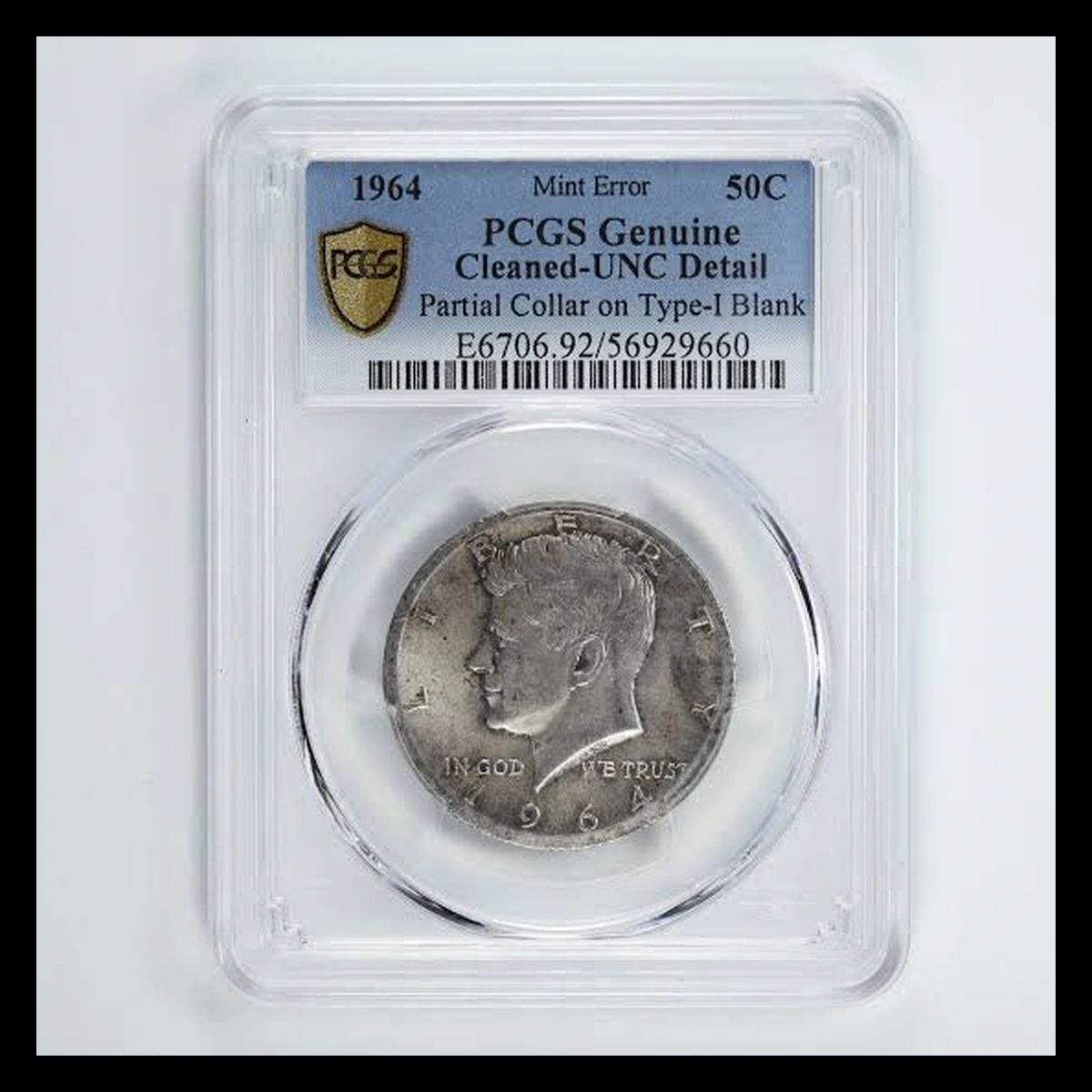
7. 1964 Half Dollar The Side Edge Forms a Step: Partial Collar Strike Error
When only part of a blank’s thickness sits within the collar, the restrained portion receives normal edge formation while the exposed portion spreads. This can leave two edge levels with complete face designs.
The reported NGC coin has Uncirculated Details with cleaning noted. That describes no circulation wear but a condition problem, rather than a numerical Mint State grade.
How to Identify
Rotate the coin at eye level and trace the step’s relationship to the edge grooves. Measure the confined and expanded portions at several points.
Inspect for flattened reeding or pressure damage from later squeezing. A wide front border alone cannot show partial collar engagement.
What It’s Worth
Genuine examples are estimated at $100–$700. A clear step and original surfaces provide stronger comparisons.
No realized price is supplied for the cleaned example. Its cleaning remains relevant even after the minting error is identified.
8. 1964 Half Dollar The Full Design Fits inside a Wider Outline: Broadstrike Error
A broadstrike forms when the collar fails to restrain outward flow while the full image is impressed. A reported PCGS MS62 shows this basic mechanism without requiring another strike or reversed image.
Other errors may coexist with broadstriking, but they must be visible on the actual coin. A smooth edge alone is insufficient.
How to Identify
Measure several widths and follow outer design elements on both faces. Complete original detail should fit inside the expanded metal.
Inspect edge formation and rule out hammering that crushed already finished details. Spreading by itself should not cause substantial loss of weight.
What It’s Worth
Straightforward broadstrikes are estimated at $100–$800. Expansion, clear identity, and surface quality affect appeal.
A separate PCGS MS64 on a Type 1 blank, before rim raising, sold for $161 in May 2006. That is not the MS62’s sale, and compound errors need their own comparisons.
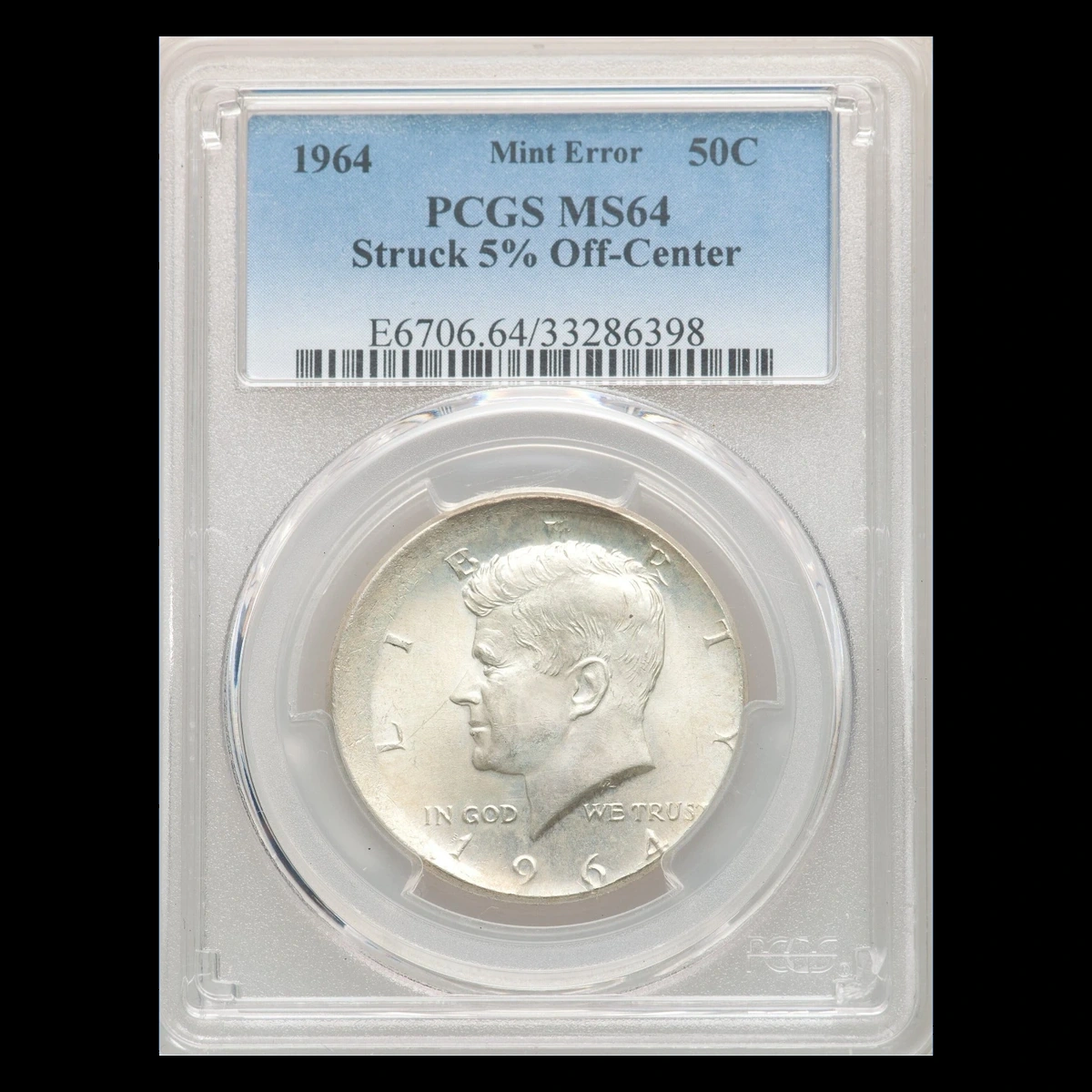
9. 1964 Half Dollar Original Blank Metal Borders a Displaced Image: Off-Center Strike Error
The reported Philadelphia PCGS MS65 is approximately 35 percent off center and cupped. A separate Denver example is about 15 percent off center.
These percentages concern design displacement rather than missing silver. A cupped outline alone does not establish a die cap.
How to Identify
Compare both faces at the boundary between struck and unstruck metal. Their incomplete images should fit one blank displaced beneath the dies.
Inspect for natural flow rather than cutting or grinding and retain any readable date. Document cupping without straightening it or borrowing another specimen’s measurements.
What It’s Worth
Genuine off-center examples have an estimated $150–$1,800 range. No realized price is assigned to the described 35-percent Philadelphia or 15-percent Denver coins.
A 1999-D 65-percent-off-center NGC MS66 sold for $552 in March 2023. Its later clad alloy and displacement differ from these silver specimens.
10. 1964 Half Dollar A Fine Ridge or Local Lump Is Raised: Die Cracks and Breaks Error
A die fracture accepts metal and leaves a raised line rather than an opening in the coin. Loss of a piece from the die can leave a larger raised patch.
A rim-connected patch may be a cud, while one entirely inside the design is an internal break. The 1964 reports do not share one fixed route or mint.
How to Identify
Use side light to distinguish a solid raised feature from a groove with a damage lip. Inspect the full line or patch rather than one bright segment.
For a cud claim, trace the connection to the rim and check for added metal or an impact-folded edge. The actual position must come from the specimen.
What It’s Worth
Clear cracks and small local breaks are estimated at $25–$200. Faint ridges generally add less interest than visible design-interrupting patches.
This guide range has no identified sale attached to it. A much larger cud requires its own comparison, and cleaning or heavy wear still affects the whole coin.
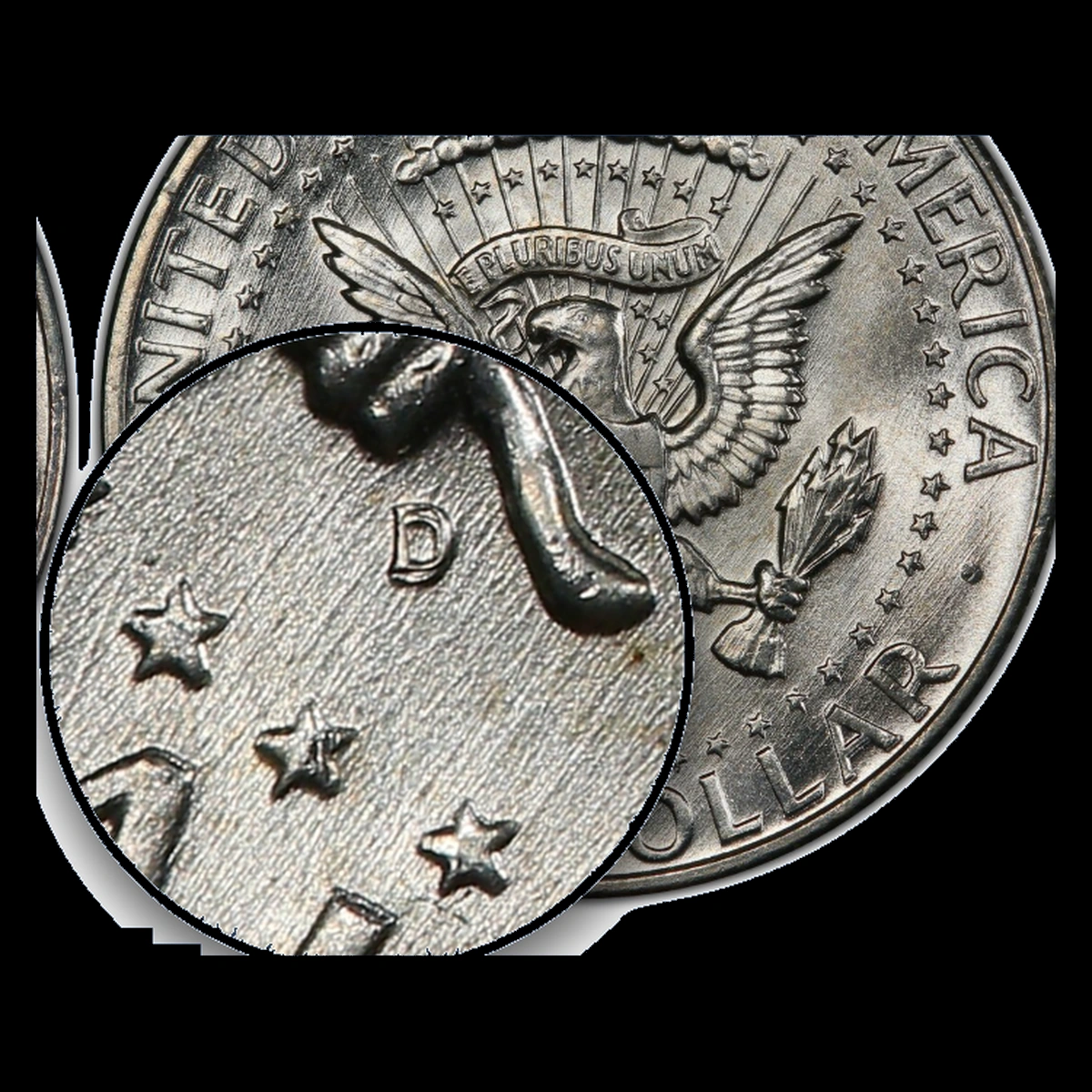
11. 1964 Half Dollar An Earlier D Remains on the Reverse: Repunched Denver Mintmark Error
For 1964, the D is below the eagle on the reverse. Repeated hand punching into that die could leave an earlier curve or upright beside the final mintmark.
The die transferred the extra fragment in a normal strike. The coin itself did not need another blow.
How to Identify
Locate the reverse D and match the earlier letter’s shape and position against a confirmed variety. A Philadelphia coin without a mintmark cannot show a repunched D.
Separate a rounded punch remnant from a flat shelf or a dent that merely widens the letter. Retain a full-reverse photograph to preserve the mintmark’s context.
What It’s Worth
Confirmed repunched-D examples are estimated at $30–$300. Clear repetition and attractive preservation support higher comparisons.
No specific auction result is supplied for this range. The exact variety and strength of its remnants must justify an error premium.
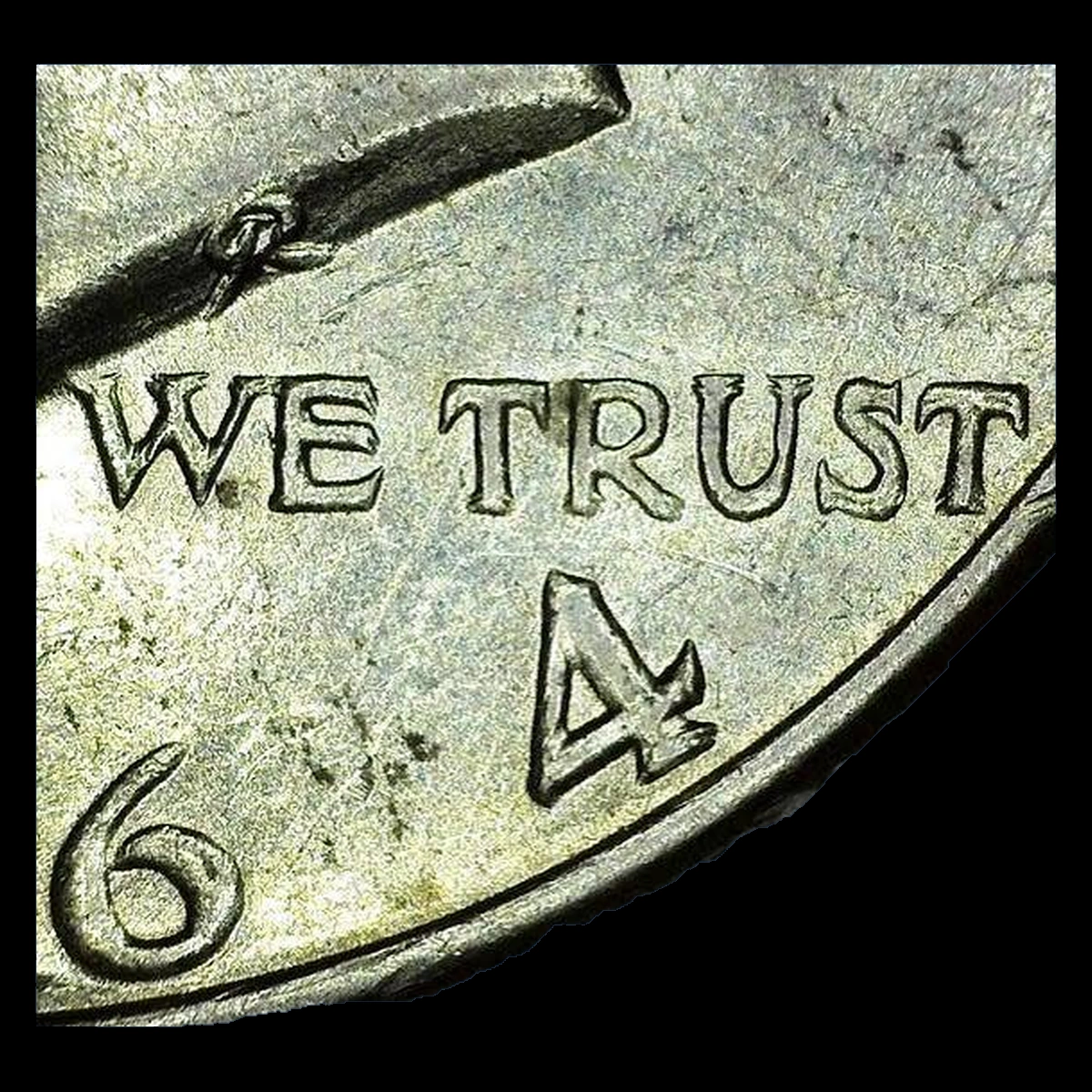
12. 1964 Half Dollar Design Details Have Repeated Outlines: Doubled and Multiple Dies Error
Repeated images can already exist in a die before it strikes a coin. Depending on tool preparation, the coin may show two, three, or four overlapping contours.
The reported group includes Denver and Philadelphia ordinary coins plus collector proofs. Accented Hair is an intended proof design and does not become doubling merely from its hair detail.
How to Identify
Establish mint and finish before selecting a variety comparison. Inspect the exact affected design rather than expecting all 1964 doubling to share one pattern.
A reported reverse example involves STATES and upper stars. Rounded repeated contours differ from low flat shelves, and proof reflections should be checked under changing light.
What It’s Worth
The estimated range is $40–$1,000 across these distinct varieties. Strength, condition, and exact attribution matter more than the broad label.
A PCGS MS65 1964-D doubled obverse sold for $130 in July 2021. That sale does not set the value of all Philadelphia, proof, or multiple-image dies.
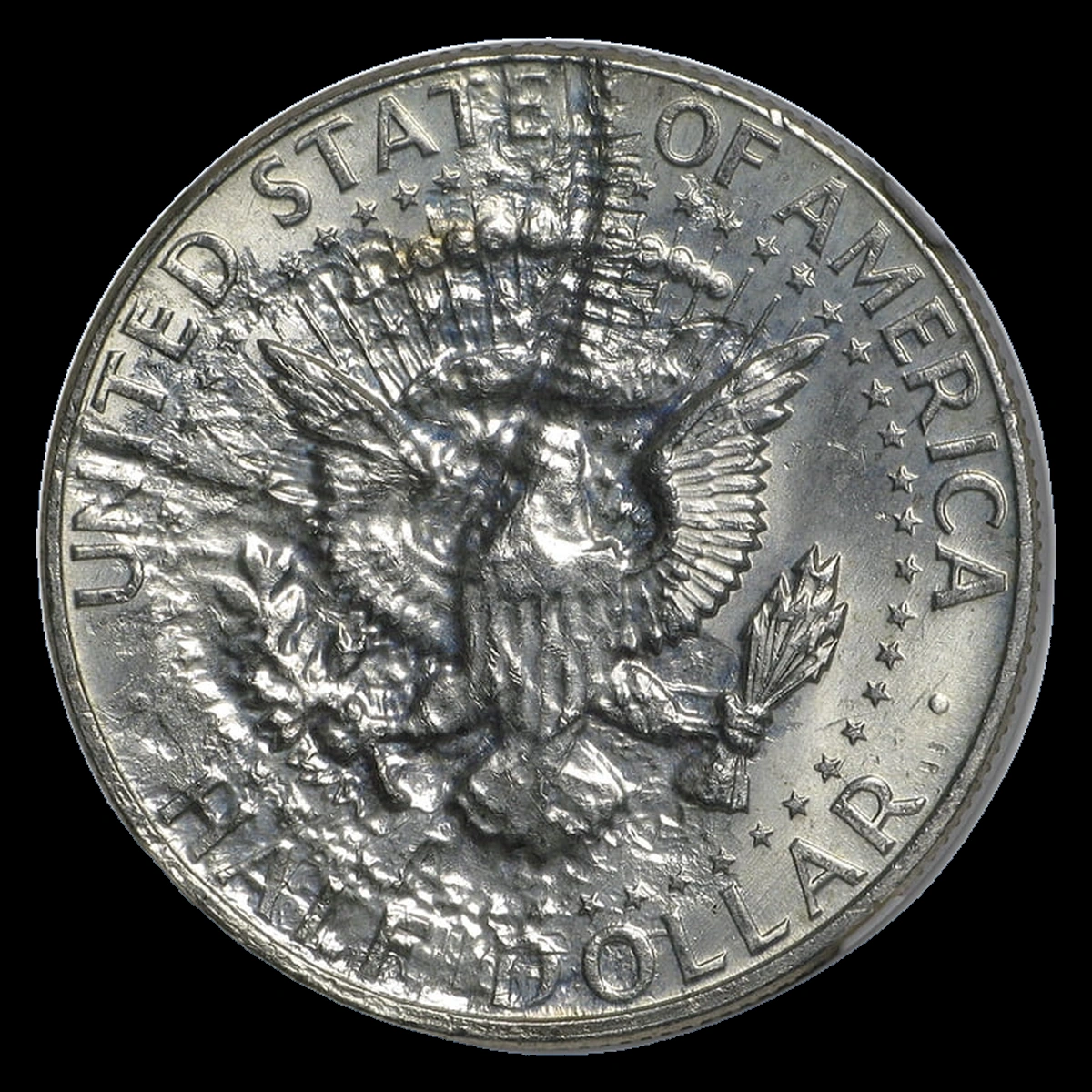
13. 1964 Half Dollar A Patch or Texture Interrupts the Design: Strike-Through Error
Material between die and blank can leave a hollow, texture, or suppressed detail. Reports include front, reverse, and two-sided interruptions.
A Denver AU58 has an impression from a detached piece bearing edge grooves. The imprint does not mean the object remained attached after striking.
How to Identify
Inspect the floor and boundary of the impression for original formation rather than scraping or torn metal. A repeated groove pattern may support an edge-fragment identification.
Check both faces when more than one area is claimed and leave retained material untouched. Name the object only when its actual outline or texture supports it.
What It’s Worth
Confirmed strike-throughs are estimated at $50–$1,000. Clear recognizable impressions can attract more interest than indistinct small patches.
A 1992-D with an edge-groove impression, graded NGC MS64, sold for $336 in July 2021. That clad coin’s sale is not a realized price for the separate silver Denver AU58.
14. 1964 Half Dollar Weak Detail Extends across Both Faces: Low-Pressure Strike Error
Insufficient striking force can leave broad areas shallow without circulation wear. The reported NGC coin is described as a die-adjustment strike.
The traditional label does not establish why an operator used a particular setting. The visible evidence is broad weakness, distinct from one locally obstructed patch.
How to Identify
Compare high points and fields on both faces for preserved original texture. Wear normally affects exposed high points first, while a weak blow can affect detail more broadly.
Look for chemical roughness, polishing, and edge alteration that could explain lost detail after minting. Normal weight alone does not resolve the cause.
What It’s Worth
A genuine low-pressure example is estimated at $150–$1,200. Clear distinction from wear and intact original surfaces are important.
No numerical grade or realized price is assigned to the reported specimen. The estimate should not be applied merely because one letter looks faint.
15. 1964 Half Dollar The Eagle Is Struck but the Front Is Blank: Uniface Strike Error
A disc blocking one die can prevent normal design formation on one face. The reported NGC MS66 has a struck reverse and an obverse without the normal portrait.
It is listed as (1964), an assigned date because the dated side is blank. A full visible 1964 date must not be claimed for this specimen.
How to Identify
Inspect the blank face for sanding, faint erased portrait remnants, or uneven thinning. Compare the other face for original struck detail.
A recessed reversed picture would be a brockage rather than a simply blank face. Examine both rims and the edge while keeping the assigned-date limitation explicit.
What It’s Worth
Genuine examples of this kind are estimated at $250–$1,500. An original blank face and well-preserved struck reverse support the comparison.
No actual sale is supplied for the NGC MS66. The high grade alone does not price the error, and a ground-down ordinary half does not qualify.
16. 1964 Half Dollar Two Impressions Cross Each Other: Double and Compound Strikes Error
A PCGS MS61 has a second strike about 30 percent off center. A different assigned-date (1964) MS66 has a second blow about 95 percent off center and a blank reverse area.
A separate NGC MS65 combines another strike with spreading, a reversed impression, and an indent. These combinations belong to distinct specimens rather than one universal pattern.
How to Identify
Trace where one displaced design crosses or flattens another, using several recognizable elements. A thick letter alone is not evidence of a second complete impression.
Classify any plain area separately from an incuse reversed image. Compare spreading and edge changes with the sequence visible on that specific coin.
What It’s Worth
Double and compound strikes are estimated at $200–$2,500. Clarity of the sequence and the condition of the remaining design affect interest.
No individual realized price is assigned to the three described examples. A separate full-brockage broadstrike sold for $2,400 in March 2023, offering dramatic-error context rather than an exact price for each double strike.
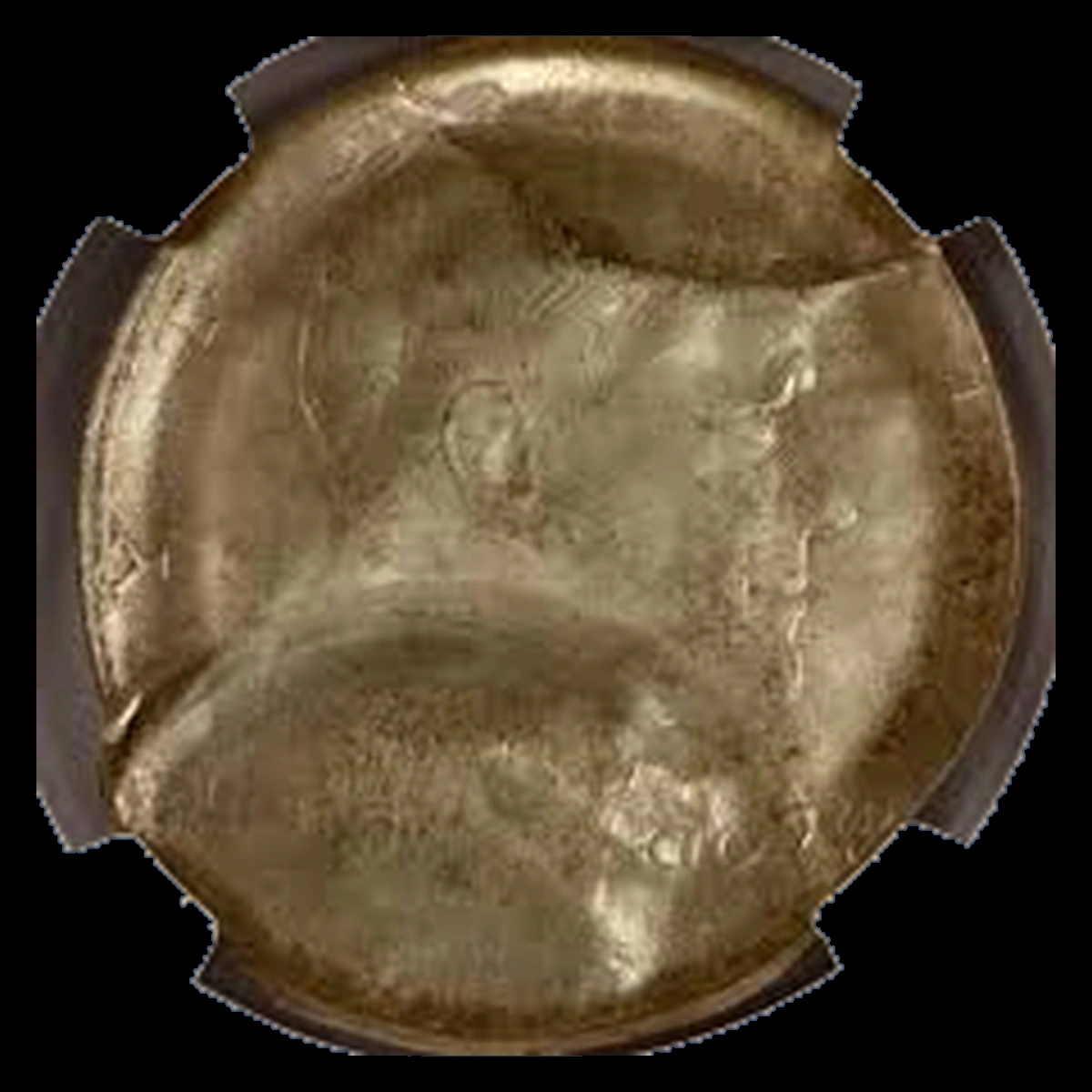
17. 1964 Half Dollar A Reversed Image Is Recessed in a Wide Coin: Full Brockage with Broadstrike Error
An already struck coin can block a die and impress its raised design into the next coin. The result is a sunken mirror image, called a brockage.
The documented PCGS MS65 also broadened without normal collar restraint. A separate reported example measures about 36 millimeters, a measurement that must remain attached to its own specimen.
How to Identify
Verify that lettering is reversed and sits below the surface, then inspect the expanded outline for original formation. Two coins squeezed together after minting can leave impressions with crushed rims and disturbed detail.
Measure actual width rather than assuming 36 millimeters. Keep both the recessed image and the broadstrike evidence visible in the photographs.
What It’s Worth
The combination has an estimated $800–$3,500 range. A complete readable reversed design can be more appealing than a small unclear impression.
The 1964-dated PCGS MS65 sold for $2,400 in March 2023. That whole-coin result includes the broadstrike and full reverse brockage together.
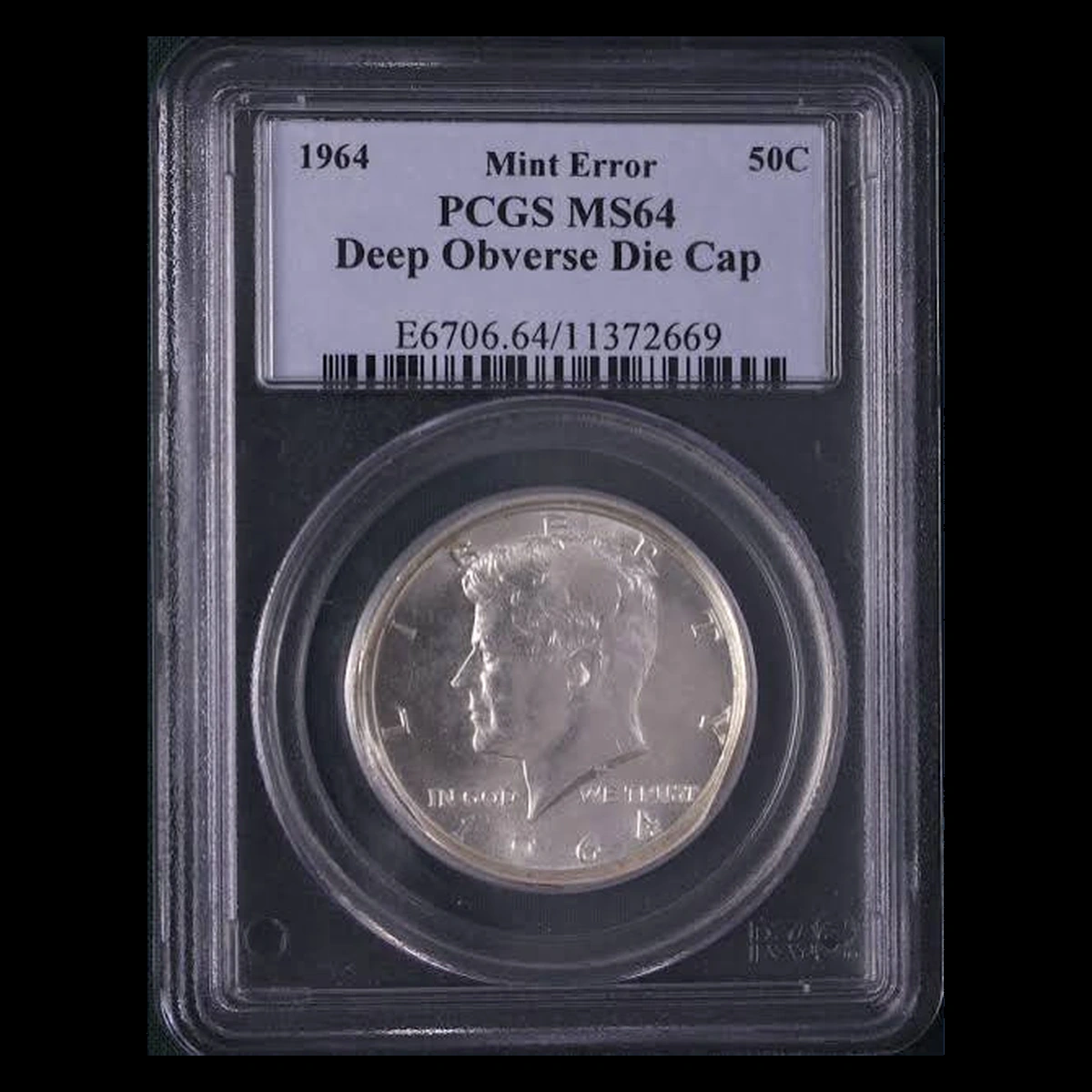
18. 1964 Half Dollar The Rim Rises into a Wall: Die Cap and Mated Cap Pair Error
A coin adhering to a die can wrap around it through continued striking and develop a cup-like wall. An obverse cap may retain Kennedy inside while reverse detail becomes rounded or weakened.
A separate reported mated pair involves two coins that worked together in the press. The single cap and pair require different evidence.
How to Identify
Photograph both faces and the raised wall without flattening the cup. Follow how original design and metal extend into it, checking for sharp bends or tool marks from later manipulation.
For a pair, compare corresponding contact marks without forcing the pieces together. Two unrelated bent coins do not establish a mated relationship.
What It’s Worth
A single genuine cap is estimated at $700–$2,500, while a documented pair is estimated at $2,000–$6,000 for both coins. Shape, preservation, and matching evidence affect the assessment.
No specific realized price is supplied for either report. The pair range is not a per-coin value.
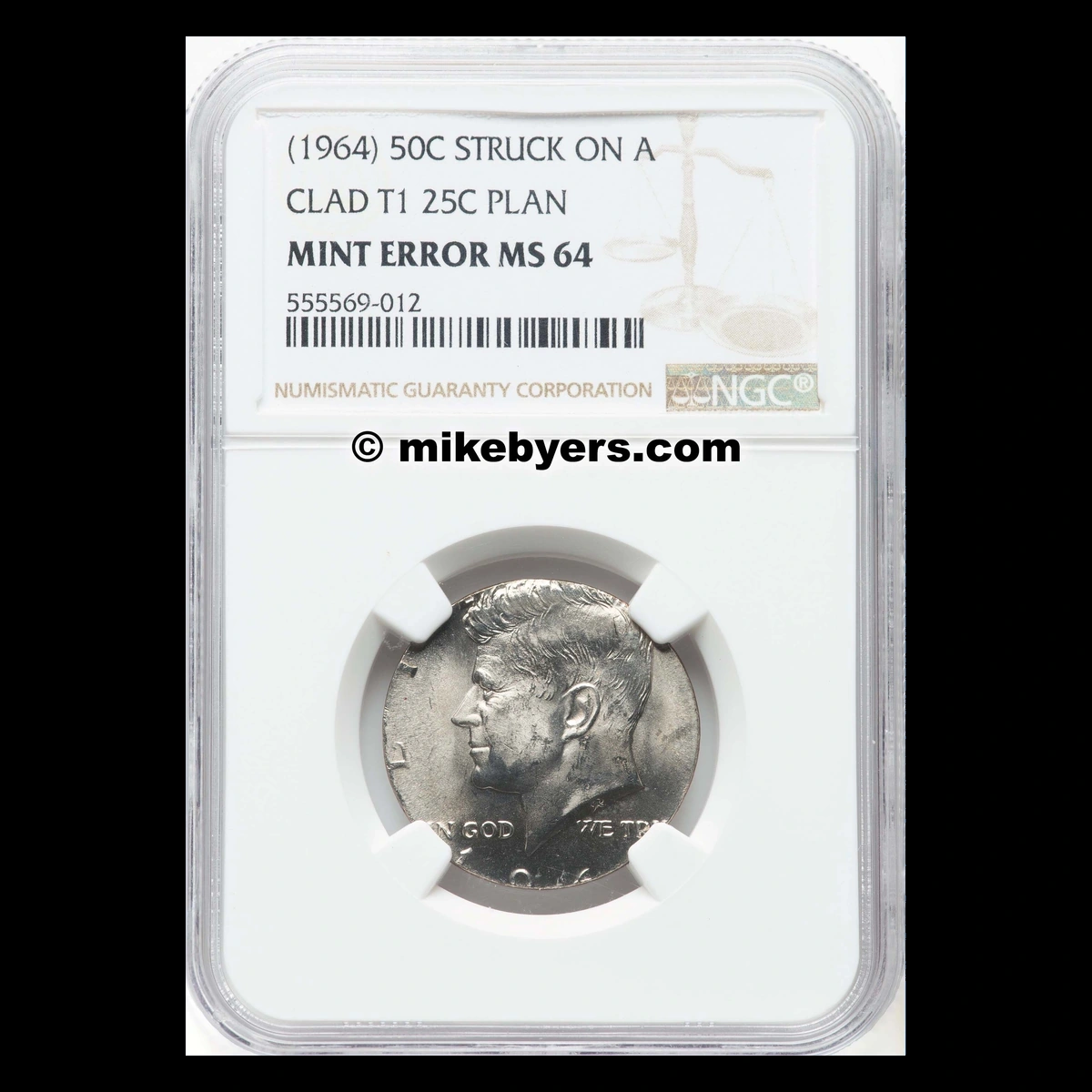
19. 1964 Half Dollar Another Denomination’s Blank Carries Kennedy: Wrong Planchets Error
Reported host blanks include silver quarters, silver dimes, nickels, and clad quarters. Their sizes and compositions create distinct errors with different amounts of surviving half-dollar design.
Some specimens also show peeling or reversed impressions. Those added features belong only to the coins that show them, and an older unspecified quarter description should not be assigned an alloy by guesswork.
How to Identify
Compare weight with possible blank standards: silver quarter 6.25 grams, silver dime 2.50 grams, nickel 5.00 grams, and clad quarter 5.67 grams. Actual strike condition and loss can affect the finished reading.
Check metal layers, diameter, and natural truncation of the design against the proposed host. Retain any readable date and reverse D without inventing missing portions.
What It’s Worth
The estimated range is $500–$6,500 across these different wrong-denomination blanks. Metal, readable identity, preservation, and genuine additional errors all matter.
No one sale prices every combination. A 1965 half on a clad quarter blank, graded PCGS MS65, sold for $1,560 in January 2018 and is most relevant to the clad-quarter type.
20. 1964 Half Dollar An Older Quarter Image Lies beneath Kennedy: Overstrike on a 1965 Quarter Error
The reported NGC MS66 preserves quarter details beneath a 1964-dated half-dollar design. Its host was an already struck 1965 quarter, not an unused quarter blank.
The host date means the event could not occur before 1965. The date relationship and the surviving older design are essential parts of the identification.
How to Identify
Match recognizable quarter lettering and picture details beneath Kennedy on more than one area of both faces. A random line cannot establish a prior denomination.
Use the clad quarter’s original 5.67 grams and approximately 24.3 millimeters as starting references, allowing for expansion. Inspect layers, seams, and edge changes for a genuine overstrike rather than alteration.
What It’s Worth
The overstrike has an estimated $2,000–$8,000 range. Clear evidence of both denominations and their unusual date relationship supports interest.
No realized price is assigned to the reported NGC MS66. A 1977 half over a 1976 nickel sold for $6,168.75 in January 2016, a different host and year used only for comparison.
Conclusion
For 1964 Kennedy errors, identify the physical mechanism before comparing prices: an opening in the coin, a raised die mark, a blocked design, and an older coin beneath Kennedy are different evidence. Their measurements must stay with the correct specimen.
Keep undated blanks and assigned-date pieces labeled accurately, and preserve fragile flaps, cracks, and cap walls. A pair’s price covers both coins, while a compound error’s sale covers one complete piece rather than separate premiums to total.