Rare 1867 Dime Errors (List & Pictures)
A reflective surface alone cannot separate the collector Proofs from the regular coins among these 1867 dime errors. Estimated whole-coin values span $600–$8,000, and a regular-strike F-102 with mirror-like surfaces sold for $4,920 in November 2024.
Compare the date, inspect the front for transferred shapes, and finish at the lower right wreath.
| Inspection area | Reported feature | Estimated whole-coin value |
|---|---|---|
| Date, especially below 1 and 7 | F-103 Proof repunched date | $600–$5,000 |
| Extra shapes on the front | F-102 obverse die clash | $1,000–$8,000 |
| Lower right wreath | F-102 reverse doubling | $1,000–$8,000 |
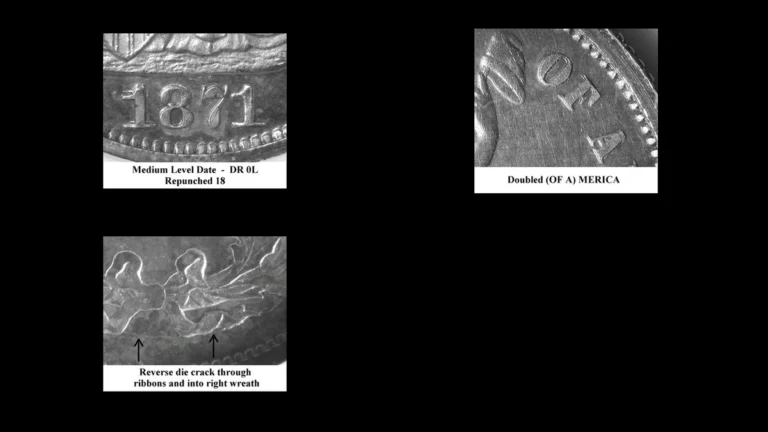
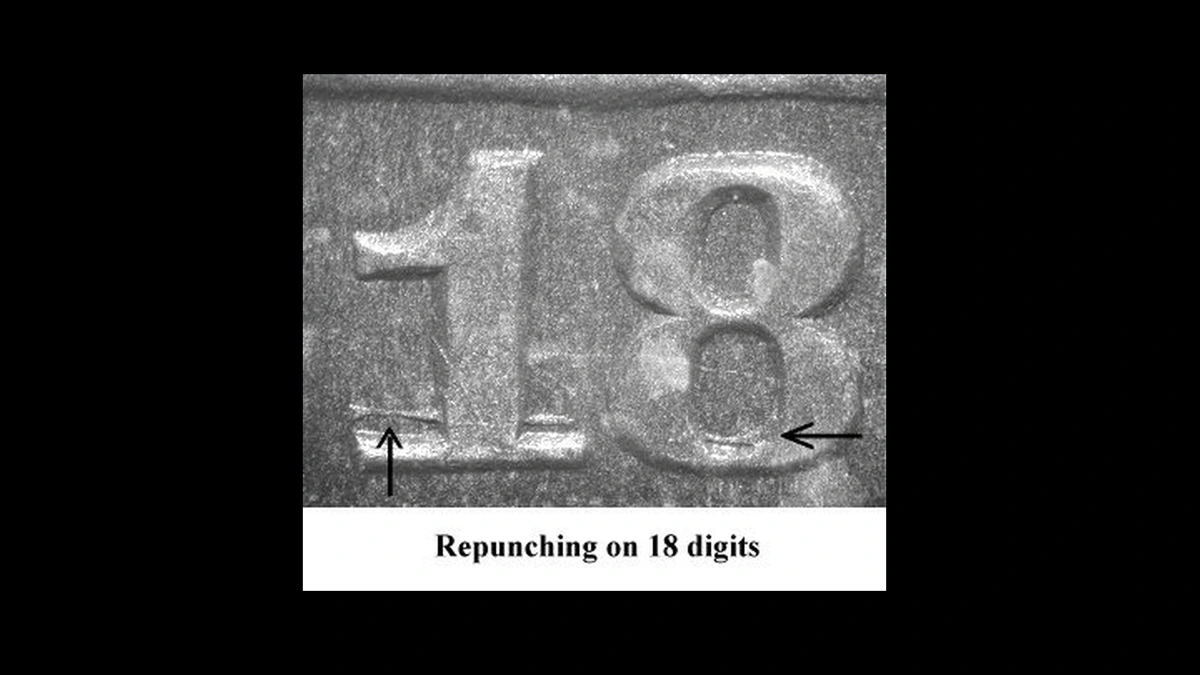
1. 1867 Dime Earlier numeral strokes remain below the date: Repunched Date Error
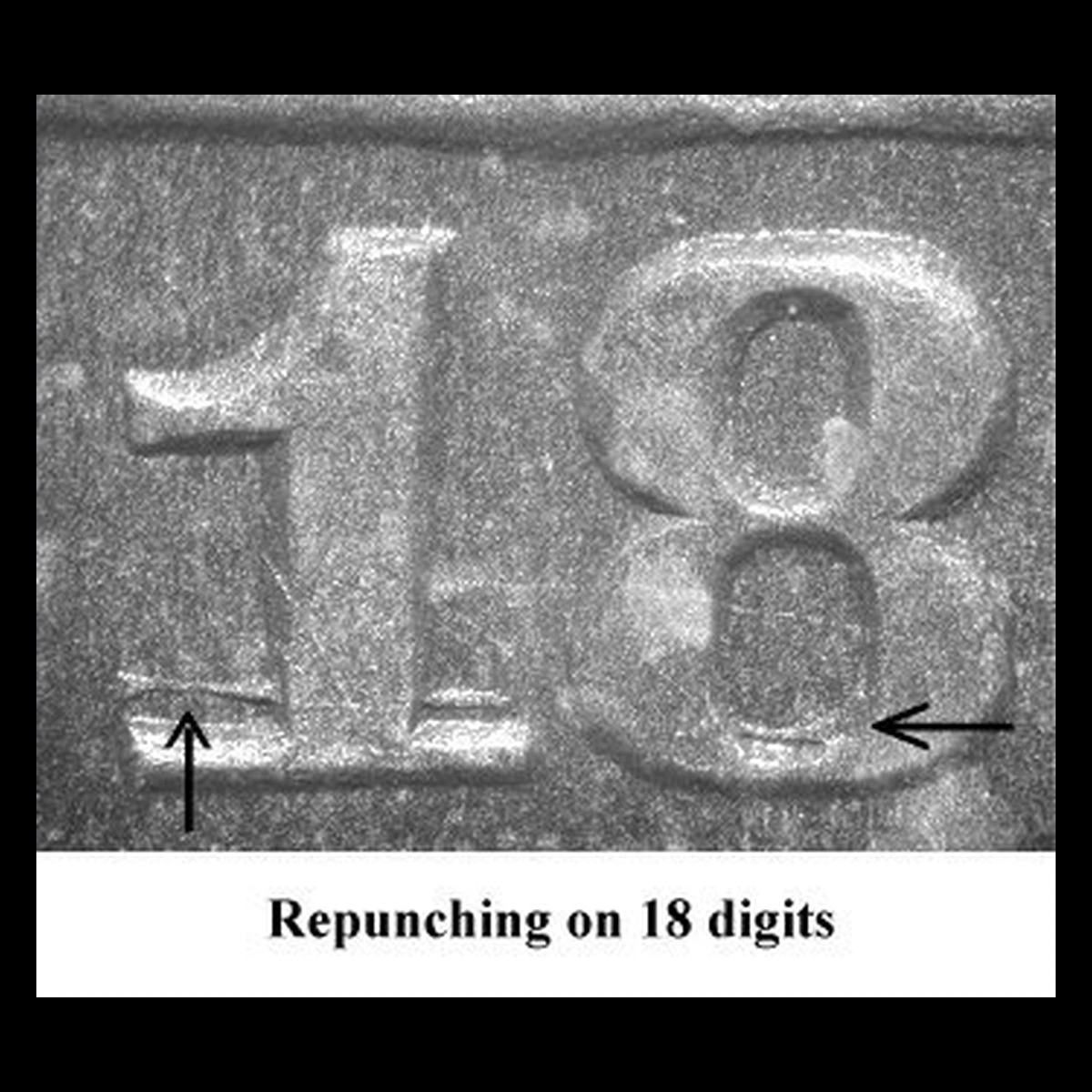
The F-103 Proof has small remnants below the 1 and 7, with additional repeated marks reported on the 8. These extra shapes should fit portions of earlier numeral positions.
They originated when the date was punched into the obverse die more than once. The die, a steel stamping tool, then reproduced the retained strokes on the coins it struck.
The variety is associated with a Proof made especially for collectors. A bright regular-strike dime does not become an F-103 Proof simply because its fields reflect light.
How to Identify
Inspect the lower edges of 1 and 7 with a 10× magnifier, then move to the reported marks on 8. Compare the complete arrangement with an attributed F-103 image, keeping all four date digits visible.
A genuine remnant should match an earlier numeral stroke in the correct position. A uniform flat shelf around several numbers can instead result from movement during striking.
Assess the date position, rim, and surfaces together against a known Proof. Reflectivity is one aspect of appearance, not a complete manufacturing diagnosis.
The Philadelphia issue has no mintmark and was made in 90% silver, with original specifications of about 2.49 grams and 17.9 millimeters. If accessible, check those measurements and the grooved edge as general supporting evidence, allowing for wear.
What It’s Worth
Matching F-103 Proofs have an estimated $600–$5,000 whole-coin range. A PCGS PR66 Cameo example with CAC quality approval sold for $3,120 in April 2018.
PR66 is a high Proof condition grade, while Cameo describes frosted design elements against reflective fields. The price therefore reflects the preserved collector coin as well as its date variety.
Fine scratches across those reflective fields can make a substantial difference. The existence of a matching date does not neutralize surface damage when comparing another specimen with that result.
2. 1867 Dime Wreath-like traces appear on the front: Obverse Die Clash Error
The illustrated F-102 has strong extra design traces on its obverse, while its reverse lacks the same visible clash evidence. Unequal marks on the two faces are compatible with this example.
A die clash begins when the opposing dies meet without a blank in place. Transferred parts of one design can then appear where they do not belong on coins struck afterward.
The F-102 date offers an additional landmark: it sits high, descends gently, and has the 1 close to the base of Liberty’s seated figure. This arrangement helps place the extra marks in the correct variety context.
How to Identify
Orient Liberty upright beside Fortin’s F-102 reference photograph. Look for obverse traces whose forms correspond to parts of the reverse wreath.
Compare shapes rather than simply counting lines. Cleaning scratches do not reproduce the same wreath elements, even when their locations look suggestive at first glance.
Check the high date and the position of its 1 after matching the transferred details. These landmarks support the identification but do not replace the requirement for visible clash marks on the actual coin.
An apparently unclashed reverse does not by itself reject the documented obverse pattern. The marks need not be equally apparent on both sides.
What It’s Worth
The estimated whole-coin range is $1,000–$8,000. An NGC MS66 Star Prooflike F-102 brought $4,920 in November 2024, and a PCGS MS64 example sold for $4,320 in July 2022.
Both grades describe unworn coins, and Prooflike describes reflective surfaces on a regular strike. It does not mean the coin was manufactured as a collector Proof.
These sales document the variety and condition levels, not visible clash marks on every auctioned F-102. Verify the marks independently before treating either result as a close comparison for a particular clash-bearing coin.
3. 1867 Dime Extra outlines border the lower right wreath: Reverse Doubling Error
Doubling is described in the lower right wreath of F-102. This reverse feature is separate from the transferred obverse shapes, although the two may occur on a single coin.
The supplied description does not establish a more specific cause for the extra outline. Calling it a confirmed doubled die would go beyond that evidence.
How to Identify
Frame the lower right wreath with its neighboring leaves and the nearby rim in view. That context makes it easier to match the location than an isolated, tightly cropped edge.
Move the light while inspecting the repeated outline under magnification. A reflection may shift away, whereas a physical raised edge remains in place.
Record whether the feature appears rounded or shelf-like without assuming those forms share one cause. Compare it with the F-102 reference and check the obverse’s high, gently descending date.
Preserve the cautious description “reverse doubling” until stronger attribution evidence establishes its origin. A variety name alone cannot turn an ambiguous outline into a proven doubled die.
What It’s Worth
An estimated $1,000–$8,000 applies to the complete F-102 dime with readable wreath doubling. The scarce Philadelphia issue and its condition contribute much of that amount.
The November 2024 result of $4,920 is a variety comparison. It is not an independent auction record for a confirmed doubled-die error.
A coin showing both this feature and an obverse clash still receives one overall valuation. Adding the two ranges would count the same underlying dime twice.
Conclusion
Separate the Proof’s repeated numeral strokes from the regular F-102’s obverse clash and reverse doubling. Reflective fields occur in the discussion of both coin types, so the design evidence and manufacturing attribution must lead the identification.
The $600–$8,000 estimates concern complete coins. Keep uncertain doubling terminology intact, and do not turn general variety sales into confirmed records for features the listings do not establish.