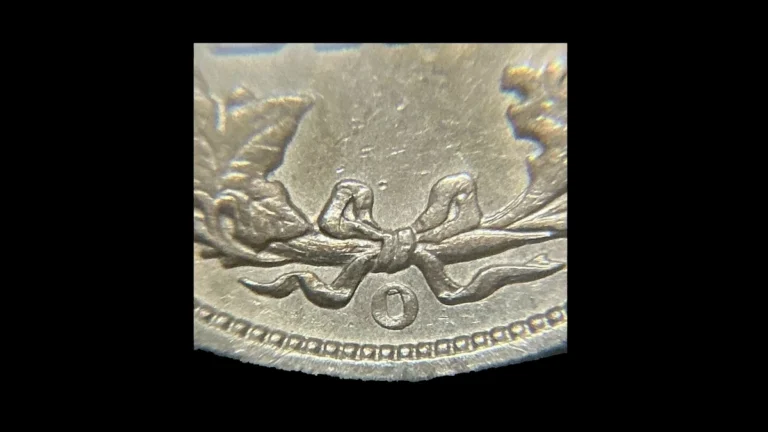
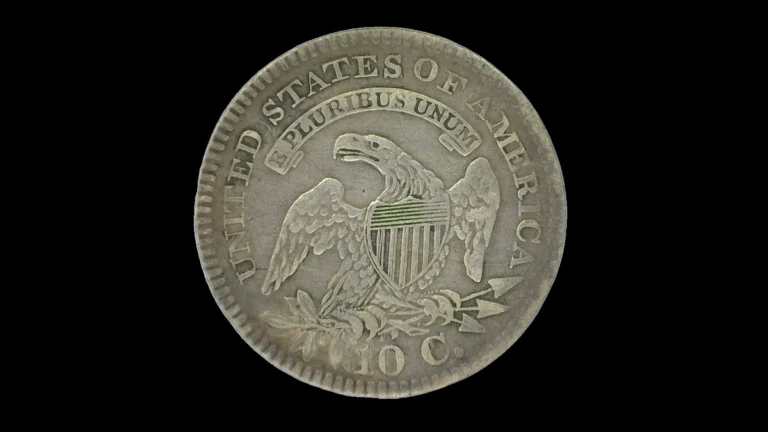
Rare 1841 Dime Errors (List & Pictures)
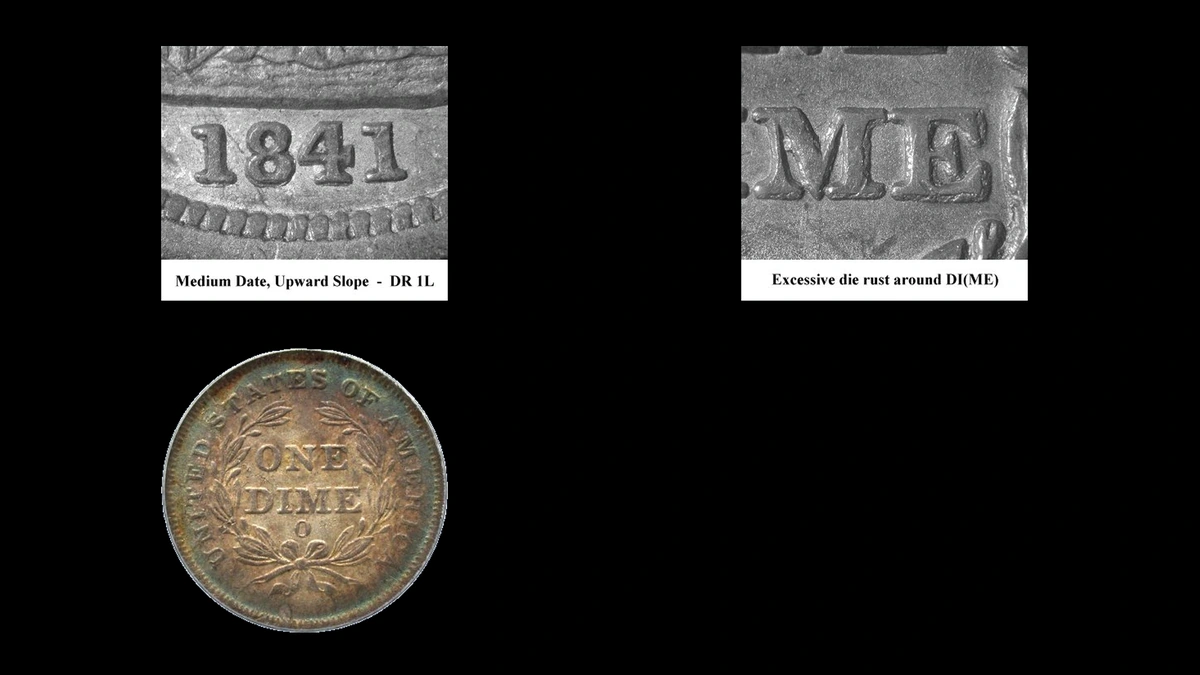
The date and a few small design areas provide useful places to search for 1841 dime errors. Estimated whole-coin values run from $30–$4,500, with an F-104 repunched-date MS65 bringing an indexed $3,840 in June 2023.
Compare the extra date strokes and seventh star first, then turn to the reverse to distinguish raised die texture and cracks from damage to the coin.
| Location | Feature | Estimated range |
|---|---|---|
| Below date digits | Repunched date | $40–$4,500 |
| Seventh obverse star | Reported filled-die weakness | $75–$500 |
| UNI in UNITED | Rusted-die texture | $30–$1,500 |
| First S in STATES | Reverse die crack | $30–$1,800 |
A normal 1841 dime weighs about 2.67 grams and measures 17.90 millimeters, with a grooved edge. Record any reverse mintmark and allow for wear before using those physical standards to assess a loose coin.
1. 1841 Dime Lower Strokes beneath the Numerals: Repunched Date Error
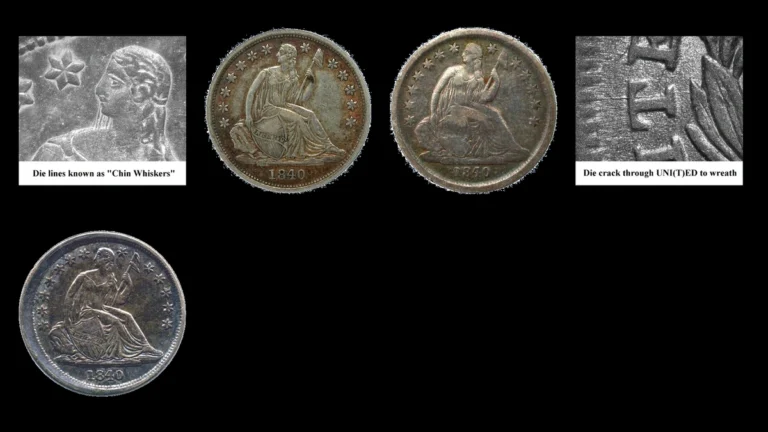
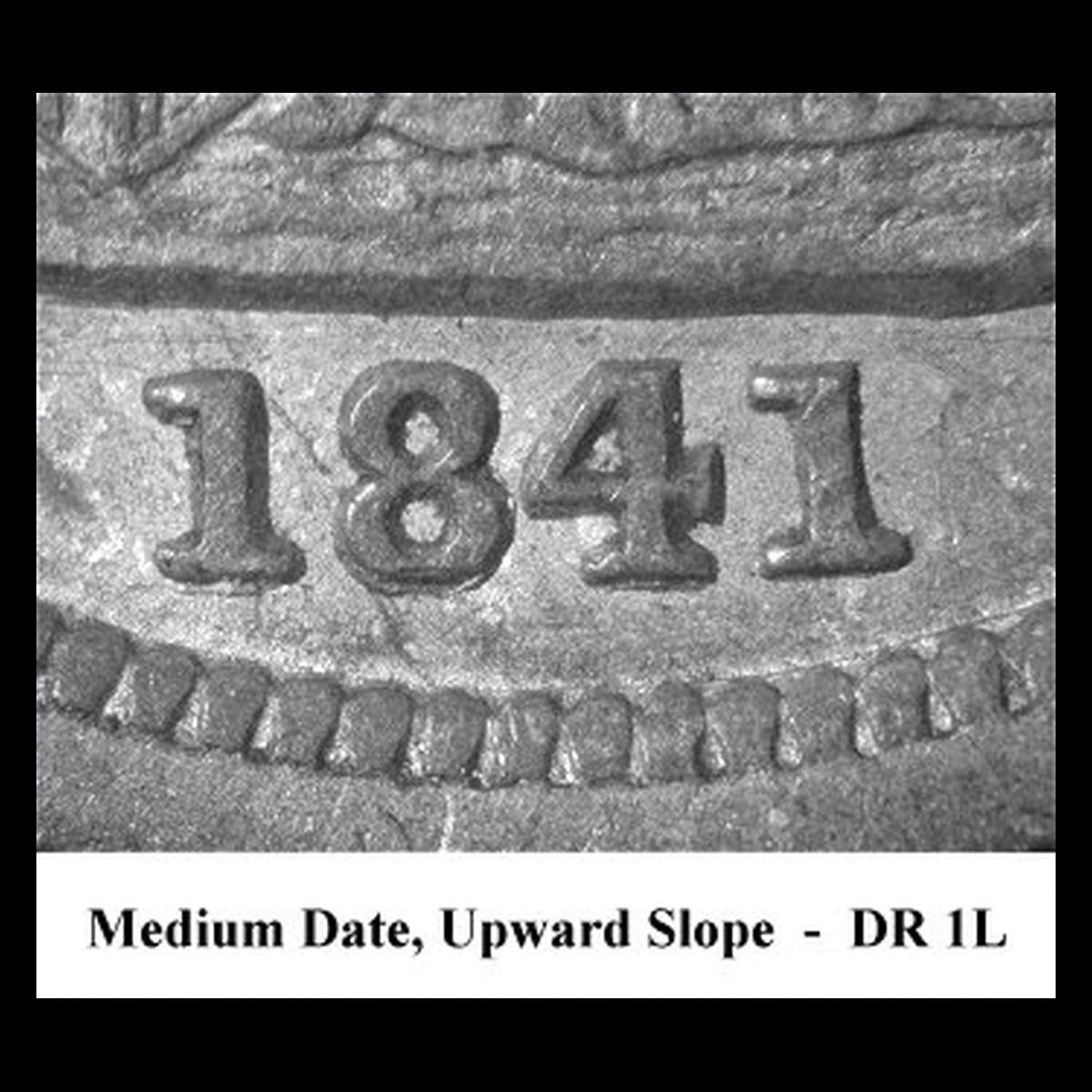
An earlier date entry survives below the finished numbers on recorded Philadelphia varieties. The punch first entered the die too low, then was placed slightly higher without erasing every earlier stroke.
Some patterns have remnants under 184, while others show them beneath 841. These are different date arrangements rather than interchangeable descriptions of one example.
How to Identify
Photograph the whole date straight on, then follow the raised pieces under each affected digit. They should fit portions of numerals in a consistent lower position.
A single shelf or random cut is insufficient, and repunching the date does not require a second Liberty portrait. Compare the reverse pairing too, particularly when choosing between similarly described front varieties.
What It’s Worth
Estimated values are $40–$4,500 from worn examples through especially well-preserved coins. The auction index records an F-104 PCGS MS65 with CAC approval at $3,840 in June 2023 and an F-103 PCGS MS64 at $1,020 in November 2024.
Both results concern unworn coins, but the grades and date patterns differ. Visible extra numerals do not give a heavily worn example the preservation value of either specimen.
2. 1841 Dime One Star Much Weaker than Its Neighbors: Filled-Die Report Error
A guide describes the seventh obverse star as weak or missing and suggests a filled die. Grease or other material blocking that small die recess could prevent the star from forming normally during the strike.
The supplied account does not identify the mint or grade of its example. The explanation involves an obstruction under striking pressure, not melted silver.
How to Identify
Compare the seventh star’s points with the neighboring stars and nearby Liberty detail. Uniform flattening can reflect circulation wear, whereas a localized blocked detail should contrast with better-preserved surroundings.
Use angled light to look for scratches, a polished patch, or displaced metal where a star might have been removed later. A faint star alone cannot establish the suggested minting cause.
What It’s Worth
A genuine circulated blocked-star example is estimated at $75–$500 for the complete dime. An ordinary PCGS AU58 appears at $216 in a January 2024 auction index, a condition comparison rather than a sale of the missing-star coin.
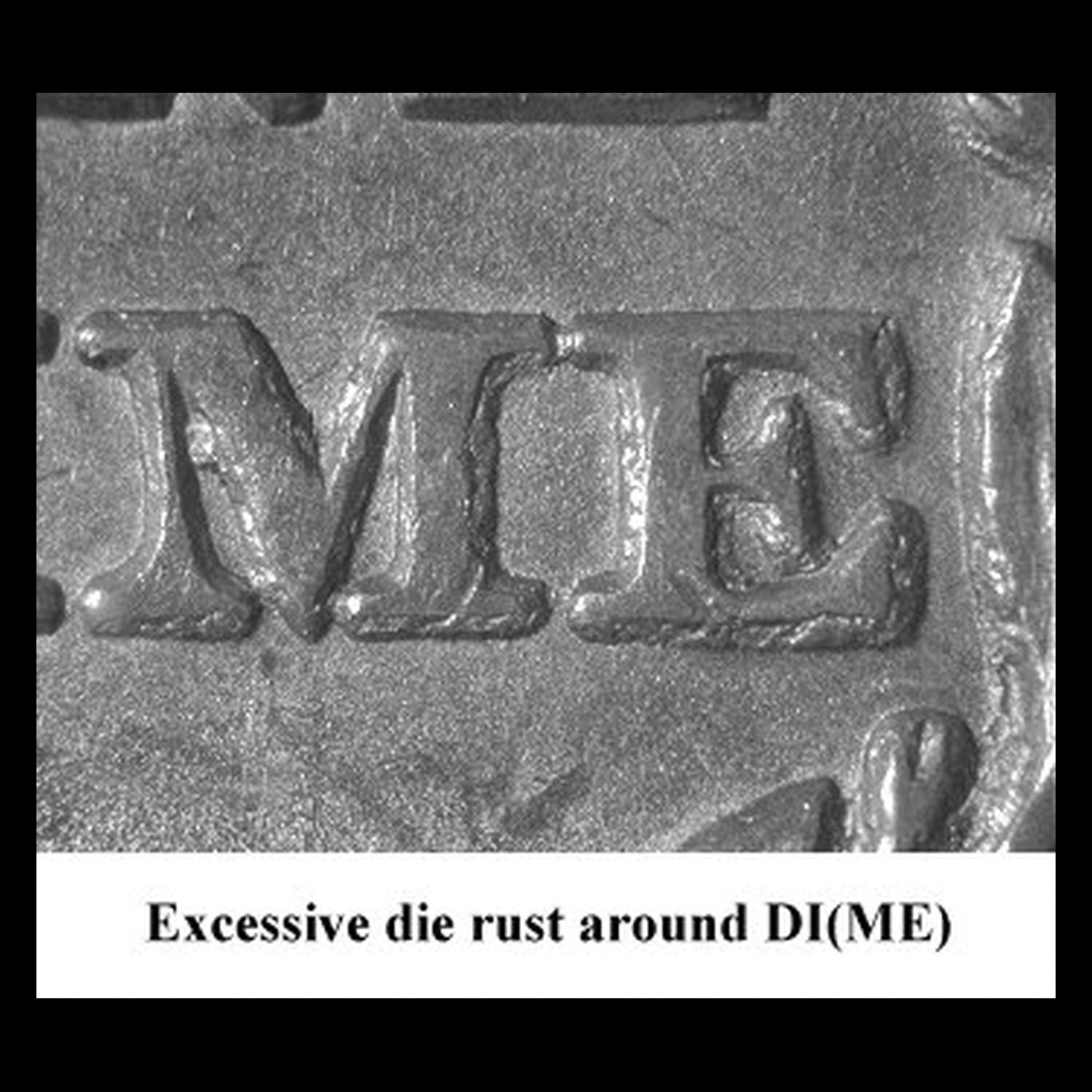
3. 1841 Dime Raised Grains around UNI: Rusted-Die Texture Error
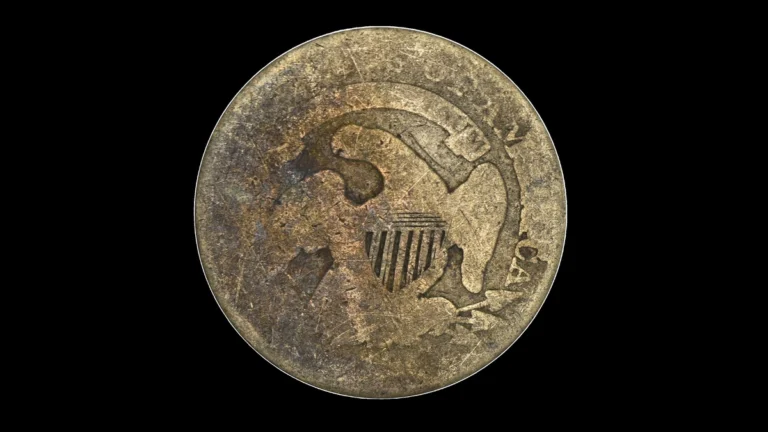
The F-105 Philadelphia reverse shows tiny raised bumps around UNI in UNITED. Rust had pitted the steel die, and the silver entered those cavities when the dime was struck.
How to Identify
Direct light across the lettering to determine whether the texture rises above the field or consists of holes in the coin. Corrosion attacking the dime after manufacture can remove metal and produce sunken pits instead.
Compare the distribution with the F-105 photographs, then confirm the extra date pieces beneath 841 on the front. A dark or generally rough surface without those matching relationships is not enough.
Change the light instead of scraping residue or toning away. The small raised pattern and its associated date details are evidence worth preserving.
What It’s Worth
A matched F-105 is estimated at $30–$1,500 from worn through lower unworn grades. An ordinary NGC MS63 brought an indexed $720 in December 2024, but that record does not identify an F-105 rusted-die sale.
Clear die texture may appeal to a specialist, while actual corrosion can reduce value. The two rough-looking surfaces should not receive the same description.
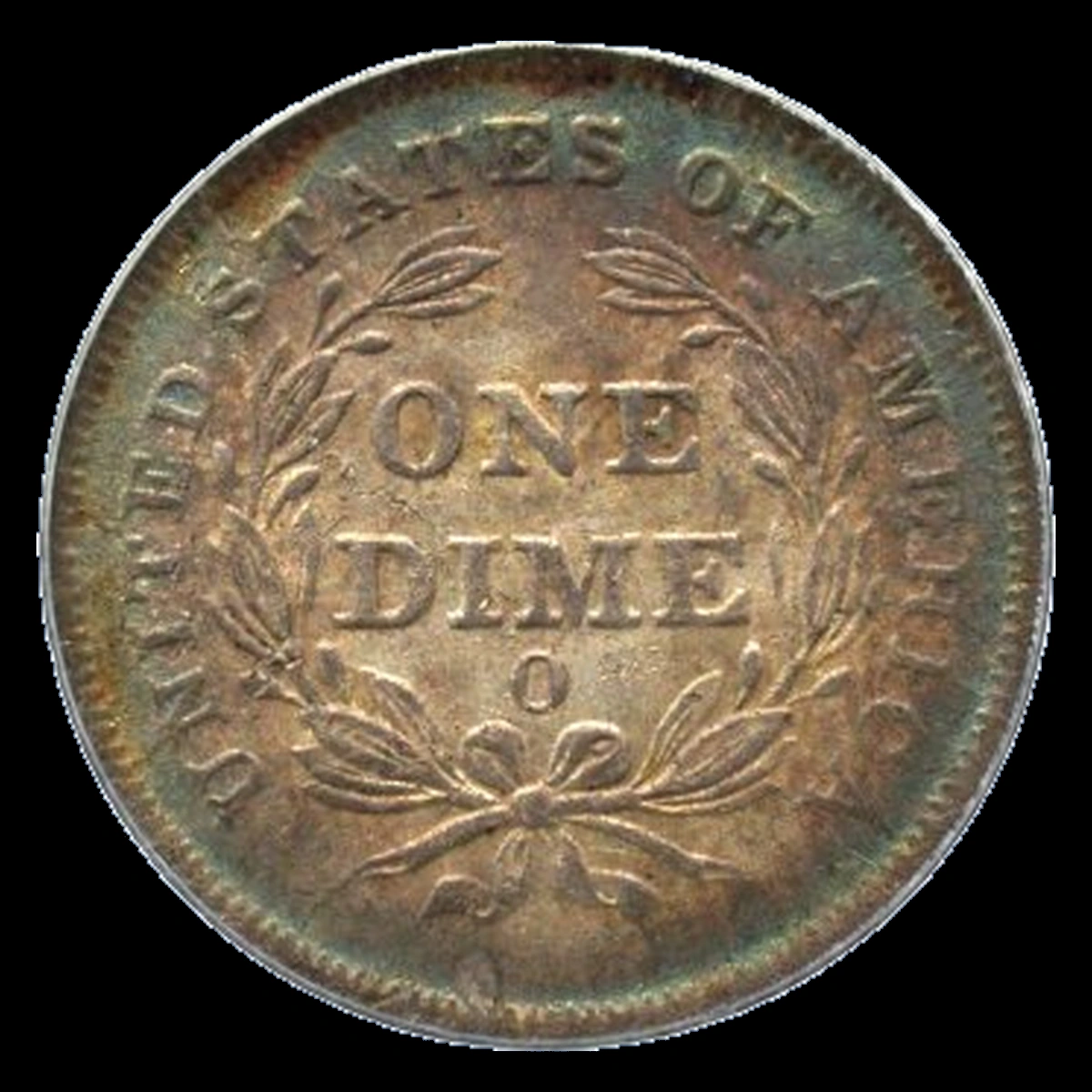
4. 1841 Dime A Raised Line Crossing S: Reverse Die Crack Error
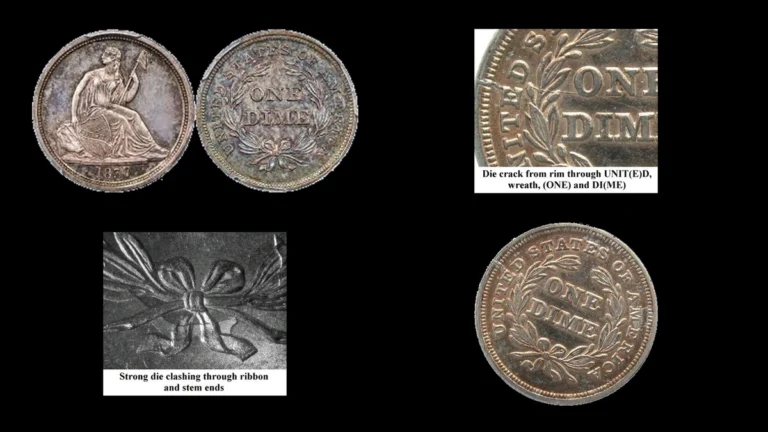
The first S in STATES is crossed by a thin raised line on the F-103 reverse. An opening in the cracked die filled with silver and produced the ridge.
The matching front has earlier date pieces beneath 184. Those remnants were created during die preparation, while the reverse crack records subsequent damage to the striking tool.
How to Identify
Trace the line through S under side lighting, checking that the feature itself stands above the silver. A scratch can have pushed-up edges but still cuts a trench through the original surface.
Confirm the Philadelphia pairing with its date remnants and absence of an O below the wreath. The date match supports F-103, but the reverse still needs its own visible crack.
What It’s Worth
A complete F-103 with visible cracking is estimated at $30–$1,800. The indexed November 2024 MS64 result of $1,020 values the repunched-date variety as a whole, and its title does not state how strongly the reverse crack appeared.
Do not treat that amount as a separately measured crack premium. Wear, surface marks, and the clarity of the actual ridge remain important to comparison.
Conclusion
The four inspection areas answer different questions: lower date strokes identify repunching, an isolated weak star may indicate blockage, raised grains can record die rust, and a ridge through S can reveal cracking. Confirm the associated die pairing where one is known.
Preserve the surfaces and compare whole coins of similar condition, keeping ordinary auction comparisons distinct from sales explicitly attributed to the variety.