Rare 1837 Liberty Seated Dime Errors (List & Pictures)
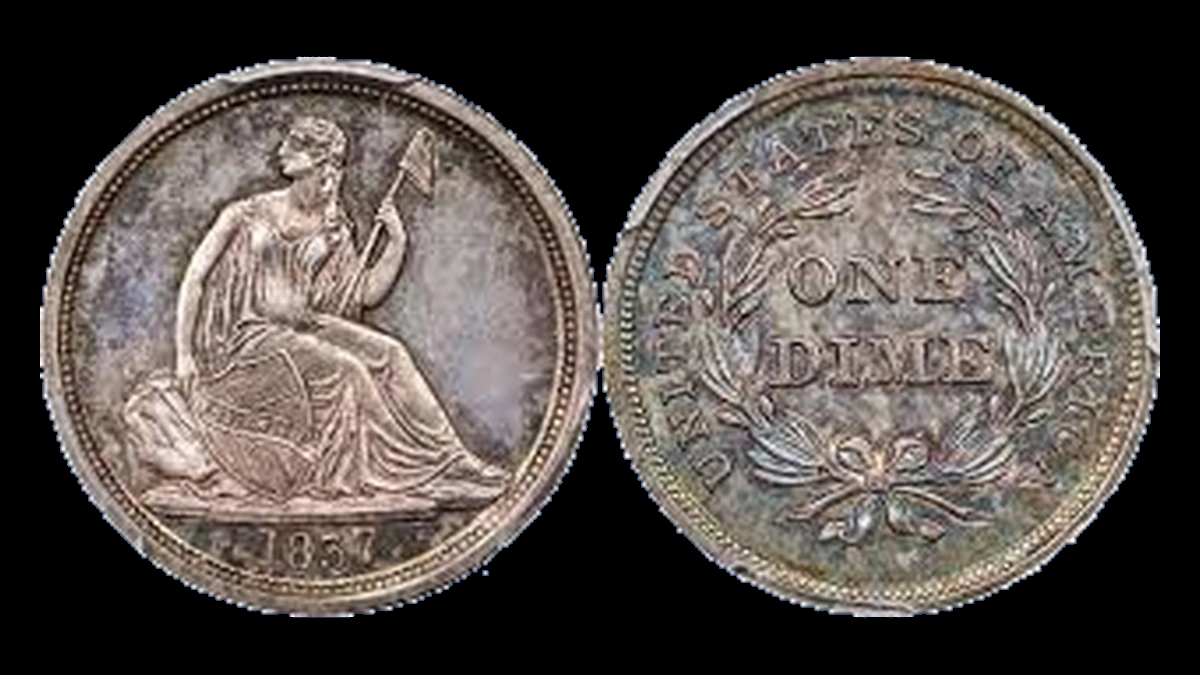
An 1837 Large Date dime with a repunched 7 brought $10,370 in June 2026, graded CACG MS65. Estimated whole-coin values for 1837 Liberty Seated dime errors range from $100 to $12,500.
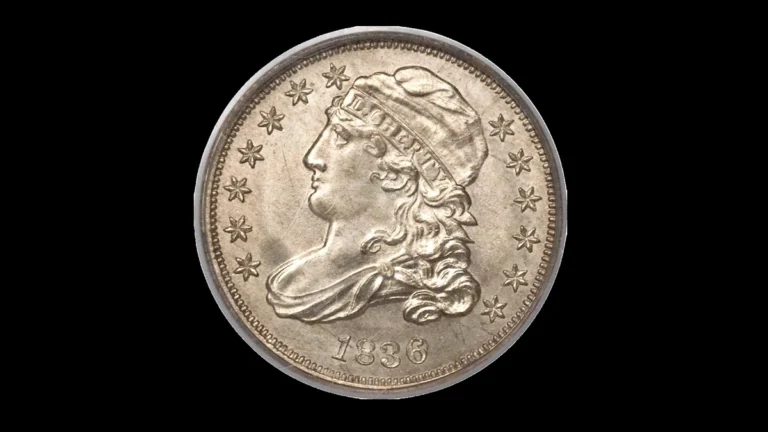
The seated figure normally has no surrounding stars; that is part of the design. Inspect the date, surface lines, and alignment while keeping this 17.90-millimeter, 2.67-gram type separate from the larger 1837 Capped Bust dime.
| Inspection point | Feature | Estimated whole-coin range |
|---|---|---|
| Lower-left base of 7 | Repunched date | $100–$12,500 |
| Front or reverse crack routes | Die cracks | $100–$5,000 |
| Near Liberty or below reverse bow | Die clash | $100–$5,000 |
| Orientation after flipping | Rotated dies | $100–$2,500 circulated |
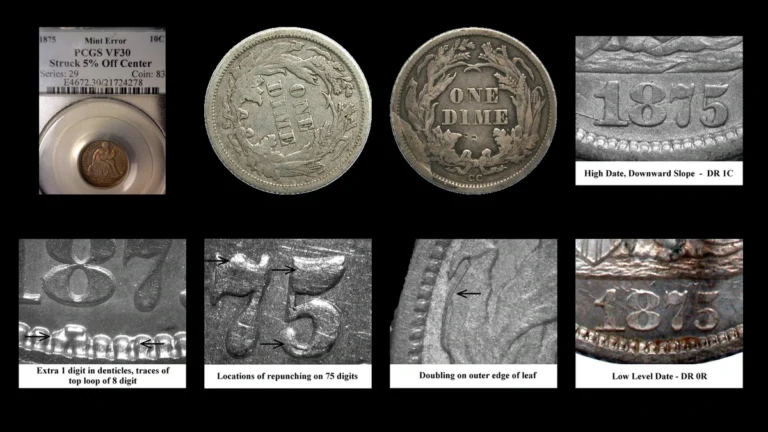
1. 1837 Dime A tiny extra stroke beside 7: repunched date Error
The Large Date 7 has a normal flat top and, on the relevant variety, a small repeated trace at the left of its base. The flat top identifies a date style; the extra lower trace is the evidence for repunching.
Part of an earlier date-punch entry survived after the date was entered again into the die. F-101a illustrates the feature, with later examples belonging to the same die family.
How to Identify
Keep the entire 7 in view while focusing on its lower-left base. Match the small raised remnant to a confirmed example rather than choosing any mark next to the digit.
A flat shelf or a cut beside the number has a different appearance from the surviving numeral outline. Wear and later work on the die may weaken the trace, so the ordinary flat top is not a substitute for seeing it.
Other cracks or clash marks can support identification of a die stage, but they cannot prove that the repunched detail remains visible. Record the actual date evidence separately.
What It’s Worth
Estimated whole-coin values span $100–$12,500 from worn through exceptional Large Date examples. The tiny repeated stroke does not by itself explain the upper end.
A June 2026 Stack’s Bowers sale brought $10,370 for an F-101b graded CACG MS65. That was an exceptionally well-preserved unworn coin with the repunched-date variety identified.
Use comparable surfaces and wear when considering a lower-grade coin. A cleaned or heavily worn specimen should not inherit this result solely from the extra stroke.
2. 1837 Dime Raised lines converging or crossing words: die cracks Error
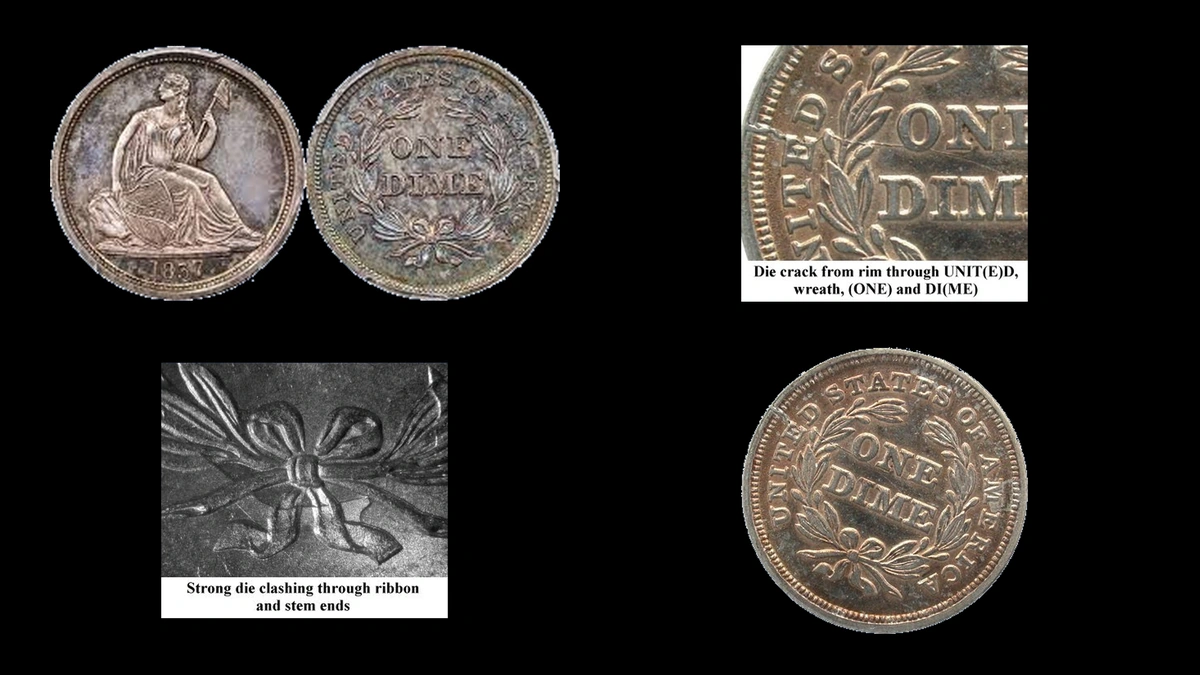
The Large Date F-101c has front-side cracks approaching the area behind Liberty’s knee from around four and seven o’clock. Another line appears near one-thirty.
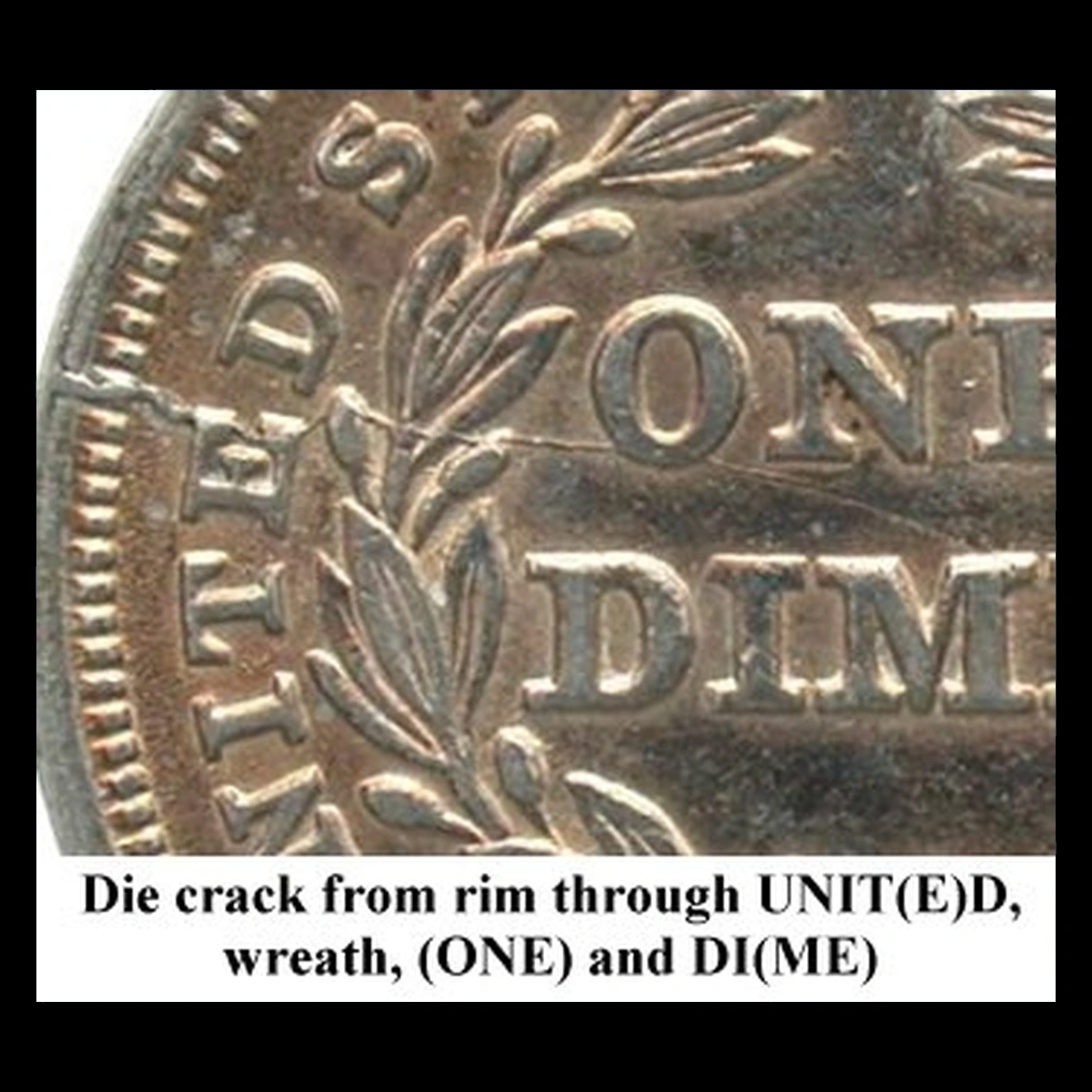
A Small Date F-103a has a different reverse route, entering from the left rim and crossing the lettering and wreath. These raised ridges form as metal enters openings in a cracked die.
How to Identify
Select the date style before tracing the cracks. The converging front-side lines belong to the Large Date comparison, while the cross-reverse line belongs to Small Date F-103a.
For F-103a, follow the line from the left rim through E in UNITED, across the wreath and O in ONE, and toward ME in DIME. The specialist reference photograph provides the route.
Low-angle light should reveal a ridge standing above the coin. A scratch cuts into the surface, and a dark line without visible relief is not enough to decide.
Inspect the edge grooves where a line meets the rim for unrelated damage. A crack in the die does not require a physical split in the coin.
What It’s Worth
The estimated whole-coin range is $100–$5,000 for worn through well-preserved unworn examples. Crack visibility matters alongside preservation and surface quality.
GreatCollections records an F-101c with fan-shaped front cracks and a rotated reverse at about $619. That result covers one coin with both features, rather than a separate payment for each branch.
The $10,370 F-101b result belongs to another die stage and much stronger preservation. It should not replace a condition-appropriate comparison for an F-101c crack specimen.
3. 1837 Dime Traces of the opposite face: die clash Error
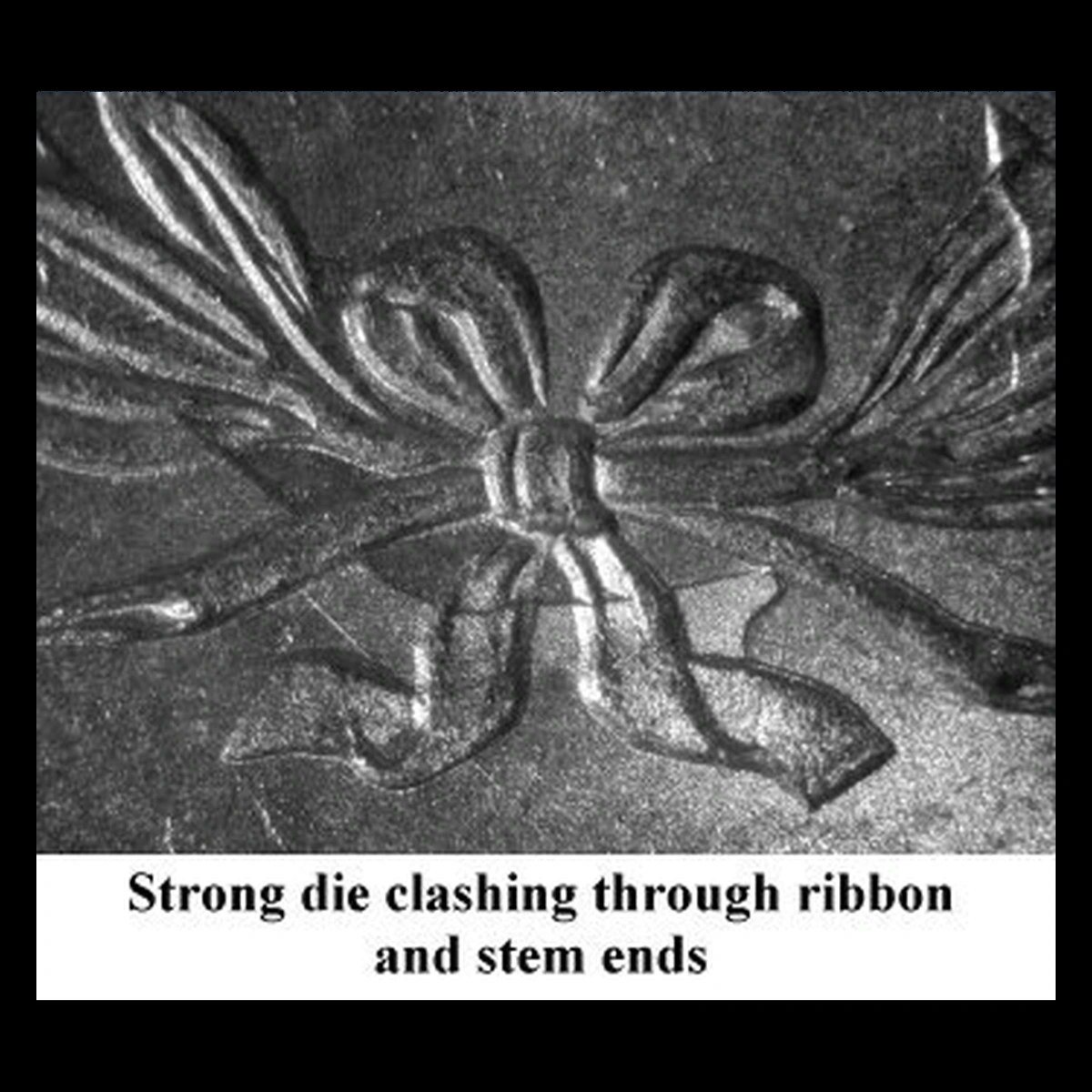
On Large Date F-101c, unwanted shapes appear near Liberty’s upper body and behind her. A separate Small Date example has a bandlike feature beneath the reverse bow.
A clash occurs when the dies meet without a blank between them. The contact can mark the tools with parts of the opposite design that transfer to later coins.
How to Identify
For the Large Date example, compare the open areas around the upper figure with an attributed F-101c. For the Small Date example, move to the reverse area below the bow.
Look for a contour that relates to the opposing design. Random scratches and intended design lines do not establish that relationship merely because they occupy the same area.
Do not combine the separate examples into a required pattern on one coin. The thickness or darkness of a band also cannot establish how many die collisions occurred.
What It’s Worth
Whole coins with clear clashes have an estimated range of $100–$5,000 from worn through well-preserved unworn examples. Attractive original surfaces can matter more than the number of visible lines.
The supplied $10,370 sale is an F-101b MS65, not a separate price for the F-101c clash. Similar date style and condition are needed before an auction figure becomes a useful comparison.
4. 1837 Dime The reverse leans left: rotated dies Error
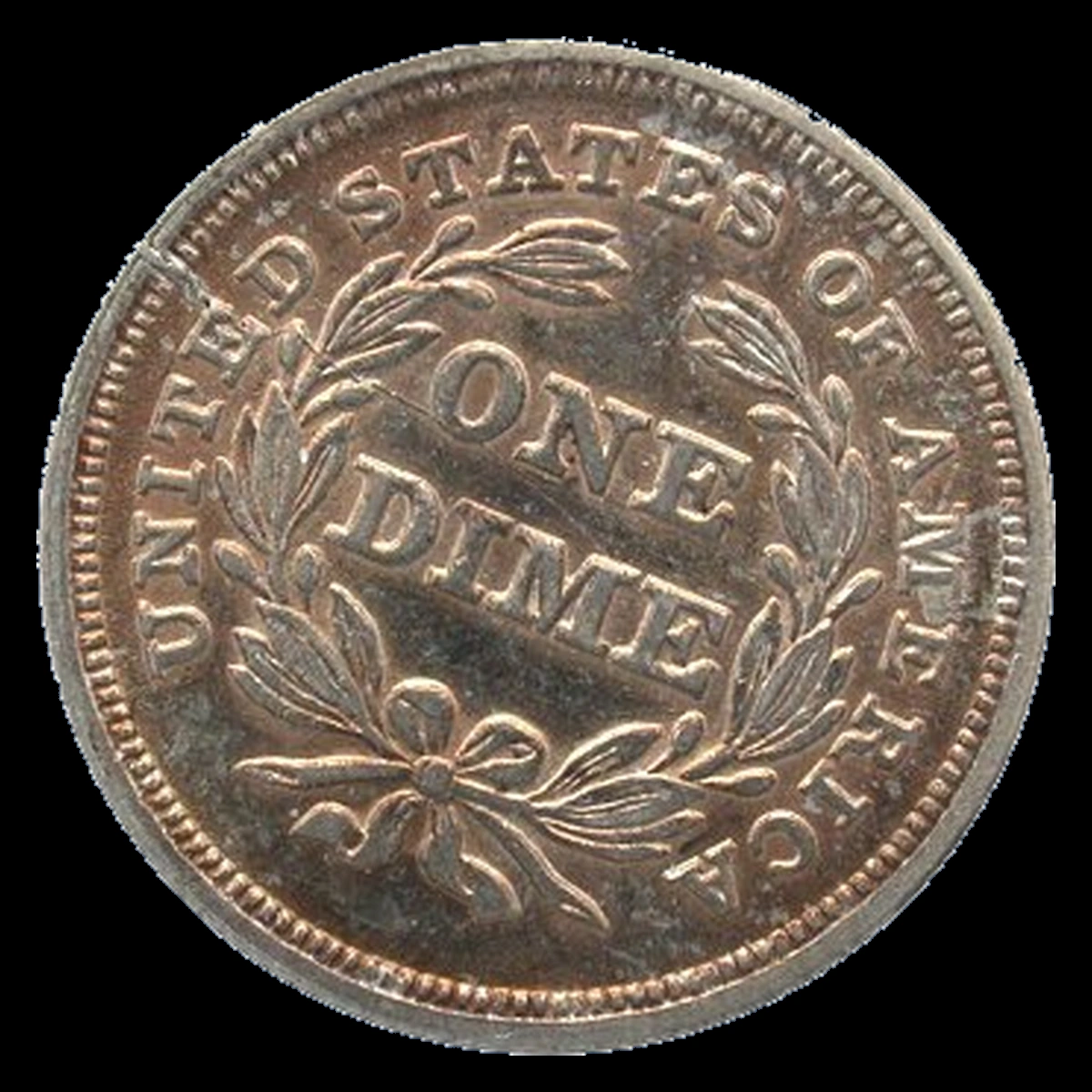
About 23 degrees of leftward rotation is recorded for the Large Date F-101 group and a Small Date F-103a example. Other Small Date varieties can have normal alignment.
This feature concerns the angle between the dies. It can exist even when the designs themselves are centered on the blank.
How to Identify
Hold the seated figure upright and flip the coin top to bottom without twisting sideways. Repeat the movement to see whether the reverse keeps the same leftward lean.
Compare it with a vertical reference or measure from photographs that preserve the face-to-face orientation. Images independently turned upright cannot demonstrate rotation.
Keep the viewing direction consistent with the reference when describing left or right. Also check the edge for seams or alteration if the alignment appears unusual.
The year alone does not identify a rotated example. The date style, die variety, and actual repeated flip test should agree.
What It’s Worth
Worn through lightly worn examples with the recorded rotation have an estimated whole-coin range of $100–$2,500. The modest tilt is only one part of their appeal.
The CACG MS65 F-101b sold for $10,370 also has the repunched date described earlier. Its price belongs to a higher condition group and is not a rotation premium to add to a circulated dime.
Conclusion
Use the date to choose the correct comparison, then examine the specific route or outline of each feature. Large Date and Small Date coins can show different cracks and clashes despite sharing the year.
A controlled flip answers the separate alignment question. The highest supplied sale demonstrates exceptional whole-coin quality; it does not make every repeated stroke, raised line, or tilted reverse a five-figure find.