Rare 1855 Dime Errors (List & Pictures)
An 1855 dime with a doubled date sold for $16,800 in August 2023, but it was a rare Proof made for collectors. Ordinary coins can have related doubling without belonging in that price group.
For 1855 dime errors, the supplied estimates run from $50–$5,000 for circulation strikes, with $15,000–$40,000 for the separate Proof group. Check the front details, the edge, and finally how the two faces line up.
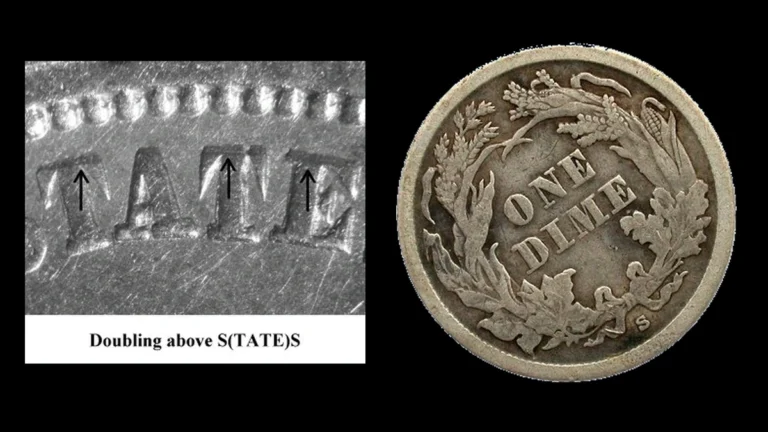
1. 1855 Dime Repeated Date or Shield Edges: Doubled Die Error
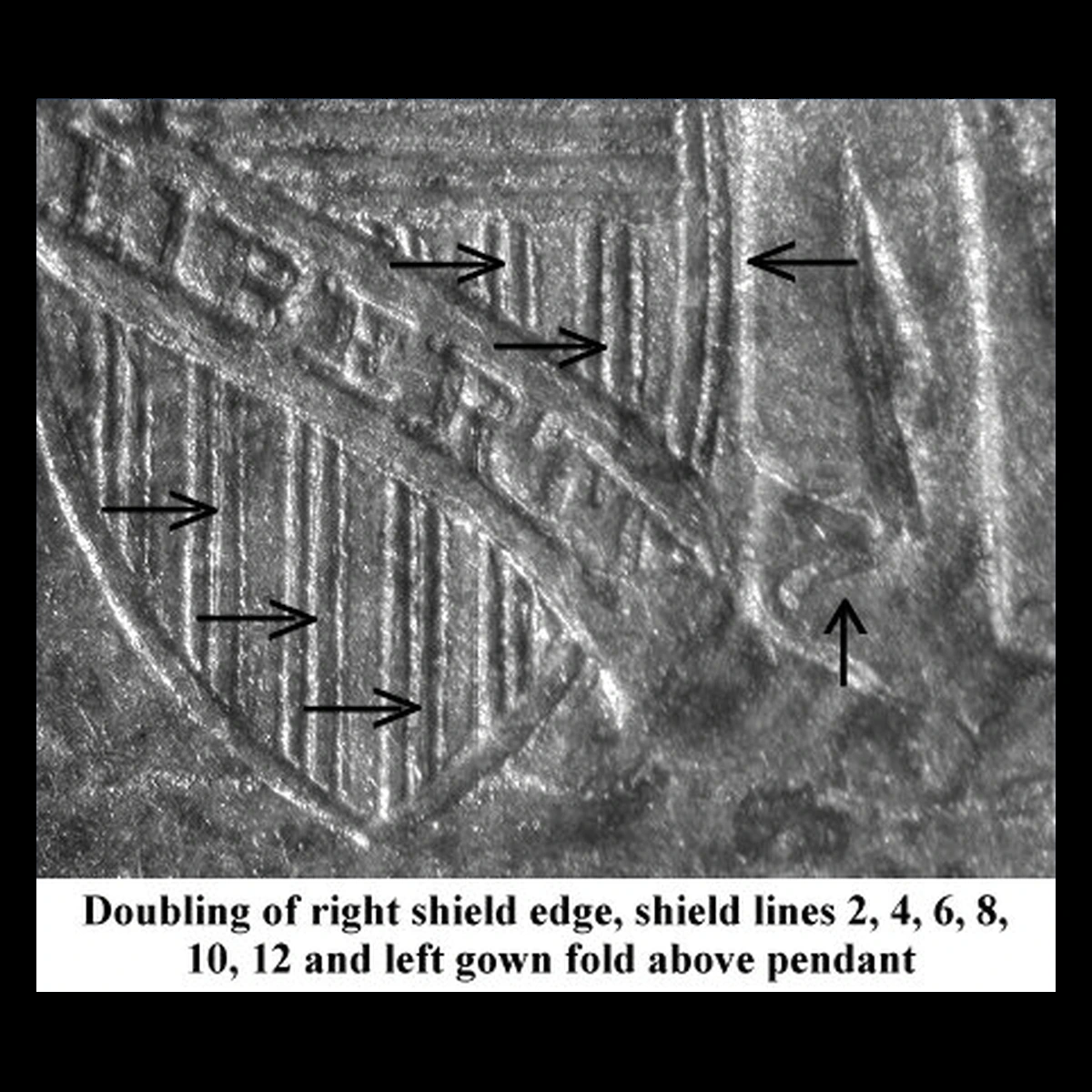
Two different doubling patterns appear in the 1855 material. One repeats the right edge of Liberty’s shield; another doubles the date and belongs to a die used for rare Proofs and later ordinary coins.
A die is the steel tool that stamps the design onto the coin. Here, the date and arrows were already in the design copied onto the tools, so the extra date outlines are not individual digits punched twice into a working die.
How to Identify
For the shield pattern, find a rounded repeated line along the right outer edge. For the date pattern, compare the doubled numerals with the correct reference instead.
A doubled date does not settle whether the coin is a Proof. That decision needs the complete surfaces, quality of the strike, and matching die details.
Look at the entire dime under gentle light before concentrating on the tiny feature. A polished circulation coin may shine, but polishing cannot turn it into a specially made Proof.
What It’s Worth
$100–$2,000 is the estimate for worn through lower-grade unworn doubled dies. Rare Proofs have a separate comparison range of $15,000–$40,000.
A PCGS PR64 Cameo coin with CAC approval realized $16,800 in August 2023 in the supplied Proof auction record. Cameo means the raised design is frosted against a reflective background.
Its price reflects the scarce Proof issue and its condition together. It is not a ready-made value for every ordinary 1855 dime with date doubling.
2. 1855 Dime Raised Lines Join the Date and Stars: Die Cracks Error
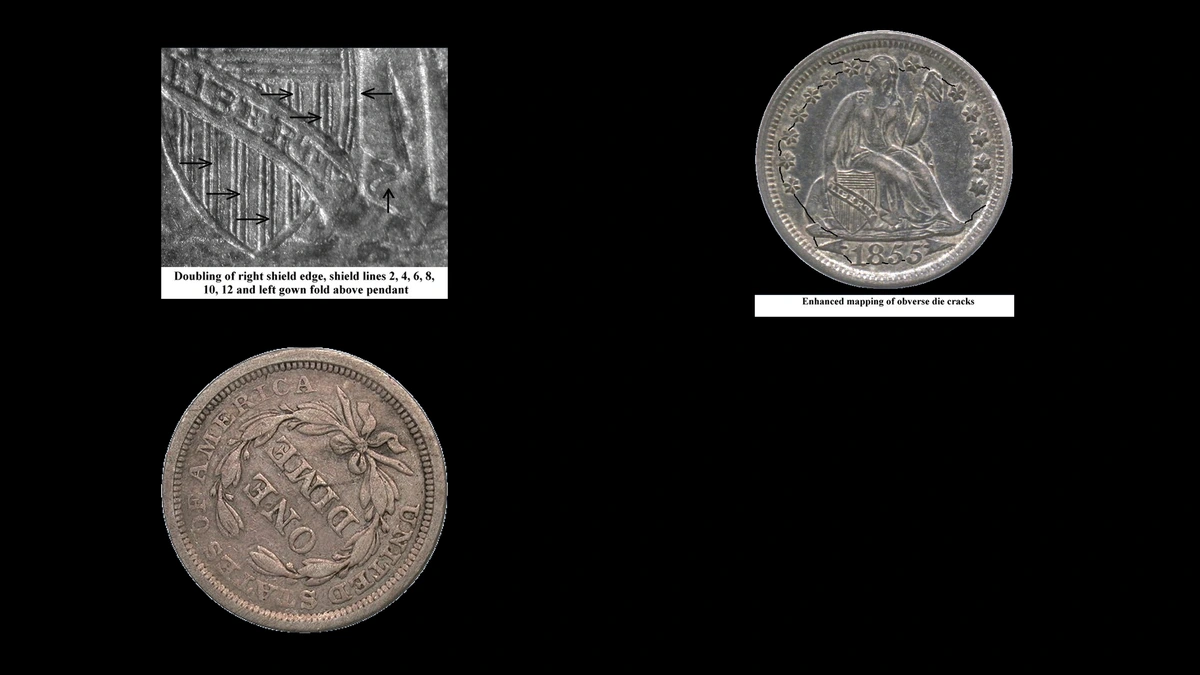
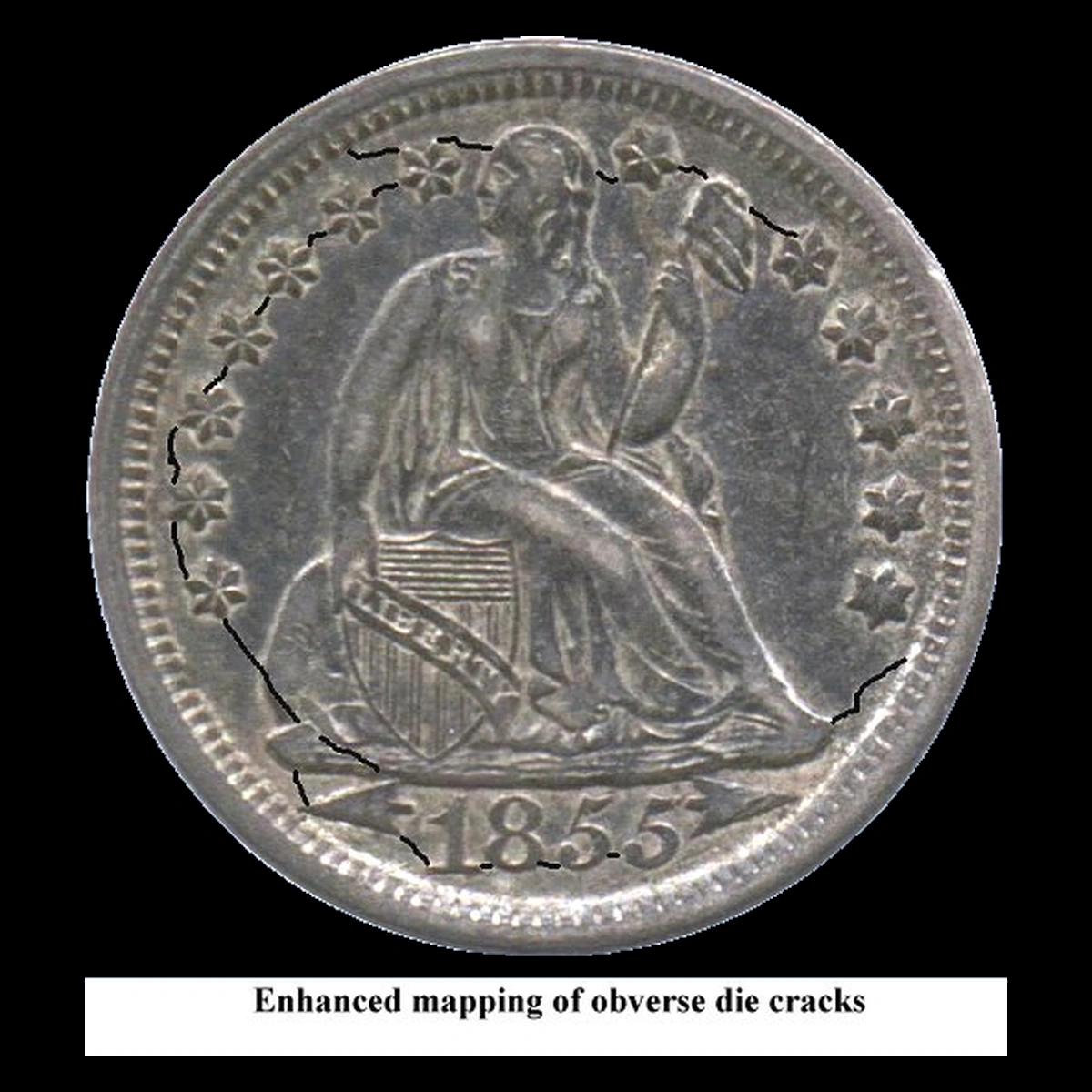
The illustrated crack network starts around the lower ends of the date, passes through the left arrow and base, and continues toward stars 1–7. Other lines run around Liberty’s head, star 8, the cap, and star 9.
These are ridges left by cracks in the stamping tool. The silver entered those openings during striking; the coin itself did not split along the same routes.
How to Identify
Begin at the date and follow each line instead of trying to recognize the whole network at once. Side lighting helps show that a genuine crack line stands above the coin.
A scratch has a cut in its center, sometimes with rough metal pushed up beside it. Fine border marks on the reverse can help match the pictured die, but they are supporting details rather than the main crack feature.
Confirm that the reverse says ONE DIME. The smaller half dime has a similar seated figure and can cause confusion in enlarged photographs.
What It’s Worth
$50–$500 is the estimated range for worn examples with a recognizable crack network. More surviving detail and cleaner surfaces generally support stronger prices.
Fortin’s pictured example is EF45, a worn coin with substantial detail, and has no supplied sale result. His table assigns no separate premium to this cracked-die version, so ordinary date-and-grade value remains the starting point.
3. 1855 Dime Shield Lines Appear behind ONE: Die Clash Error
Horizontal shield lines and lettering traces behind ON in ONE are the key clues on this reverse. They belong to the front design and should not normally appear there.
The dies once hit each other without a coin blank between them. They picked up pieces of the opposite design, which later appeared on coins struck with the damaged tools.
How to Identify
Study the area behind ON for recognizable shield lines, then look to Liberty’s right on the front for faint reverse-design traces. The marks should make sense as parts of the opposite face.
Fortin’s pictured clash provides the pattern to compare. A small line within the shield helps identify the die, but that line is not itself the clash.
Random scratches do not reproduce the other face’s design. Photograph the whole front and back so each faint mark can be understood in context.
What It’s Worth
$100–$1,500 is the estimate for worn through lower-grade unworn examples with visible clashes. The reference coin is MS63+, meaning unworn with visible marks.
No sale price is supplied for that illustrated coin, and Fortin lists no separate premium for the clash. Its unworn condition can account for much of its value before the transferred lines are considered.
4. 1855 Dime Part of the Rim Is Missing: Clipped Blank Error
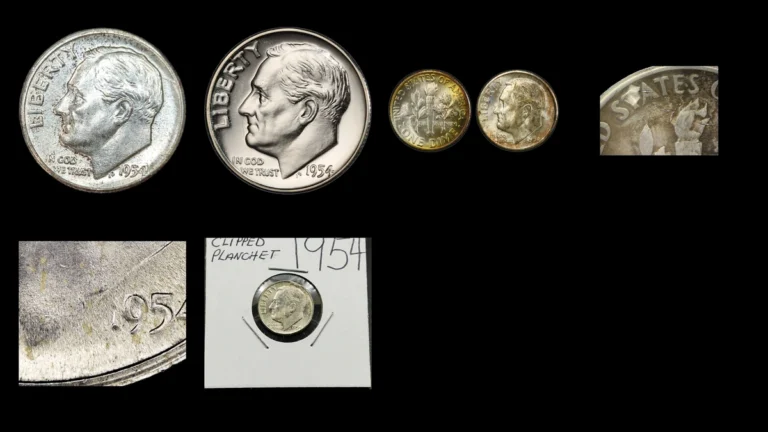
An 1855 dime from the Rippere Collection has a cataloged rim clip and an ANACS VF35 grade. That grade describes noticeable wear with much of the design still present.
The gap began in the blank before the coin was struck. The design and rim therefore formed around metal that was already missing.
How to Identify
Check where the normal rim meets the missing section. Original struck metal should flow toward the gap, while file lines or a fresh cut suggest later damage.
Weakness on the opposite rim can support a genuine clip, although it may be subtle. Keep the complete 1855 date and the gap in the same set of photographs.
A normal dime of this issue weighs about 2.49 grams and measures 17.9 millimeters across. A clip reduces weight, but wear also removes metal, so weight alone cannot prove the error.
What It’s Worth
$75–$800 is the estimated range for genuine clips, depending on preservation and visibility. Supplied comparisons place worn coins around $75–$250 and better-preserved examples around $300–$800.
The ANACS VF35 listing records a November 2025 sale but does not reveal the winning amount. Its date and grade document an example without supplying a usable transaction price.
5. 1855 Dime Bare Metal Sits beside a Shifted Design: Off-Center Strike Error
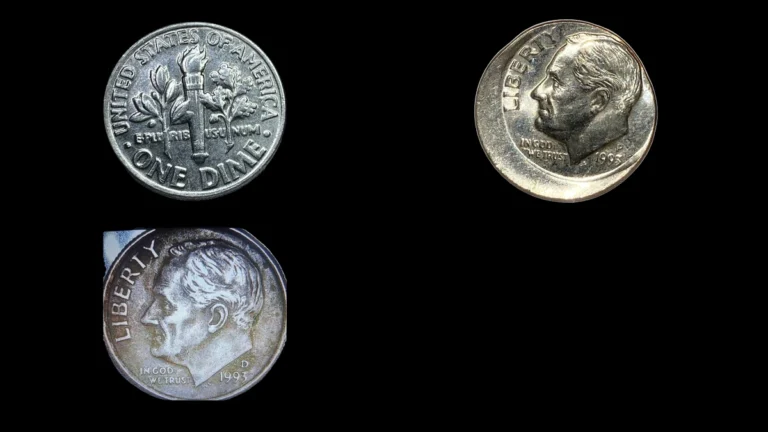
A coin blank that sits partly outside the dies receives an incomplete, displaced design. Unlike a clip, an off-center strike usually leaves the metal present, with a blank crescent beside the image.
One reported 1855 dime is 10% off-center and graded PCGS AU50. A separate older catalog describes a 25% shift toward nine o’clock; those details belong to a different coin.
How to Identify
Compare both faces for missing design and an unstruck area in matching positions. The full date needs to remain readable to identify the year confidently.
Check the boundary for original metal rather than grinding. A merely uneven rim is not enough to demonstrate a substantial off-center strike.
The 10% advertisement also calls its blank “Type I,” meaning it lacked the raised rim normally prepared before striking. This does not mean it was made from foreign metal or a blank intended for another denomination.
What It’s Worth
$1,500–$5,000 is the estimated range for substantial, readable-date examples in worn through lightly worn condition. The 10% AU50 coin had a dealer asking price of $2,700.
That figure was an advertisement, not a completed sale. The separate 25% example has no supplied selling price, and its larger offset cannot simply be added to the other coin’s value.
6. 1855 Dime The Reverse Finishes at an Angle: Rotated Die Error
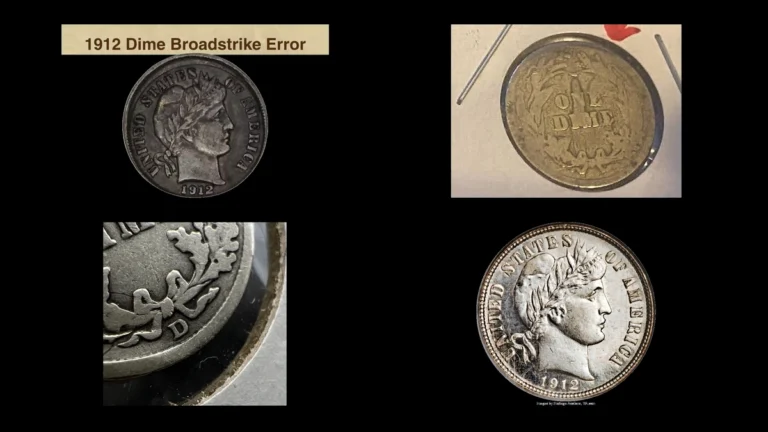
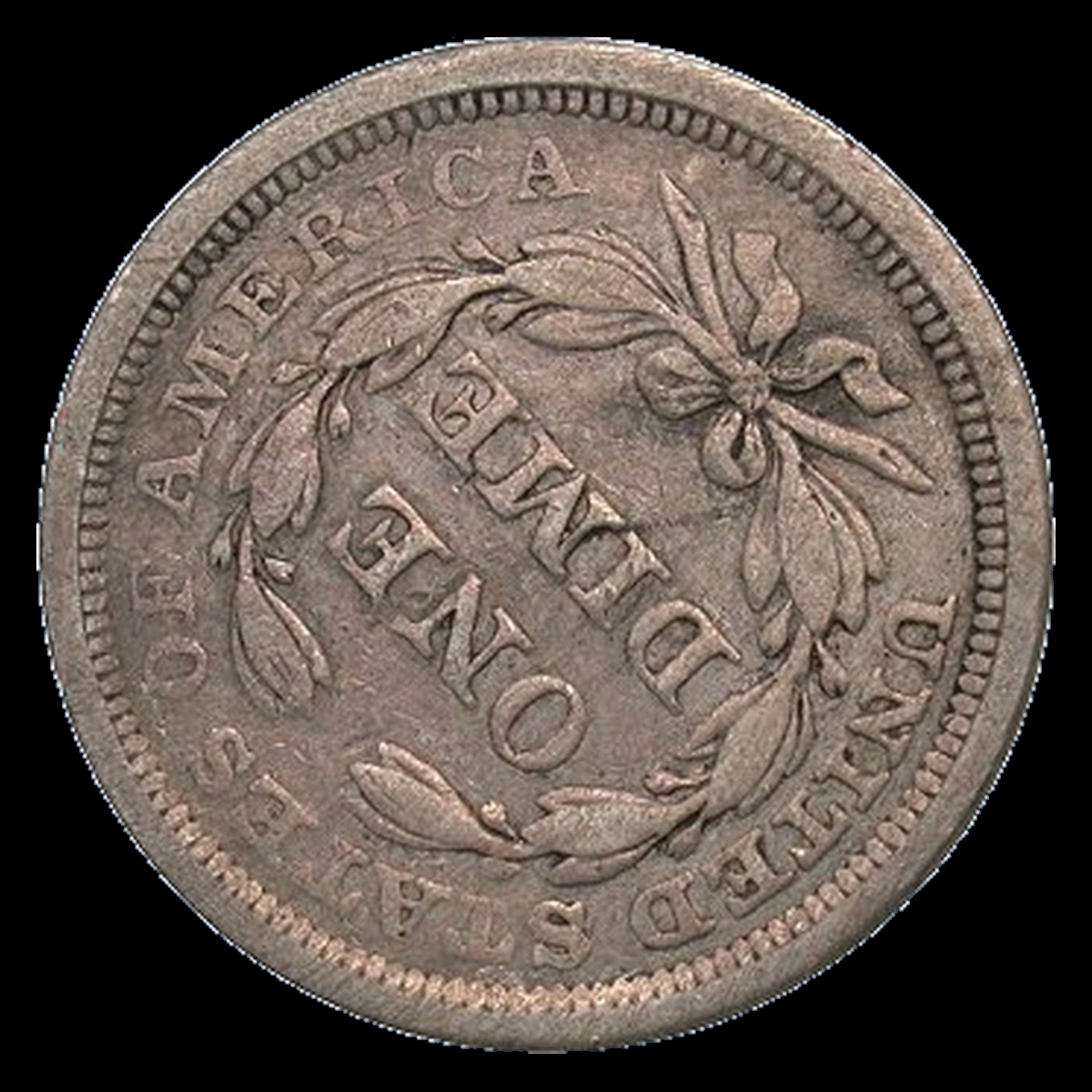
A normal top-to-bottom flip should leave the reverse upright. Fortin records an 1855 variety whose reverse instead tilts 135 degrees to the right.
The error comes from how the two dies were positioned in the press. Weak details on the date and reverse help describe the reference coin, but do not establish the angle.
How to Identify
Hold Liberty upright in a transparent holder that prevents the coin from slipping. Flip the holder straight from top to bottom without turning it sideways.
Measure the reverse against a fixed vertical line and repeat the flip. The same angle should appear each time.
Two photographs that have each been turned upright cannot show the original relationship. Keep the coin’s orientation unchanged when recording both faces.
What It’s Worth
$200–$2,000 is the estimate for clearly identified worn examples. The coin’s surfaces and remaining detail still matter even when the rotation angle is the same.
Fortin suggests a 200–400% premium over an ordinary example in comparable condition. That is pricing guidance rather than a reported auction result.
Conclusion
Several 1855 dime features can be recognized with good light and a careful comparison, but they do not all add the same kind of value. Small cracks and clashes may mainly follow the ordinary coin’s grade.
A large off-center strike or repeatable rotation is a different case. With doubled dates, establish whether the whole coin is an ordinary strike or a rare Proof before choosing a price comparison.