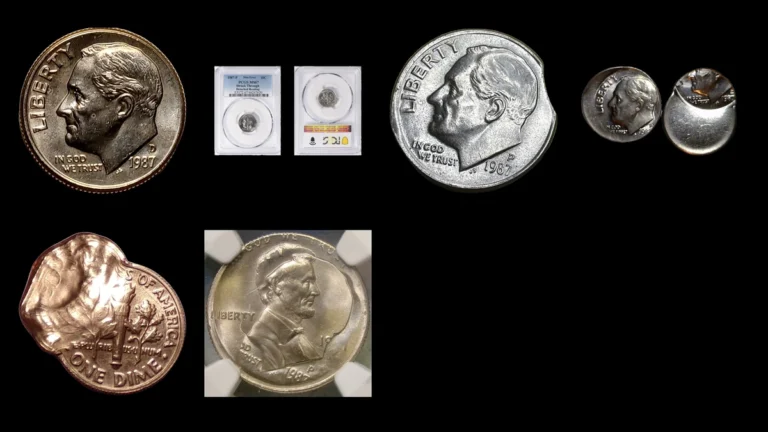
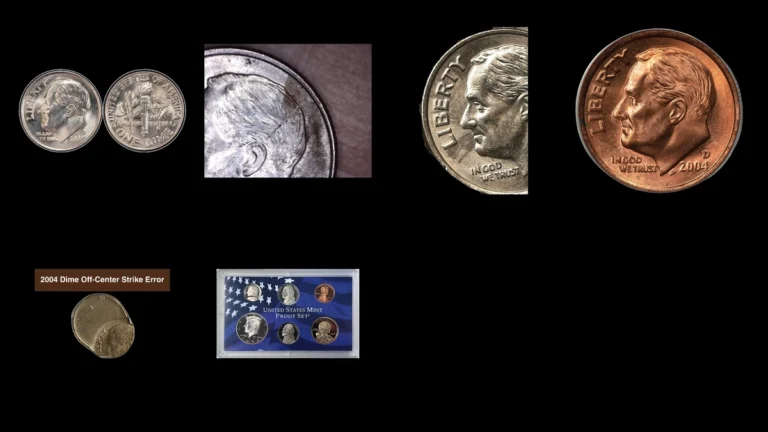
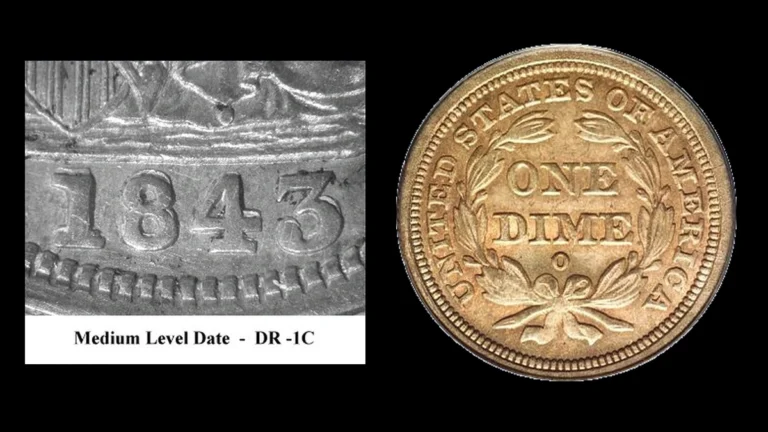
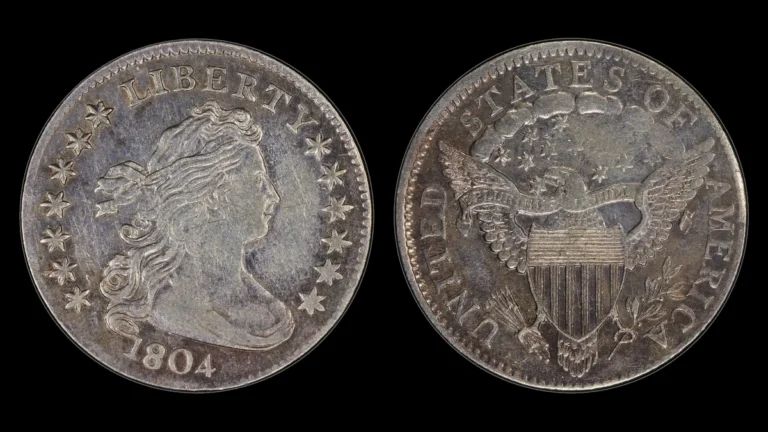
Rare 1938 Dime Errors (List & Pictures)
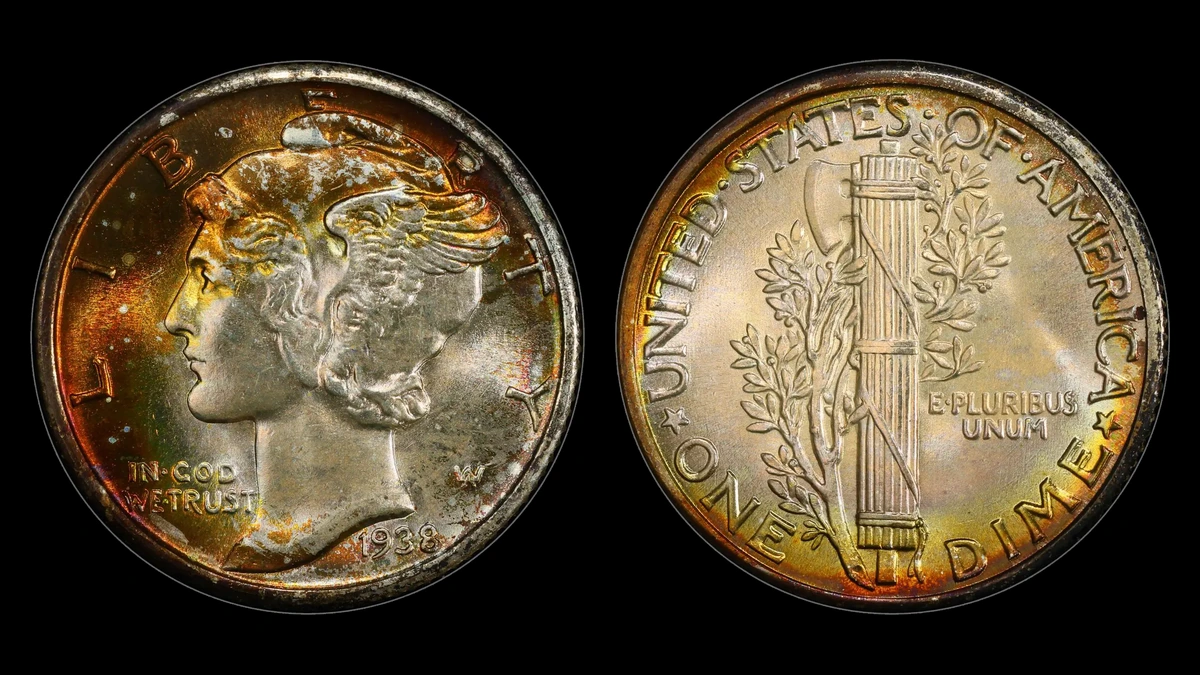
Some 1938 dime errors require a magnifier, while others change the rim or move the design visibly. Estimated values span $20–$1,000; the supplied year guide reports a rim-lamination marketplace sale of $25 in June 2026, while a $618 off-center listing was an asking price.
Inspect the date and mintmark first, then decide whether unusual edge metal is separating, missing, or simply left unstruck.
| Visible clue | Category | Estimated range |
|---|---|---|
| Fine inward date outline | Doubled die obverse | $50–$800 |
| Extra D or S curve | Repunched mintmark | $25–$600 |
| Layers opening at the rim | Lamination | $20–$150 |
| Curved missing section | Clipped blank | $75–$500 |
| Blank margin with displaced designs | Off-center strike | $150–$1,000 |
A normal Mercury dime starts at 2.50 grams and about 17.9 millimeters, with a grooved edge. For certified coins, use holder photographs and recorded measurements rather than opening the holder to repeat basic checks.
1. 1938 Dime A Close Outline inside the Date: Doubled Die Obverse Error
WDDO-001 has subtle date doubling that spreads inward toward the center. Both close outlines were present in the die, so a single normal strike could reproduce them.
The reference also notes curved tool scratches on the obverse and a small reverse mark below D in UNITED. These supporting marks help check the die after the main date pattern agrees.
How to Identify
Compare the complete date with Wexler’s WDDO-001 photographs, looking for the same close, inward contour. A flat shelf or reflection is not the same repeated shape.
Then locate the small raised mark below the reverse D, which comes from a gouge in the die, and compare the listed obverse tool scratches. A random scratch on one coin cannot replace the main doubled-date match.
What It’s Worth
The guide-based estimate is $50–$800, including $50–$150 for moderate circulated examples and higher figures for clearer, better-preserved coins. No recorded WDDO-001 auction result is supplied.
This variety’s actual feature is subtle. A dramatic doubled die from another year is not a suitable direct price comparison.
2. 1938 Dime An Earlier Letter beside D or S: Repunched Mintmark Error
One Denver variety has an extra D above the main letter, while another preserves a tilted earlier D. These shapes arose when the mintmark punch entered the die in more than one position.
A San Francisco S/S is also reported, but the Denver images do not establish its direction or shape. Each pattern needs an independent match.
How to Identify
Keep the complete mintmark in view and trace the possible earlier letter as a curve belonging to D or S. Compare Denver’s upward and tilted examples separately.
A nick can create a lump without retaining any meaningful letter shape. The catalog term “northward” simply means the earlier D lies above the final one.
What It’s Worth
Whole-coin estimates range from $25–$600. The year guide separately quotes $15–$50 premiums for common circulated examples and $300–$600 for dramatic repeats, which are guide figures rather than individual auction records.
A premium means an amount above an ordinary coin’s value; it should not be confused with the whole-coin range used here. Clarity and preservation determine how useful either figure is.
3. 1938 Dime Silver Opening in Thin Layers at the Rim: Lamination Error
The reported San Francisco F15 has a rim flaw described as lamination. Weakness within the metal can leave a narrow split, attached flake, or small area where a layer separated.
The circulated grade describes the coin’s preservation. It does not independently establish that the grading service certified the seller-described lamination.
How to Identify
Follow the opening from the edge onto the face and look for thin layers separating naturally. A sharp rim impact usually displaces metal rather than revealing the same layered structure.
Leave any flake attached and verify the date and S from full-face views. An ordinary rim nick should not be reclassified simply because the host coin is in a grading holder.
What It’s Worth
Modest examples are estimated at $20–$150. The year guide reports a $25 marketplace sale on June 13, 2026 for the F15 listing, without independently confirming an error attribution.
A higher estimate needs a convincing separation and suitable preservation. The report should remain distinct from a verified grading-service error record.
4. 1938 Dime A Curved Gap in the Outline: Clipped Planchet Error
A curved clip can form when a blanking punch overlaps an already cut area of metal strip. The incomplete disc then receives the dime design.
A reported Denver example was graded MS65 FB and appeared at GreatCollections in December 2024. Full Bands describes clear separation of the central reverse bands and does not authenticate or measure the clip.
How to Identify
Inspect metal flow and design at both ends of the curved gap, checking for saw marks or abruptly severed detail. Opposite-rim weakness may support an original clip but can be faint or absent.
The source gives no size or location for this specimen’s clip. Record those from the actual coin instead of treating the Full Bands label as evidence about the missing metal.
What It’s Worth
Genuine curved clips are estimated at $75–$500. No price accompanies the reported MS65 FB appearance; a 1935 guide’s $50–$125 small-clip and $150–$300 larger-clip estimates are different-year guide comparisons.
The upper allowance can reflect better preservation and sharp bands. It is not a reconstructed sale result for the 1938-D.
5. 1938 Dime A Design Shift beside Untouched Metal: Off-Center Strike Error
A seller listing describes an MS61 dime struck 12% off center. Its blank was displaced between the dies, leaving part unstruck and losing some intended design beyond the opposite edge.
The listing title does not establish a mint letter or direction. Those facts need to be read from the coin and label.
How to Identify
Compare both faces and the grading label, keeping the readable 1938 date visible. Matching design displacement should explain the original blank area on both sides.
An unstruck crescent still contains metal, unlike a cut-away gap. Inspect its boundary and surviving edge for alteration, and distinguish a shift affecting just one face from an off-center blank.
What It’s Worth
Readable-date examples are estimated at $150–$1,000. The recorded seller listing asked $618 for the MS61 12% coin, with no completed transaction supplied.
MS61 indicates no circulation wear but allows many noticeable marks. That preservation, the displacement, and surviving identity all belong in the comparison.
Conclusion
The best starting point is the form of the evidence: a stable extra contour, recognizable mintmark fragment, separating layer, missing arc, or intact blank crescent. Each calls for a different comparison and explains a different stage of manufacture.
Keep Full Bands and numerical grades separate from error authentication, and distinguish reported marketplace results and asking prices from firmly attributed sales.