Rare 1935 Dime Errors (List & Pictures)
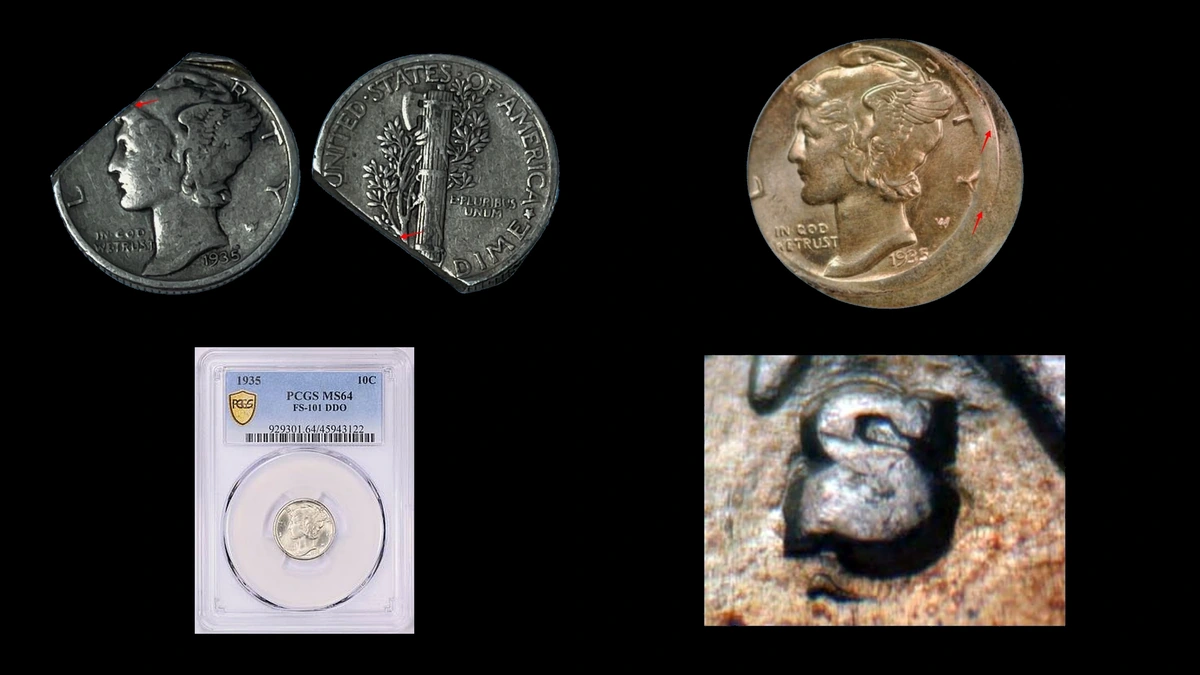
A Philadelphia 1935 doubled-die dime graded PCGS MS64 sold for $2,306.25 in July 2024. Estimated whole-coin values for 1935 dime errors range from $30 to $3,600.
Check the edge and centering first, then compare the lettering, mintmark, and any interrupted design. A standard Mercury dime weighs 2.50 grams and measures 17.9 millimeters.
| What to inspect | Feature | Estimated whole-coin range |
|---|---|---|
| Missing metal at edge | Clipped planchet | $50–$300 |
| Displaced design | Off-center strike | $200–$1,000 |
| Repeated front letters | Doubled die obverse | $2,000–$3,600 unworn |
| Secondary S outline | Repunched mintmark | $40–$1,500 |
| Local hollow or weak patch | Strike-through | $30–$150 |
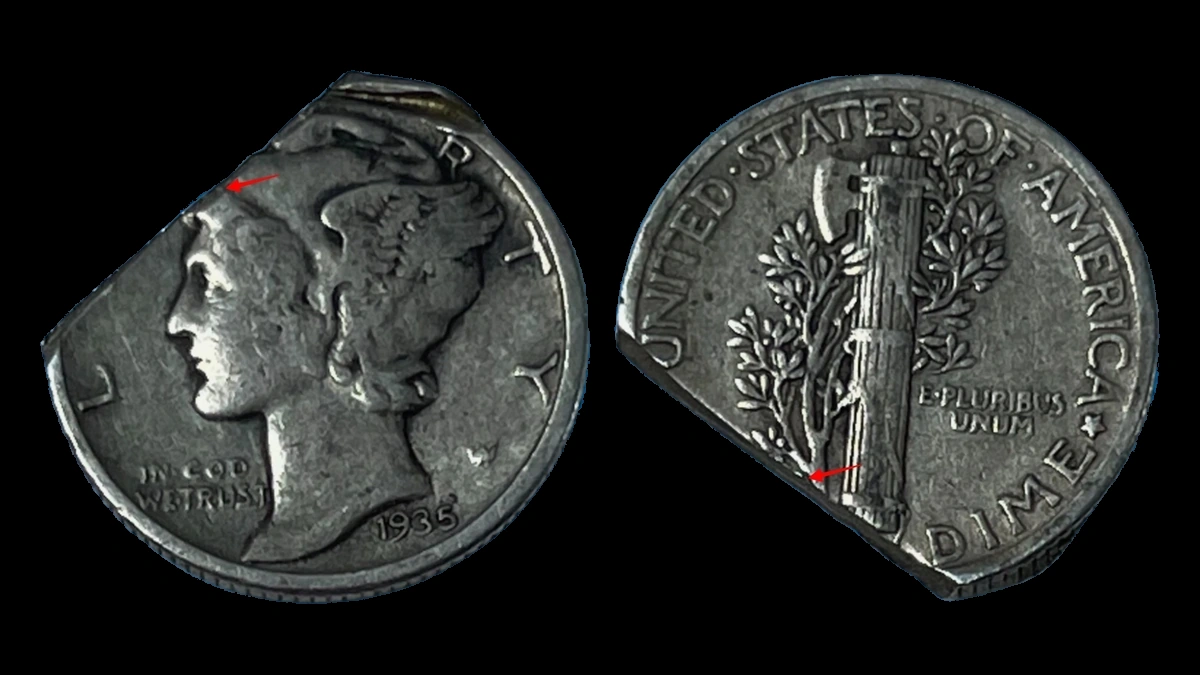
1. 1935 Dime A section of the edge is absent: clipped planchet Error
A clip originates when the metal disc is cut, before it receives the design. The blank-cutting punch can overlap an existing hole to create a curved gap, or cross the strip’s edge to leave a straighter one.
The incomplete disc, called a planchet when prepared for striking, then becomes a coin. The reported 1935 category is not assigned to a single mint.
How to Identify
Inspect both ends of the gap and follow the nearby edge grooves. The design should show how metal struck around an existing boundary, rather than appearing freshly cut away afterward.
Look for sharp tool lines and compare the opposite rim for possible weakness. That weakness can support a clip attribution but is not equally visible on every coin.
Weight loss supports the presence of missing metal without proving when it disappeared. Measure across intact sections, and read the actual date and mintmark before choosing a comparison.
What It’s Worth
Small circulated clips have an estimated whole-coin range of $50–$125, while clearer larger clips are estimated at $150–$300. The source associates these groups with roughly 5–10% and 15–25% missing metal.
Those percentages concern missing material, not how far the design shifted. These estimates do not document a particular 1935-D or 1935-S sale, and an edge cannot be authenticated from its gap size alone.
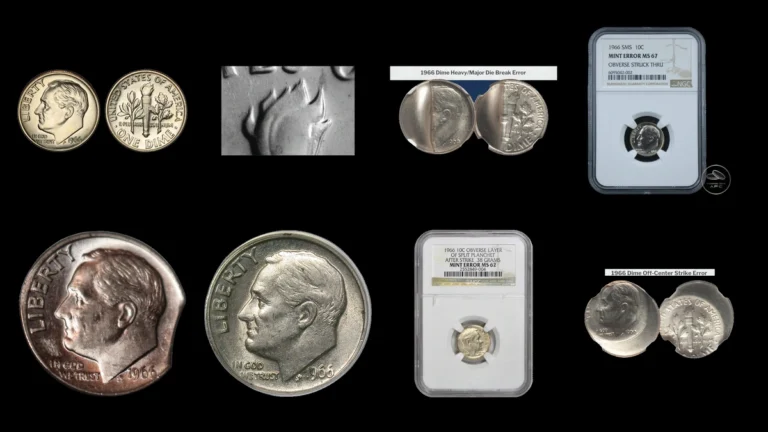
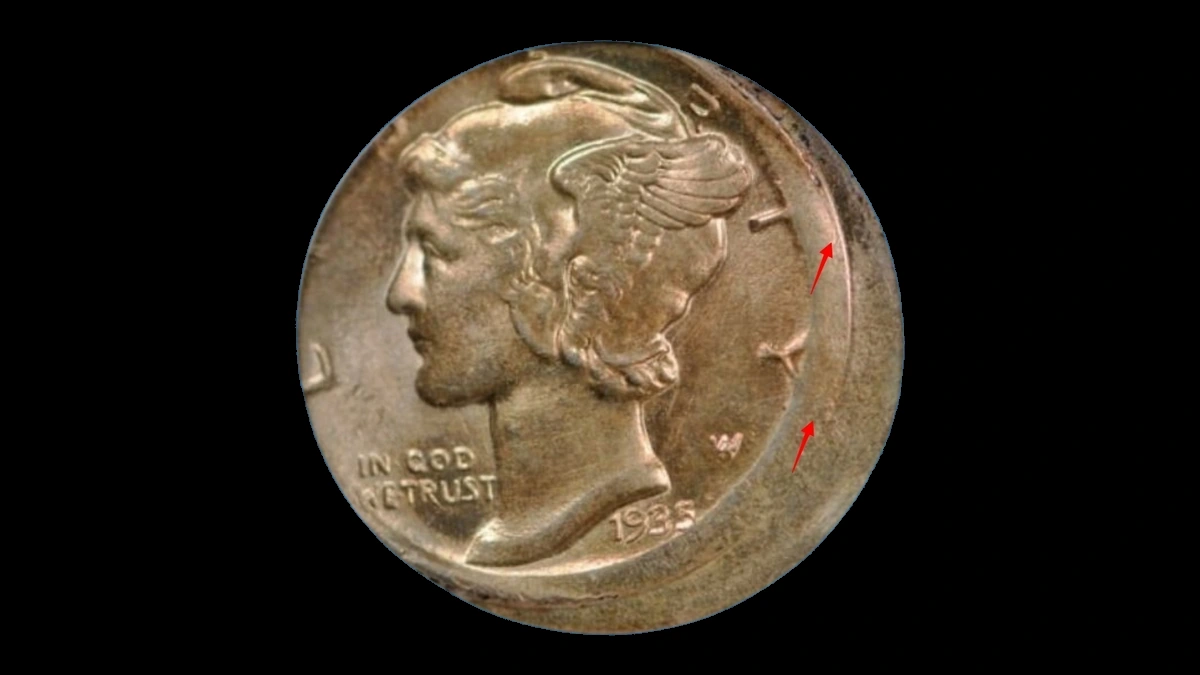
2. 1935 Dime A shifted design beside plain silver: off-center strike Error
The blank sat away from the center of the dies, allowing part of the design to miss it. Original plain metal survives opposite the truncated design.
The supplied guide describes a roughly 10% off-center example with a readable date and Full Split Bands. That band description concerns clear separation in the reverse’s horizontal bands, not the cause of the misplaced strike.
How to Identify
Compare both faces to verify corresponding displacement. An uneven border on only one face can instead indicate a single misaligned die.
Examine the plain crescent for original surface texture and a natural transition into struck detail. Grinding away a normal design can create misleading blank space.
Record the complete date and any mintmark. The advertised roughly 10% example has no certified grade or mint established in the supplied description.
What It’s Worth
Readable-date examples have an estimated whole-coin range of $200–$1,000. The source places dramatic 25–50% examples at $500 or more, although loss of the date can reduce their appeal.
The roughly 10% coin was listed at $395, an asking price rather than a completed sale. Its Full Bands description belongs to that advertised specimen and should not be assumed for every off-center dime.
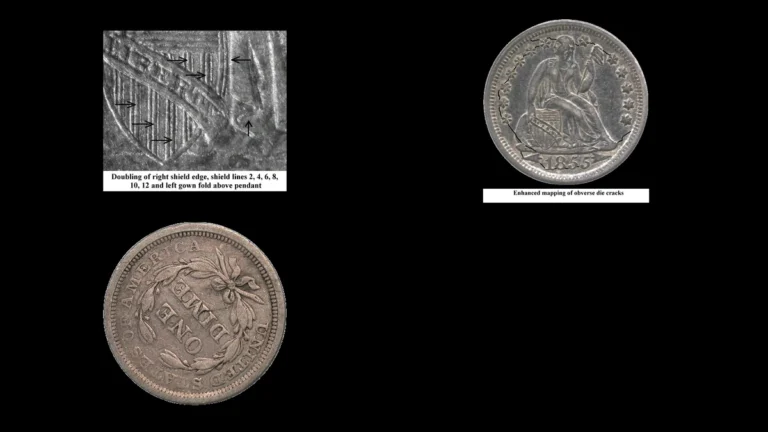
3. 1935 Dime Repeated front lettering: doubled die obverse Error
The Philadelphia FS-101 variety has extra raised outlines in the front design, particularly the lettering in LIBERTY and the motto. The repetition was already present in the die.
One strike could therefore transfer both outlines. This is distinct from two displaced full impressions left by striking the coin twice.
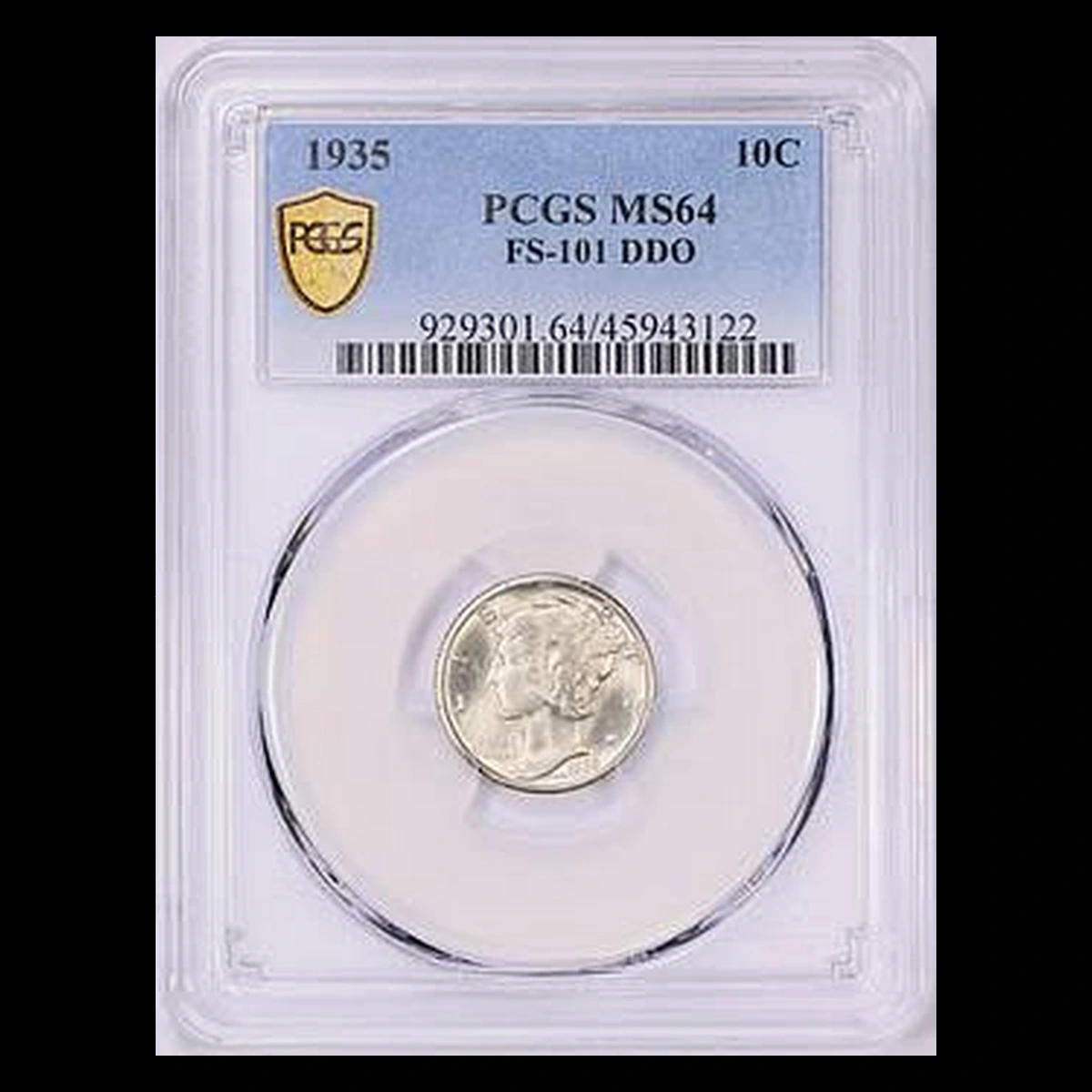
How to Identify
Compare the same letters with a confirmed FS-101 photograph. Look for rounded separation or small notches where strokes meet, rather than flattened shelf-like edges.
Check the date as part of the whole front pattern. One thick digit does not replace a match to the documented lettering.
Confirm Philadelphia by the absence of a mintmark in a readable mintmark area. A D or S requires its own variety comparison rather than this attribution.
What It’s Worth
Identified unworn examples have an estimated whole-coin range of $2,000–$3,600. Circulated examples require different comparisons.
A PCGS MS64 FS-101 sold for $2,306.25 at GreatCollections in July 2024. The upper estimate includes the guide’s allowance for Full Bands, a separate measure of reverse strike detail.
Flat strike doubling does not qualify for this variety’s price. Front attribution, reverse band quality, and overall preservation should each be checked directly.
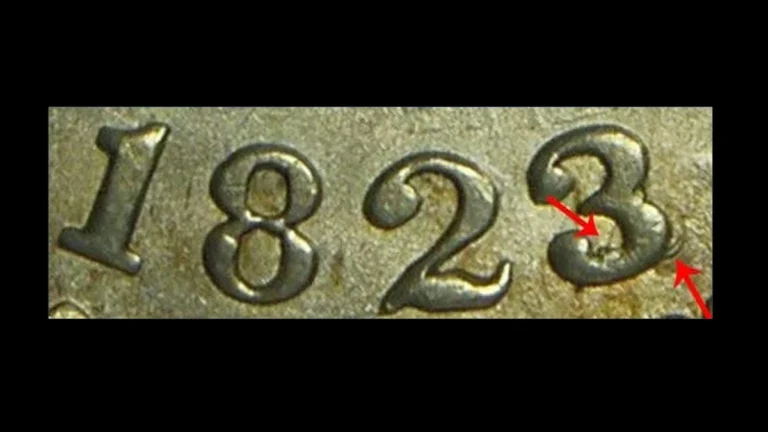
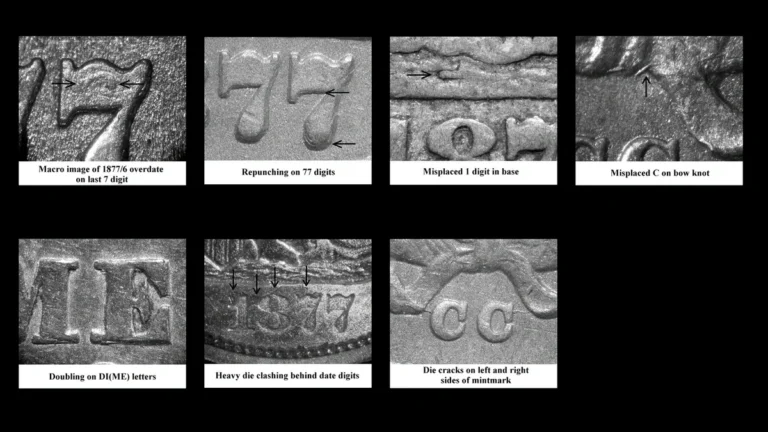
4. 1935 Dime Part of another S at the mintmark: repunched mintmark Error
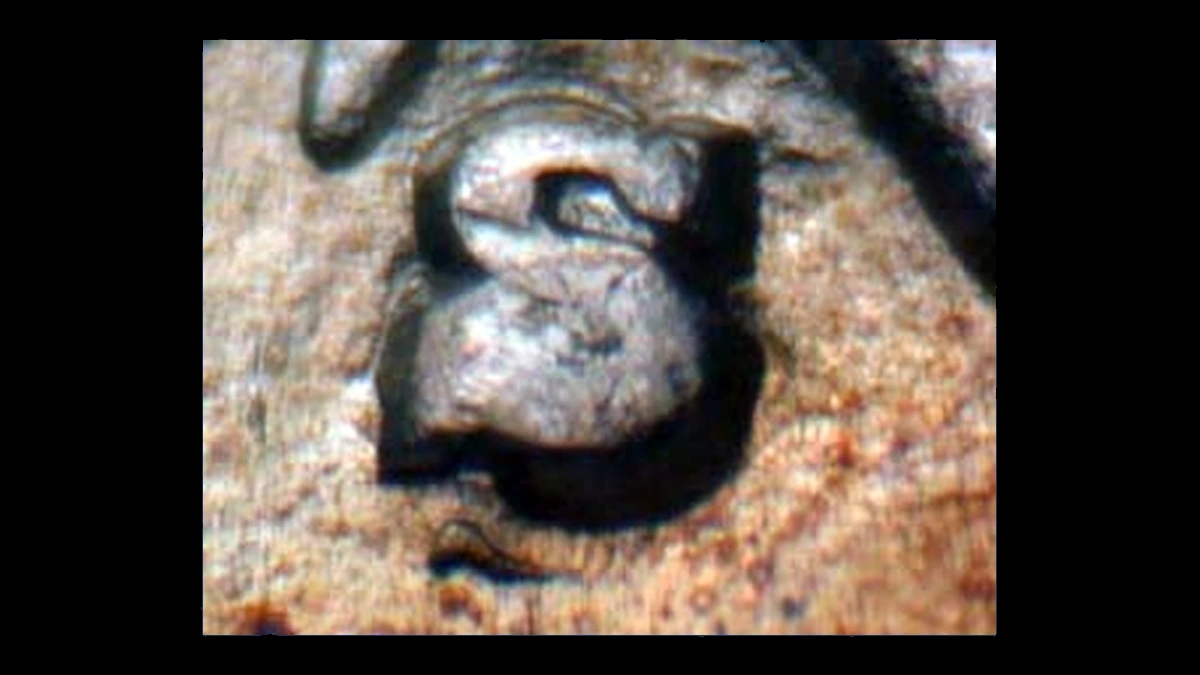
The S below the left side of the reverse bundle of rods can preserve part of an earlier S. Mintmarks were punched into the die by hand, so a second placement could leave earlier strokes visible.
The supplied guide reports this S/S variety as FS-501. That attribution concerns the mintmark, not doubling of the entire reverse.
How to Identify
Examine both loops and the area around the main S. Look for a secondary curved or upright part that follows another letter’s structure, rather than an isolated raised dot.
Compare the complete mark with a confirmed S/S reference. The supplied description does not establish one direction for the extra outline, so do not assume it must lie above or below.
Keep the 1935 date and surrounding reverse design in the comparison. Damage to the opening of an ordinary S should not be mistaken for an earlier punched letter.
What It’s Worth
Estimated whole-coin values are $40–$1,500 from circulated through attractive unworn examples with a matching repunched S. Correct attribution is essential before using that range.
The year guide reports an MS67 sale at $1,320 at Heritage in October 2019. This is a source-reported result for exceptionally preserved unworn condition, not a price for every doubled-looking mintmark.
5. 1935 Dime One patch loses normal detail: struck through Error
Material between the blank and a die can interrupt their contact, leaving a depression or a localized area of missing design. Collectors call the resulting feature a strike-through.
The 1935 report does not identify the material on a certified specimen. A weak patch should therefore not be labeled as wire, fabric, or another specific object without supporting evidence.
How to Identify
Compare the affected patch with nearby high points. General wear softens exposed areas, while an obstruction may interrupt one localized area beside otherwise clear detail.
Inspect the boundary for a strike impression rather than later impact damage with pushed-up edges. A shape visible only in tarnish does not identify foreign material.
Check the edge and both faces for alteration. Measurements are supporting evidence, but weight loss with disturbed metal requires a separate explanation.
What It’s Worth
Ordinary visible strike-throughs have an estimated whole-coin range of $30–$150. The guide supplies no completed sales for one certified 1935 specimen or mint.
A recognizable impression can be more appealing than a small ambiguous weak spot. The range also does not price an identified object still retained in the coin, which would need its own comparison.
Conclusion
The strongest comparisons begin with the right feature and mint: Philadelphia lettering for FS-101, a matching secondary S for the mintmark variety, and whole-coin evidence for clips or shifted strikes. Local weak detail requires its own explanation.
Keep the $395 off-center asking price separate from actual transactions. The documented doubled-die sale also applies to unworn condition, so it should not automatically price a worn or merely doubled-looking dime.