Rare 1987 Dime Errors (List & Pictures)
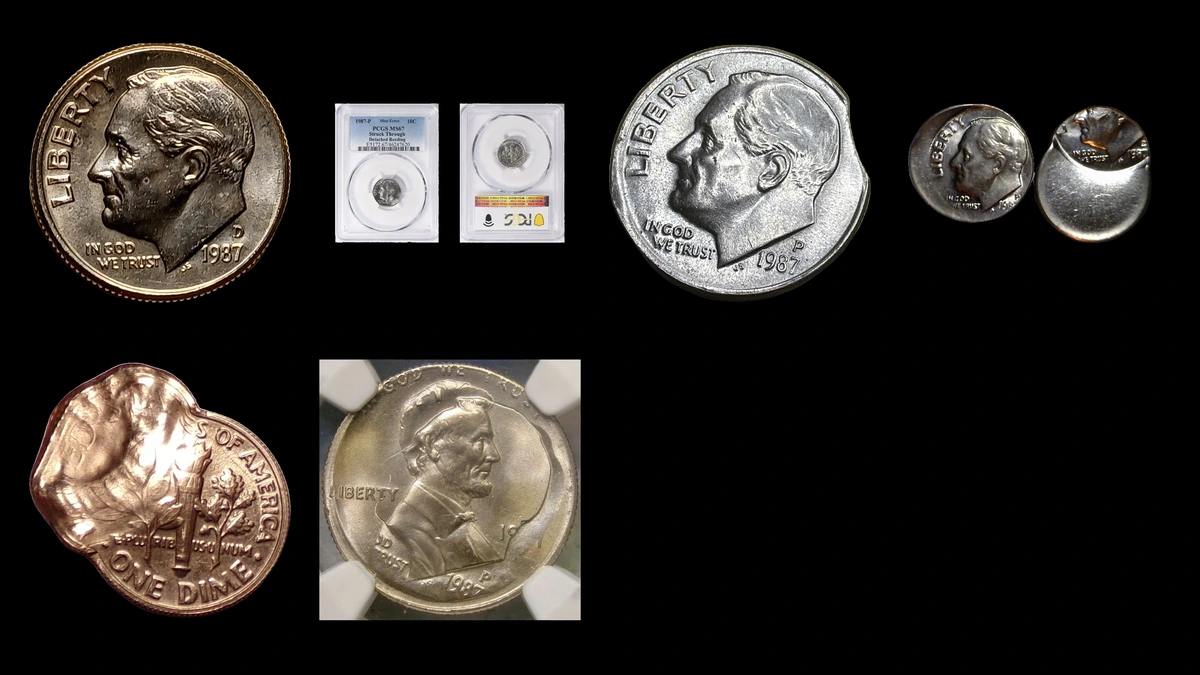
The small D and the word DIME provide useful starting points when examining 1987 dime errors. Supplied estimates span $2–$2,500, covering minor die features through coins carrying two denominations.
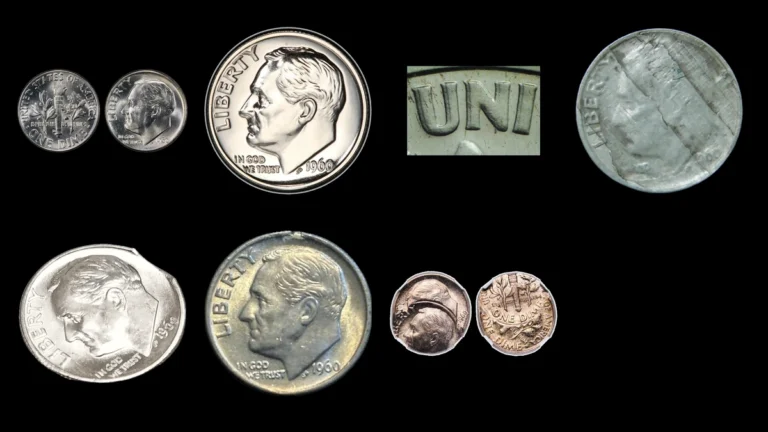
A different-year comparison, a 2001 cent over a 2001-P dime, sold for $1,320 in September 2025. Work from the repeated letters and surface marks to the outline, then investigate any additional design.
| Visible feature | Possible identification | Estimated value |
|---|---|---|
| Another outline at D | Repunched mint mark | $10–$200 |
| Repeated front or reverse detail | Proposed doubled die | $10–$150 if confirmed |
| Extra raised line | Die crack | $2–$100 |
| Grooved impression or missing M | Struck through material | $5–$1,000 |
| Copper-colored face with absent metal | Missing clad layer | $50–$600 |
| Gap through the disk | Clipped blank | $20–$350 |
| Complete design inside spread metal | Broadstrike | $25–$300 |
| Design falls beyond one edge | Off-center strike | $30–$750 |
| Second front image with a blocked back | Double strike with uniface area | $150–$1,500 |
| Incompatible blank measurements or metal | Unconfirmed wrong-planchet candidate | $300–$2,000 if authenticated |
| Cent design over dime design | Double denomination | $600–$2,500 |
1. 1987 Dime A Second D Above or Around the First: Repunched Mint Mark Error
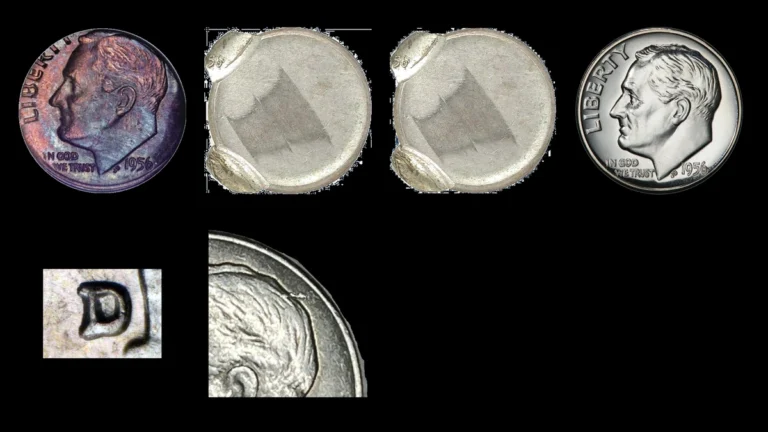
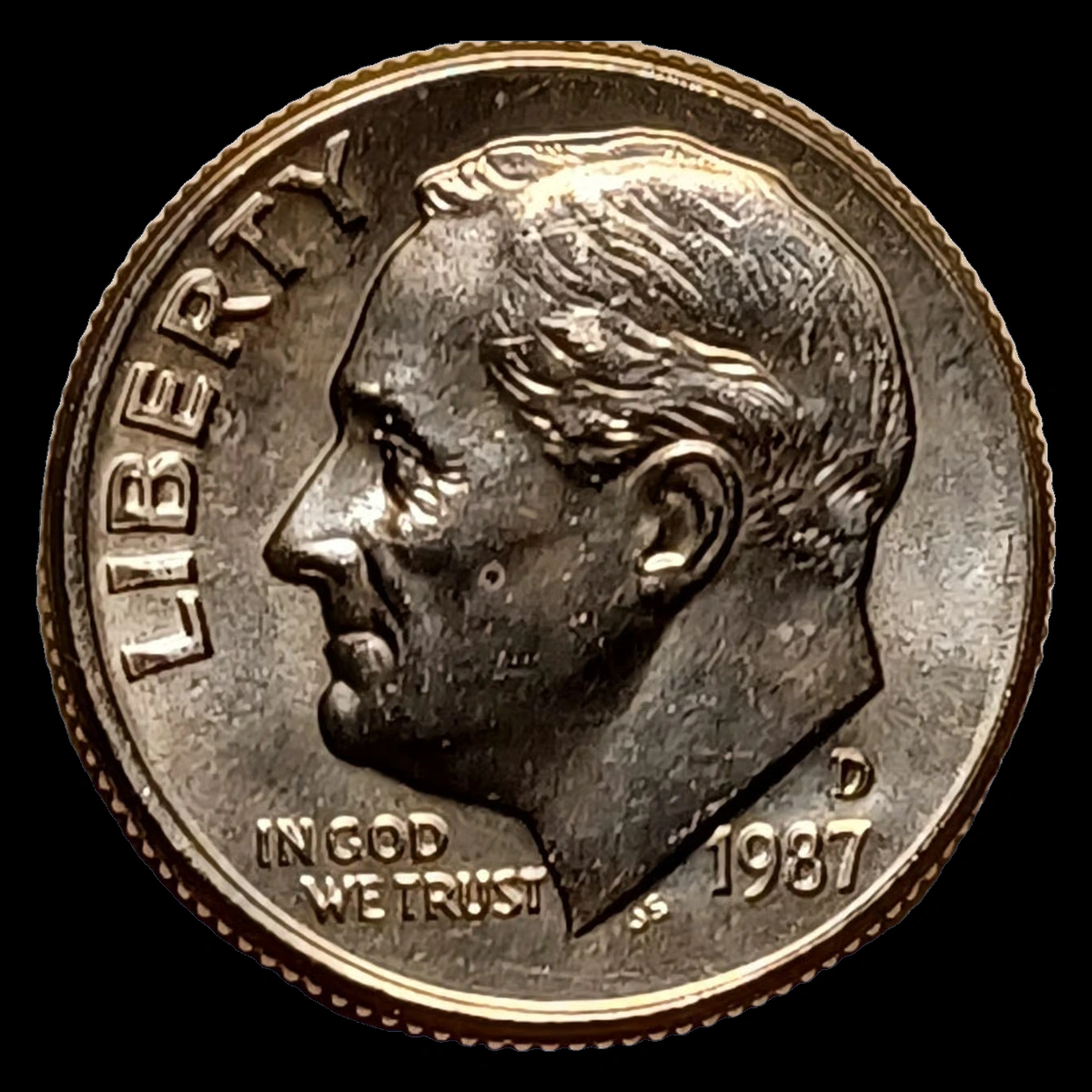
The mint mark above the date was punched into the die separately from the main design. A repeated punch could leave an earlier D impression in another position.
WRPM-001, also known as CONECA RPM-001, has the extra impression shifted upward. CONECA RPM-002 instead has a counterclockwise-rotated impression.
How to Identify
Locate D above the date and distinguish it from the designer’s JS initials near the bottom of the portrait. For the upward pattern, compare the extra upper portion with the Wexler WRPM-001 reference.
For RPM-002, inspect the upper and lower ends for shapes that fit a turned letter impression. This rotation concerns the D itself, not the orientation of the whole reverse against the obverse.
Change the lighting to separate raised metal from shadows and flat shelves. Keep the two catalog patterns separate rather than combining their strongest features.
What It’s Worth
$10–$200 is the supplied estimate for identified minor D/D varieties. A distinct extra letter on an unworn coin is easier to appreciate than a heavily worn trace.
Damage and cleaning can reduce interest in a genuine RPM. An unusual D that matches neither listed pattern needs further identification before using this range.
2. 1987 Dime Other Letters or Torch Details Seem Repeated: Possible Doubled Die Error
A doubled die contains repeated design detail before it strikes the blank. Unlike repunching confined to a mint letter, the proposed feature could involve front lettering or the reverse torch and words.
The supplied 1987 material does not establish a specific cataloged pattern for this category. It remains a possibility to investigate rather than a confirmed rare variety.
How to Identify
Examine letter corners and ends for rounded repetition or separation that agrees across several details. Compare a normal coin with similar wear so flattened design does not create a false contrast.
A low flat shelf beside a reduced letter can come from movement during striking. Document the mint, face, and complete pattern for specialist comparison instead of borrowing a famous variety from another year.
What It’s Worth
$10–$150 is a conditional estimate for a confirmed minor doubled-die pattern. It does not assign a premium to every thick or doubled-looking letter on a 1987 dime.
Without an established attribution, the appearance alone cannot justify the upper range. A useful value comparison requires matching features on the same issue.
3. 1987 Dime A Ridge Crosses the Existing Design: Die Crack Error
Metal can enter a crack in the die during striking and form an extra raised line on the dime. The report does not establish one mint or crack path for all 1987 examples.
How to Identify
Compare the line with the normal hair and torch details before treating it as extra metal. Use side lighting to determine whether it rises from the surface or cuts into it.
Follow the ridge through nearby artwork and inspect both sides for an impact or displaced metal. A raised lip next to a scratch can mimic a crack when viewed too closely.
What It’s Worth
$2–$100 is the estimated range for modest genuine die cracks. Clear original ridges and attractive surrounding detail support better comparisons than faint marks obscured by wear.
Several short cracks on one dime require one whole-coin valuation. Dirt and post-mint scratches do not gain an error premium.
4. 1987 Dime Parallel Grooves or a Missing M: Struck-Through Error
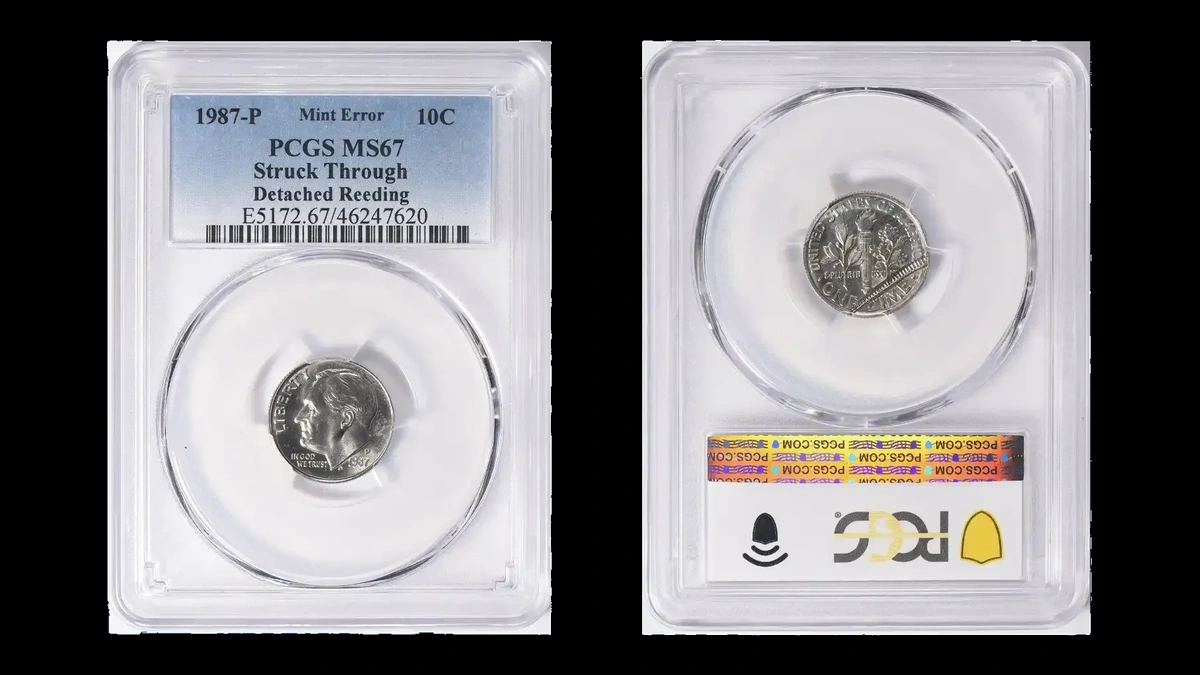
A cataloged Philadelphia dime graded PCGS MS67 was struck through detached reeding. The fragment left closely spaced groove impressions in a location where normal dime detail should appear.
A separate 1987-P report concerns grease blocking the M in DIME. These are distinct obstructions rather than two descriptions of one effect.
How to Identify
Follow where the parallel impressions begin and end on the detached-reeding specimen. Its catalog identity does not describe a broken piece of the collar ring, and the affected face should be established from the actual image.
Examine the impression’s boundary for original interrupted design rather than damage from later contact with another coin’s edge. For the missing M, compare the adjacent letters and other high points to assess whether general wear explains the weakness.
What It’s Worth
$5–$75 is the estimate for a confirmed grease-filled missing-letter effect, while $100–$1,000 covers clear original detached-reeding impressions. Their different visibility and formation make them separate value comparisons.
The MS67 grade describes very strong preservation of the cataloged grooved-impression coin. No completed-sale price for that specimen is supplied here.
5. 1987 Dime An Outer Layer Is Absent: Missing Cladding Error
A normal dime has pale outer layers bonded to a copper core. A missing-layer error exposes the core beneath the coin’s design, while an ordinary copper stripe along the edge is part of normal construction.
How to Identify
Examine the unusual face and the adjacent edge together for actual loss of outer metal. Brown staining, added plating, and chemical treatment can imitate exposed copper.
The normal 1987 dime standard is 2.268 grams, including the clad San Francisco Proof. There is no ordinary silver Proof version for this year.
Look for original detail impressed into the exposed surface rather than scraping or pitting. The general 1987 report does not establish an affected face, mint, or measured error weight.
What It’s Worth
$50–$600 is the estimated range for a genuine comparable missing-layer dime. The extent of loss and preservation of the original strike guide the comparison.
Separate 2000-D examples brought $132 for reverse-layer loss in November 2020 and $104 for obverse-layer loss in December 2022. Their known faces cannot be assigned to an unexamined 1987 candidate.
6. 1987 Dime A Section Is Missing Through the Edge: Clipped Blank Error
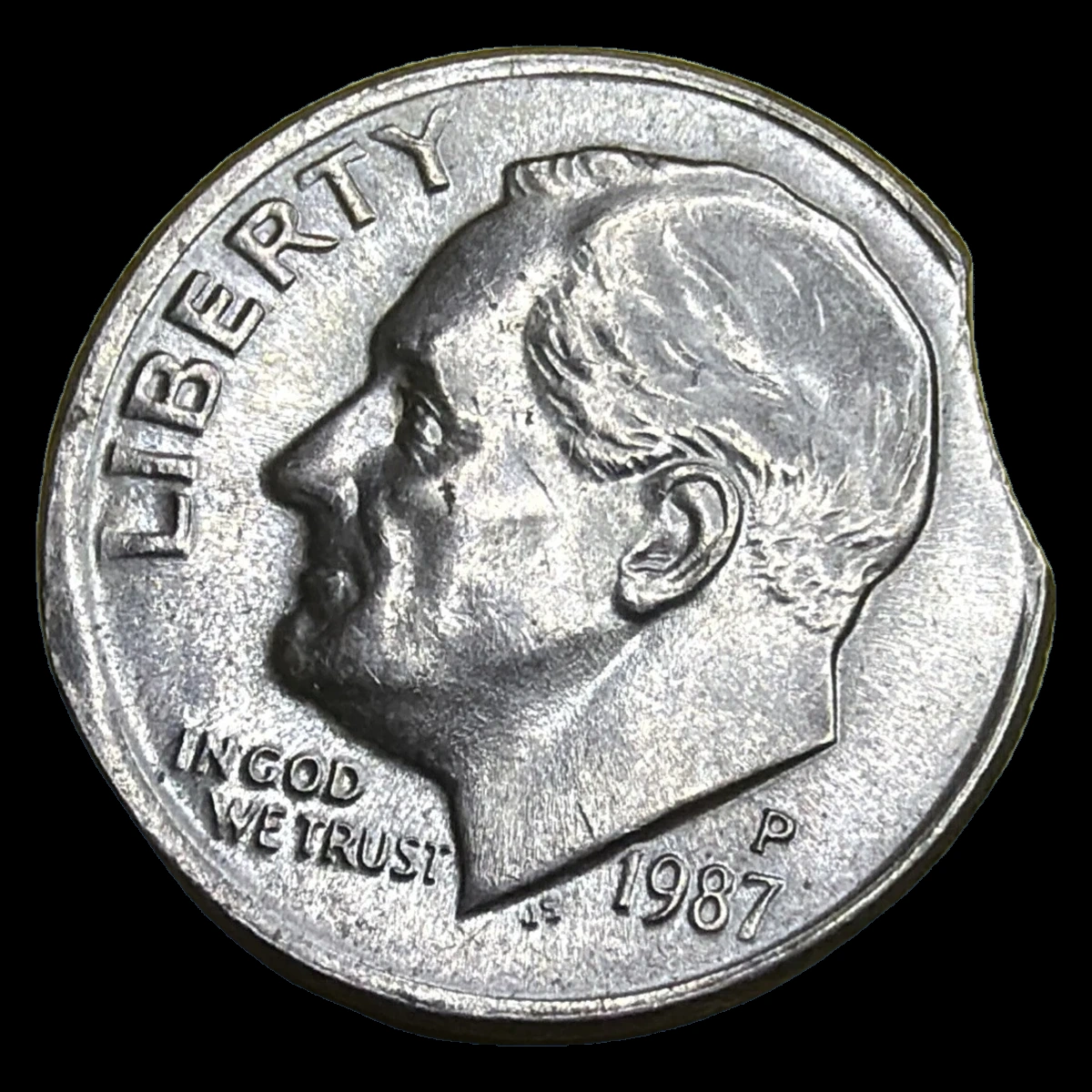
A clipped blank receives its design after part of the metal is already absent. The 1987 report does not specify one mint, shape, or missing percentage.
How to Identify
Follow the gap through the coin’s thickness and inspect its junctions with the rim. Original lettering may soften or stretch beside an incomplete blank, while saw marks and fresh filing suggest later removal.
A weak opposite rim can support the identification without being mandatory. Weight loss is also supporting evidence, since cutting a finished dime makes it lighter too.
What It’s Worth
$20–$350 is the supplied estimate for genuine clips. Readable identity, original boundaries, and the size of the missing section affect appeal.
A large later cut remains damage even if it looks dramatic. Establish that the gap existed during striking before applying a clip comparison.
7. 1987 Dime A Complete Design Sits Inside a Wider Outline: Broadstrike Error
The dime’s metal can spread when the collar does not provide normal restraint during striking. A broadstrike can preserve all the intended design within the enlarged disk.
How to Identify
Compare a loose coin’s widest and narrowest dimensions with the normal 17.91-millimeter diameter. The report supplies no actual error diameter or fixed mint.
Trace the complete outer lettering and inspect the edge grooves beside the expanded metal. Crushing a finished coin can enlarge its outline while damaging the already formed portrait and torch.
What It’s Worth
$25–$300 is the estimated range for comparable simple broadstrikes. Clear spread and a readable date make the mechanism easier to display.
Diameter alone cannot establish the error. The intact design and original edge should explain why the metal spread.
8. 1987 Dime The Design Misses One Side of the Blank: Off-Center Strike Error
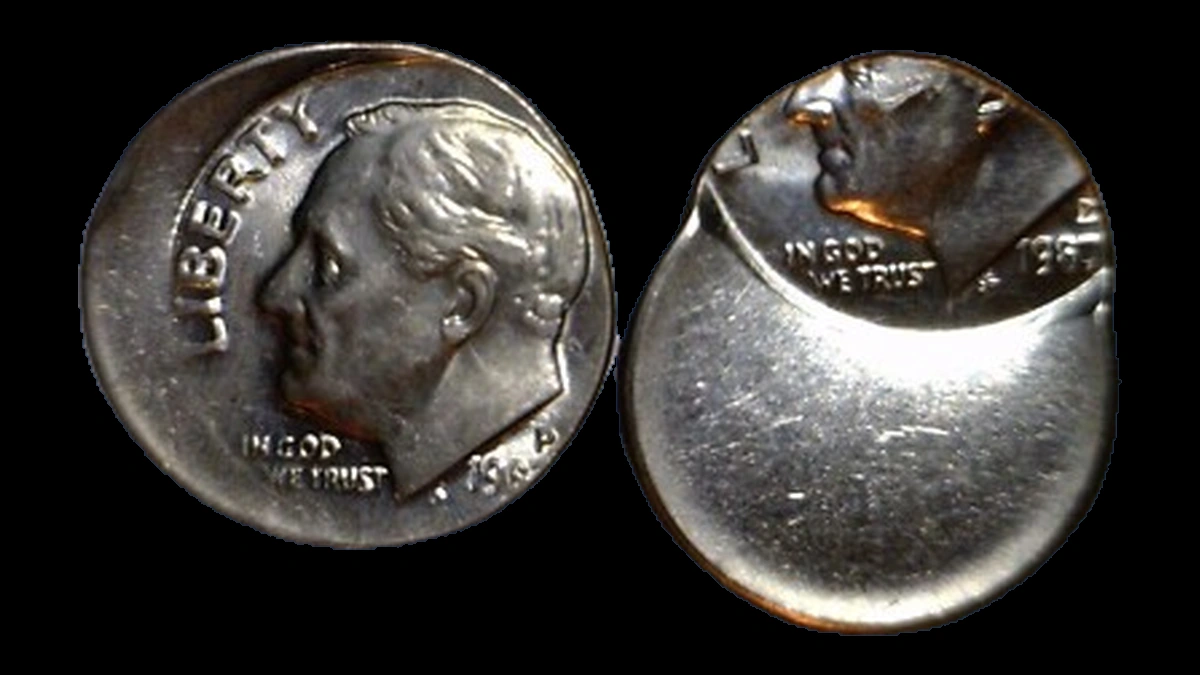
A listed Philadelphia dime is 30% off center toward eleven o’clock. A different Denver dime is described as 45% off center toward eleven-thirty.
Each has original plain metal beside a design that only partly reached the blank. The plain area is not a clip because the metal remains present.
How to Identify
Orient Roosevelt upright, then compare the design’s displacement with the surviving date and mint. Keep each reported amount and direction with the appropriate coin.
Inspect the reverse to confirm that both faces fit one misplaced blank. A centered opposite face calls for a misaligned-die comparison instead.
Look for original texture in the unstruck area rather than grinding marks or flattened remains. Do not complete missing date digits from a seller’s claim.
What It’s Worth
$30–$750 is the estimated range for individual genuine dated examples. Readability and preservation matter alongside the percentage.
Older dealer lists gave minimum bids of $18 for the Philadelphia piece and $26 for the Denver piece. These are starting requirements, not completed-sale records.
9. 1987 Dime A Second Front Image Has No Matching Fresh Back: Double Strike with Blockage Error
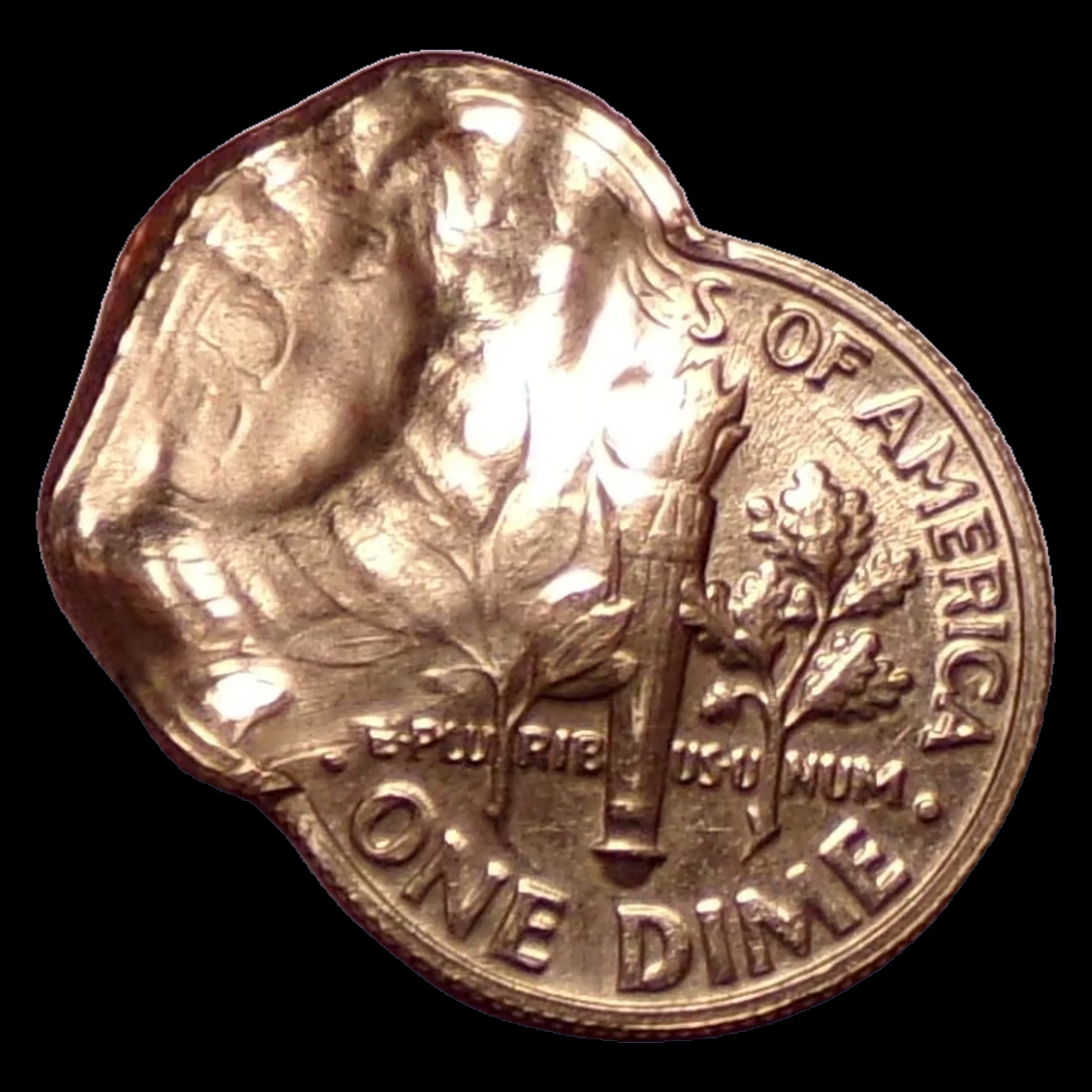
An owner-documented Philadelphia dime shows a stretched second obverse image and a corresponding reverse area without a fresh design. Its reported weight is 2.27 grams.
A specialist explained that another blank beneath the dime could have blocked the reverse during the second blow. The same coin also shows clash traces behind and below the ear, without a numerical grade or measured displacement established.
How to Identify
Align photographs of both faces and compare the second front image with the flatter area behind it. Follow connected portrait or letter details to support an additional strike.
A blocked area without a copied image differs from a backward brockage impression. The ear-area clash traces need their own comparison with the opposing design, even though they occur on the same reported coin.
What It’s Worth
$150–$1,500 is the conditional estimate for a comparable authenticated double-strike and blocked-reverse combination. Clear correspondence between the two faces is essential to that comparison.
The clash traces do not receive another full value added to the coin. Its condition and readable identity remain part of a single whole-coin assessment.
10. 1987 Dime The Metal or Dimensions Do Not Fit: Wrong-Planchet Candidate Error
An unusual blank could receive a dime design if it entered the wrong press. For 1987, the supplied category is an unconfirmed possibility rather than a documented specimen on an identified foreign or domestic blank.
How to Identify
Record actual weight and diameter, then compare the edge construction and surviving design with the normal dime standards above. Added plating, grinding, and trimming can all change those measurements.
The design should meet the original blank’s boundary naturally. A specialist can examine the metal without scraping it before assigning any particular blank or denomination.
What It’s Worth
$300–$2,000 is a conditional estimate for a modest authenticated wrong-planchet example. It does not represent a known sale or confirmation that a specific 1987 combination exists.
The actual blank would need to be established before narrowing the value. Unusual color or a low weight alone cannot place an altered dime in this category.
11. 1987 Dime A Cent Design Covers an Earlier Dime: Double Denomination Error
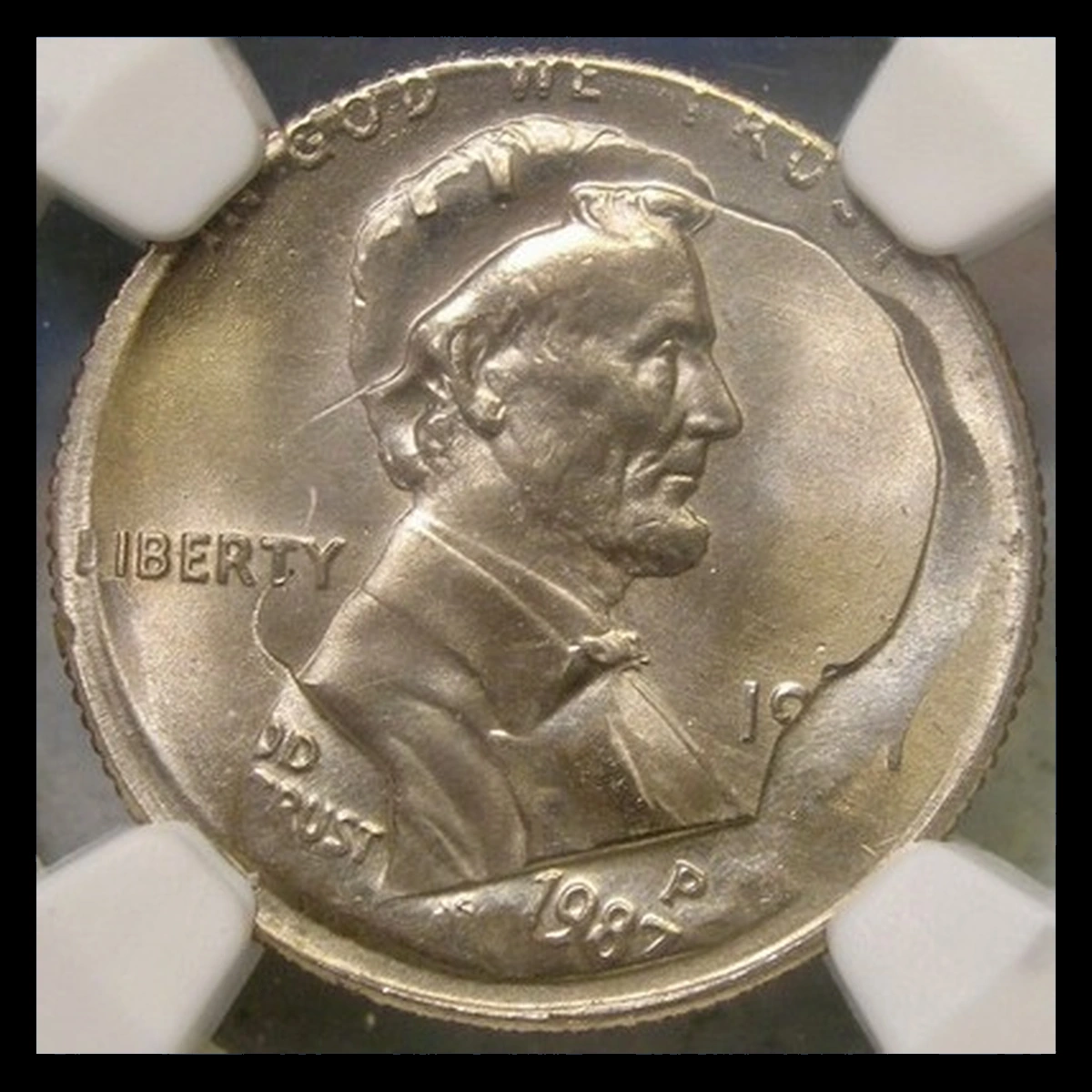
A recorded NGC MS67 example carries a 1987 cent design over a finished 1987-P dime. Portions of Roosevelt’s design survive beneath the newer Lincoln impression.
That surviving host design makes this a double-denomination error. A cent on an unused dime blank would not contain an earlier Roosevelt portrait or torch.
How to Identify
Trace recognizable dime details beneath the cent design on both faces and examine where the newer lines cross the older ones. Read each surviving date independently rather than assigning the host’s year from the cent alone.
Inspect the edge for seams or added metal that could indicate a joined novelty. The continuous piece and overlapping original designs should support the proposed striking sequence.
What It’s Worth
$600–$2,500 is the supplied estimate for comparable authenticated pieces. One recorded MS67 example brought $747.50 in 2011, and another auction record gives $660 in April 2020.
Those records alone do not establish that the same coin sold twice. A different 2001 cent over a 2001-P dime sold for $1,320 in September 2025.
Conclusion
The strongest 1987 dime identifications connect an unusual feature to the rest of the coin. A second D needs a specific punch-pattern match, while a missing M and a grooved impression require different obstruction evidence.
For larger errors, include both faces and the full edge in photographs. Keep reported possibilities conditional, and distinguish original blank metal from removed metal before moving from appearance to an estimated value.