Rare 2023 Dime Errors (List & Pictures)
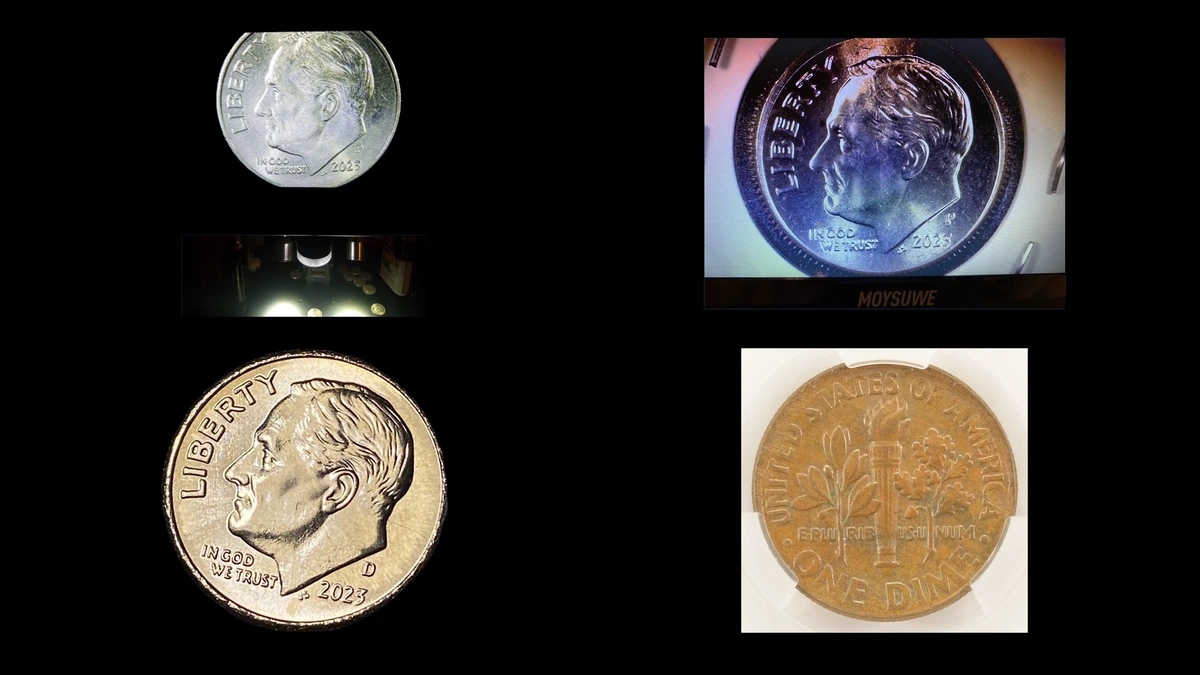
Small details make a big difference when examining 2023 dime errors, with estimated values spanning $5–$600. A missing-layer dime dated 2018-P brought $384 in July 2021, the highest supplied completed auction comparison, but it was not a 2023 coin.
Start with the design near the portrait, then check the surface, color, and outline to separate seven reported error groups.
| Visible clue | Possible error | Estimated value |
|---|---|---|
| Unexpected leaf near the ear | Die clash | $20–$250 |
| Raised metal lump | Die chip or cud | $5–$300 |
| Extra letter strokes | Doubled die | $20–$300 |
| Interrupted detail | Struck-through | $10–$200 |
| Copper exposed on a face | Missing clad layer | $50–$600 |
| Wide border, complete design | Broadstrike | $50–$400 |
| Blank crescent, missing design | Off-center strike | $30–$500 |
An ordinary circulation dime measures 17.91 mm and weighs 2.268 g, with grooves around its edge. Record those measurements if the coin is loose and accessible; they help assess changes to the metal but do not identify an error by themselves.
1. 2023 Dime A leaf beside the portrait: Die Clash Error
Begin with Roosevelt’s ear and neck, where collectors have reported a contour resembling part of the reverse oak branch. The useful clue is an identifiable piece of the opposite design in a place where it does not belong.
A die is a steel tool that stamps a coin’s design. If the two dies meet without a blank between them, they can mark each other and pass those clash marks to subsequent coins.
How to Identify
Compare the suspected contour with the oak leaves on the back, allowing for the relationship between the two designs. Being close to the ear is insufficient if the line cannot be connected convincingly to a reverse feature.
Rotate the light to separate a line in the metal from a shadow along normal hair detail. Scratches may cross this area too, so inspect their shape instead of relying on a suggestive nickname.
The 2023 discussion on NGC’s collector forum is a collector report. Hosting the discussion does not mean NGC certified the pictured coin as a clash.
What It’s Worth
$20–$250 is the estimated range for genuine examples, with stronger, recognizable transferred details generally drawing more interest. No completed sale price accompanies the ear-and-neck report.
Surface condition matters because scratches can make a faint clash difficult to evaluate. An ambiguous line should not be priced as though it clearly reproduces a leaf.
2. 2023 Dime Bumps within the design or along the rim: Die Chips and Cuds Error
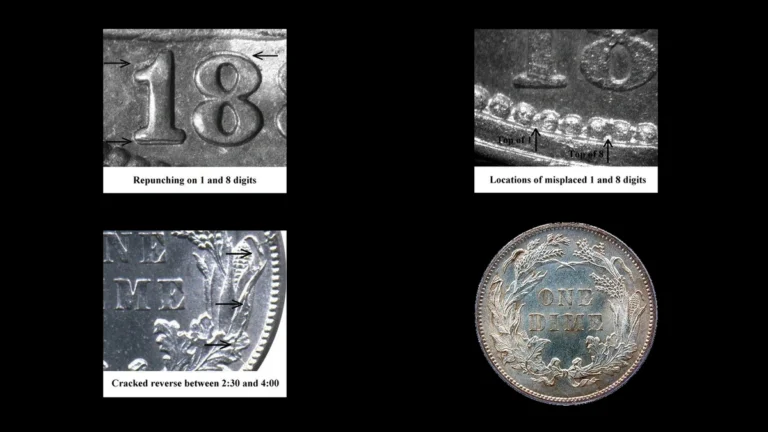
Raised lumps call for a different inspection from the faint lines above. Small cavities left by broken die fragments fill with metal during striking, leaving die chips on the coin.
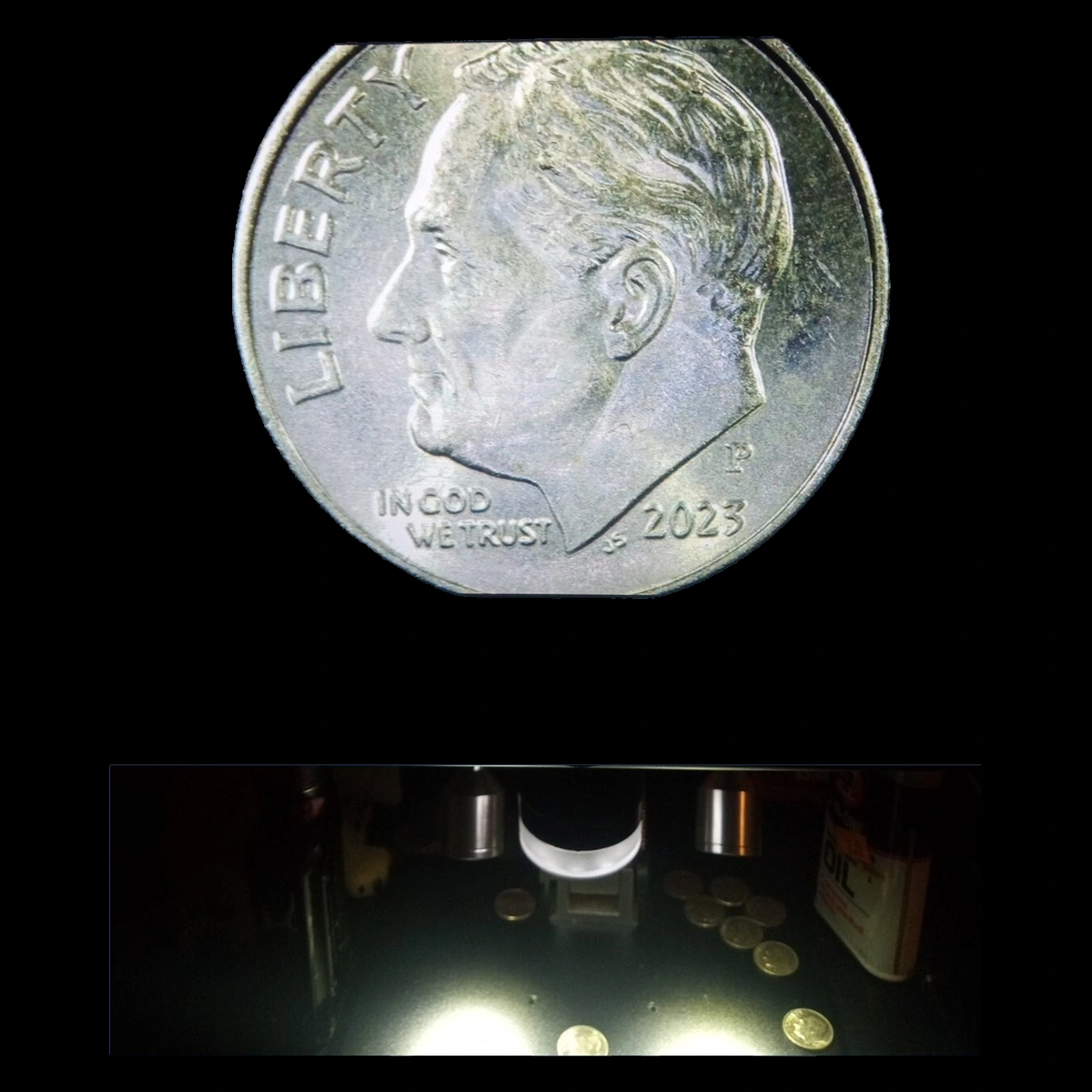
A larger die break reaching the rim produces a cud. The reported olive-branch bump on the reverse and a certified 2023-P coin with obverse chips are separate examples, not two descriptions of the same feature.
How to Identify
Use a magnifier to follow the base of each bump into the surrounding surface. Attached debris can have a visible boundary, while a blow often creates a raised lip around a depression.
For a suspected cud, trace the raised area all the way to the rim. An isolated blob inside the design remains an internal chip even if it is conspicuous.
Photograph the affected face before comparing it with a graded example. A front-chip attribution cannot establish the identity of a lump on the back.
What It’s Worth
$5–$300 covers the estimated span from minor chips to more substantial rim-connected breaks. Size, visibility, and condition matter more than the number of tiny bumps.
A 2023-P obverse-chip dime graded NGC MS65 FT sold on March 16, 2025, but its public page hides the price. MS65 describes an unworn coin’s condition, and FT refers to clear torch detail on the reverse rather than an additional error.
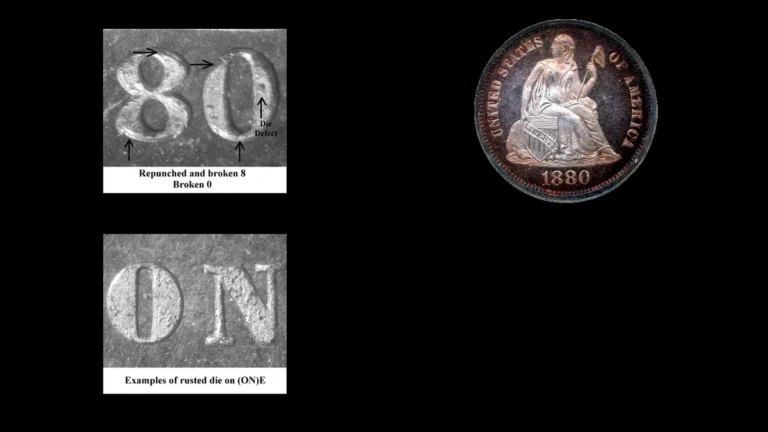
3. 2023 Dime Lettering with an extra stroke: Doubled Die Error
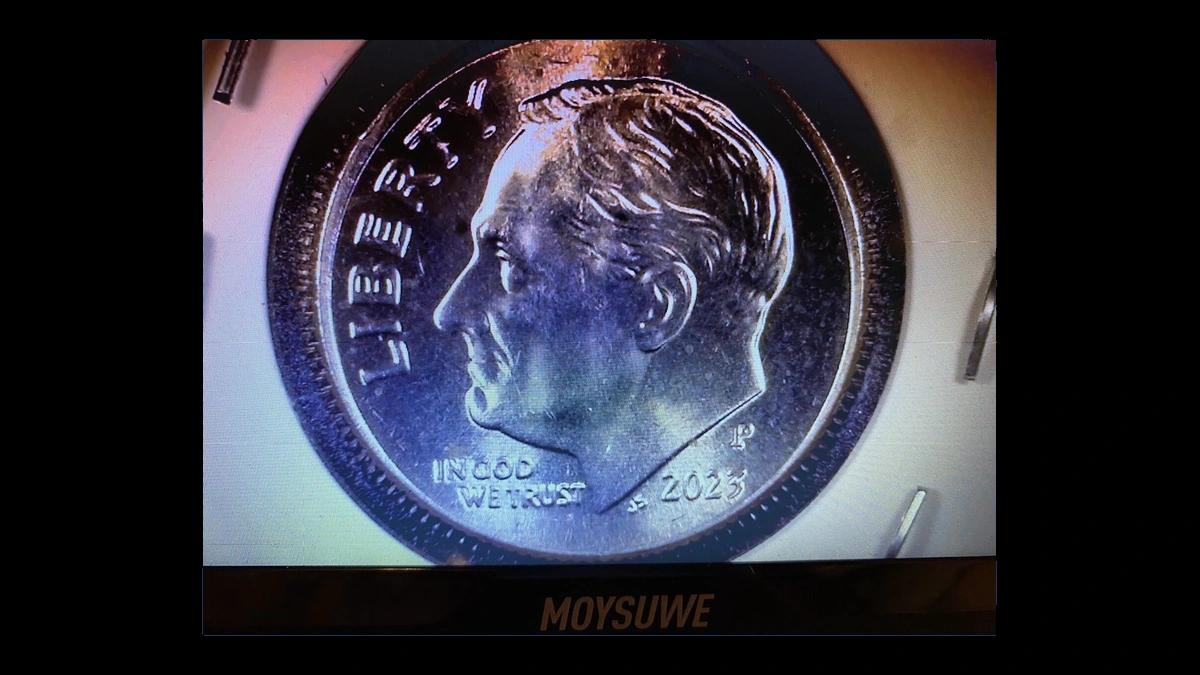
Inspect the outlines of letters after checking for lumps. Reported areas include LIBERTY and the date on the front, plus ONE DIME and the N in UNUM on the back.
In a doubled die, duplicate detail exists on the stamping tool before the coin is made. Reports from different faces and mints need separate evaluation; they do not establish one coin carrying every listed feature.
How to Identify
A genuine second stroke should remain visible when the lighting changes. Look for meaningful separation or a notch where strokes divide, rather than assuming that thick lettering proves doubling.
A low, flat shelf beside a narrowed letter can result from movement during the strike. That form of doubling does not have the same origin as a doubled die.
Record whether the coin bears a P or D mintmark and which face shows the feature. Any proposed match must agree in year, mint, affected letters, and the direction of the additional detail.
What It’s Worth
$20–$300 is a guide estimate for genuine 2023 doubled dies, not a supplied certified auction result. A clear, established pattern on an attractive coin is more persuasive than indistinct extra thickness.
Ordinary shelf-like doubling generally contributes little value. Price the demonstrated feature rather than every apparent doubled edge seen under strong magnification.
4. 2023 Dime Design detail lost beneath an impression: Struck-Through Error
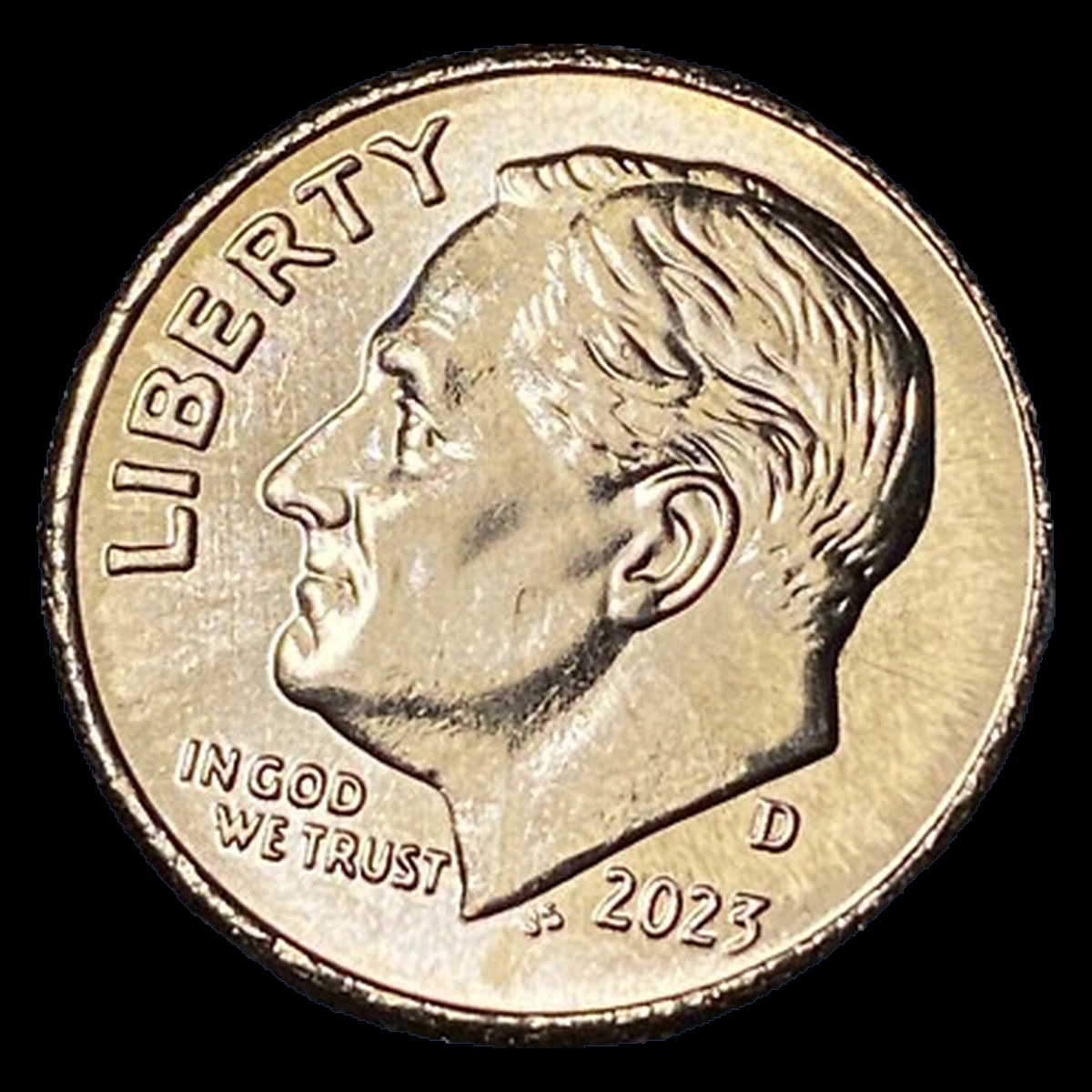
Some surface interruptions replace expected detail with a weak or recessed patch. A substance between the blank and a die can prevent part of the design from reaching the metal, producing a struck-through error.
Grease can suppress fine detail, whereas a firmer object may leave an impression. The supplied 2023-D seller listing does not establish the particular substance involved.
How to Identify
Follow the transition from normal design into the affected area under changing light. Note whether the interruption resembles an impression formed with the design or a later cut crossing it.
Sharp scratches, displaced metal beside a groove, and a matching impact mark on the opposite face suggest damage. Examine the nearby rim too, because squeezing can distort the surface and edge together.
What It’s Worth
$10–$200 is the estimated range for genuine examples, depending on the impression’s clarity and extent. The ungraded 2023-D listing asks $15 with offers accepted.
That figure is an asking price, with no completed sale or professional error finding established by the listing. A strong, readily explained impression can be more desirable than slight weakness that is hard to distinguish from wear.
5. 2023 Dime A face exposing copper: Missing Clad Layer Error
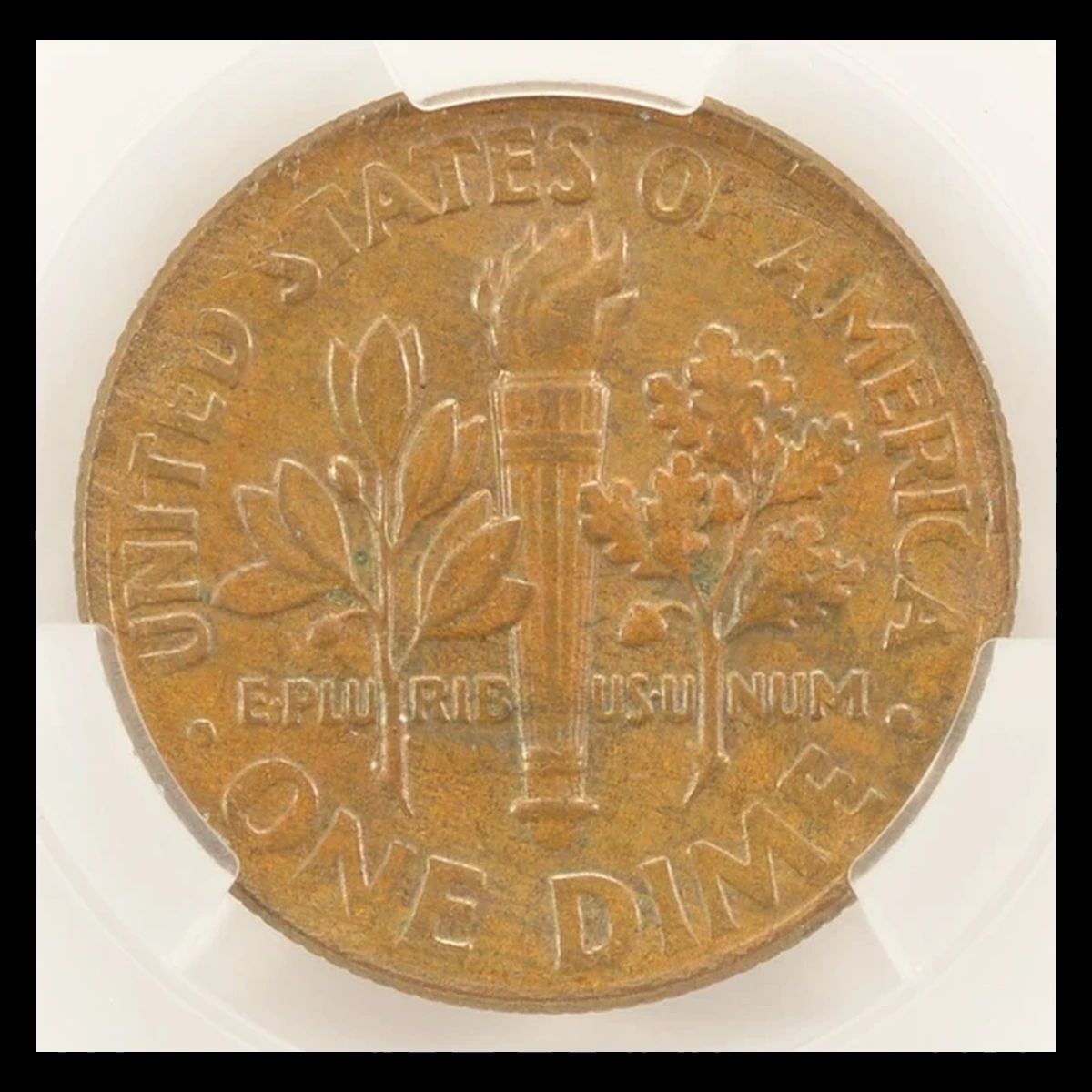
Compare the two faces when one looks unusually brown. Circulation dimes have pale copper-nickel outer layers bonded to a copper center, and losing part or all of an outer layer can expose that center.
First establish that the coin is an ordinary clad issue. The .999 silver collector proofs do not share this layered construction.
How to Identify
Look at the edge and any boundary between exposed copper and surviving outer metal. A partial missing layer needs a physical boundary, not merely a change in surface color.
Check how the stamped design continues across the exposed area. Grinding, rough chemical attack, or an added coating can provide a different explanation for an unusual face.
A reduced weight supports a missing-metal diagnosis, but acid can also reduce weight. Use the layer structure, design, and measurement together rather than accepting brown color as proof.
What It’s Worth
$50–$600 is the estimated range, influenced by how much layer is absent and how well the remaining coin is preserved. The supplied completed comparisons are both from other dates.
A 2018-P dime missing its front layer, graded PCGS MS64, sold for $384 in July 2021. A 2019-P example with eighty percent of its front layer missing brought $139 in September 2024.
Neither result establishes a sale for a 2023 dime. The extent of metal loss on those coins also should not be assigned to a newly found example without examining it.
6. 2023 Dime Extra width surrounding a complete design: Broadstrike Error
Move from the surface to the outline and check whether both designs fit inside a widened coin. A broadstrike forms when the collar, the ring that normally controls diameter and edge grooves, fails to restrain the blank properly.
The metal spreads outward, sometimes leaving an uneven border. Keeping the major design elements distinguishes this category from a strike that carries part of the design beyond the blank.
How to Identify
Compare widths in several directions with an ordinary dime, then inspect the outer lettering on both faces. Expansion should accompany complete designs rather than crushed details from later flattening.
Missing or incomplete edge grooves can support the explanation. A worn or filed smooth edge by itself does not show that the collar failed during striking.
What It’s Worth
$50–$400 is the estimate for genuine 2023 broadstrikes with visible expansion. This category does not come with a supplied certified 2023 sale.
A 2000-P dime graded NGC MS65 sold for $159 in September 2025, but it combined broadstriking with multiple strikes. Its price therefore reflects a different date and a combination of errors.
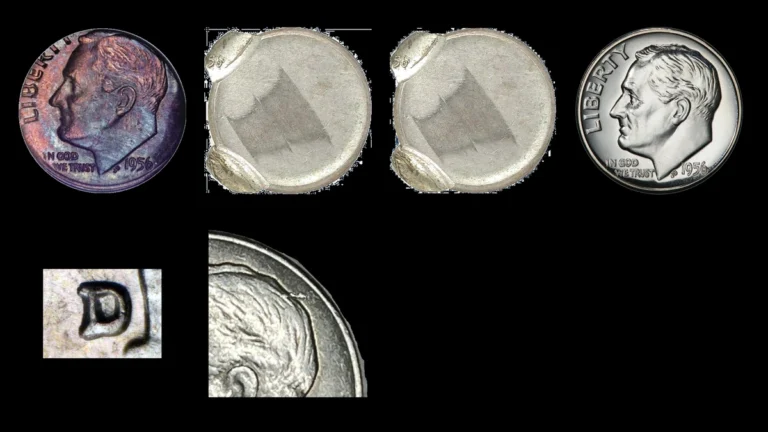
7. 2023 Dime A plain crescent beside an incomplete design: Off-Center Strike Error
A blank crescent of metal with design missing at the opposite edge suggests the disc was misplaced between the dies. An off-center strike affects the placement of both faces because the blank itself was out of position.
No fixed percentage or direction is established for the reported 2023 category. The visible coin must supply those details.
How to Identify
Turn the coin over and compare where each design ends. A centered back with only the front shifted suggests a displaced die rather than the same off-center blank affecting both sides.
The plain crescent should still contain metal. A missing piece, freshly cut edge, or filed outline requires another explanation.
Find the surviving date before assigning the year, and use a visible mintmark to identify the mint. A mark outside the struck area cannot be reconstructed from a general listing description.
What It’s Worth
$30–$500 is the estimated range for genuine examples with readable dates. A pronounced shift that preserves the year usually attracts more attention than a barely displaced design.
A different-year 1977 dime struck ten percent off center sold for $109 in June 2026. Its NGC MS64 Full Bands designation describes unworn condition and clear torch bands; the ten-percent offset belongs to that coin alone.
Conclusion
Read the evidence in stages: an unexpected design fragment, raised metal, missing detail, exposed layers, and finally the coin’s outline. These observations separate several errors that can otherwise be grouped loosely as an unusual dime.
The $5–$600 estimates cover very different features. A documented attribution and a clear view of the actual coin provide a firmer basis for value than color, a seller’s label, or a comparison from another year.