Rare 1838 Dime Errors (List & Pictures)
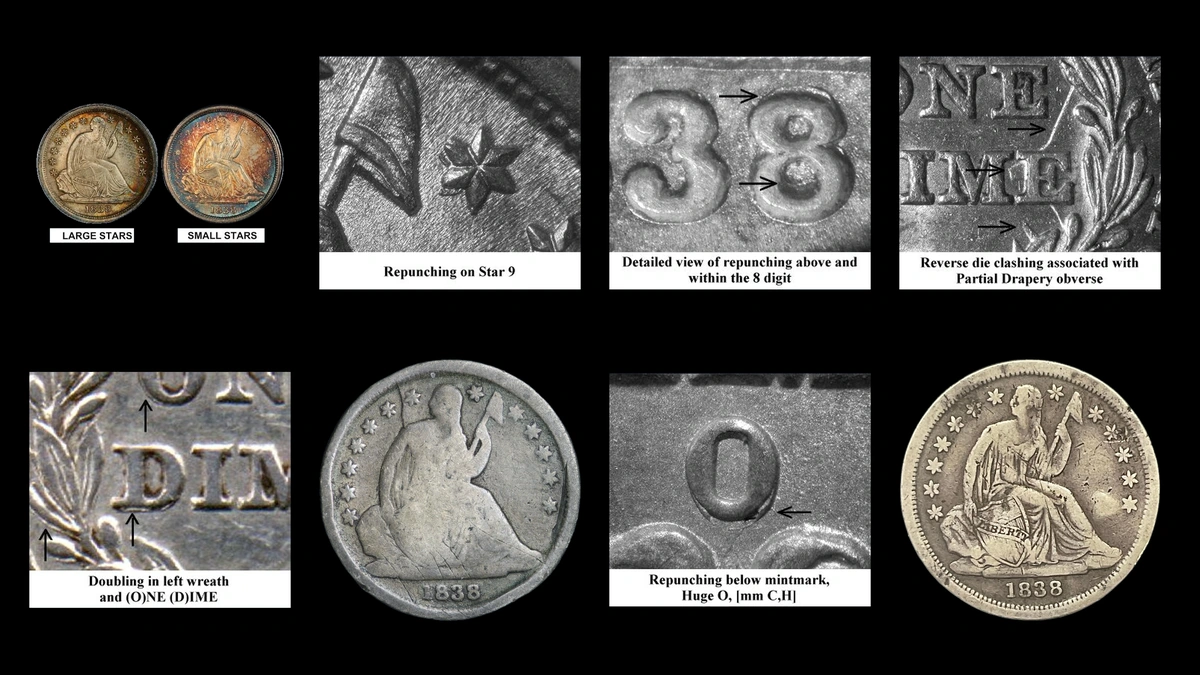
Stars separate the two main 1838 dime issues before a magnifier is needed. Philadelphia has stars around Liberty; New Orleans has a plain front and an O below the reverse wreath.
These 1838 dime errors have estimated whole-coin ranges of $50–$40,000. An exceptional New Orleans F-101 sold for $37,600 in April 2023, reflecting its preservation as well as its variety; use the stars and mint first, then inspect the smaller features.
| Area | Features to separate |
|---|---|
| Front stars | Uniform Small Stars versus extra punched star points |
| Date and elbow | Repunched 18 and the clash called partial drapery |
| Reverse letters and wreath | Doubling, raised flaws, crack lines, or metal separation |
| New Orleans mintmark and rim | Earlier O outline and edge breaks |
| Relationship between faces | Rotated reverse after a controlled flip |
1. 1838 Dime All Thirteen Stars Are Smaller: Half-Dime Star Punch Error
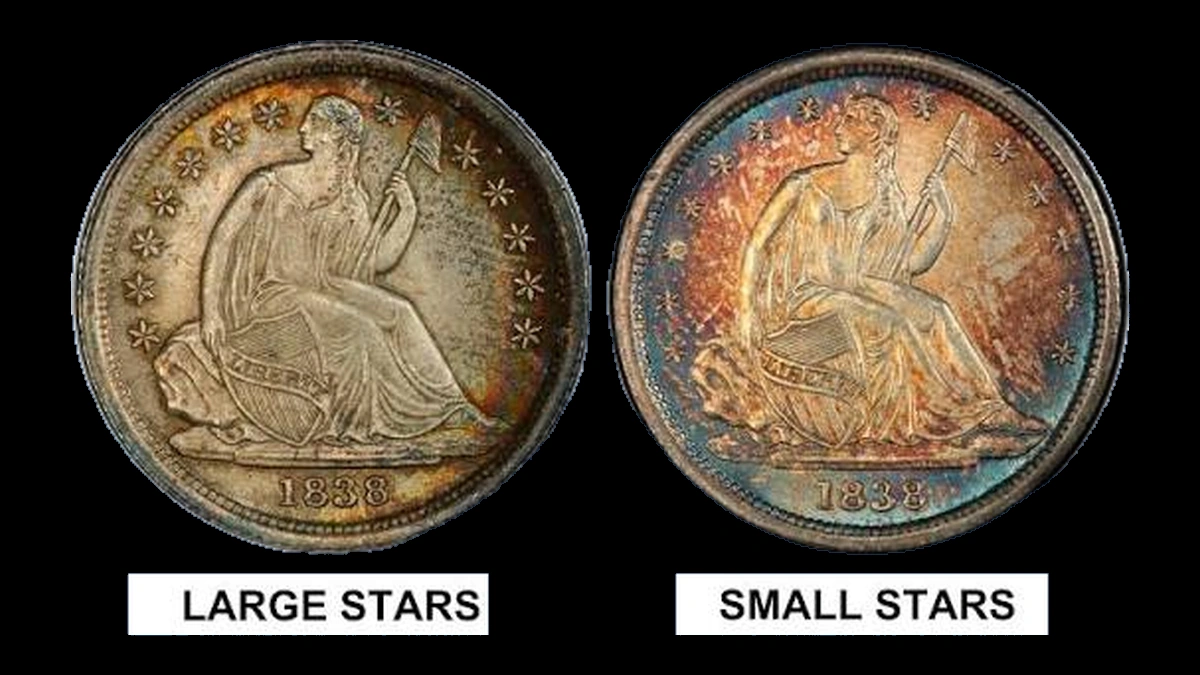
The recognized Small Stars dime was made with a star punch intended for the smaller five-cent half dime. Its thirteen stars therefore differ from the familiar Large Stars front.
The coin itself remains a normal-size ten-cent piece. This is a difference in the tool used to make the stars, not a dime design struck on a half-dime blank.
How to Identify
Compare the complete ring of thirteen stars with good Small Stars and Large Stars photographs. Wear can shorten points, so judge the original shapes and arrangement rather than one weak star.
Read ONE DIME on the reverse and confirm that there is no O. The New Orleans dime has no front stars, while an actual half dime is a smaller denomination.
The standard 1838 dime contains 90% silver, weighs 2.67 grams, and measures about 17.9 millimeters. Measurements help establish the coin type without proving the star variety by themselves.
What It’s Worth
$75–$900 is the estimate for worn through lightly worn Small Stars dimes. Comparable unworn pieces have an estimated $1,000–$6,500 range.
A PCGS MS65 example with CAC approval sold for $5,490 in May 2026. It also had the doubled reverse discussed below, so that result prices both features on one coin.
2. 1838 Dime Individual Stars Have Extra Points: Repunched Stars Error
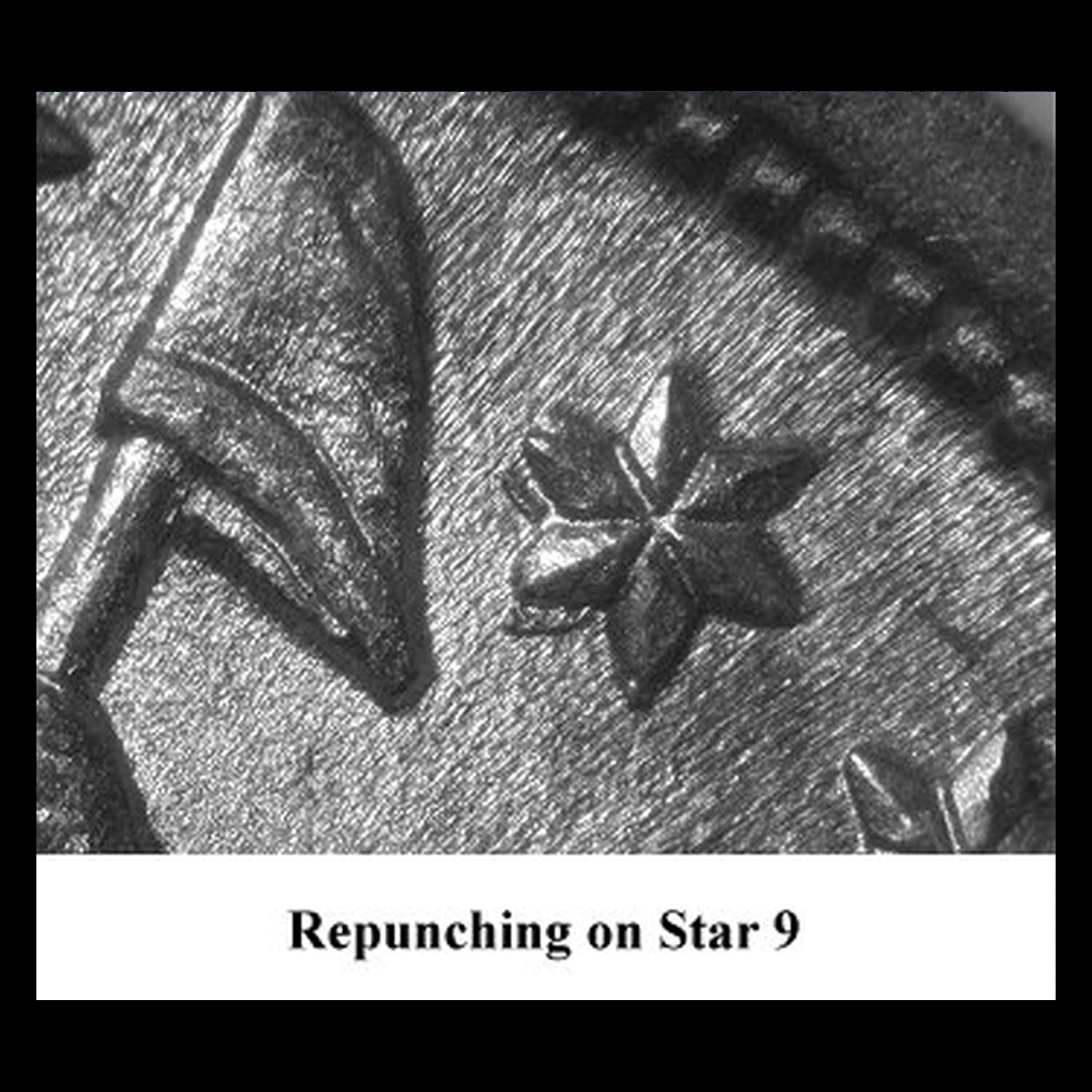
One Philadelphia die has repunching on stars nine and thirteen. A separate F-104 auction example has a repunched first star.
A repeated punch placed slightly differently can leave extra points or overlapping edges. This differs from using a smaller punch for all thirteen stars.
How to Identify
Count the stars using a matching full-front photograph before enlarging them. For the documented pairing, inspect nine and thirteen; for F-104, inspect the first star.
The additional contour should repeat part of a star’s shape. Thickness, glare, or a scratch crossing a normal point is less specific.
Do not expect all three affected positions on one coin. The two recorded patterns belong to different comparisons.
What It’s Worth
$100–$2,000 is the estimate for identifiable repunched stars on worn through lightly worn dimes. Strong extra points on well-preserved surfaces are easier to appreciate.
The F-104 MS66 brought $4,560 in January 2025 and also had a crack and a narrow lamination. That exceptional unworn result is not a separate price for either star nine or star thirteen.
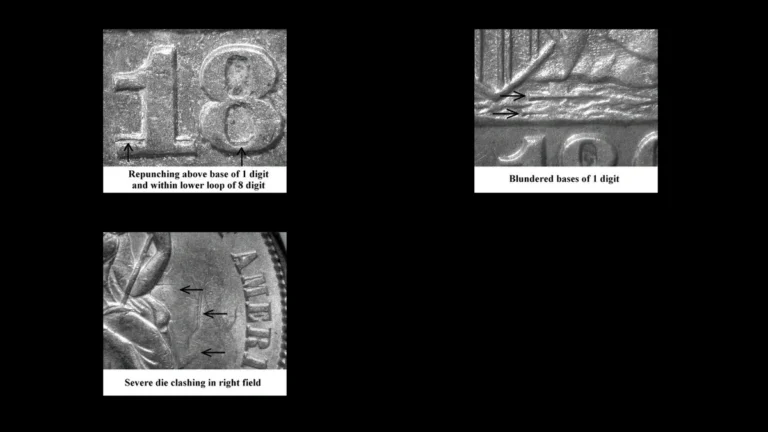
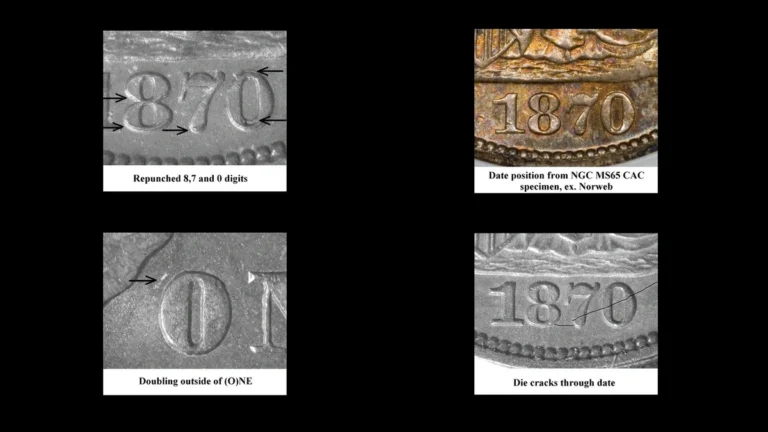
3. 1838 Dime Earlier Strokes Remain beside 18: Repunched Date Error
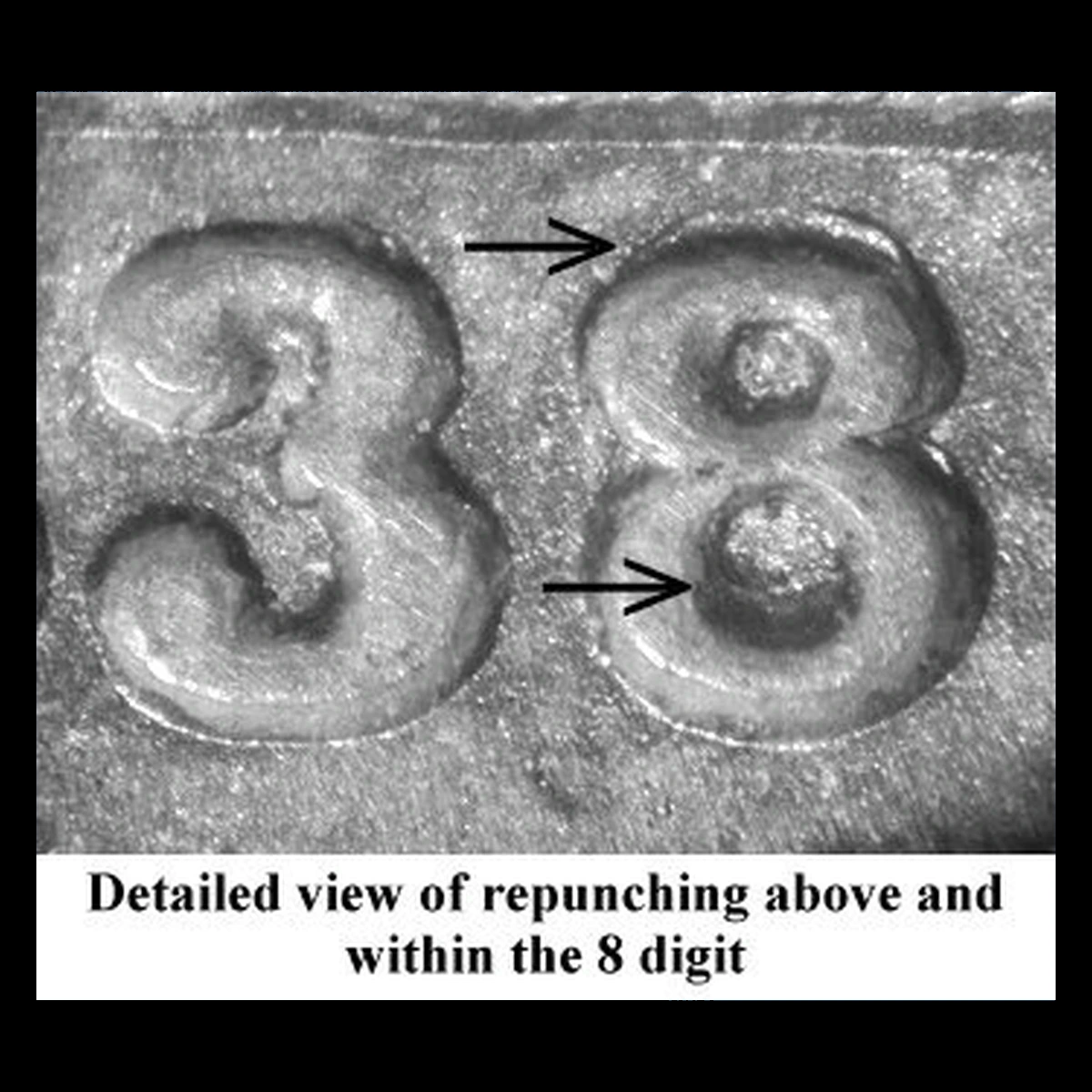
Extra pieces beside the first two date digits can record an earlier placement of the date punch. The final impression did not erase every trace from the die.
The Philadelphia pairing in the specialist record is also associated with clash marks. Date punching and a later clash happened at different stages even when both appear on one coin.
How to Identify
Trace the normal stem of 1 and both loops of 8 first. Then identify the additional strokes against a known example, keeping the full date nearby.
The normal two loops of 8 are not doubling. A flat shelf, scratch, or reflection also needs to be separated from a rounded earlier punch outline.
Confirm the starred Philadelphia front and absence of O on the reverse. The supplied description does not establish a repunch direction to assume without a matching image.
What It’s Worth
$100–$900 is the estimated range for clear repunched dates on worn through lightly worn Philadelphia coins. No specific sale of the 18 repunching is supplied.
Some examples also carry the partial-drapery clash. Compare the combined coin with similar pieces rather than adding another complete clash price.
4. 1838 Dime A Small Fold Appears below the Elbow: Partial-Drapery Clash Error
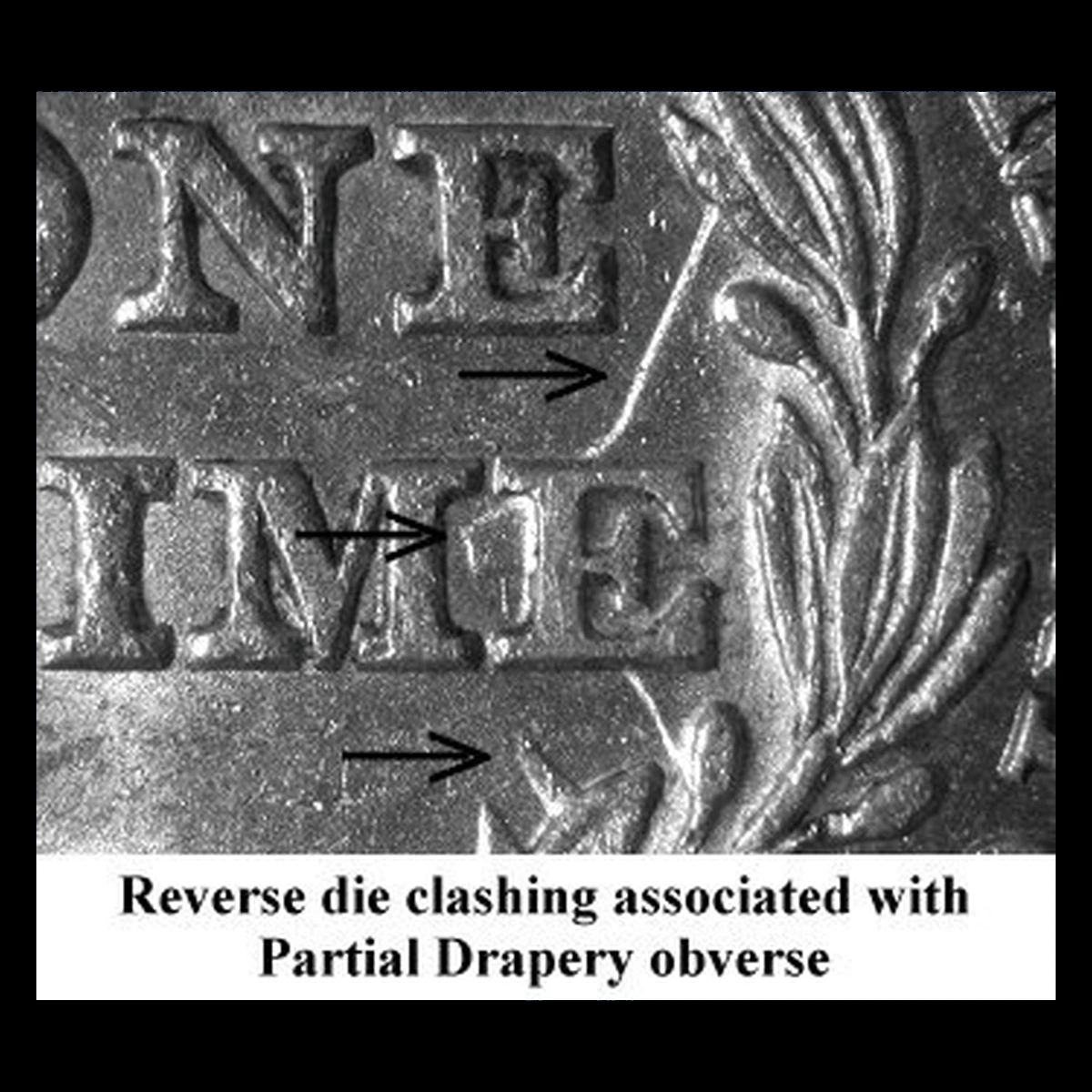
The apparent fold below Liberty’s right elbow is explained as a transferred piece of wreath design. The dies touched without a blank between them and picked up parts of each other’s design.
The traditional name is partial drapery, but it is not the extra clothing added to later normal designs. Strong reverse traces beside the inner right wreath and through E in DIME help identify the clash.
How to Identify
Begin on the back with the inner right wreath and E of DIME. The specialist reference shows the stronger transferred shapes used for comparison.
Then inspect below Liberty’s own right elbow and match the extra curve to its opposite-design source. A faint line near the elbow alone is less convincing.
Keep scratches and later pressure marks separate from these recognizable fragments. The front and back clues should support the same die pairing.
What It’s Worth
$100–$1,800 is the estimate for identifiable partial-drapery clashes on worn through lightly worn examples. Clear marks on both faces and attractive surfaces support stronger interest.
No sale of the illustrated reference coin is supplied for this range. Any accompanying date repunching belongs within the same whole-coin valuation.
5. 1838 Dime DIME, the Bow, and Wreath Repeat: Doubled Die Reverse Error
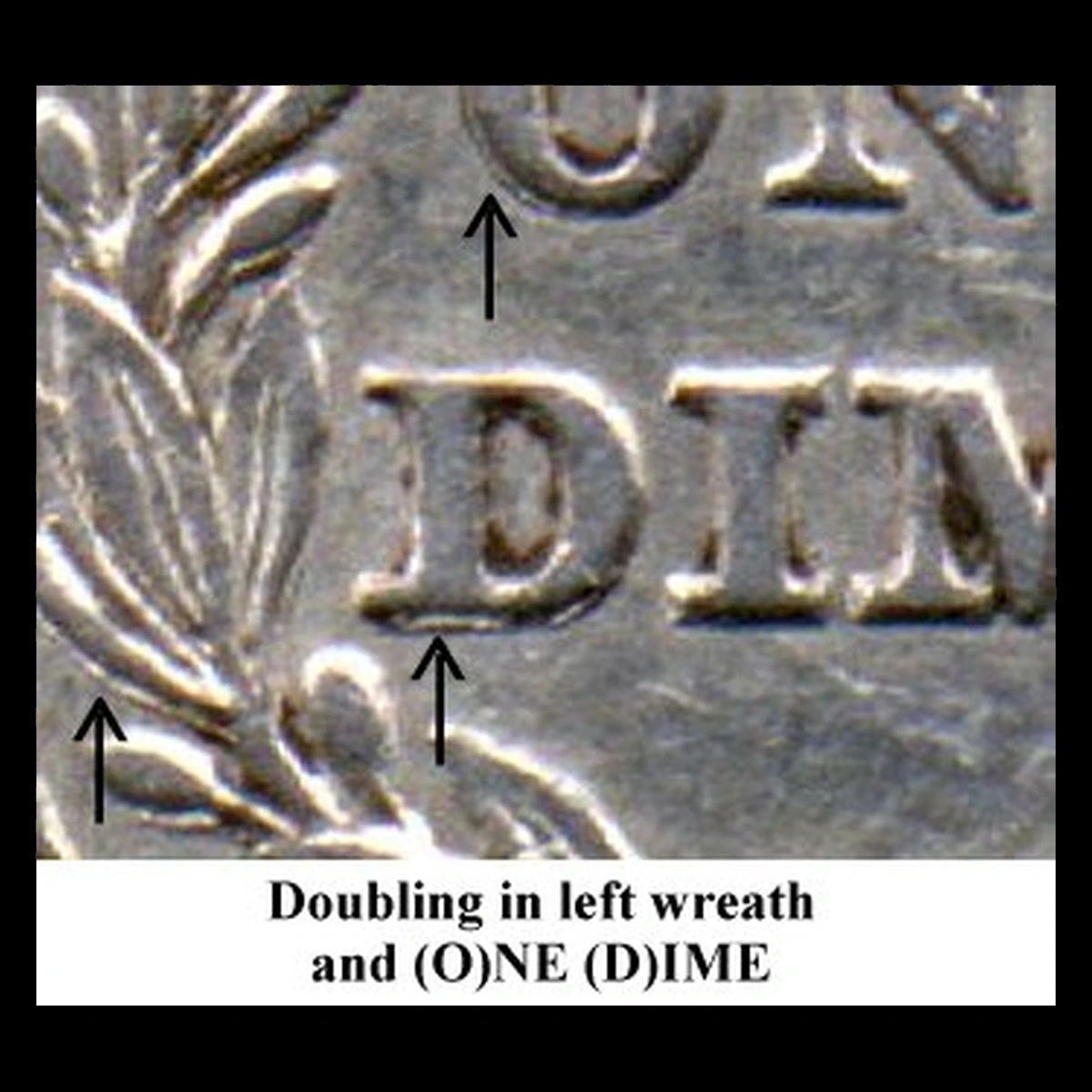
The recorded doubled reverse has extra outlines around D of DIME, the bow, and the lower wreath. The repeated design was already present on the die before it struck coins.
That reverse die was used with both Small Stars and Large Stars fronts. Different pairing labels do not necessarily mean unrelated causes of the doubling.
How to Identify
Find the extra D outline and compare it with the bow and lower-wreath details. Several matching contours make a stronger identification than one bright edge.
A low flat ledge beside a letter can come from movement during striking. It does not reproduce the same rounded extra design across several areas.
Photograph the front stars too, so the correct pairing stays attached to the reverse comparison. The Philadelphia issue has no O below the wreath.
What It’s Worth
$150–$900 is the estimate for worn through lightly worn examples, with $1,000–$6,500 for comparable unworn coins. The Small Stars PCGS MS65 with CAC approval sold for $5,490 in May 2026.
MS65 means unworn with relatively few marks, and CAC adds a separate quality review. This is the same combined Small Stars and doubled-reverse sale used above, not an additional amount to add.
6. 1838 Dime Raised Patches Sit between the Words: Reverse Die Flaw Error
The recorded reverse has a larger raised flaw between N of ONE and M of DIME. A smaller patch appears between N and E of ONE.
The specialist description does not establish precisely how these tool flaws developed. Their inner location distinguishes them from a rim-connected break, while their raised form differs from peeling metal.
How to Identify
Locate both patches and compare their exact outlines with the recorded example. Matching nearby cracks, when present, can help keep the die identification consistent.
Use changing light to see how the shapes rise from the surface. Dirt may occupy the same space, so position alone is not enough.
Leave the area untouched instead of scraping it to test the material. Another small lump between the right letters does not automatically share the same origin.
What It’s Worth
$75–$650 is the estimate for worn through lightly worn coins with clearly matched patches. This is a whole-coin estimate without a supplied sale of the illustrated flaw.
Undisturbed metal and recognizable shapes help collectors assess it. Corrosion or attached debris does not receive the same treatment simply because it sits in a similar position.
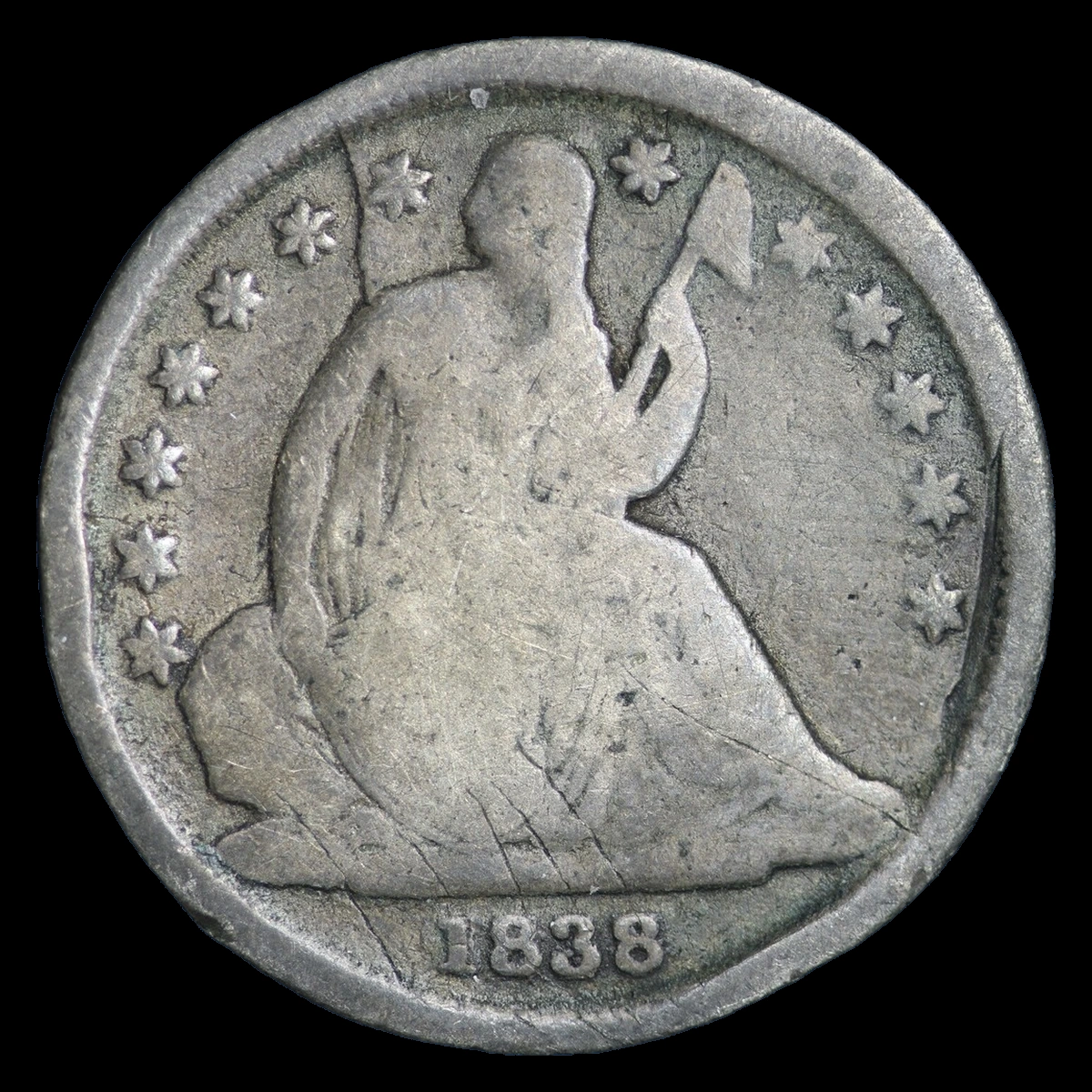
7. 1838 Dime A Raised Route Crosses Letters or Liberty: Die Cracks Error
One reverse crack runs from E of STATES through N of ONE and I of DIME toward the left bow. On the separate F-104 front, a strong line passes through B in LIBERTY.
Silver filled openings in the dies during striking and formed ridges on the coin. These separate routes do not describe one continuous crack that should appear on every 1838 dime.
How to Identify
Follow one documented route across several design elements. Side lighting should show a continuous raised center rather than an open split.
A later scratch usually cuts downward, sometimes with rough lips beside it. Check the line itself instead of judging only its dark appearance in a photograph.
Use the reverse-letter route or the F-104 B route as separate comparisons. Do not join unrelated marks from different dies.
What It’s Worth
$50–$1,000 is the estimate for worn through lightly worn coins with identifiable cracks. Visibility matters, but the early dime’s preservation still contributes much of its value.
The PCGS MS66 F-104 sold for $4,560 in January 2025. Its exceptional condition, repunched first star, and lamination also belong to that price, so the crack alone is not a $4,560 feature.
8. 1838 Dime Metal Separates between AM in AMERICA: Lamination Error
Heritage describes a narrow reverse lamination between A and M in AMERICA on the Large Stars F-104 specimen. It is a split in the coin’s metal rather than a raised line copied from a cracked die.
The same coin has a front die crack and a repunched first star. Those tool-made details have different causes from the individual blank’s metal separation.
How to Identify
Inspect the space between AM under low-angle light for a physical separating edge. Nearby intact lettering helps show the defect in context.
A color boundary changes appearance without opening the metal. A scratch can leave a cut channel and pushed-up edges instead of a natural layered split.
Keep any attached layer in place. This silver-copper alloy does not have modern bonded outer layers, so the separation is not a missing clad layer.
What It’s Worth
$100–$1,200 is the estimate for genuine laminations on worn through lightly worn examples. A small readable separation may be more appealing than extensive peeling across important detail.
The F-104 PCGS MS66 auction brought $4,560 in January 2025. That is the entire exceptional coin’s price, including its other features.
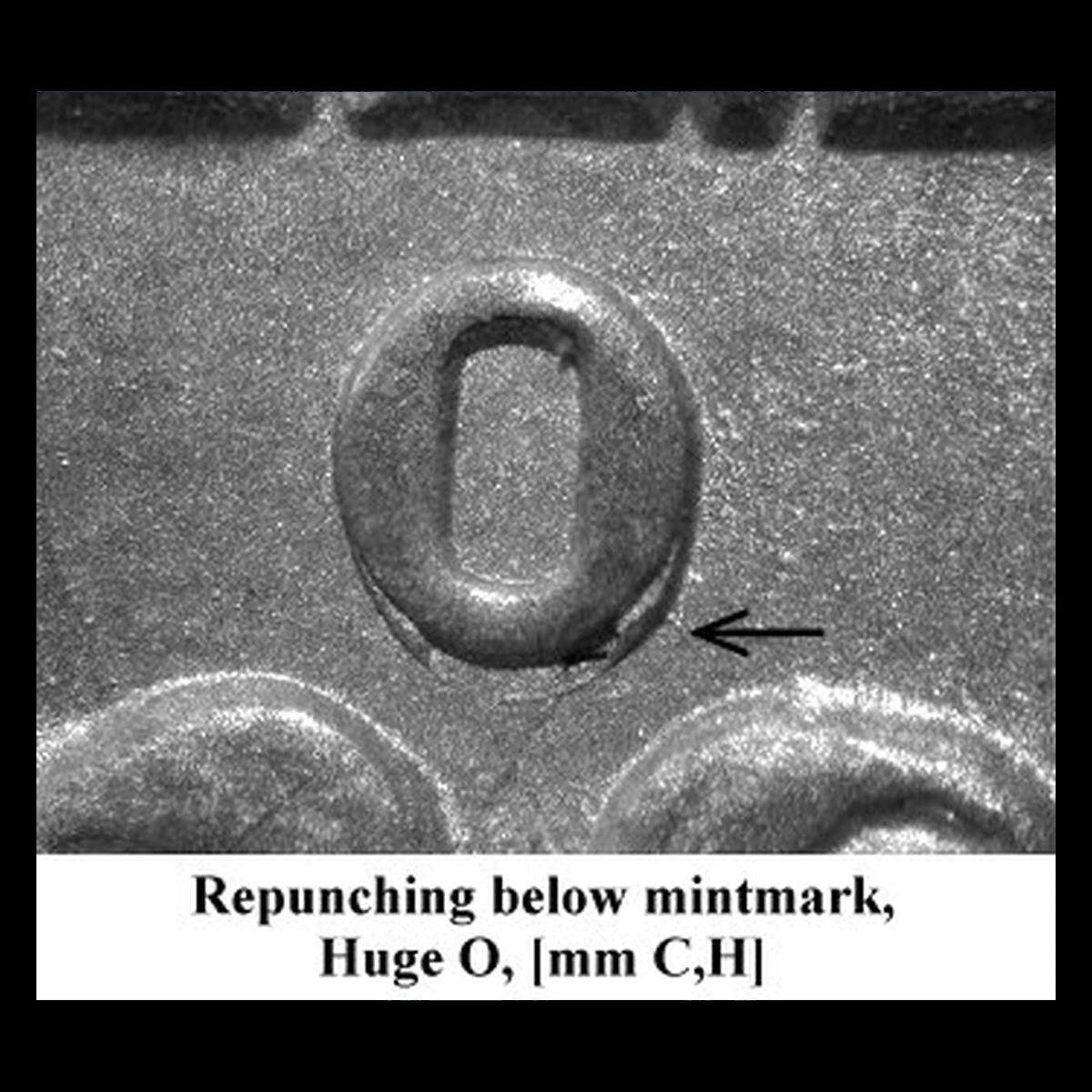
9. 1838 Dime A Second Curve Remains below O: Repunched Mintmark Error
New Orleans F-101 has an extra outline along the lower edge of its large upright O. The mintmark punch entered the die more than once, leaving part of the earlier letter.
The front has no stars. Another normal O can lean slightly without being repunched, so the letter’s angle is not the decisive feature.
How to Identify
Keep the full O below the wreath in view while examining its lower edge. Match the extra curved outline to the F-101 reference.
Check for added metal or scratches that could confuse that edge. A normally tilted O from another pairing is not evidence of a second punch.
Confirm the complete 1838 date and starless front. F-101 can also have rim breaks, but those do not replace the lower-O check.
What It’s Worth
$300–$3,000 is the estimate for worn through lightly worn repunched-O examples. Comparable exceptional unworn coins have an estimated $15,000–$40,000 range.
PCGS records $37,600 for an F-101 graded MS65+ in April 2023. Its exceptional preservation explains much of the upper value; a faint extra O on a worn coin does not inherit that result.
10. 1838 Dime Raised Breaks Reach the Front Rim: New Orleans Cuds Error
The New Orleans F-101 has front rim breaks, with early patches described near two and four o’clock. Later examples can show further development as more of the die edge fails.
Coin metal fills the missing tool area and leaves a raised patch called a cud. The normal F-102 pairing lacks these cuds, so a starless front alone is not enough.
How to Identify
Confirm the O reverse and inspect the front rim near the recorded positions. Compare the actual stage of the break rather than expecting all examples to have identical patch sizes.
Follow original raised metal into the rim where normal design disappears. A notch removes metal, while a crushed edge or solder can create a misleading mound later.
An enclosed die chip does not have the same rim connection. The complete boundary matters as much as the raised area’s height.
What It’s Worth
$300–$3,000 is the estimate for worn through lightly worn New Orleans examples with clear cuds. That already includes the substantial ordinary value of an early 1838-O.
The $37,600 F-101 was exceptionally preserved and also had the repunched O. Its sale must not be added again as a separate cud premium.
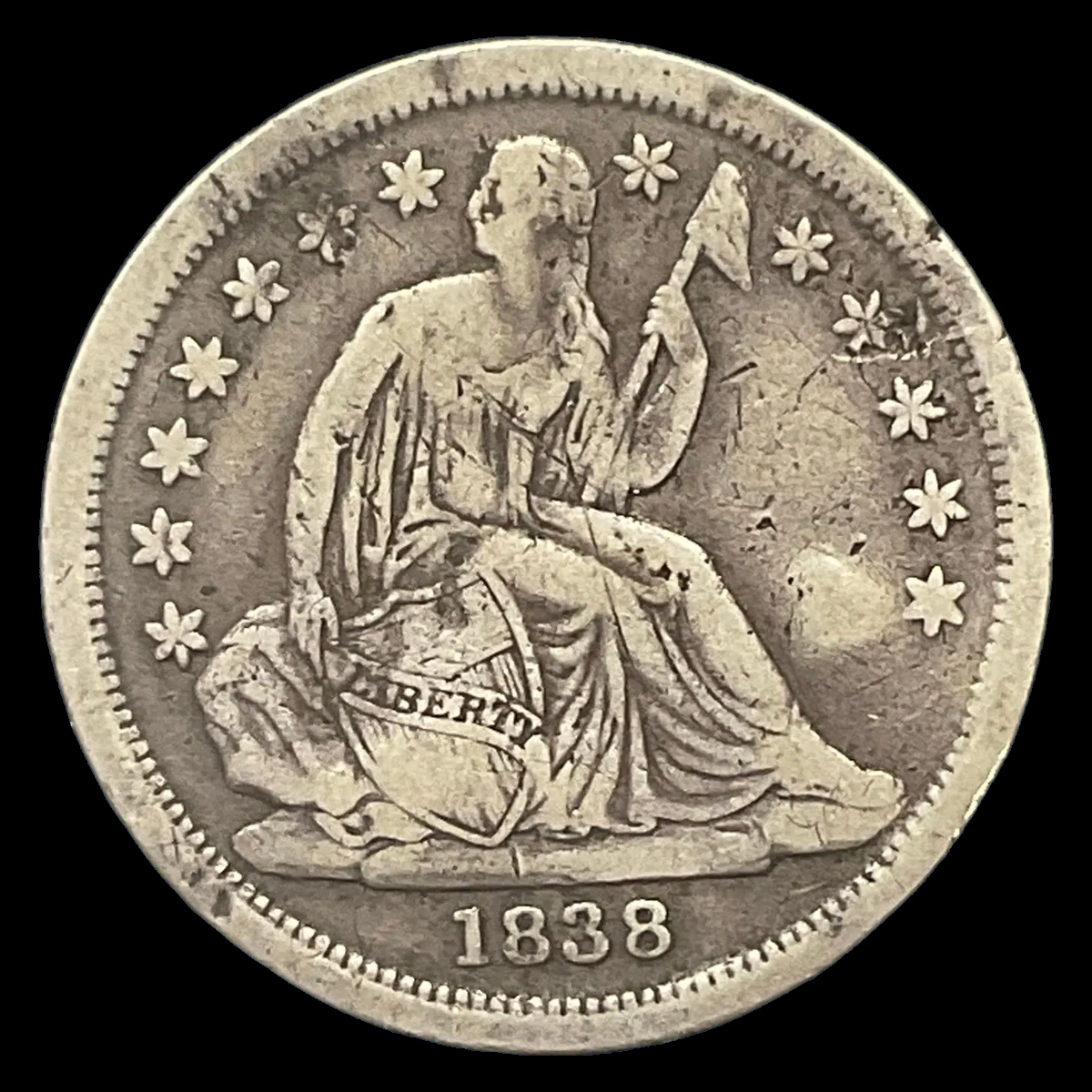
11. 1838 Dime ONE DIME Finishes at an Angle: Rotated Reverse Error
A seller reports rotation on an 1838 Large Stars dime without giving a measured angle. One die had turned relative to the other, changing how the two designs line up.
Photographs rotated separately can conceal or imitate that relationship. Reports about the smaller 1838 half dime also cannot establish the orientation of this ten-cent coin.
How to Identify
Hold Liberty upright and flip the coin straight from top to bottom without twisting sideways. ONE DIME should normally finish upright.
Repeat the movement while keeping the coin fixed in its holder or grip. A genuine rotation gives the same tilt each time.
Record the angle actually observed instead of assigning a familiar number to the seller’s report. If the apparent angle changes with each attempt, the handling may be responsible.
What It’s Worth
$100–$750 is the estimate for a clearly demonstrated rotation on a collectible worn 1838 dime. A larger repeatable angle can attract more interest than a slight difference.
The range is not a sale result for the reported example. Wear, surfaces, and proof of the actual face relationship belong in the comparison.
Conclusion
Sort an 1838 dime by its stars and mintmark first, then follow the matching branch of the inspection. Philadelphia’s Small Stars and doubled reverse differ from New Orleans’ repunched O and rim breaks.
Several listed features can share one physical coin and one auction result. Match each feature accurately, but use the complete coin’s condition and combined identity when estimating its price.