Rare 2017 Dime Errors (List & Pictures)
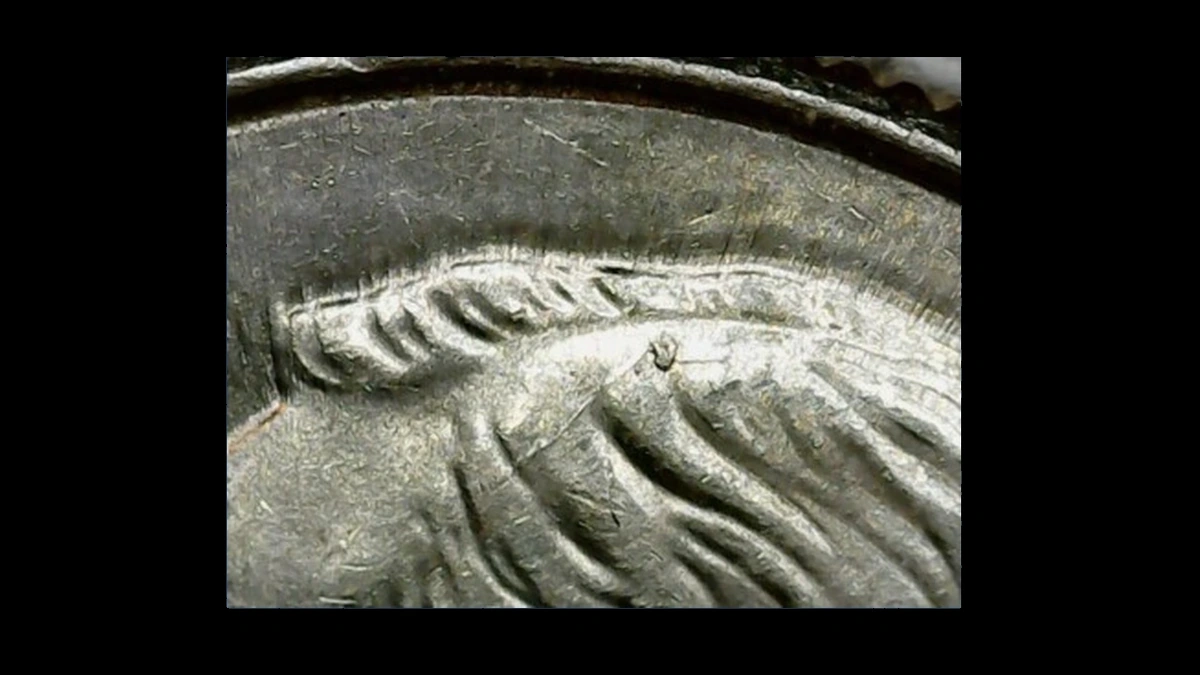
A 2018-P dime missing its front outer layer sold for $384 in July 2021. That different-year comparison helps frame the 2017 dime errors below, whose estimated whole-coin values range from $5 to $600.
Begin with the relationship between the designs, then inspect added strokes, raised breaks, and altered metal. An ordinary clad dime weighs 2.268 grams and measures 17.91 millimeters.
| What you see | Feature | Estimated whole-coin range |
|---|---|---|
| Complete design in uneven expansion | Uncentered broadstrike | $50–$400 |
| Opposite-design shapes | Die clash | $20–$250 |
| Interrupted local detail | Strike-through | $15–$200 |
| Extra design strokes | Doubled die | $20–$300 |
| Raised lines or lumps | Cracks, chips, and cuds | $5–$300 |
| Thin peeling metal | Lamination | $10–$150 |
| Copper exposed by absent layer | Missing clad layer | $30–$600 |
1. 2017 Dime More border on one side but a complete design: uncentered broadstrike Error
The reported Philadelphia example combines outward spreading with uneven centering. Both designs remain inside its enlarged outline.
The collar normally restrains the blank and forms the edge grooves. Without that restraint, metal can expand unevenly without losing the intended design beyond the blank.
How to Identify
Measure several spans, then follow all outer design details on both faces. Weak lettering that remains present is different from detail that completely missed the disc.
Inspect the expanded edge for incomplete collar contact. Later flattening can enlarge a coin too, but generally crushes already struck details.
The distinction from a true off-center strike rests on design completeness, not simply which side has the wider border. The reported category here is the uncentered broadstrike.
What It’s Worth
Genuine 2017-P broadstrikes have an estimated whole-coin range of $50–$400. Clear expansion, complete designs, and attractive surfaces provide stronger evidence for the upper end.
A 2000-P NGC MS65 dime sold for $159 in September 2025, but it was also struck multiple times. That different-year combination is limited context rather than a direct price for a simple 2017 broadstrike.
2. 2017 Dime Leaves and letters appear beside Roosevelt: die clash Error
A Philadelphia finder reported a branch tip near the forehead, PLU near the mouth, flame detail near the neck, and part of Roosevelt’s outline on the reverse. These shapes were interpreted as traces from the opposing design.
When the dies collide without a blank, they can mark each other and pass those contours to later coins. Reported Denver clashes need their own comparison rather than automatic use of the Philadelphia pattern.
How to Identify
Use the normal reverse as a map for unexpected shapes near Roosevelt. On the back, follow the reported head contour near ONE’s N toward UNUM’s M.
The finder’s photographs provide the specific Philadelphia comparison. Preserve their reported status while checking whether each contour matches the opposing design.
Reflections, polishing lines, and scratches can crowd the same area. A recognizable transferred shape matters more than the number of unusual lines.
What It’s Worth
Faint through clearly recognizable genuine clashes are estimated at $20–$250 for the whole coin. Readable transferred letters can make the feature easier to appreciate.
No completed sale is supplied for the detailed Philadelphia find. Its additional reported strike-through marks do not create a second full coin value to add.
3. 2017 Dime Weak patches beside intact design: struck-through Error
The same Philadelphia report describes affected areas below the date and beside the M in UNUM. These local interruptions are separate from its reported opposing-design traces.
Material trapped between a die and blank can block normal contact. Different obstructions can leave faint weakness or clearer impressions, but their identity needs evidence from the actual mark.
How to Identify
Compare the two stated locations with adjacent sharp details on that finder’s coin. Other 2017 strike-through candidates need not occupy those positions.
Inspect how the design enters the weak patch. Cuts and metal pushed to one side suggest scraping rather than material blocking the original strike.
Check both faces and the edge for squeezing or impact damage. A sunken patch near a clash mark does not automatically share its cause.
What It’s Worth
Genuine examples have an estimated whole-coin range of $15–$200. Small faint interruptions usually need lower comparisons than strong impressions on preserved surfaces.
The finder’s coin has no stated completed sale. Its combination of features should be assessed as one object, with clear evidence carrying more weight than the number of labels attached.
4. 2017 Dime Repeated strokes around lettering: doubled die Error
CONECA’s Errorscope lists Philadelphia reverse doubling near E PLURIBUS UNUM. A separate Denver report describes doubling on both faces of one coin.
The repeated detail originated in the die and could transfer during a normal strike. Philadelphia’s reverse pattern does not establish the separate Denver coin’s diagnostics.
How to Identify
Read the mintmark before choosing a reference. For the Philadelphia report, begin around E PLURIBUS UNUM; for Denver, compare each affected face separately.
Look for distinct added strokes or small notches where contours separate. A low flat shelf points toward movement during striking rather than the same die-making feature.
Use changing light to rule out reflected edges and match the exact shape and position. Merely seeing something doubled does not identify the reported variety.
What It’s Worth
Confirmed 2017 doubled dies with visible details have an estimated whole-coin range of $20–$300. Small features with limited demand belong toward the lower part.
No confirmed auction result is supplied for the two-sided Denver report. Both faces still belong to one coin and should not receive two complete estimates.
5. 2017 Dime A ridge, bump, or rim patch: die cracks, chips, and cuds Error
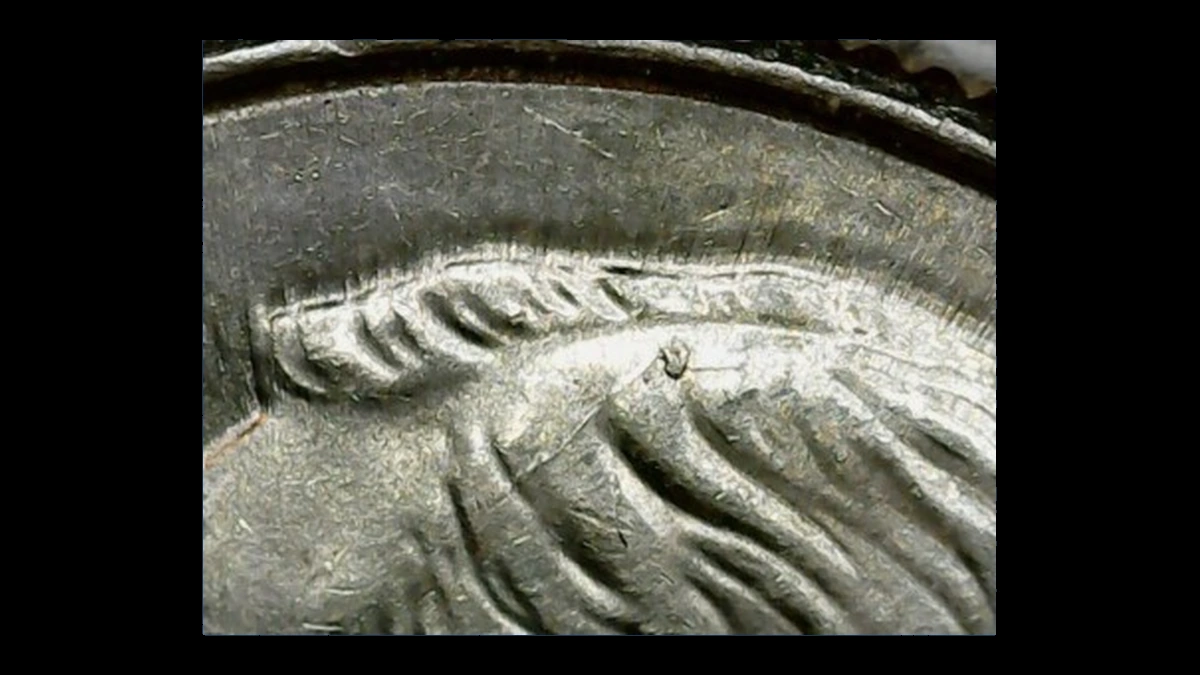
Different amounts of tool damage produce different raised features. A crack leaves a ridge, an interior chip leaves a small bump, and an edge break can leave a rim-connected cud.
Philadelphia reports include a rim cud and a separate coin with chips on both faces plus uneven borders from a shifted die. The alignment problem does not cause the raised chips.
How to Identify
Follow the raised metal and decide whether it is a narrow line, isolated interior bump, or broader mass joined to the rim. Keep enough surrounding design visible to establish that relationship.
Check for dirt, added material, and an impact’s pushed-up lip. A genuine tool defect should be part of the struck surface.
Assess the uneven borders separately on the combined example. A shifted die may affect one face’s alignment while its chips require their own direct inspection.
What It’s Worth
The estimated whole-coin range is $5–$300, with fine cracks and small chips lower than bold genuine cuds. Size, clarity, condition, and demand shape the comparison.
No particular sale establishes the complete range here. The reported chip-and-alignment combination remains one coin, and the additional label does not multiply its value.
6. 2017 Dime A thin flake lifts from the surface: lamination Error
Lamination separates a weak layer within the metal, leaving an attached flake or an opening after it breaks away. The 2017 report establishes no fixed mint or location.
Ordinary dimes use pale outer layers bonded around a copper center. A local peel should be judged from the actual boundary rather than from a general rough appearance.
How to Identify
View the opening from the side without pressing or lifting the flake. Look for a layer continuing into the surrounding metal instead of a fresh sharp cut.
Inspect the opposite face for impact marks and any seam reaching the edge. Scraping and corrosion can remove metal without producing the same Mint-made separation.
An attached flap may leave weight near normal, while detached metal can lower it. The physical layered opening remains the useful evidence.
What It’s Worth
Small genuine flakes are estimated at $10–$30, with larger clear separations around $30–$150 for the whole coin. These are estimates rather than a documented 2017 sale.
An attractive intact flap can show the feature well. Heavy scratches, corrosion, or attempts to lift it can reduce both the evidence and its appeal.
7. 2017 Dime Copper shows where an outer layer is absent: missing clad layer Error
Loss of a pale outer layer can expose the copper center across part or all of a face. Reports include Philadelphia and Denver coins, but a brown surface alone does not establish metal loss.
Heat, stains, acid, and coatings can change a dime’s color. The layer structure at the edge and any surviving boundary need to agree with the claim.
How to Identify
Compare the edge beside the unusual face with the opposite side. For partial loss, follow the boundary between exposed copper and the surviving outer material.
Look for grinding marks or chemical roughness that could explain both color and reduced weight. A lighter reading by itself does not prove that a layer was absent during production.
Check how the design formed on the exposed metal against a confirmed example. The requirement is an actually missing layer, not simply a copper-colored appearance.
What It’s Worth
Genuine examples have an estimated whole-coin range of $30–$600, depending on condition and extent. The upper allowance calls for more convincing evidence than an ungraded color claim.
An ungraded 2017-P listing shows a $29.95 sale on June 26, 2026, with the seller’s error attribution unconfirmed professionally. A PCGS MS64 2018-P missing its front layer brought $384 in July 2021.
The latter supplies a stronger certified comparison of another year. It does not authenticate a brown 2017 candidate or fix its price.
Conclusion
A complete design inside an uneven expansion, a recognizable opposing-design contour, and a physical layer boundary answer different questions. Use those visible relationships before settling on an error name.
Many 2017 reports lack direct auction results, so their estimates require an identified, collectible example. Where several features share a coin, combine the evidence in one assessment rather than adding each section’s whole-coin range.