Rare 1962 Dime Errors (List & Pictures)
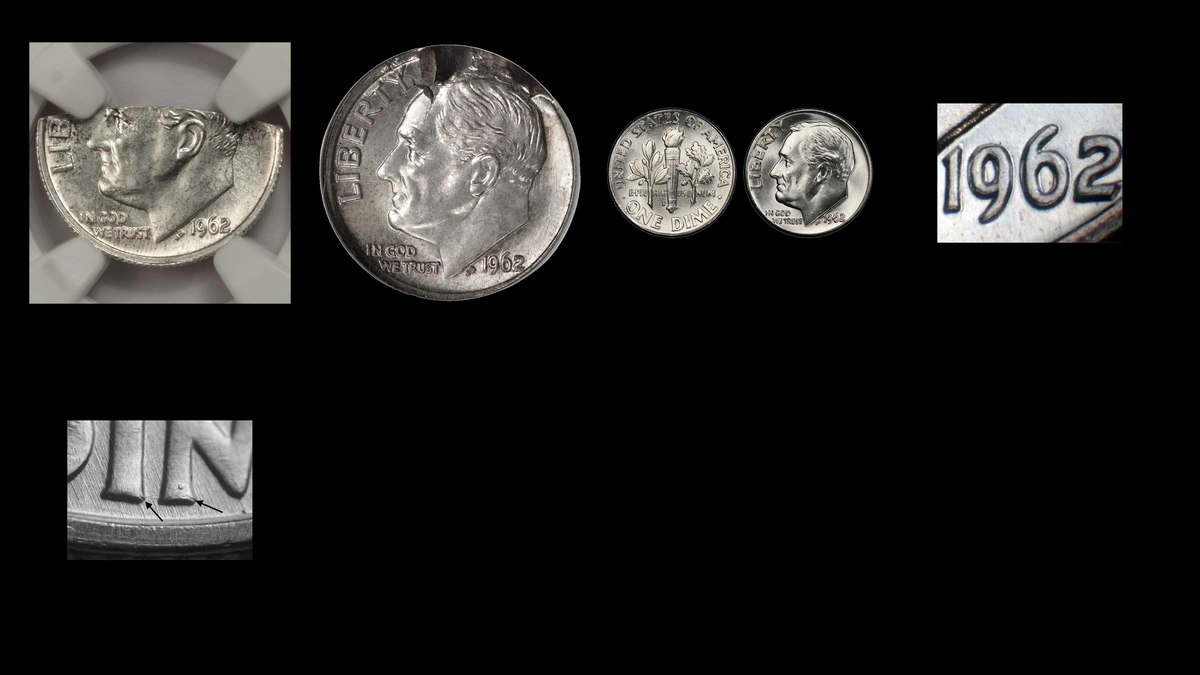
Two 1962 dimes can lose almost the same amount of weight for different reasons: one has a large straight clip, while another was made from a defective blank. Shape and surviving detail help tell their stories apart.
1962 dime errors have estimated values of $20–$1,000, including an exceptional $1,000 recorded Best Offer sale for a repunched D. Start with the outline, examine the silver surface, and finish with the small letters.
| First clue | Possible explanation | Estimated value |
|---|---|---|
| Metal missing at the edge | Clipped planchet | $30–$600 |
| Large blank area beside the design | Off-center strike | $100–$750 |
| Very low weight and flawed metal | Defective planchet | $100–$500 |
| Lifting silver sheet | Lamination | $20–$250 |
| Extra shape beneath D | Repunched mintmark | $25–$200 ordinarily |
| Extra outlines on the front | Reported doubled die obverse | $30–$350 if genuine |
| Doubled back lettering on a Proof | Doubled die reverse | $50–$700 |
A normal 1962 dime weighs 2.50 g, measures 17.9 mm, and has a grooved edge. Its silver-and-copper alloy is solid, unlike the layered metal of later circulation dimes.
Use a scale and calipers for accessible coins, and a 10× magnifier for surface detail. For a sealed graded coin, use its recorded measurements without opening the holder.
1. 1962 Dime An Incomplete Edge: 1962 Dime Clipped Planchet Error
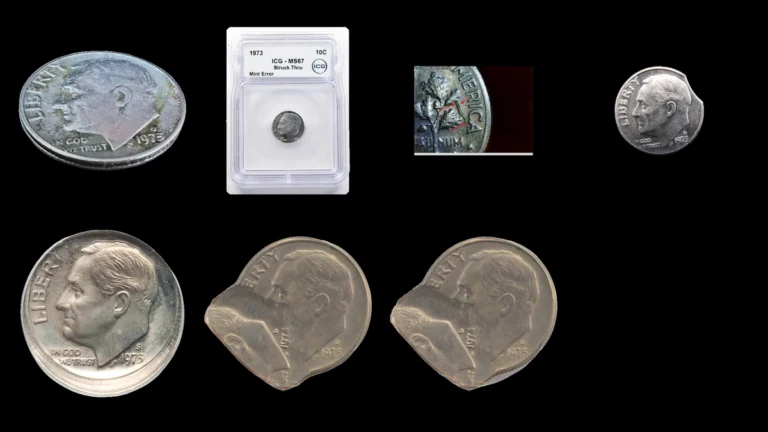
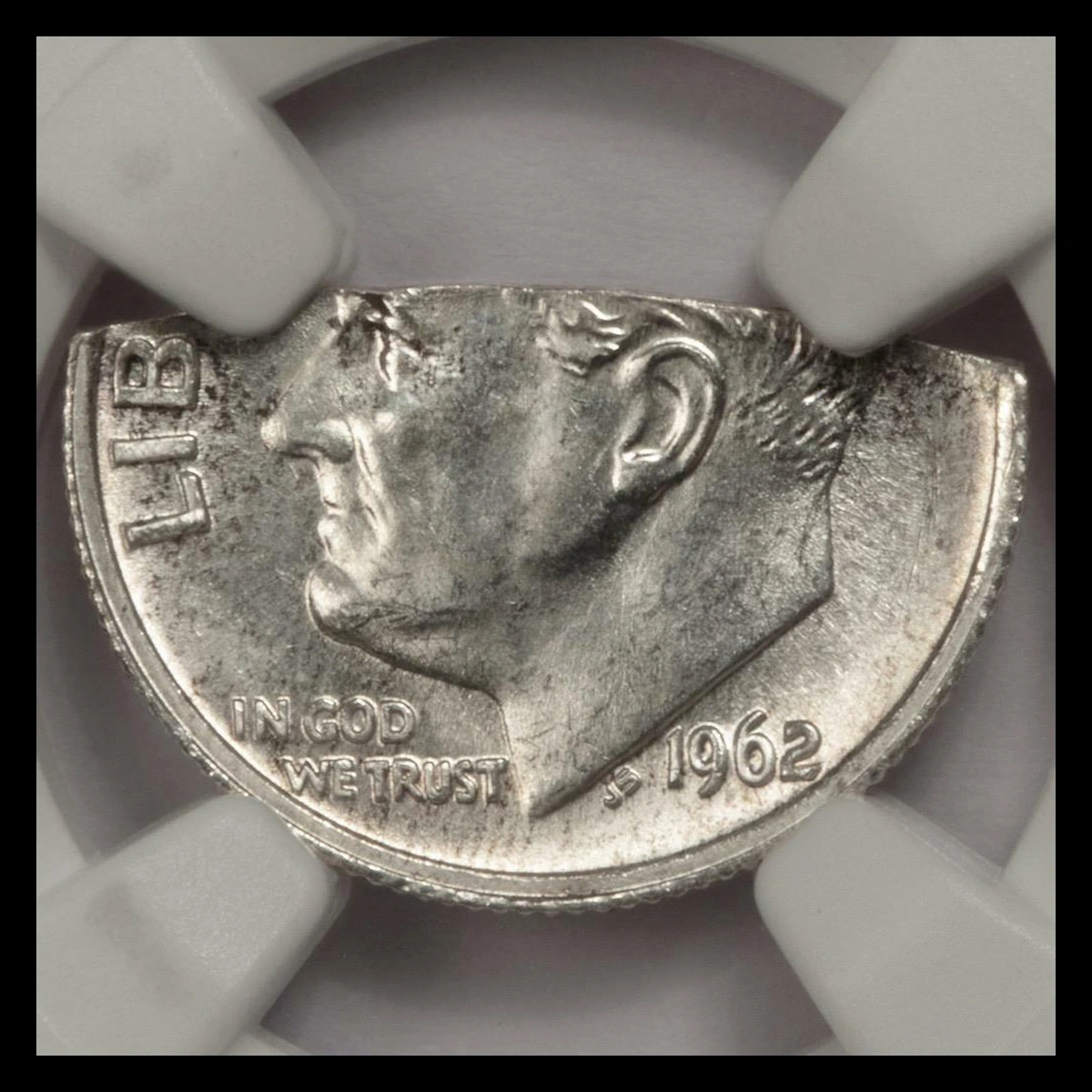
A broad, straight missing portion is the striking feature of a Philadelphia example weighing 1.37 g. A separate Denver dime has a curved opening near eleven o’clock.
Both began as incomplete metal blanks, called planchets. Punching across the strip’s edge can produce a straight clip; overlapping a hole already punched in the strip can produce a curved one.
How to Identify
Study the metal bordering the opening rather than relying only on its shape. Natural metal flow into the gap and a weak rim opposite it can support a mint-made clip, although the opposite weakness is not always obvious.
Check for saw marks and cuts running through finished letters. Those indicate a different sequence in which somebody removed metal after the design was struck.
The straight-clipped Philadelphia specimen was graded NGC MS65, while the Denver curved clip was MS63. Both grades describe unworn coins, with the higher grade indicating better preservation.
What It’s Worth
Smaller curved clips have an estimated $30–$150 range; a large, attractive straight clip can fall around $150–$600. Neither 1962 example has an individual sale price adopted here.
A 1947-S dime with a ten-percent curved clip sold for $104 in December 2024. Its NGC MS66 grade, different date, and smaller missing portion make it a general silver-dime comparison.
2. 1962 Dime A Design Beside Blank Metal: 1962 Dime Off-Center Strike Error
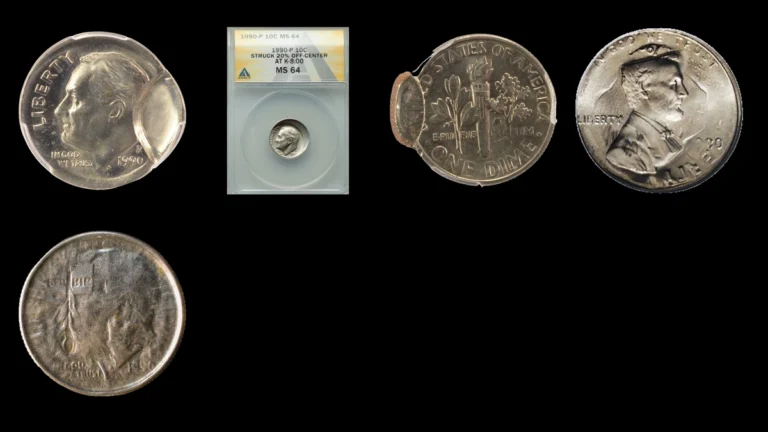
Keep the metal outline separate from the stamped picture when examining this error. A 1962 Philadelphia dime cataloged as 75% off center retains a large area that never received the design.
The blank was caught far from its proper position between the dies, the steel tools that stamp the two faces. Only the overlapping part received an impression.
How to Identify
Both faces should show incomplete designs beside original blank metal. One shifted face alone can result from a misplaced die and needs a different identification.
Locate the surviving date before assigning the coin to 1962. Examine the smooth area for scraping that might explain the missing detail after minting.
The documented example is PCGS MS64, an unworn grade with visible marks. Its unusually large offset should not be assumed for every reported 1962 off-center dime.
What It’s Worth
Smaller silver-dime offsets carry an estimated $100–$300 range, with dramatic, readable-date examples around $300–$750. A missing date or unattractive surface can limit interest despite a large shift.
A dealer offered a 1934-D Mercury dime struck ten percent off center for $350. That asking price concerns a different design and is not a completed sale of the 1962 coin.
3. 1962 Dime Too Little Silver: 1962 Dime Defective Planchet Error
The recorded weight of 1.13 g makes one Philadelphia dime particularly unusual. Its catalog description identifies a defective planchet but does not establish the exact original flaw or a foreign blank.
A defect in the prepared metal existed before the design was applied. The finished coin must therefore be examined for evidence that the strike formed around that defect.
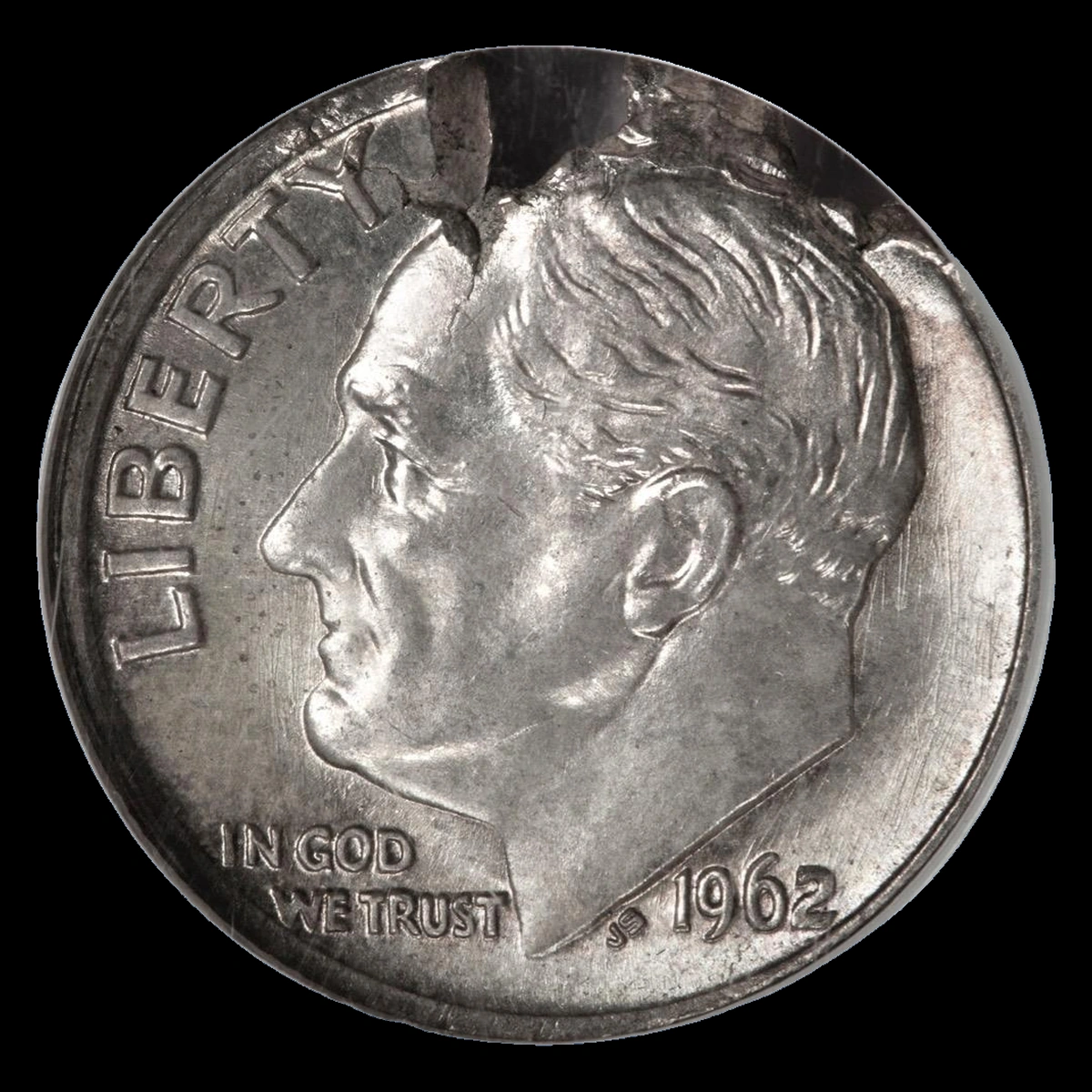
How to Identify
Compare the weight, thickness, outline, and nearby lettering together. Low weight on its own cannot distinguish an original blank problem from silver removed later.
Look for stamped details meeting the flawed area naturally. Filing may leave parallel cuts or truncate lettering that was already complete.
What It’s Worth
A clearly established defective-blank dime has an estimated $100–$500 range. The 1.13 g specimen has no sale amount used in this guide.
A different 1980-P defective-planchet dime sold for $139 in March 2023 in ANACS MS62. That unworn coin uses later layered metal, so its result provides context rather than a direct match.
4. 1962 Dime Silver Lifting from the Surface: 1962 Dime Lamination Error
A thin flap belongs to a different problem from an incomplete blank. Weakness within the alloy allows part of the coin’s metal to separate into a sheet.
Known examples include a Denver dime with peeling on the back and a separate Philadelphia coin with front-side peeling extending roughly from four to ten o’clock. These are two coins, not a description of both faces of one specimen.
How to Identify
Side lighting helps reveal the sheet’s lifted edge and its connection to the surrounding silver. Leave an attached flap in place; pulling it can destroy the feature.
Glue, dirt, and corrosion can imitate a rough patch without being a separated layer of the coin. An attached lamination can also leave the weight close to normal.
What It’s Worth
Small clear peels have an estimated value of $20–$100, rising to approximately $100–$250 for larger, appealing examples. The Denver specimen is NGC MS64, but no individual sale price is used for it or the Philadelphia coin.
A 1942 Mercury dime with major front lamination brought $89 in March 2023. Its different design and condition matter when comparing it with a Roosevelt dime.
5. 1962 Dime Another D Beneath the Mintmark: 1962-D Repunched Mintmark Error
On the back, left of the lower torch, the Denver mintmark may preserve more than one punch position. Mint workers added these small letters to the die by hand.
The cataloged D/D variety FS-501 belongs to this repunched-mintmark group. Descriptions include an earlier sideways D beneath the final upright letter.
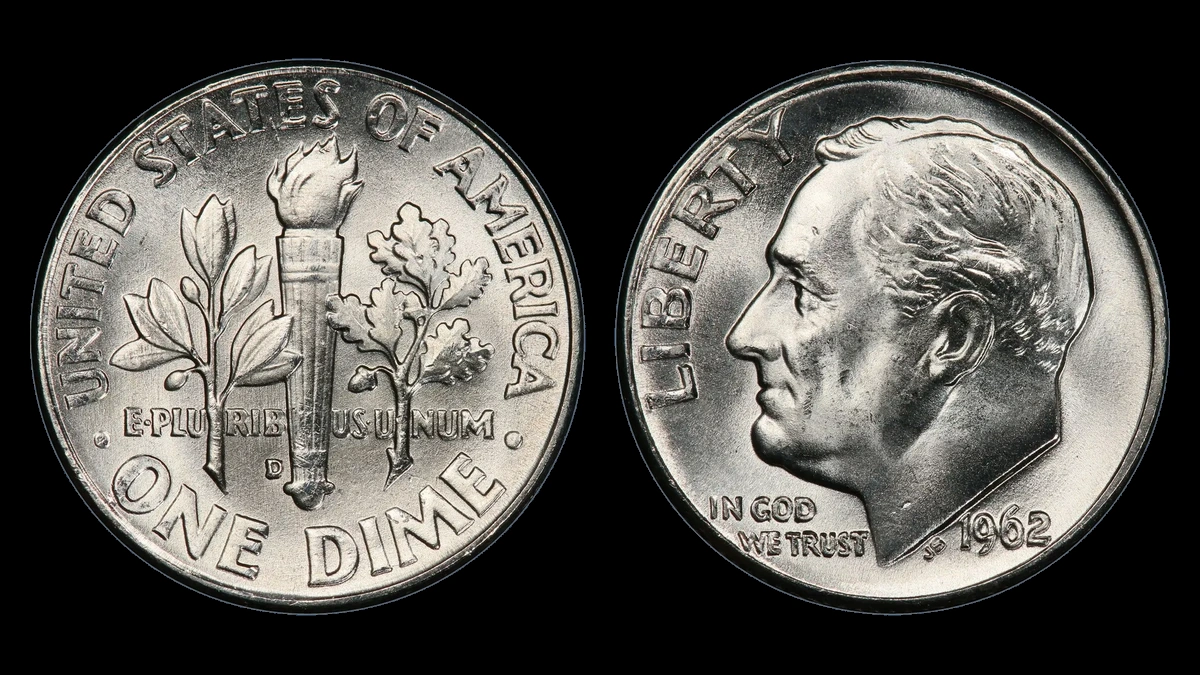
How to Identify
Trace the extra curve as part of a second letter, then compare it with an identified example of the same variety. A random lump or a scratch across the D is insufficient.
Pay attention to the rotation and placement of the earlier punch. A flat shelf alongside the visible D can come from movement during striking rather than repunching the die.
What It’s Worth
Ordinary clearly identified examples have an estimated $25–$200 range. The exceptional recorded level is about $750–$1,000, reserved for comparisons with unusually fine coins.
PCGS lists a $1,000 transaction for an MS66 FS-501 in March 2021. It is labeled eBay Best Offer, so it should not be presented as a competitive auction result.
6. 1962 Dime Extra Date and Motto Outlines: Reported 1962 Doubled Die Obverse Error
The date and IN GOD WE TRUST are the suggested inspection areas for reported front-side doubling. This report does not establish a specific certified variety or mint.
A true doubled die has extra design detail on the stamping tool itself. Coins can reproduce that detail without receiving an accidental second strike.
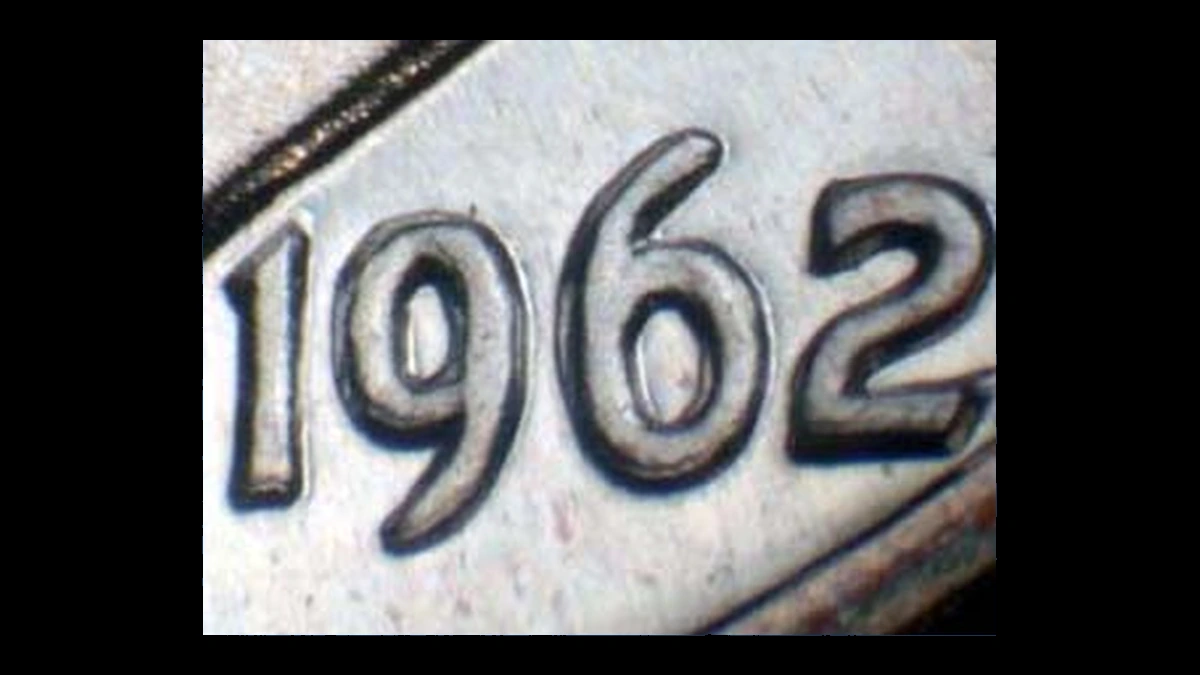
How to Identify
Check directly under magnification so that a blurred photograph does not become the evidence. Rounded separation and split letter corners are more useful than a broad, flat ledge.
Rotate the light and verify that the extra outline remains part of the raised metal. An exact variety attribution requires a matching pattern, beyond the general report used here.
What It’s Worth
The conditional estimate is $30–$350 for genuine front-side doubled dies. It is not a documented price for the reported 1962 example.
The 1960 Proof FS-102, a specially made collector issue, has an ordinary estimated range of $75–$350. That different date and finish help frame the comparison but do not identify a 1962 coin.
7. 1962 Dime Doubled Letters on the Torch Side: 1962 Proof Doubled Die Reverse Error
Reflective Proof surfaces can make back-side lettering difficult to judge. The reported doubled die concerns extra design outlines on the torch side, called the reverse.
The doubled pattern originates in the die. Repeated blows used in normal Proof production should still produce one aligned design.
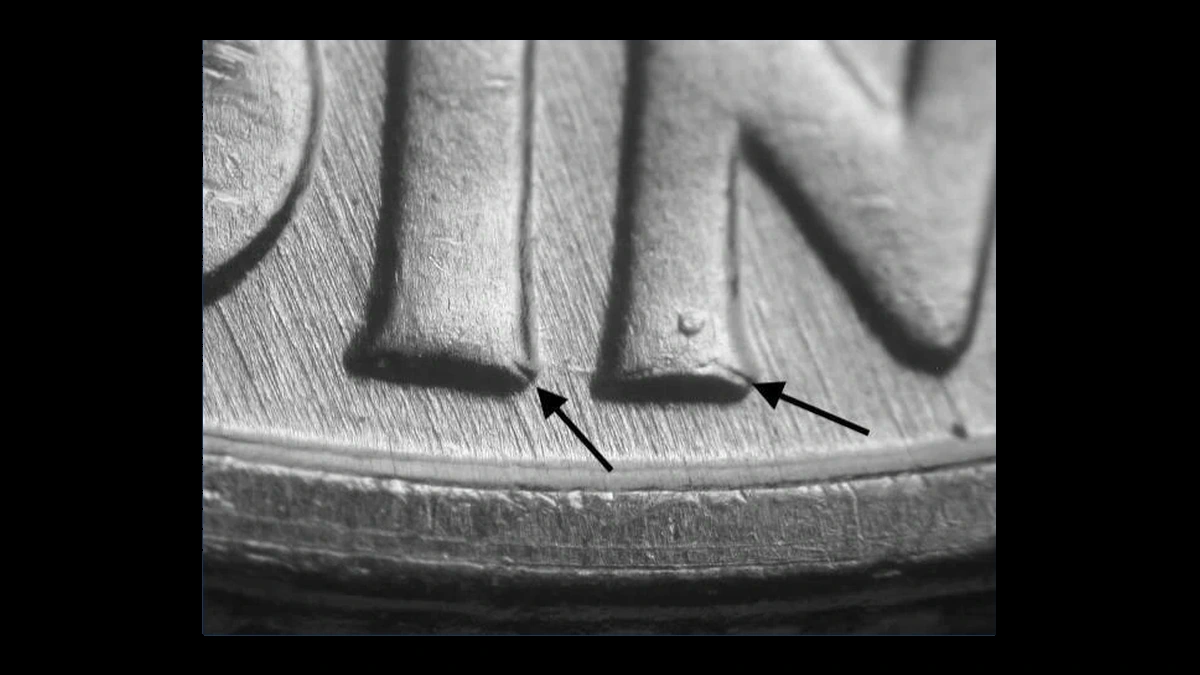
How to Identify
Compare the letters with a normal 1962 Proof at the same magnification. Look for raised separation and split corners that survive changes in lighting.
These Philadelphia Proofs normally lack a mintmark. An absent S is not an error for this year.
What It’s Worth
Modest clear Proof doubling has an estimated $50–$250 range, while stronger, attractive examples can fall around $250–$700. Scratches in the reflective background can materially reduce appeal.
A different-year 1960 Proof doubled die reverse brought $533.50. Its Proof-68 Cameo designation combines very fine preservation with frosted designs against mirrorlike fields.
Conclusion
The missing portion of a clipped dime and the untouched portion of an off-center dime may look similar at first glance. One lacks metal; the other retains metal without the design.
After sorting those larger features, use magnification for peeling silver and doubled letters. Keep reported varieties separate from confirmed attributions, and match condition and finish before applying the estimated $20–$1,000 range to an individual coin.