Rare 1958 Dime Errors (List & Pictures)
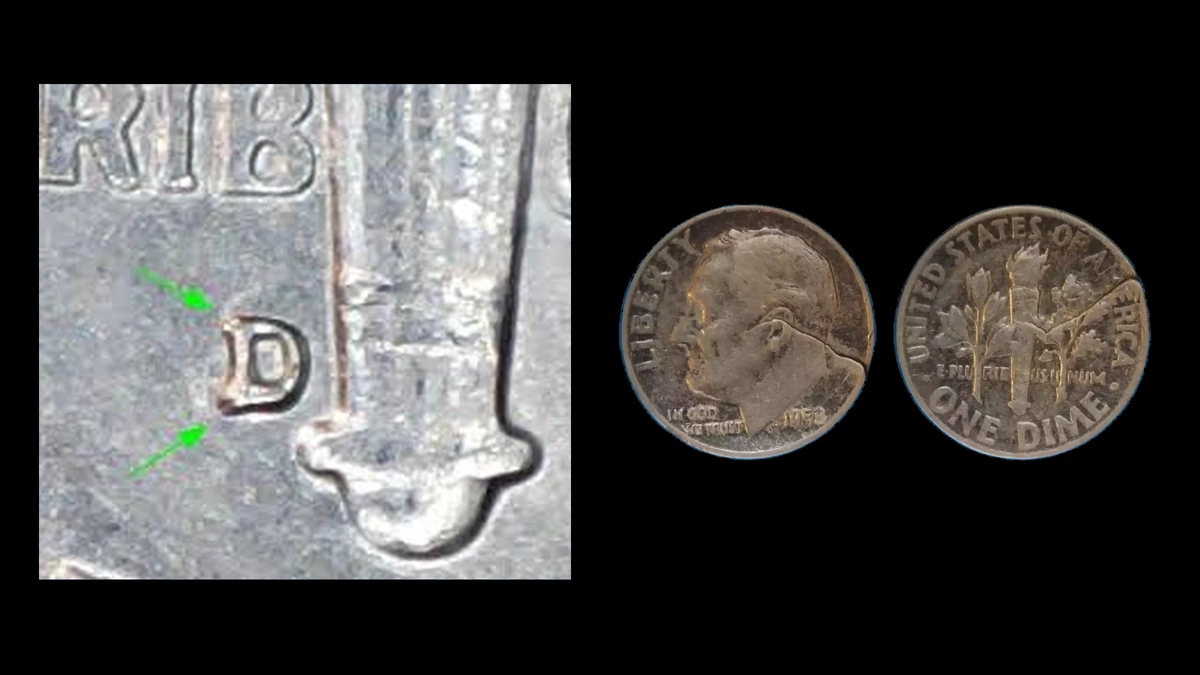
A 1960 Proof doubled-die dime brought $533.50, providing a different-year comparison for the varieties discussed here. Estimated values for 1958 dime errors span about $20–$1,000.
Work from the small lettering to the coin’s outline, then examine any openings in the metal. An ordinary 1958 dime weighs 2.50 grams, measures 17.9 mm, and has a reeded edge and 90% silver composition.
| First clue | Possible error | Estimated value |
|---|---|---|
| Extra strokes on D | Repunched mintmark | $20–$250 |
| Repeated Proof lettering | Doubled die | $50–$800 |
| Unfamiliar faint design | Die clash | $20–$300 |
| Distorted, softened design | Late-stage cap strike | $100–$600 |
| Rough or incomplete metal | Defective planchet | $30–$350 |
| Opening through the coin | Cracked planchet | $40–$500 |
| Curved section missing | Clipped planchet | $40–$400 |
| Design beside blank metal | Off-center strike | $100–$1,000 |
1. 1958 Dime Extra Strokes Around the D: Repunched Mintmark Error
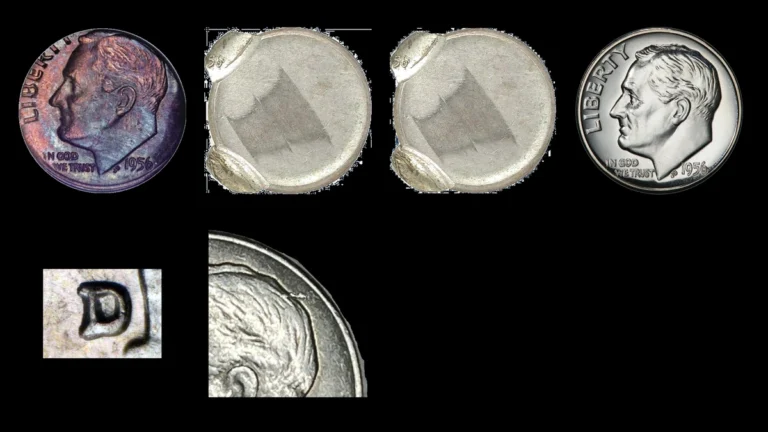
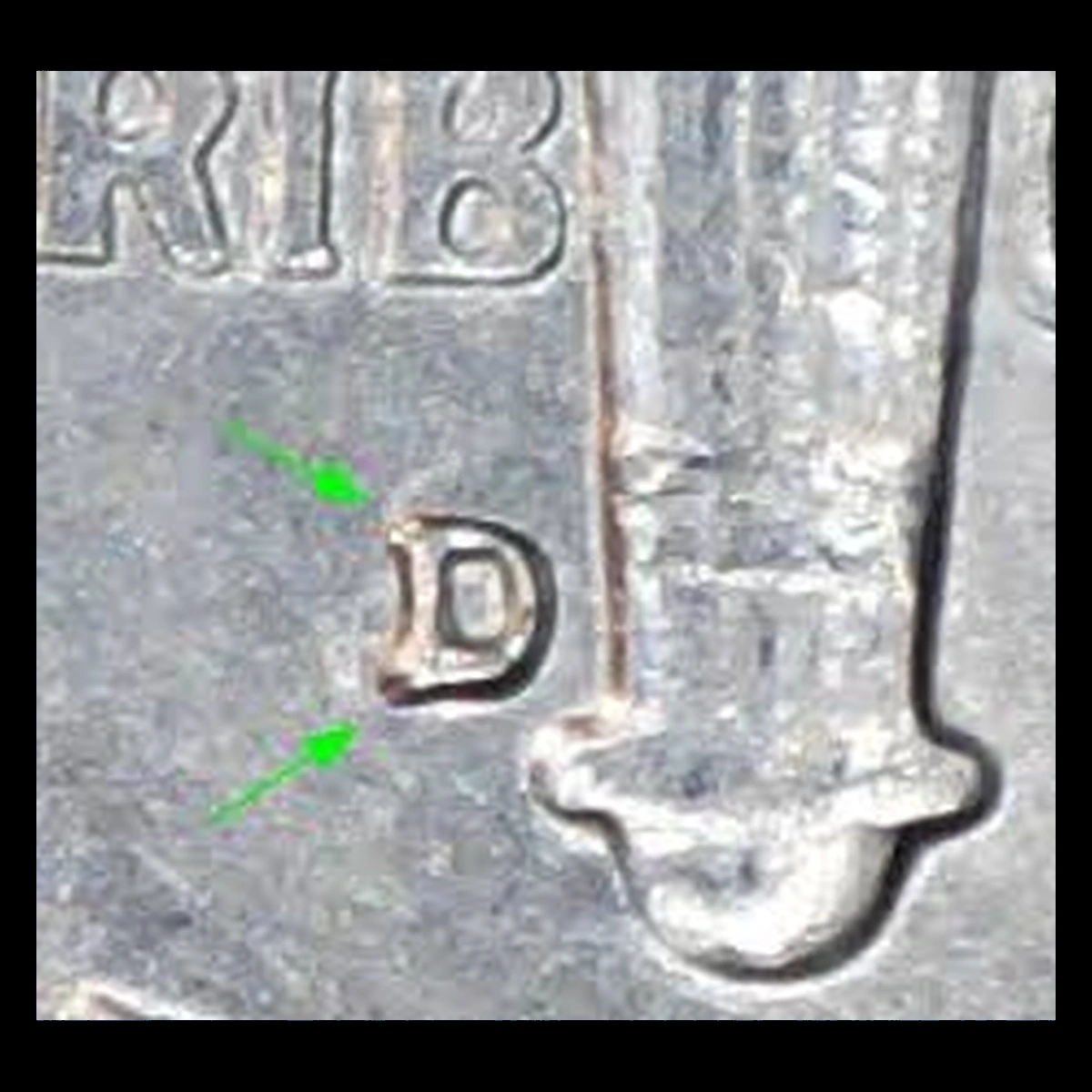
The small D to the left of the torch deserves its own close look. On a repunched mintmark, an earlier placement of the letter remains beside the final placement in the die, the tool that stamps the design.
How to Identify
Find a complete 1958 date before examining the reverse under magnification. Look for additional parts of the D rather than a general blur around its edge.
Several 1958-D patterns appear in Wexler’s mintmark listings, so the direction of the extra stroke depends on the variety. Match the position and shape to a specific listing; a scratch or flat shelf is not enough.
What It’s Worth
An identified 1958-D repunched mintmark has an estimated value of $20–$250. The range covers worn examples through attractive unworn coins with a readable secondary mark.
No named sale supports a narrower price here. The particular variety and how clearly its extra strokes survive matter more than the mere presence of a Denver mintmark.
2. 1958 Dime Repeated Details on a Proof: Doubled Die Error
Proof dimes were specially made for collectors, but their tools could still carry doubled details. The 1958 listings include separate front-side and reverse-side doubled dies, not a promise that both occur on one coin.
How to Identify
Study letters and other listed details for raised, repeated contours that remain fixed when the light moves. A doubled die transfers its repeated design during striking; it does not require the coin to be struck twice.
Use the appropriate entry in CONECA’s Roosevelt dime listings to check the affected face. These Philadelphia Proofs have no mintmark, and a low, flat ledge beside a letter should not be substituted for a catalog match.
What It’s Worth
For an attributed 1958 Proof doubled die, the estimated range is $50–$800. Clear doubling and well-preserved Proof surfaces support stronger prices.
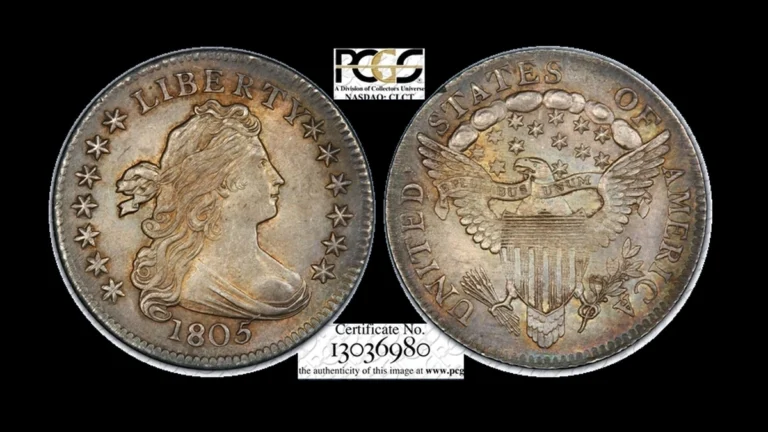
A 1960 doubled-die reverse graded PR68 Cameo sold for $533.50. That coin supplies a different-year comparison, and its grade and contrasting finish should not be assumed for a 1958 example.
3. 1958 Dime Traces of the Opposite Design: Die Clash Error
A faint shape that does not belong on its side may be a clash mark. Dies can touch when no blank is between them, leaving marks that appear on coins struck afterward.
How to Identify
Compare the unfamiliar mark with the design on the other side, including the torch and branches. A convincing match needs the correct shape and position, rather than simply an unusual line.
The supplied 1958 report does not establish one exact clash location. Check both faces and exclude random scratches before attaching a specific description.
What It’s Worth
The estimated range for a 1958 clashed-die dime is $20–$300. Minor traces fit roughly $20–$100, while stronger recognizable clashes may reach $100–$300.
No named 1958 transaction is supplied for this category. Visibility and the coin’s condition determine whether a subtle mark has much collector appeal.
4. 1958 Dime Design Softened by Another Coin: Late-Stage Cap Strike Error
A coin trapped on a die can act as a thin cover over the tool. Near the end of that cap’s life, a newly struck dime may still show much of its design, but with distortion or weakened detail.
How to Identify
Examine the affected face as a whole, then compare its letters and portrait with a normal dime. The supplied example was described as struck through a very late-stage die cap.
This is the coin struck through the trapped piece, not necessarily the trapped cap itself. Wear or a weak strike can also soften detail, so the overall pattern and an expert attribution are useful.
What It’s Worth
A 1958 dime struck through a late-stage cap has an estimated value of $100–$600. A clear effect on an unworn coin generally makes the error easier to appreciate.
An ANACS MS63 example sold for $204 in March 2023 in the Heritage auction archive. That is a recorded 1958 sale, unlike the broader estimates above.
5. 1958 Dime Irregular Metal Beneath the Design: Defective Planchet Error
A planchet is the metal blank prepared for striking. Defects in that blank can leave an irregular surface or incomplete metal even when the coin receives a normal design.
How to Identify
Look at how the stamped design meets the defective area and inspect the edge for later cutting or filing. A rough patch alone does not identify the exact problem in the original metal.
A Heritage example assigned to 1958 was graded NGC MS65 and weighed 2.3 grams. Its date was recorded as “(1958),” so do not describe all four digits as visible or call the defect a specific lamination without supporting detail.
What It’s Worth
The estimated value for a 1958 defective-planchet dime is $30–$350. The extent of the flaw, surviving design, and confidence that it began before striking all influence the price.
No sale amount is supplied for the 2.3-gram example. Low weight alone is inconclusive because filing or chemical damage can also remove metal.
6. 1958 Dime A Split in the Metal: Cracked Planchet Error
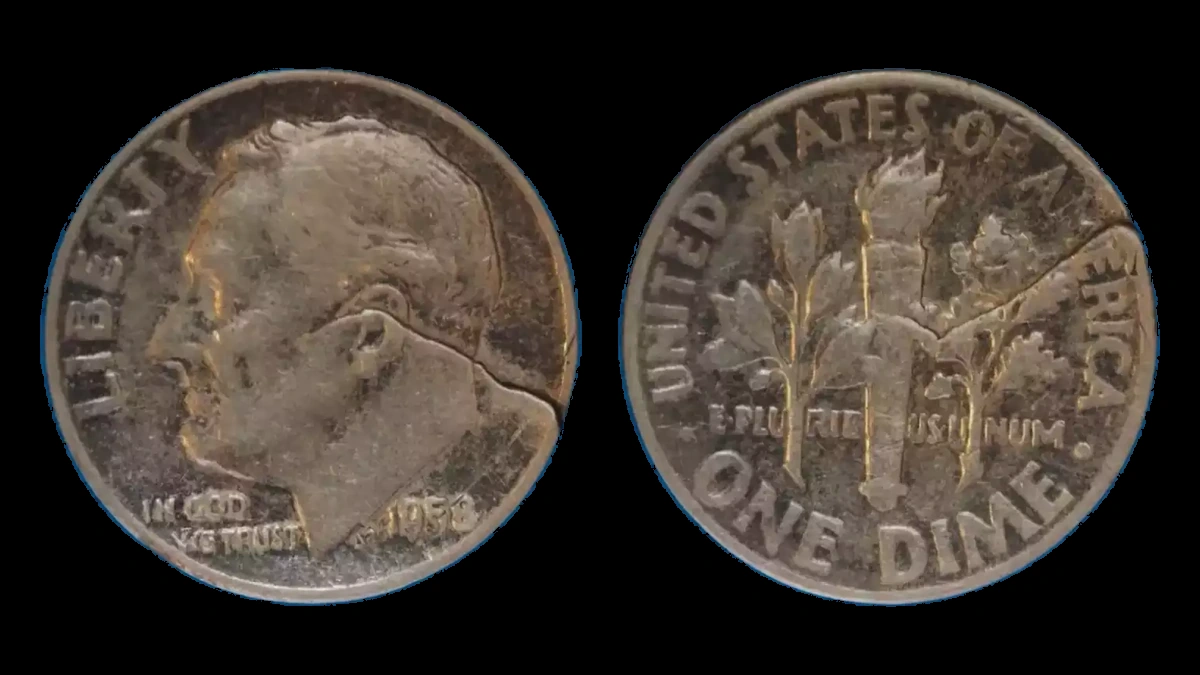
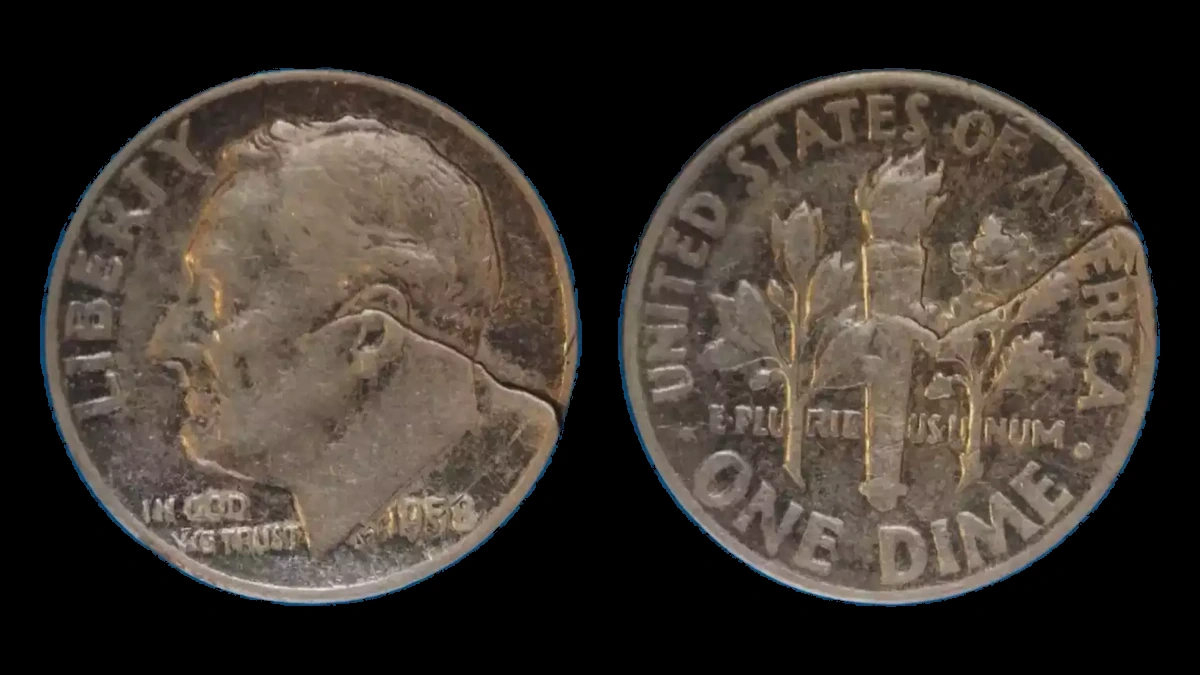
A reported AU58 example has an actual opening running across the portrait. This concerns the coin’s metal, whereas a cracked die usually leaves a raised ridge on an otherwise solid coin.
How to Identify
Use light from different directions to distinguish an opening from a dark scratch or raised line. Inspect both faces and the edge without bending or pressing the coin.
The supplied description does not map the entire split across both sides. Keep that limit in mind when comparing a candidate with the reported portrait-side opening.
What It’s Worth
A genuine 1958 cracked-planchet dime has an estimated value of $40–$500. A clear split with otherwise well-preserved detail is more informative than a damaged coin whose break cannot be dated.
A 1945-D Mercury dime graded PCGS AU50 sold for $77 in September 2024 with a cracked planchet. It is a different-year, different-design reference, not a sale of the reported 1958 AU58 coin.
7. 1958 Dime A Curved Bite in the Edge: Clipped Planchet Error
A curved clip begins when a blank is punched from a strip too close to an existing hole. The missing section belongs to the blank before the dime is struck.
How to Identify
Follow the curved boundary and check how the rim and design approach it. Later cuts may leave tool marks, sharp new edges, or metal pushed out of place.
Two supplied examples are distinct: a Denver dime with a 20% curved clip graded NGC MS61, and a Philadelphia dime with a clip near 3 o’clock graded NGC MS65. Their mint, size of clip, and grade should not be combined into one description.
What It’s Worth
The estimated range for a 1958 clipped-planchet dime is $40–$400. Larger clearly original clips and attractive surfaces can support the upper part of that range.
Neither supplied 1958 example has a recorded price here. A curved-clip 1942 Mercury dime graded ANACS MS63 sold for $73 in March 2023, providing only a different-year comparison.
8. 1958 Dime An Unstruck Crescent: Off-Center Strike Error
A dime struck while the blank is partly outside the dies can retain a plain crescent beside its design. The displaced design and untouched metal should form one coherent striking pattern.
How to Identify
Check both sides for corresponding displacement and original blank surface. A coin with only one face shifted inside a complete normal outline may have a different striking error.
The supplied year guide describes an approximately 70% off-center MS63 example without resolving the mint. If the mintmark area was never struck, its absence does not establish Philadelphia or Denver.
What It’s Worth
A genuine 1958 off-center dime with an identifiable date has an estimated value of $100–$1,000. A large displacement can be desirable, but a readable date remains important.
No sale is supplied for the reported 70% example. A 1964 dime graded ANACS MS65 and struck 60% off center sold for $134 in December 2025; its different date and grade limit the comparison.
Conclusion
The most useful first distinction is whether the odd feature is extra raised design, missing detail, or a problem in the metal itself. That separates mintmark varieties and clashes from cap strikes, clips, and splits.
Keep photographs of both faces and the edge with any close-up. A readable date, the correct variety match, and an accurately described condition make the supplied price ranges more useful.