Rare 1983 Dime Errors (List & Pictures)
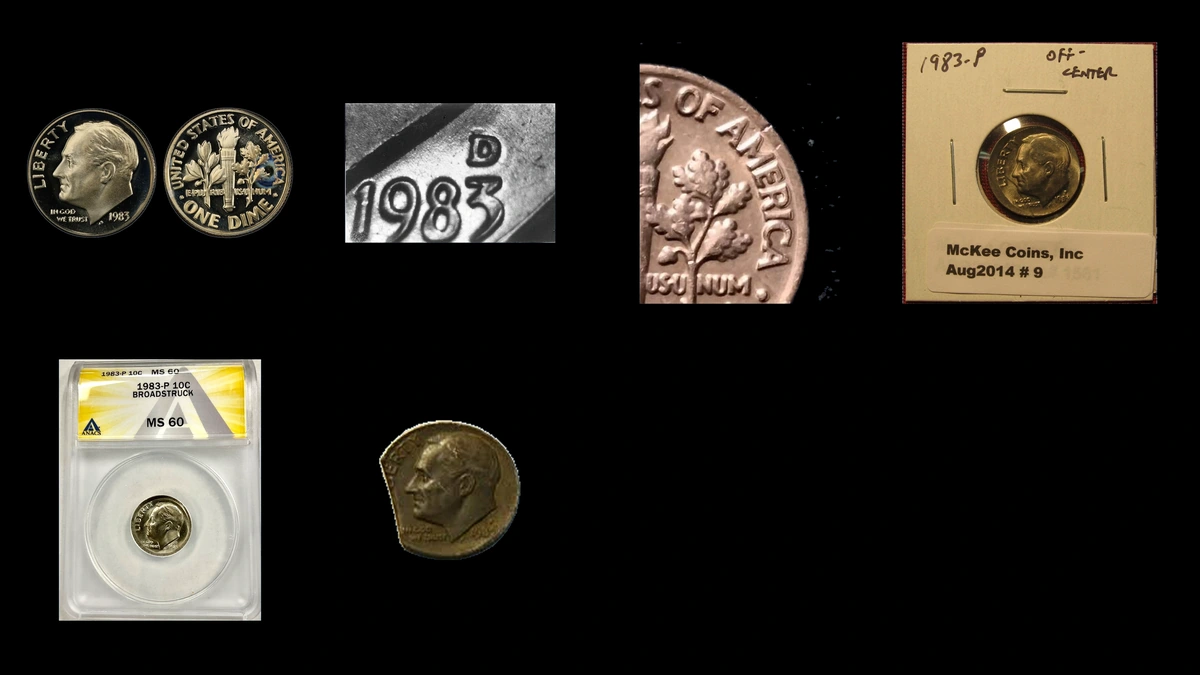
A missing S on a genuine Proof and a slightly uneven rim belong at very different points on the 1983 dime value scale. The former reached $10,560 at auction in November 2014 in exceptional condition.
The ten groups of 1983 dime errors have estimated values from $5–$11,000. Check the mintmark and finish first, compare both faces for displaced designs, and use measurements when the metal or outline appears unusual.
| What needs checking? | Possible error | Estimated range |
|---|---|---|
| Proof finish without S | No S Proof | $500–$11,000 |
| Earlier D above the main D | Repunched mintmark FS-501 | $20–$150 |
| Front shifted more than back | Misaligned front die | $5–$75 |
| Incomplete designs beside blank metal | Off-center strike | $25–$250 |
| Two displaced impressions | Double strike | $35–$500 |
| Broad ghostlike design | Late die-cap strike-through | $75–$350 |
| Complete design on expanded metal | Broadstrike | $25–$150 |
| Missing edge segment | Clipped blank | $10–$100 |
| Struck irregular fragment | Scrap strike | $200–$1,500 |
| Metal and measurements fit another coin | Wrong-denomination blank | $250–$2,500 |
A normal copper-nickel clad 1983 dime weighs 2.268 g, measures about 17.9 mm, and has a grooved edge. Use a precise scale and calipers for accessible pieces, and recorded measurements for coins sealed in grading holders.
1. 1983 Dime A Proof Without Its S: 1983 No S Dime Error
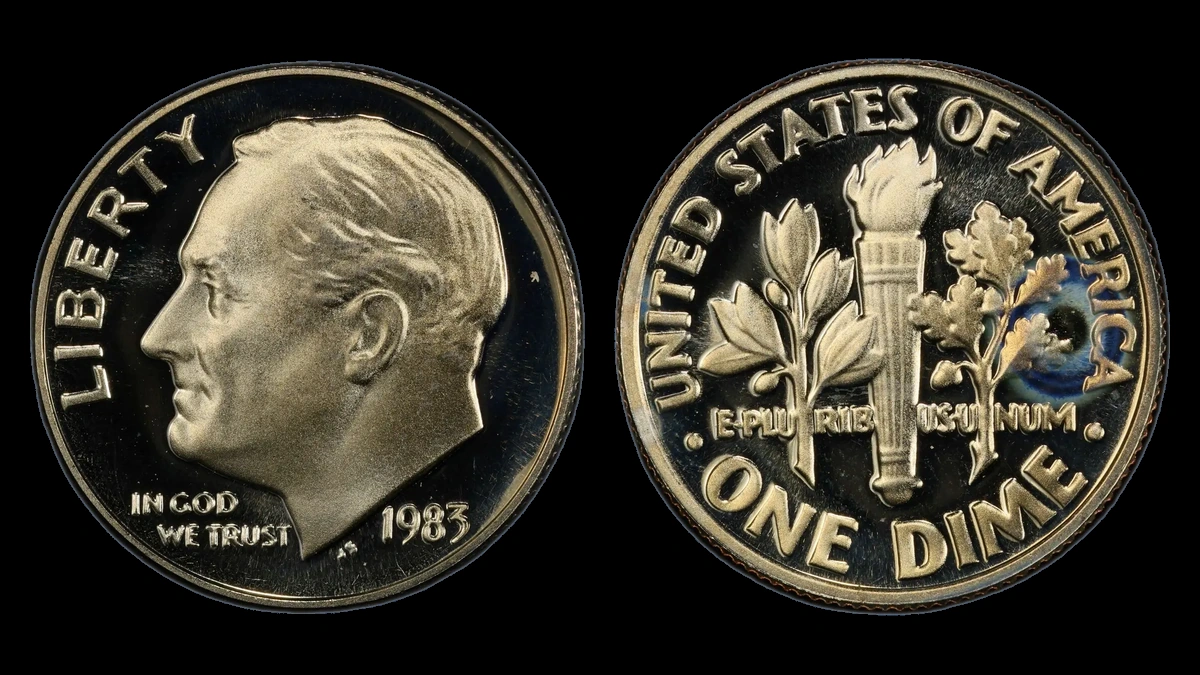
Above the date on a normal 1983 Proof, an S identifies San Francisco. The scarce No S variety was also made there, but its die never received the mintmark.
A Proof is a specially made collector coin with carefully prepared surfaces. Ordinary Philadelphia and Denver dimes both carried mintmarks in 1983, so an empty space by itself does not establish this Proof variety.
How to Identify
Examine the empty position above the date and right of Roosevelt’s neck with a 10× magnifier. Look for an undisturbed surface rather than a shallow hollow, fine grinding marks, or local polishing.
Compare the entire piece with a normal 1983-S Proof. Sharp detail, reflective backgrounds, and frosted raised designs support the finish; mere shine does not prove it.
What It’s Worth
The estimated $500–$11,000 range extends from collectible examples to exceptional top grades. Recent results include $585.60 for a PR68 Deep Cameo in May 2026 and $780 for a PR69 in March 2026.
PCGS records a $10,560 sale in November 2014 at PR70, the highest numerical grade. That historical result should not be applied routinely to every No S Proof.
2. 1983 Dime An Extra D Above the Mintmark: 1983-D Repunched Mintmark FS-501 Error
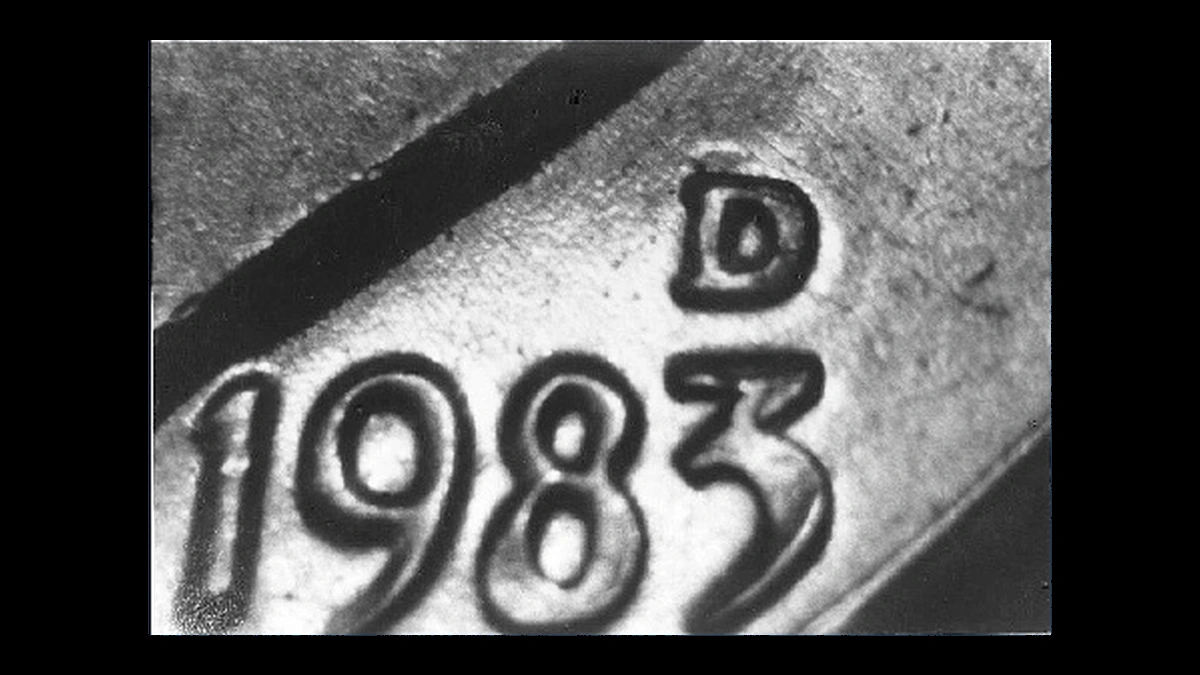
The upper curve of D can preserve a faint earlier impression shifted upward. On FS-501, traces also appear around the upper serif, the small finishing stroke at the letter’s end.
More than one mintmark punch position remained in the die. Coins made with that tool repeated the overlapping letter shape.
How to Identify
Locate D above the date and compare its upper edge with an attributed FS-501. The extra contour should fit an earlier D placed north, or upward, from the stronger impression.
Change the lighting to eliminate a bright reflection as the explanation. A scratch or flat shelf from strike movement does not provide the same earlier letter shape.
What It’s Worth
Recognizable examples have an estimated $20–$150 range from worn through ordinary unworn condition. A distinct upper D remnant supports a stronger comparison than vague thickening.
The variety is separately listed by PCGS, but its page supplies no auction record. Prices for exceptionally graded ordinary 1983-D dimes cannot be treated as evidence of this mintmark premium.
3. 1983 Dime The Front Border Shifts Alone: 1983 Misaligned Die Error
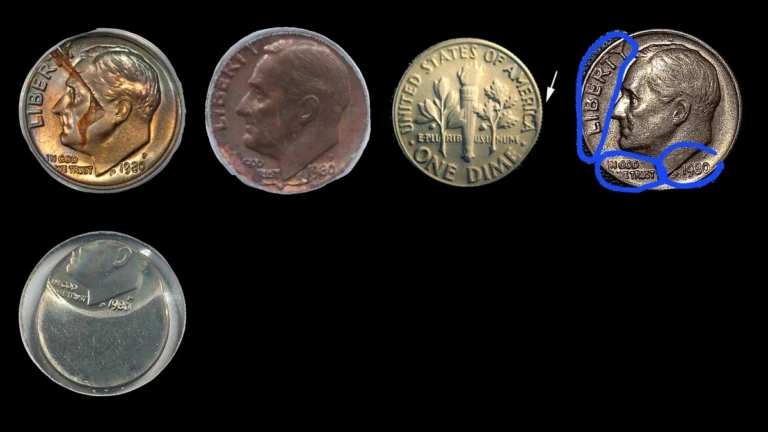
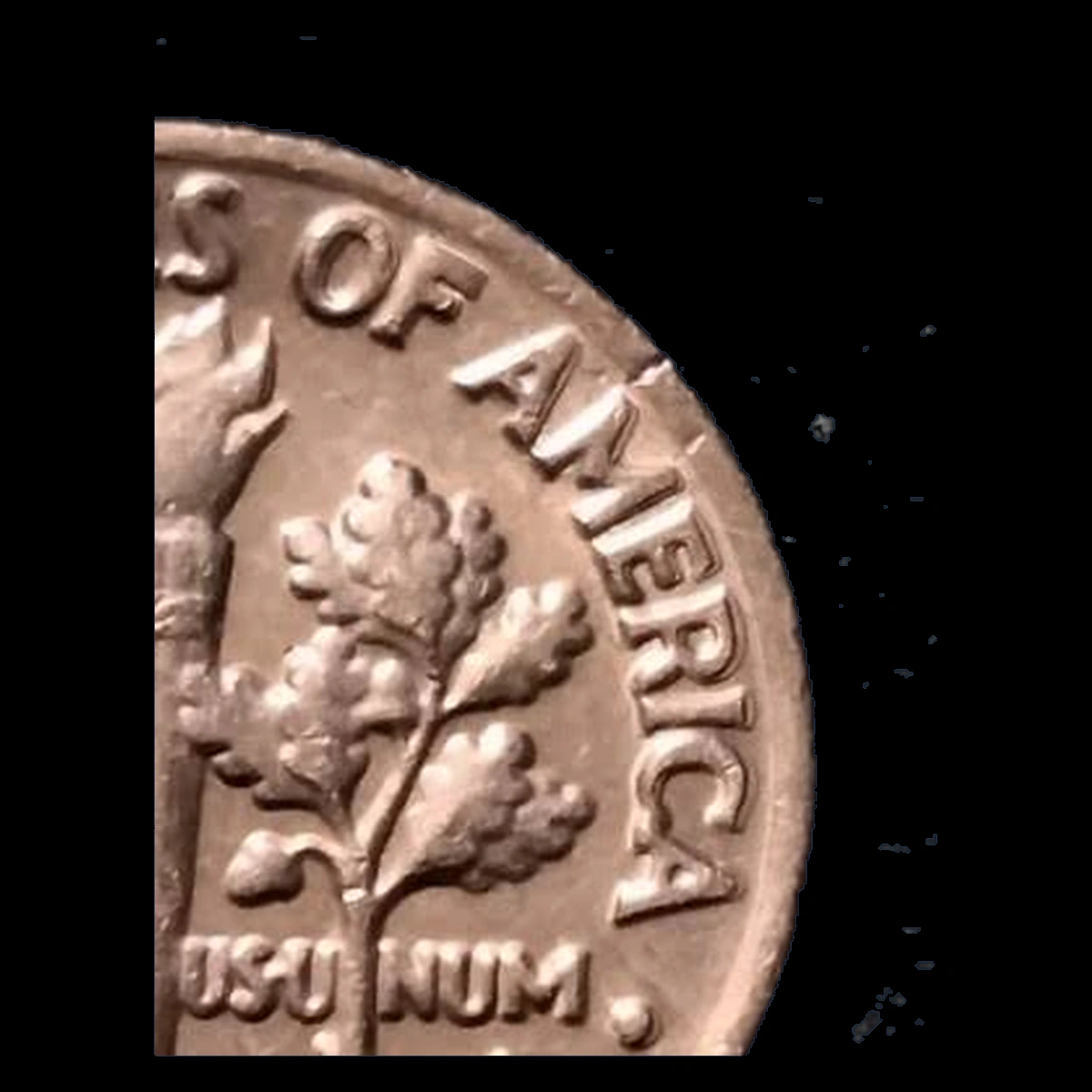
Compare the front’s narrow and wide borders with the back before calling a dime off center. A shifted front die can move that face’s design while the reverse remains more evenly positioned.
A historical Mint Error News listing reports this on a 1983-P dime. Its exact direction and percentage are not established in the supplied record.
How to Identify
Take straight-on photographs of both faces at the same size. Compare the distance from lettering to rim at several positions and see whether only one face is substantially displaced.
Inspect the narrow border for missing design and edge damage. Small border differences are common, and a rim injury may imitate a slight shift.
What It’s Worth
A noticeable front misalignment has an estimated $5–$75 range across worn and unworn condition. A barely uneven border generally attracts little extra interest.
No individual sale amount is supplied for the reported Philadelphia example. Its one-sided displacement should not automatically receive the price of a clear off-center strike.
4. 1983 Dime Both Designs Miss Part of the Blank: 1983 Off-Center Strike Error
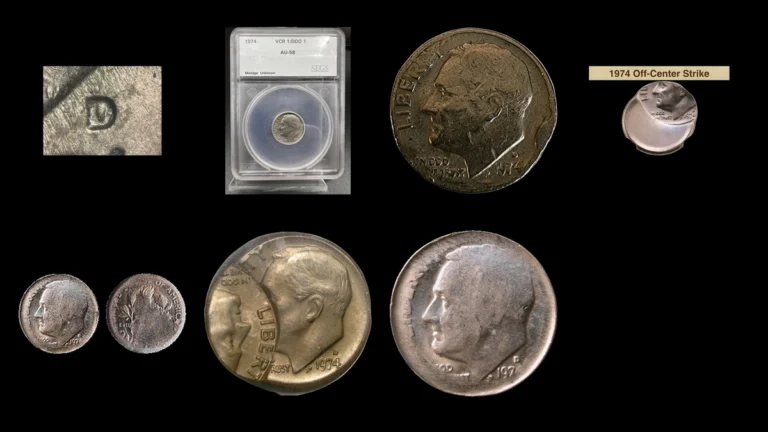
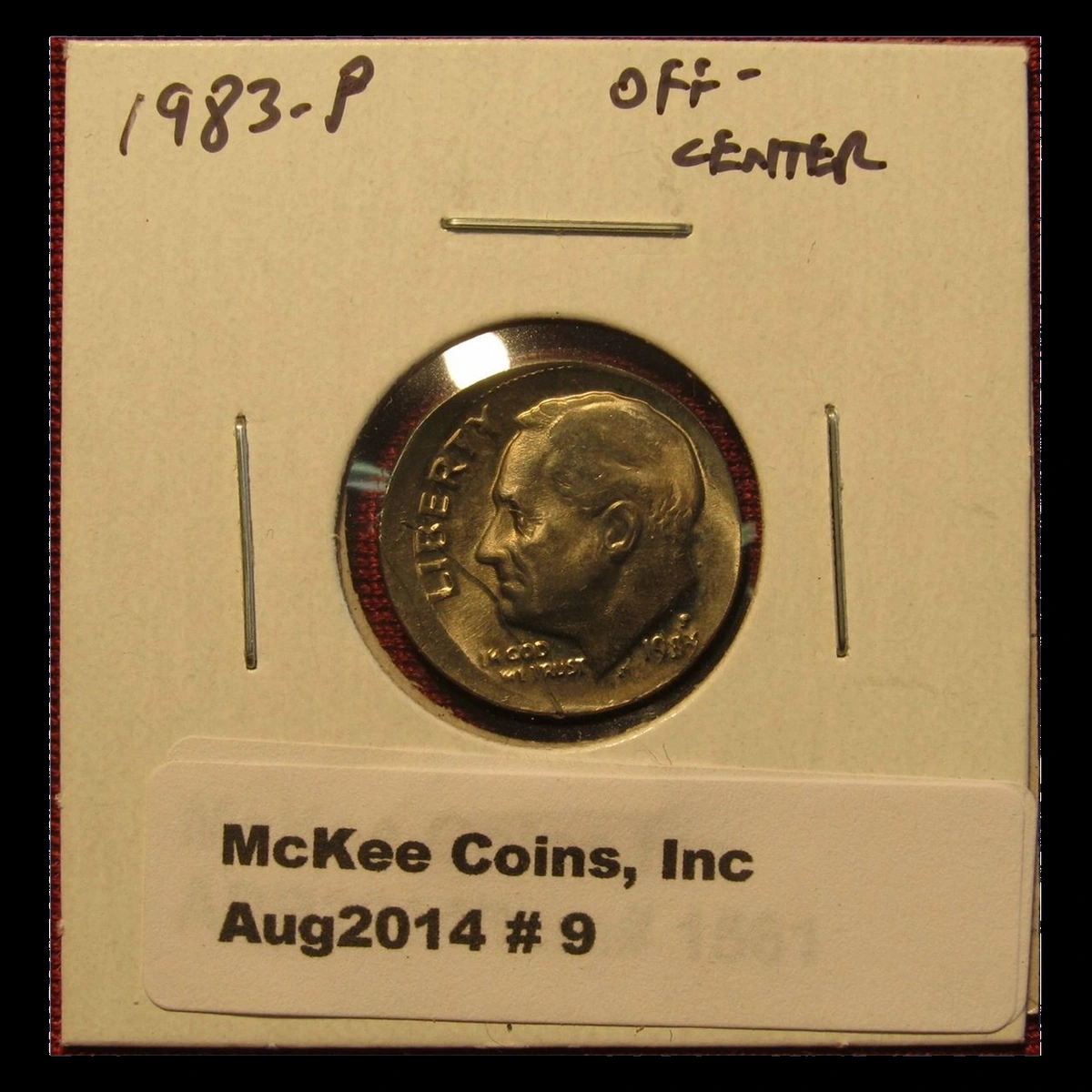
An untouched area beside incomplete designs suggests that the blank itself was displaced. Both dies then struck only the portion caught between them.
The specific 1983-P example was described as fifteen percent off center toward eleven o’clock and graded ANACS MS63. Denver examples are also reported, without the same established direction or percentage.
How to Identify
Keep the entire coin in view and confirm its readable date. Both faces should fit the same misplaced blank, with original unstruck metal beside the designs.
Inspect the transition for grinding or scraping that might have erased finished detail. Use the fifteen-percent description only for the documented Philadelphia coin, not a different Denver candidate.
What It’s Worth
Readable-date 1983 off-center dimes have an estimated $25–$250 range. Stronger visual displacement and better surfaces generally provide stronger comparisons.
The ANACS MS63 designation describes an unworn coin with noticeable marks. Its catalog entry is used for identification here without assigning an unavailable sale result.
5. 1983 Dime Two Designs in Different Positions: 1983 Double Strike Error
On the recorded Philadelphia coin, the second impression is 75% off center. It occurred after an already-struck coin remained in or returned to the striking area.
NGC described the coin as unworn but assigned a Details label because of a reverse wheel mark. That later surface damage is separate from the second blow.
How to Identify
Select a recognizable letter or portrait feature in the first impression and find its counterpart in the displaced design. Two coherent impressions are different from narrow doubling along letter edges.
Record the date, P mintmark, and stretched outline where they survive. The 75% figure concerns the second strike’s placement and does not describe a percentage of metal lost.
What It’s Worth
Comparable double strikes have an estimated $35–$500 range, with cleaner unworn pieces supporting the stronger comparisons. The documented damaged coin fell just below that rounded range.
NGC’s auction index records $34 in January 2016 for the example with a wheel mark. A different 1978-D MS63 double strike brought $264 in 2022, illustrating why the visible error and surface condition must be considered together.
6. 1983 Dime A Broad Ghostlike Impression: 1983 Strike Through a Late Die Cap Error
A soft design across much of a face can result from trapped coin metal covering the die. The covering begins when a struck coin sticks to the tool and becomes progressively thinner under repeated blows.
A later blank receives a muted impression through that cap. The 1983-P example was graded ANACS MS60, an unworn grade that can include substantial marks.
How to Identify
Compare the softened area with clearer details elsewhere. Broad, ghostlike raised design on original surface needs to be distinguished from uniform wear, polishing, or scraped-away metal.
The supplied catalog description does not specify which face was affected. This is the coin struck through the cap, so it does not need the cup-shaped outline of a coin that became a cap itself.
What It’s Worth
Recognizable late-cap strikes with readable dates have an estimated $75–$350 range. The clarity of the obstruction’s effect helps determine appeal.
No sale result is assigned to the ANACS MS60 listing. A generally worn or polished dime offers a poor comparison because faint design alone does not establish a covered-die strike.
7. 1983 Dime An Expanded Edge Around Complete Designs: 1983 Broadstrike Error
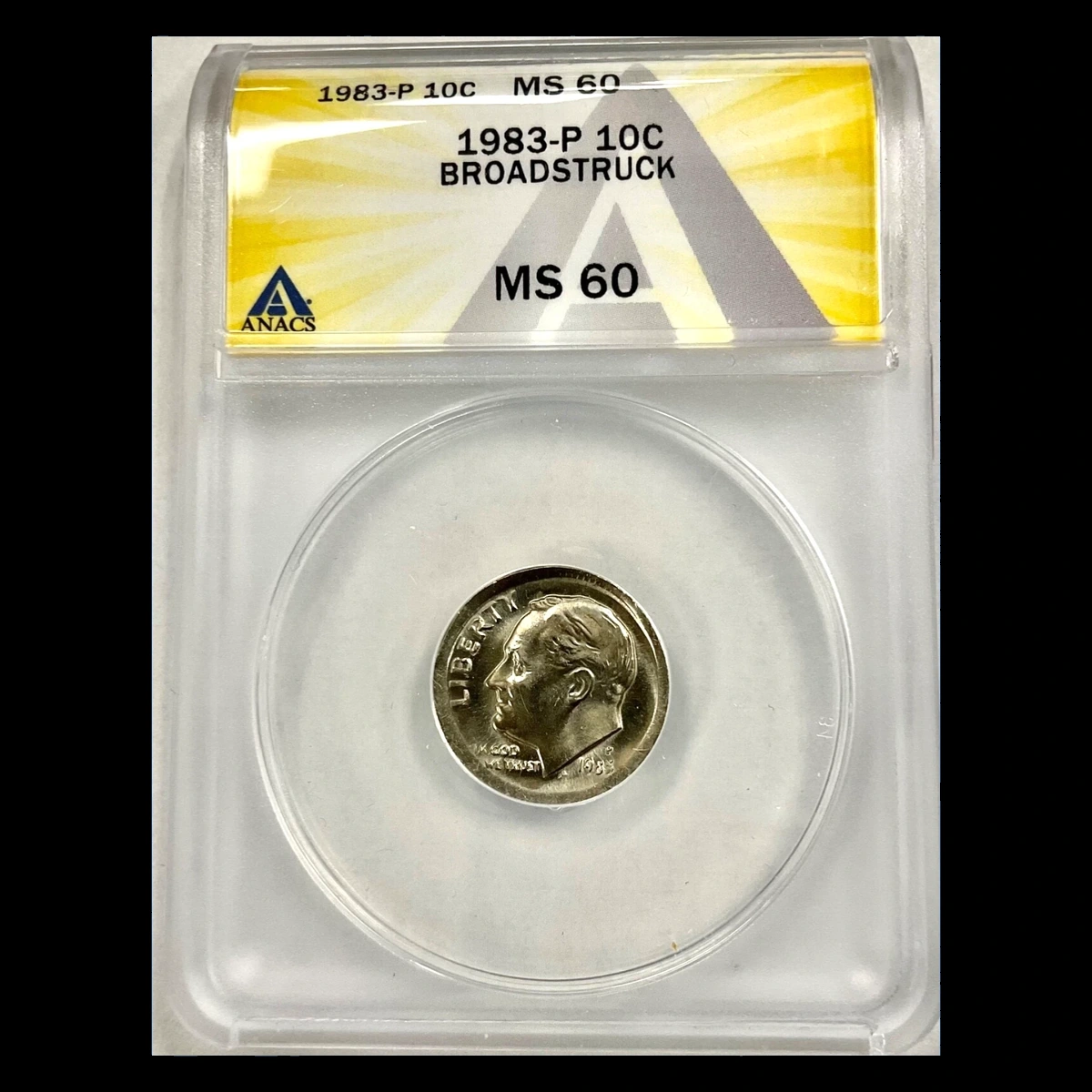
The collar normally restrains a dime’s width and forms its edge grooves. If it fails to confine the blank, metal can spread beyond the expected outline while retaining the complete designs.
Both Philadelphia and Denver broadstrikes are reported. Their shapes and measurements should be evaluated individually.
How to Identify
Inspect the edge first, then measure the widest and narrowest spans. The expanded metal and altered collar effects should agree with complete major details on both faces.
Hammering or pressing a finished coin can increase width while flattening letters and damaging the surface. Those crushed features are different from natural spreading during the strike.
What It’s Worth
Clear broadstrikes have an estimated $25–$150 range from worn through unworn condition. Modest expansion belongs toward the lower comparisons.
A related 1978 year guide values obvious broadstrikes up to about $100. That estimate supplies context rather than a recorded 1983 transaction.
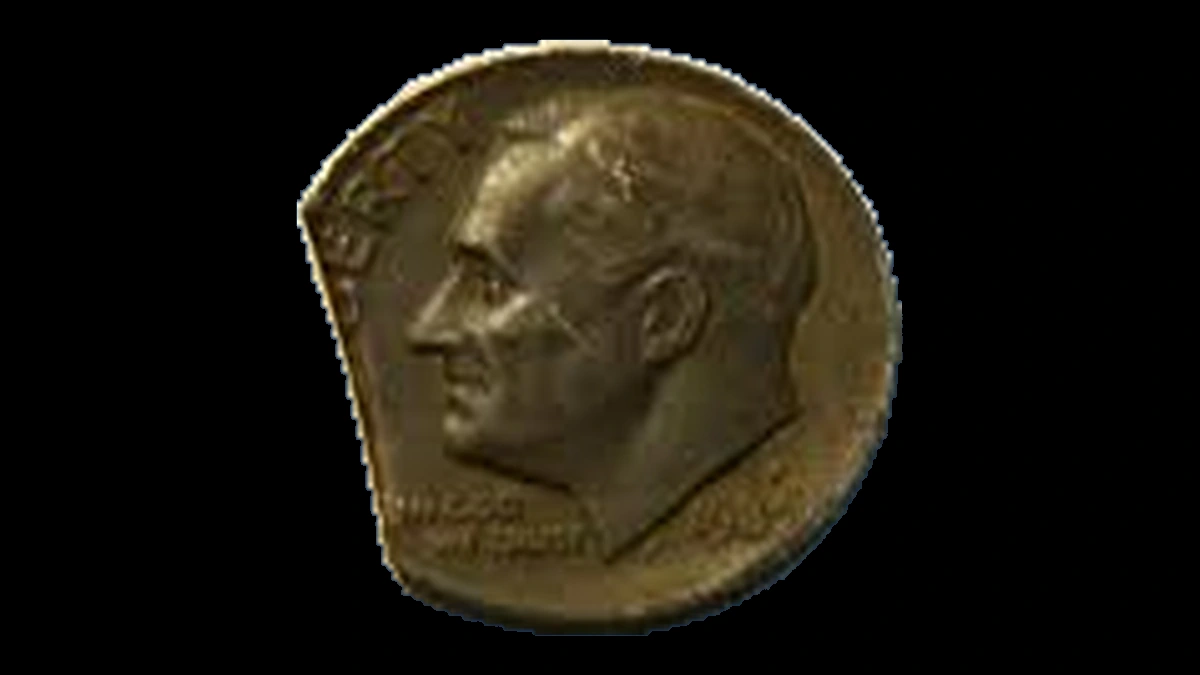
8. 1983 Dime A Missing Edge Segment: Reported 1983 Clipped Blank Error
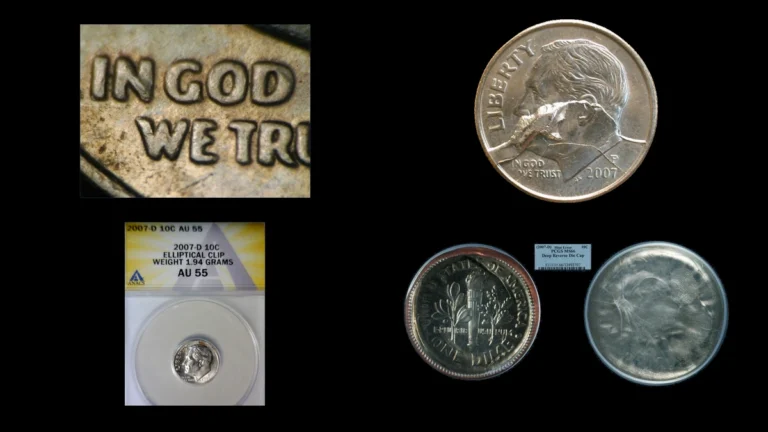
A planchet is the prepared disc that receives a coin’s design. If that disc is incomplete, the struck dime may retain a curved or irregular gap.
Overlapping an earlier punched hole can create a curved clip, while a strip-edge problem can produce another outline. The 1983 guide does not establish one mint, clip size, or specific specimen.
How to Identify
Examine the gap’s ends for original design meeting an existing omission. Fresh saw marks, filing, or metal pushed up by pliers can indicate later cutting.
A weak rim opposite a curved clip may provide supporting evidence, although it is not obvious on every genuine example. Keep the date and mintmark visible when documenting the surviving outline.
What It’s Worth
Modest original clips have an estimated $10–$100 range in collectible worn through unworn condition. Clear shape and an identifiable date help make a coin useful for comparison.
No specified 1983 clip auction is supplied. A larger opening can look dramatic while reducing appeal if it removes the date or accompanies substantial damage.
9. 1983 Dime Dime Detail on an Irregular Fragment: 1983 Scrap Strike Error
The documented 1983-P piece weighs only 12.5 grains, approximately 0.81 g. It received a dime impression on an irregular scrap rather than a normal prepared disc.
A 2014 Stack’s Bowers catalog lists the example in PCGS MS64. Its limited metal area determines which parts of the design could appear.
How to Identify
Document maximum dimensions, weight, and every surviving date or mintmark detail. Follow the design toward the irregular boundary to see whether it formed on metal already shaped that way.
Fresh cuts and abruptly severed raised details can reveal a finished dime trimmed afterward. The cataloged weight is specific to this scrap and does not establish an alloy test.
What It’s Worth
An identified scrap strike of this kind has an estimated $200–$1,500 range. Readable identity and well-preserved struck surfaces make stronger examples.
The PCGS MS64 listing establishes a particular unworn specimen but supplies no adopted sale price here. Cutting a normal dime into a fragment does not create an equivalent error.
10. 1983 Dime The Metal Fits Another Coin: Reported 1983 Wrong-Denomination Blank Error
A dime design may be struck onto a blank intended for another denomination. The different metal, thickness, or diameter can change both the finished shape and the design’s completeness.
The year guide includes this category without establishing a donor coin for a confirmed 1983 specimen. Its cent-blank illustration should not be treated as proof that such a 1983 example has been documented.
How to Identify
Record weight, diameter, and thickness before proposing the donor denomination. A wrong blank may be wider or thicker than a dime, so being unusually small is not a requirement.
Inspect edge layers and use nondestructive professional alloy testing where appropriate. Plating, corrosion, or flattening must not be mistaken for a consistent match to another coin’s blank.
What It’s Worth
A professionally identified wrong-denomination example has an estimated $250–$2,500 range. The donor metal, condition, and rarity make this a broad conditional appraisal.
A 1957 dime on an El Salvador centavo blank brought $4,080 in 2022. That special foreign-blank comparison exceeds this working range and does not establish a standard price for ordinary domestic wrong-blank claims.
Conclusion
Both faces often supply the answer that a single close-up misses. They distinguish one shifted die from an off-center blank and help separate an intact Proof from a coin with an altered mintmark area.
Across the estimated $5–$11,000 range, evidence and condition carry different weight for each error. Use the recent No S sales alongside the historical high, and retain the uncertainty surrounding broadly reported blank categories.