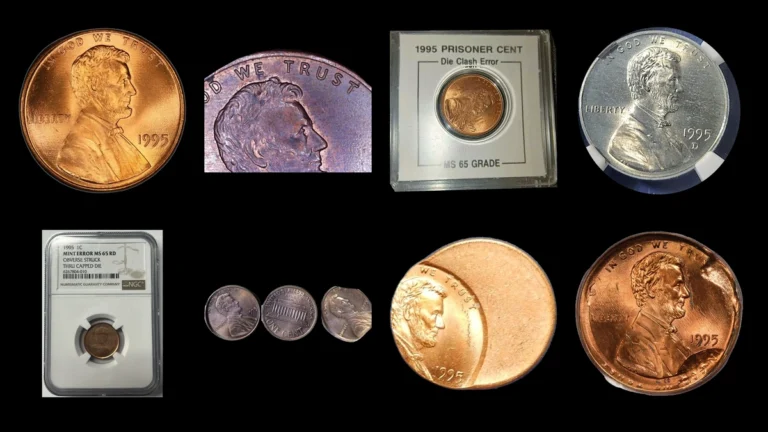
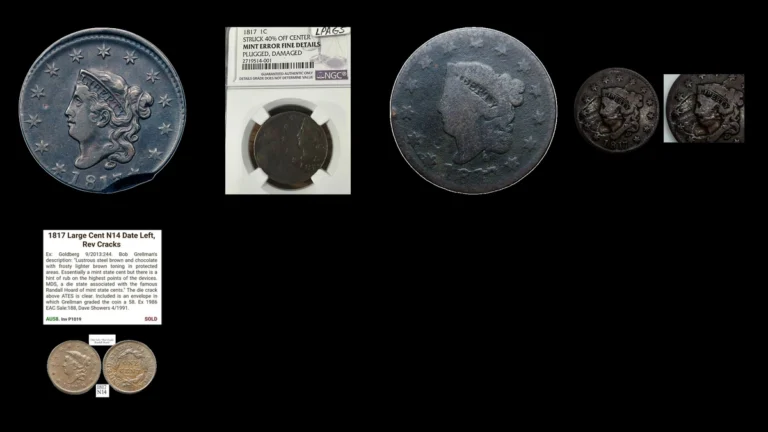
Rare 2006 Penny Errors (List & Pictures)
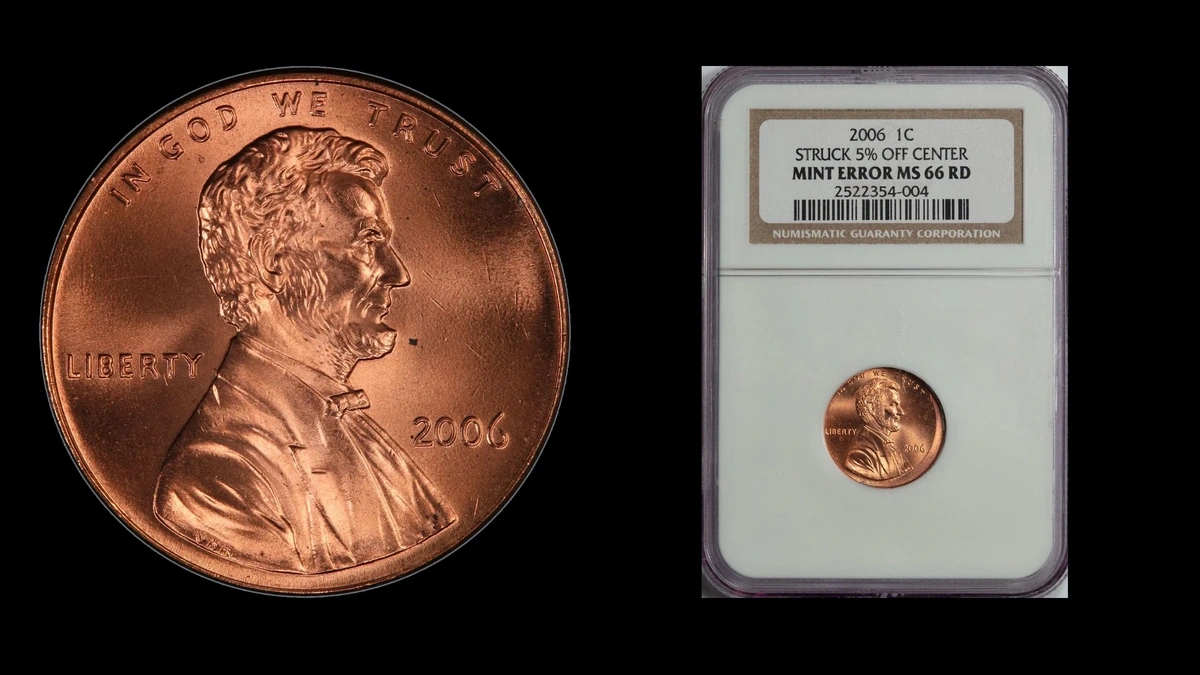
A 2007-D cent on a dime blank sold for $600 in March 2023, offering a different-year comparison for the largest error below. Estimated values for 2006 penny errors range from $2–$1,500, and a documented 2006 off-center cent brought just $39.
Inspect LIBERTY and the date first, then the coating, outline, and metal. A normal 2006 cent weighs 2.50 grams, measures 19.05 mm, and has a smooth edge around its copper-plated zinc body.
| First observation | Possible error | Estimated value |
|---|---|---|
| Bar between B and E | BIE die chip | $2–$75 |
| Repeated front detail | Doubled die | $5–$200 |
| Pale band inside rim | Partial plating loss | $10–$250 |
| Expanded complete design | Broadstrike | $20–$350 |
| Incomplete design and plain metal | Off-center strike | $15–$500 |
| Cent design on smaller clad blank | Dime-planchet error | $400–$1,500 |
1. 2006 Penny An I-Like Bar in LIBERTY: BIE Die Chip Error
The nickname BIE describes a raised bar between B and E in LIBERTY. A small missing piece in the die, the tool that stamps the coin, allows metal to form this extra feature.
How to Identify
Locate the actual B-to-E gap before examining the mark under side lighting. A bump elsewhere in the word does not become BIE simply because it resembles a short line.
Look for an original solid raised bar rather than dirt, a rounded plating bubble, or metal pushed aside by a scratch. The supplied report fixes neither a particular mint nor a production finish.
What It’s Worth
A genuine 2006 BIE cent has an estimated value of $2–$75. Minor bars fit about $2–$25, while well-defined examples on attractive coins may fit $25–$75.
No verified 2006 transaction is supplied for this feature. Its clarity and the surrounding surface matter more than the nickname.
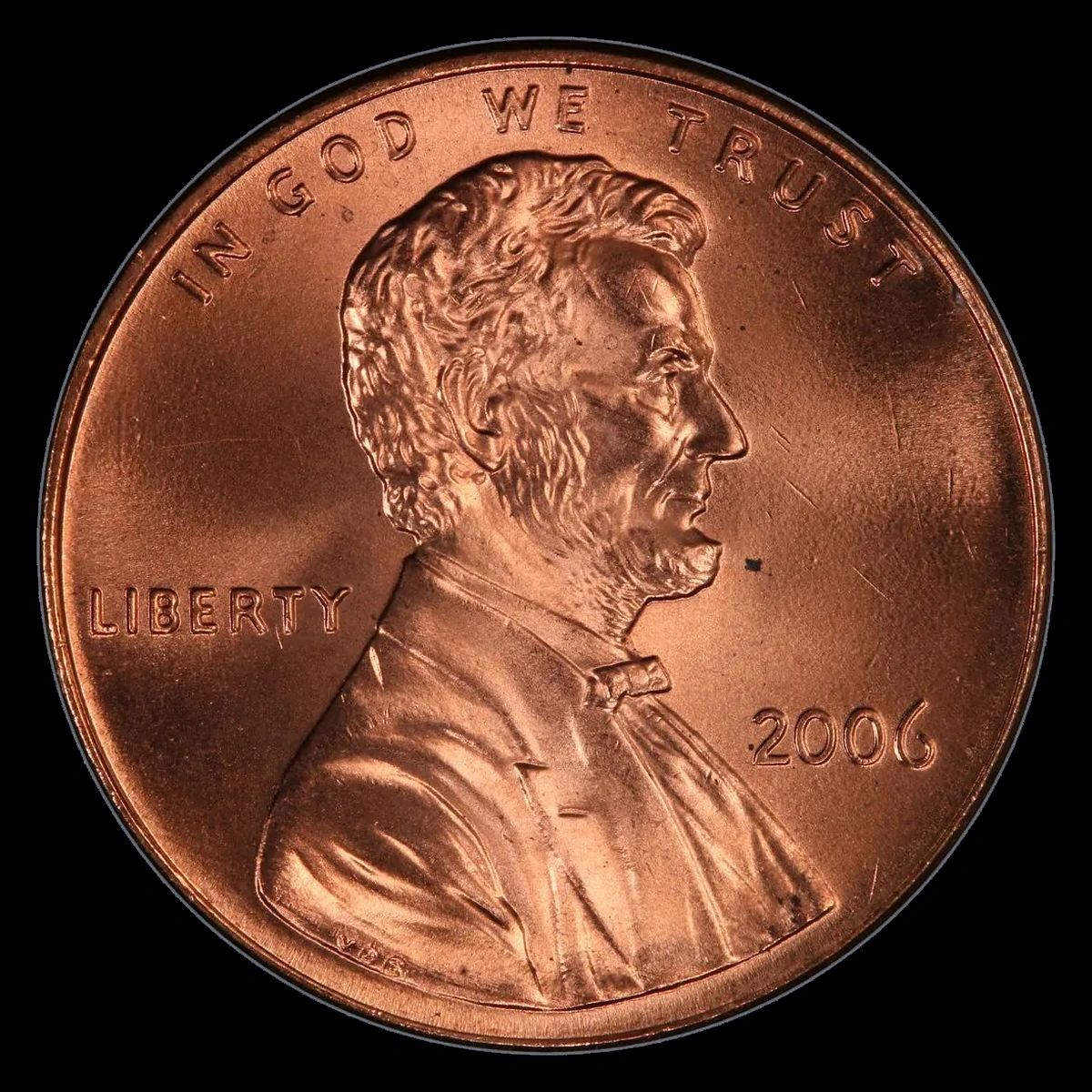
2. 2006 Penny Extra Edges on the Date or Letters: Doubled Front Design Error
The Philadelphia report names the final 6, LIBERTY, and the front motto as areas to examine. On a doubled die, the extra design exists in the tool, so several coins can receive the same repeated contour.
How to Identify
Compare the suspected feature with a confirmed variety of the same mint and finish. Philadelphia made ordinary cents and satin-finish set coins, whose different surfaces require appropriate comparisons.
A flat shelf may come from movement during striking, while a pale edge may be zinc exposed by split copper plating. Do not combine unrelated bright outlines into one assumed doubling pattern.
What It’s Worth
An identified 2006 front-side doubled die has an estimated value of $5–$200. Minor patterns fit about $5–$40, with clearer separation on well-preserved examples estimated around $40–$200.
The supplied information contains no confirmed auction record for a specific 2006 variety. A pleasing satin finish does not itself make the doubling stronger or establish a different error.
3. 2006 Penny A Pale Band Inside the Rim: Partial Copper-Coating Loss Error
An auction-cataloged Philadelphia example shows copper missing just inside the front rim. The exposed zinc can look pale or gray, but that appearance does not identify exactly when the coating was lost.
How to Identify
Follow the copper-to-gray boundary with magnification and examine the design where it crosses the band. Incomplete coating before striking, splitting during the strike, and later removal need different surface evidence.
Inspect the reverse and edge for rubbing, scraping, or chemical roughness. A small coating loss may barely affect weight, and gray zinc is not evidence of a silver cent.
What It’s Worth
A mint-made partial coating defect on a 2006 cent has an estimated value of $10–$250. Extent and preserved original surfaces influence where a coin fits.
The catalog description supplies no realized price used here. It also does not establish that the blank was never coated, so that more specific claim should wait for supporting evidence.
4. 2006 Penny All the Design Remains on a Wider Coin: Broadstrike Error
A blank can spread outward if the collar, the ring that controls its width, fails to contain it normally. The resulting broadstrike retains the intended designs within an expanded outline.
How to Identify
Follow the outer lettering on both faces, then measure the coin across several directions. The spread can be uneven without making the coin an off-center strike.
Check for crushed high points, scraped surfaces, or edge tool marks that could explain later flattening. The report does not establish one mint or finish for every 2006 broadstrike.
What It’s Worth
A genuine 2006 broadstrike has an estimated value of $20–$350. More obvious expansion with clear original design generally makes a stronger example.
A 1999 Memorial-cent broadstrike graded MS65 Red sold for $67 in March 2023. That older coin provides a same-design comparison, not a recorded sale for the 2006 category.
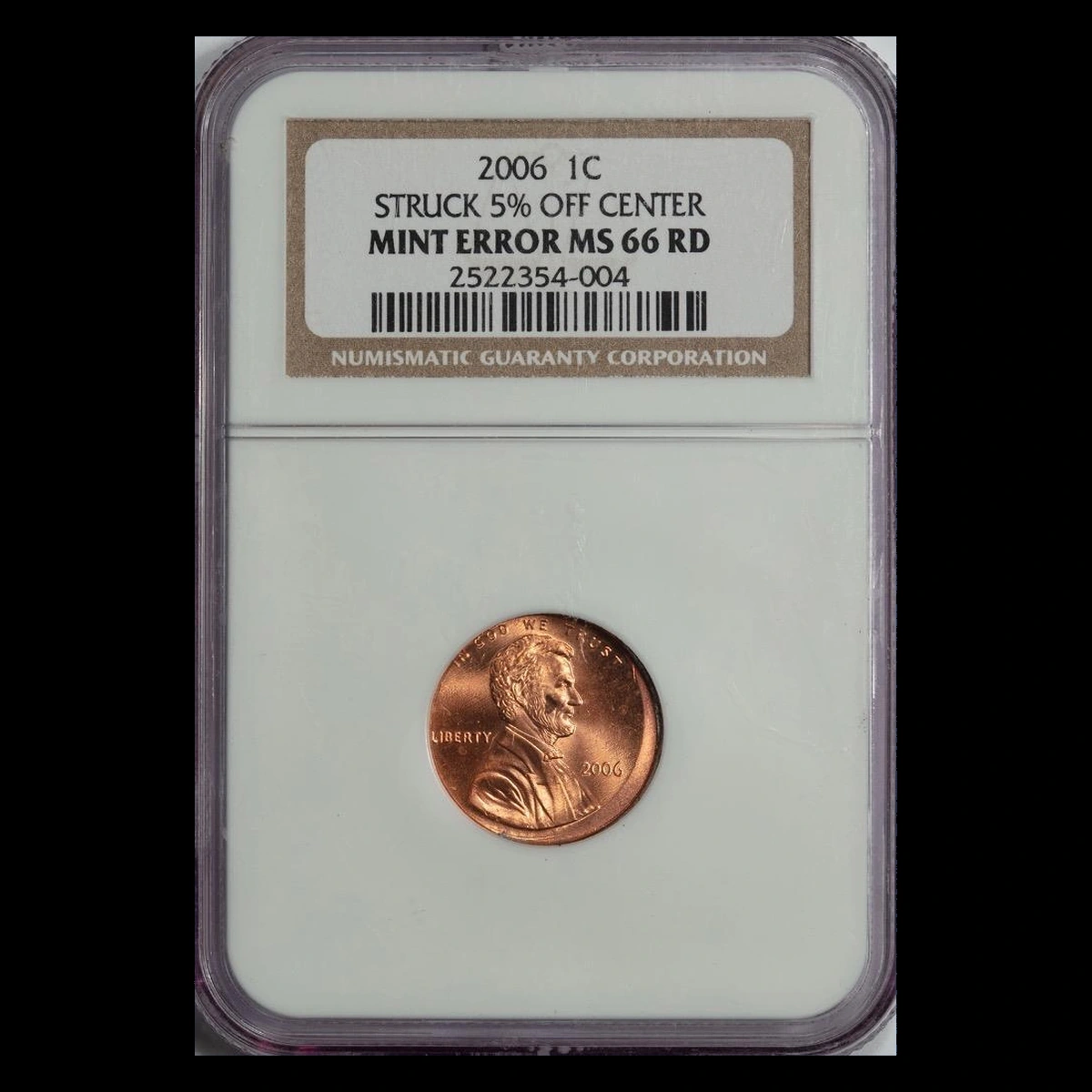
5. 2006 Penny The Design Runs Out of Space: Off-Center Strike Error
An off-center cent retains plain metal on one side while the design extends beyond the other. The blank was misplaced between the dies, so both faces should fit the same displaced striking area.
How to Identify
Find the 2006 date and examine both complete outlines. Original unstruck metal should meet the incomplete design without grinding or polishing explaining the blank-looking patch.
A shift confined to one face suggests die misalignment instead. Philadelphia and Denver examples are reported, but the documented 4% displacement applies to one specimen, not the entire category.
What It’s Worth
Estimated values for genuine 2006 off-center cents span $15–$500. A strong displacement with a readable date can draw more interest than a small shift, provided the surface remains attractive.
The 4% example graded PCGS MS64 Red sold for $39 in March 2025 in the Heritage auction archive. Its price describes an unworn copper-red coin with some marks, not a rate charged for each percentage point.
6. 2006 Penny Lincoln on Dime-Type Metal: Wrong Planchet Error
A reported 2006-D cent was struck on a blank intended for a dime. The cent design is larger than that starting disc, so outer details may not fit on the metal.
How to Identify
Compare measurements with a dime blank’s normal 2.268 grams and 17.91-mm diameter, allowing for spreading during the cent strike. Its copper-nickel clad construction has outer layers bonded around copper, unlike a normal cent’s thin copper coating over zinc.
An unused dime blank has neither an earlier Roosevelt or torch design nor the reeding of a finished dime. A gray trimmed or chemically stripped penny is not equivalent, and separate Philadelphia reports require their own specimen checks.
A specialist can examine the metal without cutting or filing the edge. Color and size alone do not prove the donor blank, mint, or production finish.
What It’s Worth
An authenticated 2006 cent on a dime blank has an estimated value of $400–$1,500. Confirmed metal, readable identity, and condition determine the closest comparison.
A 2007-D example graded PCGS MS66 sold for $600 in March 2023. It shares the Memorial design but has a different date, so it is not a recovered sale of the reported 2006-D coin.
Conclusion
The $39 off-center sale shows that a real 2006 mint error can be affordable. The much broader estimates reflect differences in visibility, condition, and whether the coin even began on the correct kind of blank.
Keep ordinary and satin-finish comparisons separate, and let the actual surface explain pale or repeated-looking edges. Both faces and the edge provide more useful evidence than a close-up of one unusual mark alone.