Rare 1996 Penny Errors (List & Pictures)
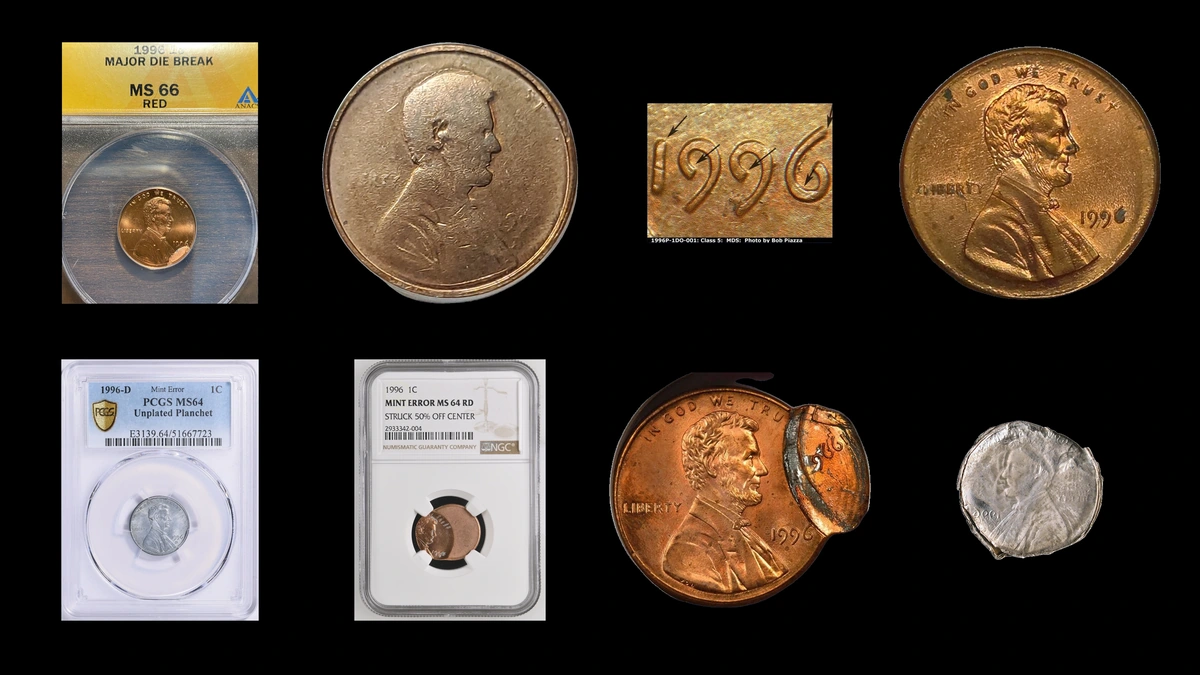
A pale surface, a second picture, or a small extra mark can each lead to a different kind of 1996 penny error. The examples below cover roughly $2–$3,500, with a 1996-D cent struck over a finished 1995-D dime bringing $2,760 at auction.
Start with the letters and copper coating, then check the coin’s outline. If another coin’s design is visible, save that clue for the double-denomination section.
1. 1996 Penny LIBERTY Has an Extra Raised Mark: BIE Die Chip Error
A small raised piece of metal between B and E can make LIBERTY look as though it contains an extra I. Collectors call this a BIE error.
A chip broke from the die, the steel tool that stamps the coin. Metal from the penny filled that small hollow during striking.
How to Identify
Look in the space between B and E, rather than searching for a second set of letters. The extra mark should be part of the coin’s metal.
A copper bubble or dirt can occupy the same space. Check its shape under a light without scraping or pressing it.
What It’s Worth
$2–$25 is a practical range for a modest BIE, while a strong, easily seen example may fall around $25–$75. These are same-type estimates rather than a recorded 1996 auction result.
A clear extra “letter” makes a more appealing example than a tiny lump that disappears without magnification.
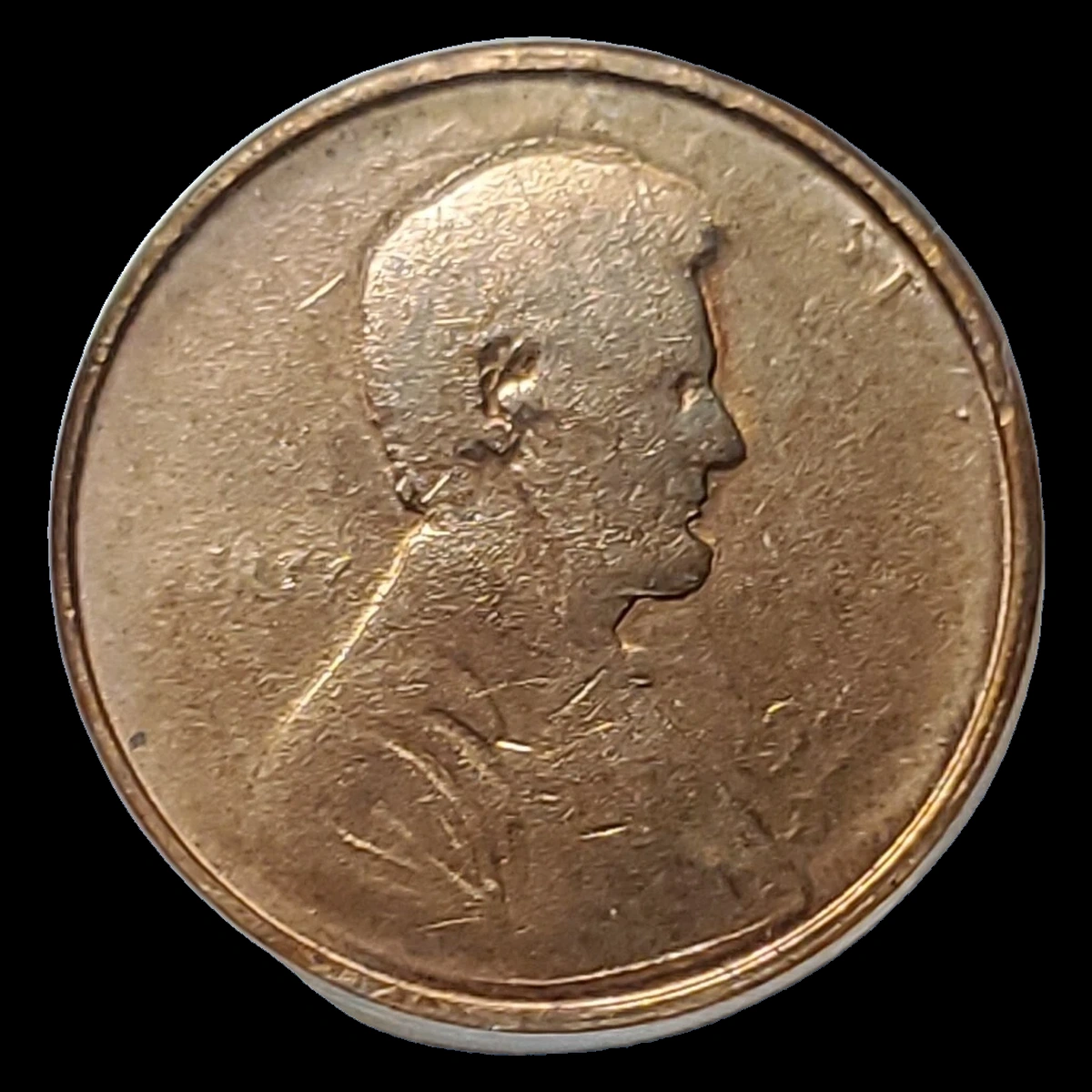
2. 1996 Penny A Patch of Design Looks Faint: Grease Struck-Through Error
Grease packed into a die can stop part of its design from reaching the coin. The result is a weak area surrounded by detail that may still be sharp.
The supplied records include Philadelphia and Denver examples. Their different grades and surface colors describe those coins, not separate kinds of grease error.
How to Identify
Compare the faint patch with nearby lettering and the highest parts of Lincoln’s portrait. General wear usually affects exposed details across the coin, rather than one isolated area.
No single missing letter defines all 1996 examples. Judge the actual weak area and avoid assigning a specific shape to grease that is no longer present.
What It’s Worth
$5–$200 covers small weak patches through more obvious examples on attractive coins. A faint trace may add little value.
For a recent comparison, a 2021-D grease struck-through cent sold for $84 in September 2025. That later Shield cent helps frame the error type; it is not a sale of the 1996 coin.
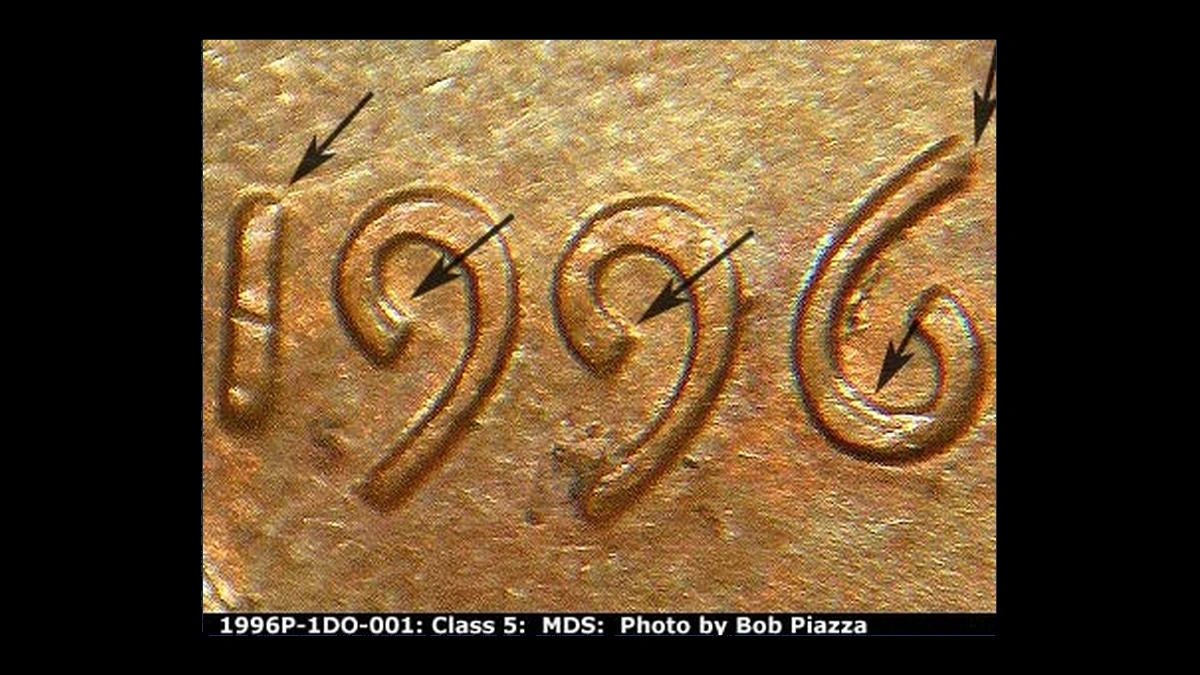
3. 1996 Penny Small Front Details Repeat: FS-101 Doubled Die Error
The Philadelphia 1996 FS-101 variety has doubled detail on the front. The repeated design was already on the die before it struck any coins.
Begin with Lincoln’s eye and nearby details when comparing a candidate. A Philadelphia circulation cent from this year normally has no mintmark.
How to Identify
Use the recognized PCGS FS-101 listing to check the specific variety. Match the position and shape of the doubling, not just the date.
Flat ledges beside letters can be strike-related doubling, while broken copper plating can expose a bright line. Neither feature alone identifies FS-101.
What It’s Worth
$15–$250 is the working range for this variety. Clear detail, little wear, and appealing original surfaces support the stronger prices.
This range is an estimate; the supplied variety recognition does not itself supply a 1996 auction sale. Red and brown surface colors also affect value without creating different errors.
4. 1996 Penny Metal Is Missing from the Edge: Clipped Blank Error
A clip begins before a penny receives its design. The machine that punches out blanks may overlap an earlier hole or cut across the edge of the metal strip.
An overlapping hole can leave a curve, while the strip edge can leave a straight gap. The reported 1996 category does not establish one shape or mintmark for every example.
How to Identify
Inspect both ends of the gap for the way the struck design and rim meet the missing metal. A freshly cut edge, tool marks, or a bent surface points toward later damage.
The rim opposite a genuine clip may be weak, but that clue is not always present. Keep the weight and the width across an intact part of the coin with your photographs.
What It’s Worth
$15–$250 is a useful range for a confirmed clipped example, depending on the amount missing and overall condition. A small, unobtrusive clip belongs toward the lower end.
A 2021 Shield cent with a 5% straight clip brought $114 in September 2025. That different-year sale provides a comparison, not an individual result for a 1996 cent.
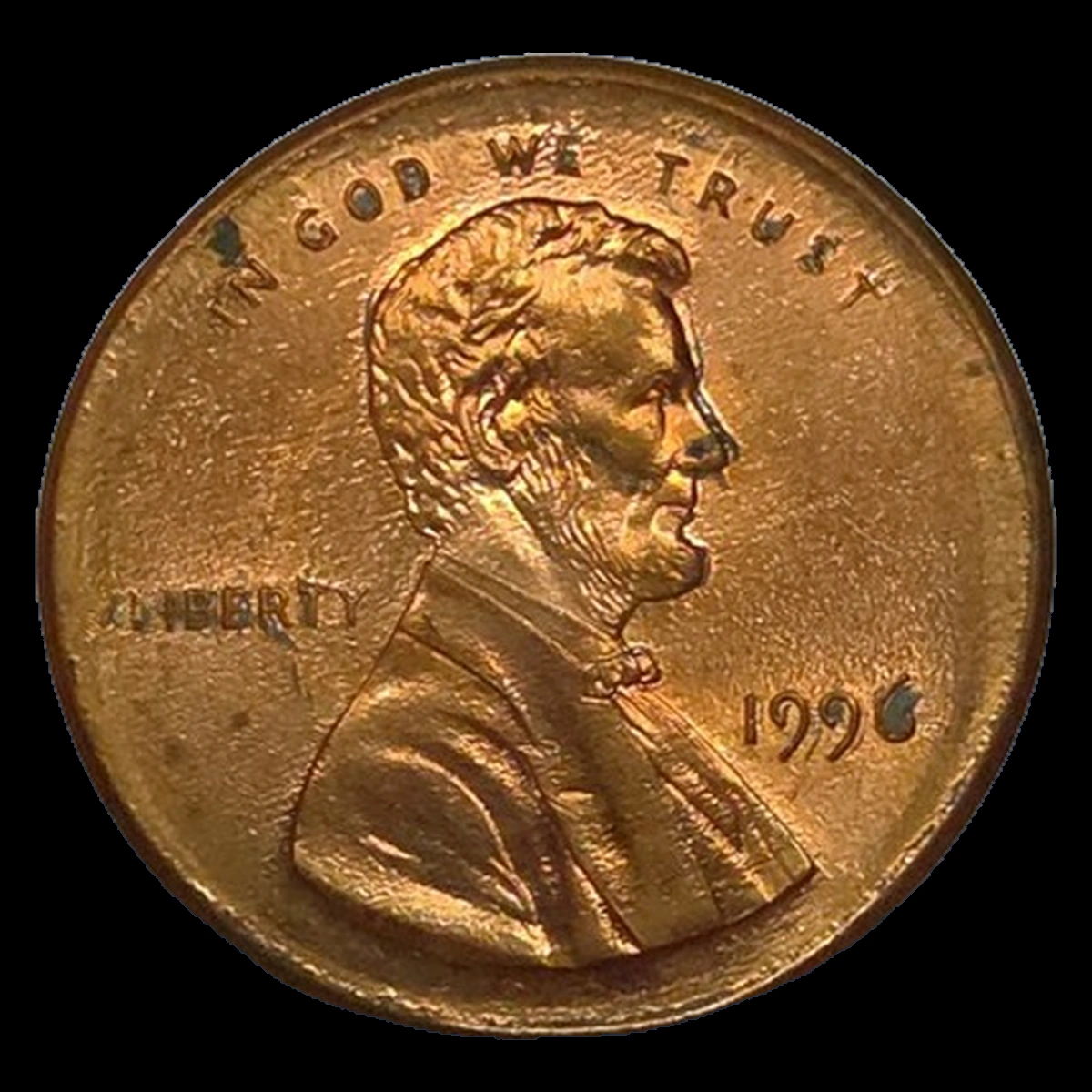
5. 1996 Penny The Coin Spreads Beyond Its Normal Rim: Broadstrike Error
A broadstruck penny has extra room around its design because the collar did not hold its edge during the strike. The design can remain complete even though the coin spreads wider than usual.
How to Identify
Follow the whole design around both faces. A complete picture with an expanded outer area supports a broadstrike; a picture cut off beside blank metal points toward an off-center strike.
A normal 1996 cent weighs about 2.50 grams and is about 19.05 millimeters wide. Broadstriking changes the outline without requiring a different kind of metal.
Also check for crushed lettering or other signs that someone flattened the coin later. A large diameter by itself does not establish a mint error.
What It’s Worth
$20–$350 is the estimated standalone range. Wider expansion and clean, unworn surfaces tend to be more desirable.
An NGC MS67 Red broadstrike appeared with an MS68 Red off-center cent in a two-coin lot that sold for $204 in December 2025. That total cannot be assigned to either penny or simply split in half.
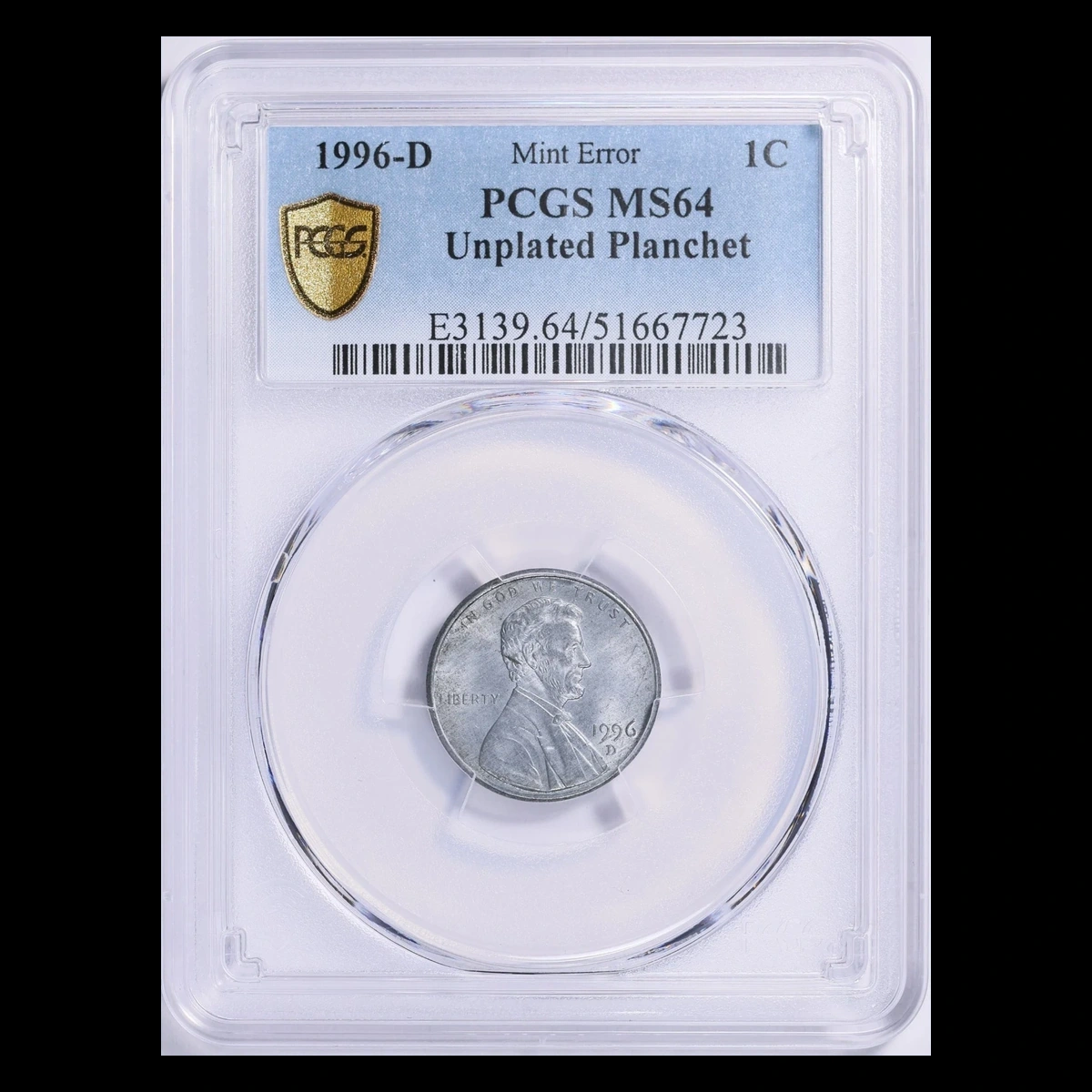
6. 1996 Penny The Penny Is Gray Instead of Copper: Unplated Blank Error
A 1996 cent normally has a zinc center under a thin copper coating. An unplated blank reaches the press without that copper, leaving the zinc-colored surface visible after striking.
A certified fully unplated 1996-D example is recorded. Reports of partly bare surfaces need their own evaluation rather than borrowing that coin’s certification.
How to Identify
Check whether the exposed surface retains its original struck texture. Chemicals can remove copper after minting and leave a gray coin with no original plating error.
Because the coating is thin, a small weight difference does not settle the question. The surface and the boundaries of any remaining copper matter more than color alone.
What It’s Worth
$75–$500 suits substantial, authenticated missing plating; a confirmed small partial area can fall around $20–$200. Extent and surface preservation drive much of the difference.
The fully unplated 1996-D graded PCGS MS64 sold for $129.25 in November 2014. Keep that result attached to the fully unplated coin, not to an unrelated partial-plating report.
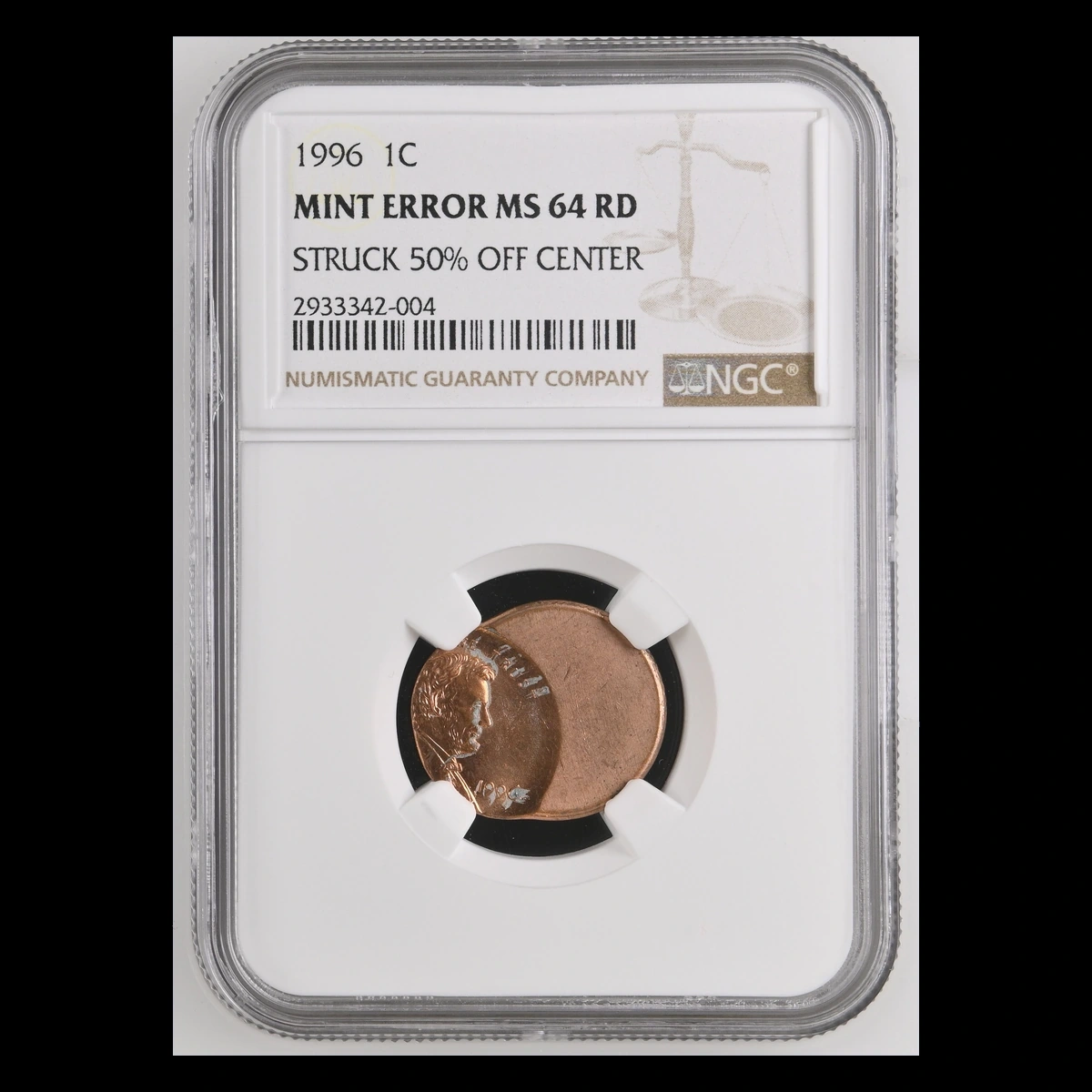
7. 1996 Penny Part of the Picture Misses the Blank: Off-Center Strike Error
An off-center penny combines missing design with an area that received no design. The blank was partly outside the dies when they came together.
How to Identify
Look for a plain crescent of metal beside the incomplete picture on both faces. The metal is still there, unlike the missing piece of a clipped blank.
Try to read the full date and mintmark area. A coin with an attractive shift and a readable date is easier to identify and collect.
What It’s Worth
$20–$100 is a reasonable range for smaller shifts, rising to about $100–$500 for stronger examples. The amount off center, visible date, and condition all matter.
The recorded 35% off-center NGC MS68 Red cent shared the $204 December 2025 lot with the broadstrike described above. The records provide no separate sale price for this penny.
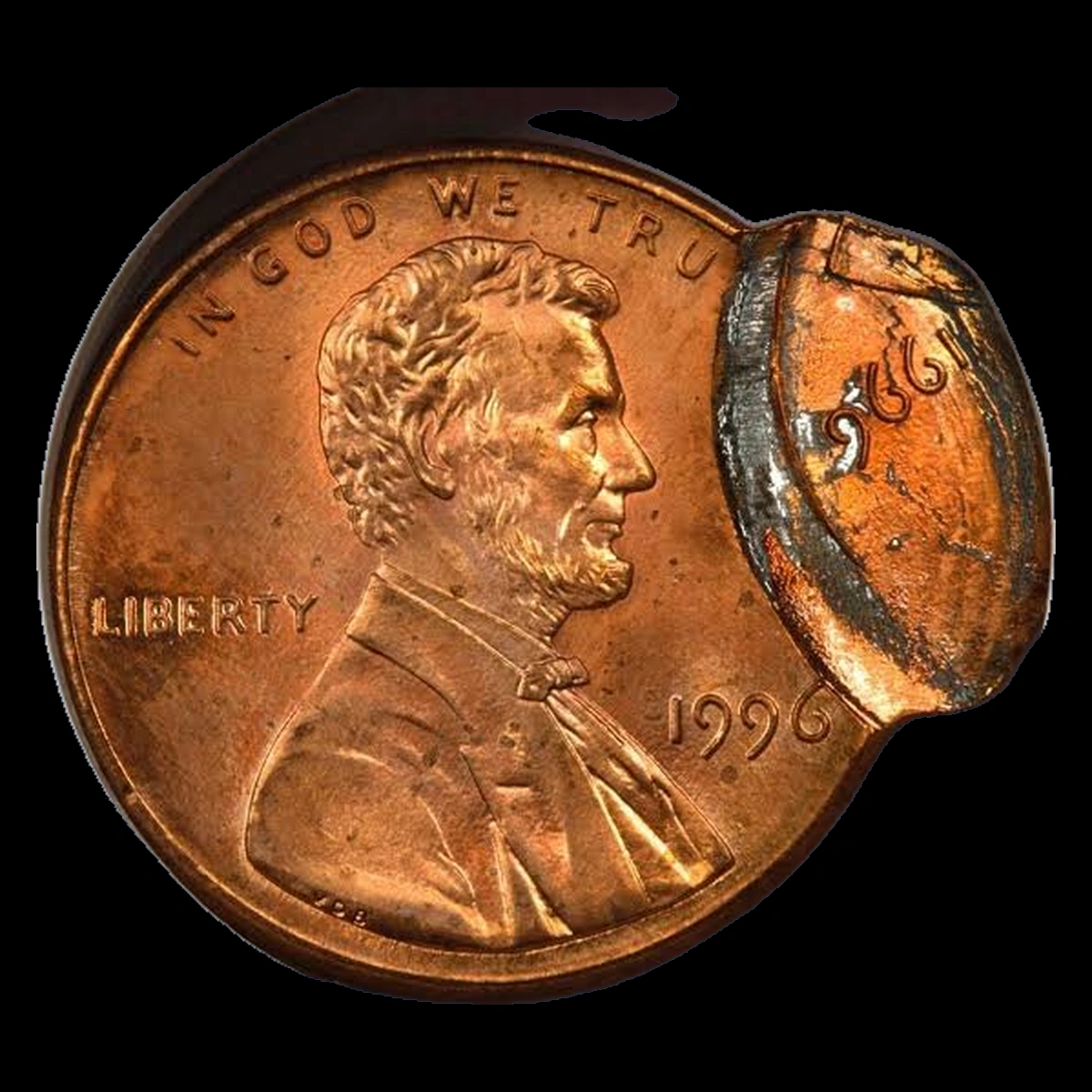
8. 1996 Penny Two Misplaced Pictures Overlap: Double Strike Error
One recorded 1996 cent was struck about 50% off center toward 7:30, then struck again about 95% off center. The clock position describes the first strike only.
Unlike a doubled die, this error comes from the coin receiving two separate blows.
How to Identify
Trace the two impressions across both faces. Their positions should explain how the same piece of metal met the dies twice.
Two full or partial pictures are different from thin doubled edges beside a letter. Do not add an assumed direction for the second strike when the photograph or record does not establish it.
What It’s Worth
$75–$750 is the estimated range for 1996 double strikes of this general kind. A clear sequence and readable date add interest.
A 1979 cent with a second off-center strike sold for $204 in September 2023. It provides context for the striking error, although that earlier cent uses a different metal composition.
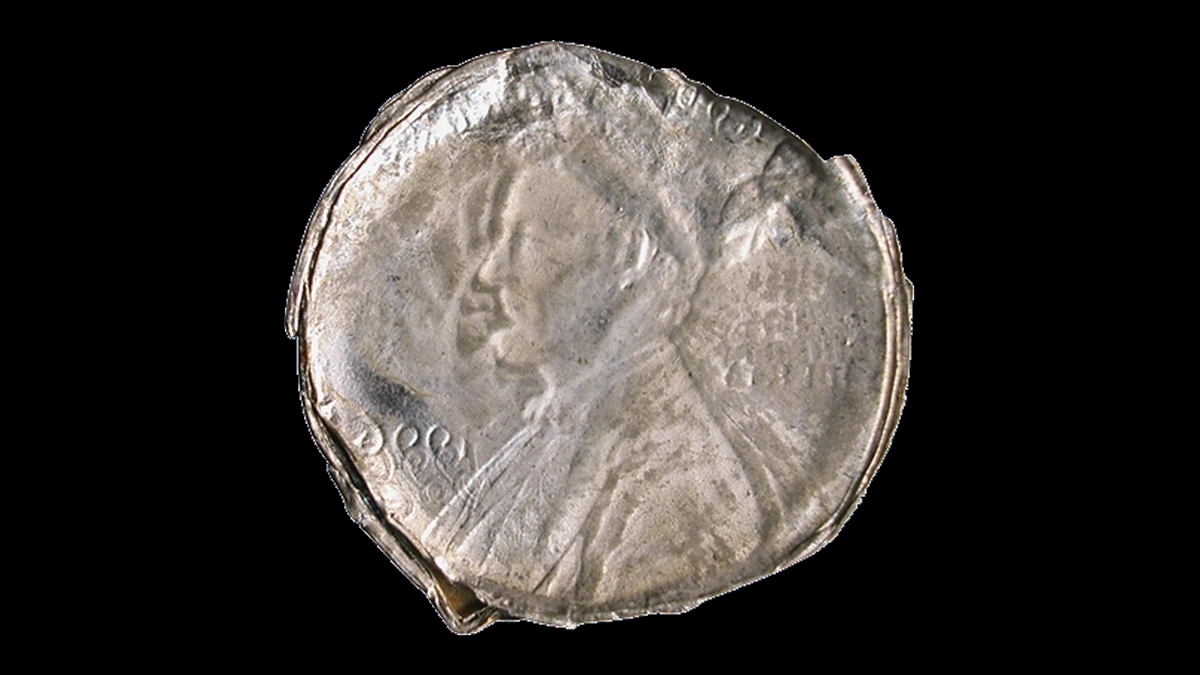
9. 1996 Penny The Penny Becomes a Cap: Die Cap and Expanded Brockage Error
A penny can stick to a die and receive further blows, stretching into a cap. The face pressed against other coins can also develop an enlarged, backward impression called an expanded brockage.
The records include different cap shapes. A flatter front cap retaining the Memorial design and a deep cap with a backward impression at the bottom are separate specimens.
How to Identify
View the coin from the side as well as from above. The wall shape and the surviving design help explain which surface stayed against the die.
A brockage is both backward and sunken into the metal. A cap with that impression has related features from its minting sequence, not two separately priced coins.
What It’s Worth
$150–$1,000 is a current comparison-based range for collectible examples. A deep, well-preserved cap with clear impressions usually attracts more attention than a shallow, damaged one.
The flatter 1996 cap brought $126.50 and the separate deep cap brought $115 in June 2000. Those older results sit below the working range; a different 2000 cent cap sold for $312 in June 2025.
10. 1996 Penny A Small Silver-Colored Blank Has Only Cent Designs: Dime Blank Error
A cent design can be struck on an unused clad dime blank. One recorded 1996 example weighed a rounded 2.3 grams and was graded NGC MS67.
Much of its design remained visible, with the tops of STATES OF AMERICA close to the edge. A small blank does not always remove most of the picture.
How to Identify
A normal dime blank is about 2.268 grams and 17.9 millimeters wide before any spreading from the cent strike. Its layered metal differs from the zinc inside a stripped penny.
Search for any earlier dime portrait or torch. An unused blank should not carry a previously struck dime design, and it need not have the grooves of a finished dime’s edge.
What It’s Worth
$250–$1,500 is the working range for an authenticated cent on a dime blank. Readable cent details and clean surfaces help its appeal.
The NGC MS67 1996 example sold for $350.75 in January 2008. A 1981-D cent on the same kind of blank brought $372 in September 2025, offering a later sale of another Memorial-cent date.
11. 1996 Penny An Unusually Small Zinc Blank Carries the Design: Proposed Foreign Blank Error
A reported 1996 cent studied by Mike Diamond was struck on a small copper-plated zinc blank weighing 2.07 grams. A possible foreign-coin purpose was proposed, but no country was established.
How to Identify
Record the weight, size, metal, and original edge together. A filed-down or chemically altered cent can also be small or light.
The reported edge appearance was part of the blank-preparation discussion, not proof of a particular foreign denomination. Neither a country name nor an exact diameter should be added without matching evidence.
What It’s Worth
$300–$2,000 is an estimated range for a confirmed unusual-blank error of this kind. The supplied record does not include a sale for the 2.07-gram specimen.
Identification of the actual blank matters more than an unsupported country label. A proposed origin alone does not justify the top of the range.
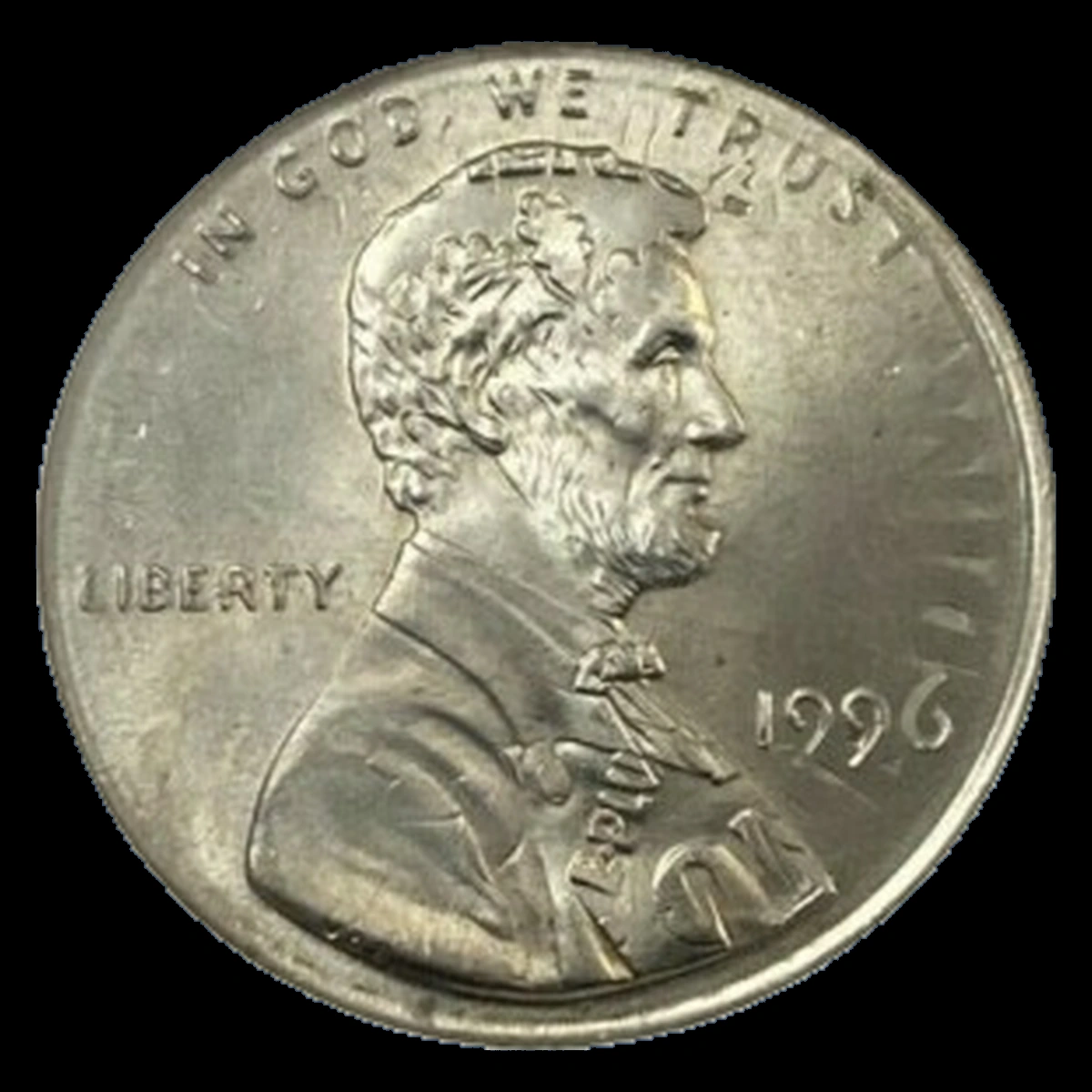
12. 1996 Penny A Dime Picture Remains Under Lincoln: Double Denomination Error
A finished dime can enter a cent press and receive Lincoln and the Memorial over its existing design. This is a double-denomination error, with parts of two different coins’ designs on one piece.
Recorded examples include a 1996 cent over a 1996-P dime and a 1996-D cent over a 1995-D dime. The dates and mintmarks must be read separately.
How to Identify
Find recognizable dime features beneath or beside the cent design, such as Roosevelt’s portrait or the torch. In one example, Roosevelt’s ear appears on Lincoln’s cheek; that position is not a rule for every coin.
Photograph both faces to show how the designs overlap. An earlier dime picture distinguishes this error from a cent struck on an unused dime blank.
What It’s Worth
$750–$3,500 is a practical range for clear, authenticated examples. How much of each design survives can matter as much as the grade.
The 1996 cent over a 1996-P dime sold for $747.50 in April 2011. The 1996-D cent over a 1995-D dime brought $2,760 in August 2009.
A 2001 cent over a 2001-P dime later sold for $1,320 in September 2025. That comparison does not replace either 1996 coin’s own result.
Conclusion
On a 1996 penny, separate an extra mark from an extra strike, and a missing copper layer from the wrong metal entirely. Those distinctions lead to very different price ranges.
Keep both faces and the edge in your photographs. When a coin is unusually small or seems to carry a dime picture, record its weight before assigning it to one of the rare blank or double-denomination categories.