Rare 1882 Penny Errors (List & Pictures)
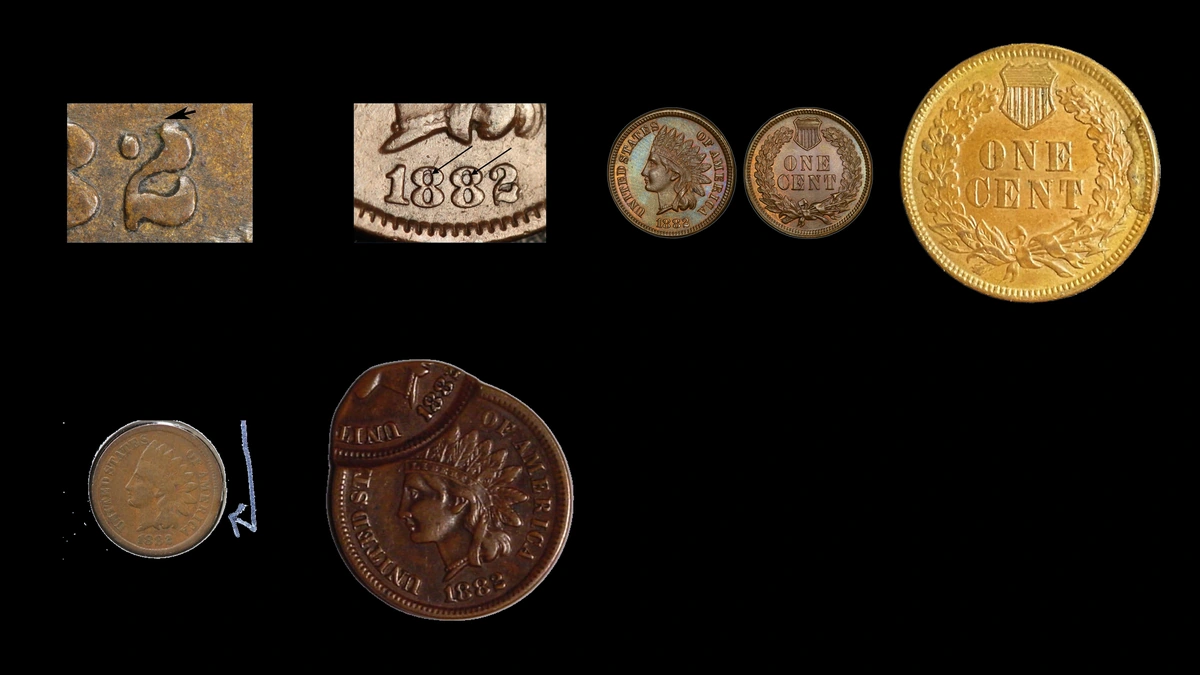
A cleaned double-struck cent brought $1,140 in January 2018. The smaller features among 1882 penny errors can require magnification, especially a missing part of 2 or a digit fragment between necklace beads.
Estimated whole-coin values span $5–$5,000. Decide whether the date has a missing stroke, an added stroke, or a fragment elsewhere before moving on to surface defects and altered outlines.
| Visible clue | Possible error | Estimated value |
|---|---|---|
| A numeral’s curve is incomplete | Broken date punch | $20–$500 |
| Extra curves inside date digits | Repunched date | $25–$1,000 |
| Numbers among beads or border teeth | Misplaced date | $40–$1,500 |
| Raised line or rim lump | Die crack or cud | $5–$750 |
| Peeling layer or missing arc | Lamination or clip | $15–$400 |
| Wide or displaced image | Broadstrike or off-center strike | $50–$2,500 |
| Repeated whole designs | Multiple strikes | $400–$5,000 |
The usual bronze cent weighs 3.11 grams and measures 19.05 millimeters across, with a plain edge. Take measurements only when safe, leaving a loose layer or sealed holder undisturbed.
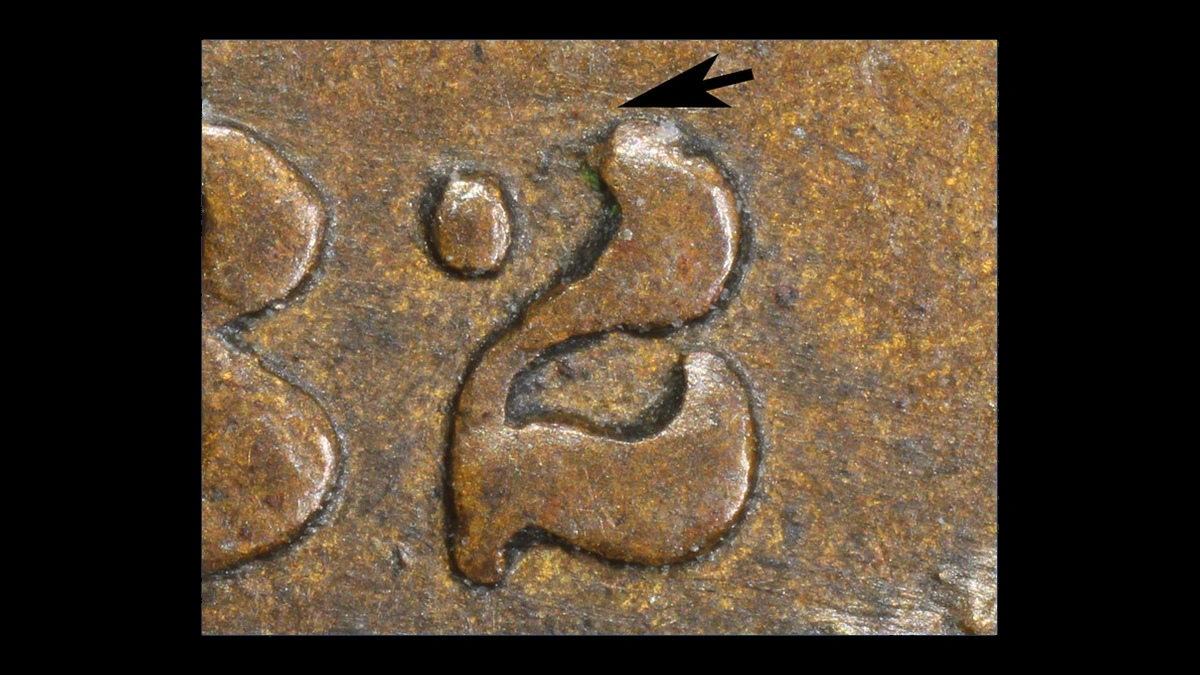
1. 1882 Penny Part of a Numeral Is Missing: Broken Date Punch Error
The Broken 2 lacks part of that digit’s upper curve because the date punch carried damaged detail. A separate reported example has an incomplete top on an 8.
How to Identify
Compare the remaining numeral’s full shape with an attributed example, not merely the empty spot. Uniform date wear or scraping may also remove detail, and later die polishing can make already weak strokes less visible.
The broken 8 needs its own close-up. A photograph of the Broken 2 cannot establish another numeral’s defect.
What It’s Worth
The estimated overall range is $20–$500: identified Broken 2 examples about $25–$500 and the separate broken-top 8 about $20–$150. These are whole-coin estimates.
PCGS records a Broken 2 AU50 Brown at $360 on eBay in January 2019. That specific marketplace result does not price every weak 1882 digit.
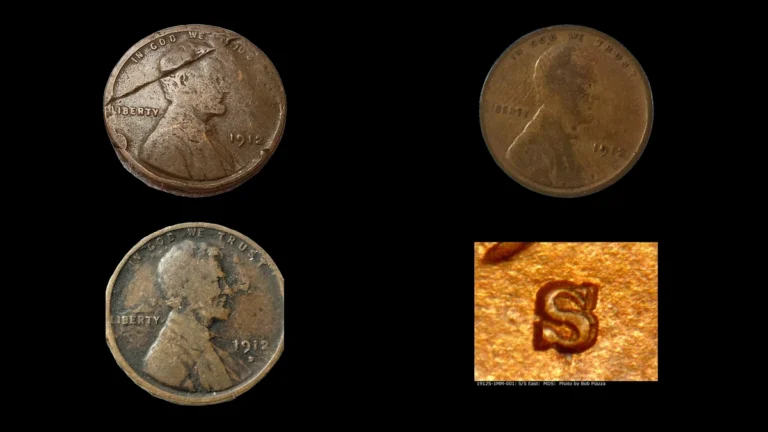
2. 1882 Penny Extra Curves Survive inside the Date: Repunched Date Error
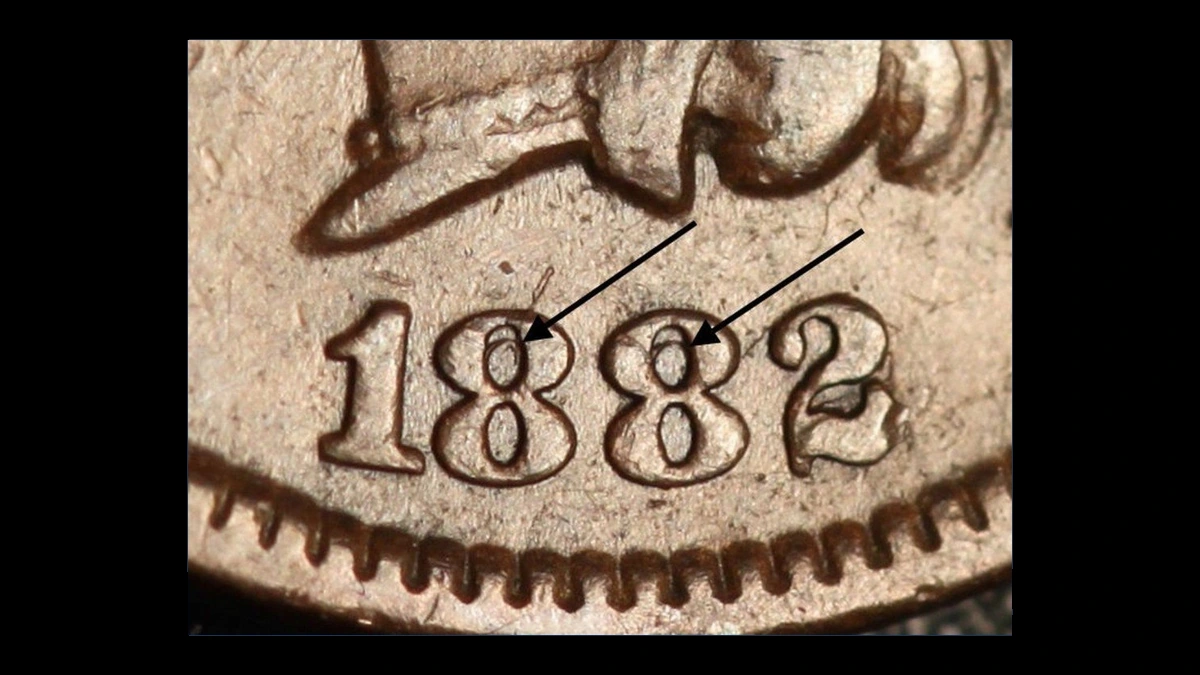
A repeated date punch can add earlier strokes beside the completed numerals. One reported pattern places remnants low inside the upper loops of both 8s and beneath the upper curve of 2.
How to Identify
Compare the whole date with the 1882 example in Error-Ref’s explanation. Rounded earlier strokes differ from flat shelves following the existing digit.
Another reported form repeats 18 upward and 2 downward. That is a different pattern, and unlike the Broken 2 it adds surviving strokes instead of merely omitting part of a numeral.
What It’s Worth
Identified repunched dates are estimated at $25–$1,000. Strong readable remnants and preservation support more than vague doubling on a worn date.
Greysheet lists a Snow-1 graded ANACS AU55 at $84 from Heritage in July 2025. Its lightly worn condition makes it a useful circulated comparison.
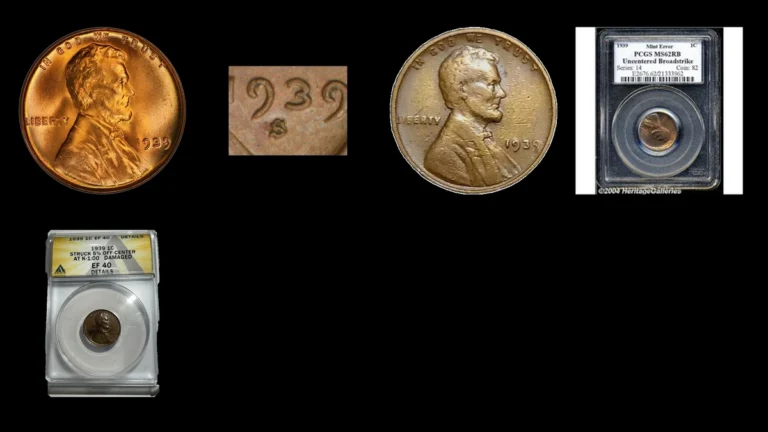
3. 1882 Penny Number Fragments Sit among Necklace Beads: Misplaced Date Error
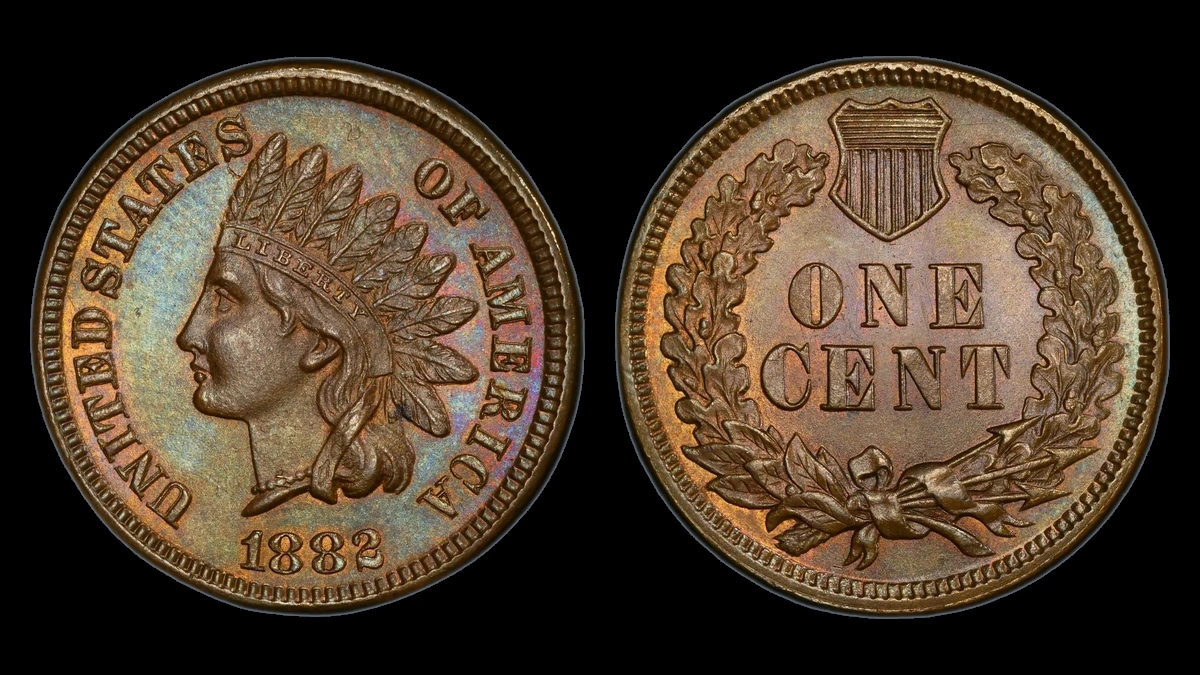
A date punch placed too high or low can leave fragments outside the normal date. Snow-6 is commonly called “Digits in Pearls” because small parts of numerals appear among the necklace beads.
How to Identify
The reports include bases of 1 between the first two beads and near the fourth and fifth, plus 8 fragments near the portrait base, ribbon, and curl. Other varieties put tops of 8 and 2 among the lower border teeth.
Use the 1882 variety catalog to select the correct location and pattern. The beads themselves and shifting shadows beside them are not numeral fragments.
What It’s Worth
Matched misplaced dates are estimated at $40–$1,500. Exact variety, fragment clarity, and condition affect the whole-coin figure.
Greysheet records an ANACS MS62 Brown Snow-6 at $282 in January 2015. If the same coin also carries a rim break, both features still receive one overall value.
4. 1882 Penny Raised Metal Crosses the Arrows or Rim: Die Cracks and Cuds Error
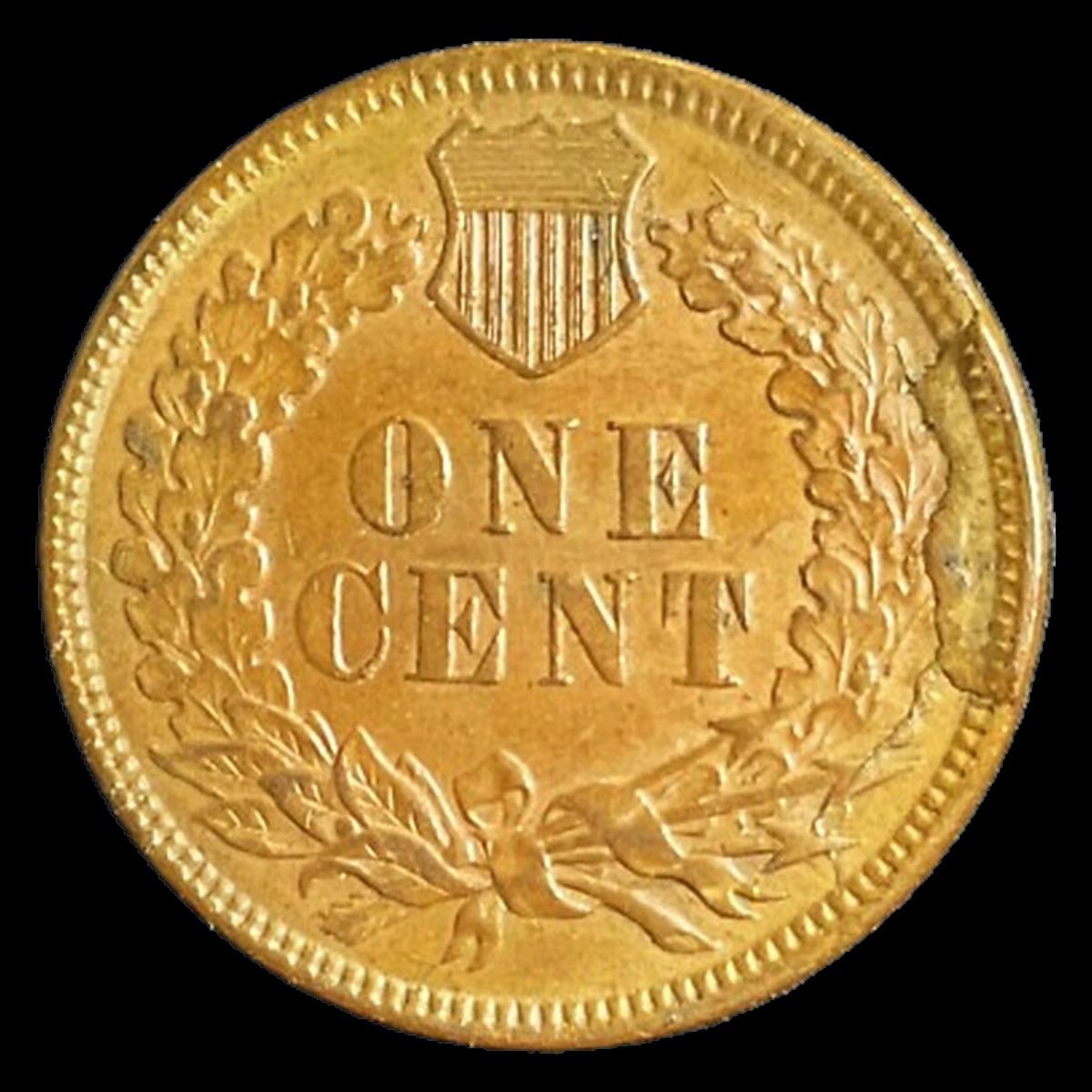
Metal entering a damaged die leaves raised detail on the coin. One reverse crack runs from the right wreath near two o’clock through the middle and lower arrows.
How to Identify
Follow the line under changing light to distinguish a ridge from a recessed scratch. For a larger cud, establish a rim-connected patch replacing normal design.
A front cud from 7:45 to 9:30 differs from the upper break spanning 10:30 to two on a necklace-digit coin. Compare the date and rim features of the same specimen rather than merging these separate examples.
What It’s Worth
Estimated values span $5–$750, with small worn cracks around $5–$75 and larger clear cuds around $75–$750. Size and preservation influence the comparison.
No individual sale is supplied for each illustrated break. The necklace-digit combination should not be valued by adding two full category maxima.
5. 1882 Penny A Front Surface Layer Separates: Lamination Error
A weak layer inside the bronze can peel away while remaining partly attached. The recorded 1882 example is a front-side lamination graded ANACS VG8.
How to Identify
Use low light to follow the peeling boundary without lifting the metal. Heavy wear can soften the edge, so a genuine low-grade specimen may not show a sharply defined flap.
A scrape or gouge cuts into finished metal rather than following a natural layer. The listing identifies the front but does not establish a path to assume across every portrait.
What It’s Worth
The estimated range is $15–$300: modest worn laminations about $15–$150 and clearer, better-preserved examples about $75–$300. An 1890 NGC MS62 Brown lamination sold for $104 in April 2010 as a different-year comparison.
The 1882 GreatCollections lot opened at $1 in August 2025. That starting bid is not its final selling price.
6. 1882 Penny A Curved Gap Breaks the Outline: Clipped Planchet Error
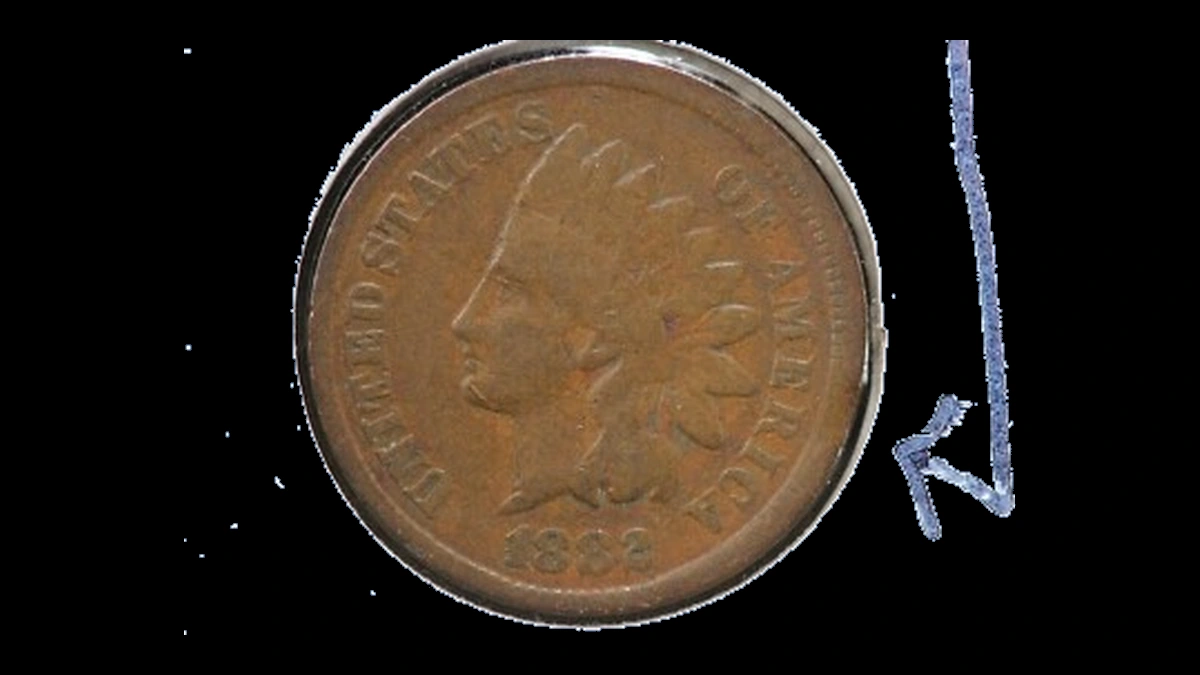
The Rippere Collection included an 1882 curved clip weighing 3.08 grams and graded ANACS VG8 Details. The missing arc began before striking, while the Details designation records a separate condition problem.
How to Identify
Inspect the rim transitions at both ends of the arc and the curved edge for cutting or grinding. Possible weakness opposite the gap can support the diagnosis when it is actually present.
The Rippere coin is only 0.03 gram below normal, showing why weight alone cannot establish a clip. An uncertified seller’s example is a separate coin with its own outline and surfaces.
What It’s Worth
Genuine curved clips are estimated at $25–$400, with many worn or problem coins around $25–$150 and stronger examples around $100–$400. The original boundary and surface condition guide that assessment.
No realized sale is assigned to the Rippere example. Its recorded weight identifies that specimen rather than establishing its price.
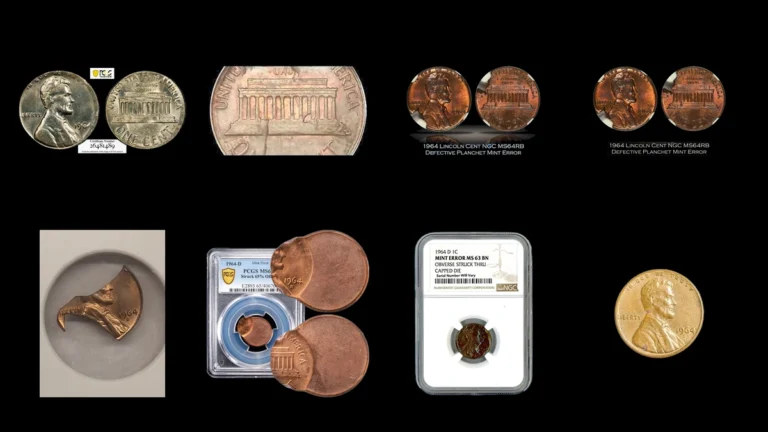
7. 1882 Penny The Whole Design Fits on an Expanded Disc: Broadstrike Error
A collar failing to contain the blank can allow bronze to spread during striking. The intended design remains within the enlarged outline.
How to Identify
Follow the outer lettering and compare widths in several directions. Inspect both faces for crushing from later pressure, which can also widen a finished coin.
Heritage cataloged a separate 1882 NGC VG8 broadstrike. With that much wear, the outline and remaining design boundary matter more than expecting crisp unworn details.
What It’s Worth
Estimated values span $50–$1,500, with worn broadstrikes about $50–$250 and clearer, stronger examples about $200–$1,500. Condition remains important despite the enlarged shape.
A different 1882 cent described as broadstruck and triple struck, graded NGC VG10, sold for $121 in February 2010 according to Greysheet. Its heavy wear and combined errors do not price the separate VG8 broadstrike directly.
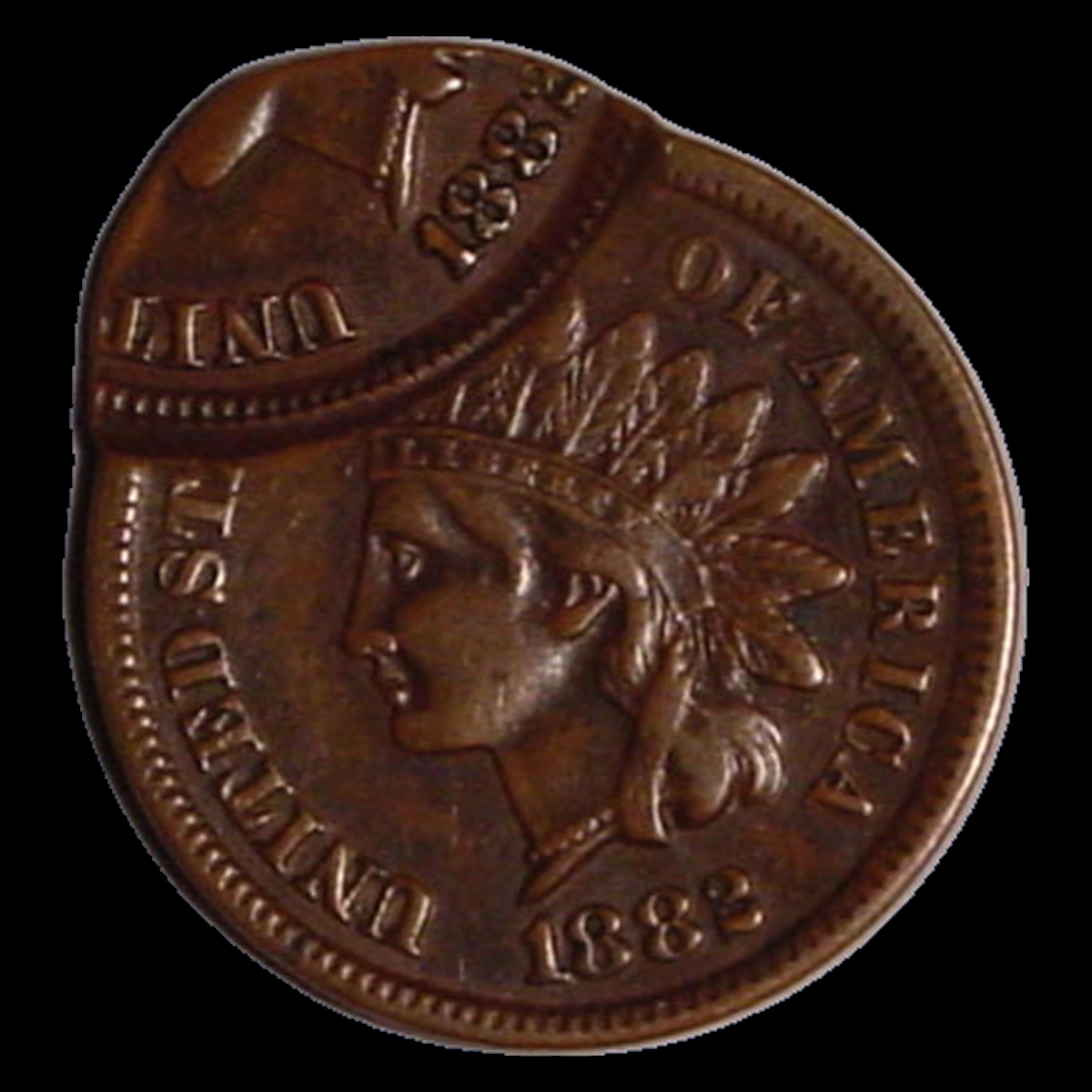
8. 1882 Penny One Design Misses Part of the Disc: Off-Center Strike Error
A 1988 dealer listing describes a worn 1882 cent struck 20% off center toward ten o’clock. It received one reported displaced strike, distinct from the double-struck coin offered in the same listing.
How to Identify
Compare the front and back against the same blank position and read the surviving 1882 date. A single shifted face opposite a centered one can have a different alignment explanation.
Inspect the unused crescent and edge for grinding or cutting. An off-center blow can leave metal unstruck without removing it.
What It’s Worth
The estimated range is $100–$2,500: worn clear examples about $100–$600 and stronger preserved dated strikes about $500–$2,500. The degree of displacement is only one factor.
The dealer asked $40 for the 20% example in 1988. That old asking price is neither a completed sale nor a current valuation.
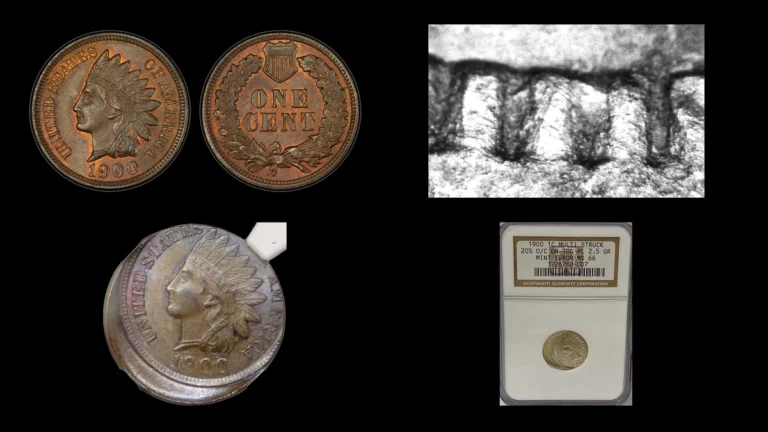
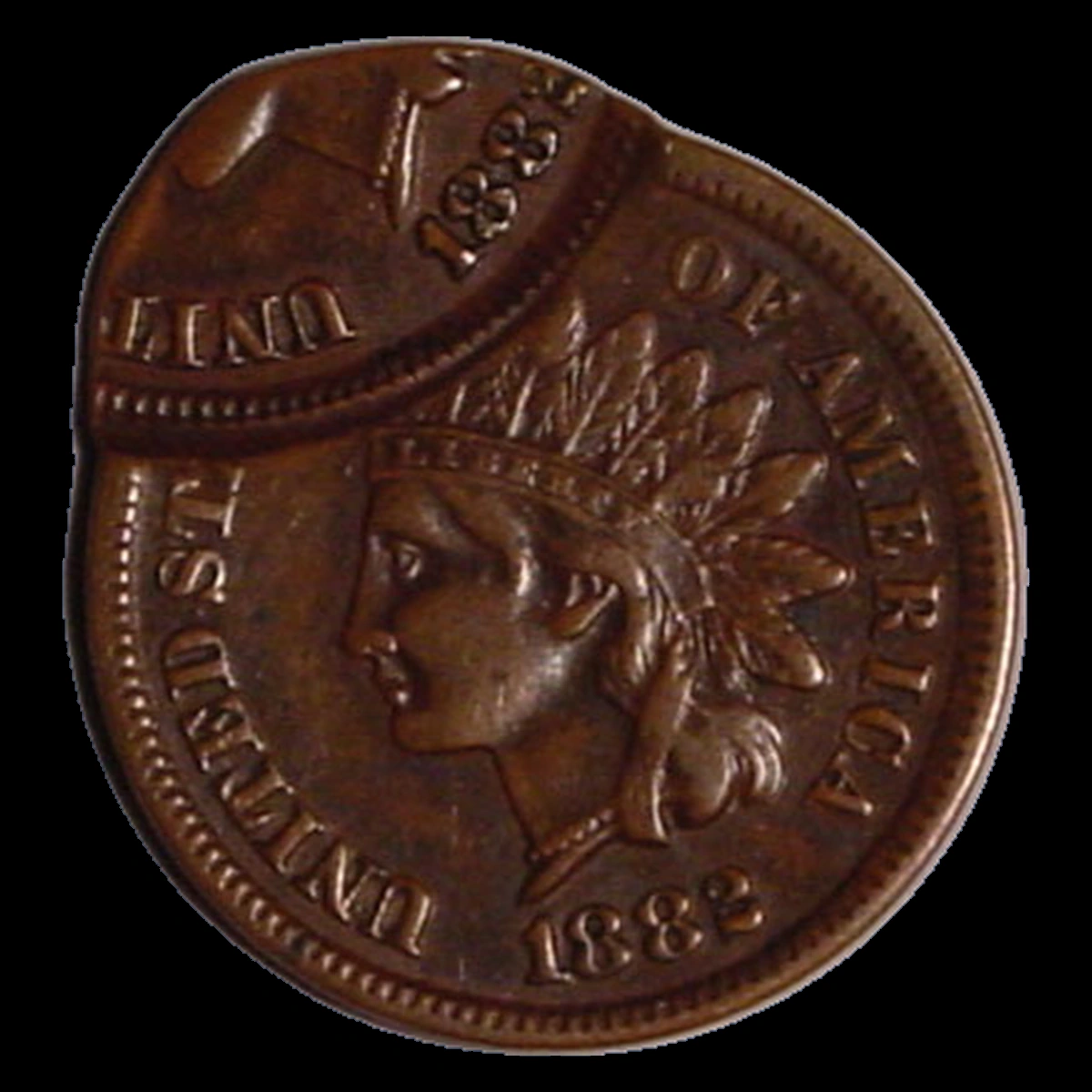
9. 1882 Penny Separate Dates Belong to Separate Blows: Double and Triple Strikes Error
The published NGC AU50 Brown example has two full dates, with a centered first strike and a second blow 75% off center toward eleven o’clock. A separate ANACS EF40 example received three strikes, the last off center.
How to Identify
Trace letters and portrait details belonging to each date, then check the same movement on the reverse. A small extra stroke within one numeral is not evidence of another whole strike.
For a proposed triple strike, map three distinguishable design positions on photographs. Later blows can flatten earlier detail, so count coherent impressions rather than isolated ridges.
What It’s Worth
Genuine 1882 multiple strikes are estimated at $400–$5,000. The clarity of the sequence and remaining preservation guide the comparison.
A cleaned ANACS AU Details double strike brought $1,140 at Heritage in January 2018, according to Greysheet’s sale record. It is a different coin from the published AU50 two-date piece and the EF40 triple strike.
Conclusion
On an 1882 cent, missing numeral detail and added numeral detail lead to different explanations. A fragment among necklace beads needs another comparison again, even when the same coin also shows a rim break.
The $5–$5,000 estimates reflect both error visibility and preservation. Keep starting bids, old asking prices, and completed transactions distinct, and compare multiple features together as parts of one collectible.