Rare 1830 Penny Errors (List & Pictures)
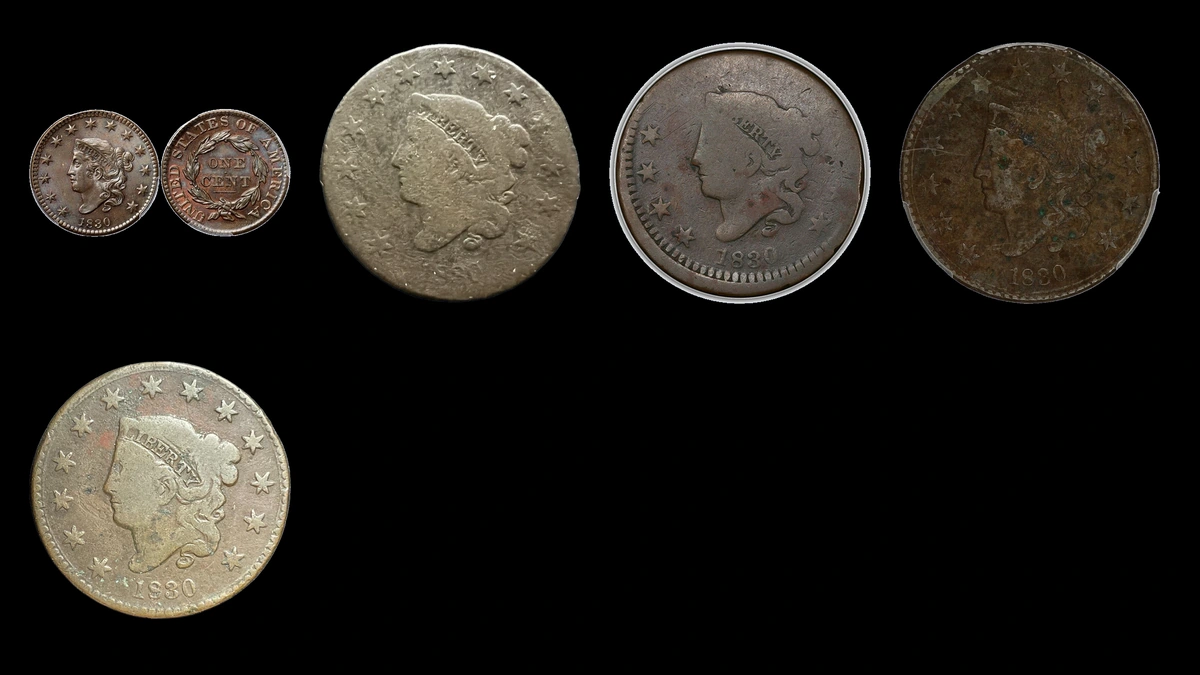
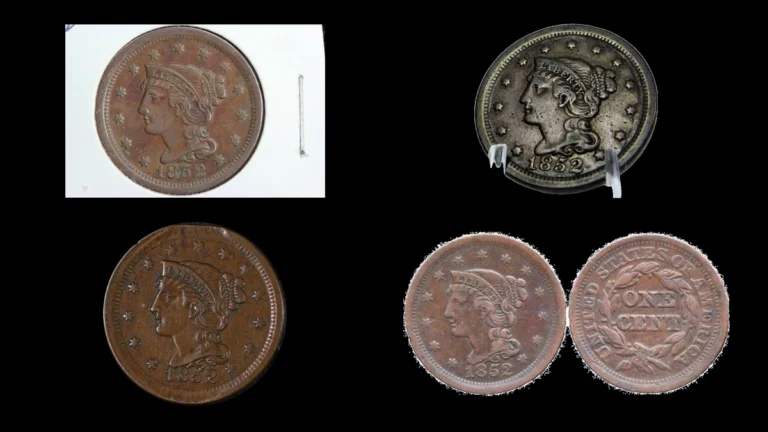
A small date trace and a large sideways wreath are very different clues on an 1830 cent. Neither tells the whole price story without the copper surfaces and remaining detail.
An unworn N-8 with a repeated date stroke sold for $3,360 including fees in May 2026. This guide to seven groups of 1830 penny errors uses estimated whole-coin ranges of $30–$8,000, from modest raised cracks to clear displaced strikes.
1. 1830 Penny Repunched 1 in the Date Error
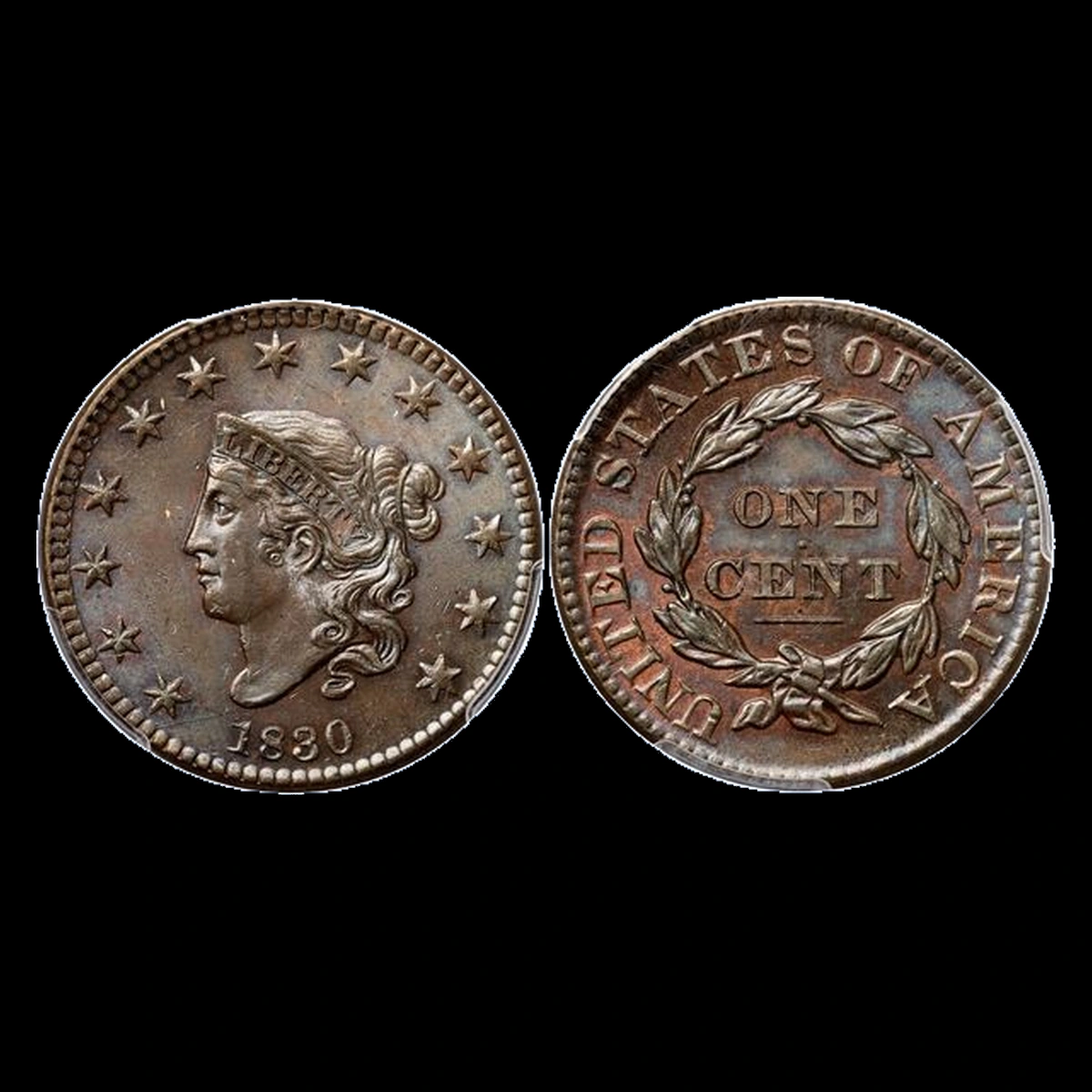
A small earlier outline follows the left edge of the 1 on the N-8 variety. The numeral was punched into the stamping tool more than once, leaving a remnant of the first position.
The same recorded coin has a front crack. Both features belong to its tool pairing; the repeated 1 does not mean another year lies beneath 1830.
How to Identify
Magnify the left side of the 1 and change the light to separate a fixed raised stroke from glare. A natural earlier outline should follow the numeral rather than cross it like a scratch.
Inspect the rest of the date for reworking and match both faces before using the N-8 name. The crack can provide a supporting clue.
What It’s Worth
$40–$5,000 is the estimated range, with worn matching examples around $40–$500 and attractive unworn coins around $500–$5,000. Preservation often matters more than the tiny stroke by itself.
The PCGS MS64+ Brown example brought a $2,800 bid in May 2026. Its 20% buyer’s fee made the total $3,360 for the complete coin, including the crack and surfaces.
2. 1830 Penny Raised Die Cracks Error
An N-4 example has a raised line around much of the front stars and date, plus back cracks linking letters to the rim. A separate N-8 crack runs from the bust tip toward the border below star one.
The die is the stamping tool, and copper entering its cracks forms raised lines. A general guide also mentions larger rim breaks called cuds without identifying one on either of these recorded coins.
How to Identify
Follow the appropriate path under side lighting: the short bust-to-border line for N-8 or the more extensive front and back pattern for N-4. A scratch has a cut center rather than an original raised ridge.
If examining a broad rim patch, check its connection for a dent or added material. A nearby thin crack does not by itself establish a cud.
What It’s Worth
$30–$4,000 is the estimated whole-coin range. Worn cracked examples may fit around $30–$750, with attractive unworn coins or confirmed substantial rim breaks around $750–$4,000.
The N-8’s $3,360 May 2026 result is the same sale described above. Its crack and repunched 1 share one price rather than creating two separate premiums of that amount.
3. 1830 Penny Lamination and Small Copper Flakes Error
A tiny original flake is missing along the jawline of an N-1 cent graded ANACS MS61 Brown. A weak layer in the copper can separate this way, a flaw called lamination.
A different listing reports an 1830 lamination without giving its exact location. The N-1 also has raised bumps copied from rust on the tool, which are different from a missing copper layer.
How to Identify
Use angled light along the jawline opening on the matching N-1. Look for a layer boundary rather than assuming any rough patch is peeling copper.
Raised tool-rust bumps sit above the surface instead of leaving a thin sheet missing. Keep any loose flap attached and do not assign the other listing’s flaw to the jaw without its photograph.
What It’s Worth
$40–$1,500 is the estimated range for original 1830 laminations. Worn coins may fit around $40–$350, with attractive unworn examples around $350–$1,500.
A separate lamination listing reports a $150 result from April 2023. It is not a sale of the ANACS MS61 jawline-flake specimen.
4. 1830 Penny Reported Clipped Edge Error
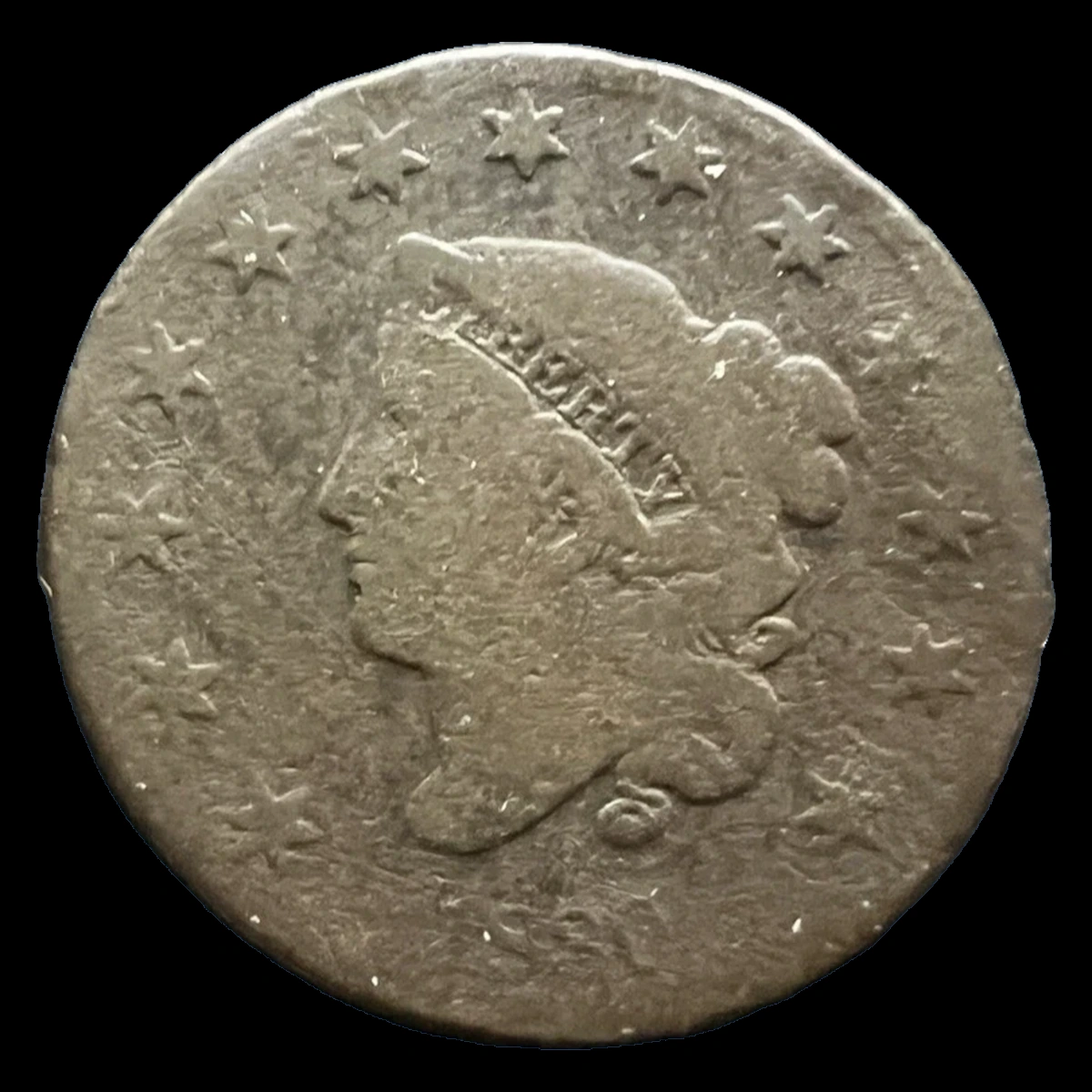
An incomplete blank can receive a design around an edge gap. A seller describes an 1830 large cent as clipped but also notes severe scratches on its back.
The scratches are later damage and do not establish how the gap formed. The reported candidate gives no direction or shape that should be assumed for another coin.
How to Identify
Inspect the opening’s wall and both ends for saw lines, filing, or cuts through completed design. Possible weakness on the opposite rim is supporting evidence, allowing for wear.
A normal cent started near 10.89 grams and roughly 28–29 mm, with a plain edge. Both a genuine clip and a later cut lower weight, so record the gap separately from the severe back scratches.
What It’s Worth
$40–$1,000 is the estimated range if the missing section formed before striking. Worn clips may fit around $40–$250, with clearer better-preserved examples around $250–$1,000.
The scratched candidate needs a condition comparison that includes its damage. An unworn 1852 clip sold for $384 in June 2024 as a later-year reference, not a direct price for that candidate.
5. 1830 Penny Reported Broadstrike Error
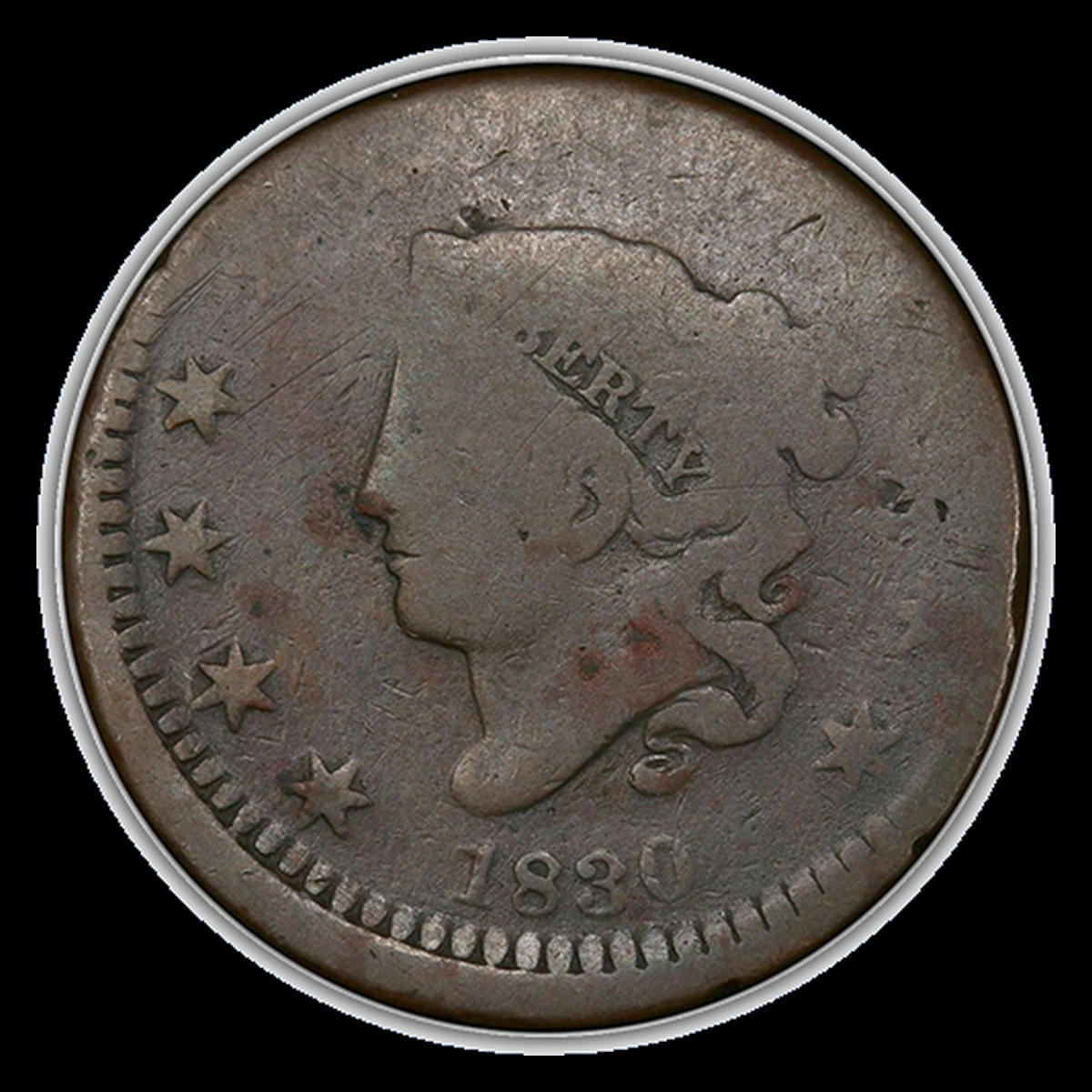
A dealer offered an 1830 cent in PCGS Good 4 as broadstruck outside the collar. A broadstrike spreads outward while retaining the intended design.
Early cents can vary in outline because their production differs from modern close-fitting collar striking. A slightly wide or uneven coin therefore needs more than a diameter reading to establish this error.
How to Identify
Compare the complete front and back with ordinary 1830 examples before measuring several spans. Use the usual 28–29 mm size as context rather than a rigid modern tolerance.
Inspect the border and edge for hammered detail, flattened letters, or later thinning. An early-copper specialist can assess whether the outward spreading exceeds ordinary manufacturing variation.
What It’s Worth
$150–$1,500 is the estimated range for a confirmed broadstrike. Worn examples may fit around $150–$600, with stronger attractive coins around $600–$1,500.
The dealer listed the Good 4 example at $350. That offer is not a completed sale, and no exact expanded diameter was supplied.
6. 1830 Penny Off-Center Strike Error
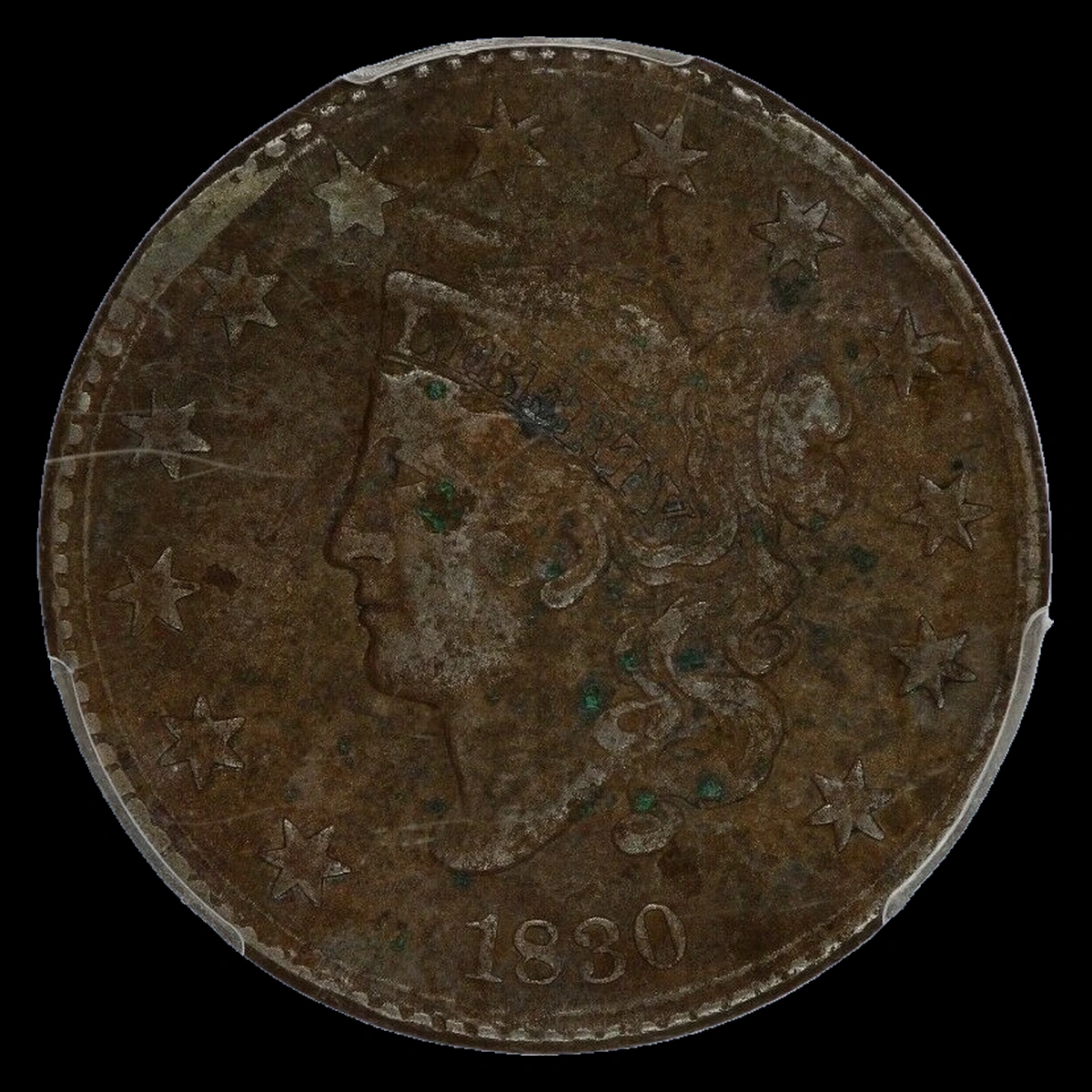
A misplaced blank can receive designs that partly miss the copper, leaving an original unstruck area. Mint Error News illustrates an 1830 example beside a different 1829 cent that also has a clip.
A year guide separately reports a 10% off-center 1830. The reports do not establish one shared specimen, and the 1829 clip should not be transferred to either 1830 coin.
How to Identify
Photograph the entire outline, remaining date, and bare copper. Check for scraped-away letters or abrasive lines that could explain missing design after minting.
Use the same physical edge to compare both faces. A shift confined to one side suggests a different tool-position problem from a blank misplaced between both dies.
What It’s Worth
$200–$8,000 is the estimated range for genuine dated examples. Worn coins may fit around $200–$2,000, with attractive stronger survivors around $2,000–$8,000.
No individual auction amount is assigned to the two 1830 reports. An undated cent identified by its dies as 1808, with light wear and a 30% offset, brought $6,462.50 in February 2018 as a different-year comparison.
7. 1830 Penny Rotated Back Error
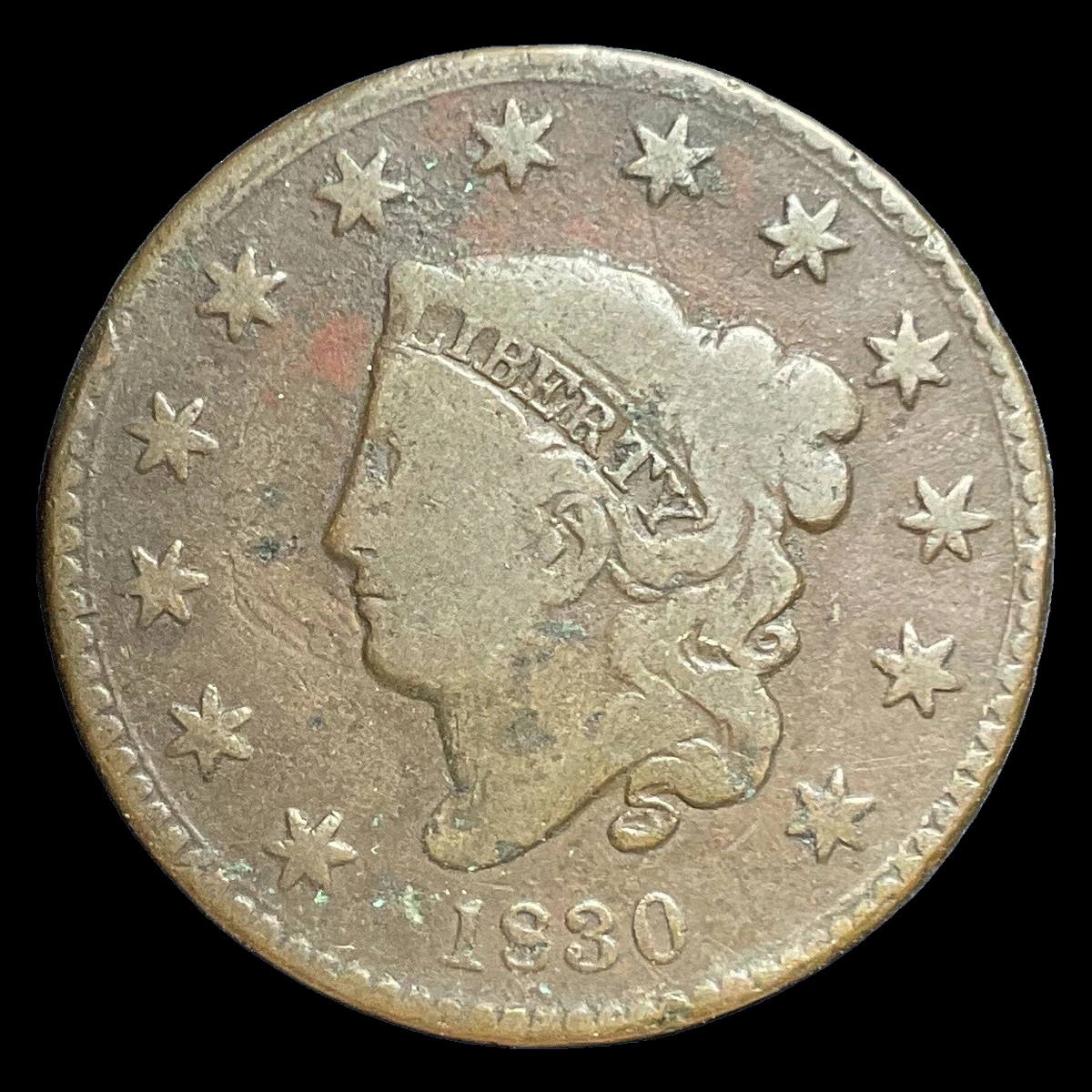
The back of an N-2 is recorded 30 degrees counterclockwise from normal alignment. A separate, much more worn N-3 is described as 150 degrees clockwise.
These turns record the angle between the dies at striking. They are not measurements that apply to every coin with the same year.
How to Identify
Hold Liberty upright in a clear holder that prevents the coin turning, then flip top to bottom. The wreath should finish upright on a normally aligned cent.
Measure the remaining lean against a fixed guide and repeat the flip. Keep angle and direction tied to the actual specimen instead of independently straightening both photographs.
What It’s Worth
$40–$7,000 is the estimated range for 1830 rotations. Worn examples may fit around $40–$500, with attractive stronger preservation around $500–$7,000.
The N-2 graded NGC MS66 Brown brought $3,220 in January 2005. Its exceptional unworn condition matters, so the worn N-3’s larger angle does not automatically make it more valuable.
Conclusion
For an 1830 cent, enlarge the date for a repeated numeral, examine metal boundaries for a clip or flake, and use a controlled flip for rotation. Each check answers a different question.
Estimated whole-coin values span $30–$8,000. Preserve original copper and keep the variety, visible feature, and condition together when using a price comparison.