Rare 1997 Penny Errors (List & Pictures)
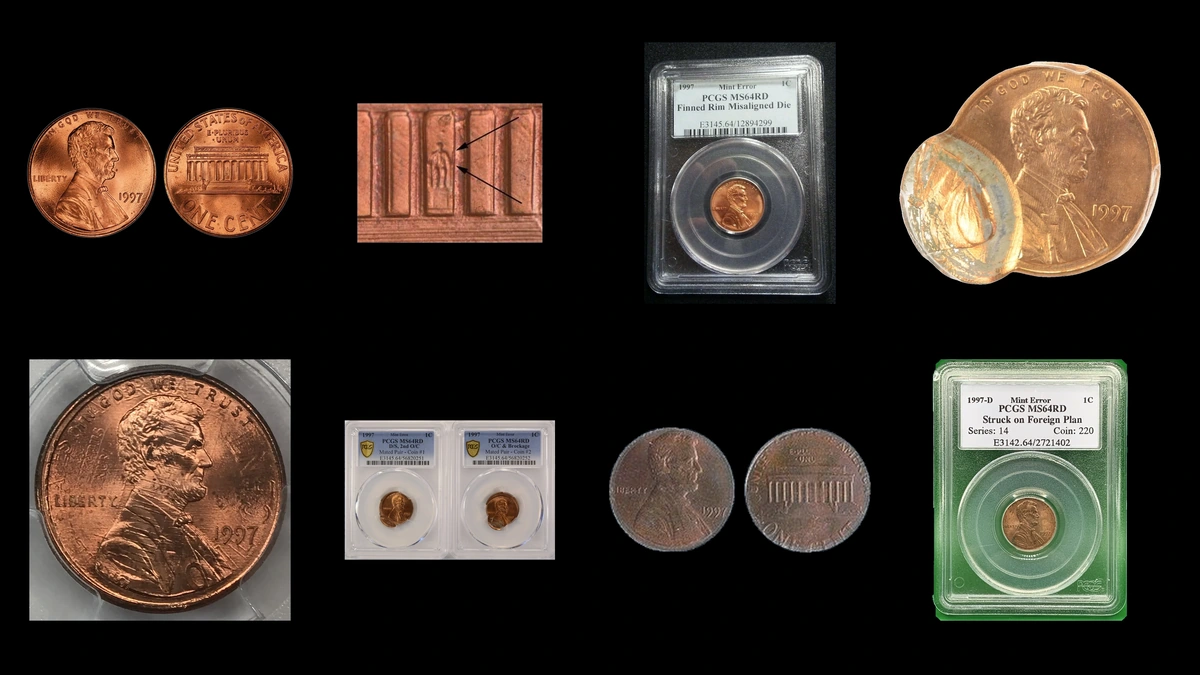
A 1997 cent struck over a finished dime sold for $1,207.50 in March 2009. Estimated values for 1997 penny errors range from $5–$3,000, including the recognizable doubled ear and several complex striking mistakes.
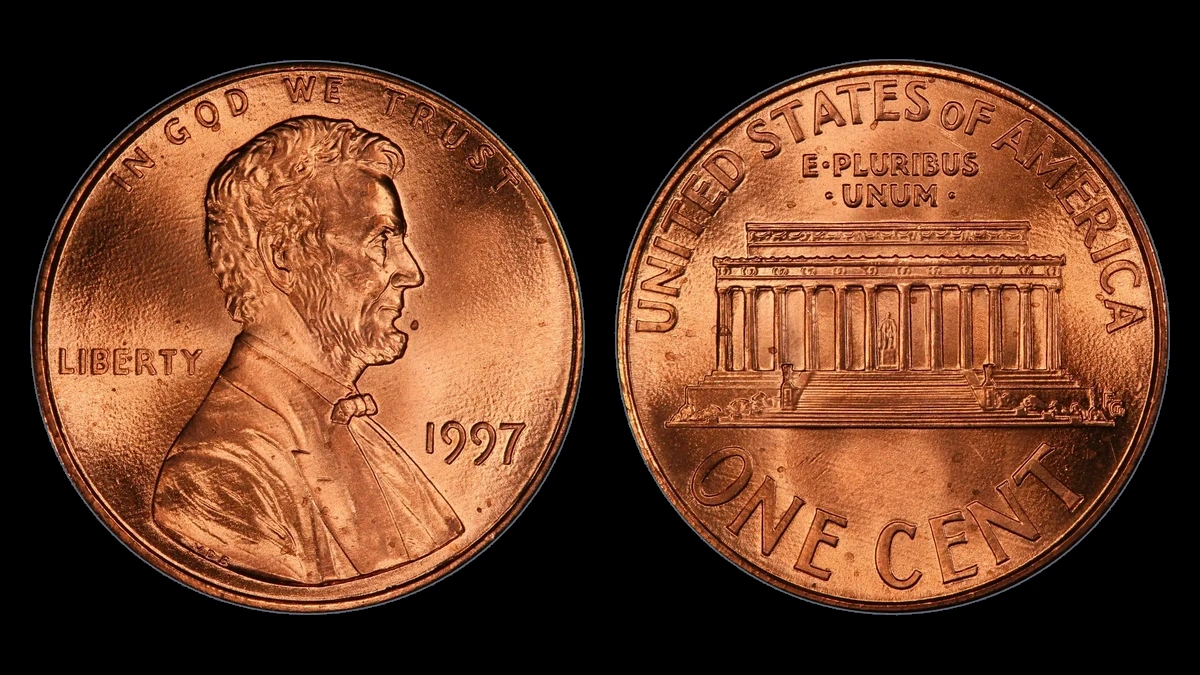
Examine the ear and Memorial first, then raised features, the coin’s outline, and its metal. A normal cent weighs 2.50 grams, measures 19.05 mm, and has a smooth edge around copper-plated zinc.
| What catches the eye | Error or variety | Estimated value |
|---|---|---|
| Second lower earlobe | Doubled ear | $25–$1,500 |
| Extra column slivers | Doubled reverse | $10–$125 |
| Bar in LIBERTY or rim patch | BIE chip or cud | $5–$400 |
| Thin upright rim wall | Finned rim | $15–$75 |
| Design beside blank metal | Off-center strike | $20–$450 |
| Overlapping impressions | Double strike | $75–$750 |
| Backward sunken detail | Brockage with broadstrike | $50–$600 |
| Smooth depressed area | Indent with broadstrike | $40–$650 |
| Raised cup walls | Die cap | $200–$1,500 |
| Gray ring on small zinc blank | Partial plating combination | $300–$2,500 for whole coin |
| Wrong metal or starting size | Wrong blank | $300–$2,500 |
| Earlier dime under cent design | Double denomination | $800–$3,000 |
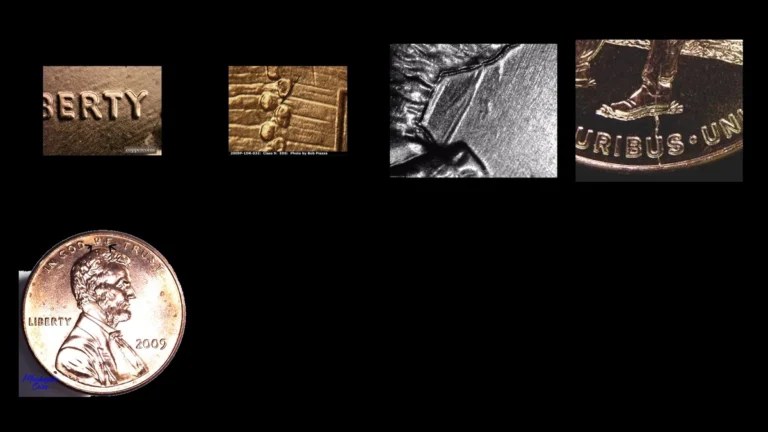
1. 1997 Penny A Second Rounded Earlobe: Doubled Ear FS-101 Error
The Philadelphia doubled-ear variety has an additional rounded contour below Lincoln’s ear. It came from repeated detail in the die, the tool that stamps the coin, rather than a second full strike.
FS-101 and WDDO-001 name the same variety. Lighter hair and beard doubling can help support the match.
How to Identify
Compare the lower ear with the Lincoln Cent Resource photographs, keeping the 1997 date and no-mint-letter area visible. A Denver ear bump does not identify this Philadelphia variety.
Use side lighting to distinguish the rounded duplicate from a flat strike shelf or a smooth copper blister. Normal weight only supports the general coin type, not the doubled-ear attribution.
What It’s Worth
An identified 1997 doubled ear has an estimated value of $25–$1,500. Wear, surface marks, and copper color account for substantial differences within the range.
PCGS records $1,020 for an MS67 Red example in August 2021. A separate MS64 Red and Brown coin brought $114 in May 2026, showing why the highest-grade result is not a standard price.
2. 1997 Penny Slivers Inside the Memorial: Doubled Columns Error
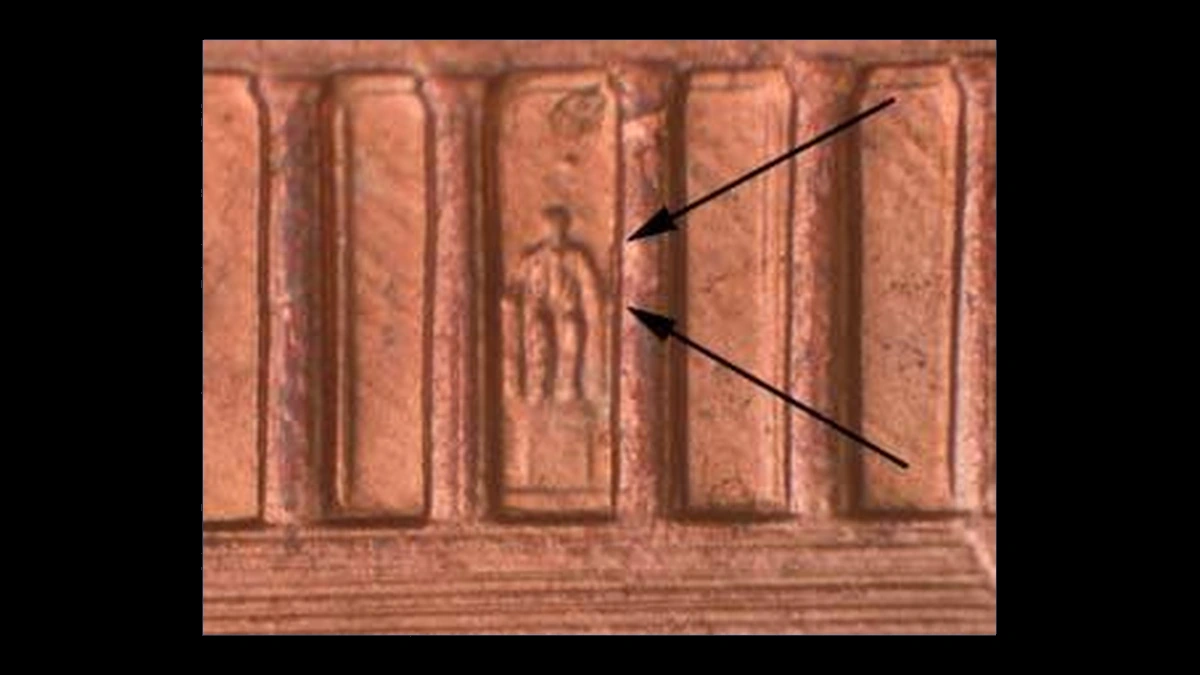
A Denver reverse variety has extra column detail inside several openings of the Memorial. The repeated architecture is separate from the Philadelphia doubled ear.
How to Identify
Confirm D, then count the openings from the left while facing the building. The Coppercoins example shows repeated detail in openings one through four and nine through eleven.
Trace each sliver beside its normal column and compare the exact shape. Plating bubbles and flat shelves can put extra-looking metal in an opening without matching the variety.
What It’s Worth
Identified minor 1997 reverse doubled dies have an estimated value of $10–$125. Clear column detail on a clean coin is more appealing than uncertain ridges on a worn surface.
The catalog establishes the pattern without supplying a realized sale here. It should not inherit the doubled ear’s strongest price simply because both involve doubled dies.
3. 1997 Penny A Letter-Space Bar or Rim Lump: BIE Chips and Cuds Error
Metal filling a small missing area in the die can create an I-like bar between B and E in LIBERTY. A larger break at the tool’s edge instead leaves a rim-connected patch called a cud.
How to Identify
For BIE, examine the actual B–E gap for solid original raised metal. Dirt, bubbles, or attached material should not substitute for the letter-space feature.
For a cud, follow the patch to the rim and inspect the design it replaces. Philadelphia rim breaks are cataloged separately, and opposite-face weakness may support them without being strong on every specimen.
What It’s Worth
The combined estimated range is $5–$400: roughly $5–$30 for BIE chips and $40–$400 for genuine rim cuds. Their different size and location require different comparisons.
No completed sale is assigned to the supplied 1997 examples. Later squeezed edge metal has a different cause even when it creates a prominent lump.
4. 1997 Penny A Thin Wall Above the Edge: Finned Rim Error
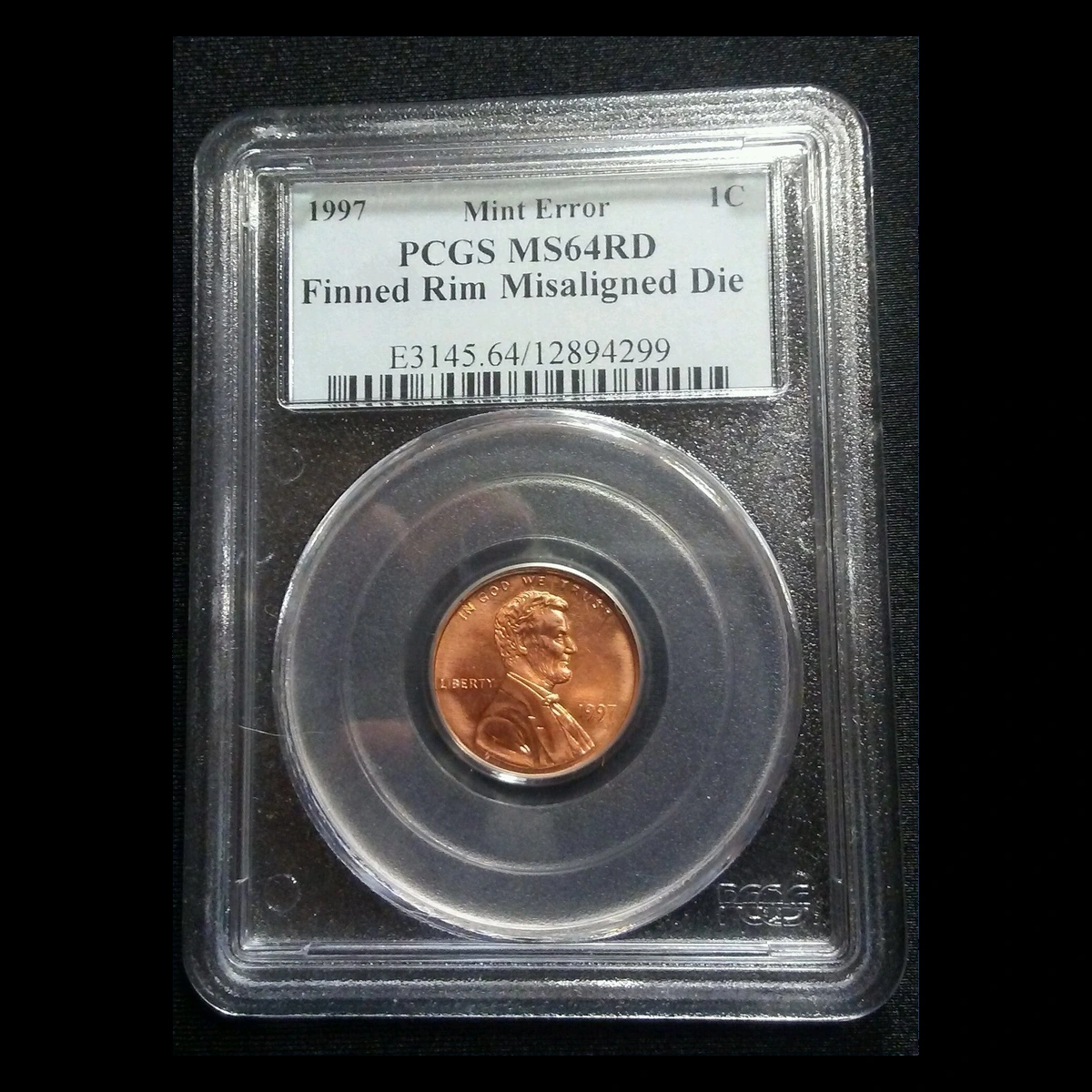
A fin forms when metal escapes upward into a narrow space beside the die. Fred Weinberg described 1997 examples with a high fin across roughly the upper half, linking it to slight front-die misalignment and excessive striking pressure.
How to Identify
View the coin at a shallow angle and from the side to see the thin upright wall. On the listed examples, compare the area from about nine to three o’clock.
A rim that appears nearly twice as thick does not imply twice the metal. Exclude rolled or battered edges, and do not try to straighten the delicate fin.
What It’s Worth
A genuine 1997 finned rim has an estimated value of $15–$75. A continuous surviving fin displays better than one bent or flattened by handling.
Weinberg’s historical inventory asked $15 for one choice brilliant uncirculated example or $25 for two. Those were offers to sell, not recorded auction results.
5. 1997 Penny Part of the Blank Stays Plain: Off-Center Strike Error
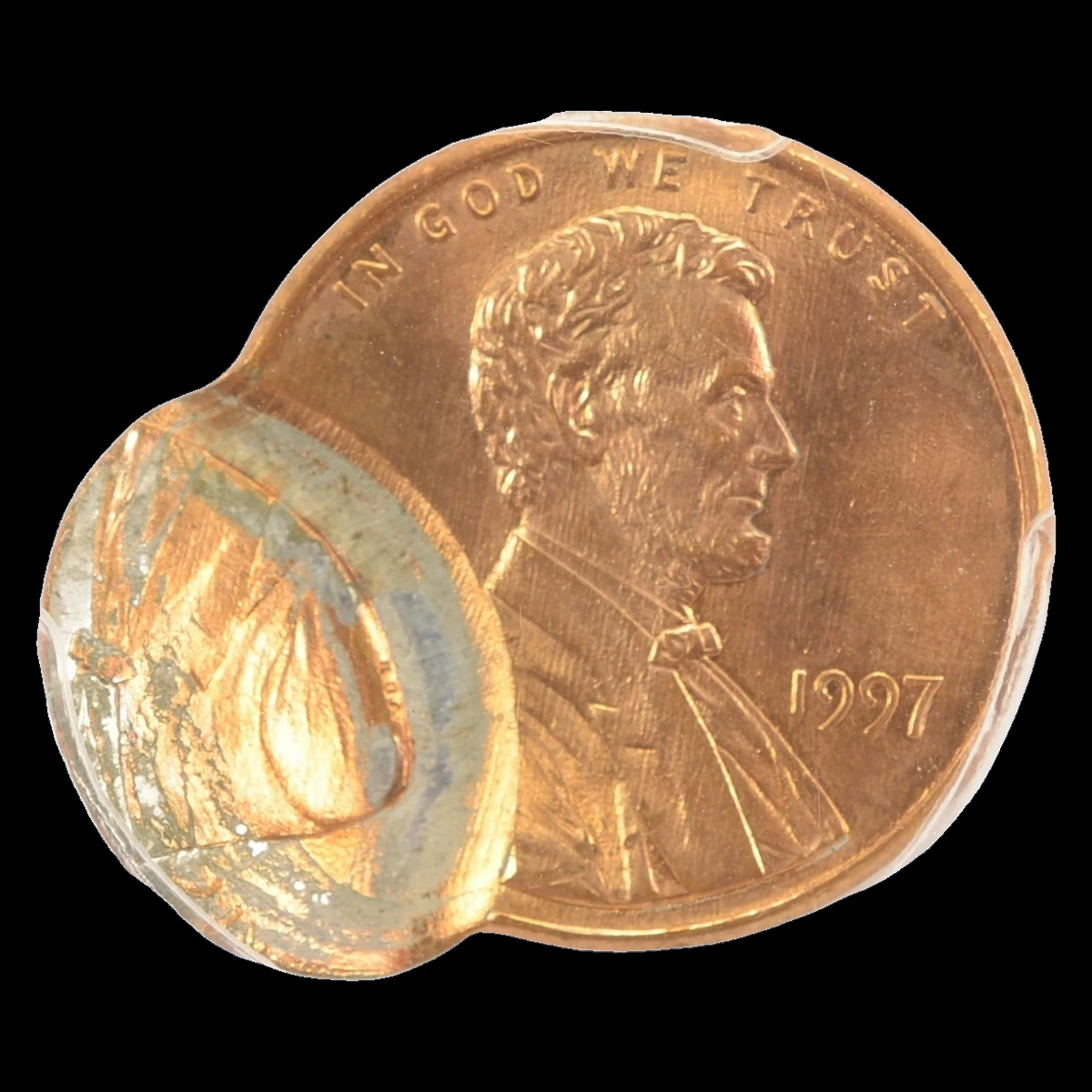
An incomplete design adjoining untouched metal can show that the blank sat partly outside the dies. A coin described in a 1997 matching pair began about 20% off center before being struck again.
How to Identify
On that specimen, the first impression points toward two o’clock and the later strike toward four o’clock. For another coin, determine its own displacement from both faces rather than copying those directions.
The plain crescent is still present as metal, unlike a clip. A complete design within a wide uneven border can instead be an uncentered broadstrike.
What It’s Worth
An identified single 1997 off-center strike has an estimated value of $20–$450. Readable date, displacement, and condition guide comparison.
The matching-pair listing establishes a particular multi-stage specimen without a completed sale used here. Its later double strike belongs to the same coin, so do not price each visible stage as a separate object.
6. 1997 Penny Another Strike Over the First: Double Strike and Flipover Error
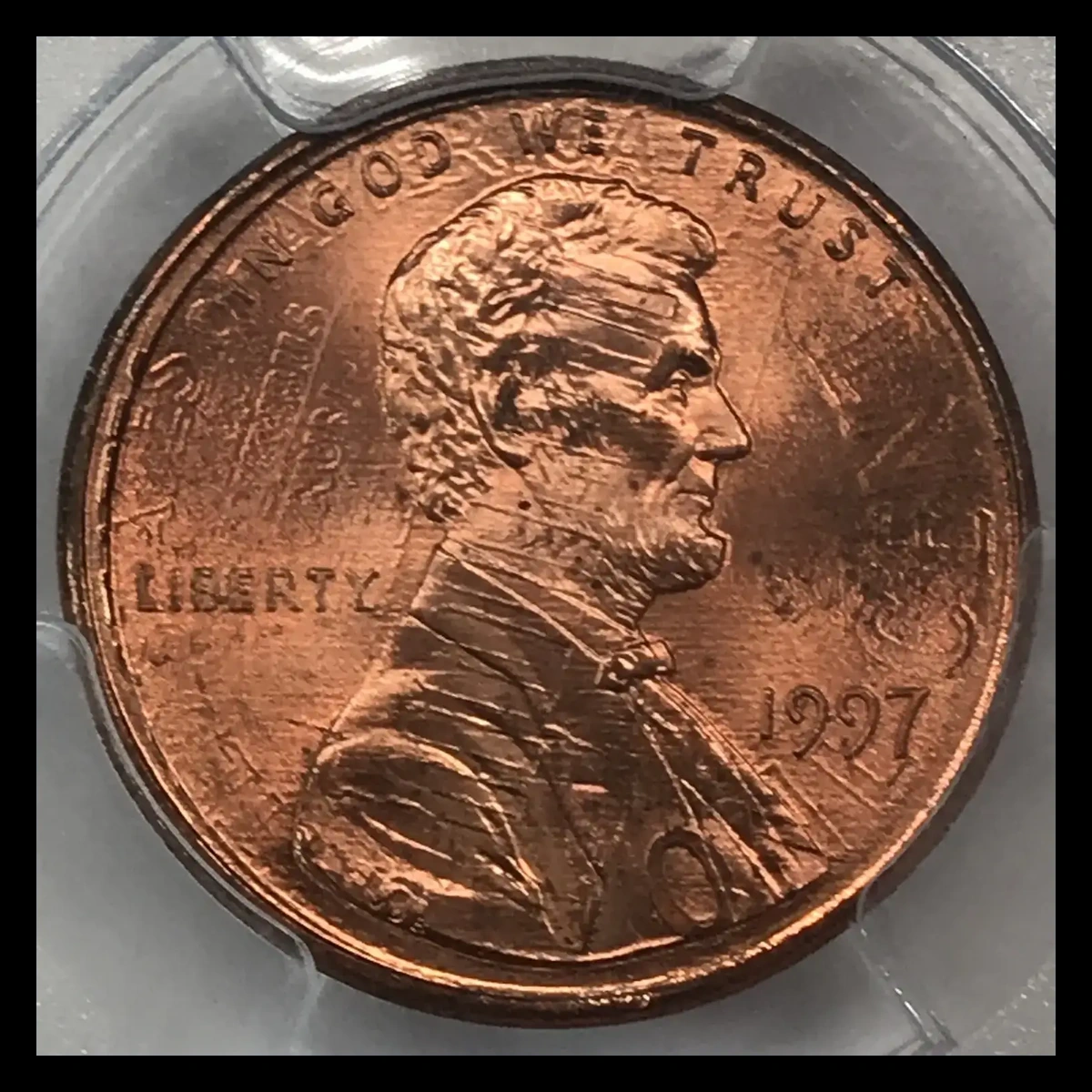
A second strike can overlap an earlier portrait or set of letters. If the cent turns over between blows, parts of Lincoln and the Memorial can appear on the same face.
How to Identify
Trace each impression across both sides before deciding whether the coin flipped or merely rotated. The sold 1997 flipover’s brief description establishes no exact angle or displacement.
A different coin in a matching pair rotated about 150 degrees counterclockwise between two off-center strikes. That rotation must not be transferred to the flipover specimen.
What It’s Worth
Genuine 1997 double strikes have an estimated value of $75–$750. Distinct, understandable impressions and preserved identity make the strongest comparisons.
The ANACS MS63 Red flipover sold for $144 in March 2026. The separate matching pair was not reported sold in its listing, so neither its opening bid nor a displayed zero is a realized price.
7. 1997 Penny A Mirrored Impression on an Expanded Coin: Partial Brockage Error
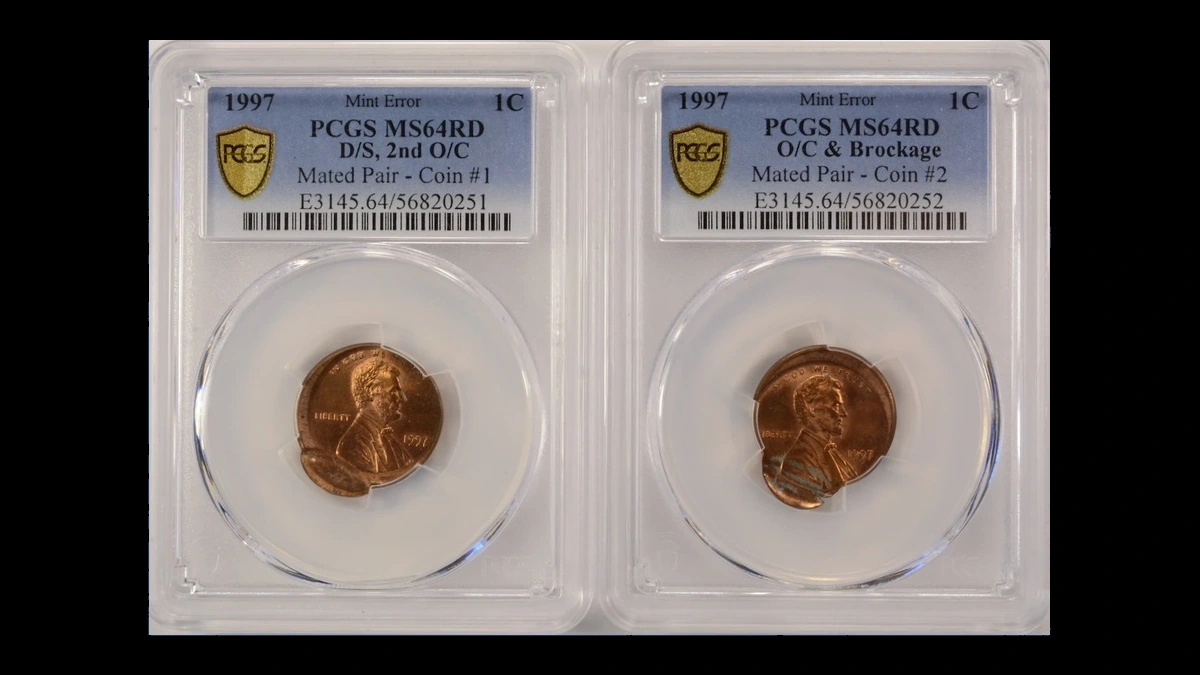
An already struck coin can intrude over a fresh blank and press a backward, sunken design into it. Mike Diamond identified this effect on a 1997 cent that also spread beyond normal collar restraint.
How to Identify
Read the recessed mirrored detail and follow the contact boundary into the remaining normal design. The explanation does not require a coin stuck to the die as a cap.
The illustrated example also has tears exposing zinc. Keep those features tied to the same strike and do not pull at the torn metal.
What It’s Worth
A confirmed 1997 partial brockage with broadstrike has an estimated whole-coin value of $50–$600. Clear transferred design helps explain the combination.
No realized price is supplied for the discussed 1997 piece. A 2001 partial-front brockage in MS64 Red sold for $79 in March 2025, providing a different-year comparison.
8. 1997 Penny A Smooth Hollow with Outward Spread: Indent and Broadstrike Error
An overlapping blank can leave a largely featureless depression while the surrounding metal receives its design. A Calkins collection entry identifies a 1997 cent that is both indented and broadstruck.
How to Identify
Examine how the depressed area meets the design around it. A recognizable backward image would suggest brockage, while a plain indent should not be given letters that are not visible.
Check the expanded outline for original strike-related flow and exclude later impact damage. The collection description does not establish a particular affected face or percentage.
What It’s Worth
An authenticated 1997 indent-and-broadstrike combination has an estimated value of $40–$650. Size, shape, and preserved surrounding design influence the comparison.
The collection piece is labeled PCI MS64 Red. That grade identifies a documented example but supplies no selling price.
9. 1997 Penny The Coin Wraps Around a Tool: Die Cap Error
A cent that stays on a die can spread and thin under further strikes, raising walls around the tool. A documented 1997 reverse cap retained its Memorial-side relationship while the Lincoln side expanded through contact with incoming blanks.
How to Identify
Use a side view to inspect the continuous cup, thinning walls, and distorted design. Do not flatten the piece or force measuring tools against it.
A reported front-and-back cap pair consists of separate coins, not one cent capped on both sides. A coin struck through a cap is also a different object from the trapped cap itself.
What It’s Worth
Identified individual 1997 die caps have an estimated value of $200–$1,500. Depth, design survival, and the state of the thin walls affect appeal.
The reverse cap graded NGC MS66 Red sold for $460 in May 2007. A matching front-and-back pair needs a set-specific comparison rather than automatically doubling the individual range.
10. 1997 Penny A Gray Ring on a Small Zinc Coin: Partial Copper Plating Error
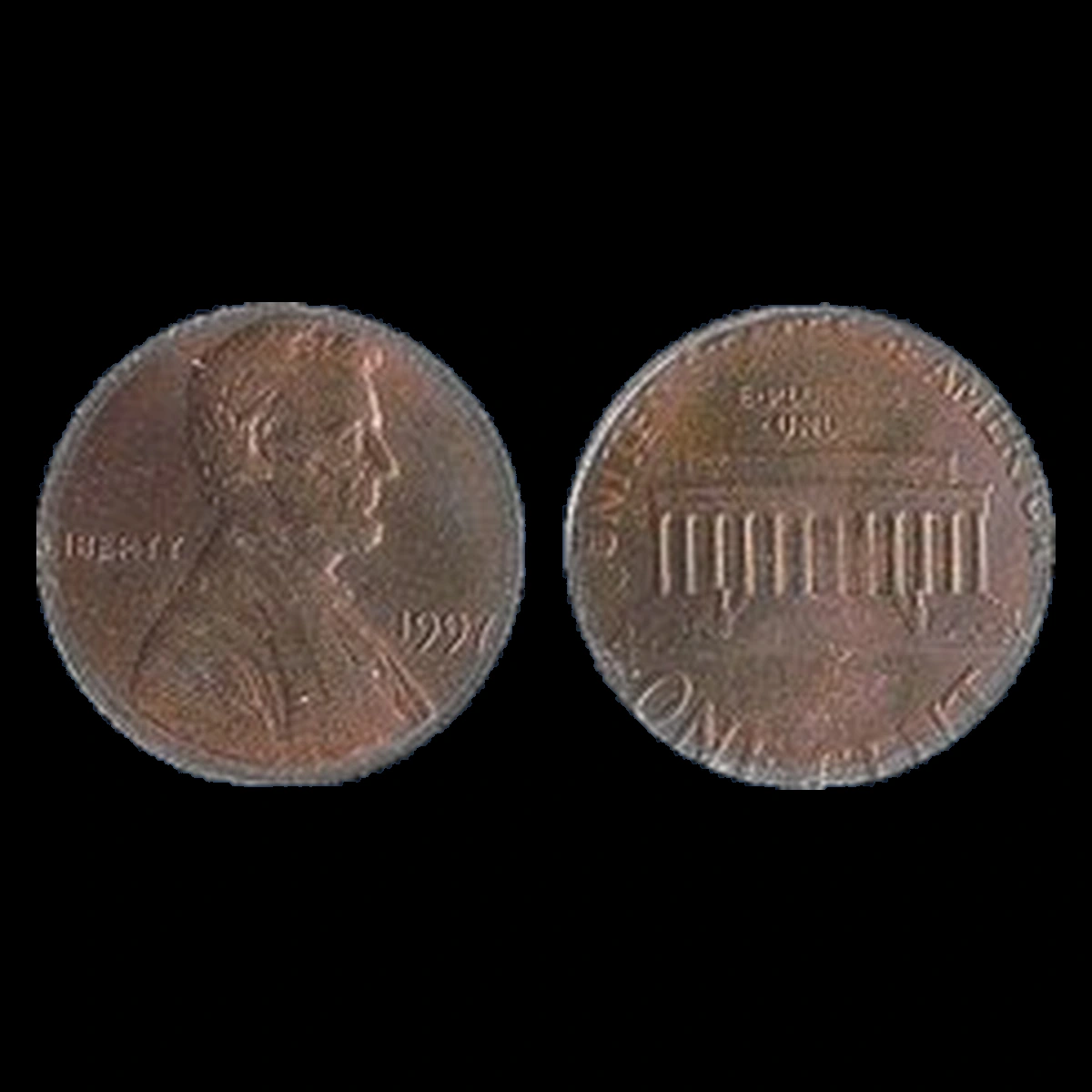
Mike Diamond illustrated a 1997 cent on a small foreign zinc blank with copper-colored centers and narrow gray rings on both faces. It weighs 1.5 grams and is the same combined-error specimen discussed in the wrong-blank group below.
How to Identify
Examine the copper-to-zinc boundary and the design crossing it on each face. The blank may have expanded beyond its earlier copper coverage, so the ring does not prove the exposed area was never plated.
Compare the documented light weight and smaller outline, not just the color. The report does not establish a fully unplated normal-size cent, and chemical removal can create misleading gray areas.
What It’s Worth
The estimated value is $300–$2,500 for the entire combined-error coin. This is not a separate plating premium to add to a wrong-blank valuation.
No completed sale is supplied for the illustrated 1.5-gram specimen. Its unusual zinc blank makes an ordinary missing-plating cent an imperfect price comparison.
11. 1997 Penny The Starting Blank Was Wrong: Dime and Foreign Zinc Planchets Error
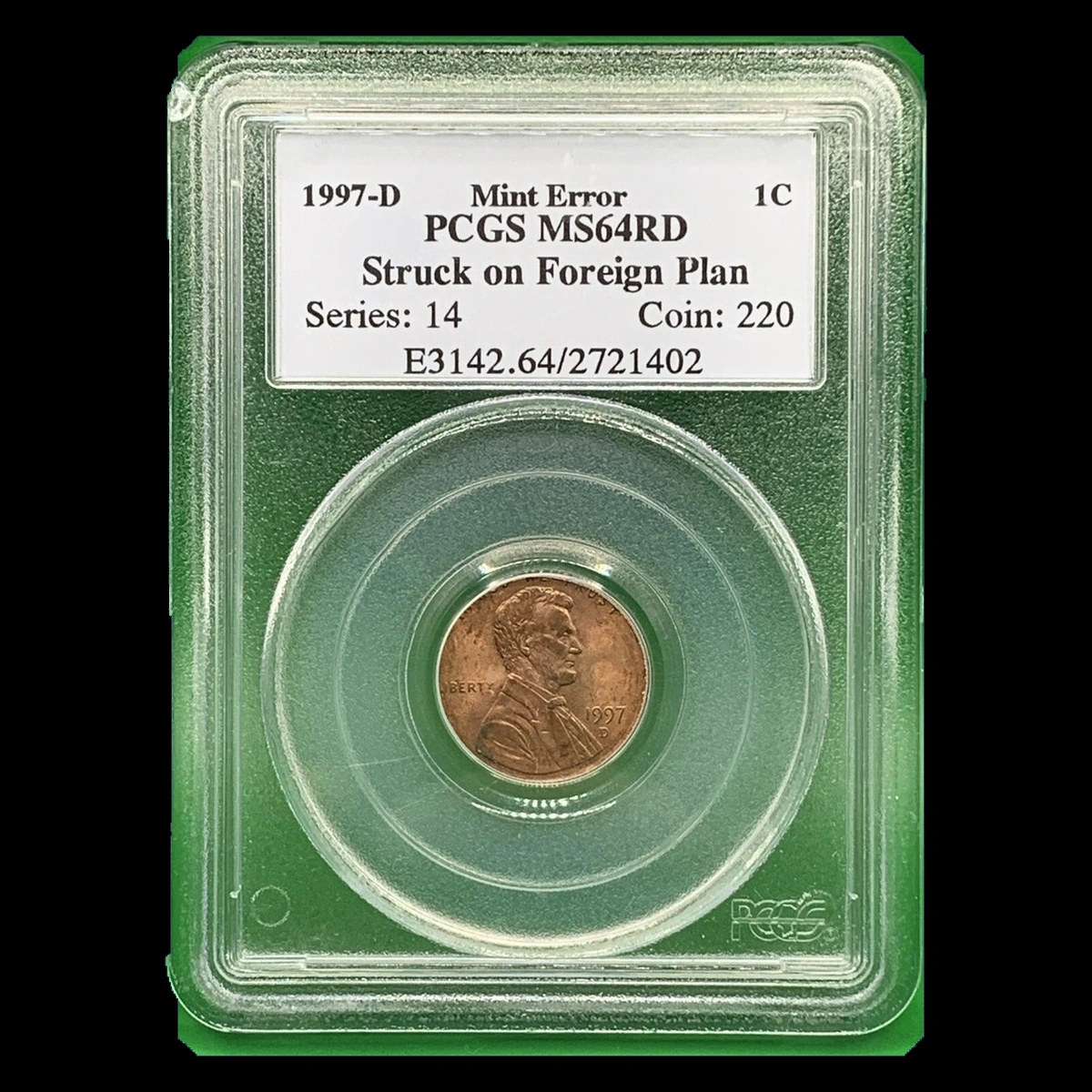
A smaller blank can run out of room before the full cent design reaches it. The supplied examples include an NGC MS65 dime-planchet cent and the separate 1.5-gram zinc specimen with partial copper coverage.
How to Identify
A clad dime blank normally weighs about 2.268 grams and measures roughly 17.9 mm before striking, unlike the recorded 1.5-gram zinc piece. Final outlines may expand during the cent strike.
The zinc blank’s intended country is not established, and a separate Denver foreign-blank report concerns another specimen. Check composition and surviving design without filing the edge or assigning an unsupported donor coin.
What It’s Worth
Confirmed 1997 wrong-blank cents of these kinds have an estimated value of $300–$2,500. The identified metal, retained date, and condition determine a closer comparison.
The dime-blank catalog entry supplies no realized sale used here. The zinc coin’s plating feature is already included in its whole-coin estimate and must not be counted again.
12. 1997 Penny Dime Designs Remain Under the Cent: Double Denomination Error
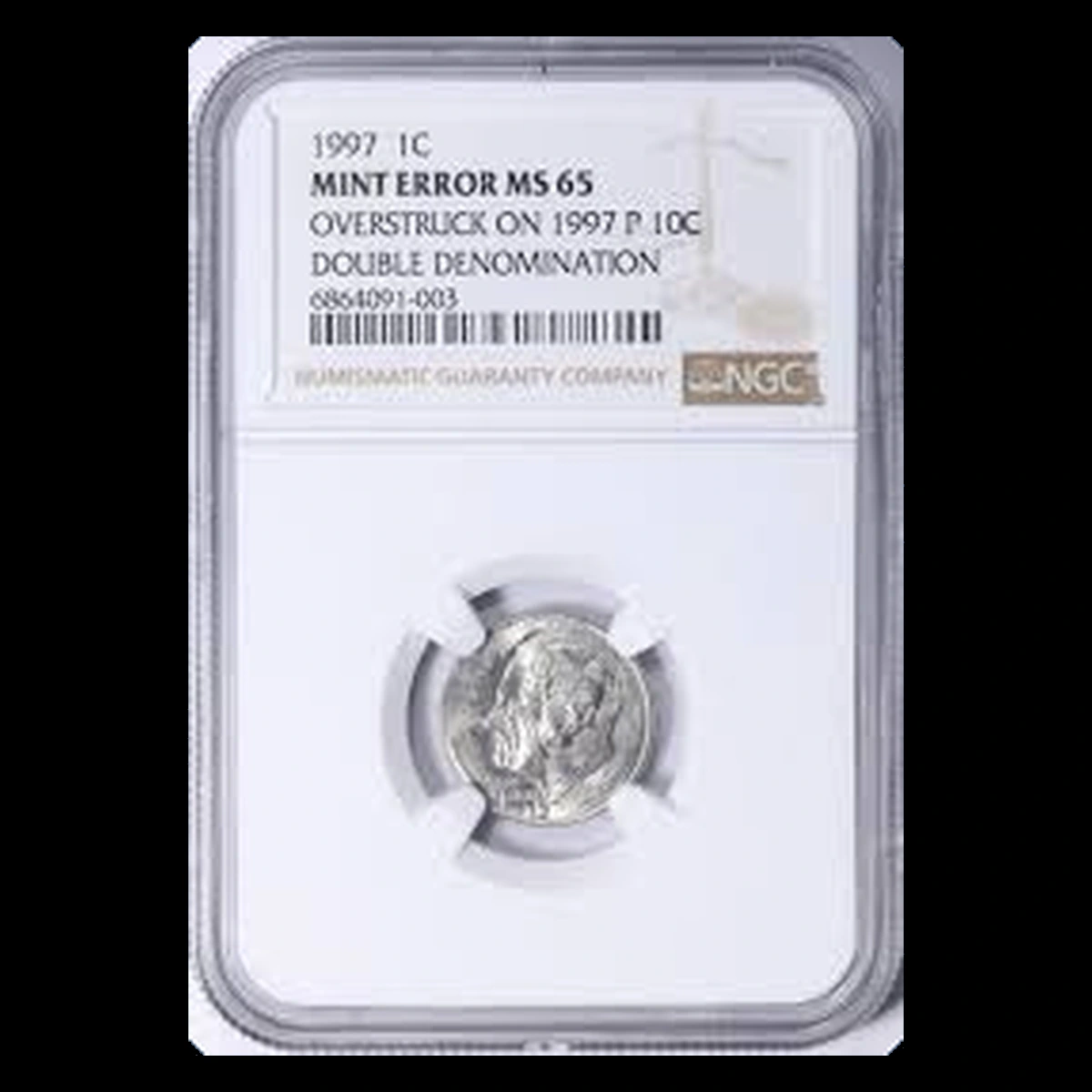
The auctioned example began as a finished 1997-P dime before receiving a 1997 cent strike. Torch-and-branch remnants appear beneath Lincoln, while Roosevelt survives beneath the Memorial.
How to Identify
Trace a recognizable detail from each denomination on both faces. The earlier image need not be equally strong everywhere, since the later strike can cover much of it.
Keep the two dates and any surviving dime mintmark tied to the actual specimen. Dime-type weight supports the identification, but the earlier design is what separates this from a cent on an unused dime blank.
What It’s Worth
Authenticated 1997 double denominations have an estimated value of $800–$3,000. Clear surviving details and condition guide the comparison.
The NGC MS66 cent over a 1997-P dime sold for $1,207.50 in March 2009. That historical result describes the complete two-design coin rather than guaranteeing a current price.
Conclusion
The doubled ear offers a small, specific feature to match, while the larger 1997 errors require the whole coin to explain their history. Reading direction, surface height, and the outline help separate doubled dies, brockages, indents, and repeated strikes.
Keep combined features tied to their actual specimen. In particular, the 1.5-gram zinc coin’s copper coverage belongs within its wrong-blank valuation, and a cap pair or matching strike pair must be assessed as its own set.