Rare 1983 Penny Errors (List & Pictures)
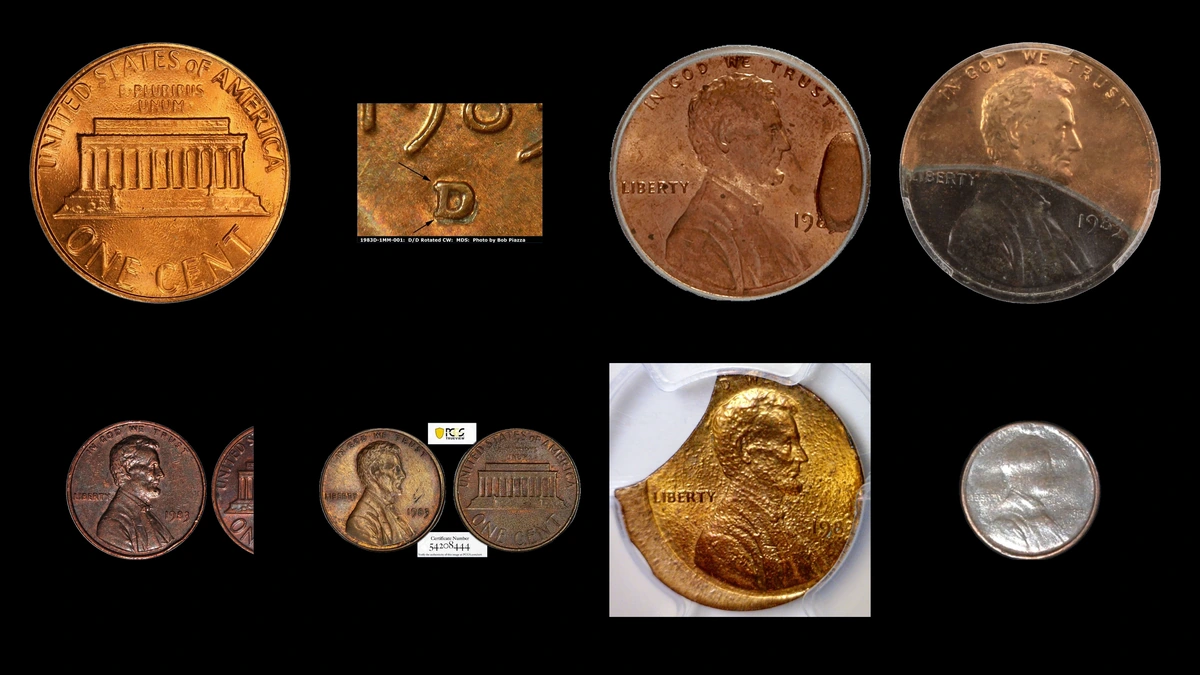
The most valuable 1983 penny errors can involve either the design or metal that looks ordinary at first. An exceptional doubled-reverse cent graded PCGS MS68+ Red brought $21,937.50 at GreatCollections.
Ten groups below span estimated values of $2–$22,500. Check the reverse lettering, mintmark, surface, and measurements before moving to missing metal and displaced strikes.
| Visible or measurable clue | Category | Estimated value |
|---|---|---|
| Repeated lettering or ear contour | Doubled dies | $5–$22,500 |
| Another part of D or S | Repunched mintmark | $3–$150 |
| Raised chip or rim-connected patch | Die damage | $2–$400 |
| Gray zinc without copper | Missing plating | $50–$700 |
| Weight near 3.1 g | Possible copper-alloy blank | $3,000–$20,000 if confirmed |
| Hole with original struck boundaries | Blow-hole defect | $150–$1,000 |
| Curved section absent | Clip | $15–$200 |
| Design altered by a covering coin | Capped-die strike | $40–$400 |
| Plain crescent and incomplete design | Off-center strike | $20–$500 |
| Two distinct strike areas | Double strike | $50–$600 |
Ordinary 1983 cents use copper-plated zinc, weigh 2.50 g, measure 19.05 mm across, and have a smooth edge. The Mint changed its normal cent metal during 1982, making a substantially heavier 1983 candidate worth examining carefully.
Record measurements for safely accessible coins and leave sealed collector pieces in their holders. A scale provides evidence of weight, while composition and original surfaces need their own confirmation.
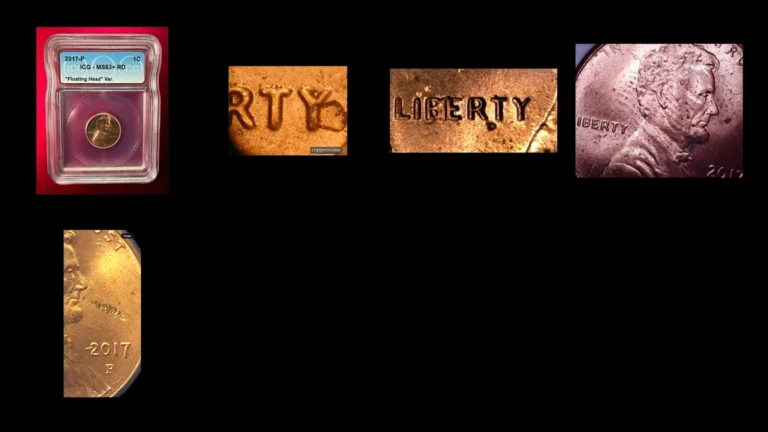
1. 1983 Penny Strong ONE CENT outlines or smaller repeated details: Doubled Dies Error
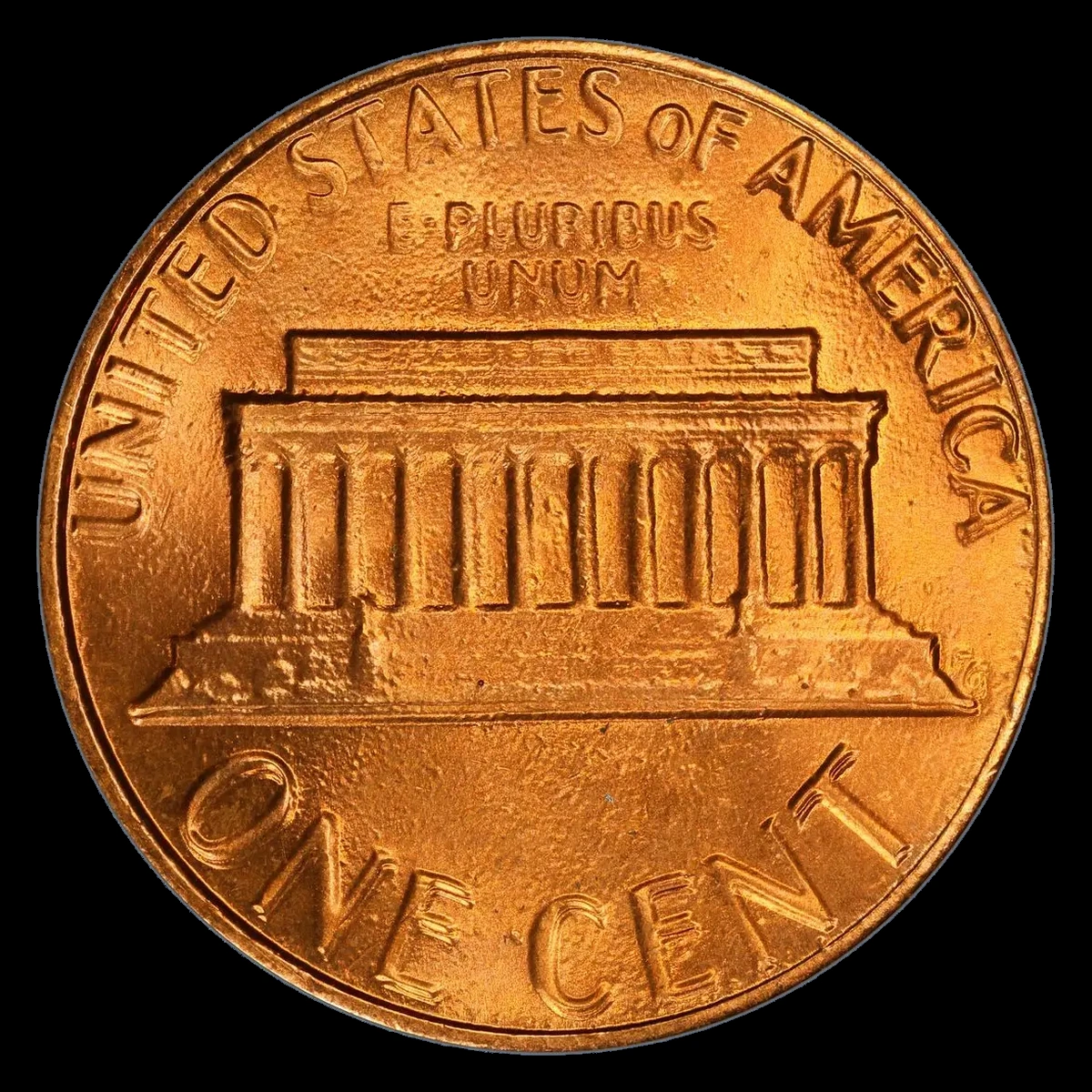
Read ONE CENT on the reverse before hunting for subtle front-side features. The strongest Philadelphia variety has clearly separated extra outlines there and in the motto above the Memorial, sometimes visible without magnification.
Other varieties show weaker reverse letters, front doubling in LIBERTY, the date, or motto, and a separate Denver outline below the ear. Each pattern originates in a die carrying repeated design before striking.
How to Identify
Follow two rounded outlines at the specific letters or feature shown by a confirmed variety. A low flat shelf produced during striking is different from repeated detail built into the die.
Match mint and face before assigning a name. The bold Philadelphia reverse cannot identify every thick letter or extra ear contour on another variety.
What It’s Worth
$5–$22,500 is the estimated span across these very different doubled dies. Minor varieties occupy the low end, while the highest figures concern extraordinary preservation of the famous bold reverse.
GreatCollections records $21,937.50 for a PCGS MS68+ Red specimen. Its exceptionally fine unworn condition and preserved red color are far beyond a typical circulated find.
Spots, wear, remaining color, and the exact variety can make large price differences. The record does not become a general value for doubled-looking 1983 cents.
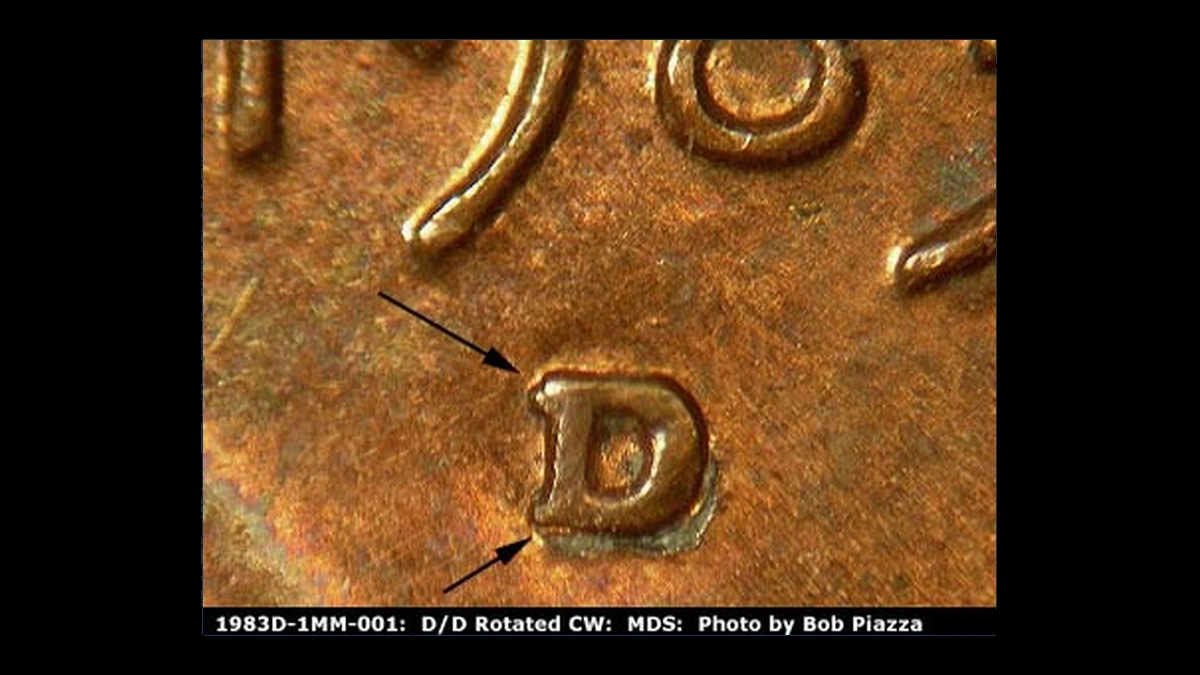
2. 1983 Penny Forked ends or an additional mint-letter curve: Repunched Mintmark Error
Inspect D or S independently from the surrounding date. In this period the mint letter was punched into the die separately, and a changed position between blows could leave part of the earlier impression.
Several Denver patterns are reported, along with a repunched S on a collector Proof. A Proof is a specially prepared collector coin, so finish matters when selecting that comparison.
How to Identify
Trace the fork, extra upright, or curve as part of a recognizable second letter. A shapeless bump can be a chip in the die instead of another punch impression.
Choose the same mint and exact pattern rather than matching only the direction of an extra mark. Keep the Proof S/S separate from ordinary Denver D/D coins.
What It’s Worth
$3–$150 is estimated for confirmed examples, allowing more for clear separation and appealing surfaces. The figure compares minor mintmark varieties rather than assigning one sale to every form.
A circulated D/D can be inexpensive, while a well-preserved Proof attracts a different comparison. Staining or an unidentified lump does not establish either premium.
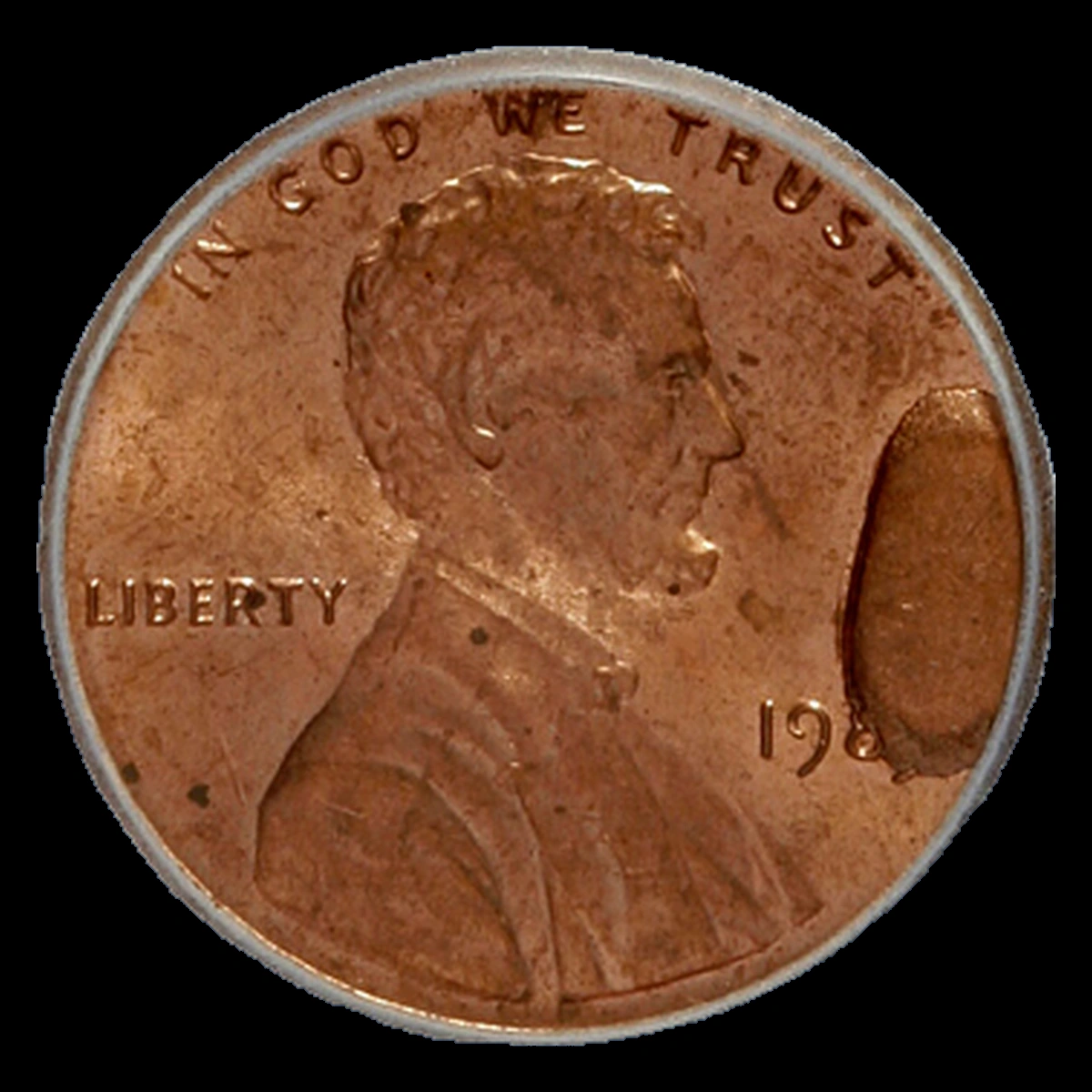
3. 1983 Penny A reverse rim blob or a small bump beside D: Die Damage, Cuds, and Chips Error
A cud is raised metal filling the space left by a die section missing at the edge. The 1983 FS-401 variety combines a reverse cud with die damage on the front.
A separate Denver example has a small chip beside D. That added metal does not trace a second mint letter and should not be called repunching.
How to Identify
For FS-401, compare both faces with a confirmed photograph rather than using any reverse blob as sufficient evidence. Follow the cud’s specific outline into the rim and check the associated front damage.
For the Denver chip, assess its individual shape beside D. A small internal bump, a repunched curve, and a large rim-connected patch need different descriptions.
What It’s Worth
$2–$400 is the estimate from small chips through clear FS-401 examples. The tiny Denver bump belongs near the inexpensive end, while attractive two-sided die damage can support more.
A 1988 cent with a prominent cud brought $312 in March 2025. That substantial different-year break is a comparison rather than a recorded FS-401 sale.
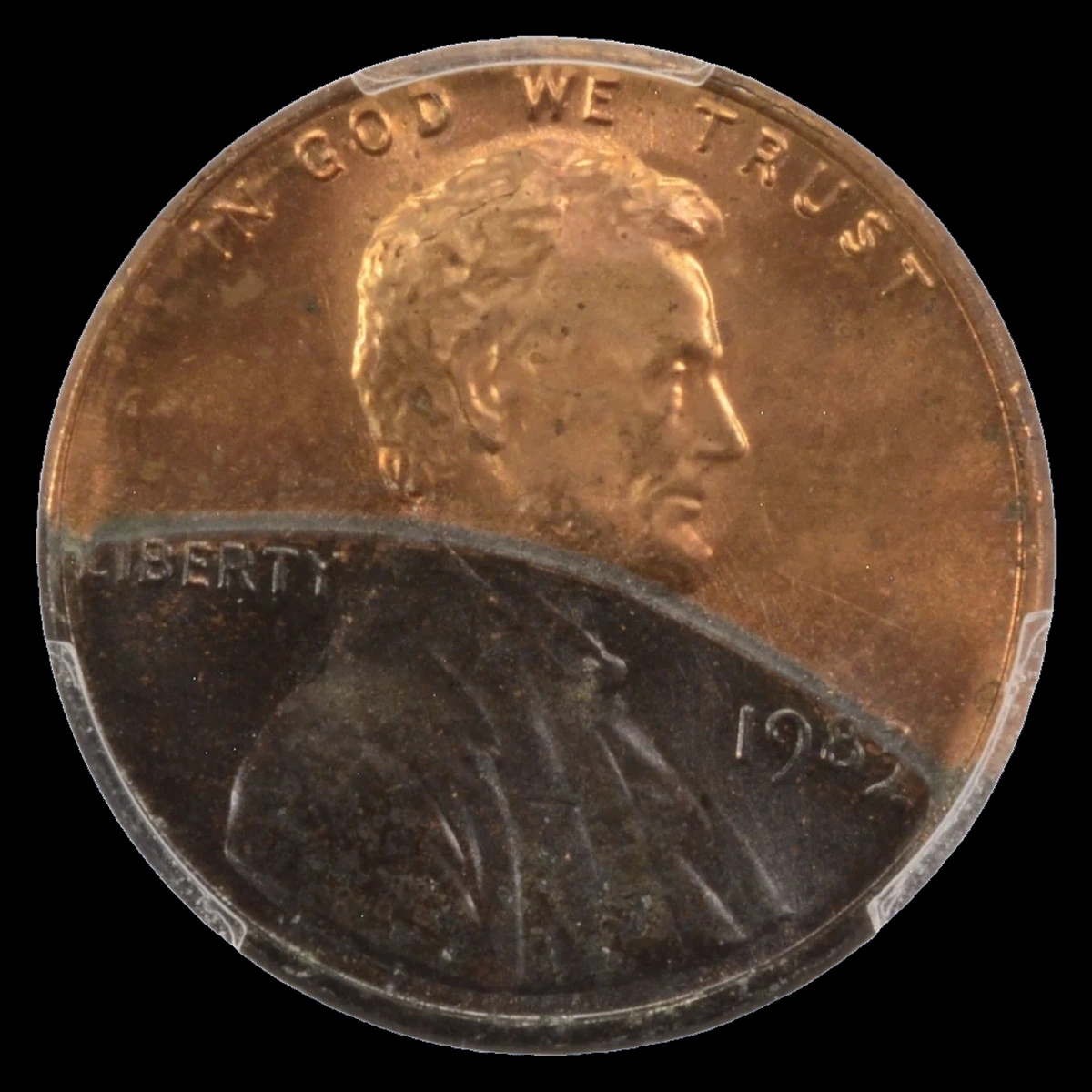
4. 1983 Penny Gray zinc carrying the original design: Missing Copper Plating Error
Some blanks lacked their usual thin copper skin when struck. Recorded 1983 examples include separate NGC MS66 coins measured at 2.47 g and 2.49 g.
Those near-normal weights illustrate why the coating’s absence cannot be diagnosed with a scale alone. Chemicals can remove copper after striking and leave a superficially similar gray cent.
How to Identify
Examine the untouched zinc texture, any remaining copper, and the boundary of each colored patch. Original fine detail should be considered alongside pitting or etching that might reveal later treatment.
Inspect the edge as closely as the faces for added coating or chemical effects. Do not clean, scrape, or chemically test the surface before it can be evaluated.
What It’s Worth
$50–$700 is estimated for confirmed original missing-plating cents. Preservation and the extent of absent copper affect the comparison.
A 1995-D example sold for $180 in March 2023, while a higher-grade 1995 coin brought $660 in January 2023. Both are other years’ transactions rather than sales of the two recorded 1983 pieces.
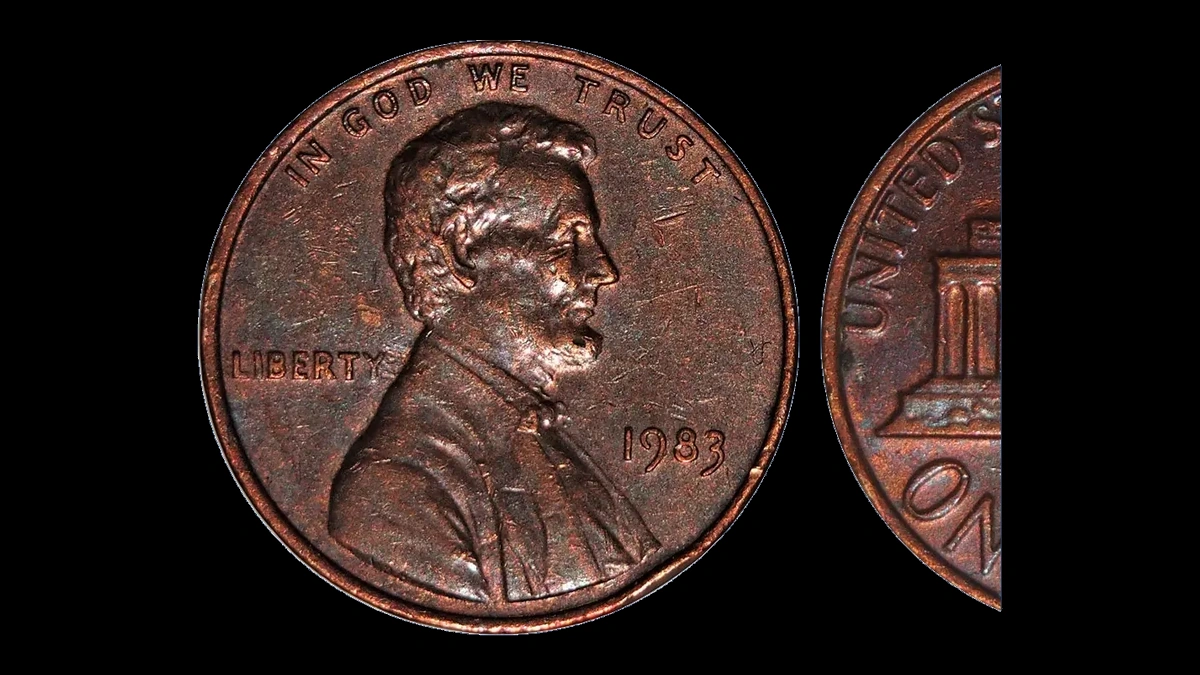
5. 1983 Penny Ordinary copper color but unusual weight: Copper-Alloy Wrong Blank Error
A recorded Philadelphia cent weighs 3.1 g because its blank is copper alloy rather than the normal plated zinc. A Denver example is also recorded.
A separate Philadelphia coin at 3.08 g combines copper-alloy metal with a struck-through area. The reports do not establish one exact alloy recipe for every specimen.
How to Identify
Use an accurate weight reading as the starting point, then inspect the date, mintmark, and edge for alteration or added metal. An older copper cent with a changed date can imitate the valuable error.
Professional nondestructive metal testing must establish the composition. Any additional struck-through claim needs a separate surface examination rather than inheriting that feature from the 3.08 g example.
What It’s Worth
$3,000–$20,000 is estimated for confirmed copper-alloy errors, allowing for mint, grade, and demand. The 3.1 g Philadelphia coin graded NGC MS61 Red and Brown sold for $4,800 in January 2020.
No separate verified sale amount is supplied for the Denver or combined struck-through example. The upper estimate is not a claim that either realized $20,000.
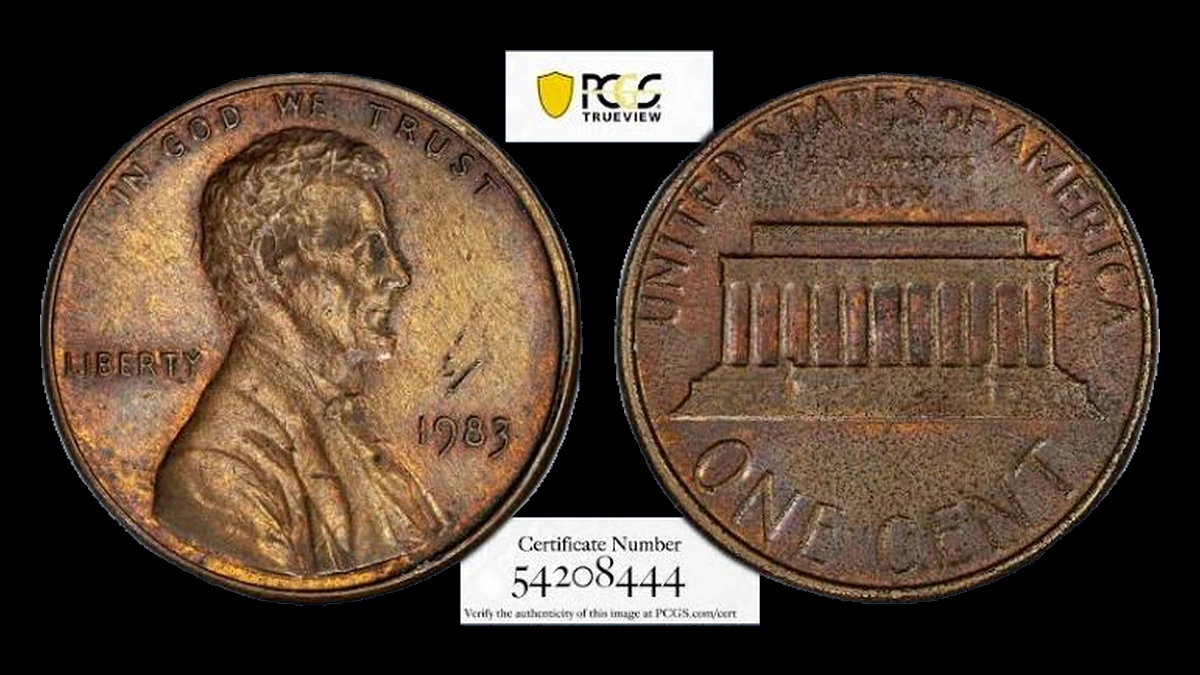
6. 1983 Penny A hole surrounded by original struck metal: Blow-Hole Defect Error
The cataloged 1983 example received its design on defective metal already containing a void. It was recorded at 2.4 g and graded NGC MS66 Red.
This blow-hole defect differs from a curved edge clip and from a hole drilled by an owner. Its timing must be established at the boundary with the original design.
How to Identify
View both sides without inserting a tool into the opening. Look for metal flow and design meeting a preexisting boundary rather than regular cutting marks or a fresh drilled burr.
Record the candidate’s own measurements instead of assuming it shares the listed coin’s 2.4 g weight. Missing weight also results from drilling, so the struck boundary supplies the more important distinction.
What It’s Worth
$150–$1,000 is estimated for a confirmed blow-hole error of this kind. This is an appraisal based on unusual defective blanks, not a verified transaction for the cataloged coin.
A clear original boundary and readable date improve presentation. A neat later-drilled hole does not qualify even if it resembles the general shape.
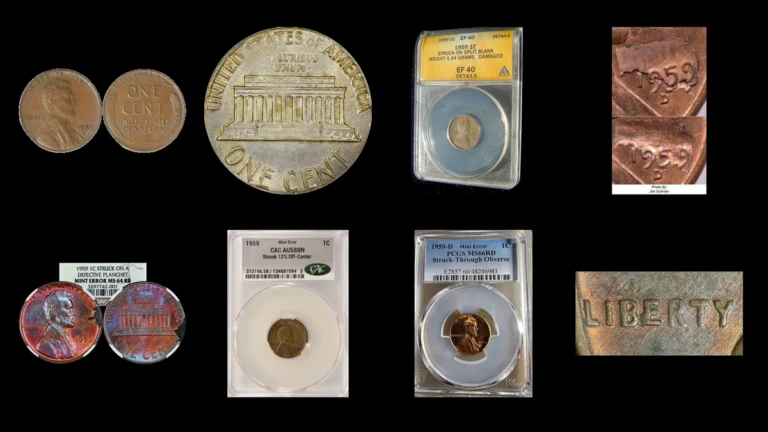
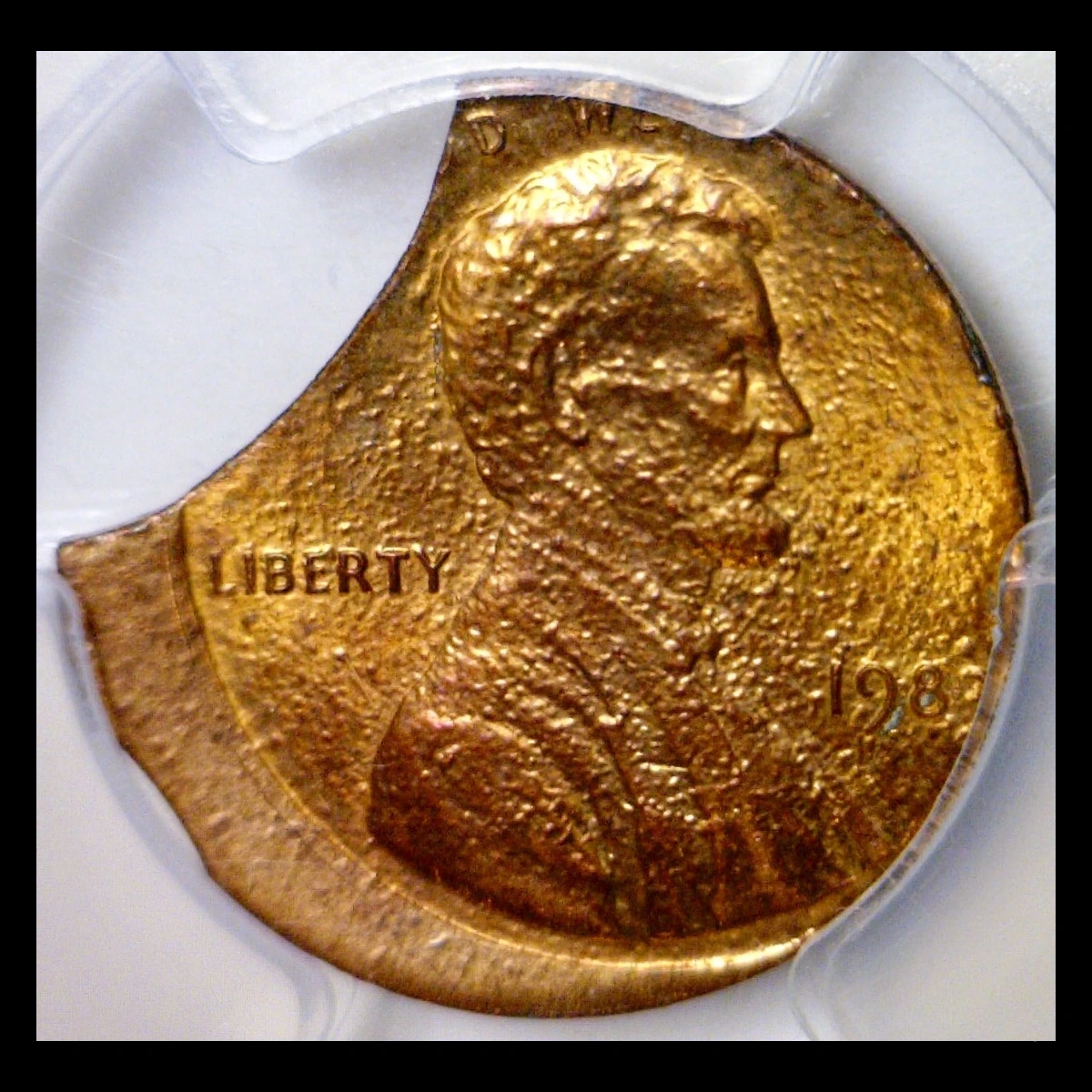
7. 1983 Penny A curved segment absent from the edge: Clip Error
Philadelphia and Denver 1983 reports include curved clips formed before the design was added. An overlapping blanking cut can remove part of the new disc by entering an earlier hole in the strip.
The subsequent strike acts on an already incomplete blank. Its rim and nearby design must reflect that sequence.
How to Identify
Inspect how lettering and the rim approach the missing curve, then check the cut surface for filing or sawing. Smoothness by itself is not decisive because original clip surfaces can vary.
Assess weight loss against the missing metal and measure intact spans. Weakness opposite the clip can support the diagnosis but is not compulsory on every example.
What It’s Worth
$15–$200 is estimated for genuine curved clips, with larger appealing examples generally stronger than small worn ones. Later cuts do not receive this manufacturing-error premium.
A 2021 straight-clip cent brought $114 in September 2025. The different shape and year make it a general comparison rather than an exact 1983 match.
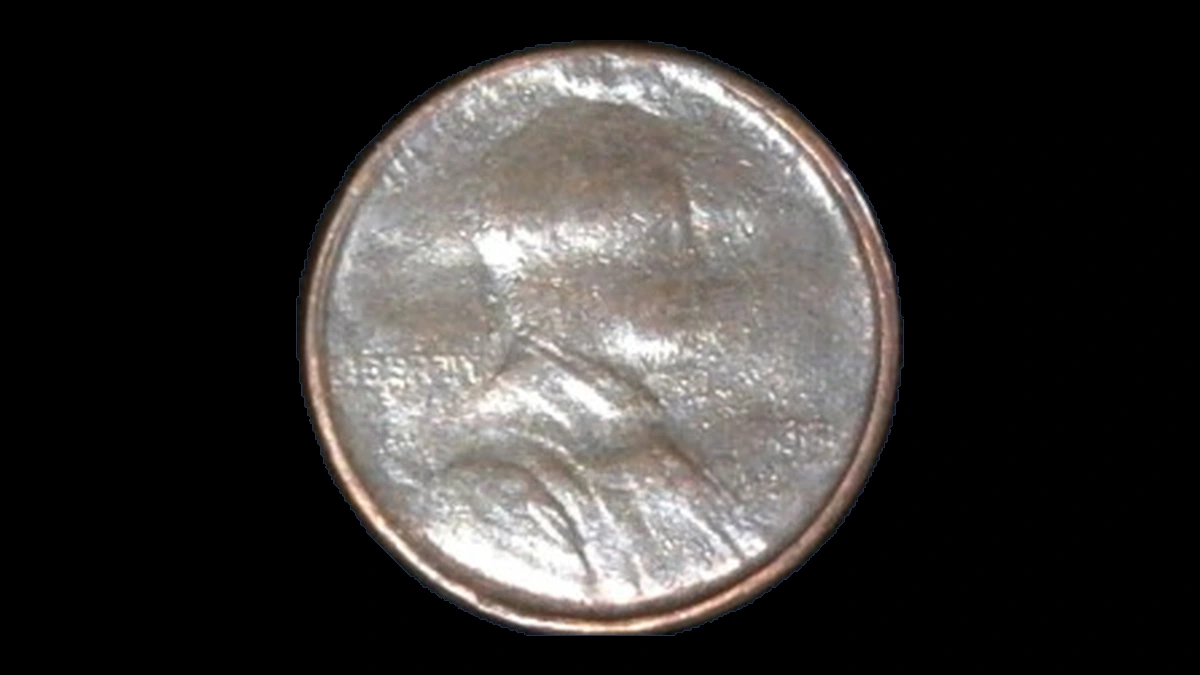
8. 1983 Penny Weak or distorted detail from a covering coin: Struck Through a Die Cap Error
A coin stuck to a die can act as a covering between the steel tool and new blanks. A later coin struck through that cap receives an altered impression depending on the covering’s thickness and condition.
The recorded 1983 example is graded ANACS MS62 Red. It is the coin struck beneath the cap, not the cup-shaped cap itself.
How to Identify
Compare the affected design and surface with a confirmed cap-struck example of the appropriate stage. Weakness alone can also come from wear, chemical damage, or scraping.
Inspect both faces and the edge, preserving the actual affected side in photographs. A generic label cannot supply a cap stage or location not demonstrated by that coin.
What It’s Worth
$40–$400 is estimated for typical confirmed 1983 capped-die strikes. Distinctive original distortion supports a stronger comparison than slight ambiguous weakness.
A 1995 late-stage cap strike sold for $180 in March 2025. No verified selling amount is supplied for the 1983 ANACS example, and the later coin need not represent an identical cap stage.
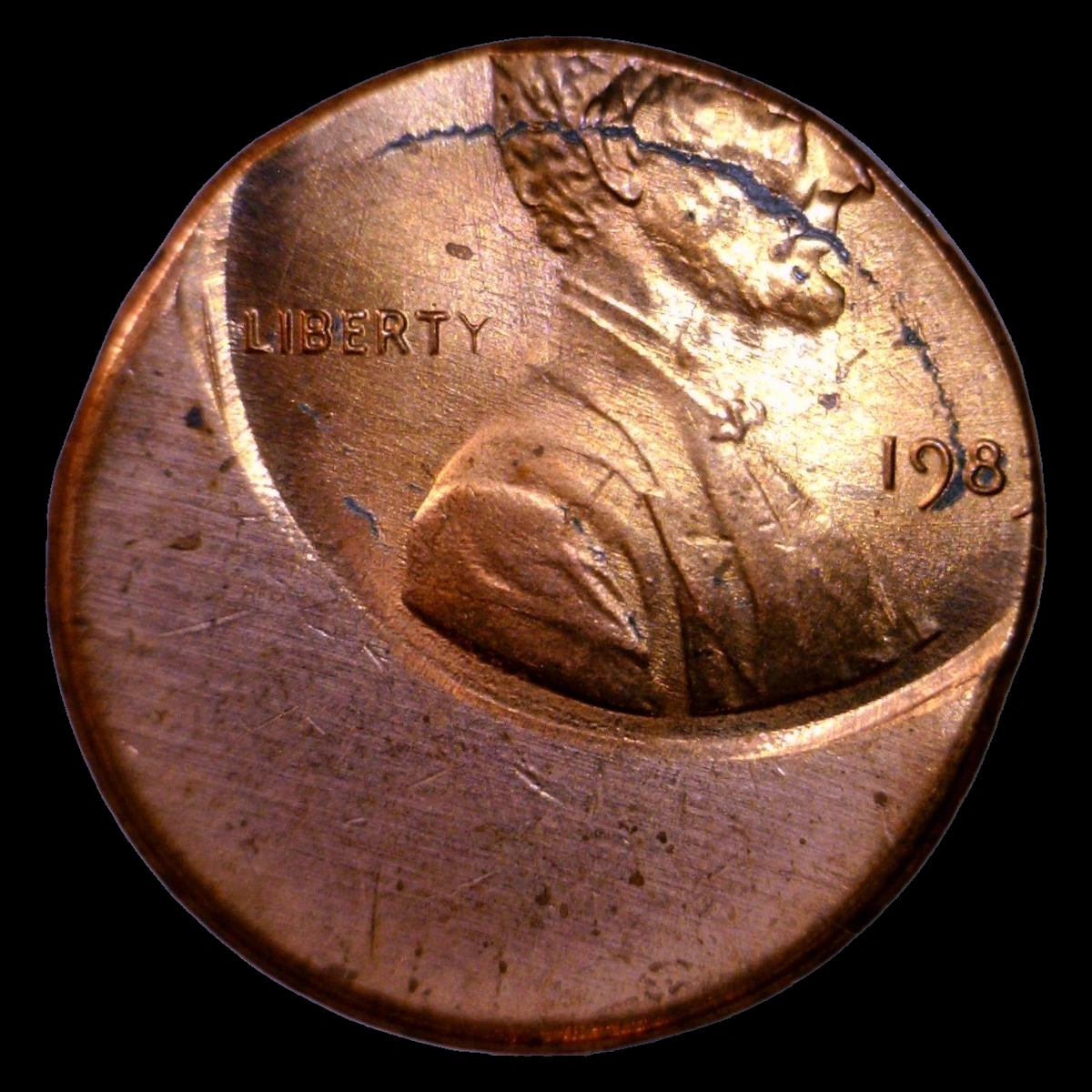
9. 1983 Penny Untouched metal beside incomplete designs: Off-Center Strike Error
Recorded specimens include a Philadelphia coin thirty-five percent off center toward eight-thirty, a separate fifty-percent Philadelphia example, and a fifty-five-percent Denver piece. Each describes its own displaced blank.
Part of the intended design missed the metal while another area remained plain. A readable date is especially valuable when much of the design is absent.
How to Identify
Confirm the complete year from the coin rather than a holder description. Compare both faces to establish the same blank position explains their incomplete designs.
Inspect the transition into untouched metal and the edge for later cutting or flattening. A single shifted face is a different alignment observation.
What It’s Worth
$20–$500 is estimated for dated 1983 off-center cents. Attractive larger shifts with readable year and mint can support stronger demand.
A 1982 plated-zinc cent struck seventy percent off center sold for $74 in June 2025. That other-year result illustrates price variation without establishing the value of any described 1983 specimen.
10. 1983 Penny A later strike overlapping the first: Double Strike Error
A second blow can land on a coin that failed to leave the press and moved. One recorded 1983 example has its later strike about eighty percent off center.
Separate Philadelphia and Denver reports describe roughly ninety-percent second strikes with one face blocked. The blank area on that later strike is not simply a reverse worn smooth.
How to Identify
Trace the boundary of the second striking area and how it overlaps, flattens, or interrupts the first. Fine extra edges within one design instead suggest a doubled die or another smaller effect.
Inspect both faces when a blocked second-strike area is claimed, without guessing what object blocked it. Later squeezing needs to be excluded through comparison of the original surface and edge.
What It’s Worth
$50–$600 is estimated for genuine double strikes, influenced by the arrangement and clarity of both impressions. A ninety-percent second-strike 1983 coin graded PCGS MS66 Brown brought $154 in June 2025.
That sale does not automatically refer to one of the separate blocked-face examples. Similar percentages do not identify the same specimen, and condition can outweigh the drama of a large second strike.
Conclusion
The bold doubled reverse and copper-alloy blank are prominent possibilities, but each needs specific evidence. Smaller repunched mintmarks, chips, and interrupted designs require equally careful matches to their own examples.
Use the $2–$22,500 estimates after identifying the variety or production event. Preserve gray surfaces and original hole boundaries, verify suspect heavy coins without damaging them, and keep record prices tied to the condition of the coins that achieved them.