Rare 1905 Penny Errors (List & Pictures)
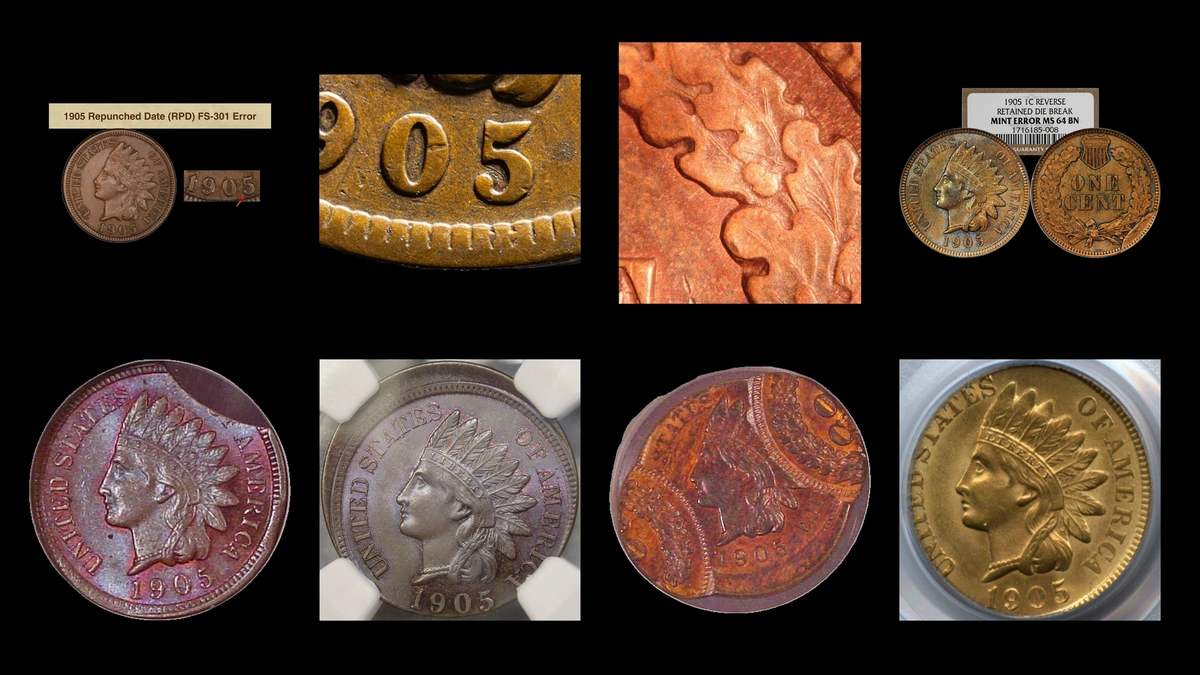
On a 1905 Indian Head cent, check the date and wreath before deciding that an unusual mark is damage. Those small areas can reveal varieties that are less obvious than a displaced strike.
Estimated values for 1905 penny errors run from $5 to $260,000, with a rare gold-planchet cent recording a $253,000 auction result. The sections below follow the design first, then the outline, overlapping strikes, and metal.
| Place to inspect | Possible feature | Estimated range |
|---|---|---|
| Date, lower border, and neck | Repunched or misplaced digits | $10–$1,500 |
| Wreath and shield | Doubled reverse details | $15–$1,500 |
| Rim and adjoining design | Cracks, cuds, or clips | $5–$750 |
| Whole coin | Off-center or multiple strikes | $100–$6,000 |
| Metal and truncated outer design | Gold-planchet strike | $100,000–$260,000 |
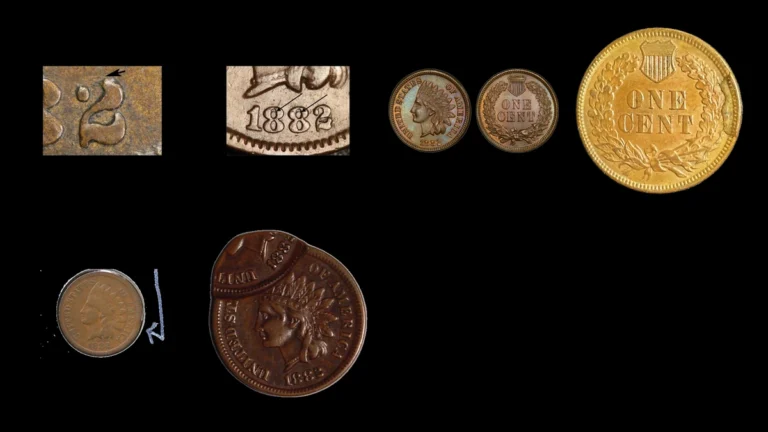
1. 1905 Penny A Second Stroke Below the 5: Repunched Date Error
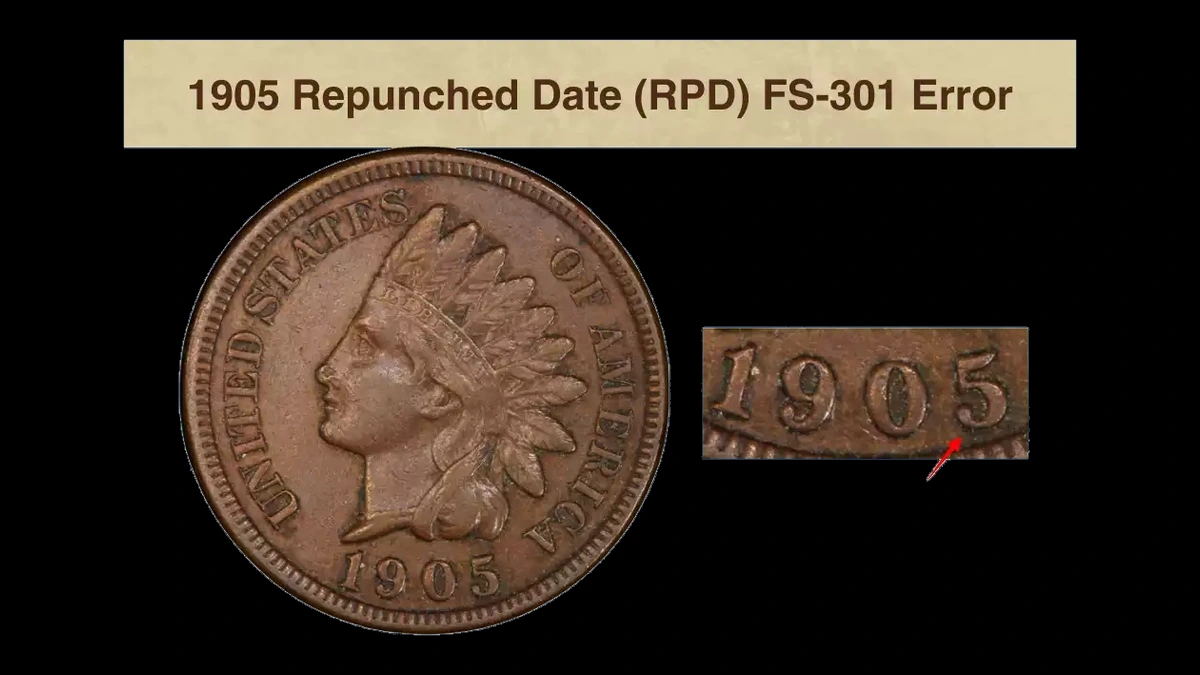
The area immediately below the 5 is especially useful for checking the Snow 1 variety. Its extra stroke records a second placement of the date punch in the die, the steel tool used to stamp the coin.
How to Identify
Match the shape beneath the 5 with a photograph of Snow 1 before applying that name. Other 1905 repunched dates have different remnants in the numeral loops or bases, so their patterns need separate comparisons.
A shallow flat shelf beside a digit does not establish repunching. One documented variety also has incomplete feather tips on early examples, but later coins show complete tips after a die blockage cleared.
What It’s Worth
$10–$1,000 is the estimated range across minor and stronger repunched dates in different states of preservation. The particular variety must be identified before its prices are compared.
PCGS records $396 in July 2013 for a Snow 1 graded XF40, a worn coin retaining substantial detail. That transaction does not give every extra date stroke the same value.
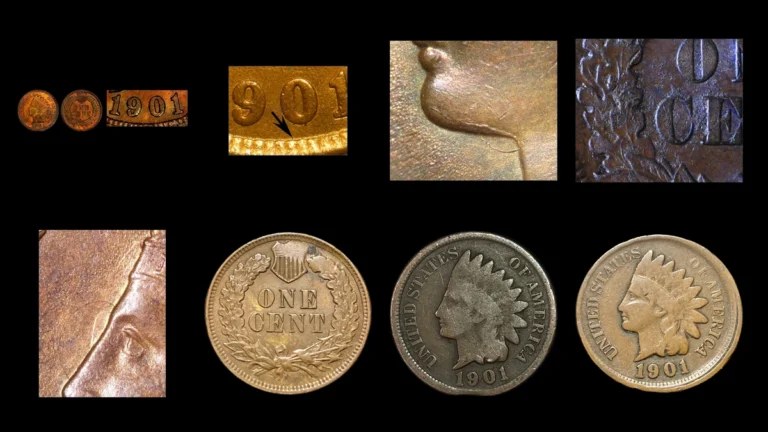
2. 1905 Penny Hidden Numeral Tops or a Stray 1: Misplaced Date Error
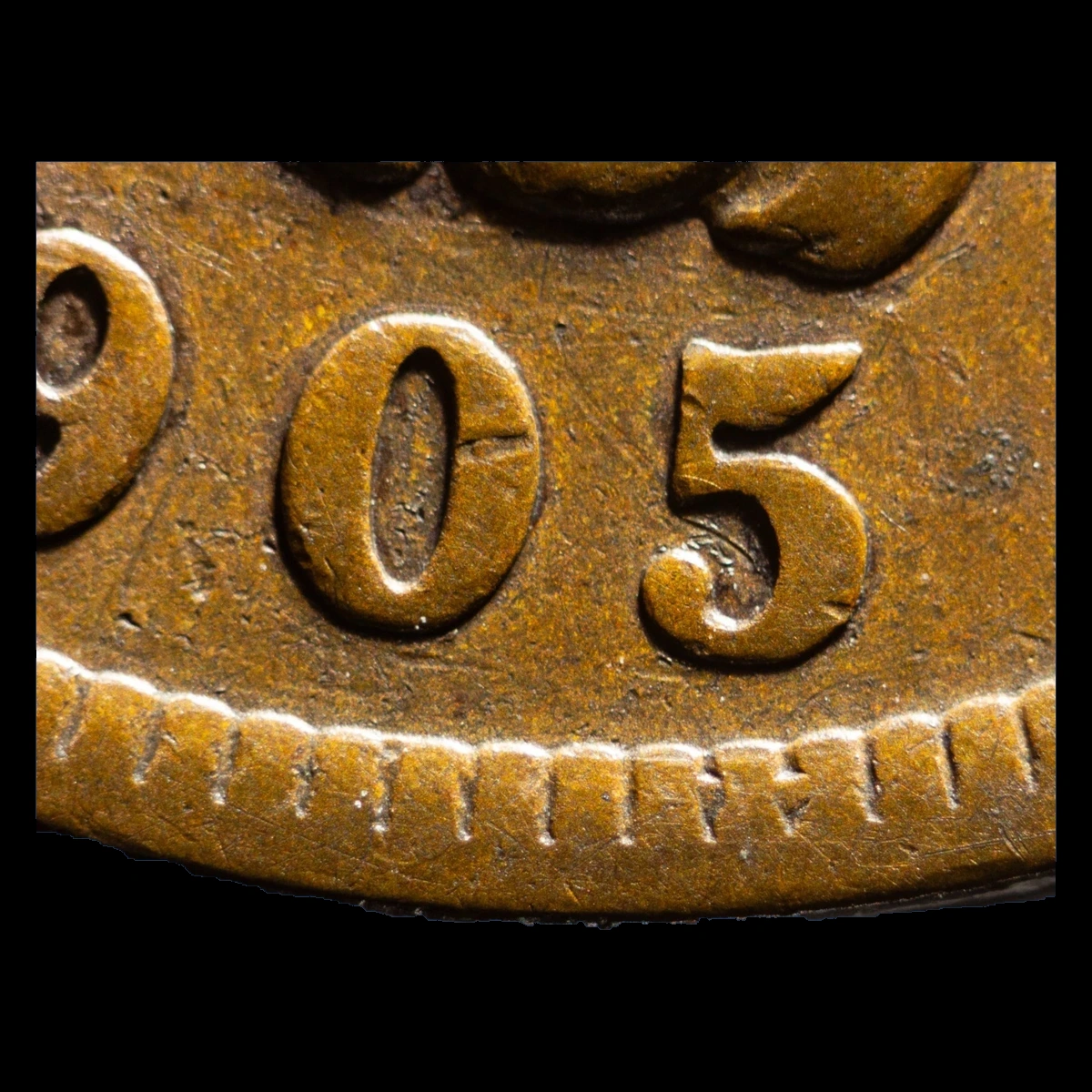
Move below the date and examine the small border teeth, then look at the neck. These are places where an unintended date-punch impression can leave numeral fragments away from the normal date.
How to Identify
One 1905 variety shows tops of 9, 0, and 5 in the lower border; another shows misplaced 0 and 5 remnants there. A separate example places a 1 in the neck.
Compare the suspected fragment with both a normal design and the correct variety photograph. Repunching of the regular date or an accompanying crack can support a particular match, but neither substitutes for finding the misplaced numeral.
What It’s Worth
$20–$1,500 is the estimated range, with strong visibility and good preservation favoring the higher end. Faint irregularities among worn border teeth need especially careful identification.
A recorded 2021 eBay result of $1,187 concerns a 1908 misplaced-date cent graded MS65 Red and Brown. That unworn, partly red coin is a different-year comparison, not a sale of the 1905 neck variety.
3. 1905 Penny Repeated Leaf Veins: Doubled Die Reverse Error
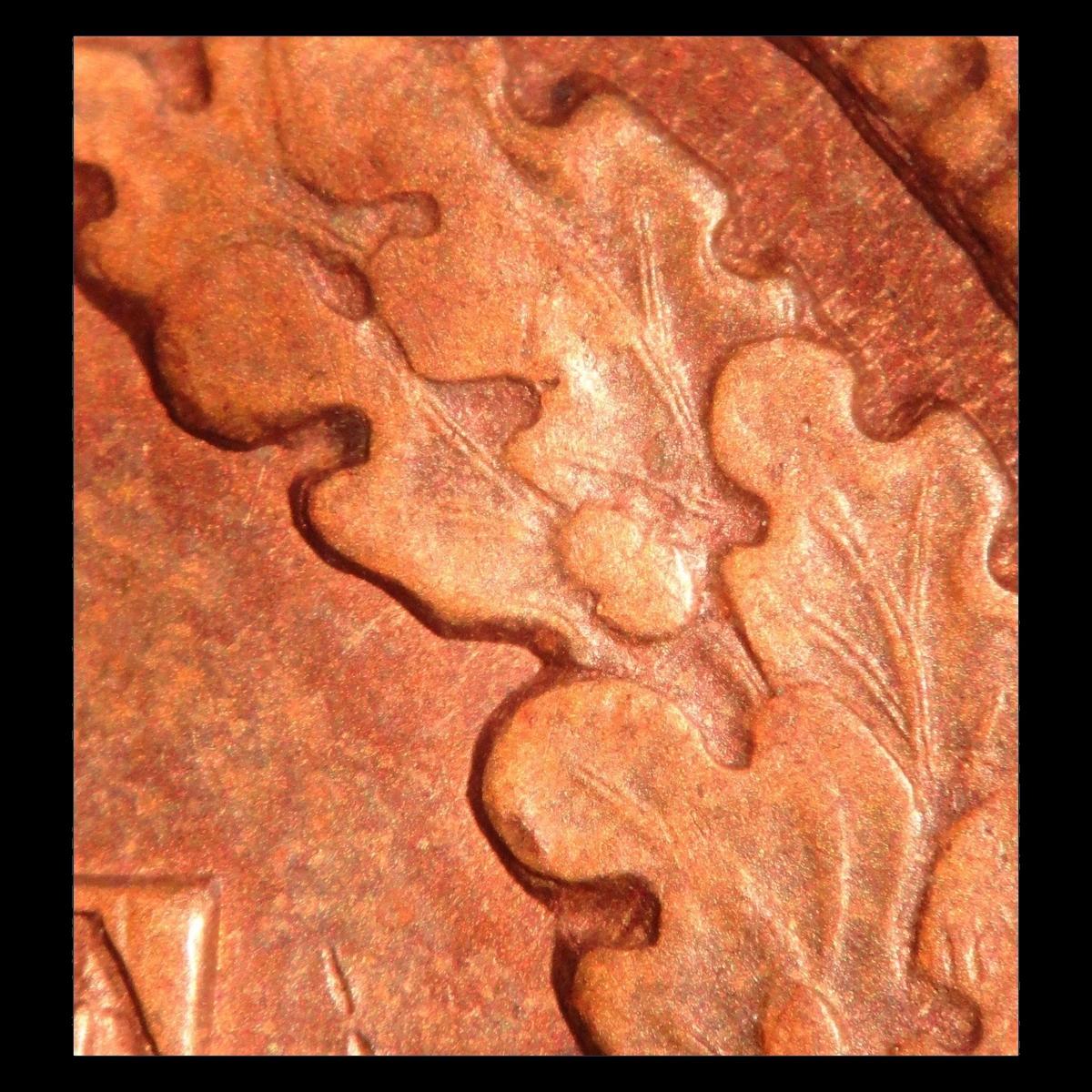
The wreath can carry meaningful doubling even when the large reverse lettering looks ordinary. A doubled die copied repeated design details onto each coin struck from it.
How to Identify
Inspect the leaf veins on each side separately. Listed 1905 varieties include one affecting both sides, others stronger on the left, and another involving the upper-right wreath and shield bars.
The front date’s placement above the border helps distinguish the correct die pair when reverse patterns look similar. Clash marks, rough spots from die rust, and an accompanying repunched date are separate features rather than proof of doubled leaf details.
What It’s Worth
$15–$1,500 is the estimate for identifiable 1905 doubled-reverse varieties. Clear repeated lines on an unworn coin merit a different comparison from subtle thickening on worn leaves.
An 1887 Indian cent with recognized front doubling sold for $1,380 in June 2025. It gives same-series context while differing in both date and affected face.
4. 1905 Penny Raised Lines Meet a Rim Patch: Die Cracks and Cuds Error
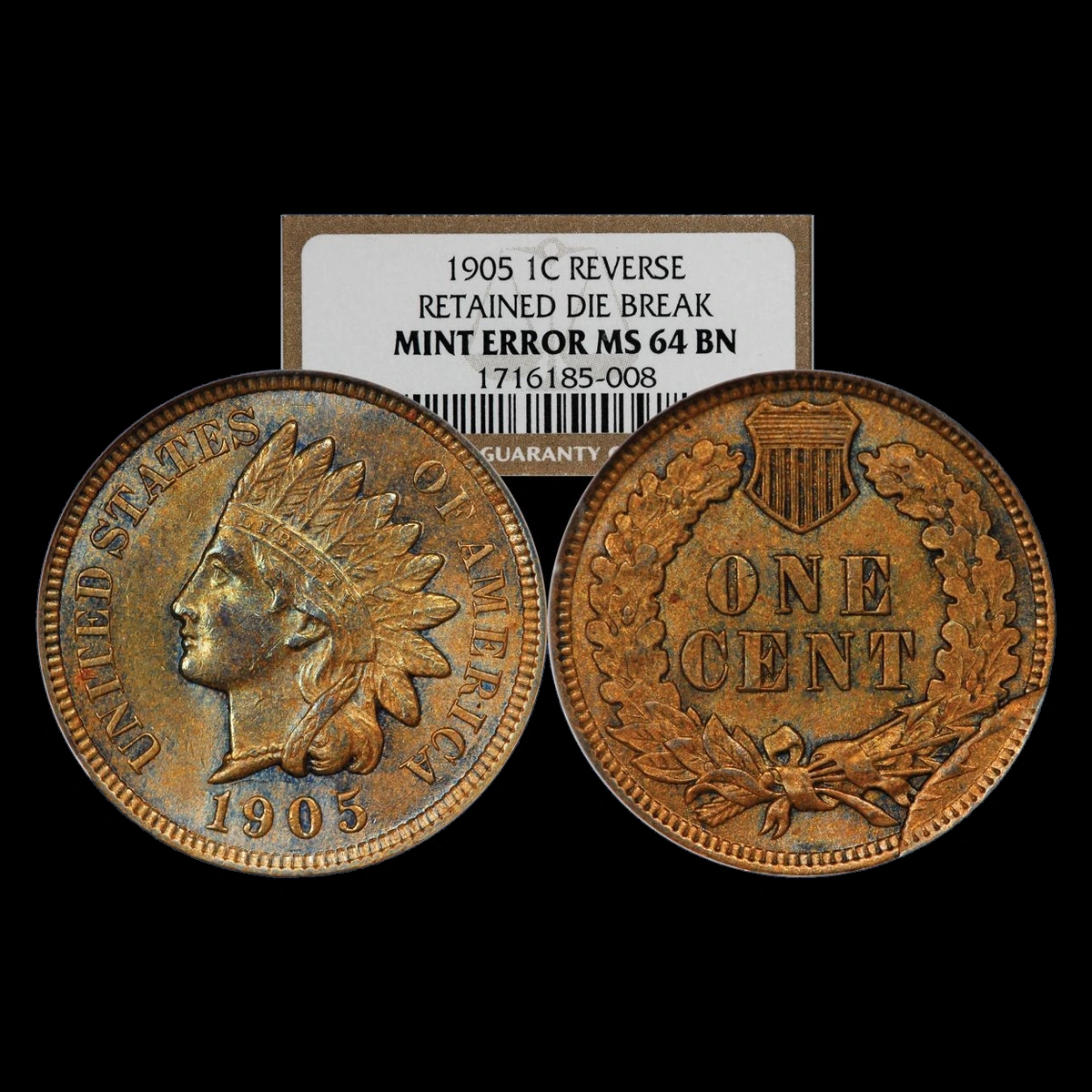
A ridge running through the wreath can lead to a larger raised area at the rim. The ridge records a crack in the die, while a broad rim-connected patch may record a broken section.
Some broken pieces stayed in position temporarily, leaving retained cuds with traces of design. When a piece fell away, metal filled the opening and formed a full cud with missing detail.
How to Identify
Compare the position and outline of the patch with the appropriate 1905 example. Several reverse locations are recorded, and one die is documented in both retained and complete-break stages.
A genuine crack rises above the coin, unlike a scratch cut into it. At the rim, distinguish struck metal from a folded edge or added solder, and examine whether wreath detail survives within the raised section.
What It’s Worth
$5–$75 is the estimated range for small clear cracks, rising to roughly $50–$750 for larger retained breaks and full cuds. Condition and the exact stage remain relevant alongside size.
A 1946-S Lincoln cent with a cud sold for $288 in March 2021, offering only a later bronze-cent comparison. If a 1905 coin also has a date variety, its combined features receive one whole-coin value.
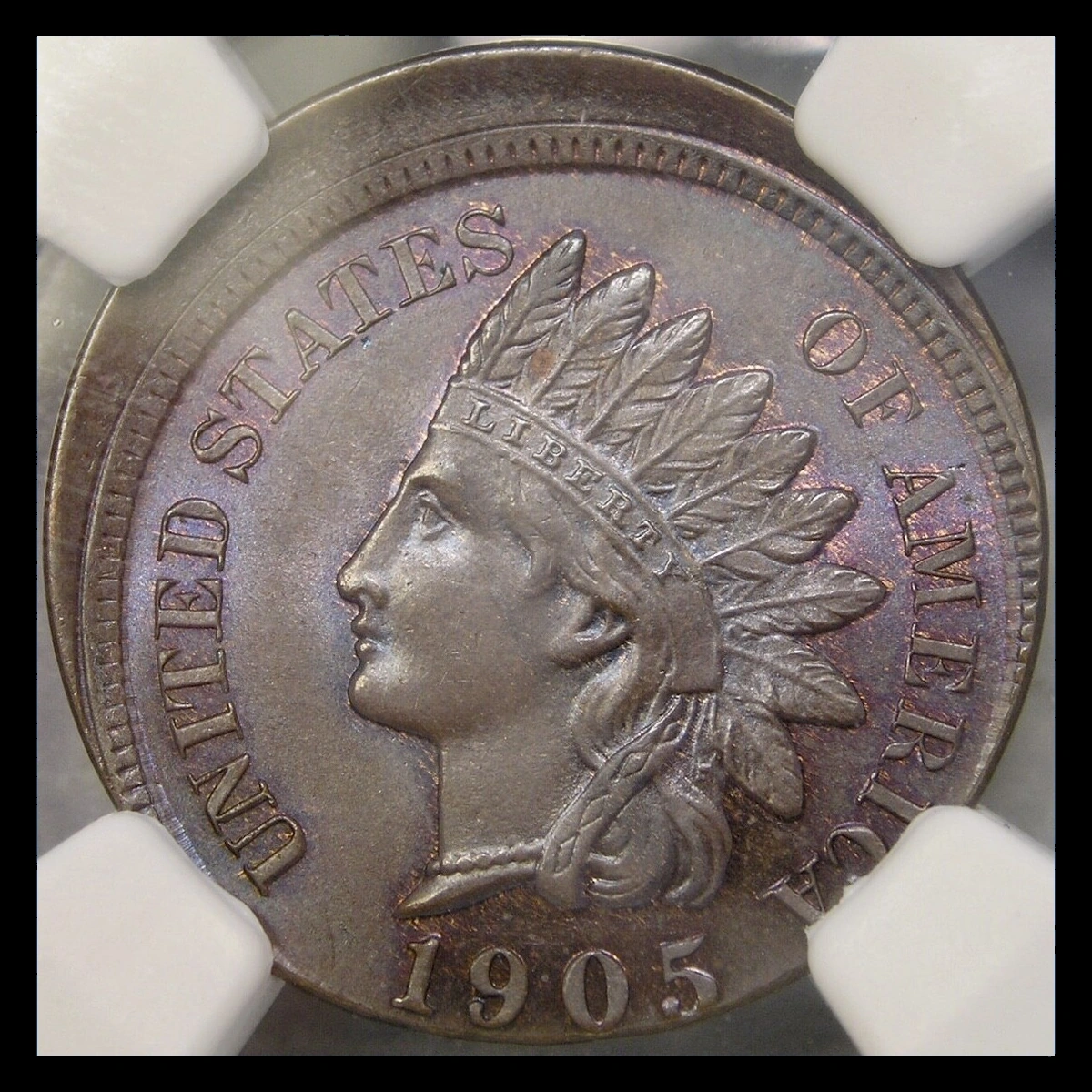
5. 1905 Penny Two Curved Gaps in the Outline: Clipped Planchet Error
Two missing edge sections appear on a pictured NGC MS64 Brown 1905 cent. The larger clip is about 10% near 1 o’clock, and the smaller is about 1% near 4 o’clock.
A clipped planchet was incomplete before striking, so the finished design formed around the missing metal. Each gap needs to fit that process independently.
How to Identify
Examine the gap, nearby rim, and edge from both faces for natural metal flow. A fresh cut through finished border detail or obvious filing suggests later removal instead.
A normal bronze cent weighs about 3.11 g and measures about 19 mm across; for loose coins, take measurements across intact portions and allow for wear. These references also help with the distorted coins below, while certified specimens should remain in their holders.
What It’s Worth
$25–$500 is the estimate for genuine clipped examples. No sale is supplied for the pictured double-clip MS64 Brown coin.
A different 1905 cent combining a ragged clip with an off-center strike sold for $211.50 in August 2013. That is one price for the compound error, and two clips do not automatically double a coin’s value.
6. 1905 Penny Blank Metal Beside a Displaced Design: Off-Center Strike Error
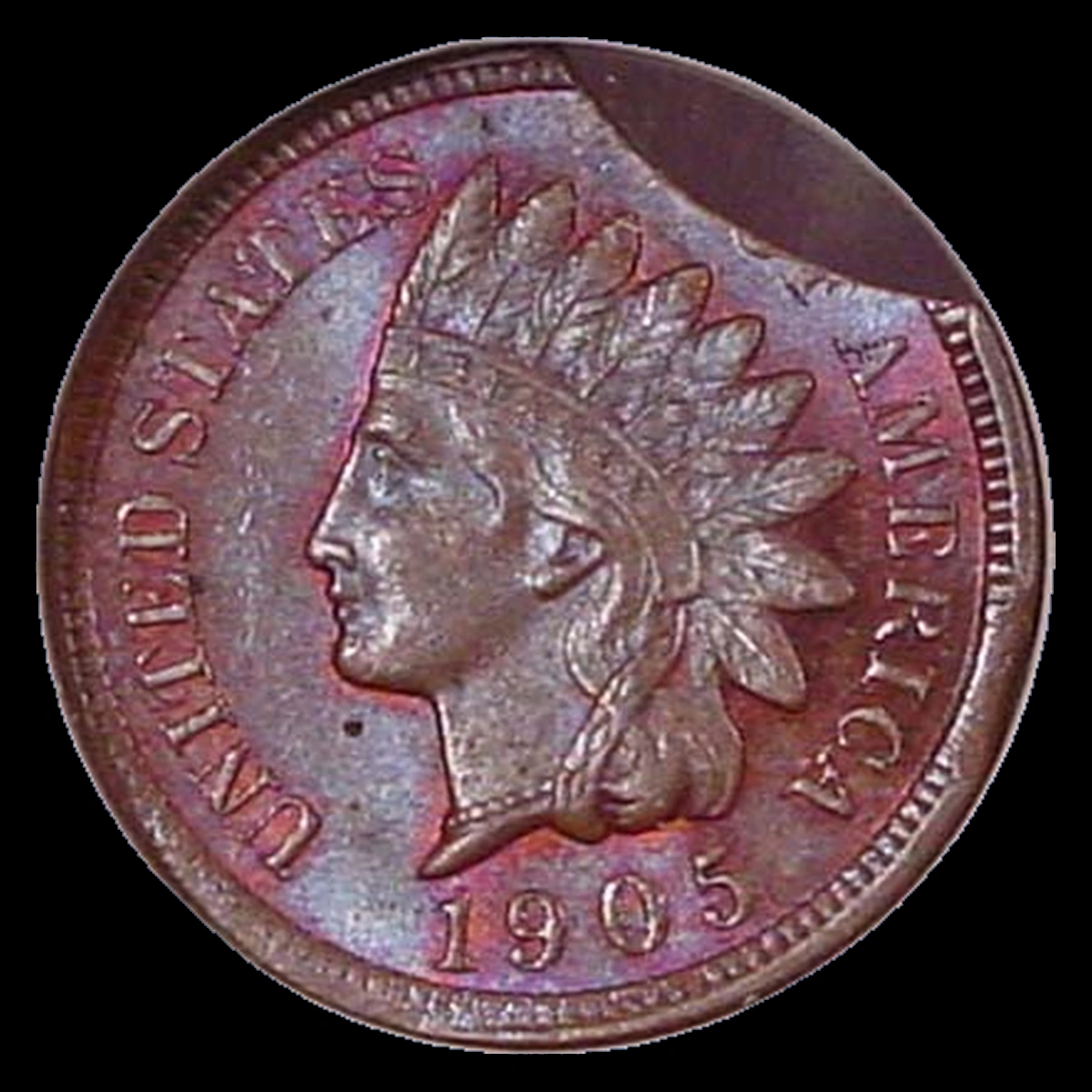
A broad empty crescent and an incomplete design can result when a blank enters the press away from the center. Both faces receive the displaced strike.
How to Identify
Find enough of the date to establish 1905 before comparing percentages. The pictured NGC MS64 Brown example was struck about 40% off-center toward 12 o’clock.
Check that the front and back strike boundaries agree, rather than only one design being shifted. The untouched area should not show grinding used to erase a previously complete image.
What It’s Worth
$100–$1,500 is the estimated range for genuine, identifiable 1905 off-center cents. The surviving date, displacement, and surfaces all affect the comparison.
A 40% off-center MS64 Brown coin sold for $1,035 in November 2004. A separate 10% off-center MS62 Brown example brought $204 in October 2021, illustrating a less dramatic error in a lower unworn grade.
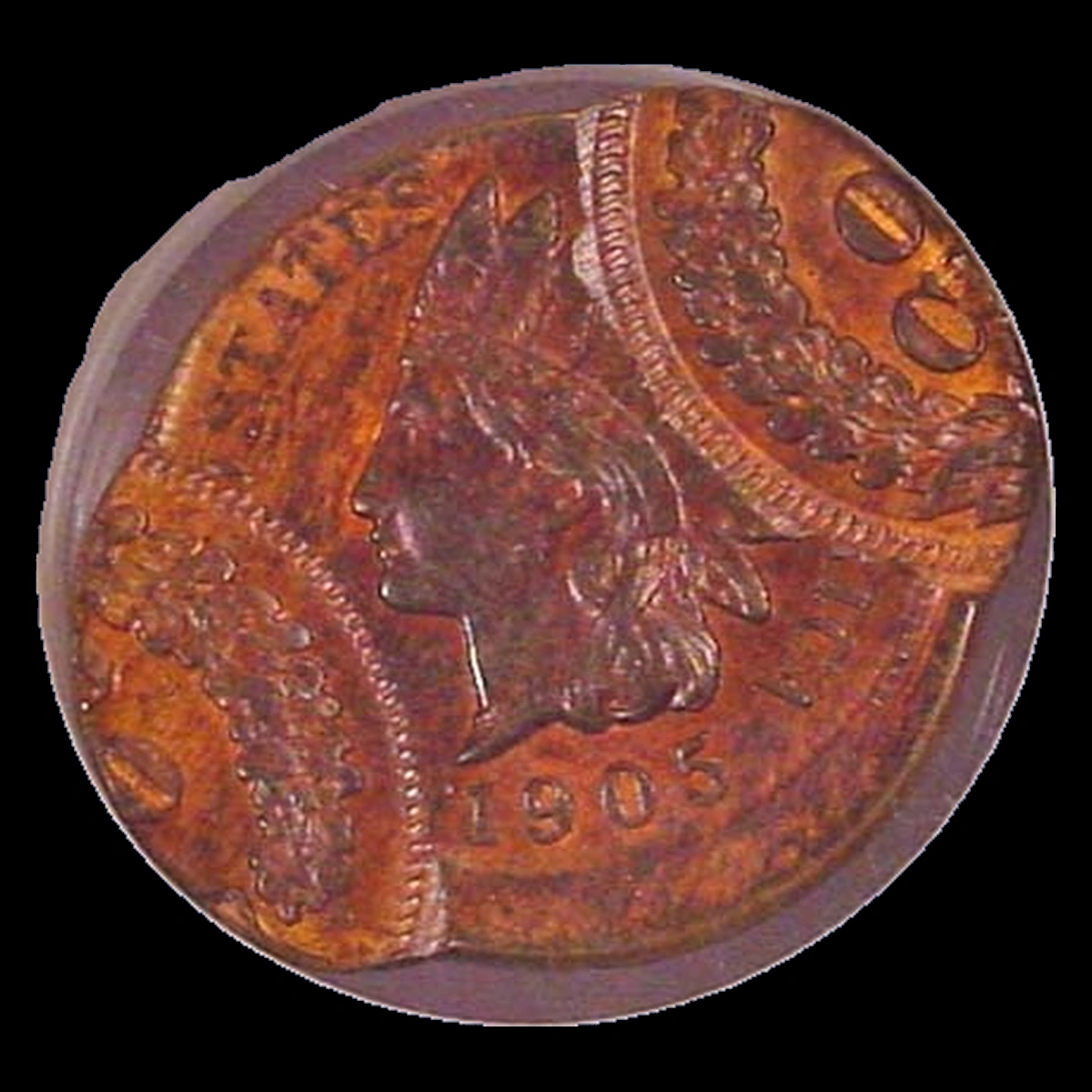
7. 1905 Penny Overlapping Designs and a Depression: Double Strike and Indent Error
Repeated portrait fragments or letters need to be assigned to separate blows before an unusual depression is interpreted. A double strike can accompany an indent, where another blank blocks part of a strike and presses into the coin.
How to Identify
One recorded coin began 10% off-center near 8 o’clock and received a second strike 75% off-center near 3 o’clock. Another has a second strike only 5% off-center together with an indent covering about half the front.
A third combines a 40% second strike with an indent whose size should not be borrowed from the previous example. Follow where the struck design ends at each depression, since a later hammer blow can crush an already completed image.
What It’s Worth
$400–$4,000 is the estimated range for these double-struck coins, including examples with an accompanying indent. Readable overlapping images and original surfaces strengthen a coin’s appeal.
A 1912 Lincoln cent with a second strike 10% off-center, graded MS65 Brown, sold for $1,920 in June 2025. It is a later bronze-cent comparison, not a completed price for any of the described 1905 pieces.
8. 1905 Penny Three Impressions Across Both Faces: Triple Flipover Strike Error
When a coin turns over between strikes, later front and back images can overlap the earlier opposite-face designs. The recorded NGC MS63 Red and Brown 1905 example also preserves evidence of three blows.
How to Identify
Map the first impression, about 10% off-center toward 11 o’clock, using photographs of both sides. Then trace the later two impressions, about 75% off-center near 2 and 8 o’clock.
The overlapping portrait and lettering must explain the turnover as well as the number of strikes. Three apparent numerals in a closeup cannot establish that sequence without the rest of the coin.
What It’s Worth
$1,500–$6,000 is the estimated range for a genuine triple flipover strike. No unpublished sale figure is assigned to the pictured 1905 coin.
A triple-struck 1920 Lincoln cent sold for $1,800 in August 2020. Its different arrangement makes it a comparison for multiple striking generally, rather than a direct match for this flipover pattern.
9. 1905 Penny Yellow Metal and Weak Outer Details: Gold-Planchet Strike Error
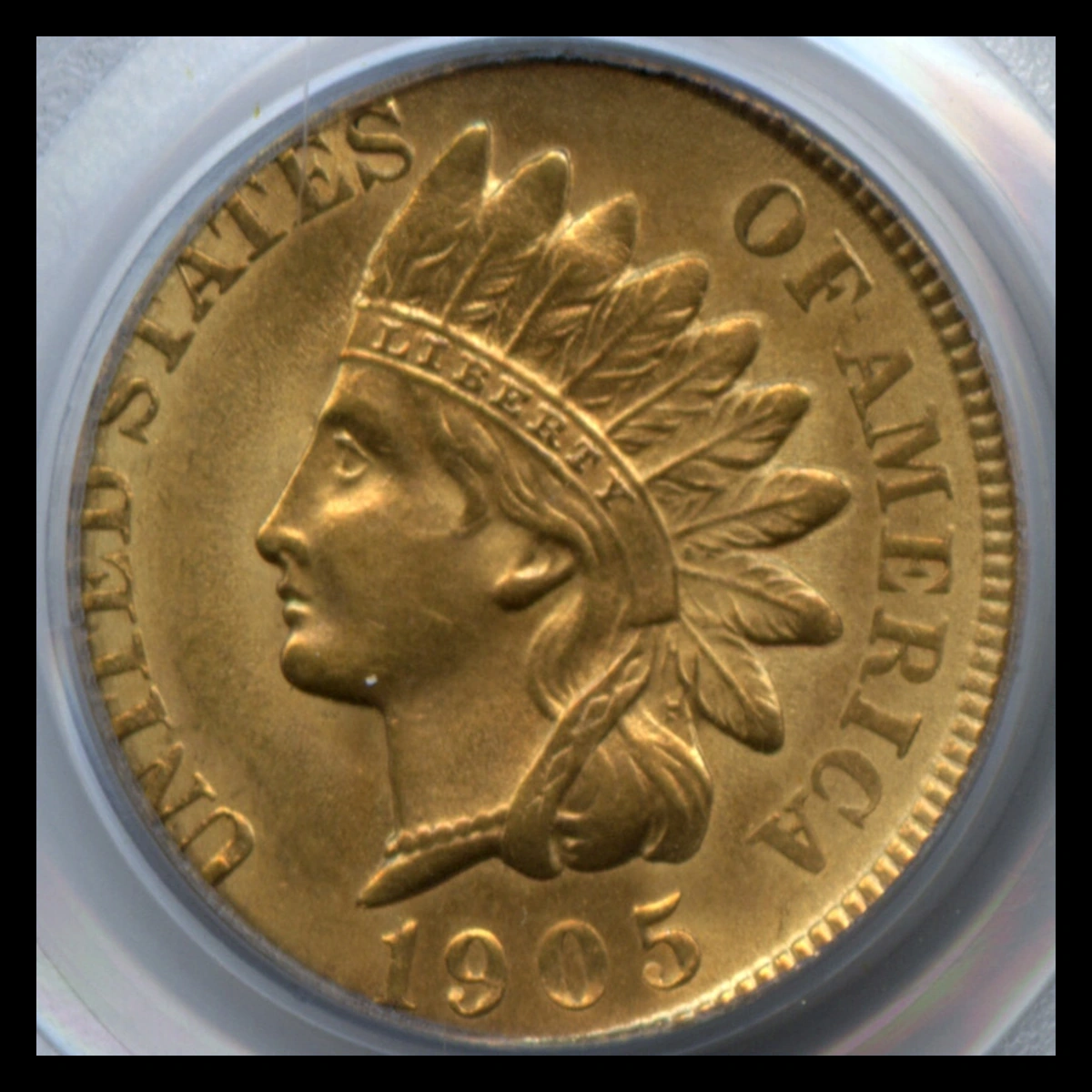
The certified gold 1905 cent weighs 64.5 grains, approximately 4.18 g, and was struck on a blank intended for a U.S. $2.50 quarter eagle. Its alloy is 90% gold and 10% copper.
The cent design sits slightly toward 9 o’clock on that smaller blank. Its route into the cent press is not established, so the genuine unusual-metal strike does not itself prove an accidental origin.
How to Identify
Compare the cut-off tops of UNITED STATES and weakness in the date, feather tips, and outer wreath with the certified specimen. A plated ordinary penny can imitate color, but it cannot establish the recorded alloy and strike.
Use professional nondestructive metal testing rather than scratching or acid-testing a suspect coin. The gold blank was smaller than a normal cent, so its measurements must be evaluated against the right planchet rather than bronze-cent expectations.
What It’s Worth
$100,000–$260,000 is the estimated range reflecting this rare certified coin’s documented market history. It has a value far beyond the metal content alone.
A Heritage-authored record lists a $253,000 result for the PCGS MS64 example. The September 2015 Heritage sale brought $105,750, showing that even this rarity has not sold at one fixed price.
Conclusion
A useful identification explains both the unusual feature and its position on the 1905 cent. Date fragments, leaf doubling, broken-die patches, and overlapping strikes each need their own evidence.
Keep specimen details together when comparing values: a clip and off-center strike may share one sale, while different double strikes have different overlaps. The exceptional gold coin belongs at the far end of the range only after its metal and identity are established.