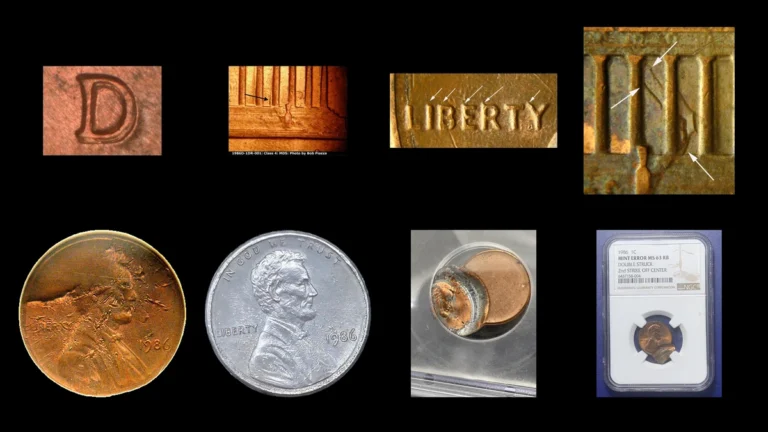
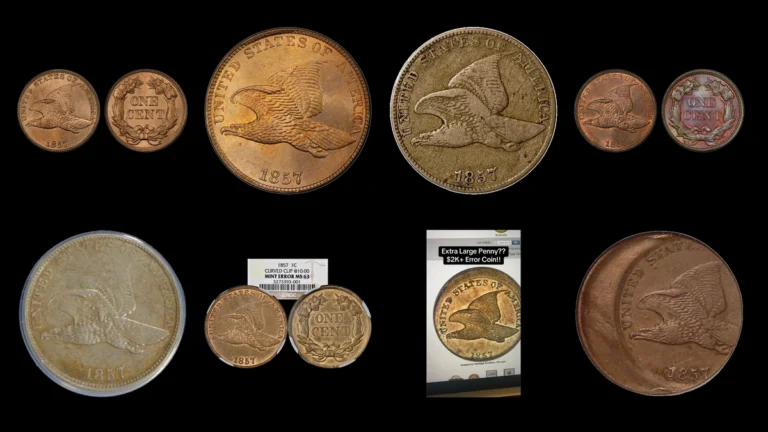
Rare 1985 Penny Errors (List & Pictures)
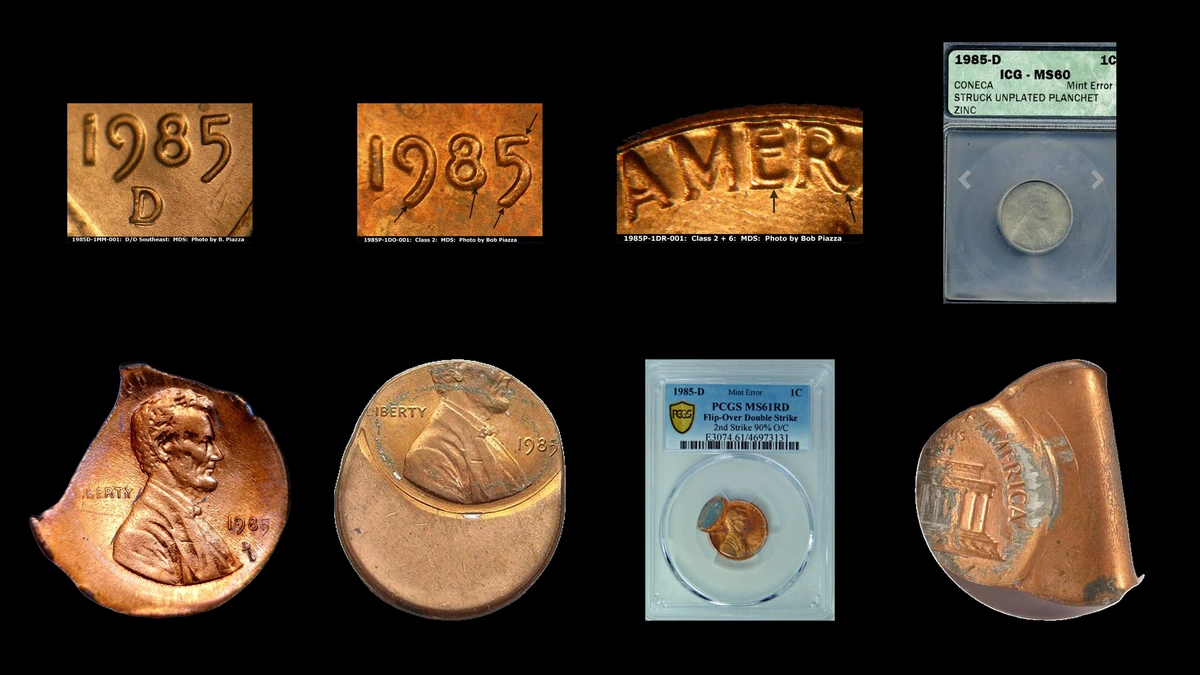
A second D below the date is a small clue; two cents joined into nested cups are a much larger one. Both appear among 1985 penny errors, with working estimates from $3–$3,500.
The bonded pair brought $881.25 in February 2014 and weighed 5 grams. This guide starts with lettering, then moves through missing metal and unusual shapes so you can choose the right comparison for your coin.
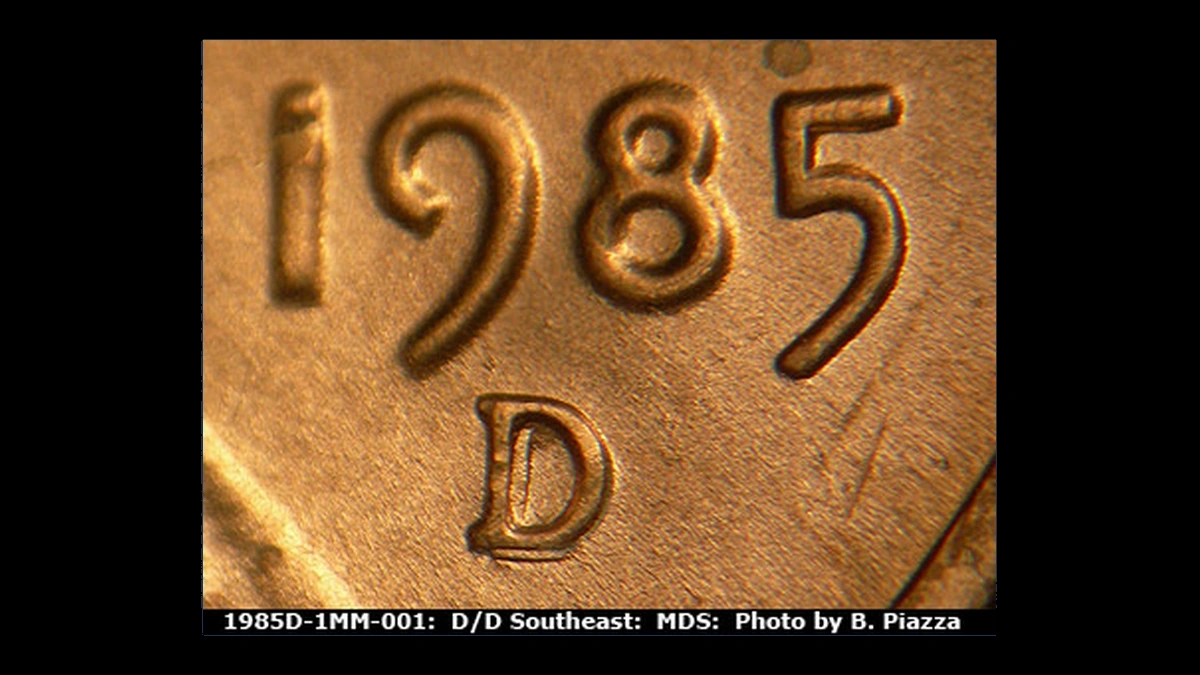
1. 1985 Penny A Partial Second D Appears: Repunched Mintmark Error
A mintmark punch could leave part of an earlier D when it was applied again in a slightly shifted position. The surrounding date did not need to double because the letter was added separately to the die.
Different reported directions describe different patterns. They are not a requirement for one D to repeat on every side.
How to Identify
Trace the D’s upright, curve, and small projecting ends under magnification. The extra metal should fit another part of the same letter.
A copper bubble or flat ledge can look like an extra stroke without being a repunch. Keep the date in the photograph so the detail remains tied to the right year.
What It’s Worth
$5–$100 is the estimate for identified minor repunched D patterns. A distinct second outline generally attracts more interest than a barely visible trace.
The year-guide report supplies the type, not an auction sale for a named specimen. Wear that obscures a small serif affects both identification and appeal.
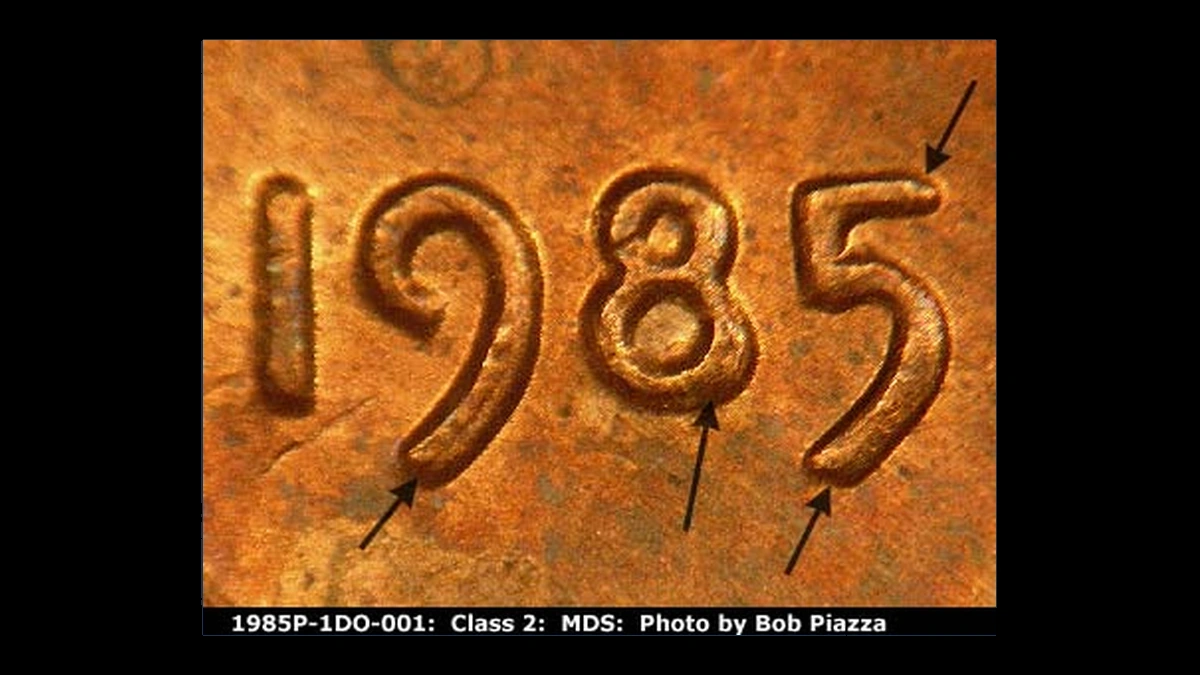
2. 1985 Penny Front Letters Have Repeated Contours: Doubled Obverse Error
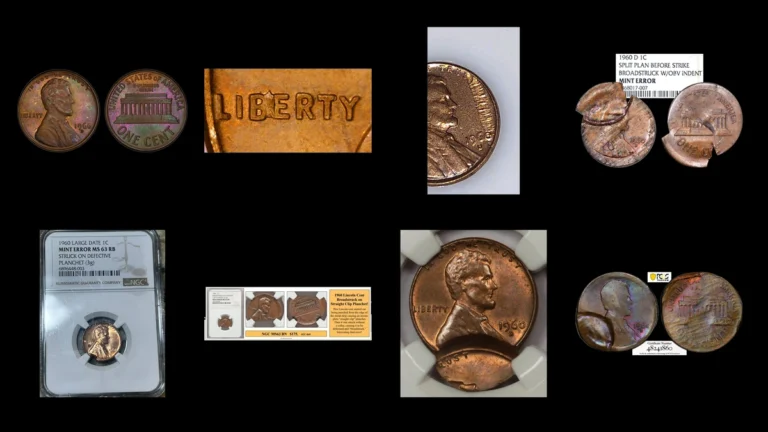
The supplied guide points to B, E, R, and T in LIBERTY, with possible date detail, as places to check for front doubling. “Obverse” simply means the front.
A doubled die carries repeated detail in the stamping tool. One blow can therefore place the extra shape on the coin.
How to Identify
Follow the individual letter shapes instead of judging LIBERTY by its overall thickness. Look for rounded repeated detail with visible separation.
A flat shelf that reduces the normal letter or a lifted copper edge needs a different explanation. The broad guide does not establish a specific catalog identity for every candidate.
What It’s Worth
$10–$200 is a working range for identified minor front doubled dies. Clearer features on well-preserved surfaces support stronger prices.
This is an estimate, not a recorded auction result for a particular variety number. Ordinary thick lettering does not receive the range without a convincing match.
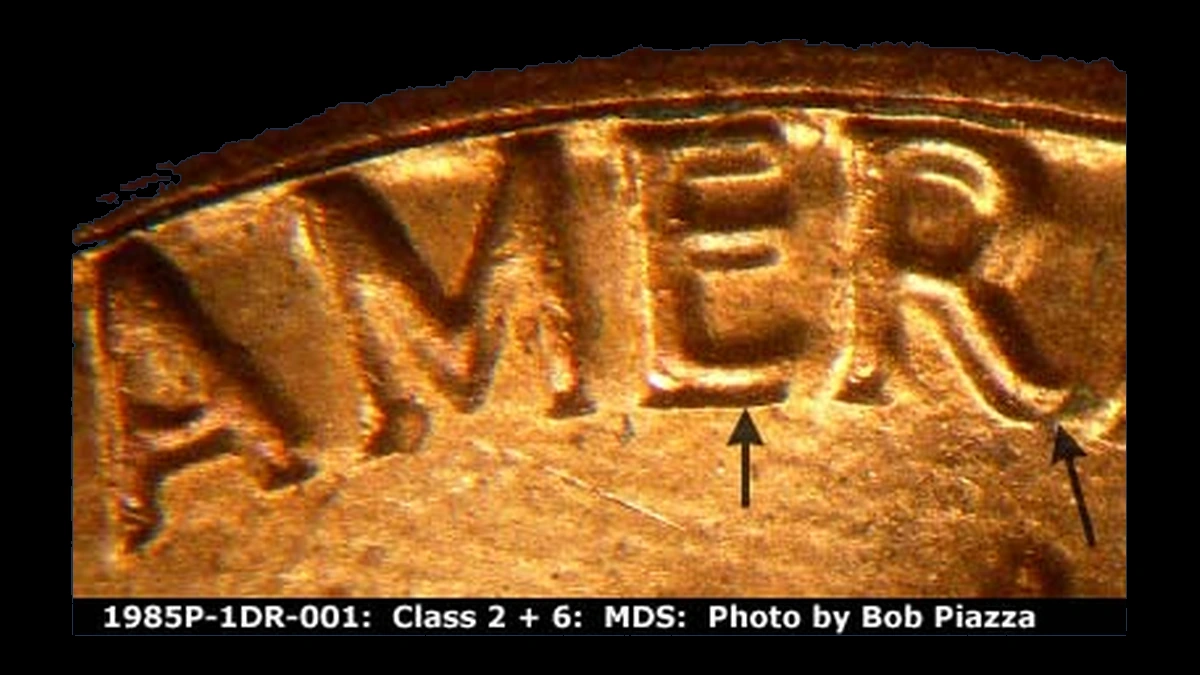
3. 1985 Penny Extra Architectural Detail Appears on the Back: Reported Doubled Reverse Error
The 1985 guide also reports back doubling, but does not locate one confirmed pattern. Any extra building or letter contour needs its own identification.
How to Identify
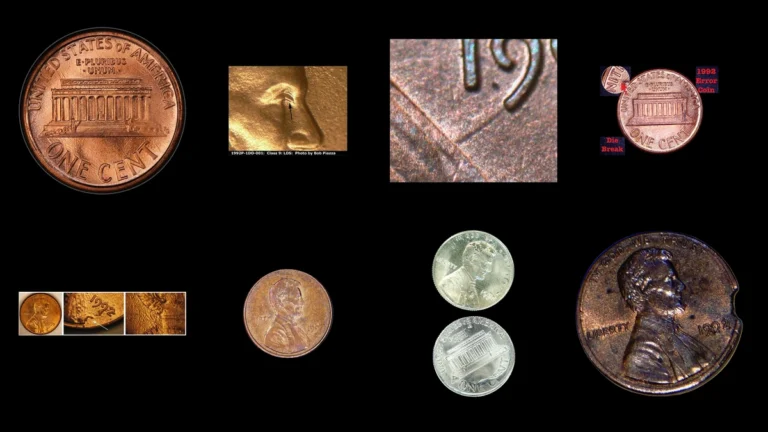
Keep the suspected feature connected to a specific column or letter while tilting the coin under a light. Reflections on the Memorial’s many normal parallel lines can resemble extra detail.
A genuine repeated shape differs from a loose copper bubble or a flat shelf. A front-variety number cannot be used to name an unidentified back variety.
What It’s Worth
$5–$150 is the estimate for an identified minor back doubled die. Clear repeated design and clean surfaces help make a useful comparison.
No exact 1985 reverse-variety auction sale is supplied here. Its price should not be borrowed from a front variety merely because both involve doubled dies.
4. 1985 Penny Raised Metal Fills a Gap or Replaces Design: BIE and Cuds Error
A BIE chip forms a raised bar between B and E in LIBERTY. A larger break can replace design with a solid patch, called a cud when it joins the rim.
A dealer’s 1985 back cud meets the edge near 5 o’clock. A separate auction-history record describes a front break without locating it.
How to Identify
For BIE, inspect the letter gap for solid original metal rather than dirt or a thin blister. For a cud, trace the patch’s connection to the rim and the design it replaces.
The reported front break must stay on the front. It should not acquire the separate dealer coin’s back-side position.
What It’s Worth
$3–$25 suits ordinary BIE chips, while larger identified breaks can fit $25–$400. Size and visibility make these very different comparisons.
The dealer’s PCGS MS64 Red and Brown description identifies the back-cud coin’s condition. It is not an auction result.
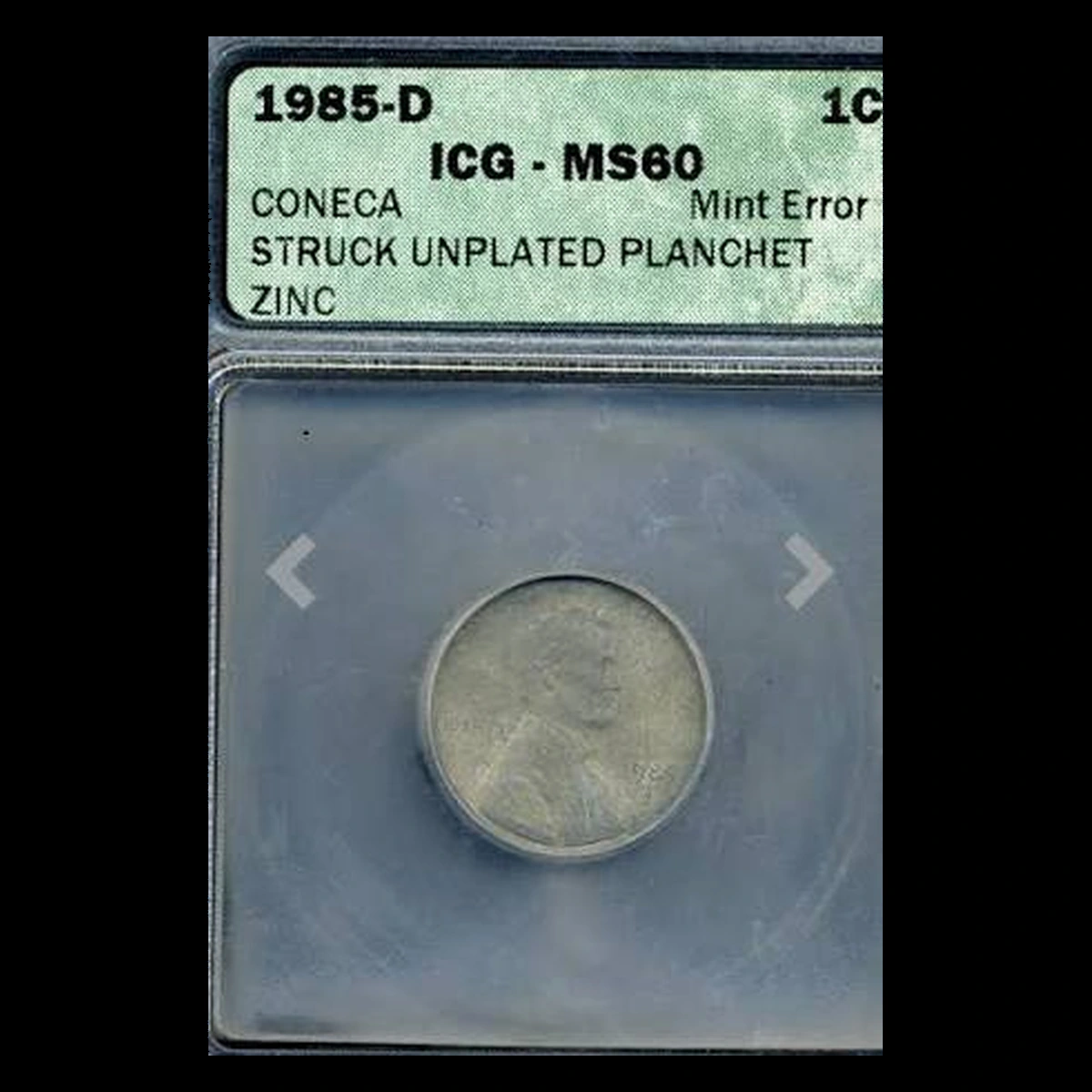
5. 1985 Penny Copper Coverage Gives Way to Gray Zinc: Missing Plating Error
Recorded 1985 examples include a fully unplated Denver cent and separate partial-plating coins. The gray zinc can be visible across the whole surface or only in certain areas.
One Philadelphia report shows bare metal around Lincoln’s head and lapel, with a diagonal zone across the Memorial. The Denver partial-plating coin has its own boundaries.
How to Identify
Study the copper-to-zinc transition and the struck texture inside the bare area. Chemical stripping and corrosion can expose zinc after minting without creating the same error.
A normal 1985 cent weighs about 2.50 grams and is about 19.05 millimeters wide. Missing a thin copper coat may change weight only slightly, so the surface evidence remains important.
What It’s Worth
$50–$1,500 is the estimated range across confirmed partial and fully unplated examples. The contrast and preservation of the original surfaces affect demand.
The Denver partial-plating coin from the Don Bonser collection sold for $780 in May 2021 as a PCGS MS64 Red and Brown. That result belongs neither to the fully unplated coin nor to the Philadelphia example.
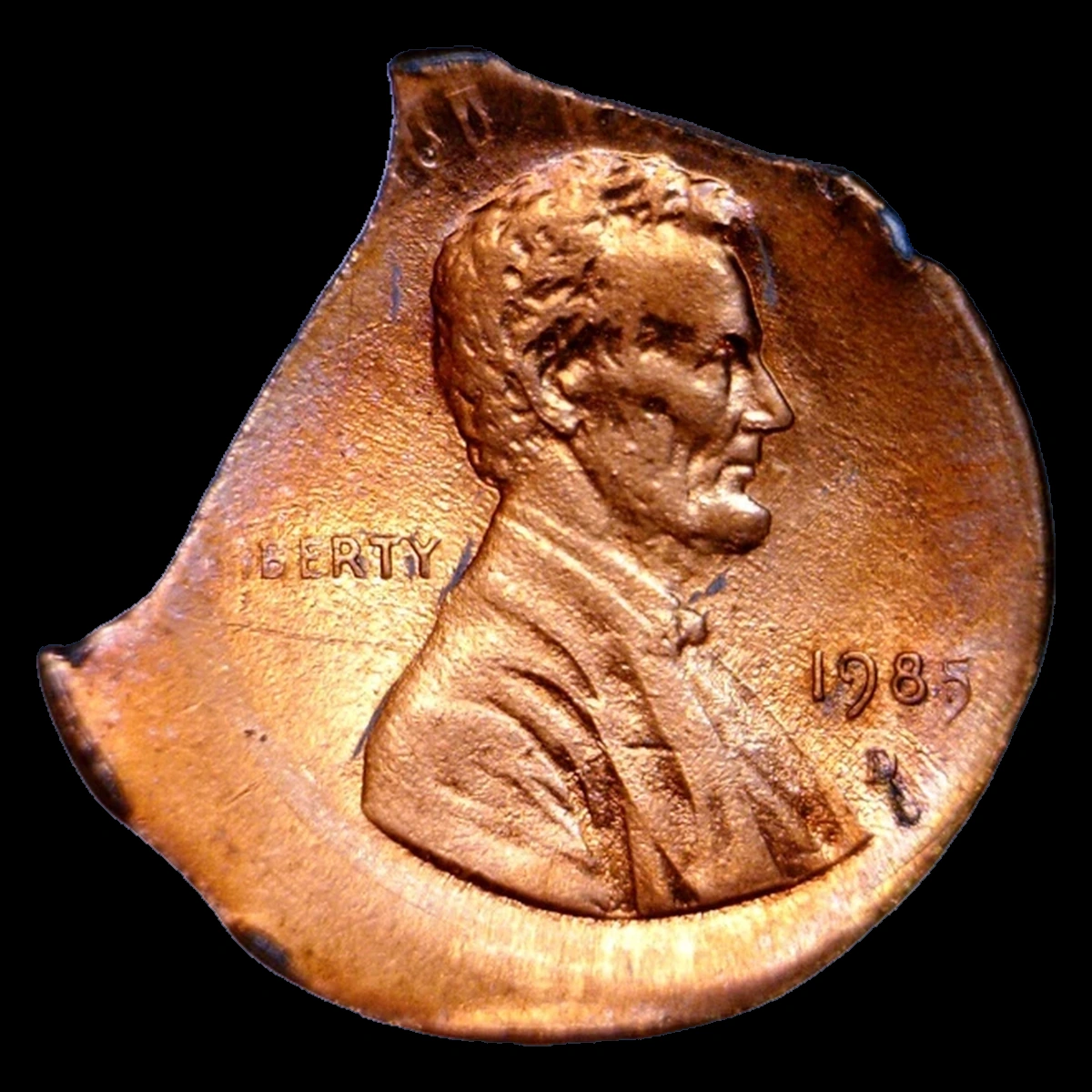
6. 1985 Penny A Large Curved Gap Removes Part of the Coin: Clip Error
The recorded Denver specimen has a 25% curved clip and weighs 1.9 grams. Its blank was missing metal before the design was struck.
Other 1985 reports describe straight or irregular gaps. Their different outlines should not be assigned the Denver coin’s measurements.
How to Identify
Inspect both ends of the missing section and the way the rim approaches them. A weaker rim opposite the gap can support a clip, but may be faint.
Look for filing grooves or fresh tool marks along the cut surface. A lower weight proves metal is missing, not that it was missing before striking.
What It’s Worth
$10–$300 is the range for identified clips of differing size and preservation. A substantial original gap should be compared with more than a tiny edge notch.
The 25% Denver example is listed as NGC MS65 Red and Brown. Its description supplies no realized sale price used in this range.
7. 1985 Penny The Whole Design Fits inside a Wider Border: Broadstrike Error
A broadstrike occurs when the collar fails to hold the edge during the blow. The original blank spreads wider without gaining extra metal.
Philadelphia and Denver examples are reported. Separate Philadelphia auction-history entries describe different graded coins.
How to Identify
Check that all intended outer letters remain on the enlarged surface. A broadstrike may have an uneven border, but it retains the design.
Later hammering can also widen a cent and usually damages finished detail. Look for natural expansion rather than a flattened portrait and tool-marked edge.
What It’s Worth
$10–$125 is the estimate for identified broadstrikes. A clear broad border with crisp lettering is more appealing than slight spreading on a heavily marked piece.
The supplied listings do not give one realized price to apply to every 1985 broadstrike. Judge the actual expansion and surface quality.
8. 1985 Penny The Design Misses Much of the Blank: Off-Center and Stretch Strikes Error
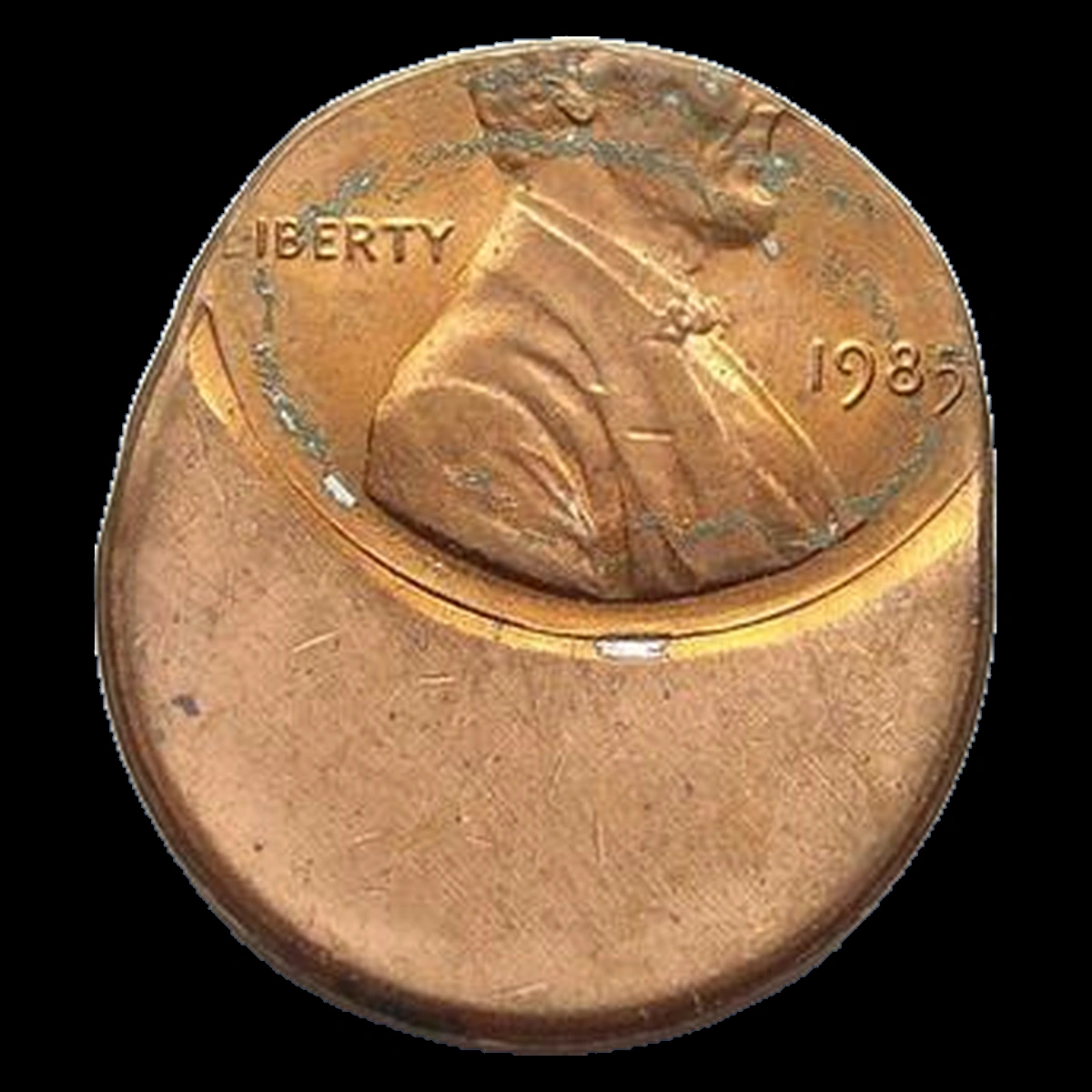
A Philadelphia example is 75% off center toward 10 o’clock, while a separate Denver coin is 70% off center toward 8 o’clock. Other Denver records describe a stretched 75% strike and an 85% strike with one side blocked.
How to Identify
Trace the boundary between plain metal and struck design on both faces. Keep each percentage and direction attached to the correct specimen.
Elongated detail helps identify a stretch strike, but its name alone does not establish a second blow. A blocked side needs examination alongside the impression on the other face.
What It’s Worth
$15–$600 spans ordinary off-center examples and stronger stretched or blocked-side combinations. A readable date and clean surfaces improve their appeal.
The Philadelphia 75% coin is PCGS MS64 Red, while the Denver 70% example is PCGS MS65 Red. Their listed grades are not supplied sale prices.
9. 1985 Penny Two Strikes Put Designs in New Positions: Double Strike and Flipover Error
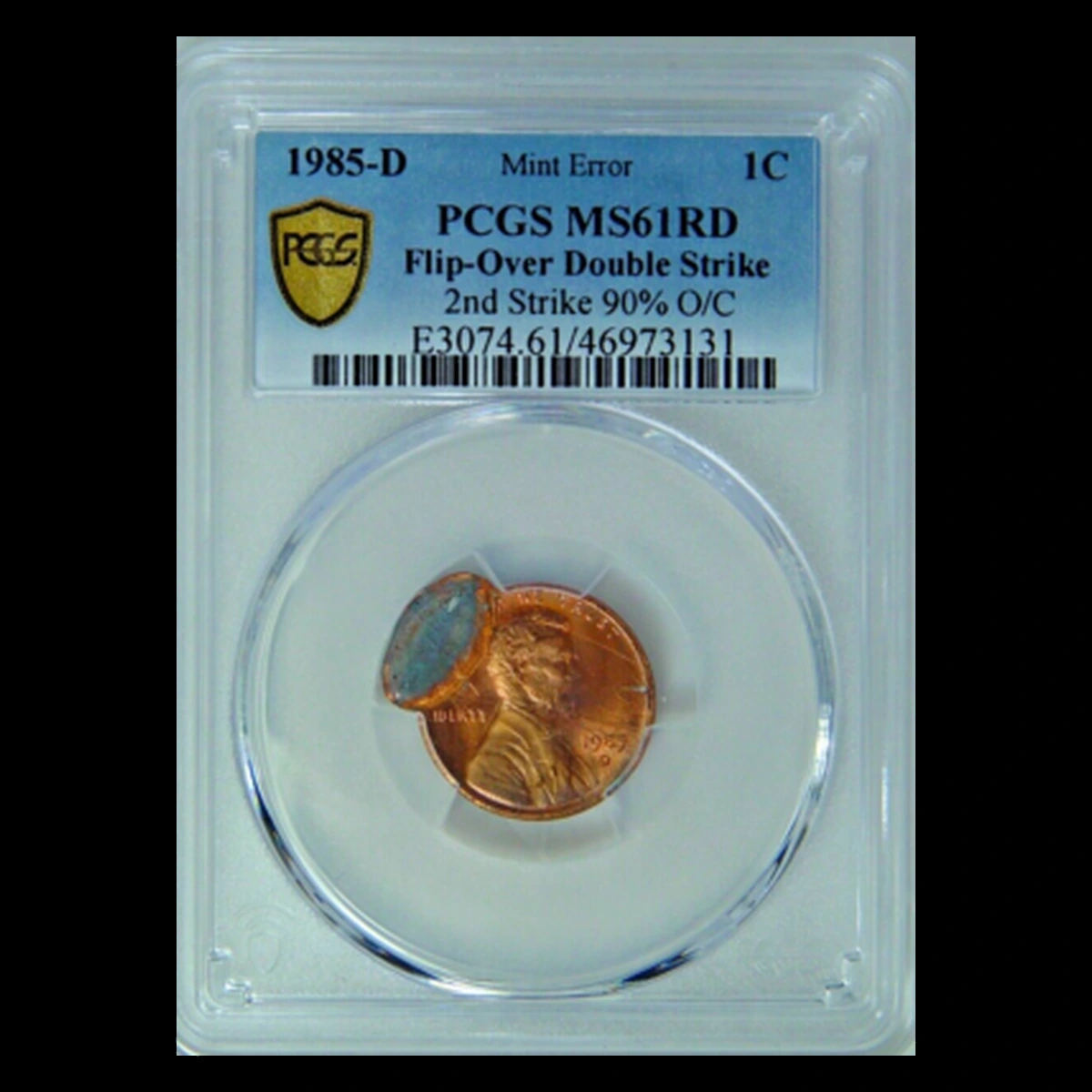
A recorded Philadelphia double strike is graded ANACS MS63 Red and Brown. A separate Denver PCGS gallery coin flipped over before a second strike about 70% off center.
Flipping can place Lincoln and Memorial details on the same face. A coin that simply shifts does not necessarily mix the two faces in that way.
How to Identify
Follow a clear feature from each impression, then compare the opposite side. The relationship should show whether the coin shifted or flipped.
The Denver percentage does not describe the Philadelphia coin. Thin doubled edges beside one letter do not establish either sequence.
What It’s Worth
$40–$750 is the estimate for identified double strikes of these kinds. Clear impressions can outweigh a dramatic but confusing overlap.
The Denver flipover is graded PCGS MS61 Red, so surface marks matter alongside the error. A different 1989 MS66 Red double strike sold for $70 in January 2016.
10. 1985 Penny One Blank Folds over Itself: Foldover Strike Error
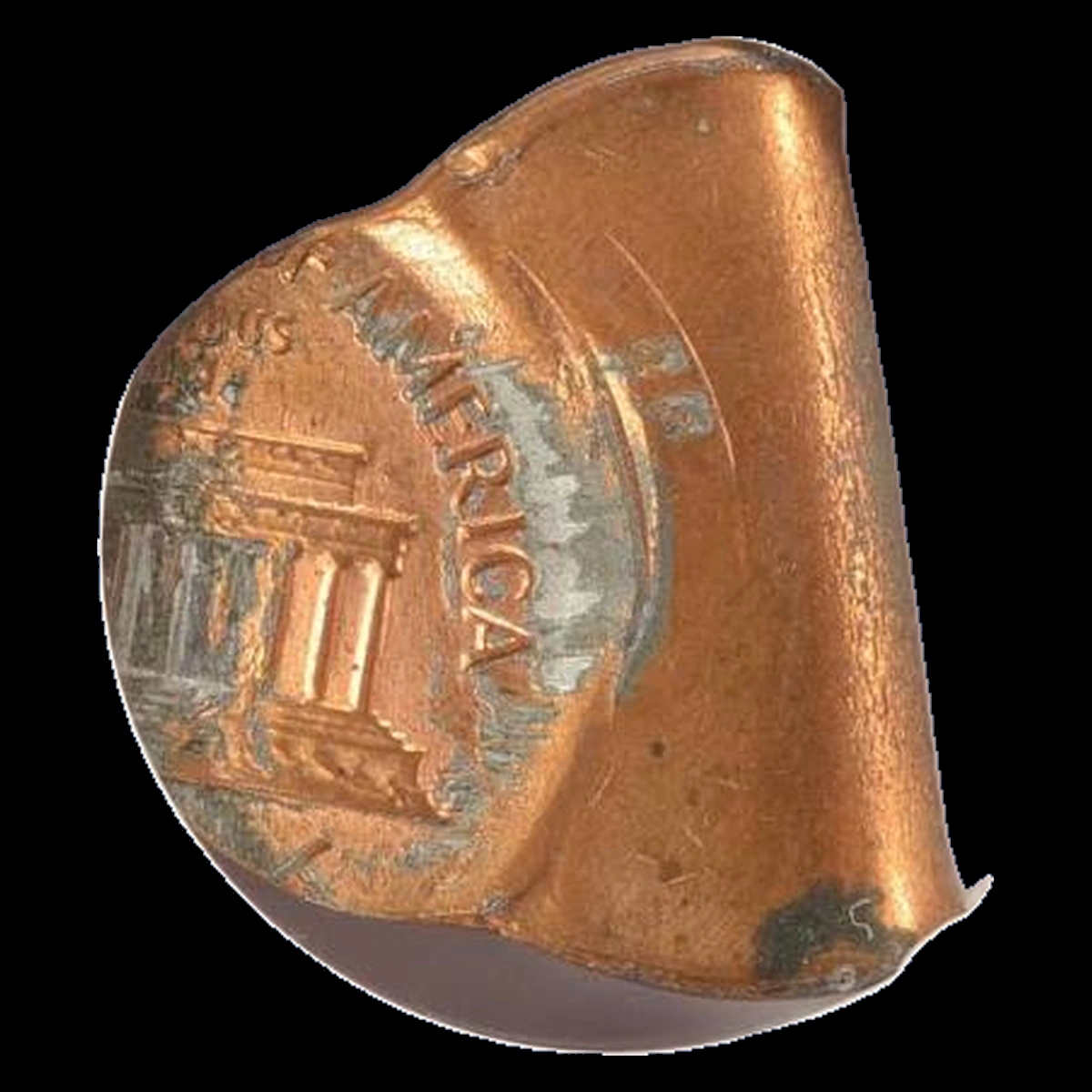
The listed 1985 foldover is graded NGC MS63 Red and Brown. Its blank bent during the striking event, leaving one part overlapping another.
How to Identify
View the fold from the side and follow where design was formed against the bent metal. Finished lettering bent or crushed afterward tells a different story.
Do not pull the layers apart or assume doubled thickness means two coins. A foldover is one continuous blank, and the listing establishes no universal fold direction.
What It’s Worth
$300–$2,500 is the estimate for an identified foldover, depending on shape and readability. Preserving the original fold protects its evidence.
A 1989 foldover off-center cent graded NGC MS65 Red sold for $960 in September 2018. That different-year combination is not a sale of the 1985 MS63 piece.
11. 1985 Penny A Dime Date Hides in Lincoln’s Jacket: Double Denomination Error
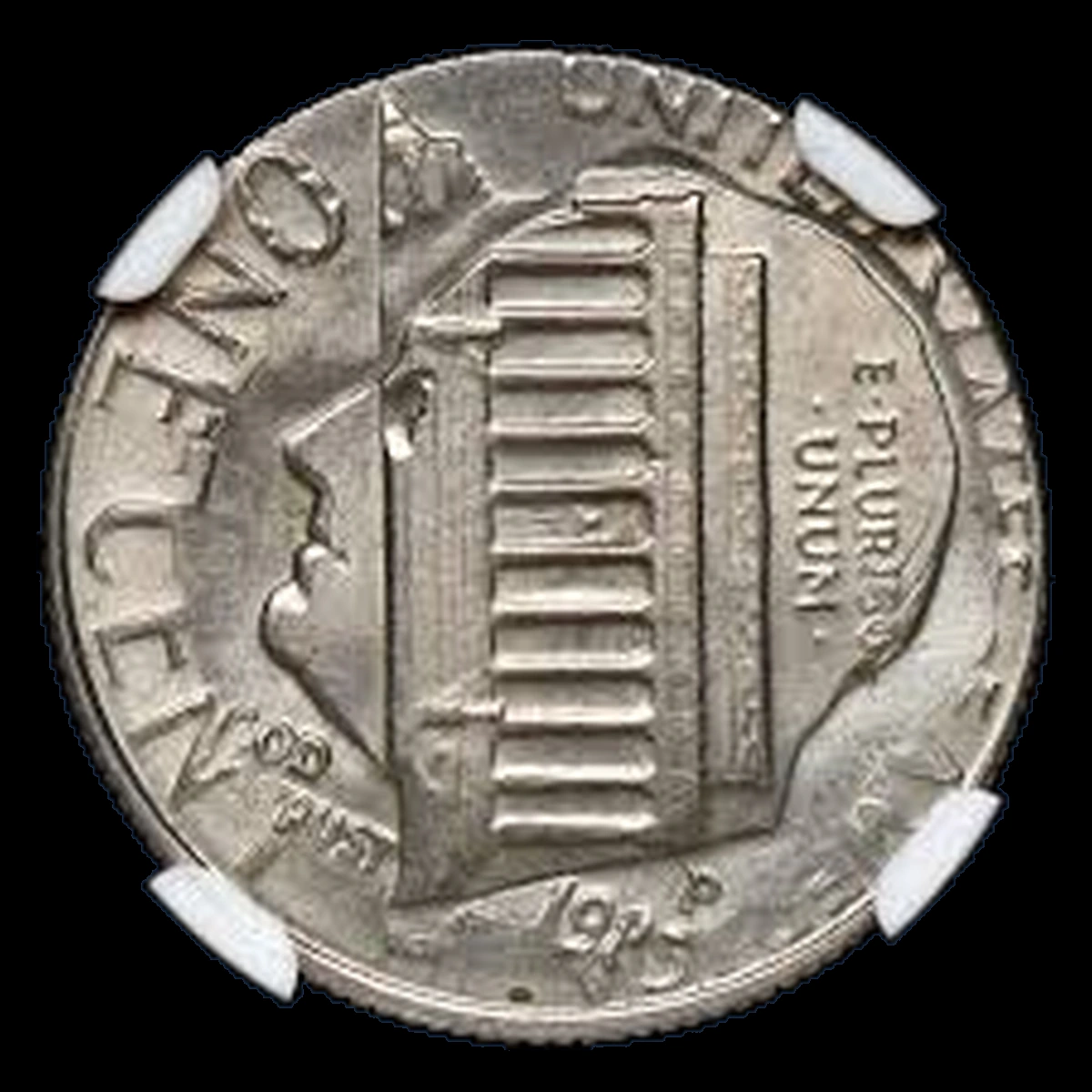
The documented coin began as a finished 1985-P dime before receiving the cent designs. Its earlier date lies among folds at the left side of Lincoln’s jacket.
Both designs are dated 1985, but they come from separate stages. An unused dime blank could not supply the earlier portrait, lettering, and date.
How to Identify
Start with the jacket folds, then trace other dime features across both faces. Read the cent date independently instead of treating every visible digit as one impression.
The dime begins at a nominal 2.268 grams and about 17.9 millimeters across. Its layered metal differs from the copper-coated zinc of an ordinary 1985 cent.
What It’s Worth
$500–$3,000 is the estimate for similar authenticated overstrikes. Clear earlier detail and good surface preservation help support the upper end.
The NGC MS67 example sold for $747.50 in April 2011. This is a historical result for the finished-dime overstrike, not a price for a cent on an empty dime blank.
12. 1985 Penny Two Cups Are Joined Together: Bonded Cap Pair Error
The recorded 5-gram object has a front die cap nested inside a back die cap. Their touching faces joined under striking pressure, with squeezed zinc visible around the margins.
A die cap is a coin that wraps around a stamping die. Here two separate caps remain bonded, with well-struck Lincoln and Memorial designs on the outside.
How to Identify
Look for the inner and outer walls from above and from the side. Follow their pressure-formed connection without trying to loosen either layer.
The 5-gram weight fits two normal cent blanks, unlike one folded coin. Glue, solder, or a loose stack cannot explain the same original striking history.
What It’s Worth
$600–$3,500 is the estimated range for a comparable authenticated nested-cap pair. It values the complete connected object.
The NGC MS68 Red pair sold for $881.25 in February 2014. Its intact bond, tall walls, and exceptionally preserved exterior designs are important parts of that comparison.
Conclusion
The right view makes a 1985 error easier to understand: magnification for a mintmark, both faces for repeated designs, and side views for folds or nested caps. Weight adds context but rarely answers the question alone.
Keep each recorded coin’s details together when comparing value. A partial copper boundary, a displaced second strike, or a 5-gram bonded pair should not borrow the identity or price of a different specimen.