Rare 1960 Penny Errors (List & Pictures)
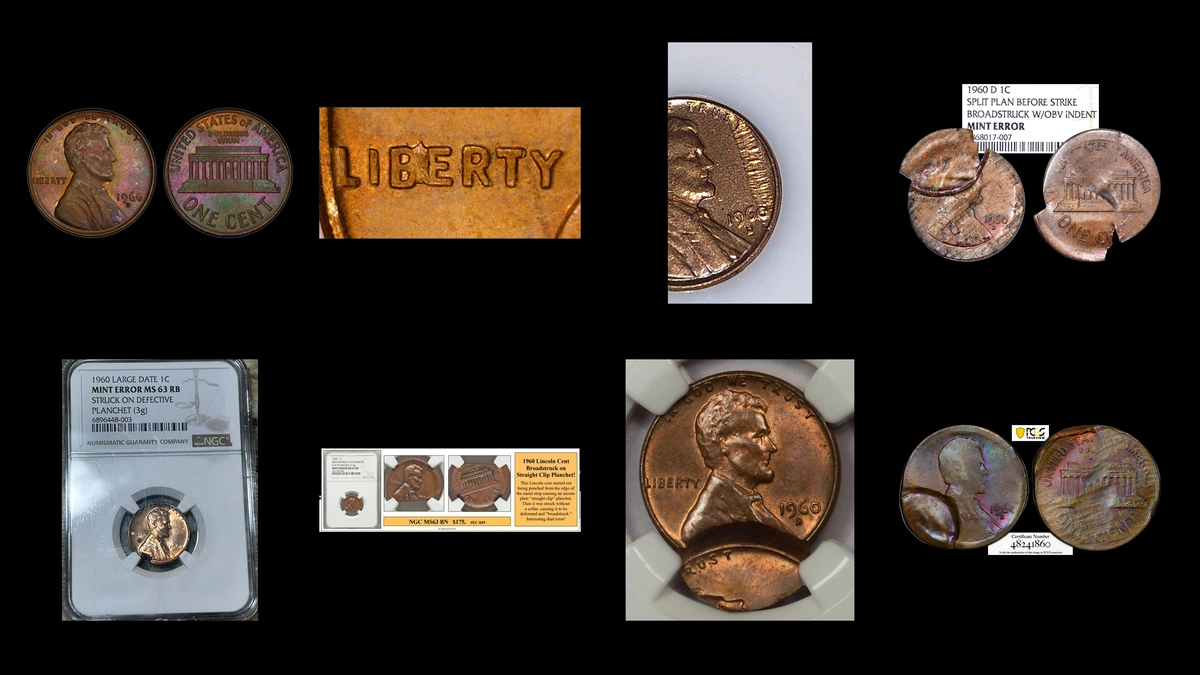
A large-over-small-date Proof sold for $7,475 in July 2003. Estimated values for 1960 penny errors range from $2–$8,500, but both ordinary large dates and small dates are normal designs.
Start by identifying the date style and finish, then inspect extra outlines, surface defects, and the blank’s shape. A normal cent is copper alloy throughout, weighs 3.11 grams, measures 19.05 mm, and has a smooth edge.
| Visible feature | Error group | Estimated value |
|---|---|---|
| Overlapping date sizes or letters | Doubled dies and date combinations | $5–$8,500 |
| Extra D stroke alone | Repunched mintmark | $5–$250 |
| Raised bars, lines, or rim patches | BIE, cracks, and cuds | $2–$600 |
| Blocked detail or retained crust | Strike-through | $5–$200 |
| Peeling alloy or related pieces | Lamination | $5–$500 |
| Original hole or defective metal | Defective blank | $40–$750 |
| Missing edge, sometimes spread | Clip or clip with broadstrike | $10–$700 |
| Wide complete design | Broadstrike | $10–$350 |
| Partial design and plain metal | Off-center strike | $20–$650 |
| Thin blank with shifted design | Split blank off center | $100–$1,000 |
| Opposite designs overlap | Flipover double strike | $100–$1,200 |
| Full sunken mirror portrait | Reverse brockage | $500–$2,500 |
| Cent design on silver blank | Silver dime planchet | $500–$3,500 |
| Identified foreign blank | Liberian ten-cents planchet | $700–$4,000 |
| Listed clad blank with clip | Clad-planchet combination requiring verification | $500–$6,000 |
1. 1960 Penny Two Date Sizes Share One Design: Doubled Dies and Date Overlaps Error
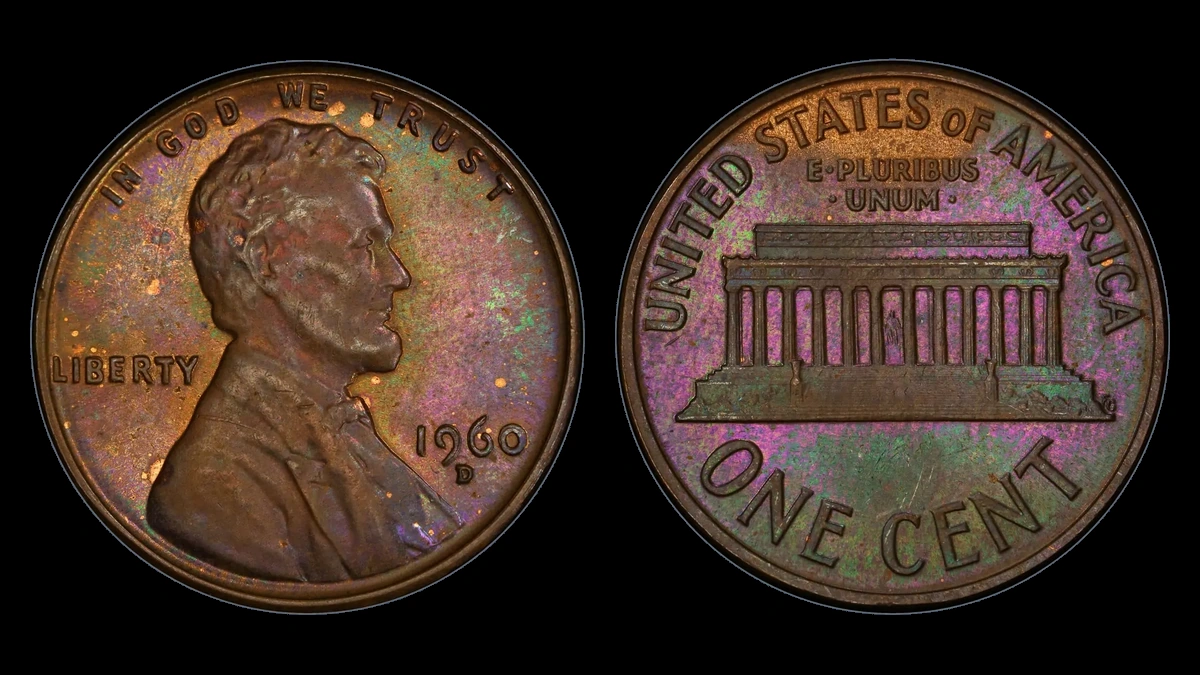
Owning a normal small date or large date is different from finding overlapping numeral shapes on the same coin. A Denver ordinary-strike variety combines small over large date with a repunched D, while Philadelphia Proofs include both date-overlap directions.
How to Identify
Compare normal date styles first, then trace extra numeral outlines, especially around 0. The Denver D needs its own check because a repeated mintmark alone does not establish overlapping dates.
Use Proof comparisons only for genuine Proofs. Separate reverse-lettering doubled dies involving ONE CENT or the country name require their own mint and finish matches.
What It’s Worth
The overall estimated range is $5–$8,500, separating minor reverse doubling around $5–$250, the Denver date-and-D combination around $50–$4,500, and Proof date overlaps around $100–$8,500. These bands concern distinct varieties.
A PR69 large-over-small-date Proof sold for $7,475 in July 2003. The Denver date-and-D combination brought $4,025 in MS66 in July 2008, a separate ordinary-strike comparison.
2. 1960 Penny An Earlier D beside the Mintmark: Independent Repunch Error
A reported D-over-D feature leaves an extra curve to the left of the final letter. A changed punch position in the die created overlapping strokes that could repeat on many coins.
How to Identify
Follow the extra curve or letter end far enough to recognize another D placement. General thickness, a damaged edge, or a flat strike shelf is insufficient.
Examine the date independently. Both date sizes must actually be present before identifying the more valuable combined Denver variety described above.
What It’s Worth
An identified independent 1960 repunched D has an estimated value of $5–$250. Strong recognizable earlier strokes and preserved surfaces make better comparisons.
No named auction result is supplied for this independent report. It should not borrow the price of a coin combining repunching with both date sizes.
3. 1960 Penny A Letter Bar, Hairline Ridge, or Rim Patch: Die Damage Error
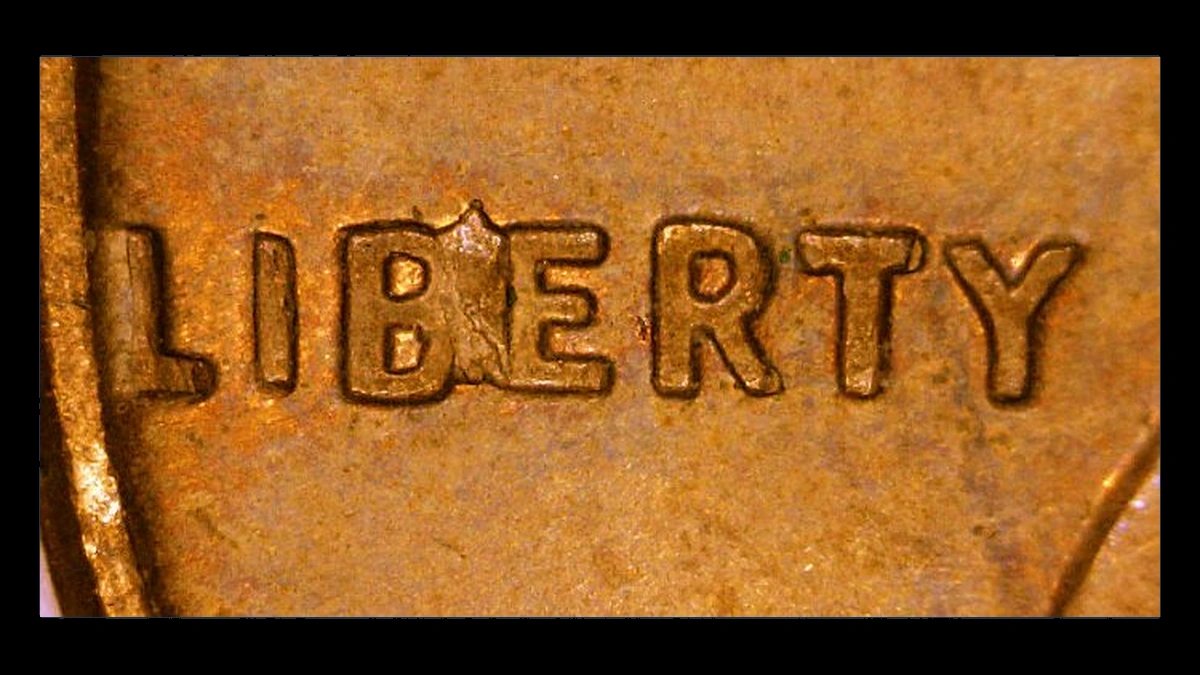
A chip in the die can fill the B–E gap in LIBERTY with an I-like bar. Other die damage leaves raised hair-to-rim cracks or a rim-connected patch called a cud.
How to Identify
Locate the correct B–E gap rather than the space between B and the original I. For a crack, check that the line rises from the surface; for a cud, trace the patch to the rim.
A reported Denver Small Date BIE coin also has a clipped lower edge. That missing metal is a separate feature on the same specimen, not part of the die chip.
What It’s Worth
The estimated overall range is $2–$600, with small bars and cracks around $2–$40 and larger clear cuds around $30–$600. Combined effects still receive one whole-coin valuation.
A 2021-D retained cud brought $186 in September 2025. Its later zinc construction and retained die section make it a related comparison, not a price for every 1960 chip.
4. 1960 Penny A Faint Digit or Embedded Crust: Struck-Through Material Error
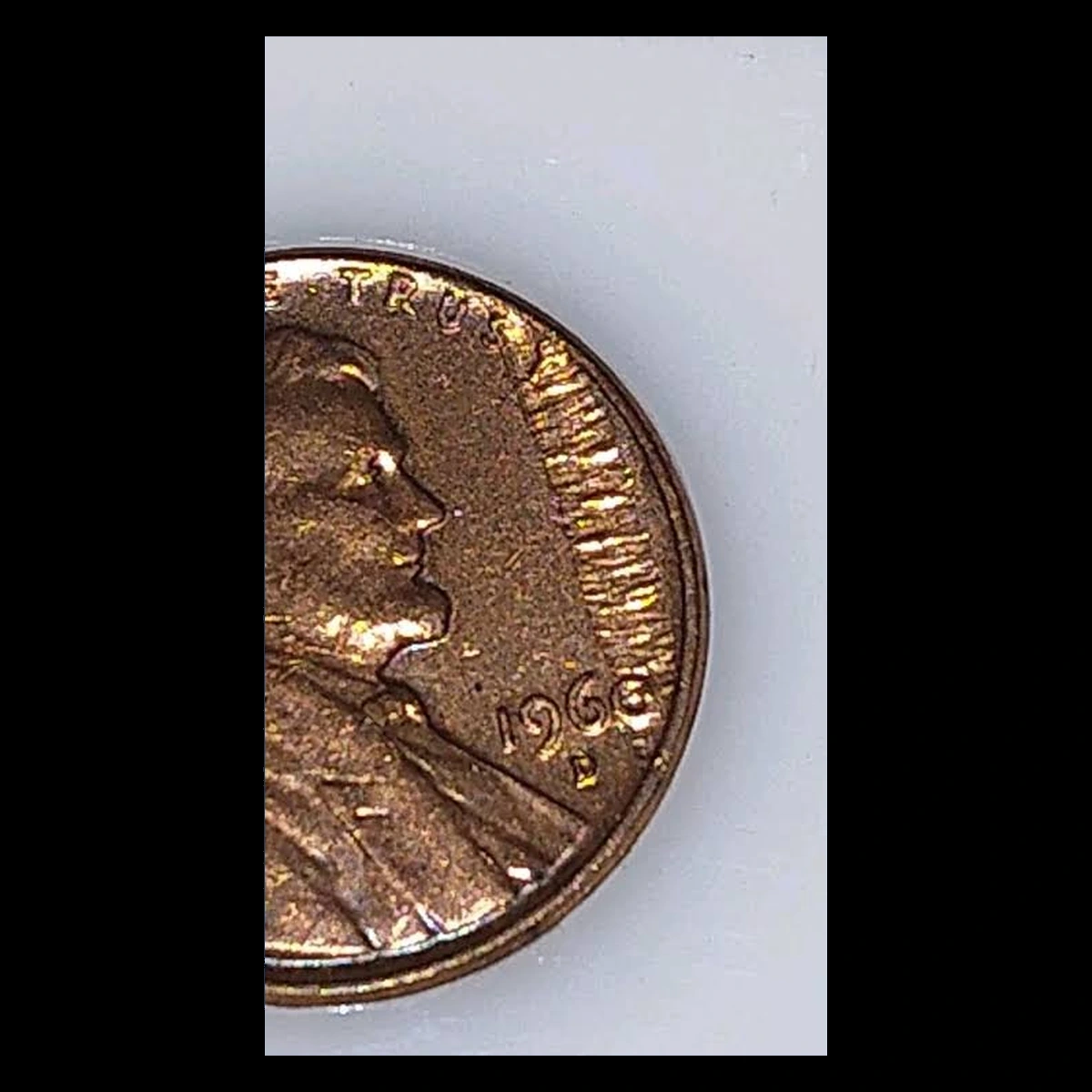
A weak 6 can show where an obstruction prevented full design formation. A separate 1960-D Small Date cent retains dark crust containing copper flakes above IN GOD WE TRUST.
How to Identify
Examine retained material in place and compare the surrounding original design. A weak digit alone does not prove it was blocked by the same mixture as the crust-bearing coin.
Look for local interrupted detail beside sharper letters rather than general wear or grinding. Other reported weak date and LIBERTY areas need their own surface explanation.
What It’s Worth
A genuine 1960 blocked-design error has an estimated value of $5–$200. Recognizable obstruction effects or original retained material can be more useful than a faint numeral.
A 2021-D grease strike-through sold for $84 in September 2025. That later cent provides mechanism context, not a sale of the 1960 retained crust.
5. 1960 Penny Peeling Alloy and Related Pieces: Lamination Error
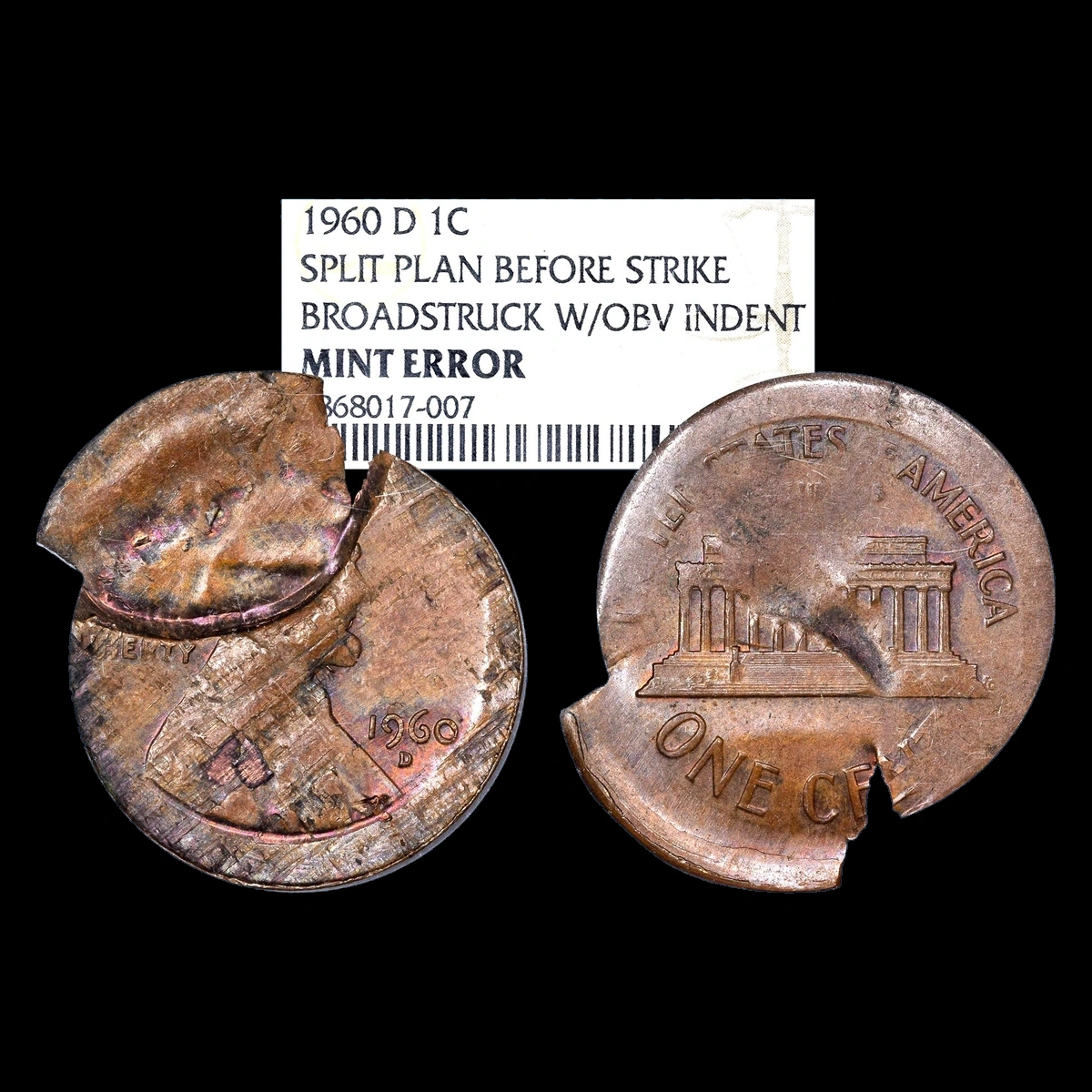
Weakness within the copper alloy can allow a surface layer to separate. A 1960-D Large Date lamination is documented separately from a matched pair described with laminations on both pieces.
How to Identify
For a single coin, follow the natural layered boundary without lifting a flap. For the pair, compare photographs of both surfaces rather than forcing the pieces together.
The brief pair description does not establish separation order or two complete halves of one coin. These are copper-alloy pieces, not zinc cores losing a copper coating.
What It’s Worth
The estimated range is $5–$500, with small original laminations around $5–$150 and a related intact pair around $150–$500 for both pieces. Each form needs its own comparison.
The matched NGC MS62 Brown pair sold for $228 in July 2021. That total is not $228 per piece, nor should it be halved to price the separate Large Date lamination.
6. 1960 Penny A Hole Predates the Strike: Defective Blank Error
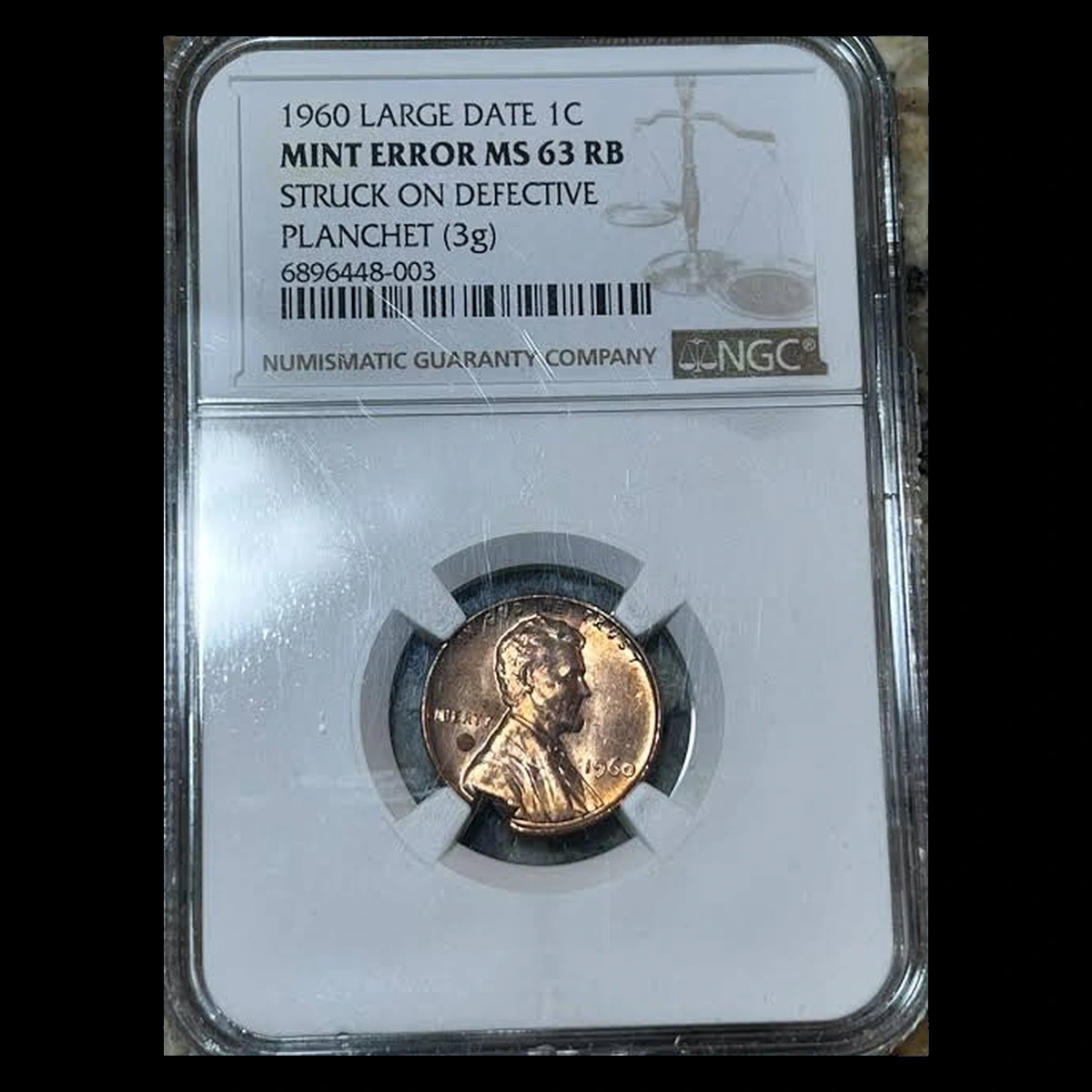
The dies can strike a blank that already contains a hole or other original metal defect. The documented holed 1960 example weighs 2.9 grams and is graded NGC MS64 Red.
How to Identify
Study the inside boundary and nearby design for metal flow around an existing opening. Circular cutting lines or a sharp drilled wall suggest later work instead.
Other no-mint-letter large- and small-date defective blanks have recorded weights of 2.6–2.9 grams and different shapes. Do not assign the holed specimen’s outline to all of them.
What It’s Worth
Identified 1960 blank defects have an estimated value of $40–$750. Original boundaries, readable design, and preservation guide comparison.
The 2.9-gram holed-blank coin sold for $228 in July 2021. That result has no application to an ordinary penny drilled after striking.
7. 1960 Penny Missing Edge Sections, Sometimes with Expansion: Clips Error
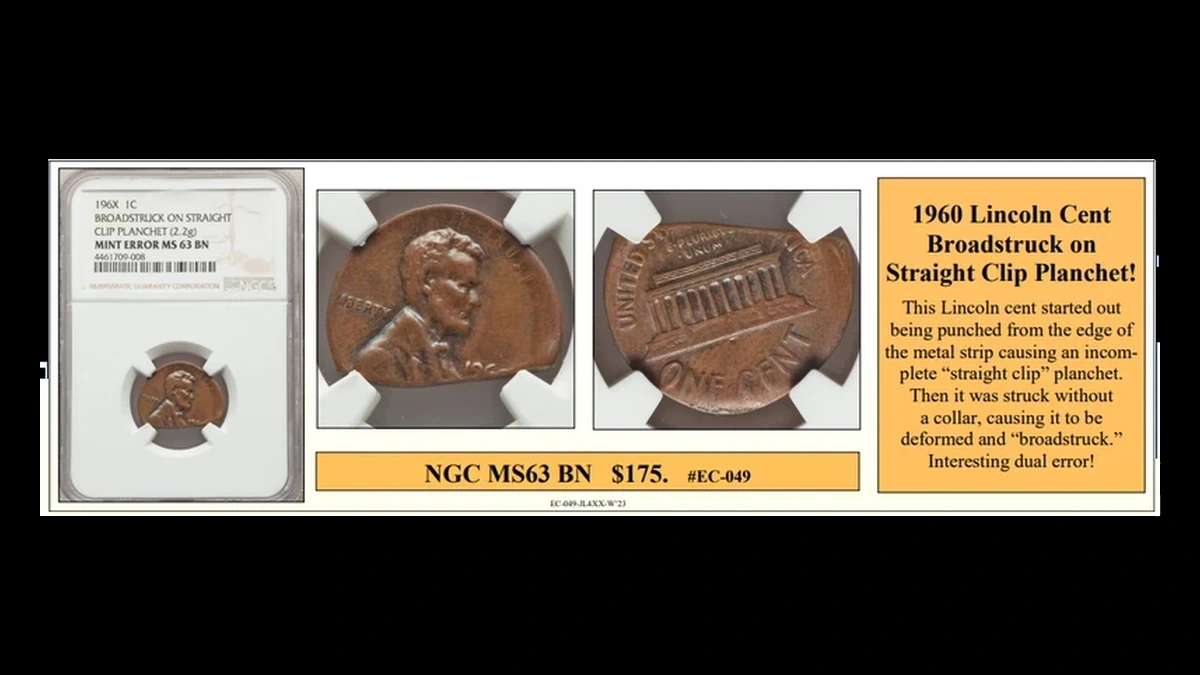
Incomplete blanks can have straight, ragged, or double gaps before receiving their designs. A recorded 1960 straight-clipped broadstrike weighs 2.2 grams, while a separate straight-clipped coin weighs 2.6 grams.
How to Identify
Inspect each gap where it meets the original rim for natural struck boundaries rather than saw or file marks. The gap count does not tell you how many times a coin was struck.
For the combined broadstrike, examine the outward spread independently of the missing side. Keep each specimen’s weight and mint attached to its own description.
What It’s Worth
The estimated overall range is $10–$700, with ordinary clips around $10–$200 and clear clip-and-broadstrike combinations around $50–$700. The latter is one complete coin.
A 1978 straight-clip cent with an off-center strike sold for $432 in May 2021. Its second effect differs from broadstriking, so it offers only a related copper-alloy combination comparison.
8. 1960 Penny The Entire Design Fits a Wider Coin: Broadstrike Error
A broadstrike expands because the collar ring fails to contain the blank normally. The documented 1960-D Large Date example was graded PCGS MS62 Brown.
How to Identify
Measure several widths and check that the outer lettering remains on the metal on both faces. Original spreading can be uneven without losing the complete intended design.
Crushed letters or a worked edge may explain later flattening. A clipped broadstrike has an additional incomplete-blank feature and requires the separate comparison above.
What It’s Worth
A genuine 1960 broadstrike has an estimated value of $10–$350. Amount of spread and surviving original detail affect its appeal.
A 1980-D copper-rich broadstrike brought $57 in March 2021. That is a same-mechanism reference, not a sale of the documented 1960-D coin.
9. 1960 Penny Plain Metal Beside a Displaced Design: Off-Center Strike Error
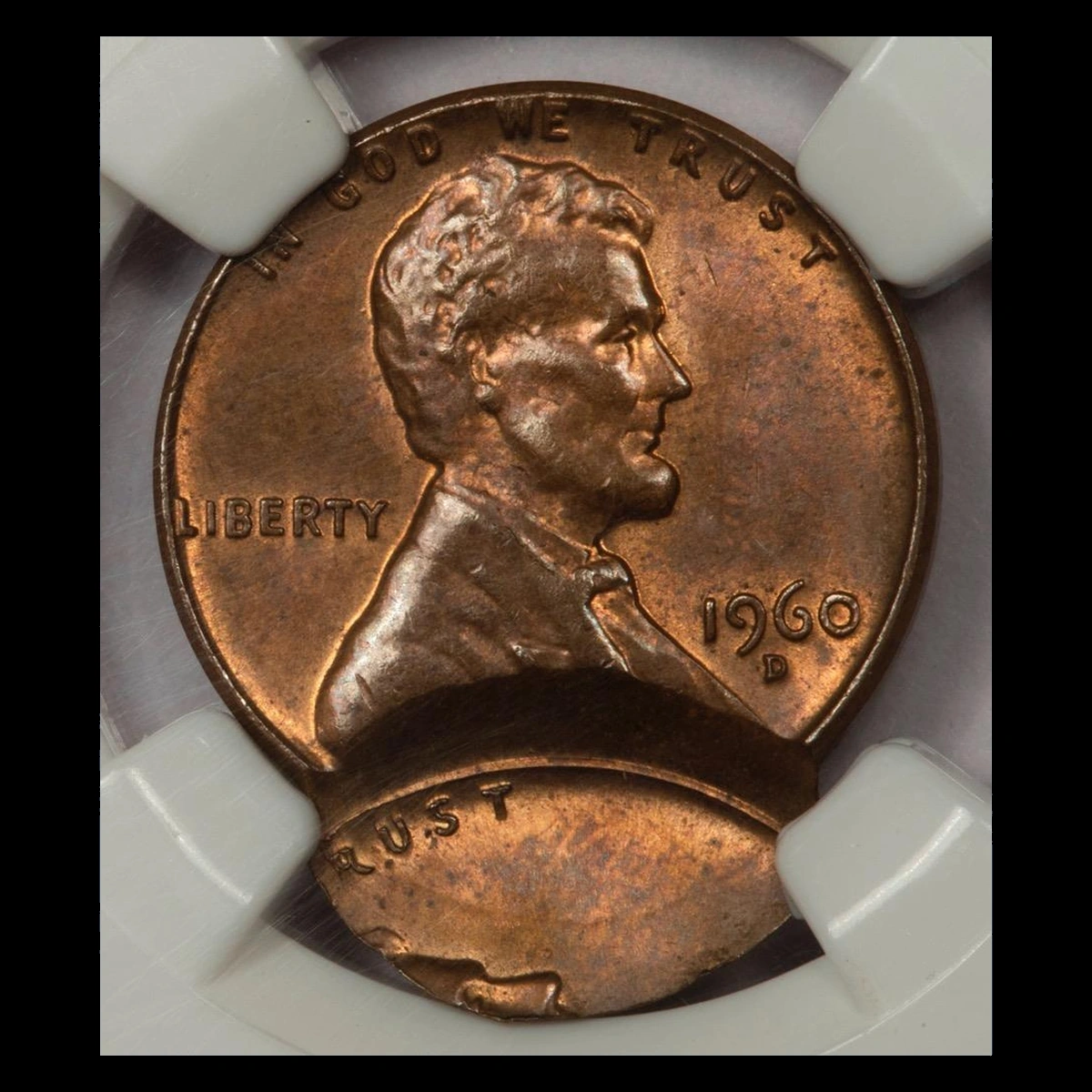
A 1960-D Large Date example is described as 65% off center with later damage. Another Denver specimen combines an off-center strike with a ragged blank and weighs 2.5 grams.
How to Identify
Distinguish the plain crescent, which still contains metal, from the ragged gap where material is absent. A shifted design alone does not explain low weight.
Compare both faces for compatible displacement and read the date and D from what survives. Inspect the edge and plain area for later cutting or grinding.
What It’s Worth
The estimated range is $20–$650 across ordinary 1960 off-center cents and clearer ragged-blank combinations. Date visibility, surface quality, and the actual combined features guide comparison.
A 1972-D cent struck 60% off center sold for $44 in September 2025. The damaged 65% 1960-D piece cannot be priced from its percentage alone, and the 2.5-gram coin has one overall value.
10. 1960 Penny Thin Separated Metal Receives a Shifted Strike: Split Blank Error
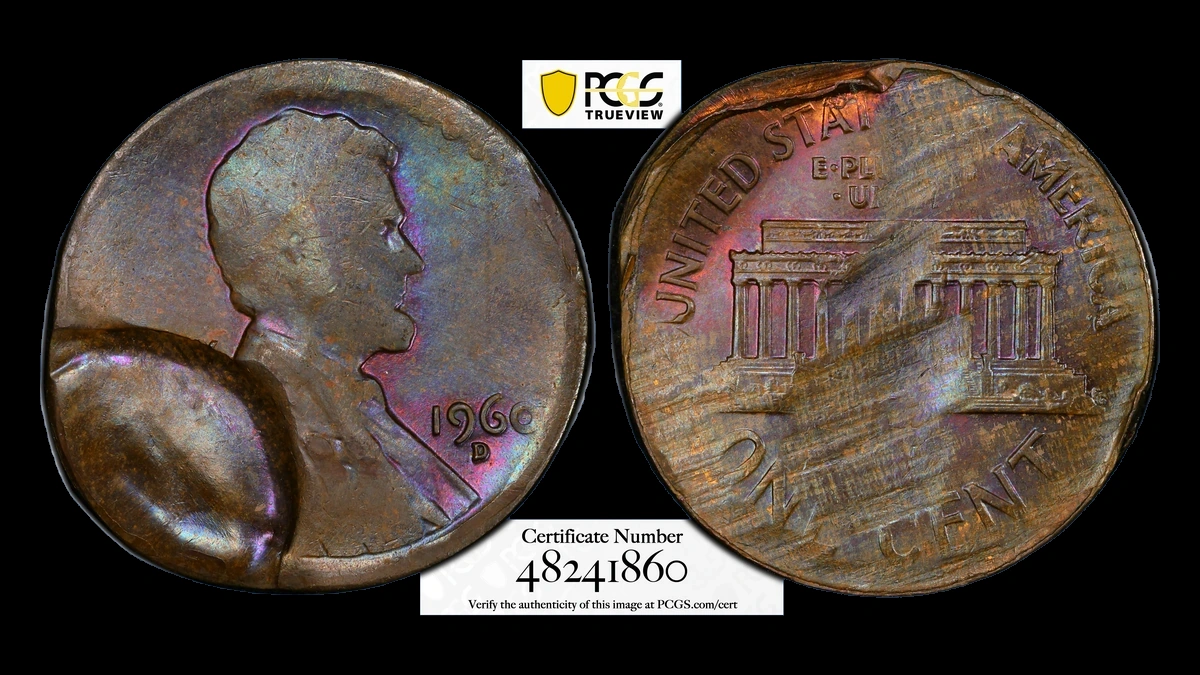
The reported 1960 combination was struck 40% off center on a blank that had split before striking. Only part of the original thickness entered the press.
How to Identify
Inspect the rough or lined separated surface for shallow design pressed into it. That relationship helps show the split existed before the blow, unlike a completed coin that separated later.
Check thickness and actual weight without copying measurements from another split cent. The report supplies no weight for this specimen, and grinding a finished coin thin leaves different evidence.
What It’s Worth
The estimated whole-coin value is $100–$1,000 for the original split blank with its off-center strike. The two effects do not create two separately priced objects.
A 1963 cent struck on a pre-split blank sold for $159 in June 2024. Its 1.6-gram measurement belongs to that different-year comparison, not the 1960 piece.
11. 1960 Penny Opposite Designs Meet in a Tiny Second Strike: Flipover Error
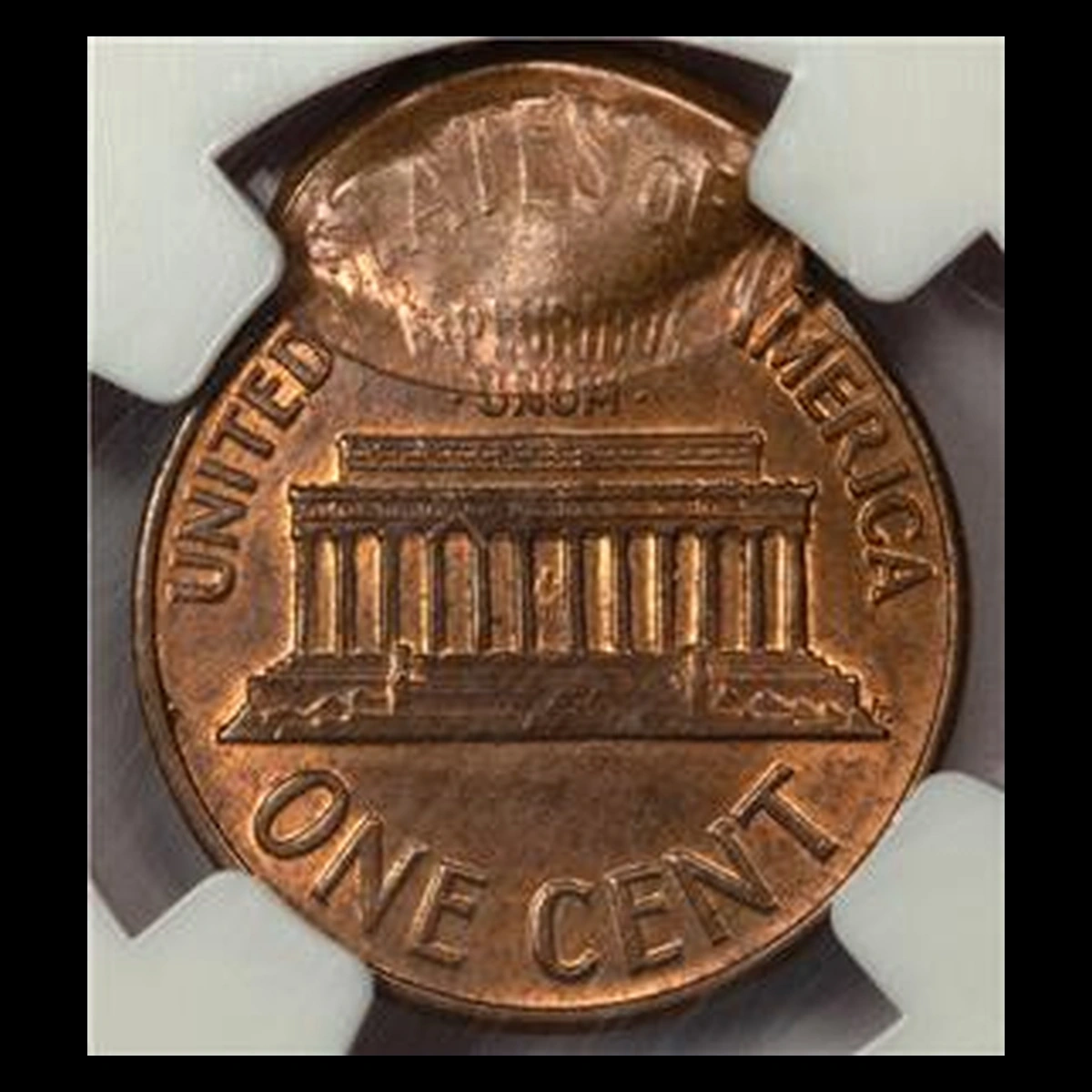
The recorded 1960-D Large Date coin turned over before a second strike described as 95% off center. Only a small part of that later blow reached the metal.
How to Identify
Locate the small later impression and identify which face’s design it contains. Compare both sides to see whether the opposite design remnants support a flip.
A narrow extra letter edge alone is insufficient. Inspect the contact area and edge for later pressure or attached pieces that could imitate a copied design.
What It’s Worth
A confirmed 1960-D flipover double strike of this general kind has an estimated value of $100–$1,200. Readable opposite-side detail helps explain the sequence.
The recorded specimen is PCGS MS62 Red and Brown without a sale supplied here. A 1979 off-center double strike brought $204 in September 2023, comparing repeated striking without proving the same flip arrangement.
12. 1960 Penny Lincoln Appears Backward on the Reverse: Full Brockage Error
A recorded no-mint-letter 1960 Large Date cent has a normal front and a full early brockage on the back. Another struck coin blocked the reverse die and pressed a recessed mirror portrait into the fresh blank.
How to Identify
Establish that the reverse image is sunken before reversing a photograph to read it. This is different from a normal raised second portrait on a novelty coin.
Compare both faces and the edge for later squeezing between completed pennies. The documented example is NGC MS62 Brown and has the mirror image replacing the Memorial.
What It’s Worth
A full authenticated 1960 brockage has an estimated value of $500–$2,500. An early complete transfer can preserve more recognizable detail than a partial or distorted one.
An undated full-brockage cent sold for $192 in March 2025. Its unknown year and unspecified receiving face limit direct comparison with the 1960 reverse example.
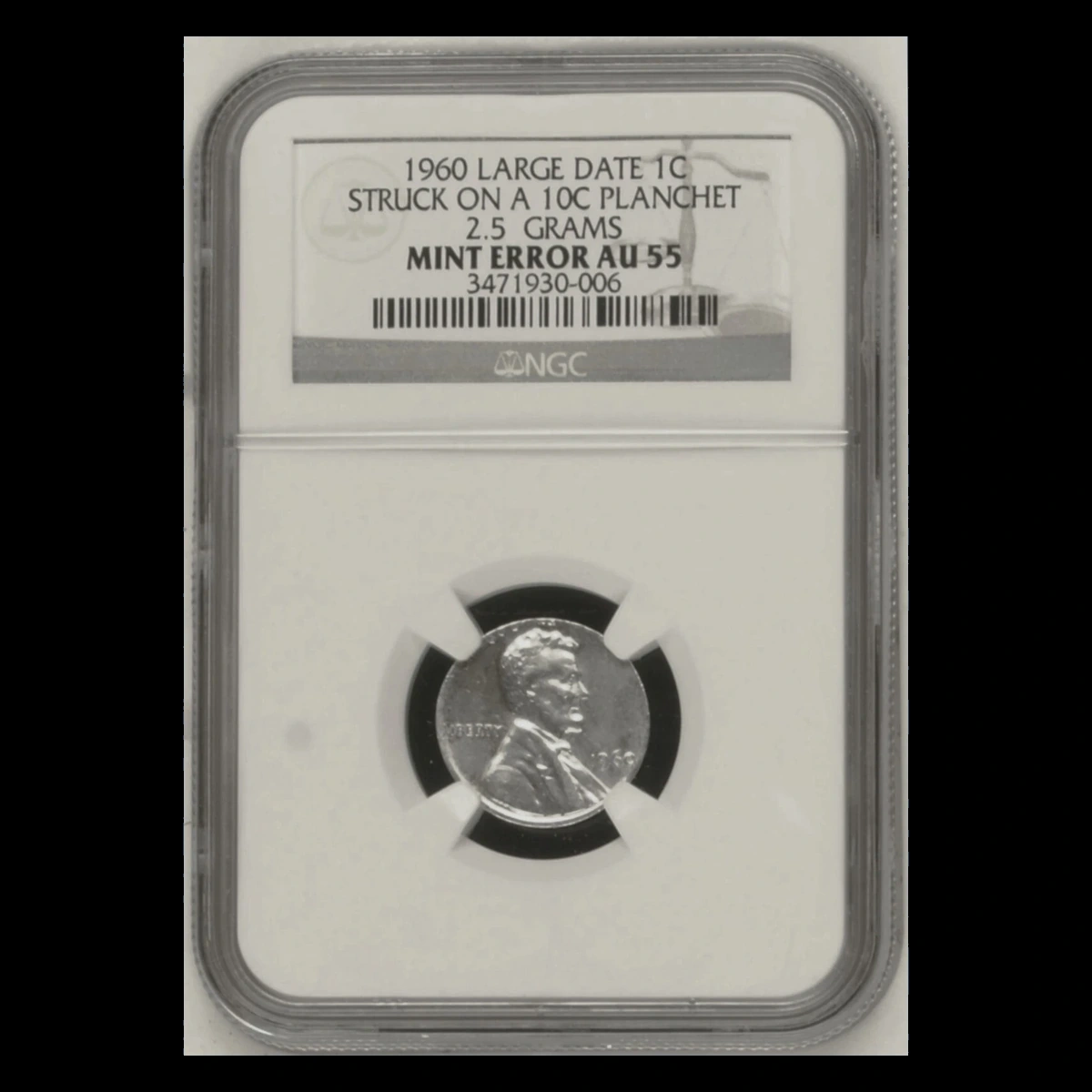
13. 1960 Penny The Cent Is on Silver Dime Metal: Wrong Planchet Error
Documented silver-dime-blank cents include a Philadelphia Large Date and a Denver Small Date. Their smaller blanks did not receive an earlier Roosevelt design.
How to Identify
The Denver coin retains a complete date with 0 close to the edge. The separate Philadelphia piece has a high border near five o’clock and loses part of IN GOD opposite it.
A silver dime blank normally weighs 2.50 grams, below the cent standard. Confirm silver metal rather than a pale coating, and keep each example’s edge details separate.
What It’s Worth
Identified 1960 silver-dime-planchet cents have an estimated value of $500–$3,500. Preserved date and condition guide the comparison.
The Denver Small Date example graded PCGS MS63 sold for $1,762.50 in January 2013. That result is not a sale of the separate Philadelphia Large Date specimen.
14. 1960 Penny A Liberian Ten-Cents Blank Receives Lincoln Error
The recorded Philadelphia Large Date coin keeps all of 1960 visible but loses right-side outer design. Its blank was identified as intended for a Liberian ten-cents coin.
How to Identify
Compare the complete date and missing outer details with the actual specimen. Its generally near-centered strike means that limited design space does not automatically establish a large off-center error.
Use the correct foreign-blank metal and measurements for authentication, not normal cent specifications as though they described the donor blank. Do not scrape the surface to test its identity.
What It’s Worth
An authenticated comparable Liberian-blank cent has an estimated value of $700–$4,000. Established blank identity and preserved design are essential.
The NGC MS62 example sold for $805 in November 2002. A higher-grade 1972-D cent on a Philippine five-sentimos blank brought $1,500 in April 2022, a different country and date comparison.
15. 1960 Penny A Listed Clad Dime Blank with a Clip: Verify the Combination Error
An auction title describes a 1960 cent on a clad dime blank with a 5% clip. Regular U.S. clad dimes began with 1965 dates, so the listed earlier cent date and metal require careful confirmation together.
How to Identify
Read all four date digits from clear photographs and verify pale outer layers around a copper core. The auction title alone does not explain how the date and blank came together.
Inspect the missing boundary for an original clip rather than a later cut. A complete clad dime blank starts near 2.268 grams, and the missing section would remove some of that metal.
What It’s Worth
A provisional estimated whole-coin range of $500–$6,000 applies only after the listed date, clad metal, and original clip are established. The PCGS MS62 July 2021 offering ended without a sale.
A confirmed 1964 cent on a clad dime blank brought $5,280 in May 2022. That different dated combination does not prove the 1960 listing’s history, and the clip should not receive another independent full-coin price.
Conclusion
Normal small and large dates give 1960 cents several legitimate appearances before any error is involved. Overlapping numeral sizes, a repeated D, and reverse doubling each need their own evidence.
For damaged-looking metal, identify what existed before striking and what happened afterward. Preserve flaps and documented pairs, keep specimen measurements separate, and treat an unsold or unresolved auction description as evidence to examine rather than a completed sale or established production story.